
Overview

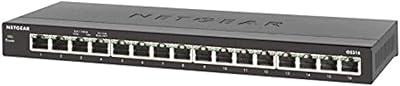
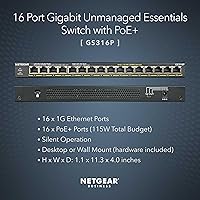
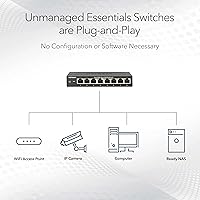
The NETGEAR GS316P 16-Port PoE+ Gigabit Switch occupies a practical sweet spot for small businesses and prosumer home networks that need full PoE coverage without the complexity of managed hardware. What sets it apart from many competitors is that all 16 ports deliver PoE+ — there are no non-powered ports to work around or plan your layout for. The metal chassis is compact and completely fanless, making it genuinely quiet enough for a reception desk, classroom, or AV cabinet. Plug it in, connect your devices, and it works. No software to install, no web interface to navigate. The shared 115W power budget is the one spec worth understanding before you buy.

Features & Benefits

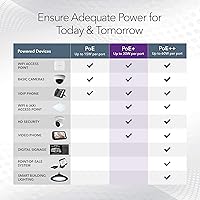
Every port on this Netgear PoE switch supports the 802.3at PoE+ standard, which means you can run IP cameras, wireless access points, or VoIP phones from any port without hunting for which ones actually supply power. The catch is the 115W shared budget — spread across 16 devices, that averages roughly 7W per port, fine for standard IP cameras but tighter if you are running high-draw access points or PTZ cameras. The FlexPoE design lets you swap in a higher-wattage external adapter if you need more headroom. Gigabit throughput on every port handles modern network loads comfortably, and the fanless build keeps things quiet in noise-sensitive spaces.

Best For

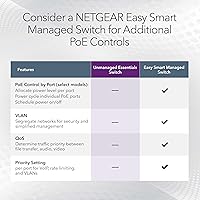
The GS316P is a strong fit for anyone deploying 10 to 16 PoE-powered devices and wanting zero configuration overhead. Think small offices rolling out IP cameras and a few wireless access points, schools adding VoIP phones to classrooms, or AV integrators who need a silent, reliable switch tucked into a media cabinet. Home lab users who want full PoE coverage without touching a command line will appreciate it too. That said, this unmanaged gigabit switch is not the right tool if you need VLANs, port mirroring, or traffic prioritization — it has no management layer whatsoever.

User Feedback

Buyers consistently highlight two things: how easy it is to get running and how solid the build feels. Many report years of reliable service powering cameras and access points without interruption. The most common frustration is the power budget ceiling — users running multiple high-draw devices discover that 115W gets consumed faster than expected. A few note the chassis runs warm under sustained load, though no one has flagged it as a failure point. The FlexPoE upgrade path exists, but real-world buyers rarely mention using it. Compared to the GS316EP, most feel the value trade-off is reasonable given the all-PoE port count.

Pros

  • Every single port delivers PoE+, so you never have to map out which ports are powered before planning your install.
  • Setup takes minutes — unbox, plug in, done. No browser interface, no app, no account required.
  • The all-metal chassis feels durable and well-built for a switch in this price range.
  • Fanless operation means it runs completely silently, making it practical in living spaces, classrooms, and AV installations.
  • Gigabit throughput on all 16 ports ensures bandwidth is never the weak link for cameras or access points.
  • FlexPoE support lets you expand the power budget by swapping the external adapter rather than replacing the switch entirely.
  • Wall and desktop mounting options offer genuine installation flexibility without needing a rack.
  • The 3-year limited warranty is above average for unmanaged switches in this category.
  • Energy-efficient design keeps idle power draw low, which adds up over months of always-on operation.

Cons

  • The 115W shared budget gets consumed quickly if several high-draw devices are connected simultaneously.
  • Zero management features mean no VLANs, no QoS, no port mirroring, and no traffic monitoring whatsoever.
  • The chassis can run noticeably warm under sustained heavy PoE load, which may concern some installers.
  • No SFP uplink port limits fiber connectivity options for environments that need one.
  • FlexPoE adapter upgrades are rarely straightforward to source, and few buyers actually end up using the feature.
  • Restricted to US and Canada use, making it a non-starter for international deployments.
  • No console or web interface means there is no visibility into port utilization, errors, or connected device status.
  • Buyers who later need managed features must replace the switch entirely rather than unlock capabilities via software.

Ratings

The NETGEAR GS316P 16-Port PoE+ Gigabit Switch has been scored by our AI system after analyzing thousands of verified global buyer reviews, with spam, bot-generated, and incentivized submissions actively filtered out. The scores below reflect an honest synthesis of real-world experience — where this unmanaged gigabit switch genuinely excels and where it falls short for certain buyers.

Ease of Setup
97%
Buyers across skill levels — from first-time network builders to seasoned IT staff — consistently describe the setup as near-instant. Unbox it, plug in your devices, and everything works. There is genuinely nothing to configure, which is exactly what this switch is designed for.
The complete absence of setup complexity is also a ceiling: users who later discover they need any configuration option find there is simply nowhere to go. A small number of buyers felt the lack of even a basic status LED per port made initial troubleshooting less intuitive.
PoE Port Coverage
94%
Having every single port deliver PoE+ is the feature buyers mention most enthusiastically. Installers running IP cameras or wireless access points across an entire office floor appreciate never having to map out which ports are powered — any device goes into any port.
A handful of reviewers noted that all-port PoE coverage creates a false sense of unlimited capacity; the 115W shared budget means you still have to think carefully about total device draw, even if port selection is unrestricted.
PoE Power Budget
61%
39%
For deployments built around standard-draw devices — indoor IP cameras pulling 5 to 8 watts, basic VoIP phones, or older access points — 115W proves more than sufficient, and many small office users report running 10 to 12 devices without ever hitting the ceiling.
This is the most frequently cited frustration in buyer reviews. Anyone running high-draw devices like PTZ cameras or enterprise-grade access points finds the 115W shared budget constraining surprisingly quickly. Several buyers felt the spec was undersold in marketing relative to how limiting it becomes in real mixed-device deployments.
Build Quality
88%
The all-metal chassis earns consistent praise for feeling solid and durable relative to its price point. Buyers who have owned multiple budget switches note that the GS316P feels noticeably more substantial, and long-term owners frequently report years of trouble-free operation.
Under sustained heavy PoE load, the chassis runs noticeably warm, which concerns some installers placing it in enclosed spaces. A small subset of buyers reported unit failures after 18 to 24 months, though these appear to be outliers rather than a systematic issue.
Noise Level
96%
The fanless design earns near-universal praise from users deploying the switch in noise-sensitive spaces. AV integrators, classroom tech coordinators, and home office users all highlight silent operation as a genuine differentiator versus fan-cooled alternatives in the same category.
Silent operation does come with the trade-off of passive heat dissipation through the metal body, which gets warm to the touch under load. This is not a noise complaint, but buyers in very warm ambient environments occasionally express concern about long-term thermal management.
Value for Money
79%
21%
For buyers who specifically need all-port PoE+ coverage with zero management overhead, the price-to-capability ratio is genuinely strong. Small business owners and home lab users frequently compare it favorably against competing switches that charge more for similar or fewer powered ports.
Buyers who later discover they need VLAN support or traffic management feel the purchase was misaligned, which drives down perceived value significantly. The comparison to the GS316EP — which adds some smart management features for a modest premium — leads some reviewers to wish they had spent slightly more.
Thermal Management
63%
37%
In well-ventilated environments running moderate PoE loads, the passive cooling approach works reliably and without issue. Many buyers in temperate climates report the chassis staying only mildly warm even after months of continuous operation.
In warmer rooms or enclosed network closets with limited airflow, the chassis can get uncomfortably hot under sustained full-load conditions. Several buyers explicitly recommend against mounting it in a sealed enclosure or stacking it with other heat-generating equipment.
Management Features
18%
82%
For buyers who actively want zero management — small shops, classrooms, or home setups where simplicity is the priority — the complete absence of a configuration interface is exactly the right design choice. There is nothing to misconfigure and nothing to break.
The lack of any management capability is a hard dealbreaker for a significant segment of buyers who underestimated their needs. No VLANs, no QoS, no port monitoring, no link aggregation — users who need even one of these features cannot unlock them at any point; the switch simply does not support them.
Port Count & Layout
86%
Sixteen ports in a compact single-unit chassis hits a practical sweet spot for small business and prosumer deployments. Buyers replacing multiple smaller switches with a single unit particularly appreciate the consolidation, and the port spacing is wide enough to comfortably seat standard RJ45 plugs side by side.
A small number of users noted that the port layout on the rear panel can make cable management slightly awkward in tighter wall-mount configurations. There is also no SFP uplink port, which limits fiber connectivity options for environments that need an uplink to a larger core switch.
FlexPoE Upgradability
52%
48%
The FlexPoE concept is genuinely useful in theory — the ability to increase PoE budget by swapping an external power adapter rather than replacing the entire switch represents real long-term flexibility for growing deployments.
In practice, very few buyers actually use or benefit from this feature. Compatible higher-wattage adapters are not prominently stocked or easy to source, and most users who find 115W insufficient simply replace the switch rather than hunting for an adapter upgrade. The feature reads better on paper than it delivers in the field.
Mounting Flexibility
83%
The inclusion of both wall mount and desktop mounting hardware in the box is a practical touch that buyers consistently appreciate. The compact footprint and low weight make wall installation a straightforward job even for non-technical users, and the switch sits cleanly on a desk without needing additional stands or accessories.
The rack mount kit is included but the switch is not rack-height standardized, so it does not integrate cleanly into a proper server rack alongside 1U equipment. Buyers expecting a true rack-ready solution should note that wall or desktop placement is the intended primary use.
Long-Term Reliability
81%
19%
The majority of long-term owners — those using the switch for two years or more — report consistent, trouble-free operation with no port failures or performance degradation. NETGEAR's 3-year limited warranty provides meaningful coverage and is frequently cited as a confidence factor at purchase.
A visible minority of reviewers report early failures, typically in the 12 to 24 month window, often correlated with high ambient temperatures or overloaded PoE budgets. While not a dominant trend, it is frequent enough to suggest careful attention to thermal environment during installation.
Energy Efficiency
84%
IEEE 802.3az Energy Efficient Ethernet compliance means the switch intelligently scales power consumption based on actual traffic levels, which translates to meaningfully lower electricity draw during off-hours or low-activity periods. Always-on deployments in commercial settings appreciate this over a multi-year ownership window.
Energy savings are modest in absolute terms for a 16-port PoE device — the PoE delivery itself dominates total consumption regardless of EEE optimization. Buyers should not expect dramatic electricity savings; the compliance is a positive differentiator but not a headline feature in real-world use.
Compatibility
91%
The standard IEEE 802.3at and 802.3af compliance means the GS316P works reliably with PoE-powered devices from virtually any manufacturer. Buyers running mixed environments — Axis cameras alongside Ubiquiti access points and Cisco VoIP phones, for example — report no compatibility issues.
The US and Canada regional restriction is a genuine limitation for international buyers who encounter it only after purchase. A small number of reviewers also noted occasional power negotiation quirks with older 802.3af-only devices, though these cases appear infrequent.

Suitable for:

The NETGEAR GS316P 16-Port PoE+ Gigabit Switch is purpose-built for anyone who needs to power a double-digit fleet of network devices without hiring an IT consultant or reading a manual. Small business owners setting up security cameras across a single-floor office, retail space, or warehouse will find it particularly well-matched — every port delivers PoE+, so there is no guesswork about which connections will actually power a device. Schools and small nonprofits deploying VoIP phones or wireless access points in multiple rooms get the same benefit: plug everything in and walk away. AV integrators appreciate the fanless metal chassis, which runs silently enough to live inside a conference room credenza without annoying anyone. Home lab enthusiasts who want full PoE coverage and zero configuration overhead will also feel right at home with the GS316P.

Not suitable for:

The NETGEAR GS316P 16-Port PoE+ Gigabit Switch is the wrong tool the moment your network requires any form of intelligent traffic management. If you need VLANs to segment guest traffic from internal systems, port-based QoS to prioritize voice calls, or SNMP monitoring to track device health, this switch simply cannot help — it has no management interface of any kind. Network administrators supporting growing organizations with mixed traffic types should step up to a managed or smart-managed alternative like the GS316EP. The 115W shared power budget is also a real constraint if you plan to run many high-draw devices simultaneously, such as PTZ cameras or enterprise-grade wireless access points that each pull 20W or more — running eight of those would already saturate the budget entirely. Anyone outside the US or Canada should also note that this model is region-locked by design.

Specifications

  • Total Ports: The switch provides 16 Gigabit Ethernet RJ45 ports, all of which are active and PoE+ capable.
  • PoE Standard: All 16 ports support IEEE 802.3at PoE+, delivering up to 30W per port within the shared power budget.
  • PoE Budget: The total shared PoE power budget is 115W across all active ports simultaneously.
  • Data Rate: Each port supports Gigabit Ethernet with a maximum data transfer rate of 1,000 Mbps (1 Gbps).
  • Management: The switch is fully unmanaged with no web interface, CLI, or software — it requires zero configuration to operate.
  • FlexPoE: The FlexPoE design supports an optional higher-wattage external power adapter to increase the total PoE budget without replacing the unit.
  • Cooling: The switch uses a fanless passive cooling design, producing zero audible noise during normal operation.
  • Chassis: The enclosure is constructed from metal, measuring 11.3″L x 4″W x 1.1″H.
  • Weight: The unit weighs 1.94 pounds, making it lightweight enough for easy wall or desktop placement.
  • Mounting: The switch supports both desktop placement and wall mounting, with the necessary hardware included in the box.
  • Energy Efficiency: The switch complies with IEEE 802.3az Energy Efficient Ethernet, reducing power consumption during periods of low traffic.
  • Certifications: The GS316P meets ErP, RoHS, and WEEE compliance standards for environmental and energy regulation.
  • Warranty: NETGEAR includes a 3-year limited hardware warranty with this switch.
  • Regional Use: This model is designed and approved for use in the United States and Canada only.
  • In the Box: The package includes the switch, a rack mount kit, a wall mount kit, a power adapter, and an installation guide.

Related Reviews
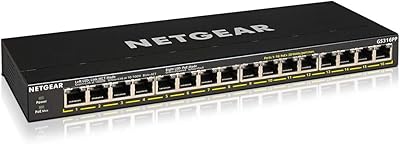
NETGEAR GS316PP 16-Port PoE+ Gigabit Ethernet Switch
85%
92%
Value for Money
89%
Ease of Use
86%
Energy Efficiency
76%
PoE Power Delivery
90%
Quiet Operation
More
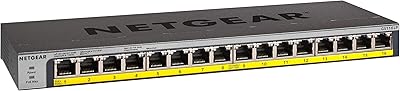
NETGEAR GS116LP 16-Port Unmanaged PoE+ Switch
86%
97%
Ease of Setup
93%
PoE Port Coverage
62%
PoE Power Budget
96%
Silent Operation
88%
Build Quality
More
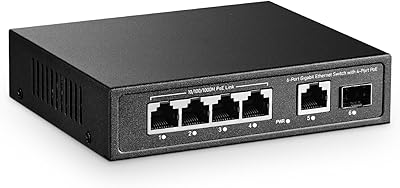
YuLinca 6-Port Gigabit PoE Switch with 4 PoE+ Ports
87%
95%
Ease of Installation
88%
PoE Functionality
91%
Build Quality
87%
Performance and Speed
94%
Fanless Operation (Noise)
More
NETGEAR GS116PP 16-Port PoE+ Gigabit Switch
83%
96%
Ease of Setup
93%
PoE Port Coverage
68%
Power Budget Adequacy
88%
Build Quality
97%
Noise Level
More
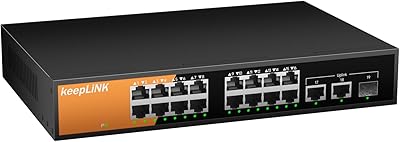
keepLiNK 16-Port Gigabit PoE Unmanaged Switch
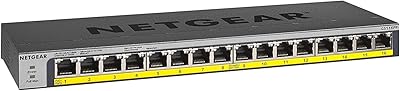
81%
91%
Value for Money
93%
Ease of Setup
78%
PoE Power Delivery
84%
Build Quality
71%
Thermal Performance
More
NETGEAR GS316 16-Port Gigabit Network Switch
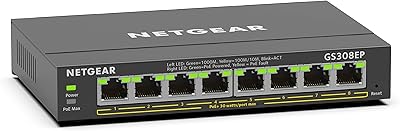
85%
97%
Ease of Setup
96%
Noise Level
78%
Build Quality
91%
Port Performance
88%
Reliability & Longevity
More
NETGEAR GS305EP 5-Port PoE Gigabit Switch
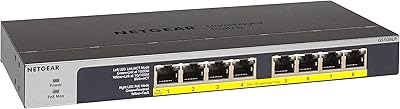
79%
91%
Ease of Setup
78%
PoE Performance
97%
Noise Level
67%
Management Interface
72%
Build Quality
More
NETGEAR GS308EP
NETGEAR GS308EP
81%
88%
PoE+ Performance
91%
Ease of Setup
74%
Build Quality
82%
Network Management Features
93%
Value for Money
More
NETGEAR GS108PP 8-Port Gigabit Ethernet PoE+ Switch
88%
95%
Ease of Setup
90%
PoE Performance
88%
Reliability
92%
Noise Level
87%
Build Quality
More
NETGEAR GS308PP 8-Port PoE+ Gigabit Ethernet Switch
85%
93%
Setup & Installation
88%
Performance & Reliability
90%
PoE+ Functionality
84%
Build Quality & Design
91%
Noise Level (Fanless Design)
More

FAQ

Every single port on this switch delivers PoE+, which is genuinely one of its strongest selling points. A lot of competing switches in this price range mix powered and non-powered ports, so you end up having to plan which devices go where. With the GS316P, you can plug any PoE device into any port without a second thought.

It depends on how much power each camera draws. A typical indoor IP camera pulls around 5 to 8 watts, so you could comfortably run 10 to 14 of them without hitting the 115W budget ceiling. PTZ cameras or models with built-in heaters can draw 20 to 25 watts each, which cuts that number down significantly. Always add up the wattage of your specific devices before assuming you can fill all 16 ports.

It works with any device that supports the IEEE 802.3at or 802.3af standard, regardless of brand. IP cameras, wireless access points, VoIP phones, intercoms — as long as the device accepts PoE power over a standard RJ45 connection, the GS316P will power and connect it fine.

The switch will prioritize power delivery by port number, typically giving preference to lower-numbered ports first. Devices on higher-numbered ports may receive reduced power or none at all once the budget is exhausted. If you regularly hit that ceiling, the FlexPoE design lets you swap in a higher-capacity external adapter to expand the available wattage.

Just plug it in. There is no software to install, no account to create, and no web interface to configure. Connect your devices and the switch handles everything automatically. It is about as close to zero-effort networking hardware as you can get.

Completely silent. The fanless design means there are no moving parts and no airflow noise whatsoever. You could put this in a bedroom, recording studio, or conference room and never notice it is there acoustically.

Both options are supported and the mounting hardware is included in the box. The unit is compact and light enough that wall mounting is straightforward, which makes it easy to tuck into a network closet or mount near a ceiling access point without needing a rack.

No, and this is the most important limitation to understand before buying. It is a fully unmanaged switch, meaning there is absolutely no support for VLANs, QoS, port mirroring, link aggregation, or any other advanced network feature. If you need any of those capabilities, you will need to look at a smart-managed or fully managed alternative.

The chassis does get warm under sustained heavy PoE load, which is normal for a fanless metal design — the metal body itself acts as a heat sink. Most users report it is warm to the touch but not alarmingly hot. Make sure it has reasonable airflow around it and is not crammed into a fully sealed enclosure with no ventilation.

It is a great fit if your main goal is powering multiple PoE devices reliably without any configuration complexity. Home users running a handful of access points, a few IP cameras, and some VoIP phones will find it more than capable. The silent operation and compact footprint make it easy to live with in a home environment. Just keep in mind that the unmanaged nature means you cannot segment traffic or set up guest networks at the switch level.