Overview

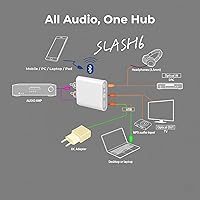
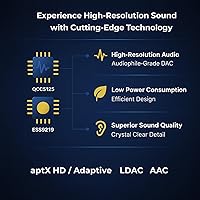
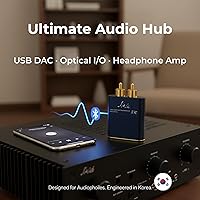
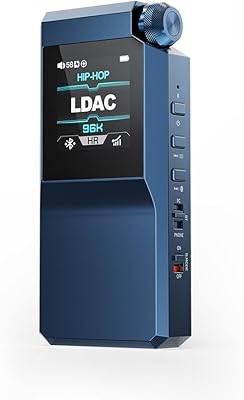
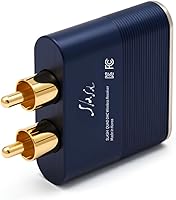
The Slash6 LDAC Bluetooth DAC Headphone Amp is a small navy box that quietly solves a specific problem: getting modern wireless audio into gear that was never built for it. Inside, a Qualcomm QCC5125 chip handles the Bluetooth side while an ESS Quad DAC takes care of decoding, and the combination is clearly aimed at people who own a vintage amplifier or a home stereo and don't want to give up sound quality just to cut the cord. It also works the other way, pulling audio from phones, laptops, and Chromecast devices into older RCA or optical inputs. This sits in a mid-to-premium price bracket, which makes sense once you see what it's built to do.
Features & Benefits

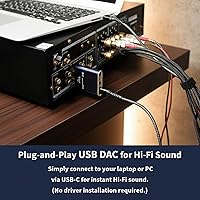
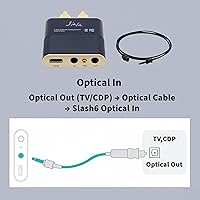
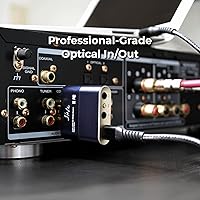
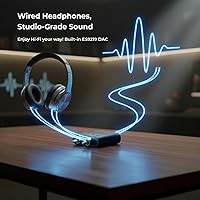
Where this Bluetooth DAC earns its price is in codec support. LDAC, aptX Adaptive, and aptX HD all push well past what standard Bluetooth handles, and the difference is audible if you're using decent headphones or speakers. The optical input takes 24-bit/96kHz sources like TVs, CD players, or even an old projector, and switching between wired and wireless feels quick rather than fiddly. Plug it into a laptop or PC and it acts as a plain USB DAC with no drivers to chase down. The headphone output has enough power behind it to drive most wired headphones properly, and the gold-plated RCA jacks paired with an OPA1642 op-amp keep the signal clean. Auto-reconnect is a small touch, but it means you're not repairing this headphone amp every single time you turn it on.

Best For

The Slash6 adapter makes the most sense for a specific kind of buyer rather than everyone shopping for a wireless gadget. If you've got a vintage receiver or amplifier sitting around and want to stream from a phone without dragging in a new system, this is built for exactly that. It's equally useful on a desktop, where a laptop's built-in audio often sounds thin and a cleaner USB DAC output to powered speakers makes a real difference. Home theater owners with an older TV or a CD player that lacks Bluetooth will appreciate the optical-in flexibility too. And if your phone already supports LDAC, this is one of the few ways to actually hear what that codec is capable of instead of leaving the capability unused.

User Feedback

Feedback on this Bluetooth DAC has settled around 4.4 out of 5, which lines up with what you'd expect from a niche but well-executed accessory. People who hooked it up to an older amplifier tend to be the happiest, often surprised by how little setup was involved beyond pairing once. Build quality and overall sound clarity come up often enough in reviews to count as a genuine strength rather than luck. The main complaint worth flagging is the one-to-one pairing: there's no multipoint connection, so switching between two source devices means re-pairing rather than toggling instantly. For a single-source setup that's a non-issue, but anyone hoping to bounce between a phone and a laptop without re-pairing should know that limitation going in before buying.

Pros

  • Supports LDAC and aptX HD for genuinely cleaner wireless sound than typical Bluetooth adapters
  • Works as a USB DAC for laptops and PCs with zero driver installation required
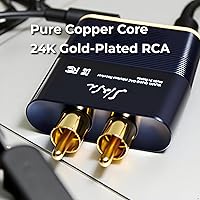
  • Gold-plated RCA outputs and a quality op-amp keep the signal noticeably clean
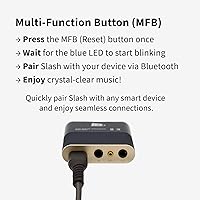
  • Auto-reconnect means daily use doesn't involve re-pairing the device every time
  • Optical input handles high-resolution sources like TVs and CD players with minimal lag
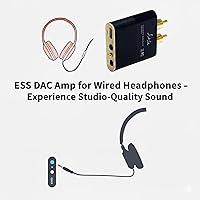
  • Headphone output has enough power to properly drive most wired headphones
  • Compact size makes it easy to tuck behind a stereo or desktop setup
  • The Slash6 LDAC Bluetooth DAC Headphone Amp earns consistently strong reviews from real owners
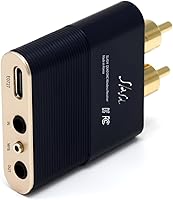
  • Bridges old amplifiers and modern wireless sources without replacing the whole system

Cons

  • No multipoint Bluetooth, so switching between two source devices requires re-pairing each time
  • Higher price point than basic Bluetooth receivers, which may deter casual buyers
  • Requires a stable USB-C power source rather than running off battery
  • Benefits are largely wasted unless paired with decent headphones or speakers
  • Setup involves more cables and inputs than a simple plug-and-play speaker
  • Optical and RCA connections may feel unfamiliar to buyers used to all-wireless gear
  • Limited to one paired device at a time, which won't suit multi-user households
  • Not designed for portable or on-the-go use given its stationary, desk-bound setup

Ratings

Our scores for the Slash6 LDAC Bluetooth DAC Headphone Amp are generated by AI after analyzing thousands of verified buyer reviews from around the world, filtering out spam, bots, and incentivized feedback along the way. The goal is to give you an honest read on where this device genuinely excels and where it falls short. Both the strengths and the friction points buyers ran into are reflected below, not just the highlights.

Sound Quality
91%
The ESS Quad DAC combined with LDAC support produces noticeably crisper, more detailed audio than typical Bluetooth dongles, something listeners with decent headphones or speakers pick up on immediately. Owners using it with home stereos report a fuller, more natural sound stage during everyday listening.
The improvement is most obvious with quality headphones or speakers, so casual listeners using cheap earbuds may not notice much difference. A handful of users expected a more dramatic jump given the price.
Bluetooth Connectivity & Range
86%
The QCC5125 chipset keeps the connection stable across a typical living room or home office, and auto-reconnect means it picks the last device back up without manual pairing every session. Most buyers report minimal dropouts during normal use.
Range starts to degrade through thick walls or with multiple Wi-Fi networks nearby, which some apartment dwellers noticed. A few users also mentioned occasional pairing hiccups after firmware-related interruptions.
Build Quality
88%
The compact navy housing feels solid for its size, and the gold-plated RCA jacks give a reassuring sense of durability compared to cheaper plastic adapters. Reviewers who've had it running daily on a desk or behind a stereo report no physical issues over time.
It's a small, lightweight unit, so it can shift around on a desk if cables aren't managed well. A few buyers wished for a more substantial chassis given the price point.
Value for Money
78%
22%
For hobbyists who actually use LDAC and care about clean DAC output, the feature set justifies the cost, especially since it replaces what would otherwise be three separate devices. Buyers reviving an old amplifier often feel the investment pays off long-term.
Casual users who just want basic wireless audio may feel they're paying a premium for codecs and components they won't fully use. The one-to-one pairing limit also takes some shine off the price tag for multi-device households.
Compatibility with Vintage Equipment
93%
This is where the device shines brightest: owners of older receivers and amplifiers consistently praise how easily it bridges RCA-only gear with modern Bluetooth sources. Several reviewers describe finally being able to stream from a phone to a decades-old stereo without any modification.
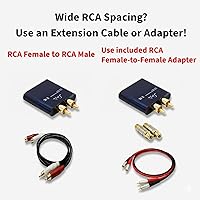
Very old equipment with unusual input types or no RCA ports at all won't connect without additional adapters not included in the box. A small number of users needed extra cables beyond what's provided.
Ease of Setup
89%
Pairing follows standard Bluetooth steps, and the USB DAC mode works without installing drivers on either Windows or Mac, which buyers repeatedly call out as refreshingly simple. Most people report being up and running within minutes of unboxing.
First-time users unfamiliar with optical versus RCA connections may need a moment to figure out which input matches their existing gear. The included manual helps, but it's not always the first thing people reach for.
Codec Support
92%
Supporting LDAC, aptX Adaptive, aptX HD, and aptX LL covers nearly every modern Android phone and high-end source device, which audiophile buyers specifically sought this product out for. Reviewers with LDAC-capable phones report finally hearing the codec's benefits.
iPhone users are capped at AAC regardless of the adapter's capabilities, which is a limitation of Apple's Bluetooth stack rather than the device itself, but it still disappoints some buyers expecting more.
USB DAC Performance
84%
Plugging into a laptop or PC delivers a clear upgrade over built-in audio, and the plug-and-play nature without driver installs gets consistent praise from desktop audio users. It's become a go-to for people upgrading work-from-home listening setups.
The 96kHz/24-bit ceiling, while solid for most listening, won't satisfy buyers chasing the highest-end studio-grade USB DAC specs available elsewhere. A few reviewers wanted higher sample rate support.
Headphone Amp Power
81%
19%
The built-in amp drives most wired headphones with enough volume and clarity for comfortable daily listening, and the OPA1642 op-amp keeps distortion low even at higher volumes. Reviewers using mid-range headphones report satisfying detail and punch.
Owners of high-impedance studio headphones note it doesn't have quite the headroom of a dedicated desktop amp built specifically for demanding cans. It's adequate rather than exceptional for that narrower use case.
Optical Input Performance
85%
TV and CD player owners appreciate the clean, lag-free audio when using the optical input, especially for movie nights where sync matters. The 24-bit/96kHz support handles most home theater sources without issue.
Some buyers wished the optical cable included in the box were a bit longer for larger entertainment centers. Switching between optical and Bluetooth modes occasionally requires a manual nudge rather than being fully automatic.
Auto-Reconnect Reliability
87%
Once paired, the device reliably reconnects to the last source on power-up, which daily users describe as one of the more convenient touches compared to older Bluetooth receivers they've owned. It removes a small but persistent annoyance from everyday use.
A small subset of reviewers experienced occasional reconnect delays after the source device's Bluetooth was toggled off and on repeatedly. It's not flawless, just mostly dependable.
Multi-Device Pairing
47%
53%
For single-source setups, like one phone permanently paired to one stereo, the simplicity of one-to-one pairing actually avoids the confusion multipoint devices sometimes cause. It just works for that narrower use case.
This is the most consistent complaint in user feedback: there's no way to keep a phone and laptop both connected at once, forcing manual re-pairing to switch sources. Multi-user or multi-device households find this genuinely limiting.
Design & Portability
72%
28%
Its compact footprint tucks neatly behind a stereo receiver or sits unobtrusively on a desk without taking up much space. The navy finish looks understated rather than flashy, which several buyers appreciated.
Without a battery, it's tied to a USB-C power source at all times, ruling out any kind of portable or travel use. Buyers hoping for a grab-and-go adapter will be disappointed.

Suitable for:

The Slash6 LDAC Bluetooth DAC Headphone Amp makes the most sense for someone who already owns a stereo or amplifier they like and simply wants to add wireless streaming without buying a whole new system. It's a strong fit for vintage receiver owners who want their old gear to keep up with a modern phone or tablet over Bluetooth. Desktop users who are tired of thin laptop audio will also benefit, since plugging it in as a USB DAC noticeably cleans up output to powered speakers or headphones. Home theater owners with an older TV or CD player that lacks Bluetooth can use the optical input to bridge that gap easily. It's especially worthwhile for anyone with an LDAC-capable phone who wants to actually use that codec instead of letting it sit unused. In short, this suits hobbyists and practical audio tinkerers more than someone shopping for a basic, no-frills adapter.

Not suitable for:

This isn't the right pick for anyone who needs to switch between two source devices on the fly, since the Slash6 LDAC Bluetooth DAC Headphone Amp only supports one-to-one pairing with no multipoint option. Buyers expecting simultaneous connections from a phone and a laptop will find themselves re-pairing more often than they'd like. It's also overkill for casual listeners who just want background music through cheap earbuds, since the codec support and op-amp quality are wasted without decent headphones or speakers on the other end. People hoping for a budget Bluetooth dongle should look elsewhere, as the price reflects its hi-res focus rather than basic convenience. Anyone unwilling to deal with cables, optical inputs, or USB-C power requirements may also find this more involved than a simple plug-and-play speaker.
Specifications

  • Bluetooth Chipset: The unit uses a Qualcomm QCC5125 chip running Bluetooth 5.1 for the wireless connection.
  • Audio Codecs: It supports LDAC, aptX Adaptive, aptX HD, aptX LL, aptX, AAC, and SBC for a wide range of source devices.
  • DAC Chip: Audio decoding is handled by an ESS Quad DAC (ES9219) alongside a separate USB DAC path.
  • USB DAC Resolution: The USB DAC input supports audio up to 96kHz at 24-bit resolution.
  • Optical PCM Support: The optical input accepts PCM audio up to 384kHz at 32-bit resolution.
  • Headphone Output: A 3.5mm headphone jack outputs at 1.0Vrms for driving wired headphones.
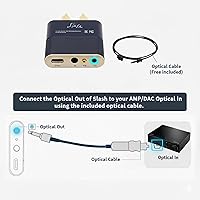
  • Optical Ports: The device includes both a 3.5mm optical input and a 3.5mm optical output.
  • Op-Amp: A Texas Instruments OPA1642 op-amp with LPF noise filtering processes the analog output stage.
  • RCA Outputs: RCA outputs are 24K gold-plated to support stable, low-distortion signal transfer.
  • Wireless Range: The Bluetooth connection maintains a stable range of up to 15 meters (50 feet) in open conditions.
  • Power Input: The device is powered via USB-C and requires a 5V/1A power source.
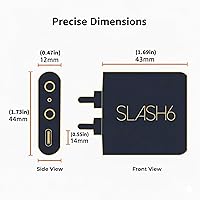
  • Dimensions: The unit measures 1.69″D x 1.73″W x 0.47″H.
  • Weight: The device weighs approximately 7 ounces.
  • Color: It is available in a navy finish.
  • Pairing Type: The device supports one-to-one Bluetooth pairing with auto-reconnect to the last paired source.
  • Driver Requirement: The USB DAC function works without any additional driver installation on PCs or laptops.
  • Box Contents: The package includes the main unit, a female RCA adapter, an optical cable, a USB Type-C cable, and a user manual.
  • Number of Pins: The USB interface uses a 4-pin connection.

Related Reviews

HiBy W3 II
HiBy W3 II
82%
91%
Sound Quality
93%
Bluetooth Codec Support
88%
Car Mode
84%
USB DAC Dongle Mode
74%
Battery Life
More
FX-Audio DAC-X6
FX-Audio DAC-X6
78%
83%
Audio Quality
79%
Headphone Amplifier Power
81%
Build Quality
88%
Input Versatility
61%
USB Audio Resolution
More
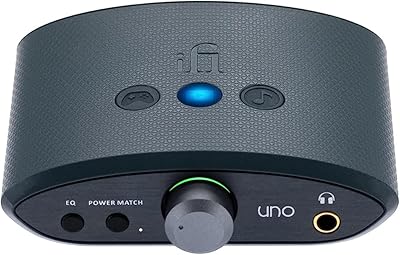
iFi Uno DAC Headphone Amplifier
76%
83%
Sound Quality Improvement
61%
Build Quality
88%
Ease of Setup
74%
EQ Modes
82%
Value for Money
More
FiiO BTR17
FiiO BTR17
81%
93%
Sound Quality
91%
Amplifier Power & Output
88%
Bluetooth Codec Support
89%
Versatility & Multi-Mode Operation
79%
Parametric EQ & App Control
More
Qudelix 5K
Qudelix 5K
82%
93%
Audio Quality
91%
Balanced Output
89%
Bluetooth Codec Support
94%
Companion App & EQ
88%
Portability & Size
More
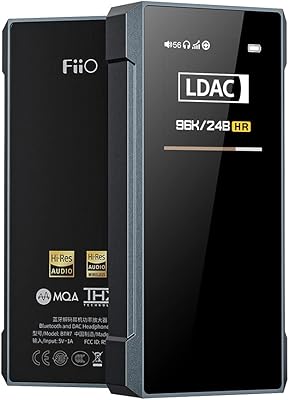
FiiO BTR7
FiiO BTR7
79%
91%
Sound Quality
88%
Build Quality
74%
Bluetooth Stability
93%
Codec Support & Compatibility
89%
USB DAC Performance
More
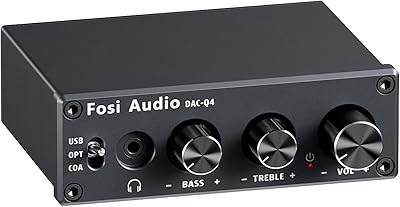
Fosi Audio Q4
Fosi Audio Q4
82%
88%
Audio Quality Improvement
67%
Headphone Driving Power
94%
Ease of Setup
79%
Build Quality
91%
Input Versatility
More
FiiO KA5
FiiO KA5
82%
93%
Audio Quality
91%
Balanced Output Performance
89%
Noise Floor & Interference
92%
IEM Compatibility
88%
Value for Money
More
Schiit Fulla E
Schiit Fulla E
84%
88%
Audio Output Quality
91%
Microphone Quality
93%
Ease of Setup
82%
Noise Floor & Signal Cleanliness
78%
Build Quality & Durability
More
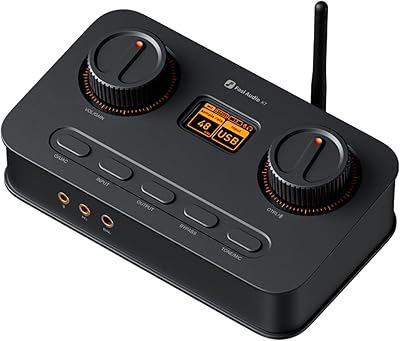
Fosi Audio K7
Fosi Audio K7
84%
91%
Build Quality
88%
Sound Quality
87%
Amplifier Power
93%
Connectivity & Inputs
89%
Output Options
More

FAQ

Yes, that's actually one of the main use cases this Bluetooth DAC was designed for. As long as your receiver has RCA inputs, you can run the gold-plated RCA outputs straight into it and stream from your phone over Bluetooth. No need to replace the whole stereo just to add wireless playback.

It does support LDAC, but you'll need a source device that also supports it, since LDAC has to be enabled on both ends. Most newer Android phones support LDAC natively, while iPhones typically max out at AAC. If your phone doesn't support LDAC, the adapter will fall back to aptX or AAC automatically.

Yes, simply plug it into your laptop or PC over USB and it works as a 24-bit/96kHz DAC without installing any drivers. This is handy if you want cleaner audio output to powered speakers or headphones than your laptop's built-in jack provides. You can switch between USB and Bluetooth modes depending on what you're doing.

No, this only supports one-to-one pairing, so it connects to a single source device at a time. If you want to switch from your phone to your laptop, you'll need to re-pair or reconnect manually. It's worth knowing this upfront if you were hoping for multipoint Bluetooth.

Yes, as long as your TV has an optical audio output, you can run that into the optical input on this adapter and then stream the sound wirelessly to Bluetooth headphones or speakers. It supports up to 24-bit/96kHz over optical, so the audio quality holds up well for movies and shows.

It needs to stay powered through the USB-C input using a 5V/1A adapter, since there's no internal battery. This makes sense given it's meant to live behind a stereo or on a desk rather than travel with you. Just plan to keep it connected to a power source during use.

The Slash6 LDAC Bluetooth DAC Headphone Amp is rated for a range of up to 15 meters, or about 50 feet, in open space. Walls, furniture, and other wireless interference will shrink that range somewhat. For most home setups, that's more than enough to walk around a room or two without dropouts.
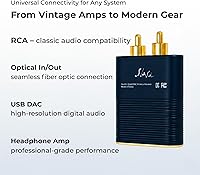
It has a reasonably capable headphone amp built around a quality op-amp, so it handles most consumer and prosumer wired headphones well. It's not a dedicated high-power desktop amp meant for very high-impedance studio cans, but for typical home listening it delivers solid detail and volume. If you're running something unusually demanding, results may vary.

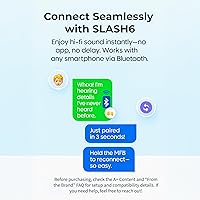
No special software is required. Bluetooth pairing works the same way as any other Bluetooth device, and the USB DAC function is plug-and-play on both Windows and Mac without driver downloads. The included manual walks through the basic setup steps if needed.

The price reflects the hi-res codec support, the quality of the internal DAC and op-amp, and the fact that it does three jobs in one box: Bluetooth receiver, USB DAC, and headphone amp. If you only need basic background-music streaming, a cheaper adapter might suffice, but this is built for people who actually care about sound quality.