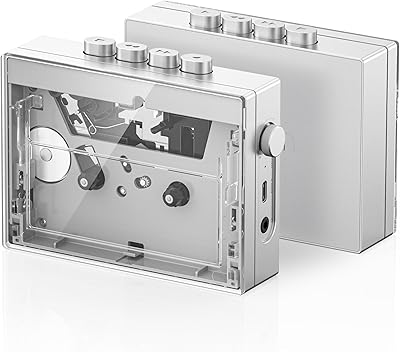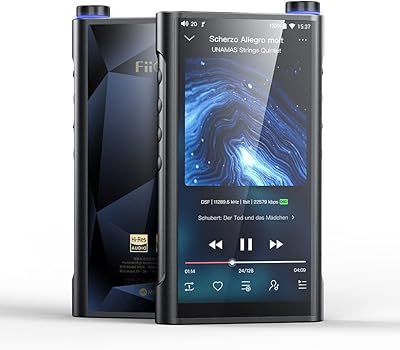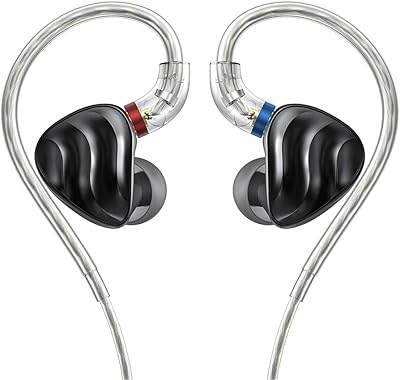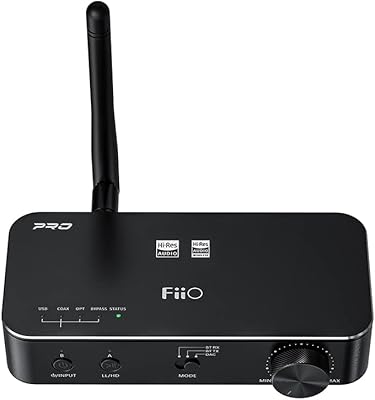


Overview

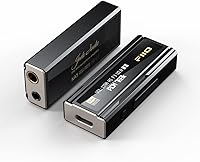
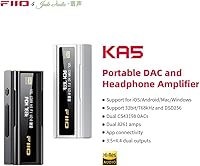
The FiiO KA5 sits in an interesting spot — it's not a budget throwaway dongle, but it doesn't ask you to clear desk space for a full amp stack either. Plug it into your phone or laptop via USB-C, and you get a real, capable listening experience without the bulk. What makes it stand out is the dual output design: a 3.5mm jack for everyday use and a 4.4mm balanced port for when you want to push your headphones harder. No battery to charge, no drivers to wrestle with on most platforms. For anyone whose built-in audio feels like an obvious weak link, this USB DAC makes a genuinely compelling case for the upgrade.

Features & Benefits

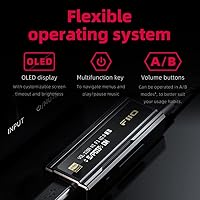
The spec sheet looks impressive, but what matters in practice is how the KA5 dongle actually performs. The 4.4mm balanced output pushes over 265mW per channel — plenty of headroom for harder-to-drive headphones that would barely wake up on a phone's headphone jack. The single-ended 3.5mm side is no slouch either, with an SNR above 124dB keeping the noise floor nearly inaudible. Output impedance stays under 0.35 ohms, which means sensitive in-ear monitors won't pick up that familiar hiss or tonal shift some dongles introduce. Hi-res support stretches to 768kHz/32bit and DSD256. A touch volume control on the body rounds things out, though its sensitivity is worth being aware of before you pocket it.

Best For

This portable amp earns its place most naturally in the hands of IEM listeners. If you're running sensitive in-ears, the ultra-low output impedance is a real practical advantage — it keeps tonal response accurate rather than letting the DAC color the sound. It's also a strong pick for anyone using a laptop or desktop with noticeably weak onboard audio; the jump in clarity tends to be immediate. Mobile users moving on from basic USB-C dongles will find meaningful headroom here without jumping to a full desktop solution. Gamers and remote workers who monitor audio closely will appreciate how clean and quiet the output stays during long sessions.

User Feedback

Buyer sentiment for this USB DAC skews noticeably positive, with most praise aimed squarely at the balanced output quality relative to what the price tier typically delivers. The included accessory bundle — especially the Lightning cable — gets repeated mentions from iPhone users who appreciate not having to source adapters separately. On the critical side, the touch volume control draws consistent complaints; accidental adjustments happen more often than they should. A handful of users also flag that the unit runs warm after extended listening sessions, though that's not unusual in this category. The plastic build divides opinion — it's clearly functional but doesn't feel substantial in hand. Sound-related complaints, notably, are rare.

Pros

  • The 4.4mm balanced output delivers real power and clarity that basic dongles simply cannot match.
  • Ultra-low output impedance keeps sensitive IEMs sounding accurate and free from tonal coloration.
  • A dead-silent noise floor means even the quietest passages in music come through without background hiss.
  • Hi-res support up to 768kHz/32bit and DSD256 covers every serious lossless format in common use.
  • The included cable bundle — USB-C OTG, Lightning OTG, and USB-A adapter — covers most devices out of the box.
  • Plug-and-play setup on Windows, Mac, and Android means no drivers, no hassle, just audio.
  • The KA5 dongle drives demanding full-size headphones at the balanced output with headroom to spare.
  • Compact enough to carry daily without adding meaningful weight or bulk to a bag.
  • Sound-related complaints from verified buyers are genuinely rare, which says a lot in this category.

Cons

  • The plastic chassis feels noticeably less premium than metal-bodied rivals at a comparable price point.
  • The touch volume control is too easy to trigger accidentally when pocketing or repositioning the dongle.
  • Extended high-volume listening sessions cause the unit to run warm, which some users find uncomfortable.
  • On certain Android devices, brief audio dropouts or recognition delays have been reported during use.
  • The included OTG cables feel thin and show connector wear after several months of daily handling.
  • There is no physical lock or hold function to disable the touch surface during transport.
  • Users on older or non-standard USB hubs occasionally face power negotiation issues that require troubleshooting.

Ratings

The FiiO KA5 has been put through its paces by audiophiles, commuters, and home listeners alike — and our AI-driven scoring system has analyzed verified global buyer reviews, actively filtering out incentivized and bot-generated feedback to surface what real users genuinely think. Scores reflect both where this portable amp punches above its weight and where it falls short of expectations. Strengths and frustrations are represented equally, so you get an honest picture before you buy.

Audio Quality
93%
Users who care about clean, accurate sound consistently single out this USB DAC as a noticeable step up from anything built into a laptop or phone. The balanced output in particular earns strong praise — listeners describe noticeably better separation and detail when switching from single-ended to the 4.4mm connection.
A small number of critical listeners feel the sound signature is slightly analytical or dry compared to pricier dedicated DACs. At high gain with very efficient IEMs, a tiny residual hiss has been noted by a handful of users with particularly sensitive setups.
Balanced Output Performance
91%
The 4.4mm balanced output is the headline reason many buyers choose this dongle over cheaper alternatives, and it delivers. Listeners report that harder-to-drive headphones that struggled on basic dongles come alive with real dynamics and volume headroom to spare.
The benefit is most obvious with full-size headphones and planar IEMs. Users running easy-to-drive earbuds through the balanced port report a smaller perceived improvement, making the upgrade feel less meaningful for that specific use case.
Noise Floor & Interference
89%
The extremely low noise floor is one of the most praised technical aspects. IEM users especially appreciate plugging in and hearing absolute silence between tracks — no hiss, no USB interference buzz, even when connected to a busy laptop port.
A handful of users on certain Android phones have reported occasional brief digital noise when the device wakes from sleep or switches audio streams. This appears device-dependent rather than a universal flaw, but it does come up with enough regularity to mention.
IEM Compatibility
92%
The output impedance staying under 0.35 ohms is a genuine practical win for IEM listeners. Users with multi-driver and balanced-armature in-ears report that the tonal accuracy holds up — no bass bloat or treble shift that lower-spec dongles can introduce.
There is little to criticize here for the target use case. Users running very low-sensitivity dynamic driver IEMs occasionally note they need to push the volume higher than expected, but this is a minor concern rather than a real compatibility issue.
Value for Money
88%
Buyers repeatedly describe a sense of surprise at what this portable amp delivers relative to its price tier. Getting a proper 4.4mm balanced output, hi-res decoding, and a genuinely low noise floor in something this compact feels like a fair deal by most accounts.
Some buyers who stretched their budget to purchase this find themselves wishing the build quality matched the audio performance. When you compare it physically against competitors in a similar range, the plastic housing can make the price feel slightly harder to justify on aesthetics alone.
Build Quality
61%
39%
The dongle is solidly assembled in a practical sense — connectors feel secure, and the unit survives daily bag and pocket use without obvious wear after months of use. It is compact enough to forget it is there, which counts for something.
The plastic chassis is the most consistent complaint outside of sound. Buyers accustomed to the metal housings on competing dongles describe it as feeling lightweight in a hollow rather than portable way. It does not feel fragile, but it does not feel considered either.
Touch Volume Control
58%
42%
Having physical volume adjustment directly on the dongle body is genuinely convenient, especially for desktop users who want quick control without reaching for their keyboard or unlocking their phone. The touch response is fast and accurate when used intentionally.
Accidental volume changes are a recurring complaint. Sliding the dongle into a pocket, repositioning it on a desk, or simply handling the cable can trigger the touch surface. Several users have been caught off guard by sudden volume jumps, which is a real daily-use frustration.
Portability & Size
86%
At just under 2.2 inches long and weighing under 4 ounces, this USB DAC genuinely disappears into a bag or pocket. Users who commute or work across different spaces mention it being easy to keep attached to a keychain or tucked in a case without adding noticeable bulk.
The dongle form factor means it adds a short tail to whatever device it is plugged into. On phones used while walking, this dangling setup can feel slightly precarious, and a few users mention the USB-C connection feeling vulnerable to sideways stress over time.
Heat Management
67%
33%
For typical listening sessions of under an hour, most users report no heat issues whatsoever. The unit handles standard playback at moderate volumes without becoming uncomfortable to touch, which is reasonable performance for a fanless device drawing power from USB.
Extended high-volume sessions — particularly through the balanced output — cause the unit to run noticeably warm. It never reaches concerning temperatures by any account, but users who keep it running for several hours continuously find it warmer than they expected from something this small.
Device Compatibility
84%
The included cable kit covers a wide range of devices out of the box. iPhone users particularly appreciate the bundled Lightning OTG cable, which eliminates the need to buy a separate adapter. Android and desktop compatibility is essentially plug-and-play in most cases.
A small number of users on older Android devices or certain USB hubs have encountered power negotiation issues where the device is not recognized immediately or cuts out intermittently. These cases appear edge-case rather than common, but they do exist and can be frustrating to diagnose.
Hi-Res Audio Support
87%
Support for 768kHz/32bit PCM and DSD256 decoding is well above what you typically find in this portable segment. Users who maintain hi-res local libraries or subscribe to lossless streaming tiers report the formats play back without issues or resampling artifacts.
Whether most listeners can perceive the difference between standard hi-res and the highest supported formats is genuinely debatable, and some technically minded buyers acknowledge the upper-limit specs are more reassuring on paper than transformative in everyday listening.
Accessory Bundle
82%
18%
The box contents are notably generous. Alongside the main unit, buyers receive a USB-A to USB-C adapter, a USB-C OTG cable, and a Lightning OTG cable — a practical set that covers most real-world connection scenarios without requiring a separate purchase.
The included cables are functional but not particularly durable. A few users report the OTG cables feeling thin and cheap relative to the main unit, with some experiencing wear at the connector end after several months of regular use.
Setup & Ease of Use
91%
Plug-and-play behavior on Windows, Mac, and most Android devices means there is genuinely no learning curve. Most users describe going from unboxed to listening in under two minutes, which matters when you just want to hear your music rather than troubleshoot drivers.
iOS users occasionally encounter a small setup friction point where the Lightning connection requires enabling the correct audio output in settings, which is not always intuitive for first-time DAC users. This is an Apple platform limitation more than a product flaw, but it does generate some initial confusion.

Suitable for:

The FiiO KA5 is a strong match for anyone who takes their listening seriously but does not want to commit to a full desktop audio setup. IEM enthusiasts in particular stand to gain the most — the ultra-low output impedance keeps tonal accuracy intact with multi-driver and balanced-armature in-ears that can sound noticeably off through lesser sources. If you are a laptop or desktop user whose onboard audio card feels like the obvious weak link in an otherwise capable setup, plugging this USB DAC in is one of the most immediate upgrades you can make. Mobile listeners who have already outgrown basic USB-C dongles but find dedicated desktop amps impractical will hit a real sweet spot here, especially since the bundled Lightning and OTG cables mean it works across phones, tablets, and computers without extra shopping. Gamers and remote workers who monitor audio closely will also find the clean, quiet output well-suited to long sessions where fatigue and background noise matter.

Not suitable for:

Buyers primarily focused on build quality and premium feel may find themselves disappointed by the FiiO KA5, as the plastic housing simply does not communicate the same craftsmanship as metal-bodied competitors in a similar price range. If aesthetics and materials are a significant part of your purchasing decision, it is worth handling competing options before committing. Users who tend to have their dongle loose in a pocket while listening should also consider whether the touch-sensitive volume control will cause frustration — accidental adjustments are a documented and recurring complaint that affects the everyday experience regardless of sound quality. Anyone expecting to run the balanced output at high volumes for hours on end will notice the unit running warm, which may be a concern for the cautious. Finally, listeners who rely on wireless audio or primarily use Bluetooth headphones will find no use for this wired-only device.

Specifications

  • Outputs: Dual headphone outputs: 3.5mm single-ended and 4.4mm balanced, both accessible simultaneously.
  • Output Power: Delivers 122mW+122mW at 32 ohms single-ended and 265mW+265mW at 32 ohms balanced (THD+N under 1%).
  • Output Impedance: Under 0.3 ohms on the single-ended output and under 0.35 ohms on the balanced output with a 32 ohm load.
  • SNR: Signal-to-noise ratio exceeds 124dB on the single-ended output and 128dB on the balanced output, both A-weighted at 32 ohms.
  • Noise Floor: Measured below 1.6μV A-weighted on the single-ended output and below 1.8μV A-weighted on the balanced output.
  • THD+N: Total harmonic distortion plus noise measures under 0.00037% at 1kHz into 32 ohms on both output configurations.
  • PCM Support: Supports PCM audio up to 768kHz at 32-bit depth for hi-res lossless playback from compatible sources.
  • DSD Support: Native DSD decoding up to DSD256 is supported over USB for compatible players and apps.
  • Connection: USB-C input powers the device and carries the digital audio signal; no internal battery is required or included.
  • Volume Control: Touch-sensitive strip on the device body allows direct volume adjustment without accessing the source device.
  • Dimensions: The unit measures 2.11 x 0.87 x 0.47 inches, making it one of the more compact dongles in its output class.
  • Weight: Weighs 3.84 ounces (approximately 0.11 kilograms), light enough for daily carry without noticeable bulk.
  • Housing Material: Outer shell is constructed from plastic, finished in black with a utilitarian rather than premium aesthetic.
  • Included Cables: Box includes a USB-C to USB-C OTG cable, a USB-C to Lightning OTG cable, and a USB-A to USB-C female adapter.
  • Compatibility: Works with Android smartphones, iPhones via Lightning adapter, Windows PCs, and macOS computers without additional drivers on most systems.
  • Gain Control: Supports selectable gain settings to optimize output level for both sensitive IEMs and harder-to-drive full-size headphones.
  • Available Since: First became available for purchase in March 2023, positioning it as a relatively recent release in FiiO's dongle lineup.

Related Reviews
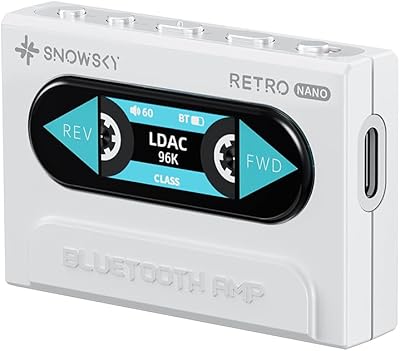
FiiO RETRO NANO
FiiO RETRO NANO
87%
94%
Sound Clarity
91%
Balanced Output
88%
Bluetooth Connectivity
90%
Wired Performance
83%
Battery Life
More
FiiO M15S Music Player
85%
95%
Audio Quality
91%
Battery Life
67%
Portability
89%
Build Quality
93%
Streaming Support
More
FiiO FH3 HiFi Earphones
84%
91%
Sound Quality
89%
Bass Performance
88%
Comfort for Long Listening Sessions
85%
Build Quality
60%
Cable Durability
More
FiiO CP13 Cassette Player
90%
94%
Audio Quality
91%
Build Durability
96%
Battery Life
88%
Portability
89%
Ease of Use
More
FiiO BTR13 Bluetooth Headphone Amplifier
85%
93%
Sound Quality
88%
Portability
85%
Bluetooth Connectivity
75%
App & EQ Features
82%
Battery Life
More
FiiO BTR3K
FiiO BTR3K
80%
88%
Sound Quality
91%
Balanced Output Performance
86%
Bluetooth Codec Support
72%
Connection Stability
93%
Portability & Form Factor
More
FiiO BTA30Pro Bluetooth Receiver/Transmitter
84%
94%
Audio Quality
80%
Setup & Installation
88%
Bluetooth Range & Connectivity
85%
Portability & Design
86%
Build Quality
More
FiiO BTR17
FiiO BTR17
81%
93%
Sound Quality
91%
Amplifier Power & Output
88%
Bluetooth Codec Support
89%
Versatility & Multi-Mode Operation
79%
Parametric EQ & App Control
More
FiiO K7
FiiO K7
84%
93%
Sound Transparency
91%
Amplifier Power
89%
Connectivity & Inputs
92%
Value for Money
78%
Build Quality
More
FiiO BTR7
FiiO BTR7
79%
91%
Sound Quality
88%
Build Quality
74%
Bluetooth Stability
93%
Codec Support & Compatibility
89%
USB DAC Performance
More

FAQ

Yes, it works with iPhones, and the box actually includes a USB-C to Lightning OTG cable so you can connect it directly. You do not need to buy any additional adapter. Just make sure your iPhone is running a reasonably current version of iOS for stable audio output recognition.

The 3.5mm jack is single-ended, which is perfectly good for everyday listening. The 4.4mm balanced output runs a different circuit that provides more than double the power output and typically results in better channel separation and a slightly lower noise floor. If your headphones or IEMs have a 4.4mm cable, it is worth using — the difference is audible on more demanding gear.

Almost certainly yes. The output impedance stays under 0.35 ohms, which is low enough to avoid the tonal coloring that higher-impedance sources can introduce on multi-driver IEMs. The noise floor is also exceptionally quiet, so background hiss is not a concern under normal conditions.

In most cases, no. The FiiO KA5 is recognized as a standard USB audio device on Windows 10 and 11 and on macOS without any additional software. For bit-perfect or exclusive mode playback on Windows, you may want to install WASAPI-compatible drivers, but for everyday use it is genuinely plug-and-play.

Not directly — since it draws power from the USB-C port, you cannot simultaneously charge your phone and use the dongle through the same connection on most phones. Some users get around this with a USB-C hub that supports simultaneous data and charging, but that setup varies by device and hub quality.

Unfortunately, there is no dedicated hold or lock function built into the touch surface. This is a known and commonly cited limitation. The most practical workaround most users settle on is keeping the dongle clipped to a bag strap or in a small pouch rather than loose in a pocket.

It runs warm during extended use, particularly at higher volumes through the balanced output, but it does not get uncomfortably hot. Most users describe it as noticeably warm to the touch after an hour or more rather than hot. It is a passive device with no cooling, so some heat generation is expected and not a defect.

It depends on the specific headphones. For moderately efficient planars, the balanced output at 265mW per channel into 32 ohms provides enough drive for a satisfying listening experience. For very inefficient flagship planars that typically require a dedicated desktop amp, this portable unit may not reach the full potential of those headphones.

The plastic housing is functional and solidly assembled, but it does not feel luxurious. If you are coming from a metal-bodied dongle or comparing it to pricier units, the chassis will feel noticeably lighter and less substantial. It holds up well to daily use, but managing expectations on feel is fair before you buy.

This portable amp handles a wide range of formats beyond compressed audio. PCM playback goes all the way up to 768kHz at 32-bit depth, and it supports native DSD decoding up to DSD256. That covers FLAC, WAV, AIFF, and high-resolution DSD files used by serious lossless listeners and audiophile streaming services.