


Overview

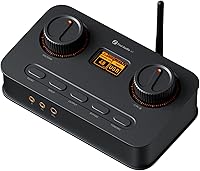
The Fosi Audio K7 arrived in April 2025 and shot straight to the top of Amazon's headphone amp rankings — a fast rise that reflects real demand rather than marketing noise. It sits in an interesting spot: more capable than a USB dongle, more affordable than proper separates, and built like neither. The all-metal aluminum chassis feels solid without being heavy, and the angled design with dual large control knobs gives it a deliberate, desk-worthy presence that plasticky rivals simply can't match. That real-time status display is a small touch, but it makes daily operation feel considered rather than tacked on.

Features & Benefits

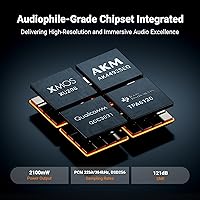
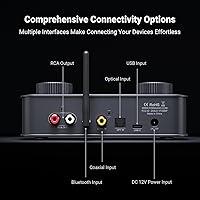
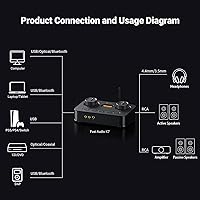
At its core, the K7 runs the AK4493S DAC chip — not AKM's flagship, but a capable mid-tier performer that handles hi-res audio up to PCM 384kHz/32-bit and DSD256 without strain. The TPA6120 amp stage pushes up to 2100mW, which translates to real headroom for demanding headphones like the Sennheiser HD 650 or HiFiMAN HE400se. What really sets this desktop DAC amp apart is the input roster: USB-C, optical, coaxial, Bluetooth with aptX HD and low-latency aptX LL, plus a 3.5mm mic jack. On the output side, 4.4mm balanced and RCA together let it anchor an entire desktop audio chain, not just a headphone setup.

Best For

Fosi Audio's desktop hub makes the most sense for people tired of juggling multiple devices on a crowded desk. If you run a gaming or home-office setup where a microphone input alongside quality headphone output actually matters, very few competitors at this price offer that combination in one box. Bluetooth aptX LL support makes it a reasonable pick for low-latency wireless listening during video playback. It also rewards those stepping up from a USB dongle with high-impedance headphones — think 150 to 300 ohm dynamics — where the amp's output power becomes audible rather than theoretical, and RCA outputs extend its usefulness to powered desktop speakers.

User Feedback

Buyers consistently praise the build quality and display, noting that the control knobs have a satisfying, weighted feel uncommon at this price point. The balanced output earns positive mentions for sounding noticeably cleaner than single-ended, particularly with sensitive headphones. On the critical side, some users report a faint noise floor at very low volume levels, and Bluetooth pairing has caused occasional frustration for a small number of reviewers. The mic input — a rare inclusion at this tier — gets mixed reactions: functional for calls and basic recording, but not a substitute for a dedicated audio interface. Against rivals like the FiiO K7 or Topping DX3 Pro+, most buyers see this unit offering broader connectivity at a slight trade-off in outright sonic refinement.

Pros

  • Solid all-aluminum chassis feels genuinely premium compared to plastic-bodied rivals at the same price.
  • Drives demanding 150–300 ohm headphones with headroom to spare — no underpowered whisper at max volume.
  • The input lineup — USB-C, optical, coaxial, Bluetooth, and a mic jack — is unusually complete for this price tier.
  • aptX LL Bluetooth cuts lip-sync delay noticeably during video playback, a real-world benefit most competitors skip.
  • 4.4mm balanced output and RCA line-out let it anchor a full desktop system, not just a headphone rig.
  • Built-in treble and bass controls offer practical tone-shaping without needing third-party EQ software running in the background.
  • The angled chassis and real-time display make source-switching and volume adjustment genuinely intuitive during a busy workday.
  • Hi-res decoding up to PCM 384kHz/32-bit and DSD256 covers every major file format without compatibility headaches.
  • The K7 consolidates what used to require two or three separate boxes into one compact, desk-worthy unit.

Cons

  • Bluetooth multi-device switching is clunky and can require re-pairing after source changes.
  • Faint background hiss at low gain settings makes it a questionable pairing for sensitive in-ear monitors.
  • Driver setup on older Windows systems and after OS updates has caused dropouts that required community forum troubleshooting.
  • The mic preamp is too limited for recording or streaming — strictly a convenience feature for casual voice calls.
  • Display brightness is not adjustable, which can be distracting in a darkened room or late-night listening setup.
  • Shortcut button functions change with press duration, leading to occasional misfires during the learning period.
  • The external power brick adds cable clutter that buyers with tight desk management will need to plan around.
  • Balanced output improvement over single-ended is audible but subtle with lower-impedance headphones, less transformative than some expect.

Ratings

Our scores for the Fosi Audio K7 are generated by AI after analyzing thousands of verified buyer reviews from global markets, with spam, bot-submitted, and incentivized feedback actively filtered out. The result is an honest, data-driven picture of where this desktop DAC amp genuinely excels and where real users have run into friction. Both the strengths and the sticking points are reflected transparently below.

Build Quality
91%
The all-aluminum chassis earns consistent praise from users who have owned cheaper plastic-bodied DAC amps and felt the immediate difference. The weight and rigidity feel appropriate for a desk anchor, and the metallic finish holds up well to daily knob-turning and cable swapping without showing wear.
A small number of buyers noted minor cosmetic inconsistencies out of the box, such as slight unevenness around port cutouts. Nothing structural, but noticeable to detail-oriented users who inspect their gear closely before first use.
Sound Quality
88%
Users upgrading from USB dongles or onboard audio report a meaningful improvement in clarity and soundstage, especially with mid-to-high impedance headphones. The AK4493S chip delivers a clean, neutral-leaning presentation that works well across genres without fatigue during long listening sessions.
Experienced audiophiles comparing the K7 to units using higher-tier AKM or ESS chips notice a slight ceiling in micro-detail retrieval. It is a capable performer at its price tier, but buyers expecting flagship-level resolution may find the presentation a touch soft in critical listening scenarios.
Amplifier Power
87%
The 2100mW output figure translates well in practice. Users driving demanding headphones like the Sennheiser HD 6XX or HiFiMAN Sundara report ample headroom with volume to spare, rarely pushing the dial past the halfway point even with harder-to-drive planars.
At very low gain settings with sensitive in-ear monitors, a handful of users detected a faint background hiss. It is not an issue for full-size headphones, but IEM users who plan to use the K7 as their daily driver should factor this in before purchasing.
Connectivity & Inputs
93%
Few desktop DAC amps at this price bracket offer this range of inputs in one unit. Buyers appreciate being able to switch between a PC via USB-C, a TV or console via optical, and a phone via Bluetooth without touching cables. The aptX LL support is a genuine bonus for low-latency video watching.
Bluetooth pairing caused occasional frustration for a small subset of users, particularly when switching between multiple paired devices. The process is not as intuitive as on dedicated Bluetooth receivers, and a couple of reviewers reported needing to re-pair after firmware interactions.
Output Options
89%
Having both a 4.4mm balanced output and RCA line-out on a single unit gives this desktop hub unusual versatility. Users building a full desktop system can connect headphones and powered monitors simultaneously, which removes the need for a separate passive preamp in many common setups.
The balanced output improvement over single-ended is real but context-dependent. Some users expected a dramatic difference and found the gain more subtle than anticipated, especially with lower-impedance headphones where the gap between balanced and unbalanced narrows considerably.
Microphone Input
71%
29%
The 3.5mm mic input is a genuine differentiator that most DAC amps at this price skip entirely. Work-from-home buyers and gamers appreciated being able to consolidate their desk setup, connecting a headset and avoiding a separate audio interface for calls and voice chat.
Users with any serious recording or streaming expectations found the mic preamp underwhelming. Gain is limited and background noise becomes audible with lower-sensitivity microphones, making it a convenience feature for casual use rather than a replacement for a proper interface.
Bluetooth Performance
74%
26%
aptX HD support provides noticeably better wireless audio quality than standard SBC Bluetooth, and the aptX LL mode is genuinely useful for cutting lip-sync delay when streaming video from a phone or tablet. Casual listeners found the wireless mode convenient and surprisingly clean-sounding.
The Bluetooth connection range is average rather than impressive, with some users experiencing dropouts beyond a normal desk distance. Multi-device switching is clunky compared to modern dedicated wireless receivers, which is a minor but real annoyance for users who regularly rotate between source devices.
Display & Interface
86%
The real-time status display is one of those features that sounds minor but genuinely improves daily use. Users can confirm the active input, sample rate, and volume level at a glance, which matters when switching between sources throughout a workday without having to guess the current state.
A few buyers felt the display brightness was fixed rather than adjustable, which made it slightly distracting in darker room environments. The information density is good, but the font size drew mild criticism from users who keep the unit at the back of a deep desk.
Ease of Use
84%
The dual large knobs and five dedicated shortcut buttons make source switching and volume control genuinely tactile and immediate. Most users reported getting comfortable with the interface within minutes, with no manual required for everyday operation.
The five shortcut buttons handle multiple functions depending on press duration, which causes occasional misfires for new users still learning the combinations. The learning curve is short but not quite zero, and the button labels are small enough to require reading the manual at least once.
Hi-Res Audio Support
88%
Support for PCM 384kHz/32-bit and DSD256 covers virtually every hi-res file format a buyer is likely to encounter. Users who stream from Tidal or manage local FLAC libraries confirmed stable decoding without dropouts or compatibility issues across Windows and Mac.
DSD playback on some Mac systems required manual driver adjustments that less technical buyers found frustrating. The XMOS XU208 processor is reliable, but driver setup is not as plug-and-play as some competing units, particularly for users less comfortable with audio software configuration.
Value for Money
83%
Buyers who compared the feature list against rivals like the FiiO K7 or Topping DX3 Pro+ consistently felt this unit offered more input and output options per dollar. The aluminum build at this price is hard to argue against, and most users felt they received more than they expected.
Competitors from Topping and SMSL offer marginally better measured audio performance at similar prices, which matters to measurement-focused buyers. Users who prioritize raw sonic benchmarks over connectivity breadth may find those alternatives worth considering before committing.
Treble & Bass Control
79%
21%
Having onboard tone controls is an uncommon and practical addition that many users genuinely engaged with rather than leaving flat. Buyers who enjoy a warmer low end for late-night listening or a brighter top end for detail-heavy tracks appreciated not needing a separate EQ application running in the background.
The tone controls operate in relatively coarse increments, which limits fine-tuning compared to parametric EQ software. A segment of audiophile users felt the implementation was more useful as a broad compensation tool than a precision adjustment, and preferred to bypass it entirely for critical listening.
Ergonomics & Desk Presence
85%
The angled chassis is a thoughtful design choice that positions the display and controls toward the user naturally. Buyers with deep desks appreciated that the angle made knob access comfortable without needing to lean forward, and the compact footprint left room for other peripherals.
At just under 2.5 pounds and a moderate footprint, some users on smaller desks found it slightly larger than expected based on product photos. The power brick is external and adds cable management consideration, which a few reviewers flagged as a minor but real desktop clutter issue.
Driver & Software Compatibility
72%
28%
Windows users on modern builds generally reported a smooth setup experience with the XMOS driver, and USB Audio Class 2 compatibility means it works without any driver installation on many systems. Mac and Linux users with newer OS versions also found it functional out of the box for basic use.
A recurring thread in user feedback involves driver conflicts on older Windows systems and occasional dropouts after OS updates. Fosi Audio's driver support response time drew mixed reviews, and a portion of buyers had to troubleshoot independently through community forums rather than official channels.

Suitable for:

The Fosi Audio K7 is a strong match for hybrid workers and gamers who are tired of managing separate devices for headphone output, microphone input, and speaker connectivity on a single desk. If you own a pair of mid-to-high impedance headphones — think a Sennheiser HD 650, Beyerdynamic DT 990 Pro, or a planar like the HiFiMAN HE400se — this desktop DAC amp has the output power to actually drive them properly, not just get them loud. People building a consolidated desktop audio hub will appreciate the ability to connect a PC via USB-C, a console or TV via optical, and a phone wirelessly via Bluetooth, all without touching cables. The onboard aptX LL support makes it a practical option for anyone who watches a lot of video content wirelessly, since the low-latency codec keeps audio and picture in sync in a way standard Bluetooth cannot. Upgraders coming from a basic USB dongle or a motherboard headphone jack will hear a genuine and meaningful improvement, especially in noise floor and channel separation. The all-aluminum build and real-time display also make it a unit you will not be embarrassed to have sitting on your desk.

Not suitable for:

The Fosi Audio K7 is not the right tool for buyers whose primary concern is extracting the absolute best measured audio performance per dollar, rather than feature breadth. Competing units from Topping and SMSL at a similar price point use higher-tier chipsets and score better on objective benchmarks, so if you spend time on audio measurement forums and care deeply about those numbers, the comparison may not favor this unit. Buyers hoping to use the microphone input as a real recording or streaming solution will likely be disappointed — it handles calls and casual voice chat adequately, but it is not a substitute for even an entry-level dedicated audio interface. Those who primarily listen through sensitive in-ear monitors should also be cautious, since a faint noise floor at low gain settings has been reported by IEM users, which can be distracting in quiet tracks. If you have no need for Bluetooth, optical, coaxial, or microphone input and just want the cleanest possible USB DAC amp signal chain, you are partly paying for connectivity you will never use, and a more focused competitor might serve you better.

Specifications

  • DAC Chip: The unit uses an AKM AK4493S digital-to-analog converter, a capable mid-tier chip that supports high-resolution decoding without the cost premium of AKM's flagship lineup.
  • USB Processor: An XMOS XU208 USB processor handles the digital interface, providing stable high-speed USB audio transmission and broad driver compatibility across operating systems.
  • Headphone Amp: The TPA6120 headphone amplifier stage delivers up to 2100mW of output power, sufficient to drive planar magnetic and high-impedance dynamic headphones without strain.
  • Hi-Res Support: Supports PCM decoding up to 384kHz at 32-bit depth and native DSD decoding up to DSD256, covering virtually all hi-res audio formats in common use.
  • Signal-to-Noise: Rated at 121dB SNR or higher, meaning the background noise floor is exceptionally low relative to the audio signal under normal operating conditions.
  • Distortion: Total harmonic distortion is rated below 0.0002%, indicating a very clean amplification path with minimal coloration introduced by the electronics.
  • Headphone Impedance: The amplifier is designed to drive headphones in the 16 to 300 ohm impedance range, covering the majority of consumer and enthusiast headphone models on the market.
  • Inputs: Accepts audio via USB-C, optical (Toslink), coaxial (S/PDIF), Bluetooth with aptX HD and aptX LL codecs, and a 3.5mm microphone jack for headset use.
  • Outputs: Provides a 4.4mm balanced headphone output, a 3.5mm single-ended headphone output, and a stereo RCA line output for connecting powered speakers or external amplifiers.
  • Bluetooth Codecs: Supports aptX HD for higher-quality wireless audio and aptX LL for low-latency wireless playback, reducing audio-to-video sync delay during media consumption.
  • Tone Controls: Includes built-in hardware treble and bass adjustment controls, allowing broad tonal shaping without requiring software equalizer applications on the connected device.
  • Display: A high-resolution real-time status display shows the active input source, current sample rate, volume level, and other operating parameters at a glance.
  • Controls: Features two large rotary control knobs and five dedicated shortcut buttons that handle source switching, gain selection, and other frequently used functions.
  • Chassis Material: The enclosure is machined from solid aluminum alloy, providing structural rigidity, enhanced electromagnetic interference shielding, and a wear-resistant metallic surface finish.
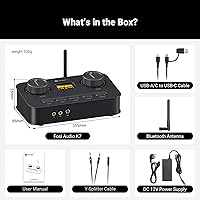
  • Power Supply: Requires an external DC 12V at 2A power supply, which is included in the box; the unit does not draw power from USB alone.
  • Dimensions: Package dimensions measure 11.46 x 8.07 x 3.9 inches, with the unit itself designed in a compact angled desktop form factor intended for typical workstation use.
  • Weight: The unit weighs 2.53 pounds, reflecting the solid aluminum construction while remaining light enough for easy desk repositioning.
  • Availability: First listed for sale in April 2025, making it a recent release with limited long-term reliability data available from extended ownership periods.

Related Reviews
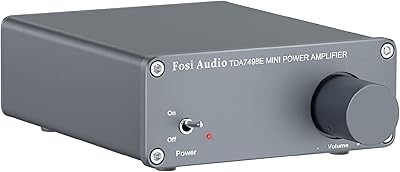
Fosi Audio TDA7498E
Fosi Audio TDA7498E
83%
88%
Sound Quality
93%
Value for Money
71%
Build Quality
74%
Power Output & Headroom
66%
Noise Floor & Background Hiss
More
Fosi Audio BT10A
Fosi Audio BT10A
81%
93%
Value for Money
82%
Sound Quality
91%
Noise Floor
84%
Bluetooth Performance
67%
Power Output
More
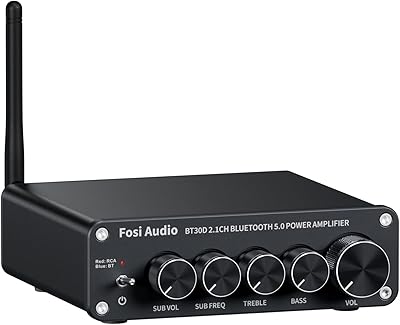
Fosi Audio BT30D
Fosi Audio BT30D
78%
83%
Sound Quality
88%
Subwoofer Performance
81%
Bluetooth Connectivity
91%
Value for Money
62%
Build Quality
More
Fosi Audio V3 Stereo Amplifier
81%
93%
Value for Money
91%
Audio Clarity & Noise Floor
67%
Real-World Power Output
74%
Build Quality & Finish
88%
Thermal Management
More
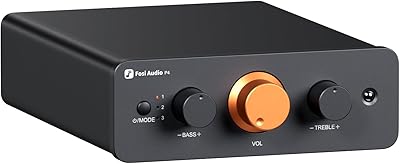
Fosi Audio P4
Fosi Audio P4
81%
88%
Build Quality
84%
Sound Quality
91%
Motorized Volume Control
79%
Remote Control
86%
Input Flexibility
More
Fosi Audio HT4S
Fosi Audio HT4S
80%
88%
Build Quality
84%
Value for Money
76%
Sound Quality
82%
Multi-Channel Versatility
63%
Bluetooth Performance
More
Fosi Audio ZP3 Balanced Preamp
88%
94%
Sound Quality
88%
Ease of Use
90%
Build Quality
87%
Customization Options
75%
Memory Function
More
Fosi Audio SK01 Headphone Amplifier
83%
88%
Sound Quality
72%
Battery Life
91%
Build Quality
85%
Tone Control Flexibility
80%
Portability
More
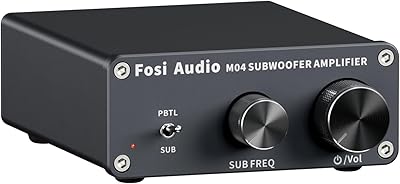
Fosi Audio M04 Subwoofer Amplifier
89%
94%
Bass Performance
91%
Sound Clarity
88%
Build Quality
90%
Ease of Setup
87%
Thermal Management
More
Fosi Audio M03
Fosi Audio M03
81%
91%
Audio Clarity & Distortion
74%
Power Output & Headroom
88%
Versatility & Operating Modes
93%
Value for Money
72%
Build Quality & Enclosure
More

FAQ

In practice, the amp stage handles demanding headphones like the Sennheiser HD 650 or HiFiMAN Sundara comfortably, with usable volume remaining well below the maximum dial position. The 2100mW figure is into a low-impedance load, so output into 300 ohm headphones will be lower, but still more than adequate for normal listening levels.

It works well enough for video calls, voice chat in games, and casual communication, but it is not a replacement for a dedicated audio interface if you have serious recording or streaming needs. The preamp gain is limited, and background noise becomes noticeable with lower-sensitivity microphones at higher gain settings.

The aptX LL codec does make a real difference compared to standard Bluetooth — lip-sync delay is noticeably reduced when streaming video from a phone or tablet. For competitive gaming where every millisecond matters, a wired connection is still preferable, but for casual gaming and media consumption the wireless lag is minimal.

On most modern Windows and Mac systems it initializes without any driver installation via USB Audio Class 2 compatibility. For higher-resolution USB audio on Windows, installing the XMOS driver unlocks the full sample rate range, and that installation is straightforward on current Windows 10 and 11 builds. Older Windows systems have had occasional compatibility issues reported by users.

With sensitive or low-impedance headphones the gap is subtle, but with higher-impedance headphones in quieter listening environments many users do notice a cleaner background and slightly more channel separation through the balanced output. It is not a dramatic transformation, but it is a genuine improvement rather than a purely theoretical one.

Yes, the RCA line output allows you to connect powered monitors or a stereo amplifier simultaneously alongside the headphone outputs. Whether both play at once or you can switch between them depends on your speaker and amplifier setup, but the hardware supports concurrent connection without issue.

The main distinction is connectivity: this unit offers more input options, built-in Bluetooth with aptX LL, a microphone input, and onboard tone controls that neither competitor includes as standard. The Topping and FiiO units edge ahead on raw measured audio performance benchmarks, so if objective specs are your primary metric those are worth a close look, but for a versatile all-in-one desktop hub this unit has a broader feature set.

Yes, connecting via optical or coaxial output from a console works without any configuration needed on the unit itself. USB connection to a PS5 also functions, though console USB audio compatibility can vary slightly by system firmware version, so optical is generally the more reliable path for console use.

A faint noise floor has been reported by a subset of users specifically when using sensitive IEMs at low volume settings. Full-size headphones in the mid-to-high impedance range are generally unaffected, but if IEMs are your primary listening tool it is worth factoring this in before purchasing.

Most pairing issues are resolved by clearing the device memory and re-pairing from scratch, which takes about a minute. Switching between multiple paired Bluetooth devices is not as fluid as on a dedicated wireless receiver, and a small number of users found the process less intuitive than expected, but persistent connection failures are not a widespread complaint.