Overview

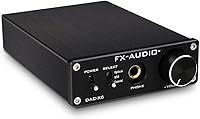
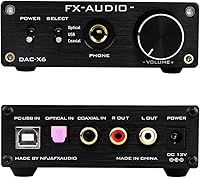
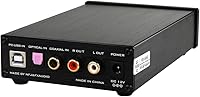
The FX-Audio DAC-X6 is a compact desktop DAC/amp combo aimed at PC and home audio users ready to leave onboard sound behind without spending a fortune. A DAC — short for digital-to-analog converter — translates the digital signal from your computer or TV into clean analog audio your headphones can actually use; combine that with a built-in headphone amplifier and you get meaningfully better clarity and drive. The brushed aluminum chassis is small enough to sit beside a keyboard without issue, yet the internal component stack genuinely exceeds what you would expect at this price tier. Plug it into USB and it works immediately — no drivers needed, no software, no setup headaches.

Features & Benefits

This desktop DAC/amp uses a CS4398 DAC chip paired with a TPA6120A2 headphone amp stage — a combination that holds distortion to 0.001% THD and keeps the noise floor low enough that quiet passages in music actually stay quiet. Three digital inputs — USB Type-B, Toslink optical, and coaxial — switch via a front-panel toggle, making source changes fast and effortless. One important caveat: USB is capped at 24-bit/96kHz, while optical and coaxial reach 24-bit/192kHz, so if high-resolution streaming is central to your setup, that distinction matters. The RCA pre-outs open a path to powered speakers, and the socketed op-amp can be swapped without soldering, giving tinkerers a genuine upgrade route.

Best For

This compact audio stack is best suited to someone buying their first dedicated DAC and amp — particularly if your current headphones fall in the 32Ω to 300Ω impedance range, where the output power curve handles most dynamic drivers well. Gamers and home theater users who need to pull audio from a PC, a console optical out, and a TV simultaneously will find the three-input layout genuinely practical. Desk space tends to be at a premium in those setups, and the unit's footprint is small enough not to become a burden. Hobbyists interested in op-amp rolling will also find it a low-stakes entry point — the hardware is accessible, and the mod community around it is active.

User Feedback

Across close to 1,000 reviews, the rating holds at 4.2 out of 5 — strong for this category. The most consistent praise centers on build quality that feels more substantial than this price tier typically delivers, and owners repeatedly note the jump over onboard audio is immediately obvious. On the downside, two issues surface with enough frequency to warrant attention: some users report channel imbalance at very low volume positions on the potentiometer, while longer-term owners occasionally raise durability questions after sustained daily use. The op-amp rolling community generally reports positive results with third-party substitutes. On balance, the picture is of a dependable unit with a few rough edges most buyers in this segment are prepared to overlook.

Pros

  • Plug-and-play USB setup works instantly on Windows, macOS, and Linux with zero driver installation.
  • Three digital inputs — USB, optical, and coaxial — covered by a single front-panel toggle for fast source switching.
  • Brushed aluminum chassis feels noticeably more solid than other units competing at this price point.
  • The FX-Audio DAC-X6 delivers a clearly audible improvement over typical motherboard or laptop headphone outputs.
  • THD of 0.001% keeps the signal clean enough that background hiss is not an issue during quiet passages.
  • Socketed op-amp can be swapped by hobbyists for an easy, soldering-free sound upgrade.
  • Optical and coaxial inputs support 24-bit/192kHz, giving hi-res headroom when a suitable source is available.
  • RCA pre-outs allow the unit to double as a DAC feeding powered speakers or a separate amplifier.
  • Compact footprint takes up minimal desk real estate while still offering a full complement of connections.

Cons

  • USB input is capped at 24-bit/96kHz — competing units at similar prices now offer 192kHz over USB.
  • Channel imbalance at very low volume positions is a recurring complaint tied to the budget potentiometer.
  • Gain adjustment requires opening the unit and moving an internal jumper, with no clear guidance in the manual.
  • Op-amp swapping voids implied warranty coverage and is not a beginner-friendly modification.
  • The power brick is bulky and can crowd a compact power strip or outlet configuration.
  • Some units ship without rubber feet, causing the chassis to slide on smooth desk surfaces.
  • Optical port fit can be loose with certain third-party Toslink cables, leading to intermittent dropouts.
  • A minority of longer-term owners report switch or headphone output failures within two years of daily use.
  • No analog input means turntables or older analog sources cannot be routed through the amp section.

Ratings

The scores below reflect an AI-driven analysis of verified global buyer reviews for the FX-Audio DAC-X6, with spam, bot-generated, and incentivized submissions actively filtered out before any scoring was applied. Across nearly 1,000 real-world responses — from first-time DAC buyers to experienced hobbyists who swap op-amps for fun — this compact audio stack earns genuine praise in several areas while drawing consistent criticism in a few others. Both sides are represented honestly here, because the goal is to help you decide whether this desktop DAC/amp fits your specific setup, not to sell you on it.

Audio Quality
83%
Most owners describe the jump from motherboard or laptop audio as immediately obvious — wider stereo image, cleaner highs, less background hiss during quiet passages. The CS4398 DAC chip keeps distortion exceptionally low, which shows up most clearly when listening to acoustic recordings or well-mastered tracks at moderate volume.
Compared to units in the next price tier up, the DAC-X6 can sound slightly warm or rolled-off at the very top end, which some listeners appreciate but detail-oriented buyers may find limiting. The stock op-amp leaves a little resolution on the table, and that ceiling becomes more noticeable with higher-end headphones.
Headphone Amplifier Power
79%
21%
At 520mW into 16 ohms and a solid curve down to 165mW at 120 ohms, this compact audio stack handles the vast majority of consumer headphones without straining. Owners regularly report good results with popular 80-ohm and 150-ohm dynamic drivers, where the amp section has enough headroom to avoid compression at higher listening volumes.
Power-hungry planar magnetic headphones and high-impedance dynamic drivers above 300 ohms may not reach their potential here — the output loses authority in that upper impedance range. Users pairing the DAC-X6 with demanding cans like certain Beyerdynamic or Sennheiser models occasionally report needing to push the volume knob further than expected.
Build Quality
81%
19%
The brushed aluminum front panel and solid overall chassis consistently draw compliments from buyers who expected something cheaper-feeling at this price. The volume knob has a satisfying weight to it, and the toggle switches feel deliberate rather than flimsy — a meaningful contrast to fully plastic competitors in the same category.
The rear panel and underside use less premium materials, and a few longer-term owners have noted that the input toggle switch can develop slight wobble after months of daily use. Internal assembly quality is harder to assess, but reports of early failures, while not widespread, do surface occasionally in review threads.
Input Versatility
88%
Three digital inputs — USB, Toslink optical, and coaxial — make this one of the more flexible options in its class. Gamers and home theater users particularly appreciate being able to run a PC via USB and a TV or console via optical simultaneously, switching between them with a front-panel toggle rather than unplugging cables.
There is no analog input, which matters if you want to route a turntable or older audio source through the amp section. The front-panel selector is a three-position toggle rather than a rotary knob, which some users find less intuitive to operate in a dark room or without looking directly at the unit.
USB Audio Resolution
61%
39%
For standard streaming services, gaming audio, and most everyday listening scenarios, the USB input at 24-bit/96kHz is more than adequate. Buyers coming from onboard sound will not feel constrained by this ceiling in typical daily use, and the plug-and-play USB class compatibility means it works across Windows, macOS, and Linux with zero driver installation.
The USB input tops out at 96kHz while the optical and coaxial inputs support 192kHz — and several competitors at a similar price point now offer 192kHz over USB as standard. For listeners who subscribe to hi-res streaming platforms or work with high-sample-rate audio files, this gap is a real limitation that directly influences source selection.
Ease of Setup
93%
Plug the USB cable in and audio routes through the DAC-X6 within seconds on virtually every modern operating system — no driver downloads, no configuration panels, no firmware steps. First-time buyers consistently highlight this as one of the most friction-free hardware upgrades they have made to a PC audio setup.
The gain setting requires physically opening the unit and moving an internal jumper, which is not documented clearly in the included paperwork. New users who want to optimize the amp section for low-impedance or high-impedance headphones may not realize this adjustment exists until they dig into online forums.
Value for Money
84%
For buyers stepping off of onboard audio for the first time, the overall package — solid chipset, multiple inputs, real headphone amplification, and an upgradeable op-amp socket — represents a strong return for the outlay. The hardware inside is genuinely above average for the price bracket, and that lands well with users who research component specs before buying.
The competitive landscape at this price point has tightened considerably in recent years, with alternatives from TOPPING and others now offering 192kHz USB support and MQA compatibility. Buyers who do their homework may feel the DAC-X6 offers slightly less future-proofing per dollar than it once did.
Volume Control Accuracy
62%
38%
Through the mid-range of the volume sweep, the analog potentiometer tracks reasonably well and gives fine-grained control over listening levels. Most users who listen at moderate to higher volumes report no noticeable issues with the knob during day-to-day use.
A recurring complaint across multiple review cohorts involves channel imbalance at very low volume positions — the left and right channels do not track evenly when the knob is turned down near minimum. This is a well-documented trait of budget potentiometers and is particularly frustrating for late-night listeners who prefer quiet background levels.
Op-Amp Upgradability
77%
23%
The socketed LM4562NA op-amp is a genuine differentiator at this price point — experienced users report meaningful improvements in soundstage and transient clarity after rolling in popular alternatives. The mod community around this unit is active, and guidance on compatible substitutes is easy to find in audio hobbyist forums.
Swapping the op-amp requires opening the enclosure, which puts the unit outside standard return or warranty coverage for most buyers. The process is straightforward for anyone comfortable handling electronics, but it adds a layer of risk that cautious first-time buyers should weigh before factoring upgradability into their purchase decision.
RCA Pre-Out Performance
74%
26%
The stereo RCA outputs at 1.8V RMS provide a clean enough signal to drive most active desktop speakers or a separate power amplifier without audible noise or hum in typical setups. Users who want to build a modest desktop speaker system around this unit find the pre-out a practical and welcome inclusion.
The RCA output level cannot be adjusted independently of the headphone volume knob, which creates workflow friction when switching between headphones and speakers during the same session. Some users also note that the pre-out introduces a very faint ground hum when connected to certain amplifier configurations.
Desk Footprint & Design
86%
At roughly 5.9 by 3.9 inches, this desktop DAC/amp occupies minimal space while still projecting a clean, professional look. The brushed aluminum front panel fits naturally into most desk setups — it does not look out of place next to a monitor or alongside more expensive audio gear.
The unit ships without any rubber feet in some batches, meaning it can slide on smooth desk surfaces when cables are tugged. The power brick is also on the bulkier side and can compete for outlet or strip space, which a few users flagged as an overlooked annoyance in smaller workstation setups.
Long-Term Reliability
68%
32%
The majority of buyers who leave reviews after extended ownership report the DAC-X6 functioning without issue after a year or more of daily use. For a unit in this price range, that level of durability feedback is above the category average and suggests the core electronics are reasonably well-built.
A visible minority of reviews mention component failures — most commonly the input selector switch or the headphone output — within the first two years. Support responsiveness from the brand has received mixed feedback, and buyers outside major markets may find warranty claims difficult to pursue practically.
Optical & Coaxial Input Quality
82%
18%
Running a 24-bit/192kHz signal through the optical or coaxial input is where this compact audio stack arguably performs at its ceiling — the CS8416 digital receiver handles high-resolution sources cleanly, and users connecting via Toslink from a TV or game console consistently report a cleaner, fuller sound compared to the USB path.
Optical cables are not included in the box, and the Toslink port on some units has been reported to fit loosely with certain third-party connectors, leading to intermittent signal dropout. It is a minor issue but worth noting for users planning to use optical as their primary input.
Compatibility Range
80%
20%
The DAC-X6 works across Windows, macOS, and most Linux distributions via standard USB audio class drivers, and connects readily to TVs, game consoles, and DVD players through its digital inputs. This breadth makes it a practical hub for mixed-device desks without requiring any software configuration.
DSD native playback support is inconsistently documented and not reliably confirmed across all source devices, which matters to a niche but vocal group of hi-res audio enthusiasts. Buyers with DSD-heavy libraries should verify compatibility with their specific player software before committing.

Suitable for:

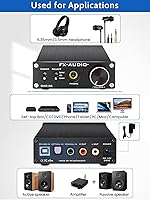
The FX-Audio DAC-X6 is a strong fit for anyone taking their first real step away from onboard PC or laptop audio — the kind of buyer who has decent headphones but suspects their motherboard is holding them back. If your cans fall somewhere in the 32-ohm to 300-ohm range, this desktop DAC/amp has the output power to drive them properly without hitting a wall. It also works well for mixed-source desks: plug your PC into the USB input, run your TV or console via optical, and toggle between them from the front panel without touching a single cable. Gamers and home theater enthusiasts who want a centralized audio hub will find the connectivity genuinely practical. Budget-conscious hobbyists who like the idea of swapping op-amps to tune the sound further down the road will also find this compact audio stack a low-risk entry point into that hobby.

Not suitable for:

The FX-Audio DAC-X6 starts to show its limits for buyers with more demanding requirements. If you rely on USB as your primary source and want to play back 24-bit/192kHz hi-res files natively, you will hit the USB ceiling of 96kHz and need to route through optical or coaxial instead — a workaround that not every setup accommodates. Power-hungry planar magnetic headphones or high-impedance dynamics above 300 ohms may not reach their potential here, and audiophiles who have already owned mid-tier gear are unlikely to find the stock sound stage satisfying without op-amp modifications. Late-night listeners who prefer very low background volumes may also be frustrated by the channel imbalance that appears near the bottom of the volume range — a well-documented trait of the budget potentiometer used. Anyone prioritizing long-term warranty support or expecting robust customer service from the manufacturer should also think carefully, as after-sales responsiveness has been inconsistent across buyer reports.

Specifications

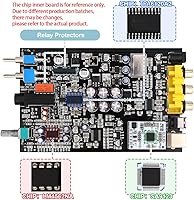
  • DAC Chip: Uses the Cirrus Logic CS4398 digital-to-analog converter, a chip known for low noise and accurate signal reproduction in consumer and prosumer audio equipment.
  • Amp Chip: The headphone amplifier stage is built around the Texas Instruments TPA6120A2, which delivers low distortion and sufficient current to drive a wide range of dynamic headphones.
  • Digital Receiver: The CS8416 from Cirrus Logic handles incoming S/PDIF signals from optical and coaxial sources, supporting sample rates up to 24-bit/192kHz on those inputs.
  • Op-Amp: Ships with a socketed National Semiconductor LM4562NA op-amp that can be physically removed and replaced with compatible alternatives without soldering.
  • Digital Inputs: Accepts three digital sources: USB Type-B from a computer, Toslink optical, and RCA coaxial, selectable via a three-position toggle switch on the front panel.
  • Headphone Output: A single 6.35mm (quarter-inch) headphone jack on the front panel supports dynamic headphones with impedance between 32Ω and 600Ω.
  • Output Power: Delivers 520mW into 16Ω, 450mW into 32Ω, 250mW into 64Ω, and 165mW into 120Ω, providing enough drive for most consumer headphones at this impedance range.
  • Line Output: Stereo RCA pre-outputs deliver a fixed 1.8V RMS line-level signal suitable for feeding powered speakers or a separate power amplifier.
  • USB Resolution: The USB input supports up to 24-bit/96kHz audio and operates as a USB Audio Class device, requiring no driver installation on Windows, macOS, or Linux.
  • Optical & Coaxial: Both the Toslink optical and RCA coaxial inputs support sample rates up to 24-bit/192kHz, enabling full hi-res playback when connected to a compatible source.
  • Signal-to-Noise: Rated SNR of 105dB means the background noise floor is low enough to remain inaudible during typical listening sessions with most headphones.
  • Distortion: Total harmonic distortion is specified at 0.001% THD, indicating a very clean signal path with minimal audible coloration introduced by the electronics.
  • Frequency Response: Covers 20Hz to 20kHz within ±3dB, spanning the full range of human hearing without significant roll-off at either end.
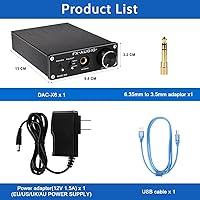
  • Power Supply: Requires a DC 12V supply via a center-positive barrel connector; an AC 100–240V adapter with an output of 1A to 3A is included in the box.
  • Dimensions: Measures 5.91 × 3.86 × 1.26 inches (approximately 150 × 98 × 32mm), making it compact enough to sit comfortably on most desks without dominating the surface.
  • Weight: Weighs approximately 1.1 lb (500g) without the power adapter, giving it a solid feel without being cumbersome to reposition.
  • Front Panel: Brushed aluminum front face features a large analog volume potentiometer, a power toggle switch, and a three-way input selector toggle.
  • Relay Protection: An onboard relay circuit is included to protect connected headphones and speakers from DC offset or transient spikes during power-on and power-off sequences.

Related Reviews
Fosi Audio Q4
Fosi Audio Q4
82%
88%
Audio Quality Improvement
67%
Headphone Driving Power
94%
Ease of Setup
79%
Build Quality
91%
Input Versatility
More
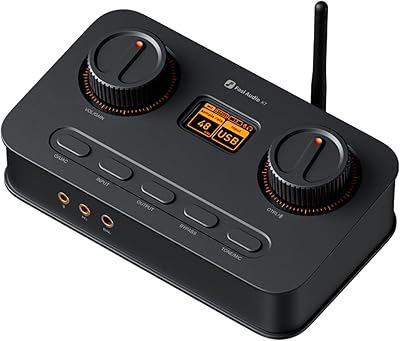
Fosi Audio K7
Fosi Audio K7
84%
91%
Build Quality
88%
Sound Quality
87%
Amplifier Power
93%
Connectivity & Inputs
89%
Output Options
More
Universal Audio Apollo x6 Heritage Edition
89%
95%
Audio Quality
92%
HEXA Core Processing Performance
94%
Preamp Emulations
89%
Compatibility with DAWs
88%
Software Bundle (UAD Plug-ins)
More
Fosi Audio ZD3
Fosi Audio ZD3
82%
91%
Sound Quality
88%
Build Quality
83%
HDMI ARC Performance
93%
Connectivity & Input Range
67%
Bluetooth Performance
More
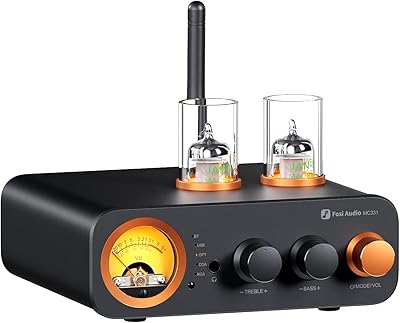
Fosi Audio MC331
Fosi Audio MC331
79%
83%
Sound Character
77%
Build Quality
91%
Feature Set
88%
Value for Money
89%
VU Meter & Aesthetics
More
SMSL DL200
SMSL DL200
84%
93%
Audio Performance
88%
Headphone Amplifier Quality
96%
DAC Chip & Measurements
91%
Connectivity & Input Options
89%
Balanced Output Implementation
More
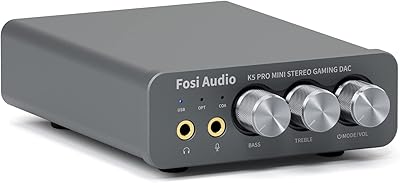
Fosi Audio K5 Pro
Fosi Audio K5 Pro
80%
88%
Sound Quality Improvement
91%
Value for Money
67%
Build Quality & Feel
83%
Headphone Amplifier Performance
86%
Input Versatility
More
Rockville X6.5C 6.5″ Competition Car Audio Speakers
84%
91%
Sound Quality
88%
Build Quality
72%
Ease of Installation
94%
Performance at High Volumes
90%
Durability
More
iFi Audio Go Link Max
84%
91%
Sound Quality
89%
Balanced Output Performance
93%
Portability & Form Factor
86%
Build Quality
92%
Hi-Res Audio Support
More
Cambridge Audio CXN100 Network Audio Player
86%
94%
Sound Quality
88%
Multiroom Compatibility
85%
Ease of Use
90%
Connectivity Options
92%
Build Quality
More

FAQ

No — the FX-Audio DAC-X6 is recognized as a standard USB audio device by Windows, macOS, and most Linux distributions without any driver downloads. Just plug the USB cable in, set it as your default playback device in your system audio settings, and you are done.

Yes, 250-ohm dynamic headphones fall well within the supported impedance range and are actually close to the sweet spot for this amp section. You will have more than enough volume and the unit will not struggle to control the drivers, which means you get a cleaner, more dynamic sound than most onboard audio can deliver at that impedance.

Absolutely — most modern TVs have a Toslink optical output, and the DAC/amp accepts that signal directly. Run a Toslink cable from your TV to the optical input, flip the front-panel toggle to optical, and your TV audio routes through the unit to your headphones or powered speakers via the RCA outputs. Just note that you will need to supply your own optical cable, as one is not included.

The USB input tops out at 24-bit/96kHz, which covers the vast majority of streaming and file-based content. If you specifically want to play 24-bit/192kHz files, you would need to connect via the optical or coaxial input instead — both of those support the full 192kHz sample rate. It is worth knowing upfront if hi-res playback over USB is important to your setup.

Most likely not a defect specific to your unit. A known characteristic of the budget analog potentiometer used here is that the left and right channels do not track perfectly at very low rotation — meaning one side can appear slightly louder than the other when the knob is barely turned up. Once you move past the first 10 to 15 percent of the volume range, the channels typically balance out. It is a common limitation of inexpensive potentiometers rather than a fault in the audio circuitry.

The RCA pre-outputs and the headphone jack are active simultaneously, so you can have powered speakers connected to the RCA outputs and headphones plugged into the front jack at the same time. Keep in mind that the volume knob controls both outputs together, so you cannot independently set different levels for speakers and headphones — you would need to unplug one or manage levels at the speaker amplifier instead.

Op-amp rolling means swapping the socketed amplifier chip for a different compatible one — people do it to subtly change the character of the sound, typically aiming for more detail, a wider soundstage, or a warmer tone. The DAC/amp ships with an LM4562NA, which is a solid baseline, but enthusiasts commonly try alternatives like the OPA2134 or OPA2604. It does require opening the case, which voids any implied warranty coverage, so if the idea of cracking open the chassis makes you uncomfortable, the stock configuration is perfectly respectable on its own.

Yes — both the PS5 and recent Xbox consoles output audio via optical when you configure the console audio settings accordingly. Connect a Toslink cable from the console to this compact audio stack, switch to the optical input, and you will get clean digital audio through your headphones or speakers without needing a headset adapter.

The included AC adapter accepts 100 to 240 volts at 50 or 60 Hz, which covers virtually every standard wall outlet worldwide. You may need a plug shape adapter depending on your country, but you should not need a separate voltage converter.

Most owners find it holds together well for at least a year or two of regular desk use — the aluminum front panel stays looking clean and the volume knob remains smooth. A smaller proportion of buyers, particularly those using it heavily across multiple daily sessions, have reported input selector switch wear or headphone output issues over time. It is honest to say this is not built to the standard of a unit costing three or four times more, but for what it costs, the hardware durability is generally above average for the category.