Overview

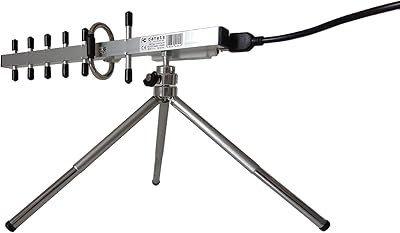
The Sirio SY27-3 3-Element Yagi Antenna is a directional base station antenna from Sirio Antenne, an Italian manufacturer with a solid reputation in the HF and CB antenna space. Covering 26.5 to 30 MHz, it realistically serves CB operators on 27 MHz, freebanders, and licensed amateur radio operators on the 10-meter band. The antenna ships factory-tuned near mid-band, which gives you a workable starting point right out of the box — but do not mistake that for fully plug-and-play. This is an outdoor, fixed-installation antenna that needs proper mounting and ideally a rotator. Built for serious operators, not casual hobbyists.
Features & Benefits

The SY27-3 delivers 8.5 dBd of gain — or 10.65 dBi if you prefer the isotropic reference — which in practical terms means a noticeably tighter beam and stronger signal in whatever direction you point it. That directional advantage is exactly what separates a Yagi from a vertical whip. The frequency range spans 26.5–30 MHz, making it useful across CB, the 10-meter amateur band, and freeband allocations. Power handling sits at 1000W continuous and 3000W short-term, well beyond what most legal operations require. The UHF-female connector works with standard coax feeds without adapters, and the anodized aluminum construction is built to handle years of outdoor exposure without degrading.

Best For

This 3-element beam is best matched to operators who already have a Yagi installation in mind and the infrastructure to support it. Licensed 10-meter operators chasing DX contacts will get the most direct benefit from the directional gain. CB operators in rural or fringe areas — where an omnidirectional antenna simply does not reach — will notice a real difference. It also suits freebanders and export radio users working within the 26.5–30 MHz range. If you are already running a mast and rotator, this Sirio Yagi drops in naturally as an upgrade. Someone expecting a quick rooftop install with minimal effort should look elsewhere.

User Feedback

Across 78 ratings, the SY27-3 holds a solid 4.2-star average — reasonable for a niche antenna that demands a proper setup. Buyers consistently highlight real-world DX improvement on 10 meters as the standout positive, and the overall build quality draws praise as well. Assembly is described as straightforward for anyone with Yagi experience. The concerns are predictable: tuning instructions are considered vague by some, and operators new to Yagi alignment report spending extra time getting SWR right. A handful of buyers flagged packaging issues given the antenna's length in transit. Nothing here points to a design flaw — just a product that rewards hands-on experience and patience.

Pros

  • The 8.5 dBd gain delivers a real, noticeable signal improvement over omnidirectional base antennas in the same frequency range.
  • Covers the full 26.5–30 MHz window, giving operators flexibility across CB, 10-meter ham, and freeband allocations.
  • Factory mid-band tuning means it is usable straight out of the box, with field adjustment available for precise targeting.
  • Anodized aluminum construction holds up well outdoors, with multiple owners reporting solid durability over extended periods.
  • The UHF-female connector pairs with standard coax without needing adapters, keeping the install clean and straightforward.
  • Power handling at 1000W continuous is comfortably above what most legal CB and amateur radio operations will ever demand.
  • Several buyers specifically call out strong DX performance gains on 10 meters as a standout real-world positive.
  • At 12 pounds, this Sirio Yagi is manageable to install on an existing mast without requiring heavy-duty structural reinforcement.
  • Sirio Antenne has a long-standing reputation in the antenna market, and build quality on the SY27-3 reflects that heritage.

Cons

  • Tuning instructions are considered unclear by a notable portion of buyers, particularly those new to Yagi alignment.
  • First-time Yagi builders consistently report spending extra, unplanned time getting SWR dialed in to an acceptable level.
  • The 57-inch packaged length creates a real shipping damage risk, and some buyers have received bent or damaged elements.
  • A rotator is effectively required for flexible directional coverage, adding meaningful cost and complexity to the overall installation.
  • No included coax or mounting hardware means additional purchases are needed before the antenna is operational.
  • Horizontal polarization limits compatibility with vertically polarized CB setups, which is a real mismatch for some operators.
  • With only 78 ratings total, the review pool is relatively shallow for drawing firm conclusions about long-term reliability.
  • The fixed-installation form factor makes this 3-element beam completely impractical for portable, mobile, or temporary deployments.

Ratings

Our AI-generated scores for the Sirio SY27-3 3-Element Yagi Antenna were produced by systematically analyzing verified purchaser reviews from global markets, with spam, bot activity, and incentivized feedback actively filtered out before any scoring was applied. The ratings below honestly reflect both where this antenna earns its strong niche reputation and where real buyers have encountered genuine friction — nothing is softened for appearance. Whether you are sizing up signal performance or bracing for the tuning process, the scorecard gives you a transparent read on both sides.

Signal Gain Performance
88%
Operators who switch to the SY27-3 from a standard vertical or omnidirectional base antenna consistently describe the improvement as immediately audible — stronger received signals and noticeably better reports from distant contacts. On 10 meters especially, the 8.5 dBd directional gain translates to a tangible DX advantage that a whip simply cannot replicate in the aimed direction.
The gain is fully realized only when the antenna is properly aimed and correctly tuned — pointing it the wrong way or running a mismatched feedline blunts the advantage considerably. Operators without a rotator will inevitably miss the beam's potential on signal paths that fall outside their fixed heading.
Build Quality
84%
The anodized aluminum elements feel solid and purposeful out of the box, with a finish that resists oxidation rather than flaking after the first winter outdoors. Multiple long-term owners report that the antenna looks and functions essentially the same after years of continuous outdoor installation, which is the most honest quality endorsement of all.
A portion of buyers noted that the element-to-boom clamps could benefit from heavier-gauge material at this price point — nothing that fails outright, but a few users reported minor joint play that required re-tightening after initial assembly. The hardware set is functional but does not feel overbuilt relative to the antenna's rated power capacity.
Frequency Versatility
82%
18%
Covering 26.5–30 MHz in a single tunable antenna is genuinely useful for operators who want to work CB, the 10-meter amateur band, and the freeband range without changing hardware. The field-adjustability means you are not locked to the factory mid-band tuning point if your primary operating frequency sits toward either edge of the range.
Horizontal polarization is the correct choice for 10-meter DX and SSB, but it creates a polarization mismatch for operators running vertically polarized CB equipment at the same site. The antenna also has no meaningful coverage below 26.5 MHz, so it serves one well-defined purpose rather than functioning as a multi-band solution.
Ease of Assembly
71%
29%
Most buyers with prior antenna experience describe assembly as manageable within a few hours, noting that the element layout follows standard Yagi conventions and the mechanical connections are intuitive. The hardware package is complete enough that experienced operators generally get from unboxing to mast-ready without an unplanned hardware run.
First-time Yagi builders consistently report the process taking considerably longer than expected, with real confusion around element positioning and orientation. The absence of a detailed guiding diagram or torque recommendation for the element-to-boom connections is a recurring frustration among less experienced assemblers working through it for the first time.
Tuning Experience
59%
41%
For operators who own a SWR meter and have tuned a Yagi before, the SY27-3 responds well to methodical adjustment — the driven element can be repositioned to shift resonance within the band, and patience is consistently rewarded with a clean SWR result. Experienced operators generally report reaching a satisfactory tune within an hour of focused work.
This is the category that most reliably trips up buyers new to Yagi antennas, and the included documentation offers minimal practical guidance on the process. Without a SWR meter there is no way to confirm correct resonance, and several reviewers specifically wished Sirio had included a more actionable tuning walkthrough or at minimum a link to one.
Value for Money
76%
24%
For an Italian-made, anodized aluminum 3-element Yagi rated to 1000W continuous, the price sits at a level that experienced operators regard as fair rather than inflated. The antenna holds its value reasonably well on the secondhand market, which is usually a reliable indicator that buyers do not regret the purchase over time.
Budget-conscious buyers occasionally question whether the premium over certain Asian-market alternatives is fully justified, given the documentation shortcomings. The antenna does not include coax or mounting hardware, meaning the true cost to become operational is meaningfully higher than the purchase price alone suggests.
Documentation & Instructions
47%
53%
The included documentation covers the essential mechanical assembly steps adequately enough for operators who already understand how a Yagi goes together. For this core audience of experienced CB and ham operators, the sparse format is more of a minor annoyance than a genuine operational obstacle.
For anyone approaching a Yagi installation for the first time, the documentation is a real letdown — tuning guidance is either absent or too vague to act on with confidence. Multiple reviewers noted they relied entirely on third-party forum posts and online resources to complete their setup correctly, which should not be necessary at this price point.
Shipping & Packaging
54%
46%
When the antenna arrives undamaged — which represents the majority of orders — buyers describe the packaging as functional and the elements as adequately separated and protected for transit. The individual element wrapping shows awareness of the fragility risk even if execution is not always sufficient.
The 57-inch package length puts this antenna in a genuinely vulnerable category for carrier mishandling, and a visible minority of buyers have reported bent elements or damaged hardware on arrival. The current packaging approach does not appear to fully account for the rough treatment long, awkward parcels routinely receive during standard carrier sorting.
Connector Quality
81%
19%
The UHF-female feedpoint connector is a sensible, industry-standard choice that accepts any PL-259-terminated coax directly without adapters. Buyers who weatherproof the connection on installation report no corrosion or contact degradation even after extended periods of outdoor exposure in wet climates.
As shipped, the feedpoint area has no factory weatherproofing treatment, meaning moisture ingress over time is a real risk for buyers who do not seal it themselves during installation. This is a straightforward fix — self-amalgamating tape takes five minutes — but it is an extra step that arguably should not fall entirely on the buyer.
Weather Durability
83%
The anodized aluminum finish handles prolonged outdoor exposure well, with owners in coastal, humid, and harsh-winter climates reporting consistent structural integrity over multi-year installations. The silver anodizing maintains its appearance better than powder-coat alternatives, which are prone to chipping and inviting oxidation underneath.
No published wind load or ice accumulation rating exists for this model, which leaves operators in high-wind or heavy-icing environments without manufacturer guidance for assessing their mounting setup. The antenna itself is built soundly, but the absence of environmental ratings is a gap that cautious buyers will notice.
Mounting Flexibility
63%
37%
At 12 pounds, this Sirio Yagi is light enough that a wide range of existing mast configurations can support it without requiring industrial-grade hardware. Operators upgrading from an omni on an already-standing mast typically find the weight transition is not the constraining factor in their setup.
The 57-inch horizontal boom demands significantly more physical space than a vertical antenna and makes the antenna incompatible with small rooftops, balconies, or any constrained installation environment. Without a rotator, the fixed-direction limitation is a real operational constraint for operators who need to work contacts across multiple headings throughout a session.
DX Performance on 10 Meters
87%
Among licensed 10-meter operators in the review pool, DX performance is the most enthusiastically praised aspect of this 3-element beam — several buyers describe making contacts that were simply unreachable with their previous omni setup, which is the most meaningful benchmark a directional antenna can clear.
DX results are inherently tied to band conditions, which vary significantly across the solar cycle, and the horizontal polarization limits versatility when working stations with mixed or vertical polarization. Operators expecting the beam to compensate for poor propagation conditions will be disappointed regardless of the antenna's capability.
Power Handling
91%
A 1000W continuous CW rating sits well above what any legal CB operator or most licensed amateur radio operators will ever transmit, meaning the antenna runs with comfortable thermal and electrical headroom in virtually all real-world operating scenarios. The additional 3000W short-duration ceiling provides meaningful margin for contest-style operating without any risk of component stress.
For the large majority of buyers, the upper power handling capacity is irrelevant overkill — legal CB power is a fraction of even the conservative continuous rating. This over-specification carries no practical downside, but it does mean buyers are partly funding a performance envelope they will realistically never approach.
Brand Reputation
86%
Sirio Antenne carries genuine credibility in the CB and HF antenna space, built over decades of Italian manufacturing with a track record that holds up under scrutiny from experienced operators. Within the amateur and CB community, the brand name consistently functions as reliable shorthand for RF performance that survives real-world use.
After-sales support infrastructure outside of Europe is difficult to navigate for some buyers, and warranty resolution through third-party resellers can be slow and inconsistent. The brand reputation effectively addresses product quality concerns but does little to compensate for the documentation and tuning-guidance gaps that newer operators encounter on first use.

Suitable for:

The Sirio SY27-3 3-Element Yagi Antenna is the right tool for operators who are serious about directional HF performance and already understand what a Yagi installation actually involves. Licensed amateur radio operators working the 10-meter band will benefit most directly — the 8.5 dBd of focused gain makes a tangible difference when chasing DX contacts compared to a vertical or omni. CB operators in rural or fringe-coverage areas, where signal strength genuinely struggles, will also find this a worthwhile upgrade over a standard base antenna. Freebanders and export radio users covering the broader 26.5–30 MHz window have a tunable platform here that can be dialed in precisely. The ideal buyer already has a mast, knows how to handle coax and a SWR meter, and either has a rotator in place or is comfortable aiming the beam manually toward a fixed direction of interest.

Not suitable for:

The Sirio SY27-3 3-Element Yagi Antenna is a poor fit for anyone expecting a simple plug-in antenna they can mount in an afternoon and forget about. Apartment dwellers, urban renters, or anyone without a dedicated outdoor mast and mounting hardware will find this physically impractical — the 57-inch boom and 12-pound frame need proper structural support, not a rooftop bracket improvised from spare parts. Newcomers to Yagi antennas who have never dealt with element tuning or SWR adjustment should be prepared for a steeper learning curve than the product documentation may suggest. It is also the wrong choice for operators who need omnidirectional coverage, since the whole point of this antenna is its narrow, focused beam. Finally, anyone looking to operate on the 10-meter amateur band needs to hold a valid license — this antenna does not change that legal requirement, and it should not be purchased under the assumption that it will go unnoticed.

Specifications

  • Antenna Type: 3-element horizontally polarized directional Yagi designed for fixed outdoor base station use in the upper HF band.
  • Frequency Range: Covers 26.5–30 MHz, encompassing the standard CB band at 27 MHz, the 10-meter amateur allocation, and adjacent freeband channels.
  • Gain: Rated at 8.5 dBd (10.65 dBi), reflecting the antenna's focused signal advantage over a standard dipole in the aimed direction.
  • Continuous Power: Handles up to 1000W CW on a sustained basis, comfortably above legal CB and most licensed amateur radio output limits.
  • Peak Power: Rated for 3000W CW on a short-duration basis, providing substantial headroom for high-power amateur radio operations.
  • Impedance: 50-ohm nominal impedance, directly matched to the standard coaxial feedlines used in HF and CB base station installations.
  • Connector: Fitted with a UHF-female (SO-239) connector, compatible with any PL-259-terminated coaxial cable without requiring additional adapters.
  • Polarization: Horizontal polarization, which is standard for upper-HF DX and 10-meter amateur use but not matched to vertically polarized CB setups.
  • Boom Length: The main boom measures 57 inches, determining the antenna's physical footprint and wind load profile on a mast installation.
  • Weight: Complete assembly weighs 12 pounds, requiring a sturdy mast and appropriately rated mounting hardware to support it safely.
  • Material: Constructed from aluminum with a silver anodized finish to resist corrosion and surface oxidation in long-term outdoor installations.
  • Tuning: Ships factory-tuned near mid-band and is field-adjustable to optimize resonance at a specific target frequency within the 26.5–30 MHz range.
  • Elements: Three-element configuration comprising a reflector, a driven element, and a director arranged along the boom for directional gain.
  • Brand Origin: Manufactured by Sirio Antenne, an Italian company with a long-standing reputation in the CB and HF antenna market since the 1970s.
  • Market Rank: Holds a Best Sellers Rank of #718 in Two-Way Radio Antennas on Amazon, reflecting steady demand within a specialized operator segment.

Related Reviews
Stellar Labs 30-2370 91-Element Yagi TV Antenna
77%
91%
Signal Reception
74%
Value for Money
82%
Build Quality
47%
Ease of Installation
58%
Aiming Precision Required
More
Antennas Direct DB8e Outdoor TV Antenna
73%
83%
Signal Reception
88%
Build Quality
86%
Weather Durability
58%
Ease of Installation
71%
Value for Money
More
RCA ANT751E Outdoor Yagi TV Antenna
75%
88%
Signal Reception
67%
Range Accuracy
83%
Build Quality
74%
Installation Experience
86%
VHF Performance
More
Tupavco TP514 Yagi Directional Antenna

73%
83%
Signal Improvement
54%
Ease of Setup
86%
Build Quality
78%
Value for Money
74%
Compatibility
More
Tram 1499 3-Foot Omnidirectional CB Antenna
76%
83%
Build Quality
76%
Signal Performance
88%
Ease of Installation
81%
Weather Resistance
91%
Connector Compatibility
More
McDuory UHD-3968 Outdoor Yagi TV Antenna
73%
78%
Signal Reception
51%
Range Accuracy
88%
Ease of Assembly
74%
Build Quality
81%
Value for Money
More
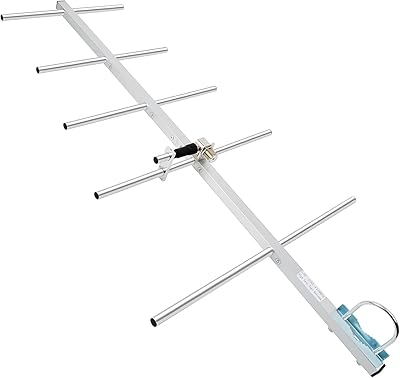
PBD HJK544 Outdoor Yagi TV Antenna
76%
83%
Signal Reception
89%
UHF Performance
61%
VHF Performance
78%
Build Quality
81%
Weather Resistance
More
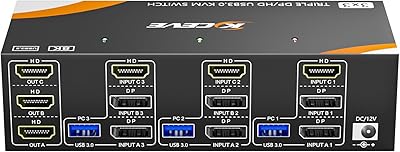
KCEVE KC-303X Triple Monitor KVM Switch
78%
88%
Setup & Installation
83%
Video Signal Quality
79%
Switching Speed & Reliability
71%
Remote Controller
81%
USB Peripheral Performance
More
TWAYRDIO TW-YG05 UHF Yagi Antenna
76%
88%
Signal Performance
74%
Build Quality
91%
Ease of Assembly
63%
Connector Compatibility
83%
Value for Money
More
NextG USB-Yagi 11N Long Range WiFi Antenna 2200mW
78%
89%
WiFi Range & Signal Strength
83%
Compatibility with Systems
72%
Ease of Setup
85%
Build Quality
80%
Portability & Design
More

FAQ

The Sirio SY27-3 3-Element Yagi Antenna covers the standard CB band at 27 MHz as part of its broader 26.5–30 MHz frequency range, so CB operators can absolutely use it. It ships factory-tuned near mid-band, which puts it close to the CB channels without any manual adjustment. The main thing to keep in mind is that it is a directional antenna — you will get the best results when you can aim it toward your most frequently contacted stations rather than relying on it for coverage in all directions.

A rotator is not strictly required. Plenty of operators mount this 3-element beam pointed at a fixed heading — toward a nearby city, a favored DX corridor, or a repeater — and get strong, consistent results without ever rotating it. If you need flexible coverage across multiple directions throughout the day, a rotator makes a meaningful practical difference. Your operating habits really determine which approach suits you.

The mechanical side of assembly is manageable for anyone with basic antenna experience — attaching the elements to the boom follows a standard Yagi layout and is not especially complicated. The more involved step is tuning: you will need a SWR meter to confirm the antenna is properly resonant on your target frequency, and some buyers have noted the included instructions leave a bit to be desired in detail. Reading up on basic Yagi tuning before you start saves frustration. For the installation itself, having a second person on the ground while you work at height is always the safer approach.

The SY27-3 uses a standard UHF-female (SO-239) connector, so any PL-259-terminated 50-ohm coax connects directly without needing adapters. Common choices include RG-8, RG-213, or LMR-400. For longer cable runs, a lower-loss option like LMR-400 is worth the added cost — poor feedline quality can quietly erode the gain you are paying for with a directional antenna like this.

The antenna is field-adjustable, meaning you can shift its resonant point within the 26.5–30 MHz window to favor a specific frequency. Out of the box it is tuned near mid-band, which is a reasonable starting compromise across the full range. If you primarily operate around 27.185 MHz on CB or 28.5 MHz for 10-meter SSB, you can adjust the driven element to bring SWR down at your preferred spot — just use a SWR meter to confirm your result before calling it done.

No mounting hardware is included, so you will need to source a suitable mast clamp separately based on your mast diameter. Given the 12-pound weight and 57-inch boom, a mast of at least 1.5 to 2 inches in diameter is a practical minimum for stable support. Also factor in wind loading — a horizontally mounted Yagi of this size catches considerably more wind than a slim vertical, so the mounting point needs to be solid, well-secured, and ideally guyed if the mast is tall.

The anodized aluminum construction is designed for long-term outdoor permanence, and owners across a range of climates report solid durability over extended periods. Before leaving it exposed to persistent rain or freezing conditions, it is good practice to seal the feedpoint and coax connector with self-amalgamating tape or weatherproof compound. This Sirio Yagi is built to stay up year-round, not be taken down each season.

Yes — transmitting on the 10-meter amateur band requires a valid amateur radio license in virtually every country. The antenna itself is passive hardware that anyone can purchase, but operating on licensed frequencies without the appropriate authorization is illegal regardless of the equipment involved. CB operation at 27 MHz is a separate matter and does not require a license in most countries, though legal power limits and channel restrictions still apply.

It is worth taking seriously. The 57-inch packaged length is awkward for standard carrier handling, and a portion of buyers have reported arriving elements that were bent or otherwise damaged in transit. Before signing for delivery, inspect the outer packaging carefully and photograph any visible damage immediately. Minor bends in parasitic elements can often be gently corrected without significantly affecting performance, but contacting the seller promptly gives you the best path to a resolution if something is more seriously wrong.

The improvement is genuinely meaningful rather than marginal. The directional gain of this 3-element beam concentrates your signal toward your target heading instead of radiating it equally in all directions — operators describe the practical effect as roughly equivalent to multiplying their effective transmit power several times over in the aimed direction. Reviewers working 10 meters consistently highlight real-world DX gains as the most satisfying outcome of making the switch from an omnidirectional antenna.

Where to Buy