

Overview

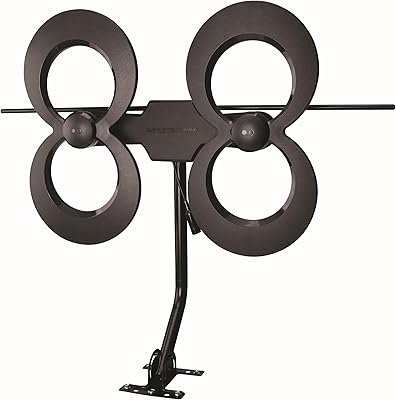
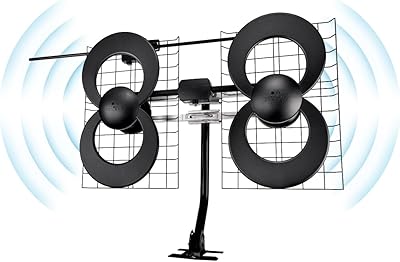
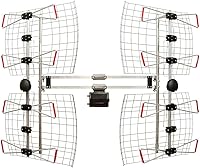
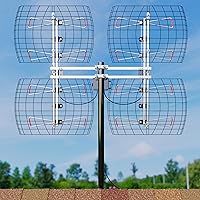
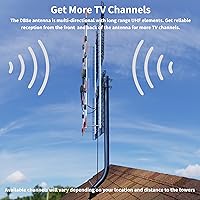
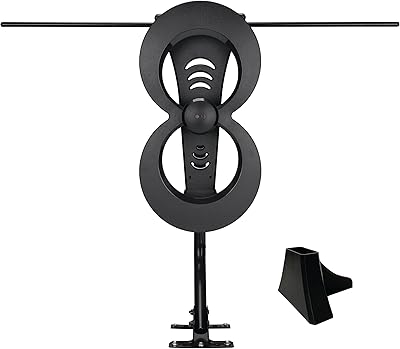
The Antennas Direct DB8e Outdoor TV Antenna is a large, multi-directional UHF antenna built specifically for households where reception is genuinely difficult — think rural properties, homes surrounded by dense trees, or locations sitting far from the nearest broadcast towers. Unlike flat indoor panels or basic omnidirectional designs, the 8-element bowtie array is engineered to pull in signals that most compact antennas simply can't reach. It claims a 70+ mile range, which is ambitious, but real-world performance depends heavily on your terrain, the direction of local towers, and what stands between you and them. It supports 4K, 8K, and NEXTGEN TV over the air — no internet subscription required.

Features & Benefits

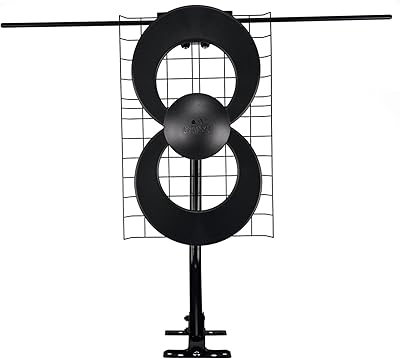
The bowtie antenna's standout engineering choice is its reflector-backed element array, which focuses incoming signal energy and cuts down on the multipath interference that causes pixelation or dropped channels. Adjustable mounting brackets let you rotate and aim individual elements toward towers in different directions — useful when your local stations don't all broadcast from the same point. The included hardware handles outdoor exposure well, and attic installation is viable if rooftop mounting isn't practical. Keep in mind that coaxial cable, a mast, and an amplifier are all sold separately, so budget for those before you buy. The antenna uses a standard 75-ohm connection compatible with any modern TV tuner.

Best For

This outdoor UHF array makes the most sense for rural and suburban cord-cutters who are genuinely far from towers and have already tried smaller antennas without much luck. If your home sits in a valley, is surrounded by mature trees, or has a metal roof that blocks signal, the size and reach of the DB8e are designed to compensate. It's also a strong pick in markets where broadcast towers are spread across multiple compass points, since the adjustable brackets let you optimize for that reality. Anyone willing to commit to a proper rooftop or attic install will get far more out of it than someone hoping to tuck it behind a television.

User Feedback

Buyers in fringe-signal areas consistently credit this bowtie antenna with pulling in channels that smaller competitors couldn't find at all, and many note that the build quality holds up through rain, wind, and temperature swings across multiple seasons. On the other side, the antenna's sheer physical size catches some buyers off guard — at nearly four feet tall and over four feet wide, solo installation is awkward and a second pair of hands makes a real difference. The need to purchase a mast, cable, and possibly an amplifier separately also surprises buyers expecting a complete kit. Signal results vary notably by location, with open flat terrain consistently producing the strongest outcomes.

Pros

  • Pulls in UHF channels at distances where most compact antennas simply give up entirely.
  • Multi-directional brackets let you aim at towers spread across different directions without remounting the mast.
  • Reflector-backed element design reduces pixelation and signal dropout caused by interference.
  • Built to handle outdoor exposure year-round — hardware holds up through wind, rain, and temperature swings.
  • Compatible with 4K, 8K, and NEXTGEN TV broadcasts, making it a forward-looking investment.
  • Works with any standard coaxial cable connection thanks to its 75-ohm impedance.
  • No monthly fees, subscriptions, or internet connection needed to receive free over-the-air broadcasts.
  • All-weather mounting hardware is included, reducing the number of separate parts to track down.
  • Attic installation is a viable option for homeowners who cannot or prefer not to mount on the roof.

Cons

  • Coaxial cable, a mounting mast, and an amplifier are all sold separately, adding meaningful cost to the total setup.
  • At nearly four feet tall and four feet wide, installation is awkward and realistically requires two people.
  • Signal performance varies widely depending on terrain — valley locations and dense suburbs often see disappointing results.
  • The 70+ mile range claim reflects ideal conditions; real-world range in obstructed environments is often significantly lower.
  • Getting the best reception typically requires trial-and-error adjustments to height and antenna angle after initial install.
  • UHF-only design means it may miss VHF high-band channels that some local markets still broadcast on.
  • The large physical footprint may not be permitted or practical in neighborhoods with strict HOA rules or aesthetic guidelines.
  • No amplifier included means fringe-area users may need to budget extra for a signal booster to reach full potential.

Ratings

The scores below reflect an AI-driven analysis of verified global user reviews for the Antennas Direct DB8e Outdoor TV Antenna, with spam, incentivized feedback, and bot-generated content actively filtered out before scoring. Each category captures both what buyers consistently praised and where real frustrations emerged — nothing is glossed over. Whether this bowtie antenna becomes a reliable cord-cutting workhorse or a source of buyer regret depends heavily on your specific situation, and these ratings are designed to make that clearer.

Signal Reception
83%
In fringe-signal territory — think rural properties 50 or more miles from towers — this outdoor UHF array consistently outperforms the compact and flat panel alternatives buyers had previously tried. Reviewers in open, flat terrain frequently describe picking up every local network affiliate in clean HD with no dropouts.
Reception is highly location-dependent, and buyers in valleys, dense suburbs, or areas with heavy tree cover often report results well below expectations. The 70-mile range claim only holds up under near-ideal conditions, which fewer buyers actually experience than the marketing implies.
Build Quality
88%
The physical construction earns consistent praise — the elements feel solid, connections don't loosen easily, and buyers report the antenna holding up through multiple winters without rust, warping, or visible degradation. For a product mounted permanently outdoors, that kind of durability is exactly what the premium price point should deliver.
A small number of buyers noted that certain plastic bracket components felt slightly less robust than the metal elements themselves, raising mild concerns about long-term pivot joint durability under sustained wind load. It is a minor issue but worth watching on older units.
Weather Durability
86%
Buyers across a wide range of climates — including those dealing with heavy snow loads, coastal humidity, and intense summer heat — generally report that the DB8e holds together well season after season. The included all-weather mounting hardware resists corrosion better than generic hardware many buyers have substituted in the past.
A handful of users in exceptionally windy locations noted that the large surface area of this bowtie antenna acts like a sail, putting stress on the mast connection over time. Proper mast selection and guy-wiring in exposed rooftop locations is more important here than with a smaller antenna.
Ease of Installation
58%
42%
The mounting bracket system is logically designed, and buyers who have done antenna work before generally find the physical assembly manageable once all parts are laid out. The instructions cover the basics, and the included hardware means fewer last-minute hardware store runs for the mounting itself.
Solo installation is genuinely difficult given the antenna's size and weight — at 10 pounds spread across a nearly four-foot frame, positioning and securing it alone on a roof is awkward and potentially unsafe. Many buyers were also caught off guard by needing to separately source a mast, coaxial cable, and sometimes a preamplifier before they could get the antenna running.
Value for Money
71%
29%
For buyers in genuinely challenging signal environments who have already cycled through two or three cheaper antennas without success, the DB8e represents a logical endpoint — one purchase that actually solves the problem rather than a series of cheaper disappointments. Long-term cost of free over-the-air TV makes the math work for committed cord-cutters.
The up-front cost is meaningful, and it climbs further once you account for the mast, cable run, and potential amplifier that are all sold separately. Buyers in moderate-signal areas who could have gotten results from a mid-range antenna sometimes feel they overspent for marginal improvement over a simpler solution.
Channel Count
76%
24%
In markets with a healthy number of UHF broadcasters, buyers report channel counts that comfortably cover the major networks plus a range of free sub-channels for news, classic TV, and sports. For households that primarily want local affiliates and free digital channels, the lineup is typically satisfying.
Because the DB8e is UHF-focused, buyers in markets where some local stations still broadcast on VHF high-band frequencies may find certain channels missing entirely. This is a market-specific limitation but a real one that catches some buyers off guard after installation.
Multi-Directional Capability
81%
19%
The adjustable brackets that let you angle the two antenna sections independently are practically useful, not just a spec-sheet talking point. Buyers in markets where towers are spread across a wide arc report noticeably better overall channel coverage compared to fixed-direction antennas they previously used.
Optimizing the multi-directional positioning requires patience and iterative adjustment — it is not a set-it-and-forget-it process. Some buyers needed multiple adjustment sessions over several days, including fine-tuning height on the mast, before landing on a configuration that captured everything reliably.
Compatibility
91%
Support for 4K, 8K, and NEXTGEN TV broadcasts means this outdoor UHF array does not need replacing as broadcasters gradually roll out ATSC 3.0 transmission in more markets. Buyers planning to be cord-cutters for the long haul appreciate that this is not a purchase they will need to revisit in a few years.
NEXTGEN TV compatibility at the antenna level still requires a compatible TV tuner or external ATSC 3.0 receiver to actually decode the signal — a detail that confuses some buyers who expect the antenna alone to unlock next-generation content immediately without additional hardware investment.
Included Accessories
41%
59%
The mounting hardware that is included is genuinely all-weather rated and avoids the cheap zinc hardware that ships with lesser antennas and corrodes within a season. Buyers who have dealt with rusted-out mounting kits on past antennas notice and appreciate the quality difference.
The accessory package is otherwise minimal to the point of frustration for many buyers — no coaxial cable, no mast, and no amplifier means the box contains just the antenna and mounting brackets. For a product at this price tier, the expectation of a more complete kit is reasonable and the gap is a recurring complaint.
Signal Stability
79%
21%
Buyers in good signal conditions — particularly those with an unobstructed rooftop mount pointed at towers within 40 to 50 miles — describe rock-solid reception with no pixelation or dropout even during wind and light rain. The reflector design visibly reduces the interference problems that plagued their previous antennas.
In fringe-signal areas, stability becomes more variable and weather-dependent. Some buyers report that storms or heavy precipitation cause temporary signal loss on the weakest channels, which is not unique to this antenna but is more noticeable when you are relying on it as your sole TV source.
Size & Form Factor
53%
47%
The large physical footprint is a direct function of the antenna's UHF capture capability — more element surface area genuinely translates to better signal collection at distance. Buyers who understand this trade-off and have the roof space or attic clearance accept it as a necessary design reality.
For buyers who underestimated the scale before purchasing, the physical size is a shock — nearly four feet in each primary dimension is not easy to work around in tight attic spaces or on smaller roof sections. HOA restrictions and aesthetic concerns also come up frequently in reviews from suburban buyers.
Longevity
84%
Multiple reviewers report units that have been continuously mounted outdoors for three or more years without any degradation in reception quality or physical condition. For a passive antenna with no electronics to fail, long service life is one of the more dependable expectations buyers can hold.
Longevity of the pivot joints and plastic bracket components over very long periods in UV-heavy climates is a mild open question, as fewer buyers have reported truly long-term data beyond five years. Metal element durability appears solid; the hardware connecting them is where time will be the real test.
Setup Clarity
62%
38%
The assembly sequence for the antenna elements themselves is intuitive enough that experienced DIYers rarely need to consult the instructions more than once. Antennas Direct also provides online resources and a customer support line that buyers with questions have found genuinely useful.
The instructions assume a certain level of familiarity with antenna installation and do not do enough to walk first-time buyers through cable selection, mast sizing, or grounding requirements — all of which are real considerations for a permanent outdoor install and sources of confusion in buyer reviews.
Attic Performance
67%
33%
When installed in an attic with minimal obstructive roofing materials between the antenna and the exterior, buyers report results that are often close to a rooftop install — a meaningful advantage for homeowners who prefer not to deal with a visible exterior mount or potential roof penetrations.
Attic performance drops significantly in homes with metal roofing, radiant barriers, or foil-backed insulation, all of which block RF signals more aggressively than standard shingles. Buyers with those construction types should plan on an exterior mount or accept meaningfully reduced channel counts.

Suitable for:

The Antennas Direct DB8e Outdoor TV Antenna was built for a very specific kind of buyer — one who lives far from the city, has already tried a cheaper antenna and been disappointed, and is serious enough about cord-cutting to commit to a proper outdoor or attic installation. If your home sits 50 to 70 miles from the nearest broadcast towers, or if thick tree cover, hilly ground, or dense roofing materials are eating your signal, this bowtie antenna is sized and engineered to compensate where smaller designs fail. It's also a genuinely smart choice for households in markets where local TV towers are scattered in different compass directions, since the adjustable mounting brackets let you fine-tune aim without pulling the whole antenna off the mast. Viewers who want to receive free over-the-air local news, sports, and network programming in full HD — and want that setup to be compatible with emerging NEXTGEN TV broadcasts — will find the DB8e well-matched to those long-term goals. Essentially, if your reception problem is real and persistent, this is a serious tool for solving it.

Not suitable for:

The Antennas Direct DB8e Outdoor TV Antenna is not the right call for buyers who live close to broadcast towers, rent their home, or aren't prepared for a meaningful installation project. If you're within 25 to 30 miles of your local towers and have a clear line of sight, a much smaller and less expensive indoor antenna will do the job just as well without any roof or attic work. Apartment dwellers or renters without outdoor mounting access should look elsewhere entirely — this is a large, permanent-style installation that weighs 10 pounds and spans nearly four feet in each direction, which rules out casual placement. Budget-conscious buyers should also note that the total cost climbs once you factor in a mast, coaxial cable run, and potentially an amplifier, none of which are included. And if you're primarily trying to receive VHF channels rather than UHF, this antenna's design is not optimized for that band, so channel coverage in some markets may be more limited than expected.

Specifications

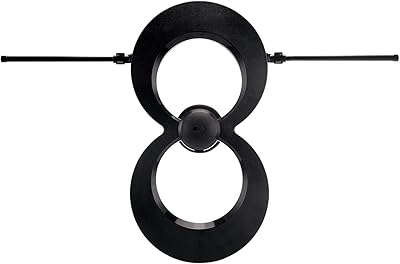
  • Antenna Type: 8-element bowtie UHF array with integrated reflectors designed to improve forward signal gain and reduce multipath interference.
  • Dimensions: The antenna measures 36″ L x 6″ W x 48″ H, making it one of the larger consumer outdoor antennas on the market.
  • Weight: The assembled antenna weighs 10 pounds, which should be factored into mast load ratings when planning installation.
  • Frequency Band: Optimized for UHF reception; not designed as a primary VHF receiver, so coverage of VHF high-band channels may vary by market.
  • Impedance: Standard 75-ohm impedance ensures compatibility with conventional coaxial cable and modern TV tuner inputs.
  • Signal Direction: Adjustable multi-directional mounting brackets allow each antenna section to be aimed independently toward towers in different directions.
  • Max Range: Rated for a maximum range of 70+ miles under favorable conditions, though real-world performance depends on terrain and obstructions.
  • Install Location: Suitable for outdoor rooftop mounting or indoor attic installation; not intended for interior living-space use.
  • Included Hardware: All-weather mounting hardware is included in the box to support permanent outdoor installation in various climates.
  • Coaxial Cable: No coaxial cable is included; buyers must purchase a separate RG6 or equivalent cable appropriate for their installation run length.
  • Mast: A mounting mast is not included and must be sourced separately before installation can be completed.
  • Amplifier: No signal amplifier is included, though the antenna supports an add-on preamplifier for installations with long cable runs or very weak signals.
  • Compatibility: Receives free over-the-air UHF broadcasts in Full HD 1080p, 4K, 8K UHD, and is compatible with NEXTGEN TV (ATSC 3.0) signals.
  • Internet Required: No internet connection is required; the antenna receives broadcast signals over the air directly from local transmission towers.
  • Model Number: The manufacturer model number is DB8e, sold by Antennas Direct Inc.
  • Color: The antenna is finished in silver, which blends reasonably well with standard metal rooftop hardware and mast systems.
  • UPC: Primary UPC is 817848011620; additional registered UPCs include 796594042266 and 853748001620.
  • Reflectors: Integrated reflectors are included as part of the antenna design to focus incoming signal energy and shield against rear interference.

Related Reviews
1byone 360° Omni-Directional Outdoor TV Antenna
73%
74%
Signal Reception
91%
Ease of Installation
72%
Build Quality
68%
Amplifier Performance
63%
4G LTE Filtering
More
Antop AT-414BG Omni-Directional Outdoor TV Antenna
85%
90%
Reception Quality
88%
Ease of Installation
86%
Durability in Outdoor Conditions
92%
Value for Money
87%
Signal Range
More
Antennas Direct ClearStream 2MAX TV Antenna
76%
83%
Signal Reception Quality
67%
Range Accuracy
88%
Ease of Installation
84%
Build Quality
79%
Multi-Directional Performance
More
Antennas Direct ClearStream 4V TV Antenna
74%
88%
Signal Reception
84%
Build Quality
81%
Multi-Directional Performance
67%
Ease of Installation
74%
Value for Money
More
Antennas Direct ClearStream 2V TV Antenna
83%
88%
Signal Reception
91%
VHF Channel Coverage
84%
Build Quality
82%
Ease of Installation
79%
Value for Money
More
Antennas Direct ClearStream 4MAX TV Antenna
86%
88%
Performance in Rural Areas
93%
Ease of Installation
85%
Signal Strength
91%
Build Quality
89%
Indoor/Outdoor Versatility
More
Antennas Direct ClearStream MAX-V TV Antenna
76%
78%
Signal Reception
61%
Range Accuracy
84%
Installation Ease
82%
Build Quality
79%
Value for Money
More
Antennas Direct ClearStream Eclipse Indoor TV Antenna
77%
74%
Signal Reception
67%
Amplifier Performance
93%
Design & Profile
91%
Ease of Setup
62%
Cable Length
More
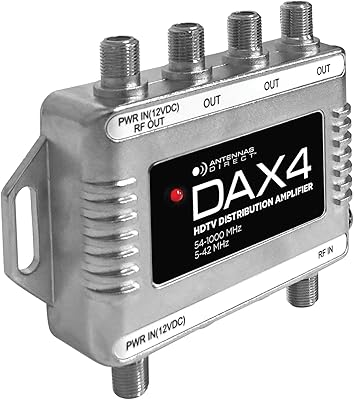
Antennas Direct DAX4 4-Output TV Antenna Distribution Amplifier
86%
87%
Signal Quality & Performance
91%
Ease of Installation
85%
Build Quality & Durability
92%
Value for Money
78%
Weather Resistance
More
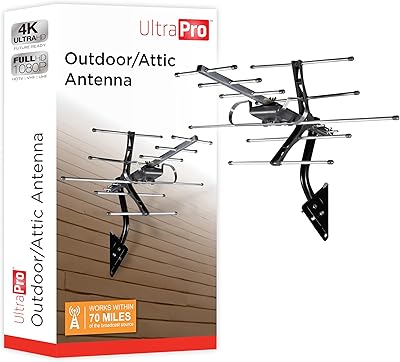
UltraPro Outdoor 70-Mile HD TV Antenna
76%
73%
Signal Reception
61%
Range Accuracy
82%
Installation Ease
78%
Build Quality
81%
Weather Resistance
More

FAQ

It can, but 70 miles is the upper end under near-ideal conditions — flat terrain, minimal obstructions, and a clear line of sight to the towers. In practice, most buyers in hilly, wooded, or suburban environments see reliable performance closer to 40 to 55 miles. Before buying, it's worth checking a free tool like AntennaWeb or TV Fool to see how far you actually are from your local towers and what signal strength to expect.

You will need a coaxial cable, a mounting mast, and depending on your cable run length, possibly a preamplifier — none of these come in the box. For most rooftop installs, an RG6 coaxial cable is the right choice. If your cable run from the antenna to your TV is longer than about 50 feet, a preamplifier mounted near the antenna can help offset signal loss over that distance.

Yes, attic installation is a supported option and works well for many households. The trade-off is that roofing materials — especially metal or those with radiant barriers — can noticeably reduce signal strength compared to an unobstructed rooftop mount. If your attic has a clear path toward the broadcast towers with minimal material between the antenna and the sky, results are often still quite good.

That is actually one of the DB8e's stronger practical features. The mounting brackets are adjustable, allowing you to angle the two antenna sections toward towers that are not in the same direction. This is genuinely useful in markets where your ABC affiliate broadcasts from one direction and your NBC affiliate from another, for example.

It is primarily engineered for UHF reception, so VHF performance is limited and not something to count on. If your local stations broadcast on VHF high-band frequencies, you may miss some channels or receive them inconsistently. Checking which bands your specific local stations use before purchasing is a good idea — a combined UHF and VHF antenna might serve you better if VHF coverage matters in your market.

The installation process itself is straightforward, but the antenna's size and weight make solo rooftop work genuinely awkward and potentially unsafe. At 10 pounds and nearly four feet across, having a second person to hold and position the antenna while you secure the mounting hardware makes the job much safer and faster. Attic installation is somewhat easier to manage alone since you are not working at height.

Not necessarily — it depends on your distance from the towers and how long your cable run is. If you are within 40 miles and your coaxial cable run is under 50 feet, the antenna alone is often sufficient. Where amplifiers tend to earn their cost is in fringe-signal situations at longer distances, or when you are splitting the signal to feed multiple TVs. One caution: adding an amplifier in an already strong signal area can actually cause problems like overload distortion.

General buyer feedback on durability is quite positive. The hardware and elements hold up well through rain, wind, and seasonal temperature shifts, which is what you should expect from an antenna rated for permanent outdoor installation. Checking that all mounting connections are properly tightened after the first winter season is a reasonable precaution regardless of which outdoor antenna you use.

Yes, this outdoor UHF array is compatible with over-the-air 4K and NEXTGEN TV signals, which use the newer ATSC 3.0 broadcast standard. The antenna itself is just a passive receiver — what determines whether you get NEXTGEN TV is whether your local stations are broadcasting in that format and whether your TV or tuner supports ATSC 3.0 decoding. The antenna hardware does not limit compatibility on that front.

A few things are worth investigating. First, try adjusting the antenna angle incrementally — even small changes in direction can make a meaningful difference in fringe areas. Second, check that all coaxial cable connections are tight and that the cable itself is not kinked or damaged. Third, if you are using a splitter to feed multiple TVs, that introduces signal loss; removing the splitter temporarily is a good diagnostic test. Finally, consider whether a preamplifier installed near the antenna head might help, particularly if your cable run is on the longer side.

Where to Buy