Overview

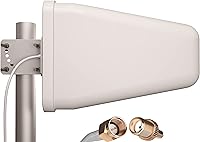
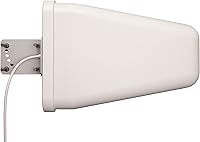
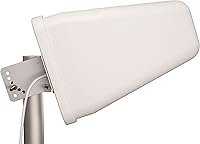
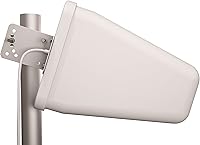
The Tupavco TP514 Yagi Directional Antenna is a dual-band outdoor antenna covering 806–960MHz and 1.7–2.5GHz — the frequency ranges that encompass most 3G, 4G, and LTE networks across North America. It works by capturing a distant cell tower signal and routing it through a cable to a phone, hotspot, or signal booster. On its own, it doesn't amplify anything; think of it as a highly focused collector. The housing is aluminum alloy and weatherproof ABS, built to stay mounted on a rooftop or exterior wall through years of harsh weather. For the price, it's a practical option for anyone dealing with persistently weak cellular coverage.

Features & Benefits

The TP514 delivers a 9dBi gain across both of its frequency bands, which is a solid figure for most private and small commercial setups. Its directional beamwidth — 65° horizontal and 55° vertical — keeps signal pickup narrow and focused, meaning less interference and more reliable connection quality when you have aimed it correctly. The antenna ships with both an SMA Male cable and a TS-9 adapter, so it works with a wide range of hotspots and cellular data cards without extra purchases. A VSWR below 1.5:1 confirms minimal signal loss at the connector, and a front-to-back ratio above 14dB does a decent job of blocking noise coming from behind.

Best For

This Yagi antenna makes the most sense for people who live or work far from the nearest cell tower and have a clear idea of which direction that tower sits. Rural homeowners, cabin dwellers, and remote workers who depend on a hotspot as their only internet connection will get the most out of it. RV owners wanting a semi-permanent rooftop setup for extended stays also fit the bill. It doubles as a strong donor antenna when paired with a cellular signal booster, pulling in a weak distant signal to feed the booster's indoor unit. Just know this is built for a fixed deliberate install, not a quick plug-and-play solution.

User Feedback

Buyers who take the time to properly aim and polarize this directional cellular antenna consistently report solid signal improvement, particularly in rural areas with a clear line toward the tower. The build quality earns praise too — most reviewers find the housing holds up well through multiple seasons outdoors. That said, the learning curve is real. A recurring complaint involves frustration from users who installed it quickly and saw little gain, only to realize later that pointing accuracy matters enormously with a directional design. A handful of buyers have raised compatibility questions with specific hotspot models. Those comparing it to omnidirectional options generally conclude this Yagi wins on raw signal pull but loses on convenience.

Pros

  • Dual-band coverage handles the vast majority of 3G, 4G, and LTE frequencies used by North American carriers.
  • A 9dBi gain figure is genuinely useful for pulling in weak distant signals in rural and remote locations.
  • Ships with both SMA Male and TS-9 adapter cables, covering most hotspots and cellular data cards out of the box.
  • Aluminum alloy and weatherproof ABS construction holds up well through harsh outdoor conditions over multiple seasons.
  • Wind rating of 210 km/h means permanent rooftop mounting is a realistic option without worry.
  • A front-to-back ratio above 14dB reduces interference noise from the wrong direction, improving signal quality.
  • Consistently strong sales rank since 2012 suggests a reliable track record and ongoing availability of support information.
  • Works as an effective and cost-efficient donor antenna for buyers pairing it with a cellular signal booster system.

Cons

  • Precise aiming is non-negotiable; a few degrees off target can noticeably degrade real-world performance.
  • No amplification built in, so buyers must pair this Yagi antenna with a booster or compatible device to see dramatic gains.
  • The 2-foot cable length is short and will require extension cables for most real-world rooftop or wall installations.
  • Directional design means it covers only one tower direction, leaving you exposed if your carrier switches towers seasonally.
  • Setup requires knowing your tower location and understanding polarization, which creates a steep learning curve for non-technical buyers.
  • Some buyers report compatibility uncertainty with specific hotspot brands before purchasing, requiring extra research upfront.
  • At roughly 1.76 pounds on a protruding mount, vibration and wind stress on brackets over time deserves monitoring.
  • Not a practical solution for renters or anyone who cannot make permanent exterior modifications to their property.

Ratings

The scores below for the Tupavco TP514 Yagi Directional Antenna were generated by AI after analyzing verified buyer reviews from multiple global markets, with spam, bot activity, and incentivized feedback actively filtered out. Each category reflects the honest spread of real user experiences — not a curated highlight reel — so both the genuine strengths and the recurring frustrations are represented transparently.

Signal Improvement
83%
When correctly aimed at a known tower, buyers in rural areas consistently report meaningful jumps in signal bars and measurable improvements in download speeds on their hotspots and data cards. Remote workers and cabin dwellers particularly note that the TP514 unlocks usable LTE where they previously had almost nothing.
Results vary dramatically based on terrain, obstructions, and carrier infrastructure. Buyers in hilly or densely wooded areas often report much more modest gains, and a small but vocal group sees little improvement even after careful setup, usually due to tower distance exceeding practical limits.
Ease of Setup
54%
46%
Physically mounting the antenna is straightforward for anyone comfortable with basic hardware and a drill. The included dual-cable kit means most buyers can connect directly to their hotspot or data card without ordering additional adapters before getting started.
Correctly aiming and polarizing a directional antenna is where many buyers hit a wall. Without knowing your tower's exact direction and testing different orientations, performance can be poor, and the product provides no built-in guidance for this process. It is the single most common source of disappointment in user reviews.
Build Quality
86%
The aluminum alloy and weatherproof ABS construction earns consistent praise from buyers who have left it mounted outdoors through harsh winters, heavy rain, and strong winds. Most long-term owners report no cracking, corrosion, or physical degradation after two or more years of continuous outdoor exposure.
A few buyers have reported that the mounting bracket hardware feels less robust than the antenna body itself, with some experiencing loosening over time in high-wind environments. The overall assembly is solid, but the weakest point tends to be the mounting interface rather than the antenna element.
Value for Money
78%
22%
At its mid-range price point, this directional cellular antenna delivers technical specifications — dual-band coverage, 9dBi gain, sub-1.5 VSWR — that would cost significantly more from other brands. Buyers who set it up correctly and see real signal gains consistently rate it as one of the better investments they have made for rural connectivity.
Buyers who struggle with setup or live in areas where the antenna cannot deliver meaningful improvement tend to feel the price was wasted. Because performance is so installation-dependent, the value proposition feels strong for technically confident buyers and weak for those who expected a simpler outcome.
Compatibility
74%
26%
Shipping with both SMA Male and TS-9 adapter cables is a genuine convenience that covers most popular hotspot and cellular data card models from major carriers. Buyers using common Verizon, AT&T, or T-Mobile hotspots generally find at least one of the included cables fits their device without additional purchases.
Compatibility questions still surface regularly in reviews, particularly around newer hotspot models and less common connector types. A handful of buyers have needed to purchase third-party adapters, and the lack of a clear compatibility checklist from the manufacturer creates unnecessary uncertainty at the point of purchase.
Durability Over Time
81%
19%
Multi-season outdoor use is where this Yagi antenna earns some of its strongest reviews. Buyers who installed it two or three years ago and revisited with updated feedback overwhelmingly report that the antenna continues to perform as it did on day one with no visible deterioration.
A minority of buyers in coastal or high-humidity environments mention surface oxidation on metal components over extended periods. The ABS plastic has held up better than the metal elements for most, but extreme UV exposure over many years can cause some fading and slight brittleness in the plastic housing.
Cable & Connector Quality
61%
39%
The included cables are functional and fit snugly on compatible connectors, with most buyers finding the connection secure enough for a permanent outdoor installation. For a mid-range product, shipping two cable types is a practical touch that competing antennas at similar prices do not always offer.
The 2-foot cable length is the most cited frustration in this area — it is nearly always too short for real-world rooftop installations, forcing buyers to purchase extension cables separately. Several buyers also note that the connectors feel somewhat plasticky and would benefit from a more robust build given the outdoor use case.
Gain Performance
79%
21%
The 9dBi gain figure holds up in real-world testing when the antenna has a clear line toward the tower and is properly polarized. Buyers who cross-referenced their signal meter before and after installation in open rural terrain consistently confirm the gain spec behaves as advertised.
In less ideal conditions — moderate tree cover, rolling terrain, or partial building obstruction — the realized gain drops noticeably compared to the rated figure. Buyers expecting the 9dBi number to translate directly into a fixed, predictable improvement regardless of environment often come away with lower scores than expected.
Interference Rejection
76%
24%
The front-to-back ratio above 14dB provides a practical real-world benefit for buyers near competing signals or in areas with electronic noise. Several technically informed reviewers specifically call out improved signal clarity and reduced noise floor compared to omnidirectional alternatives they had tried previously.
In dense suburban or semi-urban deployments where interference originates from multiple directions, the front-to-back ratio alone is not sufficient to fully isolate the target signal. Buyers dealing with complex RF environments may find the interference rejection less impressive than the spec suggests.
Weather Resistance
84%
The 210 km/h wind rating is not just a marketing number — buyers in storm-prone regions consistently confirm the antenna stays put and remains undamaged through significant weather events. The ABS housing shows strong resistance to moisture ingress, which matters a great deal for a device permanently mounted outdoors.
Extended exposure to intense direct sunlight causes gradual cosmetic fading in the white ABS housing that some buyers find aesthetically objectionable over a few years. Function is unaffected, but buyers who care about long-term appearance should factor this in.
Aiming Precision
58%
42%
For buyers who take the time to research their tower location and use a signal meter or app to fine-tune alignment, the narrow beamwidth pays off with a noticeably cleaner and stronger signal than broader-pattern alternatives. The focused pickup becomes an asset rather than a limitation once the setup process is understood.
The same narrow beamwidth that rewards a careful setup brutally penalizes a sloppy one. Even a few degrees of horizontal misalignment can cut performance substantially, and most buyers underestimate how much patience and iteration the initial aiming process actually requires.
Packaging & Documentation
47%
53%
The antenna arrives adequately protected and physically undamaged in the vast majority of reported cases. The included hardware is bagged and organized, and both cables are clearly labeled, which at least removes confusion about which connector is which.
The documentation included with the TP514 is widely criticized as thin and unhelpful, particularly around the aiming and polarization process that is central to getting the product to work. For a device where setup complexity is the number one pain point, the absence of a clear illustrated installation guide is a meaningful shortcoming.
Frequency Band Coverage
82%
18%
Covering both 800MHz and 1700–2500MHz in a single antenna keeps things simple for buyers whose carriers operate across both bands, which describes most major North American networks. The dual-band design avoids the need for separate antennas for different frequency tiers of the same carrier.
The bands covered stop short of the newer 5G mid-band spectrum, which means this directional cellular antenna has a narrowing relevance horizon as carriers continue to expand 5G infrastructure. Buyers in areas where their carrier has already migrated heavily toward 5G services may find the coverage increasingly limited over the next few years.

Suitable for:

The Tupavco TP514 Yagi Directional Antenna is best suited for people who live or work in areas where cellular coverage is genuinely poor and the source of that problem is distance from a single tower. Rural homeowners, cabin dwellers, and farmers who know roughly which direction their nearest cell tower sits will get the most out of this antenna's focused pickup pattern. Remote workers who rely on a mobile hotspot or cellular data card as their primary internet connection will appreciate how much difference a well-aimed outdoor antenna can make compared to holding a device near a window. It also works well as a donor antenna feeding into a compatible signal booster system, making it a smart first component for anyone building a more complete in-home coverage solution. RV owners looking for a mountable outdoor antenna for extended stationary stays round out the ideal buyer profile.

Not suitable for:

The Tupavco TP514 Yagi Directional Antenna is a poor fit for anyone expecting a simple plug-and-play fix for spotty signal inside a home. Because it is a passive directional antenna, it captures signal rather than amplifying it, so buyers who skip pairing it with a booster or compatible device may see underwhelming results. Urban and suburban users who already receive a usable signal level are unlikely to notice meaningful improvement, and those surrounded by tall buildings or dense terrain will find that the narrow beamwidth works against them rather than for them. If your signal problems come from multiple towers in different directions, or if you need coverage across a wide area, an omnidirectional antenna is a more practical choice. Anyone unwilling to spend time locating their nearest tower, carefully aiming the antenna, and adjusting polarization should also reconsider, because improper setup is the single biggest reason buyers are disappointed with this type of product.

Specifications

  • Frequency Range: Covers dual bands at 806–960MHz and 1.7–2.5GHz, addressing the core cellular spectrum used by 3G, 4G, and LTE networks in North America.
  • Gain: Delivers 9dBi of antenna gain across both supported frequency bands, suitable for most private and small commercial cellular signal applications.
  • Horizontal Beamwidth: The horizontal beamwidth is 65°, concentrating signal pickup in a relatively narrow forward arc to reduce interference from the sides.
  • Vertical Beamwidth: The vertical beamwidth measures 55°, requiring careful vertical alignment during installation for optimal signal capture.
  • VSWR: Voltage Standing Wave Ratio is rated below 1.5:1, indicating efficient energy transfer and minimal signal reflection at the connector interface.
  • Front-to-Back Ratio: The front-to-back ratio exceeds 14dB, meaning the antenna significantly suppresses interference and noise originating from behind the unit.
  • Impedance: Nominal impedance is 50 Ohms, which is the standard for cellular and RF equipment, ensuring compatibility with typical booster and hotspot inputs.
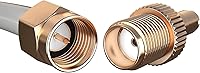
  • Connectors: Includes a 2FT SMA Male coaxial cable and a 2FT SMA Male to TS-9 adapter, covering two of the most common connection types on hotspots and data cards.
  • Wind Rating: Structurally rated to withstand wind velocities up to 210 km/h (130 mph), making permanent rooftop or exterior wall mounting a practical option in most climates.
  • Build Material: The antenna body is constructed from aluminum alloy and weatherproof ABS plastic, providing corrosion resistance and durability in outdoor environments.
  • Dimensions: Physical dimensions measure 11.81″ in length, 8.27″ in width, and 2.56″ in height, keeping the footprint manageable for most mounting locations.
  • Weight: The antenna weighs 1.76 pounds, light enough for standard bracket mounts but substantial enough to warrant checking mount hardware for long-term stability.
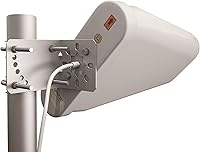
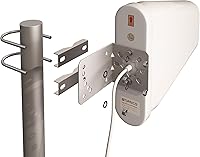
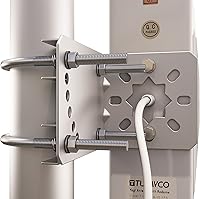
  • Mounting Style: Designed for fixed outdoor directional mounting, typically on a roof, exterior wall, or mast, and must be pointed toward the target cell tower.
  • Compatibility: Works with 3G, 4G, and LTE cellular hotspots, data cards, and signal boosters that accept SMA Male or TS-9 connector inputs.
  • Antenna Type: Log periodic Yagi design provides directional gain rather than omnidirectional coverage, concentrating signal collection in one forward direction.
  • Model Number: Manufacturer model number is TP514, produced by Tupavco LLC and first listed in August 2012 with no discontinuation reported.

Related Reviews
Tupavco TP513 17dBi Yagi WiFi Antenna
73%
83%
Signal Gain Performance
88%
Build Quality
86%
Weatherproofing
54%
Ease of Alignment
61%
Connector Compatibility
More
Tupavco TP512 15dBi 2.4GHz Outdoor Directional WiFi Antenna
84%
89%
Signal Range & Performance
94%
Durability & Build Quality
75%
Ease of Setup
87%
Value for Money
80%
Compatibility & Flexibility
More
Antennas Direct ClearStream 2V TV Antenna
83%
88%
Signal Reception
91%
VHF Channel Coverage
84%
Build Quality
82%
Ease of Installation
79%
Value for Money
More
Antennas Direct ClearStream 4MAX TV Antenna
86%
88%
Performance in Rural Areas
93%
Ease of Installation
85%
Signal Strength
91%
Build Quality
89%
Indoor/Outdoor Versatility
More
Antennas Direct ClearStream 4V TV Antenna
74%
88%
Signal Reception
84%
Build Quality
81%
Multi-Directional Performance
67%
Ease of Installation
74%
Value for Money
More
Antennas Direct ClearStream 2MAX TV Antenna
76%
83%
Signal Reception Quality
67%
Range Accuracy
88%
Ease of Installation
84%
Build Quality
79%
Multi-Directional Performance
More
Antennas Direct ClearStream MAX-V TV Antenna
76%
78%
Signal Reception
61%
Range Accuracy
84%
Installation Ease
82%
Build Quality
79%
Value for Money
More
Antennas Direct ClearStream Eclipse Indoor TV Antenna
77%
74%
Signal Reception
67%
Amplifier Performance
93%
Design & Profile
91%
Ease of Setup
62%
Cable Length
More
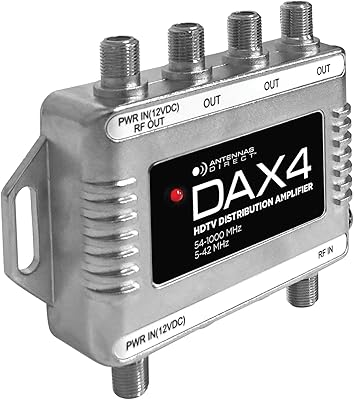
Antennas Direct DAX4 4-Output TV Antenna Distribution Amplifier
86%
87%
Signal Quality & Performance
91%
Ease of Installation
85%
Build Quality & Durability
92%
Value for Money
78%
Weather Resistance
More
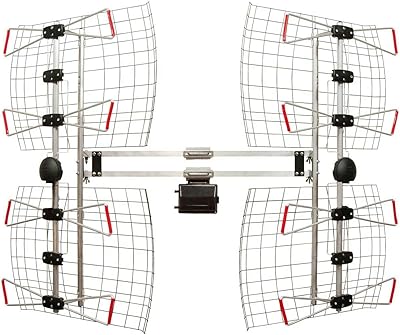
Antennas Direct DB8e Outdoor TV Antenna
73%
83%
Signal Reception
88%
Build Quality
86%
Weather Durability
58%
Ease of Installation
71%
Value for Money
More

FAQ

No, and this is probably the most important thing to understand before buying. The TP514 is a passive antenna, meaning it captures and focuses incoming signal but does not amplify it. To see a meaningful indoor signal improvement, you need to connect it to a cellular signal booster or route it directly into a compatible hotspot or data card.

The easiest starting point is a free tool like OpenSignal or your carrier's own tower map, which can show you the approximate direction of the nearest tower from your address. Once you have a rough bearing, mount the antenna and make small adjustments while monitoring signal strength on your device or booster display. Small rotational changes can make a noticeable difference, so take your time during the initial aim.

It depends on what connector your hotspot uses. The Tupavco TP514 Yagi Directional Antenna ships with both an SMA Male cable and a TS-9 adapter, which covers a wide range of popular hotspots from carriers like Verizon, AT&T, and T-Mobile. Check your hotspot's external antenna port spec before buying, and if it uses a different connector type, you may need an additional adapter.

Yes, this is actually one of the strongest use cases for this directional cellular antenna. It works well as the outdoor donor antenna in a booster system, pulling in a weak signal from the tower and feeding it into the booster's input port. Just make sure the booster you choose supports the same frequency bands the antenna covers.

Honestly, for most rooftop setups, the included 2-foot cable will be too short to reach your booster or device indoors. You will almost certainly need an LMR or low-loss coax extension cable. Keep in mind that longer cable runs introduce signal loss, so use the shortest run possible and choose a quality low-loss cable.

The aluminum alloy and weatherproof ABS build has generally earned positive feedback from long-term users. Most buyers report that the housing shows little degradation after multiple years of outdoor exposure. The 210 km/h wind rating is also reassuring for permanent installations in areas prone to storms. It is worth periodically checking your mounting hardware, though, as brackets and fasteners can loosen over time regardless of the antenna itself.

No, this Yagi antenna is designed for 3G, 4G, and LTE bands in the 806–960MHz and 1.7–2.5GHz ranges. It does not cover the sub-6GHz mid-band 5G frequencies used by most carriers today, and certainly not millimeter wave 5G. If 5G compatibility is a priority, you would need a newer antenna designed for those extended frequency ranges.

It depends on how the cell towers in your area broadcast. Most cellular towers use vertical polarization, so mounting this antenna in vertical orientation is generally the correct starting point. If you are not seeing good results vertically, trying horizontal polarization is worth the experiment. Polarization mismatch is a surprisingly common cause of poor performance that buyers often overlook.

It can work on an RV, but keep in mind it is designed as a fixed directional mount rather than a portable solution. That said, plenty of RV owners use it by attaching it to a temporary mast or bracket during extended stationary stays, then re-aiming it toward the local tower at each stop. It is not ideal for quick on-the-road use since re-aiming takes some effort.

The frequency bands it covers — 800MHz and 1700–2500MHz — are still actively used by major carriers for 4G LTE service, so the hardware has not aged out of relevance. The antenna physics behind a Yagi design do not change over time either. Where you may want to be cautious is around emerging 5G mid-band deployments, which this antenna does not support. For anyone primarily looking to improve 4G LTE coverage, it remains a practical and cost-effective choice.

Where to Buy