Overview

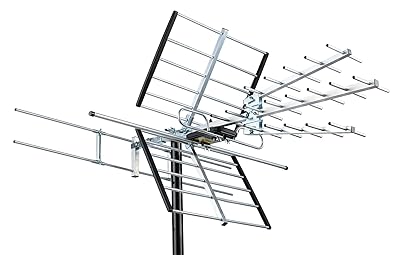
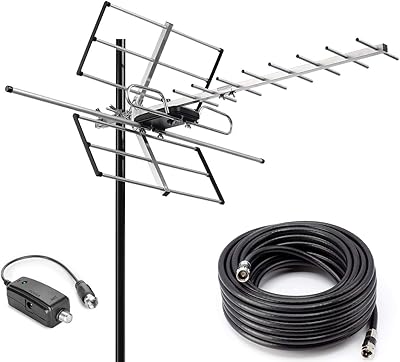
The RCA ANT751E Outdoor Yagi TV Antenna has been around long enough to earn a genuine reputation among cord-cutters who need reliable free over-the-air television beyond what a flat panel can deliver. Unlike omnidirectional antennas that cast a wide net and hope for the best, the Yagi directional design concentrates signal pickup in one focused direction — ideal for suburban or rural households situated within reasonable line-of-sight of broadcast towers. That advertised 75-mile range deserves an honest caveat: terrain, tree cover, and building obstructions all chip away at that figure in practice. Still, this outdoor Yagi antenna has remained a credible option for years, and its staying power says something real about its consistency.
Features & Benefits

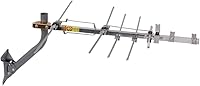
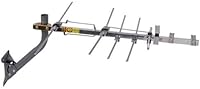
What makes the ANT751E worth considering is the combination of dual-band coverage and practical build quality. The antenna handles both VHF and UHF signals, which matters more than many buyers realize — a lot of flat indoor antennas quietly struggle with VHF, cutting off channels like NBC or PBS depending on your market. The physical construction is rated for outdoor exposure, meaning rain, UV, and wind are not concerns over time. Assembly is mostly done for you out of the box: snap-lock elements, a fold-out UHF reflector, a mast, and a 75-ohm matching transformer are all included. One real catch: coax cable sold separately, so budget for that before install day. The antenna also supports ATSC 3.0, keeping it relevant as NexGenTV broadcasts expand.

Best For

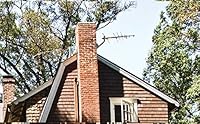
This directional OTA antenna makes the most sense for households sitting 40 to 70 miles from the nearest broadcast towers — that middle zone where indoor antennas give up but a full rooftop installation feels like overkill. Attic mounting is a particularly smart application: you get outdoor-grade durability without exposing the hardware to direct weathering, and the signal path is still far cleaner than anything inside a living room. VHF-heavy markets benefit especially, since most thin flat antennas are quietly weak on those lower frequencies. It also works as a reliable backup for streaming households — when the internet goes down during a storm, free over-the-air CBS or NBC is genuinely useful to have. Not the right pick for dense urban installs.

User Feedback

Across more than 12,000 ratings, this outdoor Yagi antenna sits at 4.4 out of 5 stars — a score that reflects genuine satisfaction rather than a thin sample. The most consistent praise centers on long-distance channel pickup: buyers who had tried multiple indoor options report finally locking in stations they could not reach before. Build quality and the included mounting hardware also get regular mention as positives. On the other side, urban buyers occasionally run into multipath interference, a known limitation of directional designs in signal-dense environments. Aiming is not set-and-forget either — precise positioning matters, and a few degrees off can drop channel count noticeably. The Signal Finder app is helpful for first-timers but not something seasoned installers tend to rely on.

Pros

  • Captures distant VHF and UHF stations that indoor and flat-panel antennas routinely miss.
  • Outdoor-rated construction holds up well against rain, wind, and years of UV exposure.
  • Comes mostly pre-assembled, with mast, clamp, mounting hardware, and a 75-ohm transformer included.
  • Supports ATSC 3.0, so it is compatible with the next generation of broadcast TV signals.
  • The ANT751E has a long track record on the market, meaning it is a known quantity rather than an untested design.
  • Attic installation is a legitimate and effective use case, avoiding full rooftop exposure.
  • Over 12,000 ratings at 4.4 out of 5 stars reflects a broad and genuinely satisfied user base.
  • Pulls in free HD network channels — CBS, NBC, FOX, ABC — with no ongoing subscription cost.
  • Compact enough at 2 pounds that mounting and repositioning is manageable for a solo installer.

Cons

  • Coax cable is not included, which surprises buyers who expect a complete out-of-the-box install.
  • The 75-mile range claim is a ceiling, not a guarantee — real-world results vary significantly by terrain and obstructions.
  • Directional aiming requires patience; small angular adjustments can add or drop several channels.
  • Not well-suited for urban installs where multipath signal interference is common.
  • The companion Signal Finder app receives inconsistent reviews and is not reliable enough to depend on entirely.
  • Renters or apartment dwellers will struggle to find a viable mounting location for this antenna.
  • Requires a separate coax cable purchase, adding cost and a hardware store trip most buyers do not anticipate.
  • Performance drops noticeably if trees, hills, or large structures sit between the antenna and the broadcast towers.

Ratings

Our AI-generated scores for the RCA ANT751E Outdoor Yagi TV Antenna were produced by systematically analyzing thousands of verified global buyer reviews, with spam, bot submissions, and incentivized feedback actively filtered out before scoring. Each category reflects the honest distribution of real user experiences — strengths and frustrations weighted equally. Where buyers consistently disagreed, that tension is captured in the scores rather than smoothed over.
Signal Reception
88%
Users living 40 to 65 miles from their nearest towers consistently report locking in channels that no previous indoor or amplified flat antenna could reach. The dual VHF and UHF coverage is a standout — buyers in markets where legacy VHF stations still dominate notice an immediate, tangible difference compared to panel-style antennas.
Reception gains are not universal: buyers in hilly terrain or heavily wooded areas frequently report falling well short of the advertised range. A subset of users note that channel counts fluctuate seasonally as foliage and atmospheric conditions shift, requiring periodic re-aiming to maintain a stable lineup.
Range Accuracy
67%
33%
For buyers in flat, open suburban or rural environments with a clear line of sight to towers, the antenna genuinely delivers impressive long-distance pickup — several reviewers document pulling in stations over 60 miles away with stable, uninterrupted signals during prime-time viewing.
The 75-mile range claim draws the most criticism in the review base. A meaningful number of buyers in moderately obstructed environments find real-world performance lands closer to 40 to 50 miles, and a few feel the marketing sets expectations that the hardware cannot consistently meet outside of ideal conditions.
Build Quality
83%
The physical construction earns consistent praise across the review base — buyers who have had this directional OTA antenna mounted outdoors for multiple years report no visible degradation in the elements or the reflector. The materials feel appropriately robust for a permanent outdoor installation rather than something clearly designed for short-term use.
A smaller but notable group of users report that specific plastic clip points on the reflector assembly feel less confidence-inspiring than the rest of the structure. In regions with frequent high-wind events, a handful of buyers have documented element misalignment after severe storms, requiring manual readjustment.
Installation Experience
74%
26%
The pre-assembled snap-lock and fold-out design genuinely reduces the number of fiddly steps compared to older antenna kits that require manual element attachment. Most buyers with basic DIY confidence complete the physical mount without needing professional help, and the included mast and hardware are considered a practical bonus.
The missing coax cable is a recurring frustration — many buyers only discover the omission once the antenna is already mounted and they reach for the cable that is not there. Instruction clarity also draws mixed feedback, with some users reporting that aiming guidance in the manual is vague enough to require supplementary research online.
VHF Performance
86%
This is one of the ANT751E's clearest advantages over competing flat and omnidirectional designs. Buyers in markets where major networks broadcast on VHF frequencies — particularly NBC and PBS affiliates in many U.S. regions — report pulling those channels in cleanly and reliably, something their previous antennas could not manage consistently.
VHF gains are only realized when the antenna is properly aimed and positioned at height; attic installations with metal-backed insulation or roofing materials can suppress VHF signal meaningfully. A few buyers in markets dominated by UHF stations found the VHF advantage irrelevant to their specific channel lineup.
UHF Performance
81%
19%
UHF reception is reliable and consistent for the majority of users, which covers most modern HD broadcast channels in U.S. markets. Buyers using this outdoor Yagi antenna as a primary source for network television report stable, artifact-free pictures on UHF stations at distances that would challenge less directional designs.
Urban buyers occasionally experience UHF signal breakup due to multipath reflections off nearby structures — a known limitation of directional antennas in dense signal environments. This is less a product flaw than a design tradeoff, but it genuinely affects a real segment of buyers who did not anticipate it before purchasing.
Value for Money
77%
23%
For users who land in the right geographic and signal environment, the ANT751E delivers years of free HD television with no monthly cost whatsoever — a proposition that makes the upfront investment look very reasonable over a multi-year horizon. The inclusion of mounting hardware and a transformer adds tangible value compared to budget alternatives that arrive as bare antennas.
Buyers who purchase based on the 75-mile claim and then underperform that benchmark tend to feel the price is harder to justify. The additional cost of a separately purchased coax cable — easily forgotten pre-purchase — bumps total outlay higher than the listed price implies.
Ease of Aiming
61%
39%
Once users commit to the process of careful directional calibration — using the Signal Finder app or an online tower map as a guide — most report finding a sweet spot that dramatically increases their channel count. Buyers who invest time in the aiming process are consistently more satisfied than those who mount and leave it.
Aiming a directional antenna is not intuitive for first-time users, and the documentation offers limited practical guidance. Several buyers report spending an hour or more on a roof or in an attic making incremental adjustments, and in multi-tower markets, compromising between aiming toward different tower clusters is a genuinely tricky problem with no clean solution.
Weather Durability
79%
21%
Long-term outdoor users in climates with significant seasonal variation — including snow, ice, and sustained rain — generally report that the antenna continues to perform without physical failure or meaningful signal degradation year over year. The UV-resistant construction holds its shape and color noticeably better than cheaper alternatives.
High-wind events are the most cited durability concern, with a subset of buyers reporting that sustained gusts can shift the antenna's aim enough to drop channels until it is manually readjusted. The mast clamp, while functional, is not considered heavy-duty enough by buyers in consistently windy installation environments.
Signal Finder App
58%
42%
For buyers who have no prior experience with directional antennas, the RCA Signal Finder app provides a useful compass-style starting point that removes some of the guesswork from initial aiming. First-time cord-cutters in particular appreciate having any kind of guided orientation tool, even a basic one.
Experienced installers and technically savvy buyers generally dismiss the app as imprecise, preferring dedicated tower-mapping websites that show exact tower bearings and distances by address. The app has also received negative feedback for inconsistent performance across different Android versions, limiting its reliability as a dependable setup tool.
Attic Installation Suitability
82%
18%
Attic mounting is consistently cited as one of the most practical and successful use cases for this directional OTA antenna. Buyers who cannot or prefer not to mount on a rooftop report that attic placement — assuming standard insulation without metal backing — yields strong, stable reception at a fraction of the physical effort of an exterior install.
Performance in the attic is highly dependent on roofing and insulation materials. Buyers with foil-faced insulation, metal roofing, or slate tiles report significantly attenuated signals, and a few have had to abandon the attic approach entirely in favor of an exterior mount to achieve usable reception.
Channel Count
75%
25%
Buyers in well-served suburban markets report pulling in 30 to 60 or more channels across major networks, sub-channels, and independent stations — a genuinely strong result that covers most viewing needs without a subscription. The combination of VHF and UHF coverage is specifically credited for maximizing the total channel count.
Channel count is a highly location-dependent metric, and buyers in rural areas with fewer broadcast transmitters or those on the wrong side of terrain obstructions often end up with far fewer channels than expected. Some users also note that channel stability — not just count — varies, with a handful of stations dropping out during certain atmospheric conditions.
ATSC 3.0 Readiness
72%
28%
The antenna's compatibility with NexGenTV and ATSC 3.0 signals is a meaningful forward-looking feature for buyers who want their hardware to remain relevant as next-generation broadcasts roll out across U.S. markets over the coming years. This future-proofing element is noted positively by technically informed buyers.
ATSC 3.0 compatibility is purely passive — the antenna can receive the signals, but viewers still need a TV or tuner that supports ATSC 3.0 decoding to access the next-gen features. In most U.S. markets as of now, ATSC 3.0 coverage is still limited, making this a benefit that matters more in the medium-term future than today.
Included Hardware Completeness
63%
37%
The inclusion of a mast, locking clamp, mounting hardware, and 75-ohm matching transformer is genuinely appreciated by buyers and represents better out-of-box preparedness than many competing antennas at a similar price point. Having the transformer pre-included removes one common point of confusion for new installers.
The omission of coaxial cable is the single most consistently raised complaint in the review base and is widely described as an oversight that adds friction to the installation day. Buyers who live far from a hardware store or ordered the antenna for a weekend project find this gap particularly frustrating.

Suitable for:

The RCA ANT751E Outdoor Yagi TV Antenna is built for a specific kind of buyer: someone living 40 to 70 miles from the nearest broadcast towers who has already tried and been disappointed by indoor antennas. If you are in a suburban or rural area with a clear-ish line of sight toward your local towers, this directional OTA antenna can pull in channels that flat panel designs simply cannot reach. It is also a strong fit for attic installations — you get the weather-resistant build quality without the hassle of a full rooftop mount, and signal performance in an attic is typically far better than anything inside the living space. VHF-heavy markets are where this antenna really earns its keep, since those lower-band signals expose the weakness of most modern thin antennas. Streaming households who want a dependable backup for power or internet outages will also find genuine value in having reliable free network TV available on demand.
Not suitable for:

The RCA ANT751E Outdoor Yagi TV Antenna is not the right tool for every situation, and being clear about that saves a lot of frustration. If you live in a dense urban environment already close to broadcast towers, the directional Yagi design can actually work against you — multipath interference from buildings and reflected signals is a known issue, and an omnidirectional antenna would serve you better in that context. Apartment dwellers or renters without access to an attic or exterior mounting surface will find little practical use here, since this antenna demands a fixed outdoor or structural installation. Anyone expecting plug-and-play simplicity should also know that precise aiming is not optional — getting the direction even slightly off can meaningfully reduce your channel count. Finally, buyers who assume everything needed is in the box should note that coax cable is sold separately, which adds a step and a cost that catches some people off guard.

Specifications

  • Model Number: This antenna is manufactured under the model designation ANT751E by Audiovox Accessories Corporation, marketed under the RCA brand.
  • Antenna Type: Yagi directional design, which concentrates signal reception in a single focused direction rather than picking up signals from all sides.
  • Signal Bands: Receives both VHF (Very High Frequency) and UHF (Ultra High Frequency) broadcast bands, covering the full range of over-the-air TV channels.
  • Stated Range: Rated for reception up to 75 miles from broadcast towers under ideal line-of-sight conditions; real-world range varies based on terrain and obstructions.
  • Dimensions: The antenna measures 36 x 4.6 x 6.7 inches assembled, making it a full-size outdoor directional unit rather than a compact or mini design.
  • Weight: At 2 pounds, the ANT751E is light enough for a single-person installation without requiring heavy-duty mounting infrastructure.
  • Impedance: Operates at 75 Ohm impedance, which is the standard for modern coaxial cable TV connections and compatible with virtually all televisions and splitters.
  • Included Hardware: Package includes a mast, locking mast clamp, mounting hardware, and a 75-ohm matching transformer; coaxial cable is not included and must be purchased separately.
  • Broadcast Compatibility: Supports 4K Ultra HD, 8K, and 1080p high-definition broadcasts, and is compatible with the ATSC 3.0 NexGenTV broadcast standard.
  • Installation Method: Ships largely pre-assembled with snap-lock UHF elements and an easy-lock fold-out UHF reflector, reducing the number of manual assembly steps required.
  • Use Environment: Rated for permanent outdoor installation or attic mounting, with construction materials designed to withstand rain, wind, and prolonged UV exposure.
  • Companion App: The free RCA Signal Finder app, available for iOS and Android, helps users align the antenna directionally to maximize channel reception during setup.
  • Coax Connector: Uses a standard F-type coaxial connector output, compatible with all common RG6 and RG59 coaxial cables sold at hardware and electronics retailers.
  • Transformer: A 75-ohm matching transformer is pre-installed or included to ensure proper impedance matching between the antenna and the connected coaxial cable run.
  • Brand Origin: Designed and distributed by Audiovox Accessories Corporation under the RCA brand, a manufacturer with a long-standing presence in the consumer electronics market.
  • User Rating: Holds a 4.4 out of 5 star average rating based on more than 12,000 customer reviews, placing it among the better-rated options in the outdoor antenna category.

Related Reviews
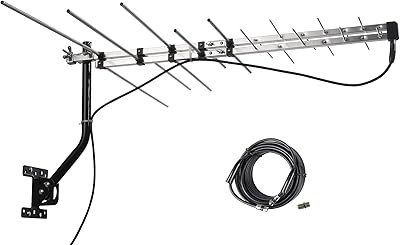
UltraPro Outdoor 70-Mile HD TV Antenna
76%
73%
Signal Reception
61%
Range Accuracy
82%
Installation Ease
78%
Build Quality
81%
Weather Resistance
More
McDuory UHD-3968 Outdoor Yagi TV Antenna
73%
78%
Signal Reception
51%
Range Accuracy
88%
Ease of Assembly
74%
Build Quality
81%
Value for Money
More
RCA ANT860EV Amplified Outdoor HDTV Antenna
84%
91%
Signal Reception
88%
Ease of Installation
84%
Durability
90%
Value for Money
89%
Range
More
PIBIDI UHD-8903 Outdoor TV Antenna
77%
73%
Signal Range & Reception
67%
VHF Band Performance
84%
UHF Band Performance
78%
Build Quality & Durability
81%
Lightning & Grounding Protection
More
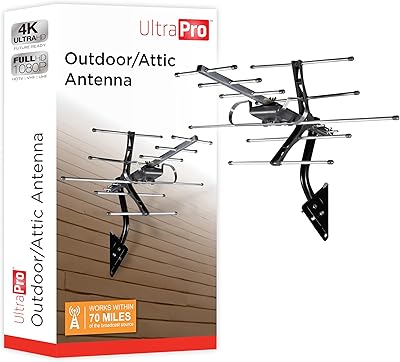
iGENJUN ANT-CS8218 Amplified Indoor Outdoor TV Antenna
72%
73%
Signal Reception Quality
67%
Amplifier Performance
88%
Ease of Installation
48%
Range Accuracy vs. Claimed Specs
71%
Build Quality & Materials
More
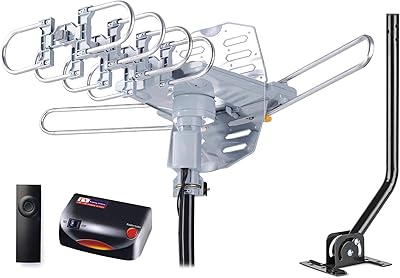
MATIS FBA08D Outdoor TV Antenna
73%
71%
Signal Reception
88%
Ease of Setup
84%
Dual TV Output
76%
Motorized Rotation
73%
Weather Resistance
More
GE 29884 Outdoor Long-Range TV Antenna
79%
83%
Signal Reception Strength
88%
Ease of Installation
86%
Build Quality & Durability
79%
Channel Count & Variety
84%
Value for Money
More
1byone 360° Omni-Directional Outdoor TV Antenna
73%
74%
Signal Reception
91%
Ease of Installation
72%
Build Quality
68%
Amplifier Performance
63%
4G LTE Filtering
More
Antop AT-414BG Omni-Directional Outdoor TV Antenna
85%
90%
Reception Quality
88%
Ease of Installation
86%
Durability in Outdoor Conditions
92%
Value for Money
87%
Signal Range
More
PBD WA-2608 Motorized Outdoor TV Antenna
74%
82%
Signal Reception Quality
78%
Motorized Rotation
84%
Installation Experience
74%
Dual TV Output
71%
Build Quality & Durability
More

FAQ

The 75-mile figure is a best-case ceiling, not a guaranteed result. In practice, range depends heavily on your local terrain, elevation, tree cover, and how directly your home faces the broadcast towers. Many users in flat, open areas do achieve impressive long-distance reception, but if you are in a hilly or wooded region, expect something closer to 40 to 55 miles of reliable performance.

No, coaxial cable is sold separately and is not included. This catches a lot of buyers off guard, so make sure you pick up an appropriate length of RG6 coax before install day. The antenna itself includes the mast, mounting hardware, clamp, and a 75-ohm matching transformer, but you will need the cable to connect it to your TV or distribution point.

Yes, and for many households an attic installation is actually the smarter choice. You get the outdoor-grade durability of the antenna without exposing it to direct weather, and attic signal performance is typically far superior to anything inside the living space. The main thing to watch for is whether your roof decking or insulation contains metal-backed materials, as those can attenuate the signal noticeably.

This directional OTA antenna is generally not the ideal choice for dense urban environments. Yagi antennas focus signal pickup in one direction, which means they can struggle with multipath interference — the kind caused by signals bouncing off buildings and arriving at the antenna from multiple angles simultaneously. If you are already close to broadcast towers and getting decent results with a simpler antenna, an omnidirectional design would likely serve you better.

Yes. The ANT751E is compatible with 4K and 8K broadcasts and supports the ATSC 3.0 standard, which underpins NexGenTV — the next generation of over-the-air broadcasting. As more stations begin transmitting ATSC 3.0 signals in your market, this antenna will be ready to receive them without any hardware upgrade.

It is manageable for most DIYers, but it is not a five-minute job. The antenna ships mostly pre-assembled, and the snap-lock and fold-out elements reduce the hands-on work. That said, you will still need to mount the mast securely, run coax cable to your TV, and spend time carefully aiming the antenna toward your local towers. Using the free RCA Signal Finder app during setup helps with that aiming process, especially if you are not sure which direction your towers are in.

In most cases, no. The Yagi design inherently provides more focused gain than an indoor or flat antenna, so many users find they do not need a separate amplifier for standard installations. However, if you are running a very long coax cable run — say, over 50 feet — or splitting the signal to multiple TVs, a distribution amplifier can help compensate for signal loss along the way.

That depends entirely on your location relative to your local broadcast towers. In most U.S. markets, free over-the-air channels include the major networks — ABC, CBS, NBC, FOX, and PBS — along with a range of sub-channels like MeTV, Comet, and local independent stations. A quick search on a site like AntennaWeb or TVFool using your zip code will give you a realistic picture of what channels are available in your area before you buy.

It is genuinely helpful for initial setup, particularly if you are new to directional antennas and unsure which way to point it. The app essentially acts as a compass, showing you the direction of nearby broadcast towers so you can orient this directional OTA antenna correctly. That said, experienced installers rarely rely on it — they tend to use dedicated online tower maps and adjust by scanning channels directly on the TV. Think of the app as a good starting point, not a precision tool.

The antenna is built for long-term outdoor exposure and generally holds up well. The materials are rated to handle rain, wind, and UV without significant physical degradation over normal use timespans. One practical maintenance tip: check the coax connection points seasonally, as corrosion at the connector ends is a more common culprit for signal deterioration than the antenna itself failing. A weatherproof coax seal at outdoor connections goes a long way.

Where to Buy