Overview

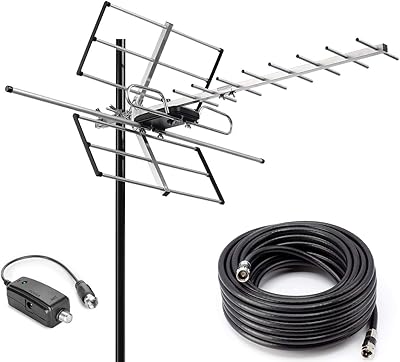
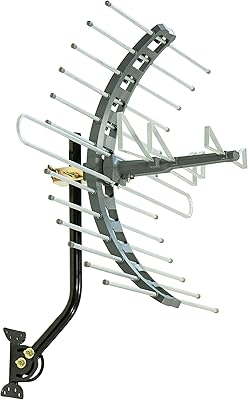
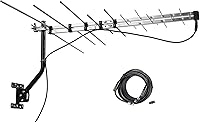
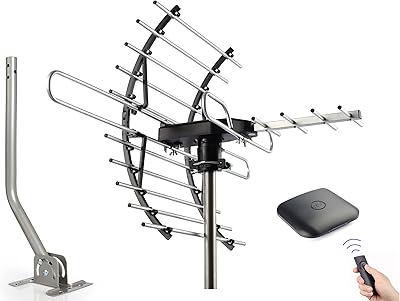
The McDuory UHD-3968 Outdoor Yagi TV Antenna is a solid mid-range pick for cord-cutters who want free over-the-air channels without a monthly bill attached. It covers both UHF and VHF bands and claims a reception range of 70-plus miles from broadcast towers — a number that sounds compelling but deserves honest scrutiny depending on your location. This rooftop TV antenna ships mostly pre-assembled, fits on a roof or in an attic, and includes a 40-foot RG6 coaxial cable and mounting pole right in the box. That said, terrain, tree cover, and your actual distance from towers will shape your real-world results far more than any spec sheet.

Features & Benefits

Unlike flat panel antennas that gather signals from all directions, this Yagi outdoor antenna uses a directional design to concentrate reception toward a specific broadcast cluster — which translates to stronger, more stable signal when it is properly aimed. It handles everything from 720p up through 4K across both VHF (170–230MHz) and UHF (470–860MHz) frequencies. The 8dB antenna gain and tight beam width help pull in weaker signals that would overwhelm a standard indoor antenna. Construction is weather-resistant with lightning protection built in, so it holds up outdoors year-round. Assembly requires no tools, just snapping a few elements into place, and the standard 75 Ohm impedance means it works with virtually any TV or tuner you already own.

Best For

This rooftop TV antenna makes the most sense for households sitting roughly 40 to 70 miles from their nearest broadcast towers, particularly in suburban or rural settings where signal competition is lower. If your towers are close by, an omnidirectional antenna would likely serve you better. But for anyone dealing with weak or distant signals, the focused nature of a Yagi is a genuine advantage. One critical thing to know upfront: you need to point it directly toward your local tower cluster. That is easy enough once you check a resource like AntennaWeb or TV Fool before you mount anything — a step many buyers skip and then regret when channel counts disappoint.

User Feedback

Most buyers come away satisfied — the McDuory UHD-3968 holds a strong rating across close to 850 reviews, and the patterns in that feedback tell a clear story. People sitting 40 to 60 miles from local towers consistently report picking up a solid channel lineup after installation, often on the first attempt. Where things get mixed is at the outer edge of the claimed range. A number of users in hilly or wooded terrain found reception spotty or nonexistent, and several flagged that the advertised 150-mile figure is wildly optimistic. On the upside, the included mounting hardware and coaxial cable earn consistent praise — buyers appreciate functional accessories rather than cheap filler, and that goodwill shows up clearly across the reviews.

Pros

  • Directional Yagi design delivers noticeably stronger signal than flat indoor antennas for medium-to-long-distance reception.
  • Covers both UHF and VHF bands, so you are not leaving any free broadcast channels behind.
  • Arrives mostly pre-assembled with no tools required, making installation manageable for most adults.
  • The included 40-foot RG6 coaxial cable is long enough for most attic and rooftop routing setups.
  • Mounting pole is included, which removes a common hidden cost from the installation process.
  • Weather-resistant construction with lightning protection holds up well through harsh seasons.
  • Compatible with any standard TV or tuner thanks to the universal 75 Ohm impedance.
  • Nearly 850 buyer ratings give you a reliable read on real-world performance before you commit.
  • Solid channel pickup reported consistently by buyers in the 40 to 60 mile range from towers.
  • Accessible price point makes it a low-risk upgrade from an indoor antenna for rural or suburban households.

Cons

  • The advertised 150-mile maximum range is highly optimistic and rarely achieved under typical conditions.
  • Heavily wooded, hilly, or valley-based locations may see frustratingly inconsistent results regardless of setup quality.
  • Yagi antennas must be precisely aimed at tower clusters — poor pointing is a common and costly installation mistake.
  • Cannot pull signals from multiple directions simultaneously, which is a real limitation if your local towers are spread out.
  • Not practical for renters or apartment dwellers who cannot mount hardware on a roof or exterior structure.
  • No amplifier or signal booster is included in the base package, which may leave fringe-area users short.
  • At roughly 34 by 33 inches when assembled, the physical footprint is substantial and may not suit smaller mounting spaces.
  • Some buyers report that channel counts drop noticeably during heavy rain or storms despite the weather-resistant claim.
  • Brand support and warranty documentation are not prominently communicated, which may concern buyers who run into issues post-installation.

Ratings

Our AI rating engine analyzed verified buyer reviews for the McDuory UHD-3968 Outdoor Yagi TV Antenna from across global markets, actively filtering out incentivized, duplicate, and bot-generated submissions to surface what real cord-cutters actually experienced. The scores below reflect a transparent synthesis of both the genuine strengths and recurring frustrations reported by buyers in a wide range of geographic and installation scenarios. Nothing has been softened — where the antenna underdelivers, the scores say so plainly.

Signal Reception
78%
22%
Buyers located 40 to 60 miles from their local tower cluster consistently report strong channel counts after proper aiming, with many pulling in 30 or more free channels in suburban settings. The dual UHF/VHF coverage ensures no broadcast band is left unaddressed, which matters for areas where VHF network affiliates are still active.
Performance drops sharply beyond 65 miles or in terrain with hills and tree cover, where signal inconsistency becomes a real complaint. A meaningful number of buyers in fringe or obstructed locations found the antenna only marginally better than a quality indoor unit, which is a tough result given the installation effort involved.
Range Accuracy
51%
49%
In genuinely open, flat terrain with towers well within 60 miles, this Yagi outdoor antenna can achieve reception that would be impossible with any indoor option, validating the directional design approach. Buyers who did their homework on tower distances before purchasing were far more satisfied than those who went in blind.
The advertised 150-mile total range figure is the single most criticized element across the review base — buyers in the 80 to 100 mile range report little to no usable reception, making the spec feel misleading. Even the more modest 70-mile claim requires ideal line-of-sight conditions that most real-world installations simply do not have.
Ease of Assembly
88%
The no-tools assembly process is one of the most praised aspects of this rooftop TV antenna, with the majority of buyers describing setup as completed in under 30 minutes. Elements click and slide into place intuitively, and the instruction clarity is sufficient for buyers with no prior antenna experience.
A small number of reviewers noted that certain element connections felt loosely fitted out of the box, raising minor concerns about long-term structural rigidity during high winds. The physical roof or attic mounting itself — while not the antenna's fault — adds complexity that the assembly rating alone does not capture.
Build Quality
74%
26%
The weather-resistant construction holds up well through standard seasonal exposure, and buyers in cold-climate regions report no significant degradation after multiple winters. The integrated lightning protection is a practical inclusion that adds genuine peace of mind for anyone mounting hardware on an exposed rooftop.
Some reviewers describe the plastic element connectors as feeling noticeably lightweight relative to metal-bodied competitors in the same price tier. A subset of buyers in high-wind areas reported physical movement at the mounting connection point after extended outdoor use, suggesting the hardware tolerances are adequate rather than robust.
Value for Money
81%
19%
For buyers who live in the right distance band and take the time to aim the antenna correctly, this rooftop TV antenna eliminates a monthly cable bill with a one-time outlay — a value proposition that is hard to argue with. The inclusion of a 40-foot coaxial cable and mounting pole removes two common hidden costs from the installation budget.
Buyers who purchase based on the maximum range claims and then experience poor reception feel the value proposition collapses quickly, particularly given the time and effort required for a rooftop installation. If a signal booster or longer cable run is also needed, the total cost climbs toward territory where more capable alternatives become worth comparing.
Included Accessories
83%
The 40-foot RG6 coaxial cable is long enough for the majority of standard attic and rooftop routing scenarios, and buyers consistently call it out as a genuinely useful inclusion rather than a throwaway add-on. Having the mounting pole in the box means most people can go from unboxing to a working installation in a single session.
No signal booster is included, which leaves buyers in marginal reception areas needing an additional purchase before the setup is complete. Some buyers also noted that the coaxial cable, while a useful length, is on the lower end of quality and may benefit from replacement in long-term permanent installations.
Directional Aim Usability
67%
33%
Once properly aimed using a tower-direction resource, the focused beam of this Yagi outdoor antenna delivers noticeably cleaner signal than any omnidirectional design could at the same distance. Buyers who understood the directional nature of the antenna before purchasing rated their satisfaction significantly higher than those who did not.
The necessity of precise aiming is a genuine friction point — buyers who installed it without researching tower directions first often blamed the antenna for poor performance that was actually a setup error. Without a built-in signal meter or pointing guide, optimizing the aim requires guesswork or a separate app, which adds steps many buyers did not anticipate.
Weather Durability
76%
24%
The antenna has demonstrated solid structural durability through rain, snow, and moderate wind loads, with the majority of long-term owners reporting no physical degradation after a year or more of outdoor exposure. The operating temperature range of -10°C to 50°C covers real-world seasonal extremes in most climates where it is sold.
Signal dropout during heavy rainfall is a recurring complaint, a phenomenon related to signal absorption rather than physical damage but frustrating nonetheless for users who expected consistent storm-season performance. A small number of buyers in coastal or high-humidity environments reported surface corrosion on metal elements faster than expected.
Multi-TV Compatibility
62%
38%
The standard 75 Ohm coaxial output makes splitting the signal to a second or third TV straightforward using any off-the-shelf splitter, which is a common use case for households looking to eliminate cable from multiple rooms simultaneously. The antenna itself introduces no compatibility barriers for any TV sold in the last 15 years.
Splitting the signal without an amplifier causes noticeable signal degradation, and the base package includes no booster to compensate — buyers trying to serve two or more TVs often find themselves purchasing additional hardware. In fringe reception areas, a two-way split can push marginal channels completely out of range.
Installation Clarity
71%
29%
Most buyers describe the included instructions as sufficient for getting the antenna physically assembled and mounted without confusion. The simple snap-together design reduces the number of steps where things can go wrong, which helps first-time outdoor antenna installers feel confident during the process.
The instructions say little about how to determine the optimal pointing direction, which is arguably the most important variable for a directional antenna — buyers are left to figure that out on their own. A QR code or reference to a tower-direction lookup tool in the documentation would meaningfully improve the out-of-box experience.
Channel Count Output
75%
25%
Buyers in suburban areas with reasonable tower proximity report channel totals in the 30 to 50 range after a full scan, comfortably covering the major broadcast networks plus a healthy selection of subchannels. Full UHF and VHF band coverage means no category of free broadcast content is systematically excluded.
Channel counts vary wildly depending on location, and buyers in rural areas more than 65 miles out often report totals in the single digits or teens — a significant gap from suburban user experiences that can skew expectations. Channels near the edge of the reception range frequently drop in and out rather than delivering a stable lock.
Physical Footprint
66%
34%
At 34″ x 33″ assembled, the antenna is appropriately sized for a directional Yagi with 8dB of gain — the physical dimensions are a function of the design rather than unnecessary bulk. Buyers with adequate roof or attic space find the size unremarkable and easy to work with during installation.
For buyers with limited attic clearance or smaller roof sections, the assembled size is genuinely restrictive and can complicate or fully prevent installation. The antenna is also visually prominent on a roofline, which matters to homeowners in neighborhoods with aesthetic restrictions or HOA guidelines.
Long-Term Reliability
72%
28%
A reasonable share of buyers report consistent, stable performance over one to two years of outdoor use without signal degradation or hardware failure, which speaks to adequate build integrity for the price tier. The lightning protection inclusion reduces one of the more common causes of long-term antenna failure in stormy climates.
The review base lacks sufficient long-term feedback beyond the two-year mark to make confident claims about extended durability, and some early buyers noted element loosening over time. Buyers in high-UV or extreme-cold climates may see plastic component aging faster than those in milder regions.

Suitable for:

The McDuory UHD-3968 Outdoor Yagi TV Antenna is a practical choice for cord-cutters living in suburban or rural areas who are situated roughly 40 to 70 miles from their nearest broadcast tower cluster. If you have tried indoor antennas and been frustrated by weak or inconsistent signal, the directional Yagi design gives you a meaningful step up in pulling power without jumping to a commercial-grade installation. Homeowners who are comfortable mounting hardware on a roof or in an attic will find the mostly pre-assembled build and included mounting pole take a lot of the friction out of getting set up. The bundled 40-foot coaxial cable is long enough to handle most real-world routing scenarios, which means one less trip to the hardware store. Anyone willing to spend ten minutes researching their local tower directions using a free tool like AntennaWeb before mounting will get considerably better results out of this rooftop TV antenna than buyers who skip that step.

Not suitable for:

The McDuory UHD-3968 Outdoor Yagi TV Antenna is not the right fit for households sitting close to broadcast towers — typically within 20 to 25 miles — where a simpler, less expensive omnidirectional antenna would pick up channels from multiple directions without needing precise aiming. Apartment dwellers or renters who cannot mount hardware on a roof or exterior wall will find this Yagi outdoor antenna impractical by design. Buyers in heavily wooded terrain, deep valleys, or hilly regions should also temper their expectations significantly, as physical obstructions can undercut even the best directional antenna regardless of its stated gain. If your local towers are scattered across very different compass directions and you need to pull from multiple headings simultaneously, a single fixed Yagi will leave channels on the table. Finally, anyone expecting the advertised 150-mile maximum range to hold up in real-world conditions is likely to be disappointed — that figure represents an idealized ceiling, not a typical outcome.

Specifications

  • Antenna Type: Directional Yagi design engineered to focus signal reception toward a single targeted broadcast direction for improved gain over omnidirectional models.
  • Frequency Range: Covers VHF 170–230MHz and UHF 470–860MHz, allowing reception of the full spectrum of free over-the-air broadcast television signals.
  • Supported Formats: Compatible with 720p, 1080i, 1080p, and 4K OTA broadcasts, ensuring the antenna is ready for current and near-future digital broadcast standards.
  • Antenna Gain: Rated at 8dB of antenna gain, which provides meaningful signal amplification for households located at medium-to-long distances from broadcast towers.
  • Beam Width: Horizontal beam width of 35° and vertical beam width of 40°, concentrating pickup into a narrow forward arc for stronger directional performance.
  • Impedance: Standard 75 Ohm impedance ensures plug-and-play compatibility with virtually all modern televisions, tuners, and coaxial signal splitters.
  • Assembled Size: Measures 34″ x 33″ when fully assembled, requiring adequate clearance on a roof mount or in a larger attic space for proper installation.
  • Item Weight: Weighs 4.73 pounds fully assembled, making it manageable for a single person to handle during roof or attic mounting.
  • Included Cable: Ships with a 40-foot RG6 coaxial cable, providing enough length to route the signal line from most rooftop or attic mounting points to a TV inside the home.
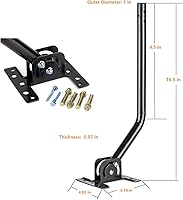
  • Mounting Pole: A mounting pole is included in the package, removing the need for a separate purchase before beginning the installation process.
  • Assembly Tools: No tools are required to assemble the antenna; the elements snap or connect together by hand, making setup accessible to non-technical users.
  • Weather Resistance: Built for permanent outdoor exposure with a weather-resistant construction and integrated lightning protection for year-round durability in varying climates.
  • Operating Temp: Rated for operation in temperatures ranging from -10°C to 50°C, covering typical seasonal extremes in most North American and European climates.
  • Claimed Range: Manufacturer states a maximum total range of 150 miles and a practical reception range of 70-plus miles from broadcast tower sources under ideal conditions.
  • Manufacturer: Designed and sold by McDuory, a consumer electronics brand focused on OTA reception products in the accessible mid-range market segment.

Related Reviews
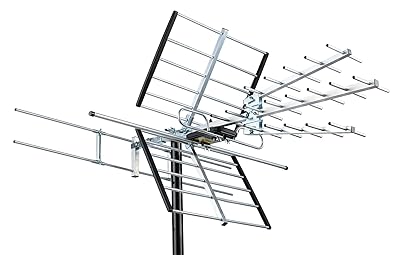
PIBIDI UHD-8903 Outdoor TV Antenna
77%
73%
Signal Range & Reception
67%
VHF Band Performance
84%
UHF Band Performance
78%
Build Quality & Durability
81%
Lightning & Grounding Protection
More
McDuory DA-210 Outdoor HDTV Antenna
87%
89%
Performance & Reception
92%
Value for Money
88%
Build Quality & Durability
95%
Ease of Installation
85%
Signal Strength & Stability
More
iGENJUN ANT-CS8218 Amplified Indoor Outdoor TV Antenna
72%
73%
Signal Reception Quality
67%
Amplifier Performance
88%
Ease of Installation
48%
Range Accuracy vs. Claimed Specs
71%
Build Quality & Materials
More
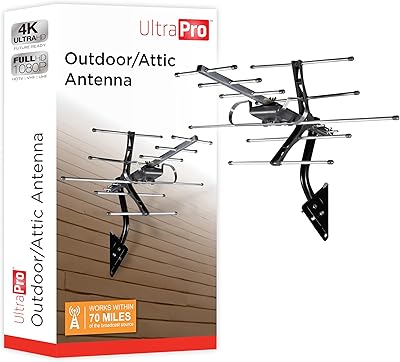
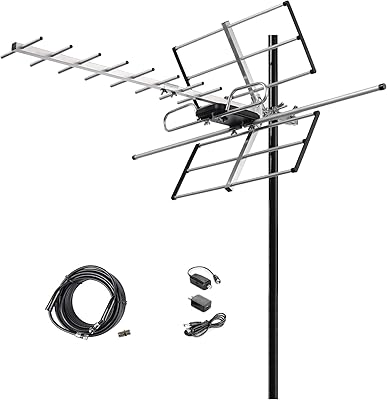
UltraPro Outdoor 70-Mile HD TV Antenna
76%
73%
Signal Reception
61%
Range Accuracy
82%
Installation Ease
78%
Build Quality
81%
Weather Resistance
More
Antop AT-414BG Omni-Directional Outdoor TV Antenna
85%
90%
Reception Quality
88%
Ease of Installation
86%
Durability in Outdoor Conditions
92%
Value for Money
87%
Signal Range
More
GE 29884 Outdoor Long-Range TV Antenna
79%
83%
Signal Reception Strength
88%
Ease of Installation
86%
Build Quality & Durability
79%
Channel Count & Variety
84%
Value for Money
More
PBD WA-2608 Motorized Outdoor TV Antenna
74%
82%
Signal Reception Quality
78%
Motorized Rotation
84%
Installation Experience
74%
Dual TV Output
71%
Build Quality & Durability
More
MATIS FBA08D Outdoor TV Antenna
73%
71%
Signal Reception
88%
Ease of Setup
84%
Dual TV Output
76%
Motorized Rotation
73%
Weather Resistance
More
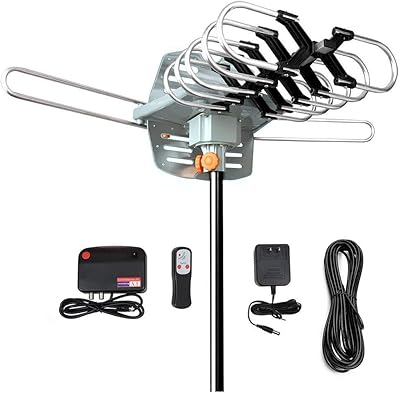
1byone 360° Omni-Directional Outdoor TV Antenna
73%
74%
Signal Reception
91%
Ease of Installation
72%
Build Quality
68%
Amplifier Performance
63%
4G LTE Filtering
More
PBD HJK544 Outdoor Yagi TV Antenna
76%
83%
Signal Reception
89%
UHF Performance
61%
VHF Performance
78%
Build Quality
81%
Weather Resistance
More

FAQ

Realistically, the McDuory UHD-3968 Outdoor Yagi TV Antenna performs most reliably for households sitting between 40 and 70 miles from their nearest tower cluster. The advertised 150-mile maximum is an idealized ceiling — do not plan around it. If you are within 25 miles of towers, a simpler and cheaper omnidirectional antenna will likely serve you just as well.

With a Yagi design, direction matters a great deal — this is one of the most common setup mistakes buyers make. Before you mount anything permanently, look up your local broadcast towers using a free tool like AntennaWeb or TV Fool, then aim the front of the antenna directly toward the main tower cluster. A few degrees off can make a noticeable difference in channel count.

Yes, attic installation works and is a popular choice for people who want the range benefits of an outdoor antenna without full exterior exposure. Keep in mind that roofing materials, insulation, and radiant barriers can reduce signal strength compared to an open rooftop mount, so results may vary depending on your attic construction.

This Yagi outdoor antenna is directional by design, which means it focuses on one forward arc and is not well suited for pulling signals from multiple directions simultaneously. If your local towers are spread across very different compass headings, you may find that pointing toward one cluster causes you to lose channels from another. A rotator mount can solve this, but that adds cost and complexity.

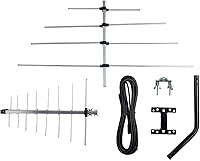
For most standard installations, yes — the package includes the antenna itself, a mounting pole, and a 40-foot RG6 coaxial cable. That covers the basics for a straightforward rooftop or attic setup. If your cable run to the TV is longer than 40 feet, or if you want to split the signal to multiple TVs, you will need to pick up additional cable or a splitter separately.

The antenna is built for permanent outdoor exposure and includes lightning protection, so routine seasonal weather should not be a concern. A minority of buyers have noted occasional signal drops during heavy rainfall, which is a physics issue common to all outdoor antennas rather than a build quality flaw. The structure itself is sturdy enough to handle typical wind and snow loads.

Not necessarily — at 8dB of gain, this rooftop TV antenna has enough built-in performance for most 40 to 70 mile scenarios without a booster. An amplifier becomes worth considering if you are splitting the signal to multiple TVs, running a very long cable, or sitting at the far edge of the reception range. Adding one blindly in a strong-signal area can actually cause overload and make things worse.

Any television sold in North America after 2007 has a built-in ATSC digital tuner and will work directly with this antenna via the standard coaxial input. Older analog TVs would need a separate digital converter box, but those are quite rare in active use today. The 75 Ohm impedance is the universal standard, so compatibility is not something you need to worry about with modern equipment.

Assembly is genuinely straightforward — the main elements snap or slide together without tools, and most buyers report completing it in under 30 minutes. The physical mounting on a roof or in an attic is where you will spend most of your time, and that depends on your specific setup. Having a second person to hold the antenna while you tighten the mount makes the job significantly easier.

Terrain is one of the biggest factors that no antenna manufacturer can fully overcome, and it is worth being straightforward about that. Hills and dense tree cover block and scatter broadcast signals in ways that reduce effective range considerably, sometimes cutting real-world performance in half compared to an open flat area. If you are in challenging terrain, this Yagi outdoor antenna is still one of the stronger options at its price point, but you should go in with realistic expectations and check return policies before committing.