Overview

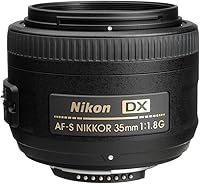
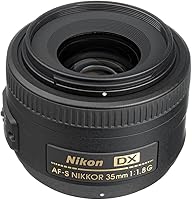
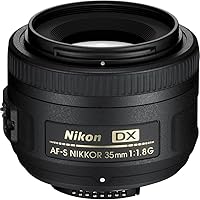
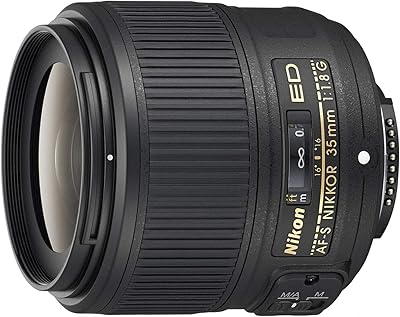
The Nikon AF-S DX NIKKOR 35mm f/1.8G Lens has earned a reputation as the single smartest upgrade a Nikon crop-sensor shooter can make after outgrowing the kit lens. It has been around since 2009 and still sells in remarkable numbers — that kind of longevity does not happen by accident. On a DX body, the focal length translates to roughly 52.5mm equivalent, which sits very close to how the human eye naturally frames a scene. The result is a perspective that feels honest and unforced, whether you are documenting everyday life or shooting at a dinner table in dim light. Consistent optical quality at an accessible price point keeps it relevant year after year.

Features & Benefits

The most immediately noticeable thing about this 35mm prime is that f/1.8 maximum aperture. Shoot in a poorly lit room, a restaurant, or a dimly lit event, and you can keep ISO lower and shutter speed faster than any kit zoom would allow. The built-in Silent Wave Motor handles autofocus quickly and quietly — practically imperceptibly — which matters a lot if you shoot video or photograph skittish subjects. Chromatic aberration and edge distortion are kept in check by an aspherical element, so you get cleaner results without heavy post-processing. At just over 7 ounces, it sits comfortably on smaller Nikon bodies without front-heavy imbalance, and manual focus override is straightforward and responsive.

Best For

This fast prime lens suits a wide range of shooters, but a few groups will get the most out of it. If you have been shooting with a kit lens and feel frustrated by indoor exposure limits or flat, compressed backgrounds, this is the natural next step. Portrait photographers will appreciate how even a moderate shooting distance produces pleasing background separation at f/1.8. Street and travel shooters love how compact and unobtrusive it is compared to a zoom. It also handles video work well enough that budget-conscious creators often reach for it before anything else. FX body owners who want a reliable crop-mode option have one more reason to consider it.

User Feedback

Owners of the NIKKOR 35mm f/1.8G consistently highlight sharpness wide open as a standout quality — particularly impressive given the price tier. Autofocus performance on entry-level Nikon bodies draws strong praise, with most users reporting fast, reliable locking in everyday conditions. That said, a few honest critiques are worth knowing. Vignetting at f/1.8 is noticeable, though it fades significantly by f/2.8 and is easily corrected in post. Videographers shooting with manual aperture changes sometimes flag focus breathing as an annoyance. There is also no optical image stabilization, which can catch handheld shooters off guard in very low light. Still, the broader consensus holds this lens as punching well above its class.

Pros

  • Sharp results wide open, which is uncommon at this price point for a fast prime lens.
  • The f/1.8 aperture handles dim rooms, evening events, and indoor photography without pushing ISO to noisy extremes.
  • Silent Wave Motor autofocus is quick and nearly inaudible, making it ideal for video and candid photography.
  • At just over 7 ounces, the NIKKOR 35mm f/1.8G is light enough to leave on your camera all day without fatigue.
  • The 52.5mm equivalent focal length feels natural and unforced, producing images that look true to life.
  • Vignetting that appears wide open clears up noticeably by f/2.8 and is easy to fix in post-processing.
  • Manual focus override works intuitively without flipping a switch or diving into menus.
  • Works on FX bodies in DX crop mode, giving some flexibility if you upgrade your camera body later.
  • Autofocus accuracy on entry-level Nikon DSLRs receives consistently strong marks from long-term owners.
  • Has remained a benchmark recommendation for Nikon DX shooters for well over a decade.

Cons

  • No optical image stabilization means handheld shots in very low light still carry real blur risk.
  • Fixed focal length requires you to physically move to reframe, which is a genuine adjustment for kit-lens users.
  • Focus breathing is noticeable during video, making smooth aperture pulls or rack focuses look inconsistent.
  • Vignetting at f/1.8 is visible enough to require correction in post if clean corners matter to your work.
  • Not compatible with Nikon Z-mount mirrorless cameras without purchasing a separate adapter.
  • The aspherical element controls but does not fully eliminate chromatic aberration in high-contrast edge situations.
  • Maximum reproduction ratio of 0.16x makes close-up or macro work impractical with this lens alone.
  • No weather sealing, so shooting in rain or dusty conditions carries real risk to the lens internals.

Ratings

Our AI-generated scores for the Nikon AF-S DX NIKKOR 35mm f/1.8G Lens were produced by analyzing thousands of verified buyer reviews from global markets, with spam, incentivized, and bot-flagged submissions actively filtered out before scoring. Each category reflects the honest distribution of real user sentiment — strengths and frustrations alike — so you get a transparent picture of where this lens genuinely excels and where it falls short.

Optical Sharpness
92%
Owners regularly describe being surprised by how sharp this fast prime lens renders subjects even at its widest aperture. Center sharpness in particular is exceptional for the price tier, holding up well in portrait sessions, street walks, and everyday documentary shooting.
Edge sharpness at f/1.8 is softer than the center, which becomes visible in flat subject matter like architecture or landscape shots where corner-to-corner clarity matters. Stopping down to around f/4 resolves most of this, but wide-open edge performance is a real limitation.
Low-Light Performance
89%
The f/1.8 aperture is the single biggest reason most buyers make this purchase, and it delivers in practice. Shooting in dimly lit restaurants, living rooms, or evening outdoor events becomes far more manageable without pushing ISO into noticeably noisy territory.
Without optical image stabilization, handheld shooting at slower shutter speeds in very dark conditions still produces motion blur, particularly for photographers newer to managing exposure manually. Users accustomed to stabilized kit lenses occasionally find the adjustment steeper than expected.
Autofocus Speed
86%
The Silent Wave Motor locks focus quickly on most DX bodies, and users frequently praise how snappy it feels compared to older screw-drive lenses. For candid photography, street shooting, and casual portraits, the autofocus response is more than sufficient.
On older or entry-level Nikon bodies, autofocus can hunt briefly in very low contrast or dim scenes before confirming. A small number of reviewers also note occasional front-focus behavior that required fine-tuning through the camera body's autofocus fine-adjustment setting.
Bokeh Quality
84%
The seven rounded aperture blades produce smooth, circular out-of-focus highlights that most portrait and lifestyle photographers find genuinely pleasing. Background separation at f/1.8 on a DX body is strong enough to give images a professional look without complex post-processing.
Bokeh at the very edges of the frame can appear slightly nervous or swirly compared to pricier portrait primes. Onion-ring artifacts in specular highlights — bright point light sources in the background — are occasionally reported by more technically observant reviewers.
Build Quality
74%
26%
The metal mount and reasonably solid barrel feel reassuring for everyday carry, and most long-term owners report no mechanical failures after years of regular use. For a lens in this price range, the physical construction is competitive and holds up well under normal handling.
The plastic barrel construction is immediately noticeable when held alongside higher-end Nikon glass, and there is no weather sealing whatsoever. Photographers who regularly shoot in rain, dusty environments, or extreme temperatures have flagged the lack of environmental protection as a meaningful limitation.
Autofocus Noise
88%
The NIKKOR 35mm f/1.8G is genuinely quiet during autofocus operation — quiet enough that video creators using it for talking-head footage or run-and-gun shooting rarely pick up motor noise on a built-in microphone. This is one of the more consistently praised practical benefits across user reviews.
In a completely silent environment with a sensitive external microphone placed close to the lens, a faint mechanical sound can occasionally be detected. It is not a common complaint, but audio-focused video producers working in quiet studio settings have noted it.
Video Usability
71%
29%
The combination of near-silent autofocus and a natural focal length makes this fast prime lens a popular choice for content creators who need a reliable everyday video lens without a large budget. Continuous autofocus during video recording performs well on bodies that support it.
Focus breathing — the slight change in framing that occurs when the lens refocuses — is noticeable enough to frustrate videographers who pull focus deliberately between subjects. It is not the right lens for cinematic focus pulls, and this limitation comes up consistently in video-specific reviews.
Chromatic Aberration
78%
22%
The aspherical element does a solid job of keeping lateral chromatic aberration controlled across most shooting situations, and the NIKKOR 35mm f/1.8G generally performs better in this regard than competing third-party options at a similar price. High-contrast edges in well-lit scenes are handled cleanly.
Some purple and green fringing is visible at f/1.8 in very high-contrast edge situations, such as backlit subjects against a bright sky. It is correctable in post-processing, but photographers who want to avoid that step may find it a minor but recurring annoyance.
Vignetting
67%
33%
Vignetting at f/1.8 actually enhances the look of portraits and close-up subjects for many photographers, drawing the eye toward the center of the frame. By f/2.8 it reduces substantially, and most raw converters including Lightroom and Capture NX-D offer automatic profile-based correction.
At f/1.8, corner darkening is pronounced enough to be visible without any correction, particularly on lighter backgrounds. Photographers shooting products, architecture, or flat-lay images who rely on even illumination across the full frame will find this a consistent and frustrating characteristic.
Size & Portability
93%
At just over 7 oz and with a slim, compact barrel, this is a lens that genuinely disappears on a small DX body like a D3500 or D5600. Street photographers and travelers consistently describe it as the lens they leave mounted all day because it adds almost no burden to the camera.
The compact size means the focus ring is relatively narrow and shallow, which makes fine manual focus adjustments less comfortable for extended periods. Photographers with larger hands occasionally mention that the lens feels slightly undersized compared to what they would prefer for deliberate manual work.
Value for Money
91%
Across years of user reviews, the consensus is remarkably consistent: this 35mm prime delivers optical and functional performance that competes well above its price bracket. For a first prime lens purchase, buyers regularly describe it as one of the best investments they have made in their camera kit.
As mirrorless continues to grow and the Nikon F-mount ecosystem gradually ages, some buyers wonder about the long-term relevance of investing in new F-mount glass. It remains a strong value purchase today, but photographers who anticipate moving to a Z-mount system soon may want to factor that transition into their decision.
Distortion Control
81%
19%
Barrel distortion is well-managed for a 35mm lens, and most photographers shooting portraits, street scenes, or environmental shots will never find it distracting. The aspherical element contributes meaningfully here, and the lens performs better in this regard than many comparable third-party primes.
Slight barrel distortion is measurable in test shots and becomes apparent when shooting straight lines close to the frame edges, such as architectural details or interior room photography. Software correction handles it cleanly, but photographers who shoot architecture regularly may prefer a lens optimized for that use case.
Compatibility Range
76%
24%
Working across both DX and FX Nikon F-mount bodies in crop mode gives this fast prime lens some flexibility for photographers who might upgrade their camera body in the future. It covers a wide range of Nikon DSLRs produced over the past two decades without any compatibility concerns.
It offers no native compatibility with Nikon Z-mount mirrorless cameras, requiring the FTZ adapter for use on those bodies. Photographers already invested in or transitioning to the Z-mount system should be aware that adapter use adds bulk and cost, and some autofocus behaviors may differ slightly.

Suitable for:

The Nikon AF-S DX NIKKOR 35mm f/1.8G Lens is purpose-built for Nikon DX crop-sensor shooters who are ready to move past the limitations of a kit zoom and start getting more intentional results. It is an especially strong fit for beginners and enthusiasts who shoot in challenging light — think family gatherings, indoor events, or evening street scenes — where a slow zoom simply cannot keep up. Portrait photographers working on a DX body will find the 52.5mm equivalent focal length flattering and natural, with enough background blur at f/1.8 to keep subjects clearly separated from their surroundings. Street photographers and travelers will appreciate how small and unobtrusive it is; it does not draw attention or add bulk to a camera bag. Video creators who need quiet, reliable autofocus without investing in a much pricier lens will also find this 35mm prime a very practical choice.

Not suitable for:

The Nikon AF-S DX NIKKOR 35mm f/1.8G Lens is not the right tool for every situation, and it is worth being clear about where it falls short before buying. Shooters who depend on zoom flexibility — covering wide establishing shots and then pulling in tight without changing position — will find a fixed focal length frustrating in fast-moving environments like sports, wildlife, or events where you cannot freely reposition. There is no optical image stabilization, so handheld shooting in very low light at slower shutter speeds will still produce blur, especially for less experienced photographers. Videographers who pull focus or change aperture during a shot may notice focus breathing, which can be distracting in polished productions. This fast prime lens is also strictly for Nikon F-mount cameras; it offers no compatibility with Nikon Z-mount mirrorless bodies without an adapter. If you primarily shoot FX format and want full-frame coverage, a different lens in the lineup is a better match.

Specifications

  • Focal Length: Fixed 35mm focal length, equivalent to approximately 52.5mm on a Nikon DX crop-sensor body.
  • Maximum Aperture: Opens to f/1.8, allowing strong background blur and reliable performance in dim lighting conditions.
  • Minimum Aperture: Stops down to f/22 for situations requiring maximum depth of field or controlled exposure in bright light.
  • Lens Construction: Built from 8 elements arranged in 6 groups, including one aspherical element to manage distortion and chromatic aberration.
  • Autofocus System: Uses Nikon's Silent Wave Motor (SWM) for fast, near-silent autofocus operation suitable for both stills and video.
  • Manual Override: Full-time manual focus override is supported, allowing instant manual adjustment without switching AF modes.
  • Filter Thread: Accepts 52mm screw-on filters, compatible with a wide range of standard circular polarizers, ND filters, and UV protectors.
  • Reproduction Ratio: Maximum reproduction ratio of 0.16x, meaning close-up or macro photography is outside this lens's practical range.
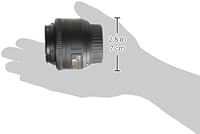
  • Dimensions: Measures approximately 70mm in length and 52.5mm in diameter, making it notably compact for a fast prime lens.
  • Weight: Weighs approximately 7.1 oz (201g), light enough to carry all day without adding meaningful strain to a camera setup.
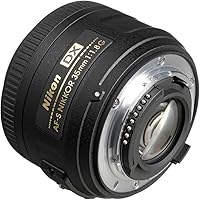
  • Mount Compatibility: Designed for Nikon F-mount DX cameras and also functions on FX full-frame bodies when used in DX crop mode.
  • Zoom Capability: Fixed focal length only — this lens does not zoom and requires the photographer to reposition to reframe a shot.
  • Aperture Blades: Features 7 rounded diaphragm blades, which contribute to smooth, circular bokeh in out-of-focus background areas.
  • Image Stabilization: No optical image stabilization is included; photographers relying on slower shutter speeds handheld should account for this.
  • Manufacturer: Designed and manufactured by Nikon, a brand with decades of optical engineering experience in the camera lens industry.
  • Available Since: First introduced in February 2009, this lens has maintained continuous production and relevance for over 15 years.

Related Reviews
Nikon AF-S NIKKOR 35mm f/1.8G ED Lens
85%
91%
Image Sharpness
88%
Autofocus Speed
93%
Low-Light Performance
85%
Portability/Size
82%
Build Quality
More
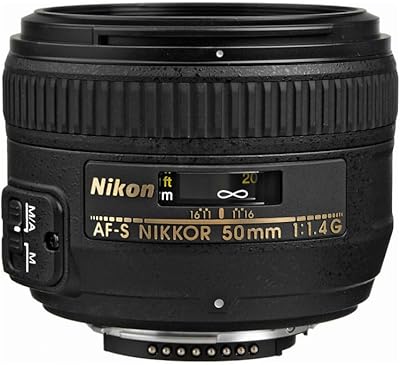
Nikon NIKKOR 50mm f/1.8G Prime Lens
83%
93%
Image Sharpness
88%
Bokeh & Background Separation
71%
Autofocus Speed
91%
Low-Light Performance
82%
Build Quality & Durability
More
Nikon NIKKOR Z 35mm f/1.8 S Lens
86%
96%
Optical Sharpness
93%
Autofocus Performance
91%
Bokeh & Background Rendering
89%
Build Quality & Weather Sealing
92%
Low-Light Performance
More
Nikon AF-S FX NIKKOR 50mm f/1.4G Lens
87%
88%
Autofocus Performance
91%
Image Quality & Sharpness
90%
Bokeh Quality
84%
Build Quality
87%
Low-Light Performance
More
Nikon AF-S FX NIKKOR 85mm f/1.4G Lens
86%
95%
Image Quality
93%
Low-Light Performance
87%
Autofocus Speed
89%
Build Quality
90%
Bokeh Quality
More
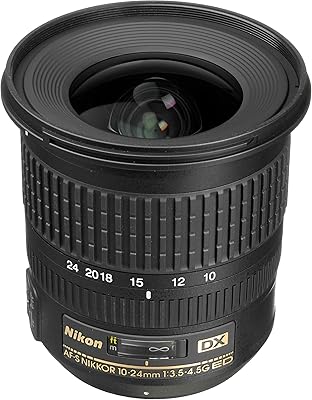
Nikon AF-S DX NIKKOR 10-24mm f/3.5-4.5G ED Zoom Lens
85%
93%
Sharpness at Wide Angles
87%
Autofocus Performance
89%
Build Quality
72%
Low Light Performance
91%
Value for Money
More
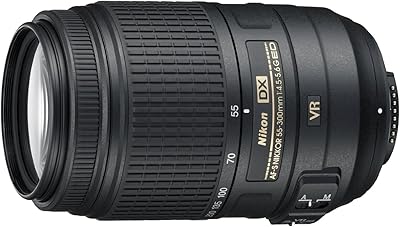
Nikon AF-S DX NIKKOR 55-300mm Zoom Lens
71%
78%
Image Sharpness
67%
Autofocus Performance
84%
Vibration Reduction
54%
Aperture Range
61%
Build Quality
More
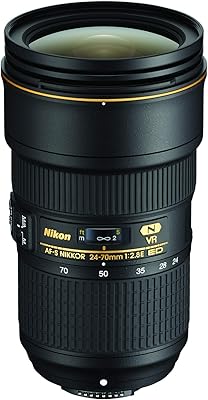
Nikon AF-S FX NIKKOR 24-70mm f/2.8E ED VR Lens
86%
94%
Image Quality
91%
Vibration Reduction (VR)
88%
Autofocus Performance
90%
Build Quality
86%
Ease of Use
More
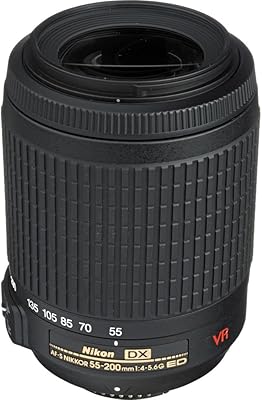
Nikon 55-200mm f/4-5.6G VR Telephoto Zoom Lens
78%
91%
Value for Money
78%
Image Sharpness
88%
Vibration Reduction
73%
Autofocus Speed
62%
Build Quality
More
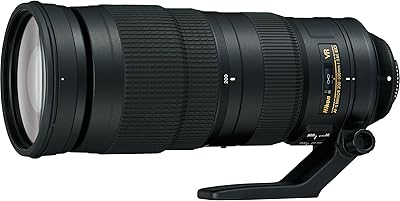
Nikon AF-S FX NIKKOR 200-500mm f/5.6E ED Vibration Reduction Zoom Lens
83%
91%
Image Quality
88%
Vibration Reduction
82%
Autofocus Speed
85%
Build Quality
78%
Ease of Use
More

FAQ

Yes, it fits any Nikon F-mount DX body without issue, including popular entry-level cameras like the D3500, D5600, and D7500. The autofocus system works fully on all of these bodies.

For most practical video work, yes. The Silent Wave Motor is quiet enough that a camera's built-in microphone is unlikely to pick it up during normal operation. If you are using a highly sensitive external microphone in a very quiet environment, you may catch occasional faint noise, but the vast majority of video shooters find it perfectly usable.

It mounts on FX full-frame bodies and will autofocus normally, but it only covers the full frame in DX crop mode. Using it outside of DX crop mode on a full-frame sensor will produce heavy vignetting around the edges of the frame.

It is visible, particularly in images with bright or uniform backgrounds like overcast skies. Most photographers either correct it quickly in Lightroom or Capture NX-D, or simply stop down to around f/2.8 where it becomes much less apparent. It is not a dealbreaker, but worth knowing about upfront.

No, it does not have any weather or dust sealing. Shooting in light rain or dusty conditions carries some risk to the lens internals, so it is worth being cautious in those environments.

A kit zoom at its longest end or in low light typically operates at f/5.6, which is nearly three full stops slower than f/1.8. That difference is enormous in practice — it means you can shoot in much dimmer conditions without cranking ISO, and you get far more background blur for portraits. Fixed focal length lenses also tend to be optically sharper than zoom lenses in a similar price range.

Yes, the filter thread is 52mm and accepts standard screw-on filters. Circular polarizers, ND filters, and UV protectors in 52mm sizing will all thread on without any adapter needed.

The manual focus ring is smooth and reasonably well-damped, so it is workable for deliberate manual focusing. That said, the focus-by-wire style means it is not quite as precise as the mechanical manual focus rings found on older lenses. For most casual use it is fine; for critical focus in very dark environments, using live view and magnification helps a lot.

Yes, on a DX body the 52.5mm equivalent focal length combined with the f/1.8 aperture produces pleasant background separation, especially when your subject is a few feet away from the background. It is not a dedicated portrait telephoto, but for environmental portraits and casual headshots it performs very well.

Build quality is solid for the price range — the mount is metal and the barrel feels durable in normal use. Many photographers report using this fast prime lens for five or more years without any mechanical issues. It is not a professional-grade weather-sealed construction, so treating it with reasonable care goes a long way toward keeping it in good shape long-term.