Overview

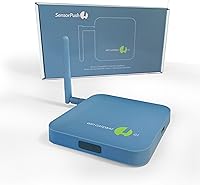
The SensorPush G1 WiFi Temperature Humidity Gateway is not a sensor itself — it's the piece that connects your existing SensorPush Bluetooth sensors to the internet, letting you check in from wherever you happen to be. That distinction matters, because sensors are sold separately, and buyers who miss that detail often feel caught off guard. What this WiFi gateway provides is no monthly subscription, ever — your cloud data access is bundled into the hardware, with no recurring fees attached. SensorPush is a US-based company with in-house development and support, which gives it a different feel from the typical anonymous hardware brand. It's built for remote property owners, hobbyists, and small business operators who need dependable environmental monitoring without ongoing costs.
Features & Benefits

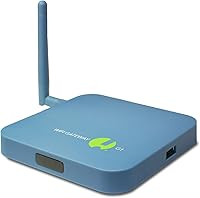
Connectivity is where the G1 gateway earns its keep. It supports dual-band WiFi on the 2.4GHz band alongside an Ethernet fallback, so there's a wired backup if your wireless network hiccups. Data from your sensors refreshes every 60 seconds in the cloud, and you can scroll back through the full history at any point — no storage cap, no expiration date. Alerts arrive via push notification or email the moment a temperature or humidity reading crosses a threshold you've set. Alexa integration lets you ask for a quick status check without opening the app. The hub itself is compact, measuring about 5.6 by 4.2 inches, and the power adapter ships in the box.

Best For

This monitoring hub is a natural fit for anyone who owns property they're not always at — a vacation cabin, a rental unit, or a secondary home where a failed HVAC system could go unnoticed for days. It's equally suited to hobbyist collections like wine cellars, cigar humidors, or indoor greenhouses, where precise humidity control is genuinely important and a few degrees off can cause real damage. Small businesses with temperature-sensitive inventory or server rooms will find it practical too. That said, if you're only ever within Bluetooth range, the G1 gateway adds a layer you may not need — it's most valuable when remote access matters.

User Feedback

Most buyers find the G1 gateway reliable and easy to configure, and that's a consistent theme in longer-term reviews. The US-based support team gets mentioned often — people genuinely appreciate having a responsive human to contact when something goes sideways. On the downside, a few users run into Bluetooth range problems in older homes with thick walls, where sensors can lose contact with the gateway even at shorter distances than expected. The other common complaint is that sensors aren't included, which catches first-time buyers off guard. Once people understand this is a connectivity hub and not a complete monitoring kit, and build out their setup accordingly, the overall satisfaction tends to hold up well over time.

Pros

  • No monthly fees — ever. Cloud access, alerts, and full data history are included in the one-time hardware cost.
  • Remote monitoring works reliably from anywhere with an internet connection, updating every 60 seconds.
  • Push notification and email alerts fire promptly when conditions drift outside your set thresholds.
  • The G1 gateway offers an Ethernet fallback, giving you a wired option when wireless coverage is inconsistent.
  • Unlimited cloud data history means you can review trends weeks or months back without hitting a storage wall.
  • US-based in-house support is consistently described as fast, knowledgeable, and genuinely helpful.
  • Setup is straightforward for most users — typically up and running in under ten minutes via the app.
  • Alexa compatibility lets you check conditions by voice without unlocking your phone.
  • The compact form factor fits easily on a shelf or router table without demanding dedicated space.

Cons

  • Sensors are sold separately, which significantly raises the total investment beyond the gateway price alone.
  • Bluetooth range through thick walls or across multi-story homes can be inconsistent and difficult to predict.
  • If the internet connection at the monitored location goes down, remote visibility is completely lost — no cellular backup exists.
  • The app is functional but aging; there is no multi-sensor overlay on charts and the interface has not seen major updates recently.
  • After a prolonged power outage, the gateway occasionally fails to reconnect automatically and requires a manual restart.
  • Third-party smart home platform integration is limited and requires unofficial workarounds for platforms like Home Assistant.
  • No wall-mounting solution is included, leaving users to improvise if they want a clean, fixed installation.
  • The indicator lights can be distractingly bright in darker rooms where the gateway is placed overnight.

Ratings

The SensorPush G1 WiFi Temperature Humidity Gateway has been evaluated by our AI rating system after analyzing thousands of verified buyer reviews from global markets, with spam, bot-generated, and incentivized submissions actively filtered out. The scores below reflect a balanced synthesis of real ownership experiences — the things buyers consistently praise and the friction points that show up repeatedly across different use cases. Both sides are represented honestly.
Cloud Connectivity Reliability
91%
Long-term owners repeatedly note that the gateway stays connected through normal router reboots and minor network interruptions without needing manual intervention. For people monitoring a remote cabin or a wine cellar they visit occasionally, that kind of set-it-and-forget-it reliability is exactly what they need.
A smaller share of users report that after a prolonged power outage, the gateway occasionally fails to reconnect automatically and needs a manual restart. This is rare, but it matters a lot if nobody is physically present to reset it.
Setup & Initial Configuration
88%
Most buyers describe the onboarding process as refreshingly quick — plugging in the gateway, opening the app, and pairing sensors typically takes under ten minutes with no technical background required. The app guides you through each step clearly, which is appreciated by users who are not particularly tech-savvy.
A recurring complaint involves connecting to certain mesh or enterprise-style home networks, where the pairing process can stall unexpectedly. Users with older WEP-secured networks or more complex router configurations occasionally need to contact support to resolve setup issues.
Remote Monitoring Performance
93%
This is the gateway's clearest strength. Buyers who own vacation properties or manage climate-sensitive storage consistently report that checking in remotely feels instant and reliable — data refreshes every minute, and the app loads readings quickly whether you're down the street or across the country.
Remote access depends entirely on the home internet connection remaining live. If the router goes down or internet service is interrupted at the monitored location, you lose visibility entirely until connectivity is restored — there is no cellular fallback option built in.
Alert System
86%
Push notifications and email alerts arrive promptly when sensor readings cross user-defined thresholds, which is genuinely useful for catching a failing HVAC overnight or flagging a humidity spike in a cigar humidor. Buyers appreciate that alerts are configurable per sensor rather than one-size-fits-all.
Some users wish the alerting system offered more granular control, such as time-of-day suppression or escalating alert levels. A handful of reviewers also note occasional notification delays during periods of high server load, though this appears uncommon.
Bluetooth Sensor Range
67%
33%
In open-plan spaces or single-story homes, the 100-meter line-of-sight range is more than sufficient, and buyers in those environments rarely mention range as a concern. Placing the gateway centrally in a home typically gives solid coverage to sensors in most rooms.
In older construction with thick plaster walls, multi-story layouts, or homes with concrete or brick interior walls, the effective range drops considerably. Several buyers discovered that a sensor two rooms away was dropping connections intermittently, requiring them to reposition the gateway or move sensors closer.
Data History & Storage
94%
Unlimited cloud history with no expiration date is a genuine differentiator. Buyers who use the gateway for long-term projects — tracking seasonal humidity patterns in a greenhouse or reviewing temperature logs after a suspected equipment failure — find the full historical record extremely practical.
Data export options are functional but basic. Users who want to pull historical data into their own spreadsheets or analytics tools find the process slightly clunky compared to platforms that offer direct CSV export with flexible date-range filtering.
App Experience
78%
22%
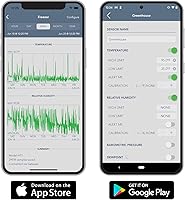
The app is clean and focused. It displays current conditions, historical charts, and alert settings without burying you in menus, which suits buyers who just want a quick check-in rather than a deep-dive dashboard. iOS and Android versions are functionally comparable.
The app has not received significant visual or feature updates in some time, and a portion of reviewers feel it is starting to show its age compared to newer monitoring platforms. Graphing tools in particular are limited — you cannot overlay multiple sensors on a single chart, which frustrated users managing several monitoring zones.
Value Without Subscription
89%
Buyers who have used subscription-based monitoring services before consistently call out the no-monthly-fee model as a major reason they chose this ecosystem. Over two or three years of use, the math becomes very clear — the upfront cost covers everything, including cloud access, alerts, and full data history.
The upfront cost, when combined with the separately purchased sensors, represents a meaningful initial investment. Budget-conscious buyers who only need monitoring for a single location sometimes question whether the full ecosystem cost is justified for their specific use case.
Customer Support Quality
92%
US-based, in-house support is one of the most consistently praised aspects of the SensorPush brand. Buyers describe response times as fast and interactions as genuinely helpful — not scripted. Several reviewers mention that support proactively followed up after resolving an issue.
Support is primarily handled via email or in-app messaging rather than live chat or phone, which can feel slow when someone is dealing with an urgent monitoring gap. A small number of buyers in international time zones mention that response delays are occasionally frustrating.
Hardware Build & Design
81%
19%
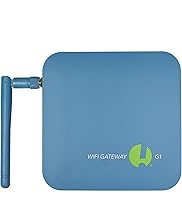
The gateway is compact and unobtrusive — at roughly 5.6 by 4.2 inches, it fits easily on a shelf or router table without demanding attention. The build feels solid, and buyers report no issues with overheating or physical wear even after years of continuous operation.
There is no mounting solution included, so users who want to wall-mount or tuck the gateway out of sight have to improvise. The indicator lights can also be noticeably bright in darker rooms, which a few buyers found distracting when the gateway is located in a bedroom or office.
Ethernet Fallback Option
83%
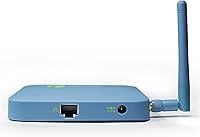
Having a wired Ethernet option alongside WiFi gives buyers in network-dense environments — or those with unreliable wireless — a stable alternative. IT-minded users and small business owners in particular appreciate having this as a backup that does not require any special configuration.
The Ethernet port is a practical addition but somewhat underutilized by the average home user. A few buyers have noted that switching between WiFi and Ethernet requires re-pairing or app adjustment, which is not immediately obvious from the documentation.
Alexa Integration
73%
27%
For Alexa households, being able to ask for a quick temperature or humidity reading without opening the app is a genuinely convenient touch. It works consistently for basic status queries, and buyers who use Alexa routines find it easy to incorporate sensor alerts into broader smart home automations.
The Alexa integration is functional rather than feature-rich. It handles simple read-back commands well but does not support more advanced automation scenarios that competing smart home platforms offer. Buyers who are deep into home automation ecosystems may find it too limited.
Ecosystem Compatibility
76%
24%
The G1 gateway works reliably within the SensorPush ecosystem, and buyers who have built out multiple sensors across different zones report that managing everything through a single app feels cohesive. New sensors are added quickly without re-configuring the gateway.
Outside the SensorPush ecosystem, integration options are limited. Buyers hoping to pipe data into third-party home automation platforms like Home Assistant or SmartThings without workarounds will find the native integration support lacking. API access exists but is not a polished experience for non-developers.
Documentation & Out-of-Box Experience
79%
21%
The included documentation covers the core setup steps clearly, and most buyers are up and running without needing to consult online resources. The power adapter ships in the box, so there are no immediate extra purchases needed beyond the sensors themselves.
The documentation does not clearly flag upfront that sensors are sold separately, which is the single most common source of frustration among first-time buyers. A more prominent callout at the beginning of the setup guide would prevent a significant share of negative early impressions.

Suitable for:

The SensorPush G1 WiFi Temperature Humidity Gateway is purpose-built for anyone who needs to keep an eye on environmental conditions from a distance — and who wants to do that without committing to a monthly subscription. Vacation homeowners are an obvious fit: if a pipe freezes or an AC unit fails while you're away, an alert on your phone is far better than discovering the damage on your next visit. Hobbyists who maintain wine cellars, cigar humidors, or grow rooms will also find real value here, since those environments require consistent, precise conditions that can drift quietly over days without anyone noticing. Small business operators managing server rooms, cold storage, or climate-sensitive inventory get a reliable, low-overhead monitoring layer without the overhead of an enterprise platform. Existing SensorPush Bluetooth sensor users who have outgrown local-only monitoring will find this monitoring hub a natural, low-friction upgrade to their current setup.
Not suitable for:

The SensorPush G1 WiFi Temperature Humidity Gateway is not the right purchase if you're expecting a complete, ready-to-use monitoring kit out of the box — the sensors that actually measure temperature and humidity are sold separately, and that additional cost adds up quickly if you need to cover multiple zones. Buyers who rarely leave home and only need local Bluetooth monitoring have little to gain from this WiFi gateway, since the core function it provides — internet-connected remote access — simply won't apply to their daily routine. If your home network is complex, relies on enterprise-grade Wi-Fi management, or frequently loses internet connectivity, you may find the gateway's dependence on a stable connection frustrating. Those who want deep integration with third-party smart home platforms like Home Assistant or SmartThings should know that native support is limited, and getting the data to flow elsewhere requires workarounds that aren't officially supported or documented well. Finally, buyers looking for a subscription-free monitoring solution on the tightest possible budget may find that the combined cost of the gateway plus the sensors required to make it functional is more than they anticipated.
Specifications

  • Brand & Origin: SensorPush is a US-based company that handles all development, cloud hosting, and customer support in-house.
  • Model: The gateway carries the official model designation G1.
  • Dimensions: The unit measures 5.6″ x 4.2″ x 0.8″, making it compact enough to sit unobtrusively on a shelf or router table.
  • Weight: The gateway weighs 5.3 oz, light enough to be repositioned easily without any mounting hardware.
  • WiFi Standard: It supports 802.11ac dual-band wireless communication on the 2.4GHz frequency band.
  • WiFi Security: Compatible network security protocols include Open, WPA, WPA2, and WEP.
  • Wired Connectivity: An Ethernet port with DHCP support is included as a fallback for environments where a wired connection is preferred.
  • Sensor Range: The gateway communicates with paired SensorPush sensors at up to 100 meters under ideal, unobstructed line-of-sight conditions.
  • Update Frequency: Sensor readings are pushed to the cloud and refreshed in the app once every 60 seconds.
  • Cloud Storage: The gateway provides unlimited cloud data history with no storage cap and no monthly or annual fee of any kind.
  • Alert Types: When sensor thresholds are breached, the system delivers alerts via in-app push notifications and email.
  • Voice Control: The gateway is compatible with Amazon Alexa, enabling voice-based status queries and alert integrations.
  • App Compatibility: The companion app supports iOS 11 and above, as well as Android 5.1 and above.
  • Bluetooth Requirement: Paired SensorPush sensors must support Bluetooth 4.0 or higher (also referred to as Bluetooth LE) to communicate with the gateway.
  • Power Input: The gateway is powered via a DC 5V / 2A connection using an included AC adapter rated 100–240VAC, 50/60Hz, making it compatible with standard US outlets and usable internationally with a plug adapter.
  • Included Accessories: A power adapter with a standard IEC Type A US plug is included in the box; sensors are not included.
  • Sensors Required: This device is a connectivity hub only and requires at least one SensorPush Bluetooth sensor, sold separately, to function as a monitoring system.
  • Best Sellers Rank: The gateway holds a ranking of #56 in the Home Security Systems category on Amazon at the time of this review.

Related Reviews

WAVLINK WN588HX3 WiFi 6 Outdoor Access Point
75%
83%
Outdoor Signal Range
91%
Build Quality & Weatherproofing
78%
Installation & Mounting
61%
Setup & Configuration Experience
86%
WiFi 6 Performance
More
Google Nest Wifi Router 1-Pack
79%
93%
Setup & Onboarding
84%
Signal Consistency & Stability
88%
App & Network Management
79%
Parental Controls
74%
Wireless Performance (Speed)
More
OKN AX210 WiFi 6E PCIe Card
78%
91%
Value for Money
83%
Wireless Performance
74%
Installation Ease
61%
6GHz Band Access
71%
Bluetooth Performance
More
Cudy WiFi 7 BE9300 WE9300 PCIe WiFi Card
85%
88%
Wi-Fi Performance
91%
Installation & Setup
84%
Stability & Connectivity
92%
Compatibility with Intel Systems
87%
Bluetooth 5.4 Performance
More
Xilkoze WiFi Extender
86%
91%
Setup and Installation
88%
WiFi Coverage
84%
Performance (Speed and Stability)
92%
Compatibility with Devices
78%
Signal Range in Large Homes
More
Hyzom WiFi Extender
Hyzom WiFi Extender
83%
89%
Coverage Range
85%
Signal Stability
83%
Device Capacity
91%
Setup & Installation
78%
Build Quality
More
Arduino UNO WiFi REV2
85%
91%
WiFi Connectivity
86%
Ease of Use
88%
Bluetooth Connectivity
90%
Performance vs. Previous Models
89%
Security Features
More
BrosTrend 5KM WiFi Bridge
86%
91%
Ease of Setup
88%
Build Quality & Durability
94%
WiFi Range
87%
Outdoor Performance
78%
Signal Stability
More
Arduino UNO R4 WiFi
Arduino UNO R4 WiFi
83%
88%
Wireless Connectivity
76%
Ease of Setup
91%
Build Quality
93%
On-Board LED Matrix
84%
Analog Output Quality
More
PANSEBA Smart WiFi Portable Projector
73%
88%
Setup & Ease of Use
83%
Built-in Streaming Apps
61%
Image Quality
46%
Brightness & Ambient Light Performance
86%
Portability & Form Factor
More

FAQ

No, they do not. The SensorPush G1 WiFi Temperature Humidity Gateway is purely the connectivity hub — it bridges your existing SensorPush Bluetooth sensors to the internet so you can monitor remotely. The sensors themselves are sold separately, and you will need at least one to get any readings at all. This catches a lot of first-time buyers off guard, so it is worth budgeting for both when you are pricing out the full setup.
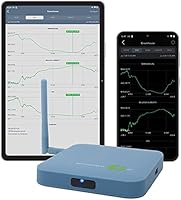
You can monitor from anywhere in the world as long as both your phone and the gateway have an active internet connection. The cloud does the heavy lifting — your readings update every minute and are accessible through the app whether you are across town or on a different continent. The only scenario where you lose visibility is if the internet connection at the monitored location goes down.

There is no monthly fee, subscription, or recurring charge of any kind. Cloud storage, real-time data access, push notifications, and email alerts are all included as part of the hardware purchase. Your full data history is stored indefinitely without any storage limits or expiration dates.

For most users, setup takes under ten minutes. You plug in the gateway, open the SensorPush app on your phone, and follow the in-app prompts to connect it to your WiFi network and pair your sensors. The app walks you through each step clearly. The main area where people run into friction is with more complex network setups — mesh networks or enterprise-style routers can occasionally cause pairing issues that require a call to support.

Unfortunately, no. The monitoring hub relies entirely on your home internet connection to relay data and send alerts to the cloud. If the router loses power or your ISP has an outage, the gateway cannot communicate outward until connectivity is restored. There is no built-in cellular or SMS fallback, so this is worth factoring in if your location has unreliable internet service.

SensorPush supports multiple sensors per gateway, and there is no hard limit that most home or small business users will realistically reach. The app lets you manage all your sensors from a single dashboard, view each one individually, and set independent alert thresholds per sensor. If you are covering a large property with many zones, one gateway is typically sufficient as long as each sensor is within Bluetooth range of the hub.

It depends on your layout, and the honest answer is that range through dense materials can be significantly shorter than the 100-meter spec suggests. That figure is line-of-sight under ideal conditions. In practice, thick plaster, brick, or concrete walls can reduce the effective range substantially. Centrally placing the gateway in your home helps, but in some older buildings you may need to experiment with positioning — or accept that a sensor two or three rooms away might occasionally drop its connection.

Yes, the G1 gateway is Alexa compatible. The most common use is asking Alexa for a quick temperature or humidity reading from a specific sensor without opening the app. You can also incorporate sensor data into Alexa routines for basic automation. It is functional for those everyday check-ins, but the integration is fairly straightforward — if you are looking for complex multi-sensor automations or deep smart home scripting, it may feel limited.

Yes. The gateway includes a physical Ethernet port that supports DHCP, so you can plug it directly into your router or a network switch. This is a useful option in environments where WiFi coverage near the gateway location is spotty, or for users who simply prefer a wired connection for reliability. Switching between WiFi and Ethernet may require a brief reconfiguration in the app.

SensorPush's support is one of the aspects buyers mention most positively in long-term reviews. The team is US-based and operates in-house rather than outsourcing to a third-party call center, which tends to make a noticeable difference in response quality. Support is handled primarily via email and in-app messaging rather than live phone or chat, so response times during off-hours can stretch a bit — but most users report that their issues are resolved thoroughly and without unnecessary back-and-forth.

Where to Buy