Seeed Studio XIAO ESP32-S3 Sense



Overview
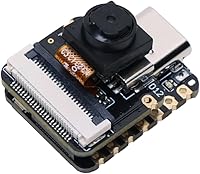
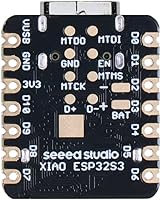
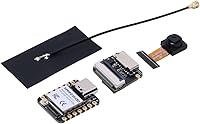
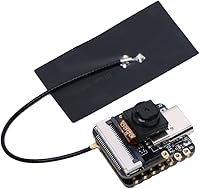
The Seeed Studio XIAO ESP32-S3 Sense is one of those rare dev boards that genuinely punches above its weight. Measuring just 21×17.5mm, this compact dev board manages to pack in a dual-core processor, an OV2640 camera module, and a digital microphone — all while remaining breadboard-friendly and surprisingly approachable. The camera is detachable, which matters more than it sounds; you can pull it off for projects where vision isn't needed and keep the build tidy. An onboard battery charge IC rounds things out, meaning you can design fully portable, untethered devices without bolting on extra hardware. For what it costs, the feature density here is genuinely hard to argue with.
Features & Benefits
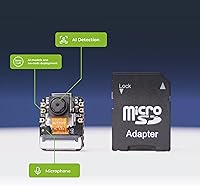
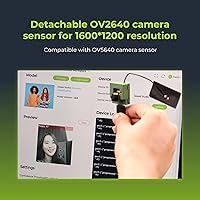
At the heart of the Seeed XIAO board sits a dual-core Xtensa LX7 running at 240 MHz — fast enough for real-time sensor processing and on-device TinyML inference. The 8MB PSRAM is genuinely useful here; image buffers consume memory fast, and without it, vision tasks on a board this size simply wouldn't work reliably. The OV2640 camera handles up to 1600×1200 resolution and can be swapped for an OV5640 if you need better image quality down the line. Add an onboard digital microphone for audio classification, a microSD slot supporting up to 32GB of storage, and a U.FL connector for extended wireless reach, and you have a surprisingly complete sensing platform in a footprint smaller than a postage stamp.
Best For
This compact dev board is a natural fit for anyone building projects where physical size is a hard constraint. Think conference badges with live face detection, wearable health monitors logging sensor data to an SD card, or a low-power wildlife camera that reports home over Wi-Fi. Students exploring edge AI will find the combination of real PSRAM and an actual camera far more instructive than working with a plain microcontroller, and MicroPython support keeps the entry barrier low. Battery-powered remote sensor nodes are another strong use case — the onboard charge IC means you can run the whole thing off a small LiPo without extra modules. If you need Zigbee or Thread, look elsewhere; for Wi-Fi and BLE work, this hits a real sweet spot.
User Feedback
Owners of the Seeed XIAO board consistently point to the sheer feature-to-size ratio as the standout win, and the quality of Seeed's Wiki documentation gets mentioned almost as often — it makes a real difference when you're starting out. That said, two friction points come up repeatedly. Getting PSRAM enabled correctly in the Arduino IDE trips up a surprising number of users; it's not impossible, but it requires a few configuration steps that aren't obvious from the default setup. The camera's ribbon connector is also delicate — some buyers reported intermittent connection issues after rough handling. Sustained use of Wi-Fi and camera together also produces noticeable heat, something worth factoring in if you're planning an enclosed housing.
Pros
- Camera, microphone, Wi-Fi, BLE, PSRAM, and battery charging are all integrated — no extra breakout boards needed.
- The 21×17.5mm footprint is among the smallest available for a board with this level of sensing capability.
- 8MB PSRAM makes real image buffering and on-device ML inference genuinely viable at this price point.
- Seeed's Wiki documentation is notably thorough and actively maintained, reducing early setup frustration significantly.
- The detachable OV2640 camera module keeps the board flexible for projects that don't always need vision.
- U.FL antenna connector allows extended wireless range when the application demands it.
- MicroPython support meaningfully lowers the barrier for developers coming from a Python background.
- The onboard charge IC allows direct LiPo connection, making portable deployments much simpler to design.
- OV5640 camera compatibility provides a clear upgrade path without replacing the entire board.
- microSD slot supports up to 32GB, making long-term unattended data logging straightforward.
Cons
- Enabling PSRAM in Arduino IDE requires non-obvious multi-step configuration that frequently trips up first-time users.
- The camera ribbon connector is fragile and prone to intermittent failures after repeated attachment and detachment.
- Running Wi-Fi and camera simultaneously generates noticeable heat that needs to be accounted for in enclosed builds.
- 8MB of Flash fills up quickly once firmware, a filesystem, and even a small ML model are all competing for space.
- No onboard battery fuel gauge makes monitoring charge state in portable deployments more complicated than it should be.
- BLE connection stability in RF-noisy environments can be inconsistent, requiring reconnection during longer test sessions.
- Advanced FreeRTOS and multi-peripheral documentation is thin, leaving experienced users piecing together solutions independently.
- Hand-soldering the castellated pads onto a custom PCB requires SMD experience that many hobbyist users don't yet have.
- MicroPython camera support lags behind the Arduino implementation in stability for continuous streaming workloads.
Ratings
The Seeed Studio XIAO ESP32-S3 Sense earned its scores through AI-driven analysis of verified global buyer reviews, with spam, bot activity, and incentivized feedback actively filtered out before scoring. Across categories ranging from raw processing capability to physical build quality, both genuine strengths and real frustrations are reflected without sugarcoating. The result is a transparent, balanced picture of where this compact dev board genuinely delivers — and where it asks for patience.
Feature Density
Value for Money
Processing Performance
Camera Module Quality
Wireless Connectivity
Memory & Storage
Ease of Setup
Build Quality
Community & Documentation
Battery & Power Management
Size & Form Factor
TinyML & Edge AI Readiness
Heat Management
Arduino & MicroPython Support
Suitable for:
The Seeed Studio XIAO ESP32-S3 Sense is purpose-built for makers, students, and engineers who need serious sensing capability in a physically tiny package. If you're prototyping a wearable device — a smart badge, a body-worn health monitor, or a compact wildlife camera — and you've been frustrated by how large most capable dev boards are, this is the board the category has been waiting for. It's equally well-suited to anyone exploring edge AI for the first time: the combination of real PSRAM, an actual camera, and an onboard microphone means you can run meaningful TinyML experiments — keyword spotting, image classification, anomaly detection — without buying three separate modules and wiring them together. Battery-powered remote sensor nodes are another natural home for this compact dev board, since the onboard charge IC lets you connect a LiPo directly and deploy in the field without extra hardware. MicroPython users making the jump from simpler microcontrollers will find the performance headroom here genuinely eye-opening compared to what they're used to.
Not suitable for:
The Seeed Studio XIAO ESP32-S3 Sense is not the right choice for buyers who want a plug-and-play experience with minimal configuration friction. Enabling PSRAM correctly, setting the right partition scheme, and getting the camera initialized reliably in Arduino IDE all require deliberate setup steps that casual users or complete beginners may find discouraging early on. If your project demands Zigbee, Thread, or Matter connectivity, this board doesn't support them — you'll need to look at other platforms. Anyone building a high-throughput video application or a project requiring sustained simultaneous camera streaming and heavy Wi-Fi use should also be cautious: the thermal output under those combined workloads is real, and designing around heat in a sealed enclosure takes planning. The closely spaced castellated pads also make hand-soldering onto a custom carrier board genuinely tricky without SMD experience, so if your end goal is a clean soldered integration rather than a breadboard prototype, factor that skill requirement into your decision.
Specifications
- Processor: Powered by an ESP32-S3 dual-core Xtensa LX7 processor clocked at up to 240 MHz, supporting real-time task execution and on-device machine learning inference.
- RAM: Includes 8MB of PSRAM, providing the memory headroom required for image frame buffering, ML model weights, and complex IoT application stacks.
- Flash Storage: Equipped with 8MB of onboard Flash storage for firmware, filesystem partitions, and application data.
- Camera Sensor: Ships with a detachable OV2640 camera module supporting up to 1600×1200 resolution, with hardware compatibility for the higher-resolution OV5640 sensor as an upgrade.
- Microphone: Features an onboard digital PDM microphone suited for audio classification, keyword spotting, and voice-trigger applications.
- Wireless: Supports 2.4GHz Wi-Fi 802.11 b/g/n and Bluetooth Low Energy 5.0 for dual-mode wireless connectivity in IoT and edge computing deployments.
- Antenna: Includes a U.FL connector for attaching an external antenna, enabling wireless communication ranges exceeding 100 meters in open environments.
- External Storage: microSD card slot supports FAT-formatted cards up to 32GB, suitable for data logging, dataset collection, and storing larger ML model files.
- Dimensions: The board measures 21×17.5mm, following the compact XIAO form factor that is compatible with the broader Seeed XIAO ecosystem of carriers and enclosures.
- Weight: The complete board weighs approximately 0.704 ounces, making it practical for wearable and weight-sensitive portable project deployments.
- USB Interface: Uses a USB Type-C connector for programming, serial monitoring, and power delivery from a host computer or USB charger.
- Battery Support: Onboard battery charge IC supports direct connection of a single-cell LiPo battery via a JST connector, enabling fully untethered portable operation.
- Operating System: Runs FreeRTOS as its real-time operating system, enabling deterministic task scheduling for time-sensitive sensor and communication workloads.
- Programming Support: Fully compatible with Arduino IDE and MicroPython, with official board packages and example libraries maintained by Seeed Studio.
- I/O Interfaces: Exposes multiple GPIO pins supporting UART, I2C, SPI, and analog input, providing broad compatibility with common sensors and peripheral modules.
- Operating Voltage: Operates at 3.3V logic level with onboard regulation, powered via USB-C at 5V or directly from a connected LiPo battery.
Related Reviews
Waveshare ESP32-S3 1.69inch Touch Display Development Board
LILYGO T-Deck Plus ESP32-S3 915MHz
LILYGO T-Embed CC1101
Fitbit Sense Smartwatch
Microsoft LifeCam Studio
JBL SoundGear Sense Open-Ear Wireless Earbuds
Calibrite ColorChecker Studio Color Calibrator
Beats Studio Buds True Wireless Earbuds
OXS S3 TV Sound Bar