Overview
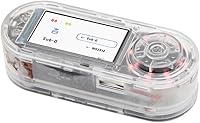
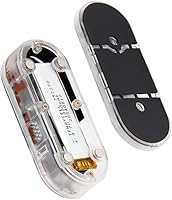
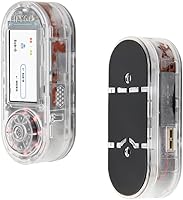
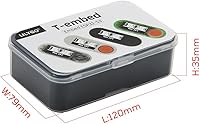
The LILYGO T-Embed CC1101 is one of those rare dev boards that packs a genuinely unusual combination of radios into a compact, ready-to-use package. Most ESP32 boards leave you wiring up external modules and sourcing your own enclosure — this wireless development kit ships with a transparent shell and an included LiPo battery, which is a small but meaningful convenience. What really sets it apart is pairing a sub-GHz CC1101 radio with Wi-Fi and BLE on a single board, plus a 1.9″ IPS display for on-device feedback. That said, this is not a beginner's toy. Solid ESP-IDF or Arduino experience is expected before you'll see quick results.
Features & Benefits
The ESP32-S3 dual-core LX7 processor gives this ESP32-S3 dev board enough headroom to handle concurrent RF tasks, display rendering, and network communication without issue. The CC1101 module supports 315, 433, 868, and 915 MHz bands, making it useful for interacting with a wide range of sensors and legacy wireless devices — though always verify your local regulations before transmitting. The 1.9″ IPS panel is genuinely sharp for its size. With 16 MB of flash and LPDDR4X RAM, there is room for substantial firmware and data logging. One critical caveat: adding the CC1101 expansion board disables the onboard microphone, a hardware-level constraint with no software workaround whatsoever.
Best For
This wireless development kit fits best in the hands of intermediate or advanced makers — people who already know their way around ESP-IDF or the Arduino framework and are not intimidated by hardware bring-up. It is well-suited for RF signal exploration, whether that means building a portable 433 MHz scanner, bridging legacy sensors to a Wi-Fi network, or experimenting with sub-GHz home automation setups. Security researchers and wireless communications students will also find it a capable, self-contained lab tool. If you are just starting out with microcontrollers, this board will likely frustrate before it inspires. A working knowledge of wireless protocols and SPI or UART debugging genuinely helps here.
User Feedback
Across its ratings, the T-Embed CC1101 holds a solid 4.2 stars, reflecting positive sentiment toward its build quality and display. Buyers consistently praise the physical construction and point to LILYGO's GitHub repository as a practical lifeline — community examples and schematics there outperform the included documentation by a wide margin. On the downside, reviewers flag a steep onboarding curve, especially those expecting a plug-and-play experience. The CC1101 and microphone hardware conflict catches buyers off guard; it is a trade-off LILYGO acknowledges but does not emphasize prominently enough at purchase. Battery life and enclosure durability draw few complaints, suggesting the physical package holds up well for its market tier.
Pros
- Combines CC1101 sub-GHz radio, Wi-Fi, and BLE on a single compact board — no module stacking required.
- The 1.9″ IPS display enables on-device data visualization straight out of the box.
- Transparent enclosure and included LiPo battery mean you can start prototyping immediately.
- 16 MB flash offers substantial room for complex firmware and local data logging.
- The ESP32-S3 dual-core LX7 handles concurrent RF, display, and network tasks without strain.
- LILYGO's GitHub repository provides schematics and community examples that experienced developers find genuinely useful.
- Supports 315, 433, 868, and 915 MHz bands, covering a wide range of sensor and legacy device protocols.
- Build quality is consistently praised — the board feels durable and well-assembled for its class.
- LPDDR4X RAM delivers noticeably smoother multitasking compared to older ESP32 variants.
Cons
- Enabling the CC1101 module permanently disables the onboard microphone — a hardware limitation with no workaround.
- Out-of-box documentation is minimal; real setup requires heavy reliance on the GitHub repository.
- No SD card slot limits long-duration data logging without a remote offload solution.
- Battery life under sustained RF scanning and active Wi-Fi is short — expect to carry a power bank for extended field use.
- Running all three radios concurrently can cause firmware instability without careful task scheduling.
- The learning curve is steep enough to frustrate developers without prior ESP32 or RF hardware experience.
- Community resources are shallow compared to mainstream platforms, leaving niche use cases poorly documented.
- The CC1101 and microphone conflict is not prominently disclosed at the point of sale, catching buyers off guard.
- RF transmission legality across frequency bands is entirely the buyer's responsibility — not addressed in any included materials.
Ratings
The LILYGO T-Embed CC1101 earned an aggregate score built from verified buyer reviews worldwide, with our AI actively filtering out incentivized, bot-generated, and duplicate feedback to surface what real users actually experienced. Across more than a dozen performance categories, the scores reflect an honest picture — acknowledging where this ESP32-S3 dev board genuinely punches above its weight class and where it creates friction for certain buyers.
Build Quality
RF Performance
Display Clarity
Documentation & Setup
Wireless Connectivity
Processing Power
Memory & Storage
Battery & Power Management
Ease of Use
Microphone Functionality
Value for Money
Community & Support
Portability & Form Factor
Out-of-Box Experience
Suitable for:
The LILYGO T-Embed CC1101 is a strong match for makers and developers who already have real experience with ESP32 toolchains and want to explore sub-GHz RF communication without assembling a stack of separate modules. If you are building a portable 433 MHz signal scanner, prototyping an IoT gateway that bridges legacy wireless sensors to a Wi-Fi network, or experimenting with home automation on less-congested frequency bands, this wireless development kit delivers a rare combination of hardware in a single, enclosure-ready package. Security researchers and wireless communications students will appreciate having CC1101, BLE, and Wi-Fi all accessible from one board for lab and field experiments. The built-in 1.9″ IPS display is a genuine practical asset for anyone who wants live feedback — RSSI readouts, decoded payloads, or status dashboards — without wiring up an external panel. Developers comfortable with ESP-IDF or PlatformIO, and willing to lean on LILYGO's GitHub repository as their primary documentation source, will find the onboarding friction manageable and the hardware capable.
Not suitable for:
The LILYGO T-Embed CC1101 is a poor fit for anyone new to embedded development or ESP32 programming — the documentation packaged with the board is thin, and the GitHub examples, while useful, assume a baseline of firmware experience that beginners simply will not have. If you need onboard audio capture as part of your project, walk away: enabling the CC1101 module permanently disables the microphone at the hardware level, and no firmware workaround exists. Buyers expecting a polished, plug-and-play RF tool with point-and-click software will be disappointed — this is a development board, not a finished product. If your primary use case involves transmitting on sub-GHz frequencies, be aware that doing so legally requires understanding your regional regulations; the hardware enables it, but compliance is entirely your responsibility. Finally, anyone who needs extended off-grid battery life for multi-hour field deployments should know that sustained RF scanning and active Wi-Fi will drain the included LiPo faster than the form factor might suggest.
Specifications
- MCU: Powered by the Espressif ESP32-S3 dual-core LX7 microprocessor, delivering ample compute headroom for concurrent RF, networking, and display tasks.
- Sub-GHz Radio: Onboard CC1101 module supports 315, 433, 868, and 915 MHz frequency bands for communication with sensors, remote controls, and legacy wireless devices.
- Wi-Fi: Supports IEEE 802.11 b/g/n wireless networking for integration with local networks and cloud-based IoT platforms.
- Bluetooth: Bluetooth Low Energy 5.0 enables short-range wireless communication with smartphones, BLE sensors, and peripheral devices.
- Display: Built-in 1.9″ IPS TFT LCD provides sharp, wide-angle color output suitable for real-time data readouts and simple on-device user interfaces.
- Flash Storage: 16 MB of onboard flash memory accommodates complex firmware builds, over-the-air update partitions, and local data logging buffers.
- RAM: LPDDR4X RAM supports smoother multitasking and more responsive firmware performance compared to standard PSRAM found on earlier ESP32 variants.
- Battery: One lithium polymer battery is included in the package, enabling portable and untethered operation without requiring a separate power source.
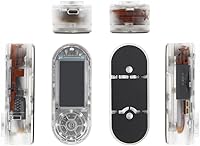
- Enclosure: Ships in a transparent shell enclosure that protects the PCB during handling while keeping the board's internal layout visible.
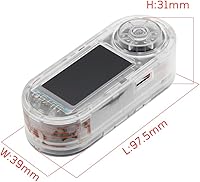
- Weight: Complete unit weighs 4.6 oz, making it portable enough for handheld and field-use applications without significant bulk.
- Dimensions: Package measures 11.02 x 6.65 x 2.01 inches, reflecting the boxed dimensions including enclosure and battery.
- OS Support: Compatible with Linux-based development environments, supporting standard ESP-IDF and Arduino framework toolchains on Linux hosts.
- Processor Brand: The ESP32-S3 SoC is designed and manufactured by Espressif Systems, a well-established vendor in the embedded and IoT silicon space.
- Microphone Note: The onboard microphone is hardware-disabled when the CC1101 expansion module is active; this is a fixed hardware constraint and cannot be resolved in firmware.
- Availability: First made available for purchase in October 2024, making it a relatively recent addition to LILYGO's T-Embed product line.
- Included Items: Package includes the development board in its enclosure, a lithium polymer battery, and a user manual covering basic hardware information.
- Manufacturer: Designed and manufactured by LILYGO (Shenzhen Xinyuan Electronic Technology Co., Ltd.), a prolific maker of ESP32-based development boards.
- GitHub Resource: Official firmware examples, schematics, and pinout references are maintained at LILYGO's public GitHub repository under the T-Embed-CC1101 project.
Related Reviews
LILYGO T-Echo 915MHz
LILYGO T-Beam Meshtastic 915MHz
LILYGO T-Deck Plus ESP32-S3 915MHz
AT&T Turbo Hotspot 3

T is for Tame Toddler Hair Kit
Eaglend EH01-T Wired Headset
UNI-T UT383 Digital Lux Light Meter
OKIOLABS OKIOCAM T Plus Document Camera
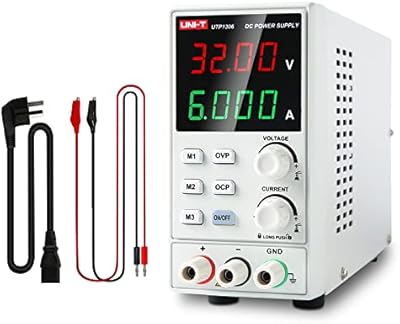
UNI-T UTP1306 Variable Bench Power Supply