LILYGO T-Deck Plus ESP32-S3 915MHz

Overview
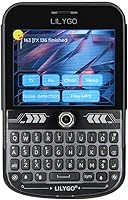
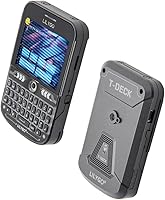
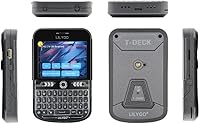
The LILYGO T-Deck Plus ESP32-S3 915MHz is one of the more complete off-grid communication devices you'll find at this price point — a compact LoRa development board that arrives with a QWERTY keyboard, a 2.8-inch color display, and Meshtastic firmware already loaded. If you haven't come across Meshtastic before, it's an open-source project that lets devices form a peer-to-peer radio mesh, passing text messages across long distances without any cellular or internet connection. The ABS plastic shell sets it apart from the typical bare PCB you'd get from most dev board vendors. It runs on USB-C power with a battery included, so you're not hunting for cables on day one.
Features & Benefits
At its core, the T-Deck Plus runs on an ESP32-S3FN16R8 dual-core LX7 processor with 8MB of PSRAM and 16MB of flash — more than enough headroom for the Meshtastic stack and any custom firmware you want to layer on top. The 915MHz LoRa radio pairs with a u-blox GPS module, so the device can beacon its position across the mesh automatically. An onboard microphone and speaker add audio capability, while a TF card slot handles local storage for map tiles or logs without needing a cloud service. The physical QWERTY keyboard is the standout convenience here: you can compose and send messages directly on the device without pulling out your phone.
Best For
This Meshtastic device makes the most sense for hikers, backcountry campers, and anyone operating in areas where cellular coverage disappears. It's also a natural fit for amateur radio experimenters and preppers who want to build or participate in a local mesh network. Makers and developers will appreciate that the GitHub repository and community wiki are both actively maintained, giving you a real foundation for customization beyond the stock firmware. Emergency communications volunteers and search-and-rescue teams will find the combination of GPS, long-range radio, and on-device messaging especially practical. Students and educators working on IoT or RF projects get a well-documented starting point.
User Feedback
Across more than a hundred ratings averaging 4.4 out of 5 stars, the T-Deck Plus earns consistent praise for its build quality and the sheer convenience of having everything integrated into one enclosure. The most common criticism worth knowing upfront: the battery percentage indicator is unreliable. LILYGO has been transparent about this, confirming it is a firmware-side limitation rather than a hardware fault, with improvements planned. Range in open terrain gets positive marks, though performance drops in dense urban environments as expected with any LoRa setup. A small number of buyers report sensitivity with the USB-C port during firmware flashing. First-time Meshtastic users note a configuration learning curve, though the official wiki helps considerably.
Pros
- Ships with Meshtastic firmware pre-installed, so you can join a mesh network within minutes of unboxing.
- The ABS enclosure makes the T-Deck Plus feel like a finished product, not a prototype on a bare PCB.
- A physical QWERTY keyboard means you can send messages on the trail without touching your phone.
- u-blox GPS enables automatic position beaconing across the mesh, genuinely useful for group navigation.
- TF card slot supports offline map tiles and traffic logging with no cloud dependency required.
- Onboard microphone and speaker give developers a foundation for audio alert or voice note features.
- Active GitHub repo and community wiki provide real documentation to build on, not just a spec sheet.
- Solid open-terrain LoRa range makes this a practical choice for rural and wilderness communication scenarios.
- All core components — radio, GPS, display, keyboard, and audio — are integrated into one pocket-sized unit.
- USB-C charging and a bundled battery mean you're ready to go without hunting for proprietary accessories.
Cons
- Battery percentage indicator is unreliable and cannot be trusted for field planning until a firmware fix ships.
- Urban LoRa range drops sharply due to building interference — city users will be underwhelmed.
- Thumb keyboard becomes fatiguing during longer messages, especially for anyone with larger hands.
- Some users report USB-C connection sensitivity when flashing firmware, requiring cable swaps or repeated attempts.
- Display washes out in direct sunlight, which is exactly when outdoor users need to read it most.
- First-time Meshtastic users face a configuration learning curve that the onboard experience alone doesn't resolve.
- The TF card slot has no cover or latch, leaving it exposed to trail dust and debris during outdoor use.
- Audio output from the built-in speaker is thin and low-volume, limiting its usefulness beyond basic alerts.
Ratings
The LILYGO T-Deck Plus ESP32-S3 915MHz has been evaluated by our AI rating system after processing verified buyer reviews from global marketplaces, with spam, bot activity, and incentivized submissions actively filtered out. The scores below reflect a balanced picture — genuine strengths and real frustrations alike — so you can make an informed decision without wading through noise. This device attracts a technically curious crowd, and their feedback is detailed and candid.
Build Quality
LoRa Radio Performance
GPS Accuracy
Keyboard Usability
Display Clarity
Firmware & Out-of-Box Experience
Battery Life
Battery Indicator Accuracy
USB-C Connectivity
Audio Features
TF Card & Storage
Developer & Community Support
Value for Money
Portability & Form Factor
Suitable for:
The LILYGO T-Deck Plus ESP32-S3 915MHz is purpose-built for people who spend time in places where cellular networks can't be relied upon — hikers, backcountry campers, trail runners, and anyone organizing group outdoor activities will find genuine utility here. Amateur radio operators and preppers building local Meshtastic mesh networks get a ready-to-run node that doesn't require soldering or sourcing individual modules. Makers and developers who want a documented, customizable ESP32-S3 platform will appreciate the active GitHub repository and the community wiki, which together make this a legitimate starting point for original firmware projects. Search-and-rescue volunteers and emergency communications experimenters who need GPS positioning and off-grid messaging in a single handheld unit are arguably the ideal audience. Educators running IoT or RF communication workshops will also find it a well-rounded hands-on platform that students can begin using the same day it arrives.
Not suitable for:
The LILYGO T-Deck Plus ESP32-S3 915MHz is not the right choice for buyers expecting a polished consumer gadget with zero configuration required. If you live in a dense urban area and plan to use LoRa as your primary communication layer, the multipath interference common in city environments will likely disappoint — this radio technology performs best in open terrain, not between city blocks. Anyone who needs a trustworthy battery gauge for mission-critical deployments should be aware that the battery percentage indicator is currently unreliable at the firmware level; it's a known issue the manufacturer is addressing, but it remains a real inconvenience until resolved. Buyers with no interest in Meshtastic, embedded development, or radio experimentation will find little practical value here — this is a specialist tool, not a general-purpose communicator. If your budget is tight and you're comparing this against a bare ESP32 board for a simple project, the premium for the integrated shell and peripherals only makes sense if you'll actually use those features.
Specifications
- Processor: Powered by the ESP32-S3FN16R8 dual-core LX7 microprocessor running at up to 240MHz, providing ample headroom for real-time mesh networking and custom firmware.
- RAM: Includes 8MB of PSRAM for handling larger data buffers, map tiles, and memory-intensive Meshtastic operations without performance bottlenecks.
- Flash Storage: 16MB of onboard flash memory stores the firmware, application data, and user configuration without requiring an external card for basic operation.
- Display: A 2.8-inch color TFT screen displays messages, GPS coordinates, node status, and device menus in a compact, readable format.
- Radio: 915MHz LoRa radio enables long-range, license-free communication suitable for North American and Australian frequency band deployments under Meshtastic.
- GPS Module: Integrated u-blox GPS receiver supports satellite-based position acquisition for automatic location beaconing and coordinate sharing across the mesh network.
- Keyboard: Built-in QWERTY thumb keyboard allows direct text input on the device without requiring a paired smartphone or external input device.
- Audio: Onboard microphone and speaker support audio input and output for developer use cases such as voice alerts, audio notes, or custom sound feedback.
- Expandable Storage: A TF (microSD) card slot provides removable storage for offline map tiles, mesh traffic logs, and additional firmware or asset files.
- Connectivity: USB-C port handles both charging and data transfer, including firmware flashing via serial connection from a host computer.
- Enclosure: The device ships inside a pre-fitted ABS (Acrylonitrile Butadiene Styrene) plastic shell that protects the PCB and gives the unit a finished, portable form factor.
- Firmware: Meshtastic open-source firmware comes pre-installed, enabling the device to participate in a peer-to-peer LoRa mesh network immediately after first boot.
- Power Source: Charges and operates via USB-C; a battery is included in the package, allowing untethered portable use without an additional purchase.
- Weight: The complete unit weighs 7.4 ounces, making it light enough for day hikes or field deployments while remaining substantial enough to feel durable.
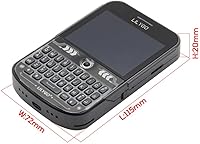
- Dimensions: Package dimensions measure 6.97 x 6.34 x 1.89 inches, reflecting the device plus its protective ABS enclosure in a pocketable footprint.
- Battery Meter: The battery percentage indicator is acknowledged by the manufacturer as inaccurate at the current firmware revision; a corrective firmware update is planned.
- Community Resources: Full source code, schematics, and development documentation are available via the official LILYGO GitHub repository and the LILYGO wiki at wiki.lilygo.cc.
- Compatibility: Connects to a host PC via USB-C for firmware flashing and serial monitoring; compatible with standard Meshtastic mobile apps on Android and iOS for configuration.
Related Reviews
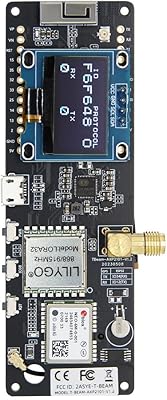
LILYGO T-Beam Meshtastic 915MHz
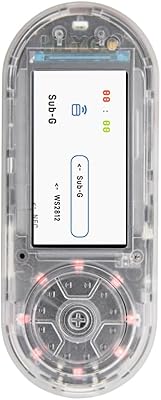
LILYGO T-Embed CC1101
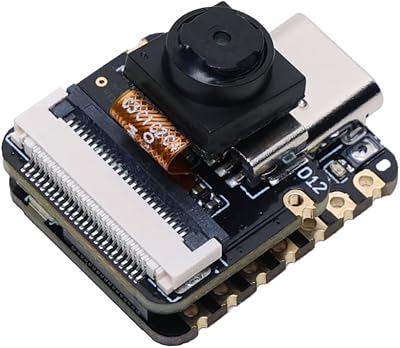
Seeed Studio XIAO ESP32-S3 Sense
OKIOLABS OKIOCAM T Plus Document Camera
LILYGO T-Echo 915MHz
Waveshare ESP32-S3 1.69inch Touch Display Development Board
Travel9to5 The Photography Deck
BuddyPhones Explore Plus
TourBox Elite Plus Bluetooth Creative Controller