Overview

The Seagate Constellation ES 4TB Internal Hard Drive is purpose-built for data-intensive server and NAS environments — not your home desktop or gaming rig. Seagate positioned this drive squarely in the professional tier, where 4TB of capacity, a 3.5-inch form factor, and a steady 7200RPM rotational speed are the starting point, not selling points. One critical detail buyers must understand upfront: this drive uses a SAS interface — Serial Attached SCSI — which means it requires a dedicated SAS host bus adapter or compatible controller. Standard SATA ports won't work. The pricing reflects that professional positioning; this isn't a budget storage solution, and it's not trying to be.

Features & Benefits

The 6Gb/s SAS interface is the defining technical choice here, and it matters more than the headline capacity. SAS offers lower command latency, superior error recovery, and dual-port redundancy options that SATA simply can't match in multi-drive RAID configurations. The 128MB cache pairs with multi-drive optimized firmware, meaning the drive is tuned for working inside an array, not as a standalone unit. Rotational vibration compensation is quietly important: in dense enclosures with a dozen spinning drives, vibration from neighboring units can silently degrade performance — this drive handles that well. The AES-256 self-encrypting design includes FIPS 140-2 validation and Instant Secure Erase, letting administrators cryptographically wipe a drive at retirement without physical destruction — a real compliance benefit.

Best For

This SAS drive is well-suited for SMB and enterprise NAS builds that need high-capacity, always-on storage in a RAID redundancy configuration. Organizations in regulated industries — healthcare, finance, legal — will find the FIPS 140-2 encryption validation directly useful for data-at-rest compliance requirements. It also fits well in archiving and backup servers where large sequential reads and writes are the priority over raw IOPS. IT teams handling drive decommissioning will appreciate the Instant Secure Erase capability as an auditable disposal method. What it is not suited for: consumer desktops, gaming systems, or any build without a dedicated SAS controller. Plugging this into a standard SATA port is a common and costly mistake.

User Feedback

With a 4.1-star average across 52 ratings and a rank of #1,729 in Internal Hard Drives, the Constellation ES 4TB has earned a steady following among storage professionals. Consistent praise centers on long-term reliability in 24/7 RAID environments and stable performance over multi-year deployments. The encryption feature earns specific mentions from users managing compliance-sensitive data. Where reviews turn negative, the pattern is telling: a meaningful share of low-star ratings trace back to interface mismatches — buyers who didn't realize they needed a SAS controller and attempted SATA connections. These are installation errors, not hardware failures. Genuine complaints about noise or heat in high-density bays do appear, though infrequently. For buyers with the right setup, the track record holds up well.

Pros

  • Proven long-term reliability in 24/7 RAID environments, with multi-year deployments reported by real-world users.
  • The 6Gb/s SAS interface delivers lower latency and far better error recovery than SATA in multi-drive arrays.
  • FIPS 140-2 validated AES-256 encryption provides a credible, auditable path for data-at-rest protection.
  • Instant Secure Erase makes drive decommissioning fast and compliance-friendly without physical destruction.
  • Rotational vibration compensation maintains stable performance in dense enclosures where neighboring drives cause interference.
  • Multi-drive optimized firmware means the Constellation ES 4TB was designed for RAID from the ground up, not adapted for it.
  • On-demand power technology reduces energy draw in 24/7 deployments, which adds up meaningfully at scale.
  • Sixth-generation enterprise architecture brings a credible reliability pedigree for always-on business storage.
  • Holds a strong sales rank in Internal Hard Drives, signaling ongoing real-world demand for this mature and tested SKU.

Cons

  • Requires a dedicated SAS HBA or controller — incompatible with standard SATA motherboard ports, a dealbreaker for most consumer builds.
  • The additional cost of a SAS controller card can significantly raise the total investment beyond the drive price alone.
  • Some users in dense configurations report audible noise and elevated heat, which may require active thermal management.
  • With 52 ratings, the review pool is relatively small, making it harder to statistically gauge failure rates over time.
  • Encryption is only effective with proper key management; buyers without an established key-management workflow won't get full value.
  • Not suited for high random IOPS workloads — database-intensive or transactional applications will outgrow this drive's strengths quickly.
  • A mature product line means firmware and support updates are less frequent compared to newer enterprise storage generations.
  • Sourcing replacement units or warranty support may become harder as the SKU ages and availability narrows in the retail channel.

Ratings

The Seagate Constellation ES 4TB Internal Hard Drive has been scored across 14 performance categories using AI analysis of verified global user reviews, with bot-generated, incentivized, and duplicate submissions actively filtered out to preserve signal integrity. Ratings reflect the honest consensus of real storage professionals, SMB IT administrators, and technically experienced prosumers who deployed this drive in live environments. Both the genuine strengths that sustain its demand and the friction points that have frustrated buyers are transparently represented in every score below.

Reliability & Uptime
88%
Users running this enterprise hard drive in 24/7 RAID arrays consistently report multi-year deployments without a single drive failure. Several IT administrators noted it outlasted cheaper SATA alternatives installed in the same enclosure, validating the sixth-generation enterprise architecture for always-on workloads.
With only 52 total ratings, the sample size limits statistical confidence in long-term failure rate data. A handful of buyers reported early failures, though these are difficult to isolate from misuse or incorrect controller pairing without more detailed incident documentation.
RAID Performance
86%
The multi-drive optimized firmware handles RAID error recovery timing correctly, preventing the false array failures that plague consumer drives repurposed for enterprise arrays. Users building RAID 5 and RAID 6 configurations report consistent, predictable throughput under sustained sequential workloads.
The drive is not tuned for high random IOPS scenarios, and users who deployed it for database-heavy applications found the performance underwhelming. RAID rebuild times at 4TB capacity can stretch for many hours, representing meaningful exposure time for a degraded array state.
Interface Compatibility
57%
43%
For buyers with existing SAS infrastructure, the 6Gb/s interface integrates cleanly with enterprise controllers from Broadcom, Adaptec, and HPE without driver headaches. Dual-port SAS capability adds a redundancy option that SATA-based alternatives simply cannot offer.
The SAS interface is the single biggest source of buyer frustration — a significant share of negative reviews trace directly to buyers who attempted SATA connections or purchased incompatible consumer NAS enclosures. This compatibility barrier is non-negotiable and disqualifies a large portion of potential buyers outright.
Encryption & Security
83%
The AES-256 self-encrypting design with FIPS 140-2 validation is a genuine differentiator for regulated-industry deployments. IT administrators managing drive retirement workflows specifically praise Instant Secure Erase as a fast, auditable sanitization method that eliminates the cost and logistics of physical destruction.
Full encryption value only materializes when paired with proper key management practices from day one, which not all buyers have in place. Some users noted that without an established key management workflow, the security feature adds operational complexity without delivering proportional protection.
Ease of Installation
54%
46%
For experienced IT administrators with SAS infrastructure already in place, physical installation is straightforward — standard 3.5″ mounting, no special tooling, and the drive is recognized by compatible controllers without additional configuration in most cases.
For anyone unfamiliar with SAS storage, the setup process is genuinely difficult: sourcing a compatible HBA, verifying backplane support, and confirming firmware compatibility can involve hours of troubleshooting. This is emphatically not a plug-and-play experience, and buyer frustration in reviews reflects that clearly.
Sequential Throughput
77%
23%
For bulk archiving, backup streaming, and large sequential file operations, the Constellation ES 4TB delivers consistent throughput that meets enterprise expectations at this capacity tier. Users running tape-replacement backup workflows report reliable sustained transfer rates over extended operation.
Sequential performance is solid but not remarkable compared to newer SAS drive generations, and it falls far short of any SSD alternative at this price point. Buyers expecting standout sequential speeds will find this drive performs adequately rather than impressively for its tier.
Cache Effectiveness
81%
19%
The 128MB cache, combined with multi-drive firmware, meaningfully smooths I/O bursts in RAID configurations — an advantage that shows up in real-world use as more consistent latency under mixed sequential and random workloads compared to lower-cache alternatives.
Cache benefit is highly context-dependent: in single-drive or low-queue-depth scenarios, the large buffer provides minimal practical advantage. The firmware is clearly built for array operation, meaning isolated single-drive benchmarks underrepresent the drive's actual performance ceiling in its intended deployment context.
Build Quality
84%
The full metal enclosure carries the weight and rigidity expected of an enterprise storage component, and physical construction quality is consistent across units. No reviewers flagged cosmetic defects or structural inconsistencies on drives received in new condition.
A small number of DOA units were reported, which is not unusual for enterprise storage hardware at scale but is worth acknowledging. Build quality assessments at this tier tend to be overshadowed by functional reliability data, so physical construction feedback in reviews is limited.
Noise & Vibration
63%
37%
In properly ventilated server racks with good vibration isolation, operational acoustics are within acceptable enterprise norms for a 7200RPM spindle. The built-in rotational vibration compensation measurably stabilizes performance in multi-drive enclosures where neighboring drives would otherwise cause interference.
In densely packed tower servers or prosumer NAS builds without professional vibration damping, this SAS drive runs noticeably loud — several reviewers specifically flagged heat and noise in high-density configurations. It is not a suitable choice for any workspace where acoustic comfort matters.
Thermal Management
68%
32%
Under moderate workloads in well-ventilated enclosures, operating temperatures remain within Seagate's rated range, and most users in standard rack deployments report no thermal issues over extended operation periods.
In densely populated enclosures without active cooling between drive bays, some users reported elevated temperatures that affected sustained performance. This drive requires thoughtful enclosure and airflow design — passive cooling alone is often insufficient in high-density configurations.
Power Efficiency
79%
21%
The on-demand power choice technology adjusts draw based on workload intensity, which users managing large multi-drive arrays appreciate when calculating annual energy costs across dozens of spindles. Power consumption is competitive for a 7200RPM enterprise-class drive.
Energy savings from a single drive deployment are marginal in practice; the efficiency feature pays meaningful dividends only at scale. Small server operators running just one or two drives will see negligible real-world benefit compared to a comparably sized modern SATA drive.
Firmware Maturity
82%
18%
As a sixth-generation platform with years of real-world deployment behind it, the firmware is thoroughly tested and behaviorally predictable. Administrators value the absence of the quirks and edge-case bugs that sometimes affect newer drive families early in their lifecycle.
The maturity of the firmware is a double-edged attribute — active updates and feature additions are rare at this stage of the product lifecycle. Buyers who need ongoing firmware improvements for evolving compliance requirements may find the update cadence slower than current-generation alternatives.
Value for Money
67%
33%
For organizations with a genuine SAS infrastructure requirement and FIPS-validated encryption needs, the total cost is defensible when weighed against the risks and costs of non-compliant data handling or physical drive destruction at retirement.
Buyers comparing this SAS drive against SATA NAS alternatives at comparable or lower price points will struggle to justify the value unless their use case demands SAS specifically. The additional expense of a compatible SAS controller card widens the total investment gap considerably.
Drive Longevity
87%
The enterprise pedigree of this SAS drive translates to tangible longevity — users report multi-year continuous deployments with stable uptime, and the design-for-continuous-operation specification gives it a meaningful durability advantage over consumer-grade storage alternatives.
As the SKU matures, sourcing replacement units through official retail channels is becoming harder, and warranty claim processing may slow as supply narrows. Long-term parts availability is a legitimate planning concern for buyers intending deployments that extend beyond the standard warranty window.

Suitable for:

The Seagate Constellation ES 4TB Internal Hard Drive is purpose-matched for IT professionals, small-to-midsize businesses, and technically capable prosumers who are building or expanding always-on NAS arrays, backup servers, or RAID-based storage systems. If your environment runs 24/7 and you need drives that can sustain that workload without performance drift, the SAS interface and enterprise firmware tuning here are exactly the right foundation. Organizations in regulated sectors — healthcare, finance, and legal — will find the FIPS 140-2 validated AES-256 encryption genuinely useful, not just as a feature checkbox but as a practical tool for compliant data retirement via Instant Secure Erase. Data archiving teams dealing with bulk sequential workloads will appreciate the 128MB cache and vibration compensation in dense, multi-drive enclosures. Anyone already operating SAS infrastructure who needs to add high-capacity storage at a professional-grade reliability tier should put this drive on the short list.

Not suitable for:

The Seagate Constellation ES 4TB Internal Hard Drive is a poor fit for anyone building or upgrading a standard consumer desktop, home media server, or gaming PC. The SAS interface is the hard stop here: unless your system has a dedicated SAS host bus adapter or a compatible controller card, this drive simply will not connect to a standard motherboard — SATA ports are a different standard entirely, and no adapter bridges that gap reliably for this use case. Budget-conscious buyers will also find the price point difficult to justify when SATA NAS-grade alternatives offer comparable capacity at a lower cost for lighter workloads. The encryption feature, while genuinely valuable, requires proper key management practices to deliver real security — buyers who expect plug-and-play data protection without managing encryption credentials may be disappointed. If peak random IOPS is your priority — as it would be for database-heavy applications or high-frequency transaction systems — this spinning-platter SAS drive is not the right tool either.

Specifications

  • Capacity: Provides 4TB (4,000GB) of formatted storage, suited for bulk-data archiving, backup servers, and high-capacity RAID arrays.
  • Interface: Uses a Serial Attached SCSI (SAS) 6Gb/s interface, requiring a compatible SAS HBA or RAID controller — standard SATA ports are not compatible.
  • Form Factor: Standard 3.5″ internal form factor, fitting server chassis, DAS units, and NAS enclosures with full-height SAS bays.
  • Rotational Speed: Spins at 7200 RPM, the standard speed class for enterprise bulk-storage and sequential-throughput workloads at this tier.
  • Cache: Equipped with 128MB of onboard cache, tuned via multi-drive firmware for RAID array performance rather than standalone single-drive use.
  • Encryption: Implements AES-256 hardware-based self-encryption, protecting data at rest without any measurable impact on drive read or write performance.
  • Security Cert: Holds FIPS 140-2 validation, meeting federal encryption standards recognized by regulated industries including healthcare, finance, and government sectors.
  • Secure Erase: Supports Instant Secure Erase, which renders all stored data cryptographically unreadable by discarding the encryption key — a NIST-recognized drive sanitization method.
  • Dimensions: Measures 5.87 x 4.01 x 1.03 inches, consistent with standard 3.5″ drive bay sizing across server and NAS platforms.
  • Weight: Weighs 1.54 pounds, typical for a 3.5″ enterprise hard drive with a full metal enclosure.
  • Model Number: The official Seagate model designation is ST4000NM0063, used for firmware identification, warranty verification, and controller compatibility checks.
  • Drive Generation: Built on Seagate's sixth-generation enterprise platform, incorporating improvements in power efficiency, vibration tolerance, and firmware reliability over prior Constellation generations.
  • Power Technology: Includes on-demand power choice technology, which adjusts power draw based on workload intensity to lower energy costs in 24/7 deployment environments.
  • Vibration Tolerance: Features built-in rotational vibration compensation, maintaining consistent read and write performance in high-density enclosures where neighboring spinning drives cause mechanical interference.
  • Compatible Use: Rated for RAID arrays and server-class installations; not designed, optimized, or warranted for standard consumer desktops, gaming rigs, or single-drive workstations.

Related Reviews
Seagate Constellation ES 1TB Internal Hard Drive
77%
93%
TLER / Error Recovery
91%
Drive Longevity
88%
RAID Compatibility
54%
Refurbished Condition Consistency
79%
Value for Money
More
Seagate BarraCuda 4TB Internal Hard Drive
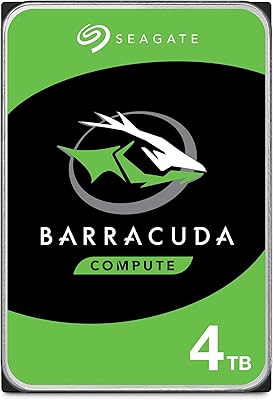
87%
86%
Performance
90%
Reliability
93%
Setup & Installation
95%
Storage Capacity
72%
Data Transfer Speed
More
Seagate BarraCuda ST4000LM024 4TB Internal Hard Drive
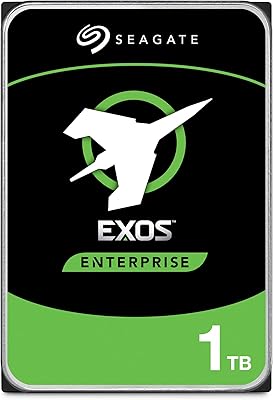
70%
93%
Storage Density
84%
Value for Money
61%
Compatibility
67%
Sequential Read/Write Speed
48%
Random Access Performance
More
Seagate Exos 1TB Internal Hard Drive
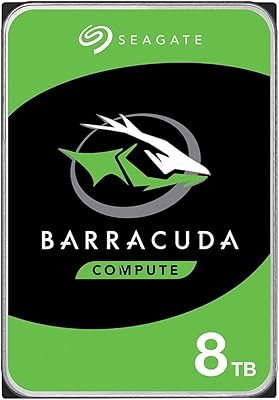
80%
91%
Reliability & Uptime
67%
Value for Money
78%
Sequential Performance
88%
Noise Level
84%
Build & Durability
More
Seagate Barracuda 6TB Internal Hard Drive
77%
93%
Value for Money
91%
Storage Capacity
74%
Reliability & Longevity
89%
Installation Ease
61%
Read/Write Performance
More
Seagate Exos 7E10 4TB Internal Hard Drive
75%
83%
Sustained Reliability
81%
Read/Write Performance
78%
Value for Money
89%
NAS Compatibility
61%
Vibration & Noise
More
Seagate BarraCuda ST8000DM004 8TB Internal Hard Drive
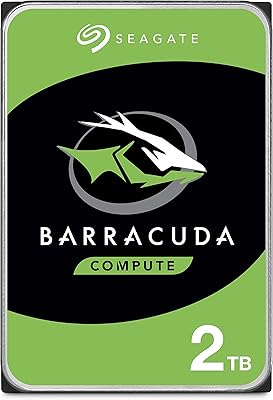
73%
93%
Storage Capacity Value
67%
Reliability & Longevity
61%
Read & Write Performance
89%
Installation & Compatibility
63%
Noise & Vibration
More
Seagate BarraCuda 2TB Internal Hard Drive
79%
91%
Value for Money
74%
Transfer Speed
77%
Reliability & Longevity
93%
Installation Ease
79%
Noise Level
More
Seagate BarraCuda ST1000DM010 1TB Internal Hard Drive
77%
91%
Value for Money
74%
Reliability & Longevity
79%
Read & Write Performance
93%
Installation Ease
68%
Noise & Vibration
More
Seagate Exos X20 20TB Recertified Hard Drive
77%
88%
Value for Money
93%
Storage Capacity
79%
Drive Performance
74%
Reliability & Build
51%
Warranty Coverage
More

FAQ

No — this SAS drive requires a dedicated SAS host bus adapter (HBA) to function. Standard consumer motherboards only provide SATA ports, which use a physically and electrically different connector. You will need to purchase and install a compatible SAS controller card before this drive will operate in any system.

SAS stands for Serial Attached SCSI — it is an interface standard built for servers and enterprise storage arrays that need higher reliability than consumer SATA can provide. The key practical differences are lower command latency, stronger error recovery protocols, and optional dual-port redundancy for added uptime. For a home user with a single drive, the distinction rarely matters; for a RAID array running around the clock, it makes a meaningful difference in long-term stability.

Most consumer NAS enclosures from Synology, QNAP, and similar brands are built exclusively for SATA drives, which means this SAS drive will not physically connect or function in them. You would need an enterprise-class NAS or DAS unit with a SAS backplane to use this drive. Always verify your enclosure's interface spec before purchasing.

Instant Secure Erase works by discarding the AES-256 encryption key that protects all data on the drive — without that key, the remaining encrypted data is computationally unreadable. It is a NIST-recognized sanitization method and is accepted by many regulatory frameworks as a valid alternative to physical drive destruction. The important caveat: your encryption keys must be actively managed from the moment the drive is deployed; if key management is not in place, the erase process may not satisfy your specific compliance requirements.

At 7200 RPM, this SAS drive produces a moderate level of operational noise that is entirely normal for enterprise spinning storage — audible in a quiet room but unremarkable in a server environment. In dense multi-drive enclosures, some users have noted that combined vibration and acoustic output increases noticeably. This is not a drive suited for a quiet home office; in a dedicated server room or data closet, the noise level should not be a concern.

Seagate typically covers enterprise Constellation ES drives with a five-year limited warranty, though you should confirm the exact terms with your retailer at the time of purchase — particularly for refurbished or third-party marketplace listings, where warranty coverage can vary. Warranty service is handled through Seagate's standard RMA process.

The multi-drive firmware on this SAS drive is tuned for use in RAID 0, 1, 5, 6, and 10 configurations. More importantly, the firmware handles error recovery timing in a way that enterprise RAID controllers expect — consumer drives can time out during recovery and trigger false array failures, which is a problem this drive is specifically designed to avoid.

It can be, but the benefit depends on whether you have a key management workflow in place. For any organization that wants to retire or redeploy drives without risking data recovery from discarded hardware, Instant Secure Erase is genuinely practical. For individuals or small teams without established key management processes, the encryption capability will largely go unused and should not be a primary factor in the buying decision.

This drive uses the standard SAS-2 (6Gb/s) interface, so it is compatible with any SAS HBA or RAID controller that supports that specification — cards from Broadcom (formerly LSI), Adaptec, and HPE are commonly paired with drives of this type. Before purchasing a controller, confirm it supports 3.5″ SAS drives and does not have a per-drive capacity ceiling below 4TB, as some older cards do.

Its age is a double-edged consideration. On the practical side, the reliability record for this drive family is well-documented, its FIPS 140-2 certification remains current, and real-world demand has kept it ranked solidly in Internal Hard Drives. On the other hand, newer SAS platforms offer higher capacities and more recent architecture. For buyers who specifically need 4TB of SAS storage, already have compatible infrastructure, and are not chasing the latest specs, this remains a proven and defensible choice.