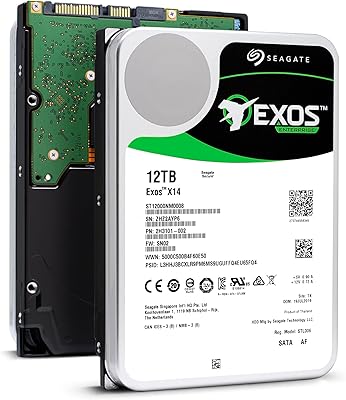
Seagate Exos 7E10 4TB Internal Hard Drive
Overview
The Seagate Exos 7E10 4TB Internal Hard Drive started life as a data center component, and that origin story is exactly what makes it interesting to home lab builders and prosumer NAS users today. Unlike consumer-grade drives like the Barracuda, which are engineered around lighter workloads and intermittent use, this enterprise HDD is rated for 24/7 continuous operation under sustained load. It connects via SATA 6Gb/s and occupies a standard 3.5-inch bay, so compatibility with modern desktops, NAS enclosures, and rackmount servers is essentially a given. The 4TB capacity sits at the practical entry point for buyers making the jump from consumer storage into something built for real endurance.
Features & Benefits
Spin up the Exos 7E10 4TB and you get a 7200 RPM platter stack paired with a 256MB cache buffer — a combination that keeps sequential transfers running smoothly even when the drive is juggling a queue of requests. That buffer size matters in practice: in a NAS handling simultaneous reads from multiple clients, smaller caches can become a bottleneck, and this Seagate workhorse drive is built to avoid exactly that. Rotational vibration compensation is another detail worth noting for anyone running a multi-drive array; drives packed tightly together can interfere with each other, and active vibration management helps maintain accuracy over time. The CMR recording method also guarantees predictable, consistent write performance across the drive lifespan.
Best For
This enterprise HDD makes the most sense for technically confident buyers who want enterprise-level endurance without the cost and complexity of SAS infrastructure. Home lab operators running a multi-bay NAS, small businesses archiving surveillance footage around the clock, or system builders stocking a secondary storage pool will all find it well-suited to their needs. IT professionals sourcing cost-effective drives for less critical server roles are also a natural fit. What it is not suited for is anything requiring portability — this is a 3.5-inch internal drive, full stop. If you need something for a laptop or an external enclosure, look elsewhere. This is purpose-built for stationary, high-duty-cycle installations.
User Feedback
With just over 50 ratings, the sample size here is modest enough that a handful of outliers can pull the average noticeably in either direction — keep that in mind when weighing the 4.2-star score. The pattern in positive reviews is consistent: buyers running the Exos 7E10 4TB in NAS arrays report stable long-term performance and appreciate the value relative to similarly priced consumer drives. The criticisms worth taking seriously involve noise levels in enclosed cases and, more critically, questions around warranty coverage — some units sold through third-party channels are OEM or refurbished, which can mean limited manufacturer support. As with any mechanical drive, redundant backups remain non-negotiable regardless of the reliability rating on the box.
Pros
- Engineered for 24/7 continuous operation, making it genuinely suited for always-on NAS and server environments.
- The 7200 RPM spin speed delivers consistent throughput in read/write-heavy workloads without throttling.
- 256MB cache buffer handles queued requests efficiently, which matters in multi-client NAS setups.
- CMR recording technology ensures predictable, stable write performance that holds up over the drive lifespan.
- Rotational vibration compensation helps maintain accuracy when deployed alongside other spinning drives in a tight enclosure.
- Broad SATA 6Gb/s compatibility means it drops into virtually any modern motherboard, HBA, or NAS without fuss.
- Buyers report strong value-per-terabyte compared to consumer drives at the same capacity tier.
- The Exos 7E10 4TB consistently earns praise from NAS users for reliable long-term performance in real array deployments.
- Standard 3.5-inch form factor ensures straightforward installation in desktops, towers, and rackmount chassis alike.
Cons
- OEM and refurbished channel listings are common, and warranty terms can be limited or unclear depending on the seller.
- With just over 50 ratings, the review pool is too small to draw statistically confident conclusions about reliability trends.
- Some users report noticeable noise levels that may be disruptive in open-air desktop builds or quiet home office setups.
- Heat generation in poorly ventilated or tightly packed enclosures has appeared in a portion of negative user reports.
- Early failure reports exist in the review set — while likely a small fraction, mechanical drives always carry inherent risk.
- No USB or external enclosure compatibility; buyers who need portable storage will need an entirely different product.
- At 4TB, this enterprise HDD may feel like an undercount for buyers building large-scale archival or backup arrays today.
- The enterprise pedigree means you may be paying for endurance ratings that light or intermittent home use will never justify.
Ratings
The scores below reflect an AI-driven analysis of verified global user reviews for the Seagate Exos 7E10 4TB Internal Hard Drive, with spam, incentivized, and bot-generated feedback actively filtered out before scoring. Each category captures what real buyers experienced across home labs, NAS arrays, small business servers, and prosumer media setups — the good and the frustrating alike. This Seagate workhorse drive earns strong marks in several critical areas, but a few pain points around purchasing context and noise are reflected transparently in the numbers.
Sustained Reliability
Read/Write Performance
Value for Money
NAS Compatibility
Vibration & Noise
Build Quality
Thermal Performance
Ease of Installation
Warranty & Support
Workload Endurance Rating
Sequential Transfer Speed
Multi-Drive Array Stability
Power Efficiency
Seller Transparency
Suitable for:
The Seagate Exos 7E10 4TB Internal Hard Drive is a strong match for technically literate buyers who need a drive that can handle sustained, heavy workloads without flinching. Home lab enthusiasts running multi-bay NAS systems — think Synology or QNAP units with four or more bays — will appreciate that this enterprise HDD was literally designed for the kind of continuous read/write cycles that would degrade a consumer drive over time. Small business operators archiving security camera footage around the clock, or those hosting a local media server that streams to multiple clients simultaneously, are exactly the use cases this drive was engineered around. IT professionals sourcing cost-effective storage for secondary server pools or off-site backup nodes will also find the value-per-terabyte proposition compelling. If you are stepping up from a consumer drive and want something with meaningfully higher endurance ratings without crossing into expensive SAS territory, the Exos 7E10 4TB sits in a practical sweet spot.
Not suitable for:
The Seagate Exos 7E10 4TB Internal Hard Drive is simply the wrong tool if your use case falls outside stationary, internally mounted storage. This is a 3.5-inch mechanical drive — it goes inside a desktop tower, a rackmount server, or a NAS enclosure, and that is the full extent of its habitat. Laptop users, anyone shopping for an external backup drive, or buyers who need USB connectivity should stop here and look at a different product category entirely. Beyond form factor, casual desktop users who run light workloads — occasional file storage, infrequent backups — are likely paying a premium for enterprise endurance ratings they will never actually need or notice. There is also a real caveat around purchasing channel: some listings for this drive involve OEM or refurbished units with limited warranty coverage, which raises the risk profile for buyers who are not prepared to verify the unit's history and handle potential failures themselves. If warranty security matters to you, scrutinize the seller carefully before committing.
Specifications
- Brand: Manufactured by Seagate, one of the longest-established hard drive makers in the industry.
- Series: Part of the Exos 7E10 lineup, Seagate's enterprise-class mechanical drive family designed for continuous-duty environments.
- Model Number: The specific model identifier for this unit is ST4000NM000B.
- Capacity: Provides 4TB (4,000GB) of raw storage, representing the entry-level capacity in the Exos 7E10 range.
- Form Factor: Standard 3.5-inch internal form factor, compatible with desktop towers, rackmount servers, and multi-bay NAS enclosures.
- Interface: Uses a SATA 6Gb/s (Serial ATA-600) interface, ensuring broad compatibility with modern motherboards, HBAs, and NAS controllers.
- Rotational Speed: Platters spin at 7200 RPM, delivering consistent throughput suited to read/write-intensive and sustained workloads.
- Cache Buffer: Equipped with a 256MB cache buffer to help smooth sequential data transfers and manage queued I/O requests efficiently.
- Recording Tech: Uses Conventional Magnetic Recording (CMR), which provides stable and predictable write performance over the drive lifespan.
- Drive Type: Mechanical hard disk (HDD); not a solid-state drive, so moving parts are present and normal operational noise should be expected.
- Duty Cycle: Rated for 24/7 continuous operation, making it suitable for always-on NAS arrays, surveillance systems, and server deployments.
- Vibration Control: Incorporates rotational vibration (RV) compensation to maintain read/write accuracy when installed alongside multiple spinning drives.
- Dimensions: Physical dimensions are 1.03 x 4.01 x 5.79 inches (H x W x L), conforming to the standard 3.5-inch drive footprint.
- Weight: The drive weighs 1.43 pounds, consistent with standard 3.5-inch enterprise HDDs of this capacity.
- Installation Type: Designed exclusively for internal installation; this drive is not intended for use in external USB enclosures as a primary configuration.
- Compatible Devices: Verified compatible with desktop PCs, rackmount servers, and NAS units supporting 3.5-inch SATA drives.
- Power Interface: Uses a standard SATA power connector, requiring no proprietary power adapters beyond a typical desktop or server PSU.
- Availability: Listed as not discontinued by the manufacturer, with the product first made available in September 2021.
Related Reviews
Seagate Exos 1TB Internal Hard Drive
Seagate BarraCuda 4TB Internal Hard Drive
Seagate Exos X20 20TB Recertified Hard Drive
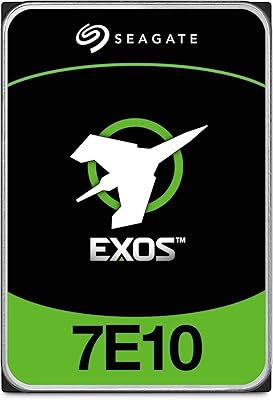
Seagate Exos 7E10 6TB SAS Hard Drive
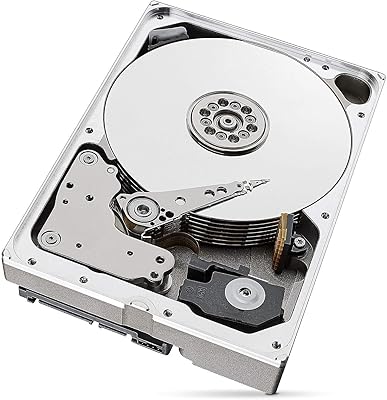
Seagate Exos X10 10TB Internal Hard Drive
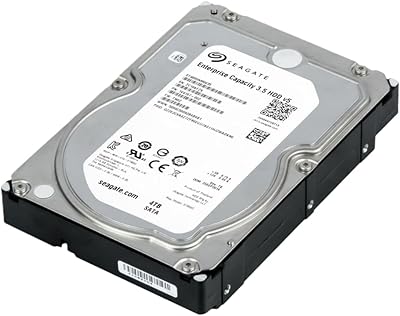
Seagate Exos 7E8 4TB Enterprise Hard Drive
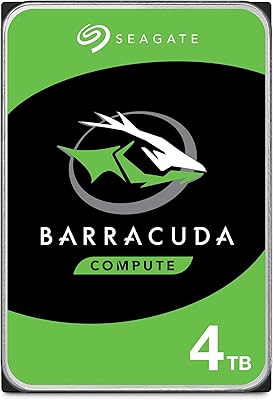
Seagate BarraCuda ST4000LM024 4TB Internal Hard Drive
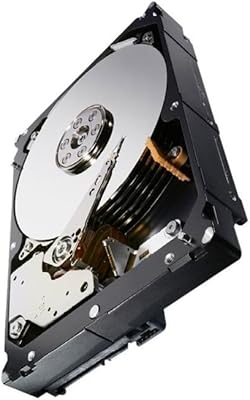
Seagate Constellation ES 4TB Internal Hard Drive
Seagate BarraCuda ST8000DM004 8TB Internal Hard Drive