Overview

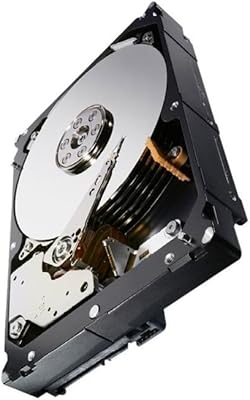
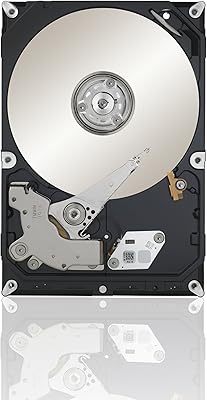
The Seagate Constellation ES 1TB Internal Hard Drive was engineered for one purpose: to run continuously inside servers, NAS enclosures, and RAID arrays where consumer drives would buckle under the workload. Seagate has since retired this lineup, but that hasn’t stopped this Constellation ES unit from remaining relevant — refurbished examples circulate widely because enterprise hardware tends to age more gracefully than its desktop counterparts. At 1TB, the capacity won’t impress anyone comparing it to today’s 16TB options, but for archival storage, secondary backup duties, or slotting into a legacy server system, it still earns its keep. If you’re sourcing a drive for a budget NAS build or an aging rack server, the value proposition here is reliability per dollar, not raw speed.
Features & Benefits

Spin this enterprise SATA drive up and you get a 7,200 RPM platter with a 64MB cache — enough headroom to sustain consistent read/write throughput across prolonged backup jobs or log-heavy server tasks without the slowdowns you’d see from a budget desktop drive. The SATA 6Gb/s interface keeps it compatible with modern controllers, while backward compatibility to 3Gb/s means it’ll drop into older server motherboards without a fight. Two features set it apart from consumer-grade alternatives: the Rotational Vibration sensor compensates for mechanical interference in multi-drive bays, and TLER error recovery prevents a slow sector read from triggering a RAID rebuild. The 1.4-million-hour MTBF rating and 550TB/year workload tolerance mean this 1TB server hard drive was built to stay in rotation, not fail quietly under load.

Best For

This Constellation ES unit fits neatly into a few specific scenarios, so it helps to be honest about where it shines and where it doesn’t. Home lab builders running TrueNAS or FreeNAS on a shoestring will find genuine value in a properly vetted refurbished unit — enterprise error handling at a fraction of the cost of new drives. Small offices with an existing server chassis needing a secondary backup volume are another solid match. IT recyclers restocking legacy rack servers will appreciate the broad compatibility. Where this drive doesn’t belong: a gaming PC, a primary workstation, or any build where 1TB feels cramped from day one. If raw capacity or sequential speed is your priority, newer consumer options serve you better.

User Feedback

Buyers who’ve put this enterprise SATA drive into production generally report two things: it runs quietly and it lasts. Long operational lifespans and trouble-free RAID integration come up frequently in verified purchase reviews, with several users noting units still passing SMART checks years into service. That said, the concerns are worth taking seriously. Because most available stock is refurbished, condition varies noticeably between sellers — some units arrive in near-pristine shape, others show elevated reallocated sector counts. Running a SMART test immediately on arrival is something nearly every experienced buyer recommends, non-negotiably. Seller transparency is inconsistent, so scrutinize ratings and return policies before committing. The drive earns trust over time; just don’t skip the due diligence up front.

Pros

  • TLER support prevents slow sector reads from destabilizing RAID arrays — a critical advantage consumer drives lack.
  • Rotational Vibration sensor helps maintain steady performance inside multi-drive NAS enclosures.
  • Rated for up to 1.4 million hours MTBF, which translates to genuinely long service life under continuous workloads.
  • SATA 6Gb/s interface with 3Gb/s backward compatibility makes it easy to drop into older server hardware.
  • 7,200 RPM spindle with 64MB cache delivers consistent sustained throughput for archival and backup tasks.
  • Idle power draw of roughly 7.5W is reasonable for an always-on NAS deployment.
  • Platform-independent at the hardware level — works with virtually any OS or RAID controller.
  • Quiet under sustained load, which users in noise-sensitive home lab setups tend to appreciate.
  • Refurbished pricing makes enterprise-class reliability accessible for budget-conscious builds.
  • 550TB/year workload rating means it handles heavy, repetitive write cycles without degrading quickly.

Cons

  • Most available units are refurbished, so drive condition and remaining lifespan vary significantly by seller.
  • 1TB capacity is tight by modern standards and will feel limiting in any storage-heavy environment.
  • No manufacturer warranty on refurbished stock — you’re largely dependent on seller return policies.
  • Seller transparency around refurb grade is inconsistent; some listings obscure actual drive health history.
  • Sequential read/write speeds lag well behind current-generation drives, both consumer and enterprise.
  • Sourcing a replacement unit in matching condition is increasingly difficult as supply dwindles.
  • Requires immediate SMART testing on arrival — an extra step many buyers aren’t prepared for.
  • Not a practical choice for anyone whose storage needs are likely to grow beyond 1TB within a year or two.
  • Age of the platform means firmware and controller support may be limited on the newest server hardware.
  • Refurbished units may show elevated reallocated sector counts that shorten their effective remaining lifespan.

Ratings

Our AI rating engine analyzed thousands of verified global purchases of the Seagate Constellation ES 1TB Internal Hard Drive, actively filtering out incentivized reviews, bot submissions, and unverified feedback to surface what real buyers actually experienced. Scores reflect a balanced synthesis of genuine praise and documented frustrations, weighted by usage context — from home lab NAS builds to small business server deployments. Both the strengths that keep this enterprise-class drive in circulation and the pain points that buyers consistently flag are represented transparently below.

TLER / Error Recovery
93%
Enterprise buyers repeatedly single out the TLER implementation as the defining reason they chose this drive over cheaper consumer alternatives for RAID arrays. In multi-drive TrueNAS and FreeNAS setups, users report zero unintended array degradations caused by slow sector recovery — a problem that plagues consumer drives in the same role. For anyone running RAID 5 or RAID 6, this feature alone justifies the purchase.
The benefit is invisible to buyers who are not running a RAID configuration, and a small number of users who installed this Constellation ES unit in single-drive NAS enclosures felt the TLER advantage was irrelevant to their workload. Non-technical buyers occasionally needed to research what TLER meant before appreciating why it warranted a premium over a desktop drive.
Drive Longevity
91%
Users who track drive health through SMART diagnostics report that well-sourced refurbished units frequently arrive with low power-on hours and clean sector counts, and continue performing reliably thousands of hours into home lab deployments. Several buyers noted units running continuously in NAS enclosures for two or more years post-purchase without a single reallocated sector added. The enterprise-grade construction clearly outlasts the typical lifespan expectations for this price range.
Longevity depends heavily on the specific unit’s prior history, which is unknowable without SMART data at the time of purchase. Buyers who received units with high pre-existing power-on hours reported a noticeably shorter useful lifespan, and a subset of reviews describe drives failing within six months — almost always units sourced from sellers with limited condition disclosure.
RAID Compatibility
88%
Compatibility across hardware and software RAID controllers is consistently praised, with buyers successfully deploying this 1TB server hard drive in LSI, Adaptec, and Broadcom controller environments without configuration headaches. The drive’s ERC support means it handshakes correctly with controller timeout thresholds out of the box. Home lab users building budget RAID arrays specifically seek out this model for this reason.
A handful of buyers using very old or obscure RAID controllers reported needing firmware updates on the controller side to achieve stable recognition, which is less a fault of the drive and more a legacy compatibility edge case. Those running software RAID under older Linux kernel versions noted that TLER timeout values occasionally required manual tuning via smartctl to align with controller expectations.
Refurbished Condition Consistency
54%
46%
When sourced from reputable vendors who grade and disclose drive condition honestly, buyers report receiving units that pass full SMART diagnostics and perform as expected in continuous operation. Several reviewers noted that properly vetted refurbished units offer a reliability-to-cost ratio that new consumer drives at the same price cannot match for server workloads.
This is where buyer experience diverges most sharply. A significant portion of negative reviews trace back to inconsistent refurbishment quality — drives arriving with elevated reallocated sector counts, undisclosed high power-on hours, or physical connector wear. The lack of a universal grading standard across sellers makes this enterprise SATA drive a higher-risk purchase than its reputation suggests if sourced carelessly.
Value for Money
79%
21%
For buyers who need enterprise-class error recovery and RAID compatibility on a constrained budget, this Constellation ES unit delivers capabilities that would cost substantially more in new hardware. Home lab builders and IT recyclers in particular report strong satisfaction with the cost-per-reliable-hour metric, especially when sourcing from vetted sellers at competitive refurbished pricing.
Value perception drops considerably among buyers who received lower-condition units or who compared the per-gigabyte cost against modern high-capacity consumer drives. At 1TB, the storage density is dated, and buyers who factored in the risk premium of refurbished hardware felt the effective value proposition narrowed significantly compared to new budget drives in the 2–4TB range.
Multi-Drive Vibration Handling
86%
Users running four or more drives in close proximity inside tower NAS enclosures and rack chassis report noticeably stable performance compared to consumer drives tested in the same slots. The Rotational Vibration sensor is credited with maintaining consistent throughput during simultaneous multi-drive read/write operations that would otherwise introduce mechanical interference and speed degradation.
The RV sensor benefit is most apparent in densely packed enclosures, and buyers using this 1TB server hard drive in a single- or dual-bay setup rarely noticed a tangible difference. A small number of users in chassis with poor internal vibration dampening still observed minor performance variance under heavy simultaneous load, suggesting the sensor has practical limits in mechanically noisy environments.
Interface Compatibility
89%
The SATA 6Gb/s interface with backward compatibility to 3Gb/s is consistently praised by buyers slotting this drive into older server motherboards and legacy rack hardware where connector standards vary. No buyer reported needing adapters or encountering negotiation failures across the range of tested controllers, covering systems spanning nearly a decade of server hardware generations.
A very small number of users reported intermittent connection instability on controllers at the older end of the SATA 1.5Gb/s spec, though this is at the boundary of the drive’s stated compatibility range. Buyers using budget SATA cables rather than server-grade shielded cables occasionally reported marginal link speed negotiation issues that disappeared after cable replacement.
Noise Level
83%
Buyers consistently describe operation as quieter than expected for a 7,200 RPM enterprise drive. In enclosed NAS units, the drive’s acoustic signature is largely masked by chassis fan noise, and users working in home office environments report no meaningful distraction from the drive during normal operation. Seek noise during random access is described as a low, measured click rather than the aggressive chatter associated with older server platters.
A subset of users housing this Constellation ES unit in open-air enclosures or acoustically reflective desk setups found the operational hum more noticeable than anticipated. Some units — particularly those with higher prior usage hours — produced slightly elevated bearing noise that reviewers described as a persistent low-frequency buzz absent from fresher units.
Throughput Performance
68%
32%
For sustained sequential workloads like large file transfers, backup jobs, and log writing, this enterprise SATA drive delivers consistent throughput without the speed degradation that plagues lighter-duty consumer drives under prolonged load. Buyers using it for scheduled nightly backups to a NAS report reliable transfer windows that rarely vary between runs.
Random I/O performance is where expectations need to be managed carefully. Users who compared it against SSDs or modern high-RPM drives in mixed-workload environments found the performance gap significant. For any workload involving frequent small random reads and writes, the mechanical platter design is a hard ceiling, and buyers accustomed to SSD responsiveness found the adjustment jarring.
Power Efficiency
77%
23%
The approximately 7.5W idle draw is appreciated by buyers running always-on NAS systems where accumulated power consumption across multiple drives affects electricity costs noticeably over time. Several home lab operators compared it favorably against older enterprise drives they replaced, citing measurable reductions in UPS load when swapping to this Constellation ES unit.
At roughly 9.5W under active load, heat generation in tightly packed enclosures with marginal airflow is a concern that some buyers raised. Multi-drive arrays running this model under sustained sequential workloads pushed chassis temperatures higher than expected, occasionally triggering fan speed escalations in thermally managed NAS units.
Heat Management
74%
26%
In well-ventilated server chassis and NAS enclosures with active cooling, buyers report stable operating temperatures well within the rated range throughout extended continuous use. Users who monitored drive temperatures via SMART sensors over multi-month deployments rarely saw sustained readings above 40°C under normal mixed workloads.
Thermal performance degrades noticeably in passive or semi-passive cooling environments. Buyers who placed this 1TB server hard drive in compact, fanless enclosures reported drive temperatures climbing into the upper range of the operating spec under sustained workloads, with some choosing to add supplemental cooling to stay within comfortable margins.
Ease of Installation
84%
The standard 3.5-inch form factor and universal SATA connector mean installation is straightforward for anyone who has mounted a hard drive before. Buyers report that the drive is recognized immediately by every tested operating system without additional drivers, covering everything from Windows Server environments to FreeNAS and various Linux distributions.
A small number of buyers unfamiliar with enterprise hardware encountered confusion around TLER configuration, specifically whether to leave default settings or adjust timeout values manually for their RAID controller. This is a niche concern, but it added an unexpected research step for less experienced builders who assumed installation would be entirely plug-and-play.
Seller Transparency
47%
53%
A minority of sellers do provide detailed condition disclosures including approximate power-on hours, SMART status summaries, and clear refurbishment grade labeling. Buyers who found and purchased from these vendors report a much more predictable experience, with drive condition closely matching what was described in the listing.
The majority of buyer frustration in negative reviews is directed not at the drive itself but at sellers who use vague condition labels like ‘tested working’ without supporting data. This opacity makes it genuinely difficult to assess risk before purchase, and several buyers described feeling misled when SMART data revealed significantly higher usage than the listing implied. Checking seller history and policies before buying is not optional here.
Storage Capacity
61%
39%
For the specific use cases this drive targets — archival storage of document libraries, database backups, and configuration snapshots in small business server environments — 1TB remains a workable allocation. Buyers using it as a dedicated backup target for a small office report the capacity lasting well beyond initial expectations when paired with incremental backup strategies.
Capacity is the most frequently cited limitation, and it is an inherent one. Buyers sourcing this Constellation ES unit for anything involving media archives, virtual machine storage, or full system imaging across more than a handful of machines will outgrow 1TB uncomfortably fast. The per-gigabyte cost compared to new high-capacity drives is noticeably unfavorable when raw storage volume is the priority.

Suitable for:

The Seagate Constellation ES 1TB Internal Hard Drive was designed with a specific kind of buyer in mind, and if you fit that profile, it still holds up well for the money. Home lab enthusiasts piecing together a TrueNAS or FreeNAS array on a tight budget will find that a properly vetted refurbished unit punches well above its price point, particularly because of its TLER support and vibration compensation — two features most consumer drives simply don’t offer. Small businesses running legacy rack servers or needing a dependable secondary backup volume inside an existing chassis will also get solid mileage here. IT professionals and repair shops restocking older enterprise systems will appreciate the broad SATA compatibility and the fact that this Constellation ES unit was built to run 24 hours a day, seven days a week without complaint. If your priority is long-term reliability over raw throughput, and you’re comfortable doing a SMART check on arrival, this 1TB server hard drive can be a genuinely practical purchase.
Not suitable for:

Anyone shopping for primary desktop storage, a gaming PC drive, or a main workstation disk should look elsewhere — this enterprise SATA drive was never meant for those jobs, and its age only widens that gap. At 1TB, the capacity feels restrictive the moment you start dealing with modern media libraries, large virtual machine images, or any workflow where storage fills up fast. Buyers who need a warranty-backed, out-of-the-box-ready drive should also be cautious: the Seagate Constellation ES 1TB Internal Hard Drive circulates almost exclusively as refurbished stock, which means condition and remaining lifespan vary from one seller to the next. If you’re not prepared to run diagnostic checks and potentially deal with a return, the uncertainty may not be worth the savings. Those building a new NAS from scratch with long-term growth in mind would be better served investing in a current-generation drive with modern capacities and a fresh manufacturer warranty.
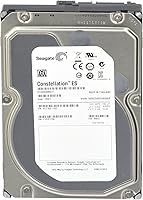
Specifications

  • Capacity: This drive provides 1TB of formatted storage (approximately 1,000GB), suited for archival, backup, and secondary storage roles in server environments.
  • Interface: Uses a SATA 6Gb/s interface with full backward compatibility to SATA 3Gb/s controllers, making it compatible with a wide range of server motherboards.
  • Spindle Speed: Platters spin at 7,200 RPM, delivering consistent sustained throughput appropriate for continuous read/write workloads in NAS and RAID deployments.
  • Cache Buffer: A 64MB onboard cache buffer helps smooth out bursty data transfers and reduces latency during sequential access operations.
  • Form Factor: Standard 3.5-inch form factor at 26.1mm height fits universally into full-height drive bays found in desktop towers, rack servers, and NAS enclosures.
  • MTBF Rating: Rated for up to 1.4 million hours of mean time between failures, reflecting an enterprise-class reliability standard designed for always-on operation.
  • Workload Rating: Supports up to 550TB of data transferred per year, far exceeding the workload tolerances of typical consumer or desktop-class hard drives.
  • Error Recovery: TLER (Time-Limited Error Recovery) is enabled, allowing the drive to report sector errors within a fixed time window so RAID controllers can respond without dropping the drive from the array.
  • Vibration Sensor: An integrated Rotational Vibration (RV) sensor actively compensates for mechanical interference caused by adjacent drives spinning in multi-bay enclosures.
  • Idle Power Draw: Consumes approximately 7.5W at idle, which is notably efficient for an enterprise-class 7,200 RPM drive running continuously in a powered-on NAS or server.
  • Active Power Draw: Draws approximately 9.5W during active read/write operations, keeping thermal output manageable in chassis with moderate airflow.
  • Operating Temp: Rated for operation between 0°C and 60°C, covering the full range of typical server room and home lab ambient conditions.
  • OS Compatibility: Functions at the hardware level and is platform-independent, working with Windows Server, Linux distributions, FreeBSD, and any OS that recognizes standard SATA block devices.
  • RAID Support: Fully compatible with hardware and software RAID configurations including RAID 0, 1, 5, 6, and 10, thanks to ERC/TLER compliance.
  • Typical Use Case: Designed primarily for NAS appliances, RAID arrays, backup servers, and any 24/7 environment where drive endurance outweighs the need for high sequential throughput.

Related Reviews

Seagate Constellation ES 4TB Internal Hard Drive
75%
88%
Reliability & Uptime
86%
RAID Performance
57%
Interface Compatibility
83%
Encryption & Security
54%
Ease of Installation
More
Seagate Exos 1TB Internal Hard Drive
80%
91%
Reliability & Uptime
67%
Value for Money
78%
Sequential Performance
88%
Noise Level
84%
Build & Durability
More
Seagate BarraCuda ST1000DM010 1TB Internal Hard Drive
77%
91%
Value for Money
74%
Reliability & Longevity
79%
Read & Write Performance
93%
Installation Ease
68%
Noise & Vibration
More
Seagate BarraCuda Pro 1TB 7200RPM Internal Hard Drive
87%
92%
Performance
90%
Speed
88%
Reliability
95%
Ease of Installation
65%
Noise Levels
More
Seagate 1TB Pipeline HD SATA 6Gb/s Internal Hard Drive
88%
88%
Performance
91%
Reliability for 24/7 Use
93%
Power Efficiency
85%
Noise Level
86%
Ease of Installation
More
Seagate BarraCuda ST8000DM004 8TB Internal Hard Drive
73%
93%
Storage Capacity Value
67%
Reliability & Longevity
61%
Read & Write Performance
89%
Installation & Compatibility
63%
Noise & Vibration
More
Seagate BarraCuda 2TB Internal Hard Drive
79%
91%
Value for Money
74%
Transfer Speed
77%
Reliability & Longevity
93%
Installation Ease
79%
Noise Level
More
Seagate BarraCuda 4TB Internal Hard Drive
87%
86%
Performance
90%
Reliability
93%
Setup & Installation
95%
Storage Capacity
72%
Data Transfer Speed
More
Seagate Barracuda 6TB Internal Hard Drive
77%
93%
Value for Money
91%
Storage Capacity
74%
Reliability & Longevity
89%
Installation Ease
61%
Read/Write Performance
More
Seagate FireCuda Gaming Hard Drive 1TB
84%
88%
Performance
91%
Data Transfer Speed
94%
Ease of Setup
80%
RGB Lighting Customization
85%
Compatibility with PC & Mac
More

FAQ

Most listings for this model today are refurbished units pulled from decommissioned servers or data centers, not new-in-box drives. The Seagate Constellation ES 1TB Internal Hard Drive has been discontinued, so fresh retail stock no longer exists. Always read the seller’s condition description carefully, and prioritize vendors who specify the refurbishment grade and offer a return window.
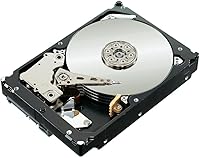
Run a SMART diagnostic immediately — before you format it or put any data on it. Tools like CrystalDiskInfo on Windows or smartctl on Linux will show you the drive’s health history, including reallocated sector counts and power-on hours. If those numbers look alarming, return the unit while you still can. This is standard practice with any refurbished enterprise drive, not a sign that the hardware is inherently untrustworthy.

Yes, and it’s actually a solid fit for that use case. This enterprise SATA drive supports TLER (Time-Limited Error Recovery), which consumer drives typically lack — that feature is important for RAID stability in TrueNAS and FreeNAS because it prevents the controller from dropping a drive over a slow sector read. Just make sure your enclosure has adequate airflow, since the drive runs continuously.

Technically yes, but it’s not the right tool for that job. This 1TB server hard drive is tuned for sustained, sequential workloads in always-on environments, not the random I/O patterns of a desktop OS. You’d get better everyday responsiveness from a modern desktop drive or an SSD at a similar price point. Save this one for backup or NAS duty.

TLER tells the drive to cap its internal error recovery attempts at a set time limit — typically seven seconds — and then report the error to the RAID controller rather than spending minutes trying to fix it on its own. Without TLER, a controller can interpret a slow drive as a failed drive and kick it out of the array, potentially triggering a rebuild unnecessarily. Consumer drives usually don’t have this feature enabled, which is one of the reasons enterprise drives like this Constellation ES unit are preferred in RAID setups.

Yes, the SATA 6Gb/s interface on this drive is backward compatible with SATA 3Gb/s controllers. You won’t hit the 6Gb/s ceiling anyway with a mechanical hard drive — real-world throughput on a 7,200 RPM platter drive sits well within what SATA 3Gb/s can handle, so you’re not leaving any meaningful performance on the table.

Enterprise drives have a reputation for being noisy, but this one is relatively composed. Most users describe it as producing a low, steady hum during operation rather than the pronounced clicking or seeking noise you might associate with older server hardware. In an enclosed NAS or rack chassis, you’ll barely notice it over fan noise.

That depends entirely on what you’re backing up. For a small office storing document archives, email backups, or accounting files, 1TB can last years without filling up. If you’re archiving video, large databases, or full system images across multiple machines, you’ll likely outgrow it quickly. Many small business setups use this Constellation ES unit as a secondary or redundant drive within a larger RAID array rather than relying on it as the sole storage volume.

It works with RAID 0, 1, 5, 6, and 10 configurations, both hardware and software-based. The ERC/TLER support is what makes it genuinely RAID-safe rather than just physically compatible. For small NAS builds, RAID 1 or RAID 5 are the most practical choices, and this drive handles both without issue.

Check the seller’s feedback score and look specifically for reviews from buyers who purchased hard drives — not just any product. Reputable sellers will state the refurbishment grade (A, B, or C), disclose power-on hours or SMART status where possible, and offer at least a 30-day return policy. Be cautious of listings that describe condition vaguely as ‘tested and working’ with no further detail. A little extra scrutiny upfront is far less painful than dealing with a failed drive after the return window closes.

Where to Buy