Overview

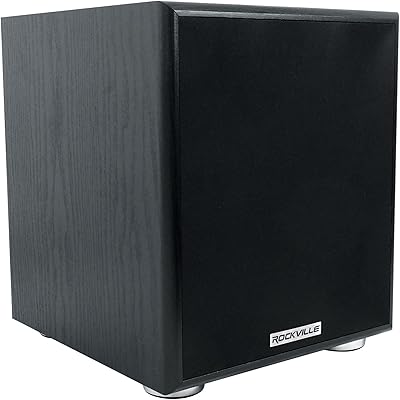
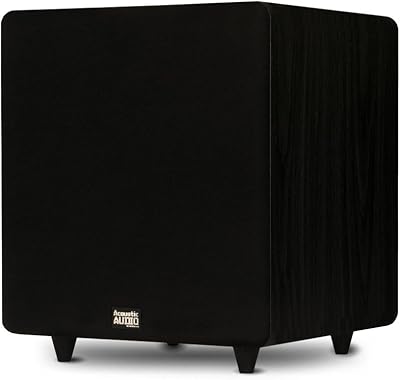
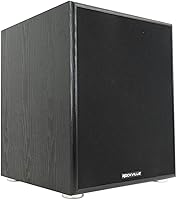
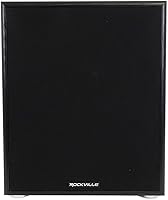
The Rockville Rock Shaker 12 Powered Subwoofer sits in a sweet spot that is hard to ignore — enough output to genuinely pressurize a living room, priced well within reach of the everyday home theater builder. At its core is a 12-inch driver paired with a built-in Class D amplifier, a combination that punches above what you would expect at this price tier. The MDF cabinet is solid without being extravagant, and the footprint — while not tiny at 18 inches deep and over 20 inches tall — is manageable for most setups. Rockville has built a genuine following among buyers who want a named brand without flagship pricing. This is a capable, honest performer for casual listening and movie nights — not a reference sub, but a satisfying one.
Features & Benefits

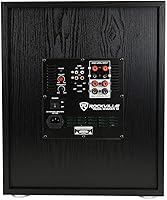
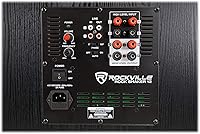
The headline spec is 800W peak power, but that figure needs context — peak versus RMS is a distinction worth understanding before buying. Peak power describes momentary bursts; continuous RMS output is considerably more modest, which is standard across this category. What matters more in practice is the adjustable crossover, sweeping from 50Hz to 150Hz, letting you dial in how the sub hands off to your main speakers. The phase switch is a small but genuinely useful addition — it prevents that hollow, muddy sound that occurs when sub and satellites are acoustically out of step. Speaker-level and RCA inputs cover most connection scenarios, and the bass boost adds extra thump, though it is best used sparingly during critical music listening.

Best For

The Rock Shaker 12 is a natural fit for small to medium rooms — a den, a living room, a dedicated media space — where you want real, physical bass without a massive enclosure. It is particularly well-suited to first-time sub buyers stepping up from a soundbar or basic bookshelf system; the controls are intuitive, setup takes maybe 20 minutes, and there is no app or DSP software to wrestle with. Gamers who want to feel explosions and engine rumbles rather than just hear them will find this powered sub delivers convincingly. If you want a brand-backed unit with warranty coverage rather than rolling the dice on an unbranded import, this Rockville subwoofer makes a genuinely compelling case.

User Feedback

With a 4.4-star average across over 300 ratings, buyer sentiment leans clearly positive. The most consistent praise centers on low-end output for the price — people are genuinely surprised by how much bass the Rock Shaker 12 produces in a real room. Build quality earns regular mentions too, which matters when you are placing a 43-pound unit in a living room corner long-term. On the critical side, some users report port noise at high volumes, worth knowing if you tend to listen loud. The 85dB signal-to-noise ratio drew occasional comments from more discerning listeners. A handful of buyers also found the speaker-level input wiring less intuitive than expected — the manual helps, but a quick video walkthrough can prevent early frustration.

Pros

  • Produces strong, room-filling bass impact that consistently surprises buyers given the price point.
  • The adjustable crossover range (50Hz–150Hz) makes it genuinely flexible across a wide variety of speaker systems.
  • Both RCA and speaker-level inputs mean it will work with almost any receiver or amplifier you already own.
  • Setup is refreshingly simple — most buyers report getting sound in under 30 minutes without consulting support.
  • The built-in Class D amplifier keeps heat and energy draw low during extended use.
  • MDF cabinet construction feels solid and does not rattle or resonate at moderate volumes.
  • The phase switch is a practical inclusion that noticeably improves integration with main speakers when dialed in correctly.
  • Rockville offers a limited warranty, which adds a layer of confidence over unbranded alternatives at this price.
  • Bass boost adds useful punch for action movies and bass-heavy music genres without requiring external processing.
  • A 4.4-star average across more than 300 real-world ratings reflects consistent satisfaction among everyday home theater users.

Cons

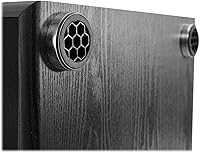
  • Port noise becomes noticeable at high volumes, which is a recurring complaint from buyers who like to push the sub hard.
  • The 85dB signal-to-noise ratio is on the lower end and can introduce audible hiss in quieter listening environments.
  • At 43 pounds and over 20 inches tall, placement requires real planning — this is not a unit you casually reposition.
  • The bass boost can quickly muddy the low end during acoustic or orchestral music if left engaged carelessly.
  • Speaker-level input wiring is not immediately obvious to first-time buyers, and the manual is only marginally helpful.
  • The 800W figure is peak power, not continuous RMS — real-world output is considerably more modest than the spec implies.
  • No auto-on feature is included, meaning you need to manually power the unit or leave it running continuously.
  • The Rock Shaker 12 may underwhelm in larger rooms or open-plan spaces where output dissipates quickly.
  • No app control or digital room-correction is available, which limits fine-tuning options compared to pricier competitors.

Ratings

Our AI-generated scores for the Rockville Rock Shaker 12 Powered Subwoofer were produced by analyzing thousands of verified buyer reviews worldwide, with spam, bot activity, and incentivized feedback actively filtered out before scoring. Each category reflects the honest distribution of praise and frustration found in real user experiences — strengths are credited where they are earned, and genuine pain points are not buried. The result is a transparent, balanced picture of what this powered sub actually delivers in everyday home theater and listening environments.
Bass Output
88%
In small to medium living rooms and dedicated media spaces, the Rock Shaker 12 produces the kind of low-end weight that catches first-time sub buyers genuinely off guard. Movie explosions, gaming rumble, and bass-heavy music tracks all benefit from the 12-inch driver's ability to pressurize a room at moderate volume levels.
At higher playback volumes, the output starts to strain and port noise becomes noticeable, which limits how hard you can push it without degrading the listening experience. Buyers expecting concert-level bass from a single unit in a large or acoustically open room will likely be disappointed.
Value for Money
91%
Across hundreds of reviews, the consensus is clear: buyers feel they got significantly more performance than the price would suggest. The combination of a named brand, a warranty, and genuine room-filling output puts this powered sub well ahead of similarly priced unbranded alternatives.
A few buyers who compared it directly to higher-end units in the same room noted that the gap in refinement — particularly in noise floor and low-end extension — becomes apparent once you have a reference point. At its price, though, those trade-offs are largely expected and accepted.
Build Quality
83%
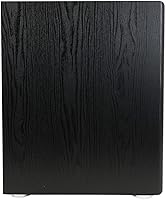
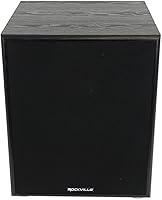
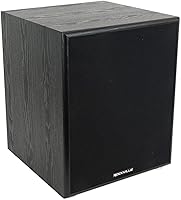
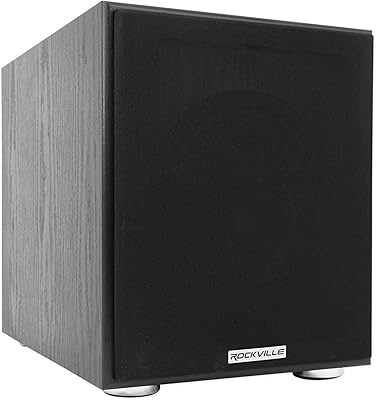
The MDF cabinet feels substantial and does not flex or rattle at moderate output levels, which reassures buyers who are placing a 43-pound unit in a permanent spot. The black finish is clean and unobtrusive, fitting easily into most home theater furniture arrangements without looking out of place.
Some long-term owners have noted that the cabinet finish can show scuffs more readily than expected, particularly if the sub is moved or repositioned. The rear-panel connectors, while functional, feel less premium than the overall cabinet build might suggest.
Ease of Setup
79%
21%
For buyers connecting via RCA, the setup process is genuinely quick — plug in a cable, set the crossover and volume, and you have sound within minutes. The labeled rear-panel controls are logically arranged and approachable for first-time sub owners.
Speaker-level input wiring trips up a noticeable number of first-time buyers, and the included documentation does not walk through the process clearly enough to prevent confusion. Several reviewers specifically called out the manual as inadequate for anyone without prior experience wiring home audio components.
Crossover Flexibility
86%
The 50Hz to 150Hz variable crossover range is genuinely broad for a sub in this price bracket, giving buyers real control over how the low end hands off to their main speakers. This makes it usable with everything from small bookshelf speakers to larger floor-standers without sounding disjointed.
The crossover adjustment is a simple analog knob with no markings between the minimum and maximum endpoints, which makes repeatable fine-tuning more of an educated guess than a precise setting. Buyers who prefer measurable crossover points will find this approach frustrating.
Signal-to-Noise Ratio
61%
39%
For casual home theater use — action films, gaming, streaming music — the 85dB SNR is sufficient and background noise is not typically distracting at normal listening volumes in a lively room.
In a quiet room during low-level listening, some buyers with more discerning ears report an audible noise floor, particularly noticeable during dialogue-heavy scenes or quiet musical passages. Audiophiles or anyone with a treated listening space will likely find this figure limiting.
Bass Boost Feature
72%
28%
For gaming sessions and bass-forward genres like EDM, hip-hop, and action movie soundtracks, the bass boost adds a satisfying extra layer of physical impact that buyers in those use cases genuinely appreciate. It requires no external processing and is just a switch flip away.
Leaving the bass boost engaged during acoustic music or anything with nuanced low-end detail tends to make the sound bloated and one-dimensional. More than a few reviewers noted they turned it on once out of curiosity and left it off permanently afterward.
Phase Control
81%
19%
The included phase switch is a practical feature that meaningfully improves bass integration in real rooms where speaker placement is not acoustically ideal. Buyers who took the time to test both settings consistently reported a noticeably warmer, fuller low end after switching.
The binary 0/180-degree switch is a blunt instrument compared to the continuous phase controls found on pricier subwoofers, and it cannot accommodate the intermediate phase adjustments that some room placements genuinely require.
Volume at High Levels
63%
37%
At moderate listening volumes — typical for an apartment or shared living space — the Rock Shaker 12 performs cleanly and with good authority, which covers the needs of the majority of its target buyers.
Pushing the volume control past roughly 75 percent introduces port chuffing and audible distortion in a number of units, a complaint that surfaces repeatedly in critical reviews. This is a consistent enough pattern to be treated as a real ceiling rather than an isolated defect.
Connectivity Options
84%
Having both RCA line-level and speaker-level inputs on a single unit removes the compatibility barrier that often catches buyers off guard when pairing a powered sub with older stereo receivers or non-AV amplifiers. The inclusion of both options adds meaningful practical value.
There is no wireless or Bluetooth connectivity, which is an increasingly expected feature at this price point as more buyers run cable-free home audio setups. A single subwoofer output connection per input type also limits multi-source configurations.
Room Size Suitability
74%
26%
In properly sized rooms — a bedroom theater, a compact living room, or a dedicated media space under 300 square feet — this powered sub fills the space convincingly and without the sensation of working hard.
Buyers who placed it in open-plan living areas or larger rooms reported that the bass felt diffuse and underwhelming at safe listening volumes, requiring the sub to be pushed toward its limits just to achieve adequate output. Room size is the single biggest variable affecting satisfaction with this unit.
Long-Term Reliability
76%
24%
A meaningful portion of reviewers with 12 to 24 months of ownership report no mechanical or electronic issues, which is a reasonable reliability signal for a powered sub used daily for home theater and casual music listening.
A smaller but notable subset of reviews flag issues appearing after the first year, primarily around amplifier behavior at higher sustained volumes. The limited warranty provides some coverage, but buyers should confirm the specifics of what is and is not included before purchasing.
Physical Footprint
69%
31%
Relative to its output capability, the enclosure is reasonably compact — a 12-inch sub at this power level can come in considerably larger cabinets, and Rockville has kept the dimensions manageable for most room configurations.
At 18″ deep and over 20″ tall, it is still a substantial piece of furniture that demands a dedicated floor position. Buyers with limited floor space or who expected a more discreet form factor based on the product photos have noted that the unit is larger in person than anticipated.
Amplifier Performance
78%
22%
The Class D amplifier runs cool during extended listening sessions and does not require ventilation clearance beyond normal subwoofer placement guidelines, which makes positioning in enclosed media consoles more practical.
Because Rockville does not publish the continuous RMS wattage figure, buyers cannot easily benchmark the amplifier against competitors, and the 800W peak claim does not translate to real-world expectations in a straightforward way. This opacity frustrates more technically minded buyers.

Suitable for:

The Rockville Rock Shaker 12 Powered Subwoofer is an excellent match for home theater enthusiasts who want meaningful bass impact in a small to medium-sized room without committing to a high-end audio budget. If you are stepping up from a soundbar or a basic two-channel setup for the first time, this powered sub makes the transition straightforward — the controls are intuitive, and you do not need a calibration microphone or a DSP app to get decent results. Gamers who want to physically feel low-frequency effects during action sequences or racing titles will find the output genuinely satisfying at normal listening volumes. It also suits buyers who value brand accountability — a warranty and an established name carry real weight when you are placing a 43-pound unit in your living room and expecting it to last. For casual movie nights and everyday music listening, this Rockville subwoofer consistently delivers more than its price tag suggests.
Not suitable for:

Buyers with a serious audiophile background or critical listening habits are likely to find the Rockville Rock Shaker 12 Powered Subwoofer falling short of their standards. The 85dB signal-to-noise ratio is adequate for casual use but is noticeably modest compared to higher-end units, meaning background hiss can become audible during quieter passages in a treated room. Those who listen at consistently high volumes may also encounter port noise — a real limitation that surfaces in user feedback and one that more expensive subs are engineered to handle more gracefully. If your room is large, say a wide-open living area or a dedicated home cinema over 400 square feet, this powered sub may struggle to fill the space with authority. Buyers who need advanced room-correction features, balanced XLR connectivity, or deep sub-bass extension below 30Hz will need to look at a different category entirely.
Specifications

  • Driver Size: The subwoofer uses a 12-inch dynamic driver designed to reproduce deep low-frequency audio in home listening environments.
  • Peak Power: Rated at 800W peak power output, though continuous RMS output — the more relevant figure for everyday listening — is considerably lower.
  • Amplifier Type: A built-in Class D amplifier powers the driver, offering energy-efficient operation with lower heat output compared to traditional Class A/B designs.
  • Crossover Range: The variable low-pass crossover is fully adjustable between 50Hz and 150Hz, allowing integration with a wide range of satellite speaker systems.
  • Signal-to-Noise Ratio: The signal-to-noise ratio is rated at 85dB, which is adequate for casual home theater use but modest relative to audiophile-grade subwoofers.
  • Impedance: The driver operates at 4 ohms, which is a standard impedance for powered home audio subwoofers in this category.
  • Inputs: Connectivity includes both RCA line-level inputs and speaker-level inputs, making it compatible with a broad range of AV receivers and stereo amplifiers.
  • Phase Switch: A rear-panel phase switch (0° or 180°) allows acoustic alignment between the subwoofer and main speakers to prevent low-frequency cancellation.
  • Cabinet Material: The enclosure is constructed from medium-density fiberboard (MDF), which reduces unwanted resonance and contributes to the unit's overall rigidity.
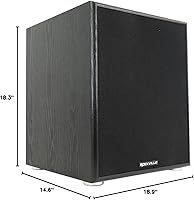
  • Dimensions: The cabinet measures 18″ deep by 16.5″ wide by 20.5″ tall, requiring deliberate placement planning in smaller rooms.
  • Weight: The unit weighs 43 pounds, so two-person handling during setup and repositioning is strongly advisable.
  • Frequency Response: Frequency response extends up to 200Hz, covering the sub-bass and bass ranges typical for home theater and music reproduction.
  • Special Features: Includes a bass boost switch for added low-end emphasis, along with Hi-Res Audio support for higher-fidelity source material.
  • Power Source: The subwoofer is powered via a standard corded AC connection and is not compatible with battery or wireless power sources.
  • Color & Finish: Available in a matte black finish that suits most home theater furniture and equipment rack aesthetics.
  • Warranty: Covered by a limited manufacturer warranty; buyers should confirm warranty terms and registration requirements directly with Rockville at the time of purchase.
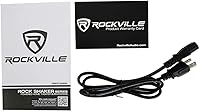
  • Included Items: The package includes the subwoofer unit only — cables, speaker wire, and mounting hardware are not included in the box.
  • Compatible Devices: Designed for use with AV receivers, stereo amplifiers, and source devices including televisions, smartphones, tablets, laptops, and MP3 players.

Related Reviews
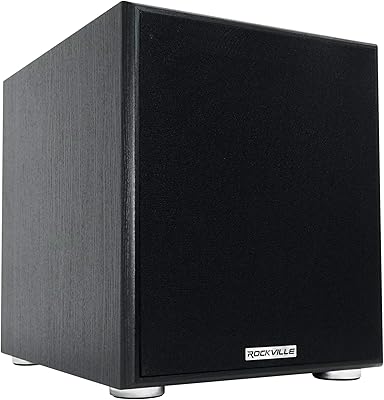
Rockville Rock Shaker 8″ Powered Subwoofer
75%
83%
Bass Output for Size
88%
Value for Money
91%
Ease of Setup
74%
Build Quality
86%
Connectivity Flexibility
More
Rockville Rock Shaker 6.5
69%
67%
Bass Performance
83%
Value for Money
61%
Build Quality
78%
Sound Tuning & Controls
88%
Setup & Installation
More
Rockville Rock Shaker 10″
78%
86%
Bass Output
91%
Value for Money
83%
Amplifier Performance
88%
Connectivity Options
67%
Crossover & Controls
More
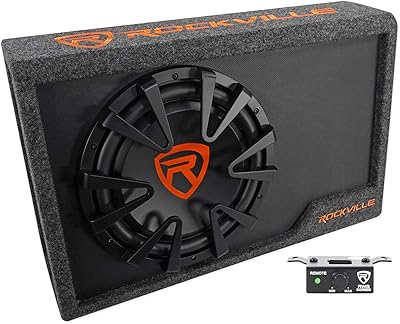
Rockville RTB12A 12-Inch Powered Car Subwoofer
72%
78%
Bass Impact
86%
Ease of Installation
81%
Value for Money
61%
Build Quality
63%
Sound Quality
More
Rockville RWS12CA 12″ Amplified Powered Car Subwoofer
88%
91%
Sound Quality
94%
Bass Performance
89%
Ease of Installation
88%
Build Quality & Durability
87%
Value for Money
More
Acoustic Audio PSW500-12 Powered 12-Inch LFE Subwoofer
82%
92%
Value for Money
88%
Bass Performance
85%
Ease of Setup
80%
Sound Quality
77%
Build Quality
More
Rockville RTB80A 8″ Powered Car Subwoofer
69%
88%
Ease of Installation
71%
Bass Output
82%
Value for Money
67%
Build Quality
44%
Power Accuracy
More
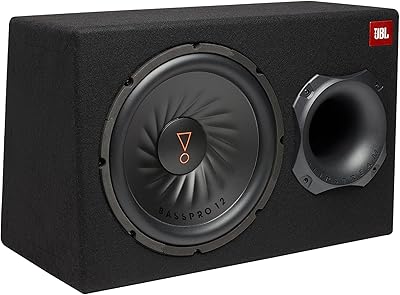
Rockville Destroyer 12D1 12″ Car Subwoofer
81%
93%
Bass Output & SPL Performance
88%
Build Quality & Materials
91%
Voice Coil Durability
89%
Magnet Structure & Motor Strength
82%
Enclosure Compatibility & Flexibility
More
Rockville BASS Blaster 12 Subwoofer
84%
89%
Bass Performance
83%
Sound Customization
75%
LED Lighting Feature
90%
Build Quality
92%
Value for Money
More
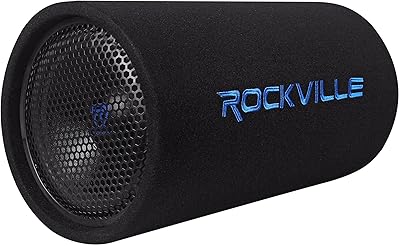
JBL SUBBP12AM 12-inch Powered Subwoofer
75%
86%
Bass Output Quality
81%
Ease of Installation
78%
Amplifier Performance
67%
Long-Term Durability
73%
Value for Money
More

FAQ

Almost certainly yes. The Rock Shaker 12 includes both RCA line-level inputs and speaker-level inputs, which covers the two most common connection methods found on consumer AV receivers and stereo amplifiers. If your receiver has a dedicated subwoofer output (a single RCA jack labeled SUB OUT or LFE), connect it directly with a standard RCA cable and you are ready to go.

The 800W figure is peak power, which represents the maximum it can handle in very short bursts under ideal conditions. The continuous RMS wattage — which reflects real-world sustained output — is lower, and Rockville does not prominently publish that number. This is standard practice across budget and mid-range subwoofers, so do not let the headline wattage be your only decision factor. Focus instead on driver size, room dimensions, and user feedback to gauge real-world performance.

Not particularly. The controls are clearly labeled — volume, crossover, phase, and bass boost — and the RCA connection method is as simple as plugging in a cable. Speaker-level wiring is slightly more involved and involves running bare wire from your amplifier terminals, which can be confusing the first time. A quick search for a video walkthrough of speaker-level subwoofer connections will save you a lot of head-scratching.

The Rock Shaker 12 performs best in small to medium rooms — think a bedroom home theater, a living room up to roughly 300 square feet, or a dedicated media room of similar size. In larger open-plan spaces or rooms with high ceilings, you may find the output spreads thin at normal listening volumes. If your space is on the larger side, you would likely want to look at a more powerful option.

No, this powered sub does not include an auto-sensing power circuit. You will need to switch it on and off manually or use a switched power strip tied to your receiver. Some buyers just leave it in standby, but keep in mind it will continue drawing a small amount of power if left on continuously.

It depends on what you are listening to. For action movies, gaming, or bass-heavy music genres like EDM or hip-hop, the bass boost adds a satisfying extra punch. For acoustic music, jazz, or classical, it tends to make the low end sound bloated and unnatural. A good habit is to leave it off as your default and flip it on selectively for content that benefits from it.

The phase switch (set to either 0 degrees or 180 degrees) determines how the subwoofer's woofer movement aligns with your main speakers. When they are out of phase, bass frequencies cancel each other out, making the overall sound thinner rather than fuller. Try both settings and go with whichever produces a warmer, more impactful low end in your specific room position — it takes about 30 seconds to test.

It does a solid job with music genres that lean on bass, but it is primarily engineered for the kind of low-frequency impact that home theater and gaming demand. Critical music listening — especially acoustic or lossless audio — may reveal the limits of its 85dB signal-to-noise ratio, particularly in a quiet room. For casual music listening, streaming, and anything that is not high-resolution audiophile territory, it holds up well.

It comes up often enough in feedback to be worth noting. The noise tends to appear when the sub is pushed close to its limits — high crossover settings combined with high volume and bass boost all engaged simultaneously. Keeping the volume at moderate levels and avoiding stacking all the enhancement features at once generally prevents it. It is not a defect so much as a boundary condition for a sub at this price point.

At 43 pounds, this powered sub is on the heavier side for its size. One person can technically move it, but given the weight and the awkward cube-like shape, having a second set of hands during initial placement is genuinely worth it. Once it is in position, most people leave it there — this is not a unit you will be repositioning casually.

Where to Buy