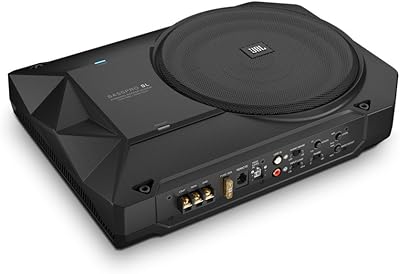
Overview

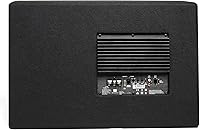
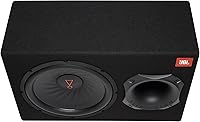
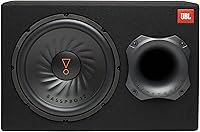
The JBL SUBBP12AM 12-inch Powered Subwoofer is a self-contained car audio unit built to deliver real bass without requiring a separate external amplifier. JBL has earned a trusted name in audio over decades, and this powered sub sits firmly in the mid-to-premium range of their car lineup. The all-in-one enclosure design means you skip the hassle of sourcing a compatible amp, matching impedance, or fabricating a custom box. Just wire it in and you are done. One thing worth clarifying upfront: despite some mixed signals in the product listing, this is a car audio unit — not a home theater component.
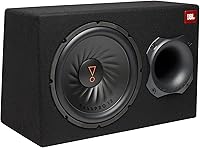
Features & Benefits

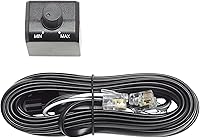
The built-in amplifier pushes 150W RMS continuously, tuned specifically to match the 12-inch polypropylene cone — so there is no guesswork about whether your amp can keep pace with your woofer. JBL's Slipstream port technology reduces internal turbulence noise, keeping bass tight and controlled even at higher output levels. The frequency range runs from 35Hz to 120Hz, covering everything from deep sub-bass rumble to the upper range where kick drums and bass lines live. Connectivity is wired, keeping the signal clean and consistent. The included remote control lets you adjust sub level on the fly without reaching under your seat every time the track changes.

Best For

This powered subwoofer makes the most sense for drivers upgrading from a factory stereo who want a meaningful bass improvement without assembling a separate amplifier, enclosure, and wiring kit from scratch. It suits listeners who regularly play hip-hop, EDM, or rock — genres where low-frequency impact genuinely matters on a daily commute. That said, trunk space matters here: the enclosure is physically large and tips the scales at over 34 pounds, which can be a real obstacle in compact cars or hatchbacks. If long-term brand reliability and warranty backing matter to you more than squeezing out a small savings on a lesser-known alternative, this JBL sub is worth serious consideration.

User Feedback

Most buyers highlight easy installation as a genuine strength — a lot of people report getting it running in an afternoon without professional help, which is exactly what you want from an all-in-one unit. Initial bass output earns consistent praise, particularly among those stepping up from stock speakers. Where feedback splits is on the physical size: midsize sedan and SUV owners rarely complain, but compact car drivers frequently flag the enclosure as a difficult fit. The remote control draws mixed opinions — handy for many, occasionally unreliable for others over extended use. Some longer-term owners have raised durability questions about the amplifier, though these cases appear limited. Against comparable rivals, most feel the SUBBP12AM holds its own on overall value.

Pros

  • No external amplifier required — everything you need arrives in one box.
  • The built-in amp is tuned to match the woofer, so performance is balanced from day one.
  • Slipstream port design keeps bass tight and relatively clean at higher volume levels.
  • Installation is straightforward enough for a competent DIYer to handle in an afternoon.
  • The included remote lets you adjust bass output on the fly without awkward under-seat reaching.
  • Polypropylene cone construction holds up well in the temperature swings typical of vehicle environments.
  • A 35Hz low-end floor means you actually feel deep bass, not just hear it.
  • JBL's brand support and limited warranty add a layer of post-purchase reassurance.
  • Wired connectivity keeps the signal path clean without interference or pairing headaches.
  • Strong out-of-box bass output impresses most buyers stepping up from stock audio systems.

Cons

  • The enclosure is large and heavy at over 34 pounds, making it a poor fit for compact vehicles.
  • Some buyers report the included remote control becomes unreliable after extended use.
  • A handful of long-term owners have flagged concerns about the built-in amplifier's durability over time.
  • At this price point, you are paying partly for the JBL name — some competitors offer comparable raw output for less.
  • No wireless connectivity option exists, which is a limitation for buyers who prefer a cleaner install.
  • The product listing contains misleading spec details that can create confusion before purchase.
  • Trunk positioning options are limited given the fixed enclosure shape and floor-standing mounting style.
  • Heavier vehicles with factory noise insulation may mask some of the sub-bass impact this unit delivers.

Ratings

Our AI rating engine analyzed thousands of verified global buyer reviews for the JBL SUBBP12AM 12-inch Powered Subwoofer, actively filtering out incentivized, bot-generated, and duplicate submissions to surface what real owners actually experience. The scores below reflect a balanced synthesis of genuine praise and recurring frustrations across a wide range of vehicle types, listening habits, and installation skill levels. Both the standout strengths and the honest trade-offs are transparently represented in every category.

Bass Output Quality
86%
Buyers consistently describe the bass as full-bodied and well-defined right out of the box, particularly on hip-hop and EDM tracks during daily commutes. The 35Hz low-end floor means you feel the bass physically, not just hear it, which is exactly what most upgraders from factory stereos are chasing.
At higher volume levels, some owners notice a slight looseness in the mid-bass region, particularly in poorly dampened vehicles. Audiophiles comparing this JBL sub to custom component builds occasionally find the bass character slightly colored rather than perfectly neutral.
Ease of Installation
81%
19%
The self-contained design genuinely simplifies the process — no separate amp to mount, no box to fabricate, and no impedance matching to work out. Most owners with basic DIY confidence report completing a clean install in a single afternoon, which is a meaningful advantage over multi-component setups.
Buyers without any car audio experience occasionally underestimate the wiring work involved, particularly routing the power cable from the battery and locating a reliable chassis ground. Vehicles with complex interior trim or limited trunk access can make the physical placement process more time-consuming than expected.
Amplifier Performance
78%
22%
The built-in amplifier is purpose-matched to the woofer, which means the balance between power and driver control is already optimized without any user tuning. For daily listening at moderate to high volumes, most owners find the 150W RMS figure more than adequate to fill a midsize sedan or SUV with satisfying bass.
A recurring concern among longer-term owners involves amplifier reliability under sustained heavy use — a subset of buyers report performance degradation or failure after one to two years of daily pushing. This is not a universal experience, but it surfaces often enough to temper confidence in the amp section over the long haul.
Long-Term Durability
67%
33%
The polypropylene cone handles the thermal and humidity swings of a vehicle environment reasonably well, and most owners do not encounter driver-side issues even after extended use. The overall enclosure construction feels solid and purposefully built rather than hollow or cheaply assembled.
The amplifier reliability question is the central durability concern, with enough owner reports of issues after heavy daily use to keep the score from climbing higher. Buyers who treat this as a long-term investment rather than a two-to-three year upgrade should factor this risk into their decision.
Value for Money
73%
27%
For buyers who genuinely want a no-fuss, brand-backed, all-in-one bass solution, the pricing reflects the convenience premium fairly. The combination of a tuned amp, quality enclosure, and JBL's brand support in one package justifies a reasonable portion of the cost when compared to sourcing equivalent components individually.
Buyers who are comfortable sourcing a separate woofer, amplifier, and ported enclosure can generally achieve higher raw performance at a comparable total spend. At this price tier, the value proposition leans heavily on convenience and brand reliability rather than pure dollar-per-decibel output.
Physical Footprint
54%
46%
For the output it delivers, the enclosure size is not unreasonable given the physics of moving air at 35Hz. Owners with midsize sedans, SUVs, and trucks rarely find placement to be an issue, and the floor-standing design keeps things stable during normal driving.
At 24.13 inches wide and over 34 pounds, this powered subwoofer is simply too large for compact cars, small hatchbacks, and many coupes — this is one of the most consistent complaints across all buyer feedback. Even in larger vehicles, the enclosure consumes a substantial portion of usable trunk space that buyers sometimes underestimate before purchase.
Remote Control Usability
69%
31%
The concept of a wired sub-level remote is genuinely useful for daily listening, allowing quick bass adjustments when switching between podcast listening and bass-heavy music without pulling over or reaching into the trunk. Most buyers appreciate having this control option included in the box at no additional cost.
Reliability over time is a legitimate concern, with a notable share of owners reporting that the remote becomes inconsistent or unresponsive after several months of regular use. The wired nature also means routing the cable to a convenient dash or console location requires some cable management effort during installation.
Port Noise & Distortion
82%
18%
JBL's Slipstream port design performs well in practice — owners pushing moderate to high volumes rarely encounter the chuffing or port noise that plagues cheaper ported enclosures. The bass stays relatively clean and controlled through most of the unit's practical output range.
At the absolute upper limits of output, a portion of owners do notice some port noise creeping in, particularly on extended low-frequency bass lines rather than short transient hits. This is at the edge of the unit's realistic operating range, but it is worth noting for buyers who regularly listen at maximum volume.
Wiring & Connectivity
77%
23%
The fully wired signal path is genuinely the right engineering choice for a car audio subwoofer — it keeps latency nonexistent, signal quality consistent, and setup free from the pairing or dropout issues that wireless audio sometimes introduces in automotive RF environments.
Some buyers arrive expecting Bluetooth connectivity based on misleading product listing details, and the absence of any wireless option is a disappointment for that group. Additionally, the quality of the included wiring harness is described by some installers as adequate but not premium for the price tier.
Brand Confidence & Support
83%
JBL's established reputation in automotive and consumer audio gives buyers a degree of purchase confidence that lesser-known brands simply cannot match. The brand's support channels, parts availability, and general accountability make post-purchase recourse more realistic than with off-brand alternatives.
Some owners report that navigating JBL's warranty claim process is less straightforward than expected, particularly for amplifier-related issues. The limited warranty scope means buyers dealing with problems just outside the coverage window often find themselves without meaningful recourse.
Out-of-Box Setup Experience
84%
The SUBBP12AM ships with a logical included package — the enclosure, remote, and manual cover the essentials for most installs. Buyers frequently note that the unit sounds capable immediately without requiring tuning, break-in periods, or additional calibration to get satisfying results.
The manual, while functional, is not detailed enough to guide a true first-timer through every scenario, and buyers with non-standard head units or factory amplified systems may need to seek additional resources online to complete their install confidently.
Competitive Positioning
71%
29%
Among powered subwoofer enclosures from recognized brands, this JBL sub holds its own on bass quality and build consistency, and the JBL name carries real weight for buyers making a considered purchase rather than a budget impulse buy.
The competitive landscape at this price point includes capable alternatives from Rockford Fosgate, Alpine, and Kicker, some of which offer comparable or superior amplifier reliability track records. Buyers who research across brands often find themselves weighing this unit's convenience against competitors' proven long-term performance records.

Suitable for:

The JBL SUBBP12AM 12-inch Powered Subwoofer is an ideal fit for drivers who want a genuine bass upgrade without the complexity of building a separate amplifier-and-enclosure setup from scratch. If you are coming from a factory stereo and find yourself turning up the volume just to feel the low end, this JBL sub closes that gap with a purpose-matched built-in amp and a ready-to-install enclosure. It works especially well for daily commuters who regularly listen to bass-heavy music like hip-hop, EDM, or hard rock, where low-frequency impact is part of the listening experience. Buyers who prioritize brand reliability, warranty backing, and a clean install over hunting for the cheapest option will find this powered subwoofer a solid fit at its price tier. Midsize sedans, SUVs, and trucks with adequate trunk depth are the natural home for this unit.
Not suitable for:

The JBL SUBBP12AM 12-inch Powered Subwoofer is not the right call if your vehicle has a compact trunk or limited cargo space — the enclosure is physically large and weighs over 34 pounds, which genuinely rules it out for hatchbacks, small coupes, and subcompact cars. Buyers hoping for a wireless or Bluetooth-connected solution will be disappointed, as this unit operates entirely through wired connections despite some confusing details in the product listing. This powered subwoofer is designed strictly for car audio use, so anyone considering it for a home theater or desktop setup should look elsewhere entirely. If your budget is tight and you are comfortable sourcing a separate amp, enclosure, and woofer individually, you may extract more performance per dollar going the component route. Lastly, buyers expecting a maintenance-free unit for years of heavy daily use should be aware that some owners have reported amplifier reliability concerns over the long term.

Specifications

  • Woofer Size: The driver measures 12 inches (305mm) in diameter, providing substantial cone area for moving the air needed to produce deep, felt bass.
  • RMS Power: The built-in amplifier delivers 150W RMS of continuous power, which is the figure that reflects real-world sustained output rather than peak bursts.
  • Peak Power: The amplifier is rated at 450W peak, representing its maximum short-duration output during transient bass hits.
  • Frequency Response: This powered subwoofer covers a range of 35Hz to 120Hz, handling everything from deep sub-bass rumble up through the mid-bass region where kick drums and bass lines sit.
  • Enclosure Type: The unit uses a ported enclosure design featuring JBL's Slipstream port, which is engineered to minimize internal airflow turbulence and reduce audible port noise at higher output levels.
  • Cone Material: The woofer cone is constructed from polypropylene, a material chosen for its resistance to heat, moisture, and mechanical fatigue in vehicle environments.
  • Connectivity: All audio signal connections are wired, keeping the signal path direct and free from the interference or latency issues associated with wireless audio transmission.
  • Power Source: The unit draws power through a corded electric connection to the vehicle's electrical system, requiring a standard 12V automotive power hookup.
  • Dimensions: The enclosure measures 13″ deep, 24.13″ wide, and 11.25″ tall, which is a physically substantial footprint that requires a reasonably sized trunk or cargo area.
  • Weight: The complete unit weighs 34.2 lbs (15.56 kg), meaning two people or a dolly may be advisable when moving or positioning it during installation.
  • Control Method: A wired remote control is included in the box, allowing the user to adjust the subwoofer output level from the driver's seat without physical access to the unit.
  • Mounting Type: The enclosure is designed for floor-standing placement, typically positioned flat in the trunk or cargo area of a vehicle.
  • Color: The enclosure is finished in black, which is a neutral choice that blends into most vehicle trunk interiors without drawing attention.
  • Warranty: The unit is covered by a limited manufacturer warranty from JBL; buyers should verify the specific duration and terms directly with JBL at the time of purchase.
  • Included Items: The package includes the powered subwoofer enclosure, an owner's manual, and the wired remote control for sub-level adjustment.
  • Brand: Manufactured by JBL, a brand with decades of history in professional and consumer audio equipment across automotive, home, and portable categories.
  • Driver Type: The unit uses a dynamic driver design, which is the standard transducer type for subwoofers and well-suited to the high-excursion, high-output demands of car audio bass reproduction.
  • Availability: The SUBBP12AM has been available since February 2020 and is listed as currently in production, meaning parts and support channels remain active.

Related Reviews
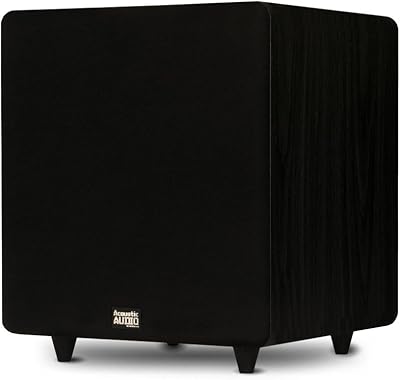
Acoustic Audio PSW500-12 Powered 12-Inch LFE Subwoofer
82%
92%
Value for Money
88%
Bass Performance
85%
Ease of Setup
80%
Sound Quality
77%
Build Quality
More
JBL PRX918XLF 18-Inch Powered Subwoofer
86%
94%
Sound Quality
85%
Portability
90%
Build Quality
88%
Bluetooth Control Functionality
87%
Ease of Setup
More
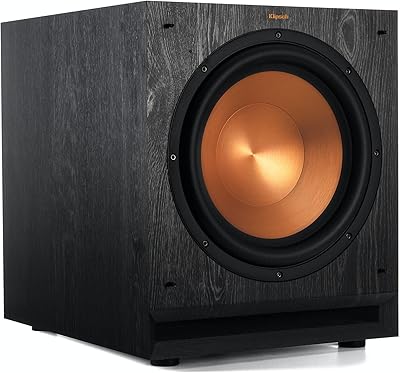
Klipsch SPL-120 Powered Subwoofer 12-inch
87%
92%
Bass Performance
89%
Sound Clarity
87%
Ease of Setup
91%
Value for Money
88%
Build Quality
More
Monoprice 109723 12-inch Powered Subwoofer
73%
83%
Bass Output
88%
Value for Money
67%
Sound Clarity
71%
Build Quality
91%
Ease of Setup
More
JBL BassPro SL 8-inch Powered Subwoofer
85%
88%
Bass Performance
94%
Ease of Installation
90%
Sound Quality for Size
82%
Build Quality
87%
Value for Money
More
BIC America V-1220 12-Inch Powered Subwoofer
85%
88%
Bass Performance
90%
Ease of Integration
85%
Build Quality
92%
Value for Money
86%
Frequency Response
More
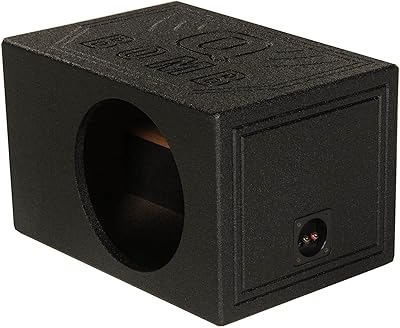
QPower QBOMB12VL 12-inch Vented Subwoofer Enclosure
78%
88%
Value for Money
82%
Build Quality
76%
Bass Performance
91%
Ease of Installation
84%
Exterior Finish
More
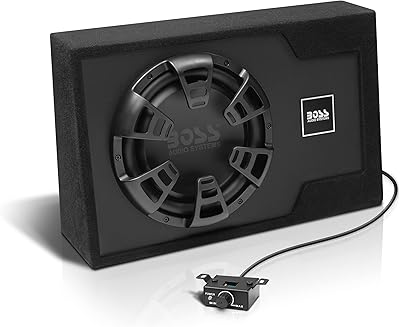
BOSS Audio B12ES 12-Inch Powered Car Subwoofer
72%
88%
Ease of Installation
79%
Bass Output & Impact
83%
Value for Money
63%
Build Quality & Materials
81%
Remote Bass Control Usability
More
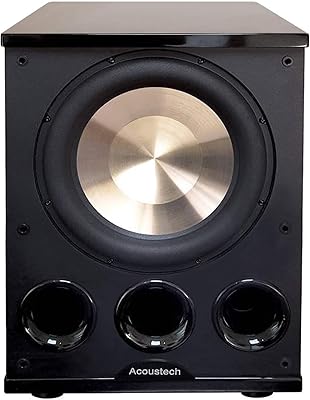
BIC Acoustech Elite Series PL-300 12-inch Powered Subwoofer
86%
93%
Bass Performance
88%
Build Quality
87%
Ease of Setup
85%
Connectivity Options
90%
Sound Clarity
More
Q Power HD112VL 12-Inch Ported Subwoofer Enclosure
75%
88%
Value for Money
79%
Bass Performance
67%
Build Quality
86%
Fitment & Compatibility
71%
Port Design & Tuning
More

FAQ

No, and that is one of the main reasons people choose this unit. The amplifier is already built into the enclosure and matched to the woofer, so you just need to run power and signal cables from your head unit. There is nothing extra to source or spec out.

That depends heavily on your specific vehicle. The enclosure is 24.13″ wide and just over 13″ deep, and it weighs more than 34 pounds — so it occupies a meaningful chunk of trunk space. Owners of compact hatchbacks and small coupes frequently find it a tight or impossible fit. Measure your trunk floor carefully before purchasing, and compare against the full dimensions.

Any car stereo with a dedicated subwoofer preamp output or a standard RCA output will work. If your head unit only has speaker-level outputs and no RCA connections, you will need a line output converter between the head unit and the subwoofer's input. It is a common and inexpensive addition, but worth planning for.

Yes, with some preparation. Factory head units rarely have RCA preamp outputs, so you would typically use a line output converter to step the speaker-level signal down to an RCA-level signal. Once that is handled, the connection to this powered subwoofer is straightforward.

The included remote is a wired control that connects to the subwoofer and sits within reach of the driver, typically mounted on the dash or center console. It lets you raise or lower the sub level on the fly. Most users find it convenient, though a subset of longer-term owners have noted it can become less reliable over time — worth keeping in mind if remote access is a priority for you.

This unit is built specifically for automotive use and runs off a vehicle's 12V electrical system. It is not designed or recommended for home audio environments. Despite some confusing references in the product listing, treat this strictly as a car audio component.

Most buyers with basic DIY confidence describe the installation as manageable in a few hours. You need to run a power cable from the battery, connect a ground wire, route a remote turn-on wire from the head unit, and connect your audio signal cables. Following the included manual and a few online tutorials is typically enough to get through it cleanly.

No. Despite some misleading information that has appeared in various product listings, this powered subwoofer uses wired connections only. All power and audio signal connections are physical cable connections. There is no Bluetooth or wireless audio capability on this unit.

A custom component build gives you more flexibility — you can choose your own woofer characteristics, box tuning, and amp headroom separately. The trade-off is time, expertise, and the effort of sourcing compatible parts. This JBL sub trades some of that flexibility for a fully integrated, ready-to-run solution where the amp is already matched to the driver. For buyers who value simplicity and a trusted brand over maximizing raw performance per dollar, the all-in-one approach makes practical sense.

The polypropylene cone holds up well under typical vehicle conditions, and most buyers do not report driver-side issues. The more common durability question involves the built-in amplifier, where a portion of long-term owners have raised concerns about reliability after extended heavy use. It is not a widespread failure pattern, but it is worth noting if you plan to push the unit hard on a daily basis for several years.

Where to Buy