Overview

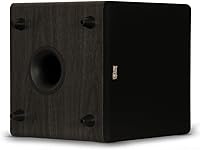
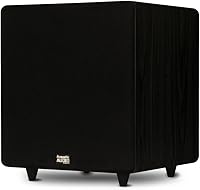
The Acoustic Audio PSW500-12 12-Inch Powered Subwoofer sits squarely in the budget-to-mid tier of the home theater market, making deep bass accessible without a major financial commitment. Built by Goldwood Sound under the Acoustic Audio label, it’s a brand known for functional value rather than audiophile pedigree. The front-firing 12-inch driver and bass reflex cabinet define its character — a no-frills, practical design focused on low-frequency reinforcement. If you’re expecting reference-grade sound, manage those expectations. But for buyers who want real, physical bass impact during movies and TV without spending a fortune, this subwoofer makes a genuinely compelling case.
Features & Benefits

Rated at 500 watts peak, this home theater sub integrates a built-in amplifier that handles everything internally — no external amp required. That said, peak wattage figures are marketing measurements; the actual continuous output is lower, so set your volume expectations accordingly. Both a dedicated LFE input and standard RCA jacks mean it pairs naturally with virtually any AV receiver. The signal-sensing Auto ON/OFF is a genuinely useful daily convenience — the sub wakes when audio plays and goes quiet when it doesn’t. Phase control and a 40–140 Hz crossover knob give you real room-tuning flexibility, especially helpful in smaller spaces where bass buildup can be an issue.

Best For

This subwoofer is a natural fit for anyone putting together their first home theater system on a tight budget. It’s sized and powered appropriately for small-to-medium rooms — think living rooms in the 150–300 square foot range — where a 12-inch driver can actually pressurize the space effectively. Movie and TV watchers get the most from it; the kind of visceral low-end thump during action sequences or cinematic scores that smaller soundbars simply can’t reproduce. Connectivity via RCA or LFE makes it compatible with virtually any standard AV receiver, and the controls are intuitive enough that most people will be up and running with minimal configuration required.

User Feedback

Across several hundred reviews, the pattern is consistent: most buyers are genuinely satisfied with the bass output for the price, particularly those upgrading from basic soundbars or built-in TV speakers. Setup earns consistently high marks — people appreciate that the PSW500-12 just works without a complicated process. That said, a recurring complaint involves hum or buzz at higher gain settings, which some users found distracting; reducing the gain slightly often resolves it. A portion of buyers also feel the 500-watt claim overstates real-world output. Build quality lands where you’d expect for this price tier — the cabinet holds up, but the grill and finish feel noticeably basic. Warranty feedback is sparse but not alarming.

Pros

  • Delivers noticeable, felt bass impact that soundbars and TV speakers simply cannot match.
  • Setup is straightforward enough for first-timers with no prior subwoofer experience.
  • Both LFE and RCA inputs make it compatible with nearly any AV receiver on the market.
  • The adjustable crossover and phase controls allow meaningful tuning for different room layouts.
  • Signal-sensing Auto ON/OFF is a genuinely convenient daily-use feature.
  • The MDF cabinet with internal bracing keeps resonance in check for the price tier.
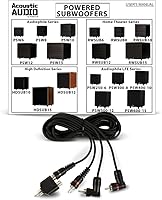
  • Ships with a 9-foot RCA cable and Y-adapter, so no immediate extra purchases are needed.
  • Sized appropriately for small-to-medium rooms where a 12-inch driver works efficiently.
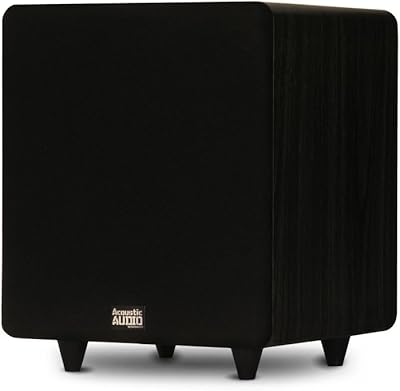
  • Vibration-absorbing feet help reduce floor buzz during heavy bass passages.
  • Represents strong value for buyers stepping into home theater bass for the first time.

Cons

  • The 500-watt peak rating is a best-case figure; real continuous output is considerably lower.
  • Some units develop an audible hum or buzz at higher gain settings, which can be distracting.
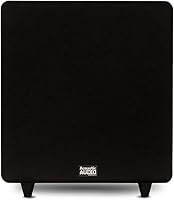
  • The removable grill and overall exterior finish feel noticeably basic up close.
  • Output headroom is limited in larger or open-plan rooms, where bass can feel thin.
  • Not well-suited for music listening where tonal accuracy and low distortion matter.
  • Warranty and after-sale support information is sparse, making long-term reliability harder to assess.
  • The bottom-slotted port design can make placement on thick carpet or uneven surfaces tricky.
  • Bass character leans toward cinematic boom rather than tight, controlled low-end reproduction.

Ratings

Our AI rating system analyzed verified global buyer reviews for the Acoustic Audio PSW500-12 12-Inch Powered Subwoofer, actively filtering out incentivized, duplicate, and bot-generated feedback to surface what real users consistently experienced. The scores below reflect an honest synthesis of both the genuine strengths and the recurring frustrations reported across hundreds of purchases. Nothing has been softened or inflated — where this home theater sub earns praise, the scores show it; where it falls short, that is reflected just as clearly.

Bass Output for Price
83%
For buyers coming from a soundbar or built-in TV speakers, the low-frequency impact this subwoofer delivers in a small-to-medium room is a genuine revelation. Movie explosions, cinematic scores, and action sequences take on a physical quality that simply does not exist without dedicated bass reinforcement at this level.
In larger rooms or open-plan spaces, the output starts to feel thin and insufficient, especially during demanding content. Users expecting the kind of room-filling bass associated with higher-end subs will find the PSW500-12 runs out of headroom faster than the peak wattage figure implies.
Ease of Setup
88%
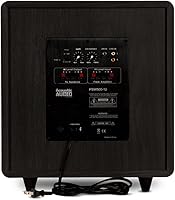
The vast majority of buyers report being up and running within 15 to 20 minutes of opening the box. The included 9-foot RCA cable and Y-adapter cover most connection scenarios, and the rear-panel controls are clearly labeled enough for first-time subwoofer owners to navigate without frustration.
The instruction manual is functional but bare-bones, leaving newer buyers without much guidance on dialing in the crossover or phase settings for their specific room. Users with less common receiver configurations occasionally report confusion about which input to prioritize.
Value for Money
86%
Measured purely against what you pay, the PSW500-12 punches above its weight for everyday home theater use. Buyers who set realistic expectations — a capable sub for movies and TV in a modest room — consistently walk away feeling the purchase was justified.
A subset of buyers who compared it against similarly priced competitors after the fact felt the real-world performance did not fully validate the 500-watt marketing figure, leaving a sense that the value proposition depends heavily on not reading too much into the spec sheet.
Build Quality
67%
33%
The MDF cabinet feels appropriately solid for the price tier, and the internal bracing does a reasonable job of keeping cabinet resonance in check during heavy bass passages. The vibration-absorbing feet are a practical touch that reduces floor rattle in everyday use.
The removable grill and exterior black ash finish feel noticeably budget-grade up close — the kind of finish that looks fine from across the room but does not hold up to scrutiny in person. Several buyers noted the grill clips feel fragile and would not survive repeated removal and reattachment.
Sound Quality
71%
29%
For home theater content — action films, streaming blockbusters, gaming — the PSW500-12 delivers a satisfying low-end punch that integrates reasonably well with most satellite speaker setups when the crossover is dialed in properly. The bass reflex design helps extend the low-frequency floor meaningfully.
The character of the bass leans toward boom rather than precision, which becomes noticeable on music content where tighter, more controlled low-end reproduction matters. Audiophile listeners or those using it primarily for music will find the overall tonal accuracy lacking relative to more refined designs.
Power Accuracy
53%
47%
The unit does produce usable and audible bass output that satisfies buyers who are new to dedicated subwoofers. For light-to-moderate volume levels in smaller rooms, the integrated amplifier handles the load without obvious strain or distortion.
The 500-watt peak claim is a significant stretch from any realistic continuous output figure, and a meaningful portion of buyers feel misled once they push the volume and notice the hard ceiling. This kind of inflated specification is unfortunately common in this market segment, but it still erodes trust.
Noise & Hum
58%
42%
At moderate gain settings in well-grounded electrical setups, many users report the sub operates quietly during quiet scenes or between content, with the Auto ON/OFF keeping standby noise essentially inaudible. Ground loop issues are not universal and some users never encounter them at all.
A recurring and credible complaint involves an audible hum or buzz that appears at higher gain settings, which some users trace to ground loop interference and others cannot resolve at all. This is not a minor issue for those affected — it is distracting enough during quiet scenes to undermine the listening experience.
Room Tuning Controls
76%
24%
Having both a variable crossover spanning 40–140 Hz and a continuous 0–180 degree phase dial gives users real tools to adapt the sub to different room shapes and speaker pairings. These are not token controls — used correctly, they make a noticeable difference in how well the bass integrates.
There are no digital or memory-based controls, so every adjustment is purely analog and requires fine-tuning by ear, which can be time-consuming for users unfamiliar with acoustic tuning. The knobs themselves feel somewhat loose and imprecise, making repeatable settings difficult to lock in.
Receiver Compatibility
89%
Dual LFE and RCA inputs cover essentially every home theater receiver configuration in the mainstream market, and the included Y-adapter handles stereo-only setups without any additional purchases. This flexibility is a genuine advantage for buyers upgrading an existing system without knowing exactly which connection type their receiver uses.
The unit is strictly wired — there is no wireless or Bluetooth option, which is increasingly relevant as wireless subwoofer connectivity becomes more common even at this price tier. Users with receivers positioned far from their ideal sub placement may need a longer cable than what is included.
Auto ON/OFF Reliability
79%
21%
Signal-sensing Auto ON/OFF works reliably for the majority of users, waking within a few seconds of audio starting and going to standby quietly after a short delay. It removes one small but real daily friction point from home theater use, particularly for people who forget to manually switch gear off.
A portion of users find the sensitivity threshold slightly awkward — the sub occasionally fails to wake quickly enough at low volume levels, or stays on longer than expected after content ends. These are minor behavioral quirks rather than failures, but they stand out in a feature marketed as a convenience.
Port & Placement Flexibility
62%
38%
The bass reflex design extends low-frequency output meaningfully below what a sealed box of similar size would achieve, giving buyers in smaller rooms a sense of depth that exceeds the physical driver size alone. Placement near a wall or corner can further reinforce output for those willing to experiment.
The bottom-facing slotted port is a real limitation on thick carpet, where the port's output is partially choked and bass extension suffers noticeably. Unlike rear-ported designs, this placement means users cannot simply tuck the sub against a baseboard without potentially affecting sound quality.
Cabinet Resonance Control
74%
26%
The MDF construction with internal bracing keeps panel vibration reasonably well damped at moderate output levels, and the vibration-absorbing feet prevent the sub from walking across hard floors during demanding content. For the build cost, these are thoughtful engineering choices.
At higher volume levels, some cabinet buzz becomes perceptible, particularly around the grill mounting points where fit tolerances are not tight. Users who regularly run the sub near its upper output limits may find this more bothersome over time than those who use it at moderate levels.
Long-Term Reliability
63%
37%
A reasonable proportion of buyers report satisfactory performance over extended periods of regular use, with no component failures in the first year. For a budget-tier sub used primarily for movies a few nights a week, durability appears adequate based on available feedback.
Long-term reliability data is limited given the product's market position, and warranty support feedback is sparse and mixed. Buyers who encounter issues outside the return window have reported difficulty getting meaningful resolution, which introduces a real risk factor for those expecting multi-year trouble-free operation.

Suitable for:

The Acoustic Audio PSW500-12 12-Inch Powered Subwoofer is a strong match for first-time home theater builders who want a meaningful bass upgrade without committing to a high-end budget. If your living room or media room falls in the small-to-medium range, this home theater sub can genuinely pressurize the space and deliver the kind of low-end impact that transforms movie watching from flat to physical. It connects easily to virtually any AV receiver through either a dedicated LFE output or standard RCA jacks, making it broadly compatible without requiring special equipment. The signal-sensing Auto ON/OFF means it fits naturally into a daily routine without fussing over power management. For cord-cutters, TV streamers, and casual movie fans who have been relying on a soundbar or built-in TV speakers, this subwoofer represents a practical, no-drama step up.
Not suitable for:

The Acoustic Audio PSW500-12 12-Inch Powered Subwoofer is not the right call for serious audio enthusiasts who prioritize accuracy, low distortion, and flat frequency response across demanding listening sessions. The 500-watt figure is a peak rating, not a continuous one, so buyers expecting reference-level output in larger rooms will likely find the real-world performance underwhelming. Dedicated two-channel stereo listeners or music-focused setups will also find that this sub is tuned more for cinematic thump than musical precision. If you are furnishing a large open-plan space or a room above 350 square feet, a single 12-inch driver at this power tier will struggle to fill it adequately. Anyone who has experienced genuine quality bass from a mid-to-high-end sub will probably find the build finish and output ceiling of this home theater sub difficult to accept at extended use.
Specifications

  • Driver Size: The subwoofer uses a 12-inch long-throw woofer with a PVA-treated cone designed for extended low-frequency excursion.
  • Peak Power: The integrated amplifier is rated at 500 watts peak, which reflects maximum short-term output rather than continuous operating power.
  • Frequency Response: The unit covers a frequency range of 24–250 Hz, making it suited for home theater low-frequency effects and general bass reinforcement.
  • Sensitivity: Driver sensitivity is rated at 98 dB at 8 ohm, indicating relatively efficient output for its power class.
  • Impedance: The speaker impedance is 8 ohm, which is standard and compatible with the vast majority of home theater amplifiers and receivers.
  • Crossover Control: An onboard variable crossover knob adjusts the high-pass rolloff between 40 Hz and 140 Hz to blend with satellite speakers.
  • Phase Control: A continuous phase adjustment dial runs from 0 to 180 degrees, allowing alignment with main speakers in different room configurations.
  • Enclosure Type: The cabinet uses a bass reflex design with a bottom-facing slotted port to extend low-frequency output below the driver's natural rolloff.
  • Cabinet Material: The enclosure is constructed from MDF with internal bracing and finished in black ash with a removable acoustically transparent grill.
  • Inputs: Connectivity includes a dedicated LFE input and standard RCA stereo inputs, covering both home theater receivers and standard stereo amplifiers.
  • Auto ON/OFF: Signal-sensing Auto ON/OFF automatically powers the unit on when an audio signal is detected and switches it to standby when the signal stops.
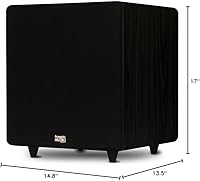
  • Dimensions: The unit measures 13.5″ deep by 14.8″ wide by 17″ tall with the vibration-absorbing feet attached.
  • Weight: The subwoofer weighs 29 pounds, which is typical for a 12-inch MDF-cabinet design in this class.
  • Power Requirements: The unit requires a standard 110V grounded US wall outlet and is not compatible with 220V systems without a converter.
  • Included Accessories: The box includes a 9-foot dual RCA/LFE cable, an RCA Y-adapter, and a printed instruction manual.
  • Warranty: The PSW500-12 is covered by a limited warranty from Goldwood Sound, Inc.; buyers should confirm specific terms directly with the manufacturer.

Related Reviews
Acoustic Audio PSW400-10 10-Inch Powered Subwoofer
85%
91%
Bass Performance
88%
Ease of Setup
85%
Sound Quality
92%
Value for Money
87%
Build Quality
More
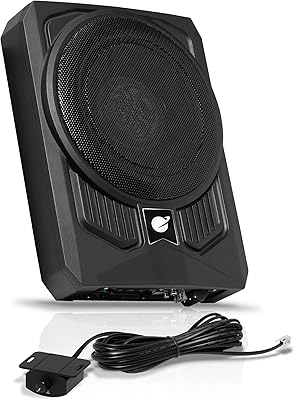
BOSS Audio B12ES 12-Inch Powered Car Subwoofer
72%
88%
Ease of Installation
79%
Bass Output & Impact
83%
Value for Money
63%
Build Quality & Materials
81%
Remote Bass Control Usability
More
Acoustic Audio PSW-6 Powered Subwoofer
84%
85%
Sound Performance
80%
Bass Depth
91%
Setup Ease
88%
Build Quality
92%
Value for Money
More
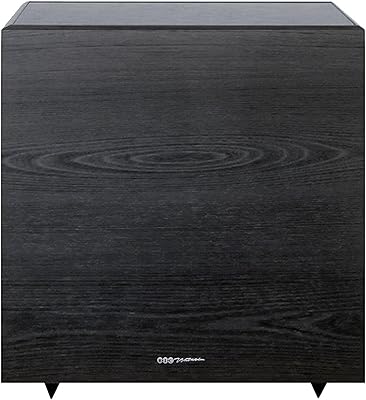
Monoprice 109723 12-inch Powered Subwoofer
73%
83%
Bass Output
88%
Value for Money
67%
Sound Clarity
71%
Build Quality
91%
Ease of Setup
More
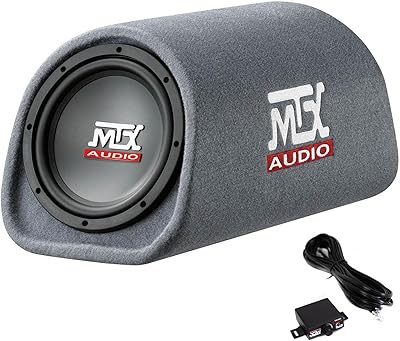
MTX Audio RT8PT 8-Inch Powered Subwoofer Enclosure
75%
71%
Bass Output
78%
Installation Ease
82%
Build Quality
84%
Value for Money
74%
Amplifier Performance
More
Planet Audio AC12D 12-Inch Car Subwoofer
72%
88%
Value for Money
74%
Bass Output
83%
Voice Coil Flexibility
62%
Build Quality
57%
Long-Term Durability
More
Klipsch SPL-120 12-inch Powered Subwoofer
80%
91%
Bass Performance
88%
Build Quality
89%
Amplifier Headroom
87%
System Integration
83%
Value for Money
More
Dayton Audio SUB-1200 12″ Powered Subwoofer
79%
91%
Value for Money
74%
Bass Performance
78%
Build Quality
93%
Ease of Setup
67%
Amplifier Power
More
Dayton Audio SUB-1500 15-inch Powered Subwoofer
75%
88%
Bass Output & Depth
63%
Amplifier Power
91%
Value for Money
74%
Build Quality
86%
Setup & Installation
More
Planet Audio P10AW 10-Inch Amplified Car Subwoofer
76%
91%
Ease of Installation
83%
Value for Money
67%
Bass Output & Impact
74%
Build Quality
62%
Sound Clarity
More

FAQ

It works with virtually any home theater receiver that has a subwoofer preout or LFE output, which covers the vast majority of AV receivers sold today. If your receiver only has raw speaker wire outputs, you can use the included RCA Y-adapter to connect it that way. Brand does not matter here.

That figure is a peak measurement, meaning it reflects what the amplifier can theoretically handle in brief, instantaneous bursts. Continuous or RMS power, which is a more honest measure of everyday performance, will be noticeably lower. For a small-to-medium room, real-world output is still satisfying, but do not expect it to shake the walls of a large open-plan space.

A low-level hum is a reported issue with some units, usually tied to the gain knob being set too high or a ground loop in the electrical setup. Try turning the gain down to around 50 percent and see if it clears up. A ground loop isolator on the RCA cable can also help if the hum persists after adjusting the gain.

Yes, this is actually one of the more practical choices for smaller spaces. A 12-inch driver in a room under 250 square feet will generate plenty of bass without overpowering the acoustics. Just keep in mind that the slotted port is on the bottom, so placing it directly on thick carpet may soften the bass slightly.

A good starting point is to match the crossover roughly to the low-frequency limit of your main speakers. If your satellite speakers roll off around 80 Hz, set the crossover to 80 Hz and adjust by ear from there. Most home theater receivers also let you set the crossover in software, in which case you can set the sub's knob to its maximum and let the receiver handle blending.

It has a signal-sensing Auto ON/OFF feature that handles this automatically. When audio plays, the sub wakes up within a few seconds; when the signal stops, it drops into standby on its own. It is convenient for everyday use and saves a small but real amount of power over time.

You can, but it is honestly better suited to home theater use. The tuning leans toward the kind of deep, dramatic low-end that works well with film soundtracks. For music, especially genres that rely on tight, articulate bass like jazz or acoustic recordings, it can feel a bit loose compared to subs designed with music playback in mind.

Phase control adjusts the timing of the bass relative to your main speakers, which matters because sound travels at a fixed speed and different speaker placements can cause bass frequencies to partially cancel each other out. If your bass sounds thin or hollow even at decent volume, try rotating the phase dial slowly from 0 toward 180 degrees while music or a movie plays and stop where it sounds fullest. It makes a real difference in some room setups.

Setup is actually straightforward for most people. Connect the included RCA cable from your receiver's subwoofer output to the LFE input on the back of the sub, plug it into the wall, set the volume and crossover to starting positions, and you are ready to go. The instruction manual is basic but covers what you need.

The MDF cabinet is solid and should hold up well with normal use. The external finish and removable grill feel more budget-oriented, and the grill clips are not the sturdiest, but the structural components are adequate for long-term use at home. There are limited long-term user reports available, so it is worth registering the warranty with the manufacturer when you first set it up.