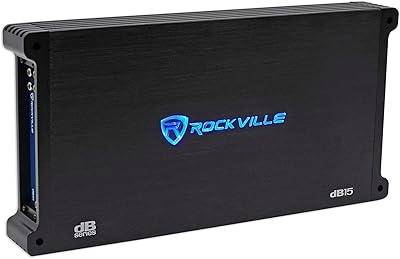
Overview

The Rockville RCS80-1 Commercial Amplifier sits in a practical middle ground — capable enough for real commercial installations, yet priced well below the professional rack gear that AV integrators typically specify for larger projects. Rockville has built a reputation supplying affordable pro-audio equipment to installers and small business owners, and this unit reflects that approach. It ships in a 19-inch rack-mount chassis with a built-in cooling system designed for continuous operation, which matters when the amp is tucked into a back-of-house closet running all day. Since its 2019 launch, it has held a consistent position in the mid-tier commercial audio market.
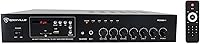
Features & Benefits

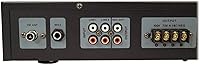
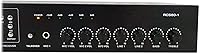
The core appeal of this commercial amp is its 70V distributed audio support, which lets you wire multiple ceiling or wall speakers across a venue using lower-gauge cable runs without worrying about impedance mismatch — a practical wiring standard widely used in commercial installs. The 60-watt output is a peak figure, so do not expect to push it hard continuously; at typical background music levels it runs comfortably within its limits. Bluetooth 5.0 handles wireless streaming reliably, and the dual 1/4-inch mic inputs with independent volume controls are handy for spaces that need occasional announcements. USB, SD, FM, and RCA inputs round out a surprisingly complete source selection.

Best For

This 70V amplifier is a natural fit for small commercial spaces — think a café with six ceiling speakers, a retail boutique that needs background music and a mic for promotions, or an office lobby that wants a clean, self-contained audio setup. AV installers who need a budget-friendly distributed audio solution for a single-zone project will find it covers the basics without overcomplicating the spec sheet. It also works well for anyone stepping up from a consumer stereo receiver who needs actual 70V compatibility. If you want Bluetooth streaming built in rather than bolted on as an afterthought, this rack unit covers that too.

User Feedback

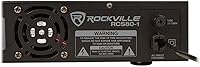
Owners generally appreciate how quickly this commercial amp comes together out of the box — the input variety and straightforward controls get mentioned repeatedly as genuine strengths. Installers cite the Rockville rack unit as a reliable single-zone workhorse that handles day-to-day background audio without drama. Heat does come up in longer reviews; the unit runs warm during extended sessions, though the cooling fan keeps things in check under normal loads. The FM tuner draws occasional criticism for average sensitivity. A few buyers have flagged that the 60-watt rating represents a ceiling rather than a cruising speed, which matters when sizing it against your actual speaker load.

Pros

  • Covers 70V, 100V, and standard impedance loads in one unit, reducing install complexity significantly.
  • Bluetooth 5.0 streaming works reliably in open commercial spaces without needing a separate receiver.
  • Dual mic inputs with independent volume controls are genuinely useful for announcement-heavy venues.
  • USB, SD, RCA, and FM inputs mean you rarely need an external source switcher or mixer.
  • Standard 19-inch rack mount fits existing AV cabinets without adapters or custom hardware.
  • The built-in cooling system handles all-day operation in properly ventilated rack installations.
  • At its price tier, this commercial amp bundles more functionality than most comparable single-zone solutions.
  • Setup is fast enough that non-specialist business owners can get it running without professional help.
  • The RCA output enables clean signal routing to a secondary zone or external processor when needed.
  • Compatible with 4-ohm, 8-ohm, and 16-ohm speakers, making it easy to reuse existing speaker inventory.

Cons

  • The FM tuner performs poorly in areas with weak broadcast signals or significant RF interference.
  • Mic preamps introduce audible hiss at higher gain levels, especially with budget dynamic microphones.
  • No phantom power means condenser microphones are not an option without an external preamp.
  • The front panel knobs and controls feel noticeably cheap compared to similarly priced competing units.
  • Source switching is fully manual with no auto-sensing between inputs, which causes operator errors in busy settings.
  • The unit runs warm even at moderate volumes, making ventilation planning non-negotiable during installation.
  • Fan noise is audible enough to be a concern if the rack is located near customer-facing areas.
  • 60-watt peak output leaves limited headroom when driving a full complement of 70V tapped speakers simultaneously.
  • Long-term durability data beyond two years of commercial use remains thin, making reliability harder to guarantee.
  • The included documentation is too sparse to guide first-time 70V installers through non-standard configurations.

Ratings

The Rockville RCS80-1 Commercial Amplifier has been scored by our AI system after analyzing verified buyer reviews from multiple global sources, with spam, bot activity, and incentivized feedback actively filtered out. The ratings below reflect real-world installation experiences from small business owners, AV installers, and office managers — covering both what this 70V amplifier genuinely delivers and where it falls short. Strengths and pain points are weighted equally so you get an honest picture before committing to a purchase.
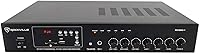
Value for Money
88%
For a unit that handles 70V distributed audio, Bluetooth streaming, dual mic inputs, and multiple source playback in one box, buyers consistently feel the price is hard to argue with at this tier. Installers doing light commercial jobs cite it as one of the most cost-effective single-zone solutions available without stepping up to significantly pricier professional gear.
A handful of buyers feel the FM tuner and overall audio polish lag behind what the price implies, suggesting some corners were cut to hit the target price point. For buyers who need only one or two of its many features, the value equation feels less compelling than it does for those who actually use the full input array.
Ease of Setup
84%
Most users — including those without formal AV training — report getting the unit up and running within an hour, which is a meaningful advantage in commercial install contexts where labor time costs money. The rear panel labeling is clear enough that connecting ceiling speakers, a mic, and a Bluetooth source simultaneously does not require consulting the manual repeatedly.
Users who are unfamiliar with 70V wiring standards occasionally report confusion during initial configuration, particularly around impedance matching and transformer-tapped speakers. The manual has been described as thin on detail for edge cases, which can slow down first-time commercial installers working in less conventional speaker layouts.
Audio Output Quality
73%
27%
At background music levels — which is exactly how this commercial amp gets used in most cafes, lobbies, and retail stores — the audio quality is clean and consistent without obvious coloration. Paired with decent ceiling speakers, the unit produces a balanced sound that works well across the vocal range where speech intelligibility matters most for announcements.
Push the output toward its 60-watt ceiling and the sound quality noticeably degrades, with some harshness creeping in at higher volumes. It is not an audiophile-grade amp, and buyers expecting hi-fi transparency in a quiet listening room will be disappointed — this unit is built for utility, not critical listening.
Bluetooth Performance
76%
24%
Bluetooth 5.0 handles wireless streaming reliably in open-plan environments, and users in restaurants and retail stores report stable connections from across a reasonably sized room. The absence of noticeable audio lag makes it practical for video playback scenarios, not just background music.
Signal stability drops in environments with thick walls, heavy kitchen equipment, or dense shelving between the source device and the amp. Several users in multi-room buildings report that the connection occasionally requires re-pairing after the source device goes to sleep, which is a minor but recurring annoyance in daily commercial use.
Build Quality & Durability
71%
29%
The metal chassis feels solid for the price, and the 19-inch rack-mount form factor fits standard AV cabinets without any fitment issues. Installers who have had units running for extended periods in back-of-house utility closets generally report no mechanical failures under normal operating conditions.
The front panel controls and knobs feel noticeably plasticky compared to professional-grade rack equipment, and a few buyers have flagged that the finish shows wear faster than expected in high-traffic environments. The overall construction quality reflects the price tier — functional and adequate, but not built to last a decade of heavy commercial use.
Thermal Management
67%
33%
The built-in cooling fan does its job in preventing thermal shutdowns during continuous daytime operation, which matters greatly for commercial installations running eight to twelve hours daily. Most users report that the amp stays within acceptable temperature ranges when installed in a reasonably ventilated rack cabinet.
The unit runs noticeably warm even at moderate output levels, which has made some installers cautious about mounting it in enclosed spaces with poor airflow. A portion of buyers specifically mention the fan noise as audible in quiet environments, which is worth considering if the rack is located near a reception desk or in a noise-sensitive area.
Input Versatility
91%
The breadth of available inputs — RCA, USB, SD card, FM tuner, and dual mic jacks alongside Bluetooth — is genuinely rare at this price level and eliminates the need for a separate mixer or source switcher in most small commercial setups. For a café that wants to play Spotify from a tablet in the morning and switch to a microphone for announcements at lunch, everything is handled in one unit.
The source switching is manual, with no smart auto-sensing between inputs, so staff in busy environments occasionally miss switching inputs correctly during transitions. The FM tuner, while a welcome inclusion, performs below average in areas with weak broadcast signals or significant RF interference from nearby commercial equipment.
Microphone Functionality
74%
26%
Having two independent 1/4-inch mic inputs with separate volume controls is a practical feature for venues that run occasional live hosting or need redundant mic setups. The independent level controls mean you can balance a host mic against a background music feed without needing an external mixer.
The mic preamps are functional but basic — users expecting noise-free gain at higher mic levels will notice some background hiss, particularly with inexpensive dynamic microphones. There is no phantom power, which rules out condenser microphones entirely and limits professional recording use cases.
70V/100V Distributed Audio
86%
The 70V line output works as expected for small-zone installs, allowing installers to run multiple ceiling speakers across longer cable runs without signal loss — exactly the use case where this commercial amp earns its place. Several professional installers cite clean, consistent distribution across six to eight speakers in a single zone.
With only 60 peak watts driving a 70V bus, headroom is limited when running a larger number of tapped speakers simultaneously. Installers who underestimate the cumulative load of multiple speakers report the amp struggling to maintain consistent output levels at higher tap settings across all connected speakers.
FM Tuner Quality
54%
46%
For venues in urban areas with strong broadcast signals, the built-in FM tuner offers a convenient no-phone, no-streaming background music option that some staff and managers genuinely appreciate for its simplicity. The inclusion at this price point is a bonus rather than a core selling feature.
The tuner sensitivity is mediocre compared to even modest standalone tuners, and users in suburban or rural areas with weaker FM signals report poor lock on stations and significant static. It is best treated as an emergency backup source rather than a primary audio input for daily use.
Rack Compatibility
89%
The standard 19-inch width fits directly into any commercial AV rack without adapters or custom mounting solutions, which saves installation time and keeps rack layouts looking professional. At 13 pounds, it is light enough to handle solo during installation without risk of dropping or straining a rack shelf.
The unit occupies a meaningful amount of rack depth, and in shallow rack enclosures common in some hospitality furniture installations, clearance for rear cable management can be tight. A few installers also note that the rack ears feel slightly underbuilt and could use reinforcement on permanent wall-mount rack installations.
Speaker Impedance Flexibility
82%
18%
Support for 4-ohm, 8-ohm, and 16-ohm loads alongside the 70V line output gives this unit genuine flexibility across a wide range of existing speaker inventories. For small businesses upgrading their audio system without replacing all their speakers, this compatibility reduces the total project cost significantly.
The manual does not offer detailed guidance on optimal impedance selection for different scenarios, leaving some users to guess based on their speaker manufacturer specs. Mismatched impedance configurations are cited in a small number of negative reviews as a source of distortion and premature output stage stress.
Recording Output Utility
63%
37%
The RCA recording output gives installers a clean signal tap for feeding an external processor, a secondary amplifier zone, or a basic recording device — a feature typically absent at this price point. For small venues that want to send audio to a secondary room without a separate distribution amp, it provides a workable solution.
The output level is fixed and cannot be adjusted independently, which creates matching challenges when connecting to equipment with different input sensitivity requirements. Users trying to integrate this feature into more complex signal chains often find they need an additional attenuator or DI box to get clean levels without introducing noise.
Long-Term Reliability
68%
32%
A meaningful number of installers report units operating without issues after one to two years of daily commercial use, which suggests the core components are reasonably robust for the price tier. The cooling system appears to be the most important factor in longevity, with well-ventilated installs showing better long-term outcomes.
There is a visible minority of reviews describing failures after the warranty period, particularly in units subjected to high ambient temperatures or poor ventilation. The overall reliability picture is acceptable but not confidence-inspiring for buyers who need guaranteed uptime in a high-stakes commercial environment without a backup unit on hand.

Suitable for:

The Rockville RCS80-1 Commercial Amplifier is a practical fit for small business owners and AV installers who need a single-unit solution for light commercial audio without the cost of professional-grade rack systems. A café owner who wants ceiling speakers running background music all day, with the option to grab a mic for announcements at peak hours, will find this commercial amp covers that exact workflow without requiring additional equipment. Office managers setting up lobby or conference room audio on a limited budget will appreciate having Bluetooth, RCA, and mic inputs all in one box that mounts cleanly into a standard rack. AV installers handling single-zone 70V projects — the kind of straightforward job where budget matters as much as performance — will find the Rockville rack unit hits a sensible cost-to-capability balance. Retail stores, small gyms, and waiting rooms that simply need reliable background audio with occasional flexibility are squarely in this unit's wheelhouse.

Not suitable for:

Buyers expecting the Rockville RCS80-1 Commercial Amplifier to serve as a backbone for demanding multi-zone commercial installations or high-uptime critical environments should look elsewhere. The 60-watt rating is a peak figure, not a sustained output guarantee, which means venues that need consistent high-volume coverage across a large number of tapped speakers will hit the unit's ceiling faster than expected. Anyone prioritizing audiophile-level sound quality — a listening room, a high-end restaurant with acoustically sensitive design, or a music studio monitor setup — will find this 70V amplifier too utilitarian for the task. The mic preamps lack phantom power, so users who rely on condenser microphones for professional recording or broadcast purposes will need a proper mixer instead. Buyers who need ironclad uptime guarantees without a backup unit, or who plan to run the amp in a poorly ventilated enclosure for twelve-plus hours daily, should factor in the thermal limitations before committing.
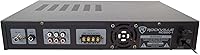
Specifications

  • Output Power: The amplifier delivers a peak output of 60 watts, intended for background music and light commercial use rather than sustained high-volume operation.
  • Distributed Voltage: Supports 70V and 100V distributed audio wiring standards, enabling multiple ceiling or wall speakers to be connected across longer cable runs in commercial installations.
  • Speaker Impedance: Compatible with 4-ohm, 8-ohm, and 16-ohm speaker loads, providing flexibility when integrating with existing speaker systems of varying impedance ratings.
  • Bluetooth: Equipped with Bluetooth 5.0 for wireless audio streaming from smartphones, tablets, or other compatible source devices with stable long-range signal performance.
  • Mic Inputs: Features two independent 1/4-inch microphone inputs, each with its own dedicated volume control for balanced mixing between two mic sources.
  • Audio Inputs: Accepts audio from RCA line-level sources, USB drives, SD cards, and a built-in FM tuner, covering the most common commercial playback scenarios in a single unit.
  • Recording Output: Includes an RCA REC output that provides a signal tap for connecting external audio processors, recording devices, or secondary amplifier chains.
  • Channels: The unit operates across 4 channels to support distributed speaker zone configurations in small commercial audio installations.
  • Power Supply: Operates on a standard 120V AC power supply, compatible with North American commercial electrical infrastructure.
  • Chassis Width: Built to the industry-standard 19-inch rack-mount width, fitting directly into standard AV racks and equipment cabinets without adapters.
  • Cooling System: Incorporates a built-in active cooling fan designed to manage heat during continuous all-day operation in commercial environments.
  • Unit Weight: The amplifier weighs 13 pounds, making it manageable for single-person rack installation without requiring additional lifting equipment.
  • Package Dimensions: Ships in a box measuring 18 x 12 x 7 inches, sized to accommodate the rack chassis and protective packaging for safe freight delivery.
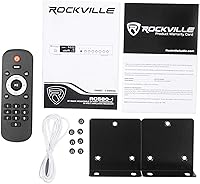
  • Mounting Type: Designed for surface mount or standard rack installation using the integrated 19-inch rack ears included with the unit.
  • Model Number: The official manufacturer model designation is RCS80-1, used for warranty registration, parts identification, and support inquiries.
  • Brand: Manufactured by Rockville, a U.S.-based pro-audio brand focused on affordable commercial and enthusiast-grade audio equipment.
  • Availability: The product was first made available for purchase in March 2019 and has remained in active production as a mid-tier commercial amplifier option.

Related Reviews

Rockville RVA600.1 Mono Car Amplifier
83%
91%
Power Output
88%
Sound Quality
85%
Build Quality
75%
Ease of Installation
80%
Durability
More
Rockville RVT-1 2-Channel Car Amplifier
85%
88%
Sound Quality
85%
Performance
75%
Ease of Installation
90%
Build Quality
83%
Bass Control
More
Rockville RCS350-6
Rockville RCS350-6
74%
84%
Ease of Setup
88%
Zone Control Flexibility
73%
Audio Output Quality
66%
Bluetooth Stability
61%
Build Quality & Durability
More
Rockville RCS650-6
Rockville RCS650-6
74%
88%
Value for Money
91%
Ease of Installation
86%
Multi-Zone Functionality
74%
Audio Quality
77%
Build Quality
More
Taramp's MD 1200.1 1-Channel 1200W RMS Car Audio Amplifier
86%
93%
Power Output
89%
Sound Quality
91%
Installation Ease
85%
Build Quality
65%
Thermal Performance
More
Rockville DBM12 Marine Amplifier
86%
89%
Performance
91%
Durability
86%
Audio Quality
78%
Ease of Installation
92%
Build Quality
More
Rockville DBM25 Marine Amplifier
86%
88%
Sound Performance
91%
Build Quality
85%
Ease of Installation
92%
Bass Control Convenience
89%
Waterproof Durability
More
Kicker CXA1800.1 Amplifier
85%
92%
Power Output
88%
Sound Quality
89%
Energy Efficiency
91%
Value for Money
84%
Ease of Installation
More
Rockville RXM-T1 Marine Amplifier
86%
88%
Sound Quality
91%
Power Output
86%
Build Durability
90%
Waterproof Performance
78%
Ease of Installation
More
Rockville dB14 Mono Car Amplifier
85%
94%
Power Output
91%
Bass Performance
78%
Ease of Installation
86%
Build Quality
70%
Thermals (Overheating Issues)
More

FAQ

You can use both. The Rockville RCS80-1 Commercial Amplifier supports 4-ohm, 8-ohm, and 16-ohm speakers directly, in addition to 70V and 100V distributed audio configurations. If you already have standard impedance speakers installed, you can connect them without any transformer hardware.
That depends on the wattage tap setting on each speaker transformer. As a general rule, the total combined tap wattage of all connected speakers should not exceed the amp's output — and since 60 watts is the peak figure here, keeping the total load under 50 watts gives you safer headroom. For a small café or retail space with six to eight low-tap ceiling speakers, it handles the job comfortably.

The unit uses manual source selection, so only one input is active at a time. You switch between Bluetooth, USB, RCA, and the other sources using the front panel controls. There is no automatic switching between sources.

It is audible if the rack or equipment cabinet is located in or very near a quiet customer-facing space. In a back-of-house utility closet or a standard AV rack enclosure with a door, it is not an issue. If the unit will sit on an open shelf behind a reception desk, the fan hum may be noticeable during quiet moments.

No — the mic inputs do not supply phantom power, which condenser microphones require to operate. You are limited to dynamic microphones with standard 1/4-inch connections. If you need condenser mic support, you would have to run the condenser through an external phantom-powered preamp first and feed the output into the RCA line input.

It can handle extended daily operation, but continuous 24/7 use without any off-cycle is pushing the limits of what this unit was designed for. Most commercial installers who run it during business hours — roughly 10 to 14 hours daily — report solid reliability. If you need true 24/7 uptime with no tolerance for failure, a higher-spec commercial amplifier with a longer warranty and better thermal engineering is a safer investment.

The unit accepts standard USB flash drives and full-size SD cards. It is compatible with common audio formats including MP3 and WMA files. It does not support lossless formats like FLAC or WAV playback through the USB and SD inputs, so make sure your music library is stored in a supported format before relying on those inputs.

Yes, the RCA REC output provides a fixed-level signal that you can feed into a second amplifier or a line-level input for a secondary zone. Keep in mind the output level is not adjustable independently, so you may need an inline attenuator if the receiving equipment requires a lower input level to avoid distortion.

In an open dining room with a clear line of sight to the source device, the Bluetooth 5.0 connection is stable and works well across a reasonable distance. Heavy kitchen equipment, concrete walls, and dense shelving can reduce range noticeably. If your phone or tablet needs to be in a back office or kitchen on the other side of a wall from the commercial amp, occasional dropouts are possible.

Treat it as a backup rather than a primary source. In strong urban signal areas it works adequately, but the tuner sensitivity is average at best and struggles with weaker or distant stations. Most users who mention the FM tuner in their feedback use it as a fallback when their main streaming source is unavailable, not as a daily driver.