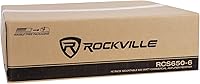
Overview

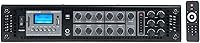
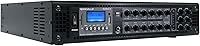
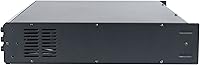
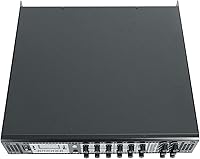
The Rockville RCS650-6 is a mid-range commercial amplifier built for small-to-medium business installations where distributed audio actually matters. It runs on a 70V architecture, the standard for commercial sound systems in restaurants, offices, and retail spaces, allowing long cable runs without meaningful signal loss. The unit slots into a standard 19-inch rack at 4U height, making it a practical choice for anyone building a proper equipment rack. Rockville occupies the budget-to-mid-tier space in pro audio — it is not competing with Crown or QSC — but for what you spend, the feature density here is genuinely hard to argue with.

Features & Benefits

This 6-zone amplifier delivers 650 watts RMS at 70V — split across six zones, that works out to roughly 100 watts per zone in practice, which is more than enough for background music on a restaurant floor without pushing the unit hard. It supports 70V, 100V, and low-impedance configurations simultaneously, which helps when mixing different speaker types in a single install. Bluetooth streaming, USB and SD card playback up to 32GB each, and a built-in FM tuner give you flexible source options without adding extra hardware. Three mic inputs, including one with a chime button, round out the PA side nicely.

Best For

This commercial amp fits well in restaurants, cafes, bars, and retail spaces that need independent zone control without investing in a full DSP setup. If you are running background music across three dining areas and need the patio quieter than the bar, dedicated per-zone knobs handle that without any configuration headaches. Schools, small houses of worship, and office lobbies that make occasional announcements will also get solid utility from the mic inputs. It is worth considering for budget-conscious installers who need proper 70V distributed audio but cannot justify the cost of a higher-tier commercial brand for a straightforward project.

User Feedback

Most owners highlight ease of installation as a genuine strong point — the zone labeling is clean, terminal blocks are well laid out, and the documentation is reasonably useful for a commercial unit. Build quality also draws consistent praise, particularly from buyers stepping up from consumer-grade gear. The most common complaint is fan noise at idle; the cooling fan is audible in quieter environments, which can be a real issue in small offices or low-ambient-noise spaces. Bluetooth range and connection consistency draw mixed feedback in real-world installs. Professional integrators tend to be more critical, while small business owners handling their own installs generally come away satisfied.

Pros

  • Six independently controlled zones in a single chassis cover most small commercial layouts without any add-on hardware.
  • True 70V distributed audio support makes long ceiling-speaker cable runs viable without signal degradation.
  • Bluetooth, USB, SD card, and FM inputs mean you rarely need to connect an external source device.
  • The chime-equipped mic input handles PA announcements cleanly without a separate paging controller.
  • Clear rear-panel labeling and logical terminal layout make installation straightforward, even for first-timers.
  • Fits a standard 19-inch equipment rack at 4U, keeping installs tidy and professional-looking.
  • Active cooling and a built-in clipping limiter help protect the unit and speakers during extended commercial hours.
  • For the price, the feature density is genuinely difficult to match from any comparably priced competitor.
  • Most buyers report clean, consistent background music output at moderate drive levels across all six zones.

Cons

  • The cooling fan is audibly noisy at idle, which is a real problem in quiet or low-ambient-noise environments.
  • Bluetooth range and stability can be unreliable in larger spaces or RF-congested commercial settings.
  • Quality control is inconsistent — some units arrive with channel noise or minor defects that require returns.
  • No zone paging priority means all-zone mic announcements require creative wiring workarounds.
  • Mic preamp noise becomes noticeable at higher gain settings, limiting usefulness for clean speech reinforcement.
  • Long-term reliability is not fully proven under heavy commercial use, with a visible pattern of failures after 6 to 12 months.
  • The depth of 16 inches rules out shallow wall-mount rack enclosures, which catches some buyers off guard.
  • Customer support response quality is inconsistent, leaving users with complex configurations largely on their own.
  • No support for lossless audio formats limits playback quality for operators using USB or SD card sources.

Ratings

The Rockville RCS650-6 has been evaluated by our AI rating system after analyzing verified purchase reviews from buyers worldwide, with spam, bot-generated, and incentivized feedback actively filtered out. Scores reflect the real distribution of user satisfaction across commercial installers, small business owners, and DIY integrators — strengths and recurring pain points alike are weighted transparently into every category.

Value for Money
88%
For a multi-zone 70V amplifier with Bluetooth, USB/SD playback, and mic inputs all in one chassis, most buyers feel they are getting considerably more than they paid for. Small business owners frequently note that comparable feature sets from better-known brands would cost significantly more, making this unit a practical choice for budget-conscious installs.
Experienced commercial integrators are quicker to note that the pricing reflects the build tier, and a few report that quality control inconsistencies — occasional dead channels or noisy preamps out of the box — undercut the value proposition when a unit needs to be returned or exchanged.
Ease of Installation
91%
Zone labeling is clear, terminal blocks are logically laid out, and the rack-mount ears are pre-attached. Multiple buyers with no prior commercial audio experience describe getting the unit up and running in under two hours, which is a real win for restaurant owners doing their own installs without hiring a contractor.
The included documentation, while adequate for basic setups, leaves some gaps for more complex configurations involving mixed impedances. A few users running both 70V and low-impedance speakers simultaneously report needing to consult external resources to avoid wiring mistakes.
Multi-Zone Functionality
86%
Having six independently adjustable zones in a single unit is the core selling point, and it genuinely delivers in practice. Bar and cafe owners appreciate being able to dial the patio down without touching the indoor levels, and the dedicated per-zone knobs make real-time adjustments fast and intuitive during service hours.
There is no zone priority or paging routing built in, so if you need one mic to override all zones simultaneously during an announcement, the setup requires some creative workarounds. More advanced zone management — like scheduling or remote control — is simply not available at this tier.
Audio Quality
74%
26%
For background music in a restaurant or retail space, the output is clean and consistent at moderate drive levels. Buyers running 70V ceiling speakers in a typical commercial layout report that the sound is full enough for ambient use, with no obvious coloration that would stand out negatively in a dining or retail environment.
Push the unit harder or run it in a more demanding listening environment and the limitations show. Some users note a slight harshness in the high frequencies at higher output levels, and the onboard preamp for mic inputs is functional but not particularly clean compared to standalone units.
Build Quality
77%
23%
The steel chassis feels appropriately solid for a mid-tier commercial unit, and the front panel controls have a reassuring firmness to them. Several buyers who upgraded from consumer-grade gear specifically call out the build as a noticeable step up, which speaks to the construction being competitive within its price class.
It is not a Crown or a QSC, and the internals reflect that. A small but consistent pattern in reviews points to quality control variability — some units arrive with minor cosmetic issues or exhibit channel noise that suggests component tolerances are not held tightly across every unit off the line.
Bluetooth Performance
67%
33%
For straightforward Bluetooth use in a small space — a manager streaming from a phone behind the bar, for instance — the connection works reliably and the range is adequate. Pairing is quick and most users in compact environments report no dropped connections during normal operation.
Real-world installs in larger spaces or environments with significant wireless interference expose the limitations. Several users report inconsistent range beyond about 20 feet, occasional dropout during peak Bluetooth traffic in busy commercial settings, and a lack of aptX or higher-quality codec support that would matter in more audio-focused venues.
USB & SD Playback
79%
21%
The ability to load music onto a USB drive or SD card and play it directly is genuinely useful for venues that want a set-and-forget background music solution without relying on a phone or streaming service. Most users report solid compatibility with standard MP3 files and straightforward folder navigation.
Playlist control and file organization options are basic at best. Users with large music libraries find the browsing experience tedious, and there is no support for lossless audio formats, which limits options for operators who want higher-quality playback from local storage.
Mic Input & PA Functionality
72%
28%
Three mic inputs, including one with a dedicated chime button for attention-grabbing announcements, cover the core PA use cases for a school lobby, small house of worship, or retail store. The echo effect on two of the inputs works well for basic speech reinforcement without needing external processing.
The echo control, while a nice inclusion, is fairly coarse in adjustment and can quickly sound artificial if overused. Mic preamp quality is serviceable but introduces audible noise at higher gain settings, which becomes apparent in quieter environments like small offices or libraries where background hiss is noticeable.
Cooling & Thermal Management
61%
39%
The active cooling system does its job — the unit runs continuously for extended commercial hours without thermal throttling or shutdown, which matters in a rack cabinet inside a restaurant kitchen area or a utility closet with limited airflow. Long-term overheating complaints are relatively rare.
The fan noise is the most consistently cited complaint across all user segments. In low-ambient-noise environments like small offices, yoga studios, or quiet retail spaces, the idle fan hum is genuinely disruptive. It is not a deal-breaker in a loud kitchen or bar, but it is a real consideration for quieter venues.
Documentation & Support
63%
37%
The manual covers the basics well enough for a straightforward single-source, multi-zone install. Terminal labeling on the rear panel is clear, and most buyers describe the initial setup as intuitive once they have the manual in hand for reference on the 70V wiring specifics.
Rockville's customer support reputation is mixed. The documentation does not go deep enough for edge cases, and users attempting more complex configurations — like integrating external sources with paging priority — report difficulty getting useful guidance from support channels in a timely manner.
Rack Integration
84%
The 19-inch form factor fits standard equipment racks cleanly, and at 4U the unit does not consume an unreasonable amount of rack space for the feature set it provides. Installers appreciate that the rack ears are sturdy and that the rear panel layout is sensible for cable management in a tidy installation.
At just over 31 pounds, the unit is on the heavier side for a 4U chassis, which can be a minor annoyance during a solo install. A few users also note that the depth of 16 inches requires confirming rack cabinet depth before purchasing, as shallower wall-mount racks will not accommodate it.
FM Tuner Quality
58%
42%
Having a built-in FM tuner removes the need for an external tuner device in installations where local radio is an acceptable background music source. For venues like waiting rooms or small shops that just want something playing without managing a playlist, it is a convenient inclusion that costs nothing extra.
The tuner's sensitivity is average at best. Users in areas with weaker signal coverage or significant RF interference report choppy reception and limited ability to pull in distant stations cleanly. It is more of a fallback feature than a primary audio source, and most serious installs will rely on Bluetooth or USB instead.
Long-Term Reliability
68%
32%
A meaningful portion of buyers report the unit running without issue for one to two years of continuous commercial use, which is encouraging for a mid-tier product in a demanding environment. Units installed correctly in well-ventilated racks with proper speaker loads tend to generate the most positive long-term feedback.
There is a visible tail of users reporting failures — dead channels, power supply issues, or intermittent output — appearing after six to twelve months of heavy use. The failure rate is not alarming, but it is consistent enough to suggest that mission-critical single-amplifier installs should factor in a backup plan or extended warranty coverage.

Suitable for:

The Rockville RCS650-6 is purpose-built for small-to-medium commercial environments where background music needs to be managed across multiple areas independently. Restaurant owners who want the patio quieter than the main dining room, bar managers who need the lounge running at a different level than the front entrance, and retail operators who want music in the fitting rooms separate from the sales floor will all find the six-zone layout genuinely practical rather than a marketing bullet point. It also works well for schools, small houses of worship, and office lobbies that occasionally need to make PA announcements, since the three mic inputs — including the chime-equipped one — cover that use case without requiring a separate system. DIY installers and budget-conscious integrators who understand 70V distributed audio and want a feature-complete unit without paying premium-brand prices will likely find this commercial amp hits a sweet spot that is hard to match at its price tier. If you are going into a noisy commercial environment like a kitchen, bar, or busy retail space where fan noise will not be audible, this 6-zone amplifier is an especially easy recommendation.

Not suitable for:

Buyers expecting the build consistency, audio refinement, or long-term reliability of established commercial audio brands like Crown, QSC, or Biamp should look elsewhere — the Rockville RCS650-6 simply is not competing at that tier, and treating it as a direct substitute in mission-critical installs would be a mistake. Quiet environments are also a real concern: yoga studios, small therapy offices, library reading rooms, or any space where ambient noise is intentionally low will likely find the cooling fan's idle hum distracting and hard to ignore. If Bluetooth is going to be a primary audio source in a larger space — say, a venue floor over 1,500 square feet with dense wireless traffic — the connection stability limitations may cause frustration. Professional integrators who need advanced zone routing, paging priority, or remote management capabilities will outgrow this unit quickly, as none of those features exist here. And if redundancy matters — meaning a single amplifier failure would cause a significant operational problem — the unit's variable quality control history makes a strong case for either a backup unit or a higher-reliability alternative.

Specifications

  • Power Output: Delivers 650 watts RMS at 70V and 780 watts at 100V, distributing roughly 100 to 108 watts per zone across all six channels under typical load.
  • Impedance Support: Compatible with 70V, 100V, 8-ohm, and 4-ohm speaker configurations, allowing mixed speaker setups within a single installation.
  • Number of Zones: Provides 6 independently controlled output zones, each with a dedicated front-panel volume knob for real-time level adjustment.
  • Dimensions: The chassis measures 19″ wide by 16″ deep by 4″ tall, conforming to standard 4U rack-mount form factor requirements.
  • Weight: Unit weighs 31.7 pounds, which should be accounted for when planning rack placement or single-person installation.
  • Bluetooth: Built-in Bluetooth receiver supports wireless audio streaming from phones, tablets, and other Bluetooth-enabled source devices.
  • USB Playback: Front-panel USB slot supports direct audio playback from USB drives with storage capacity up to 32GB.
  • SD Card Playback: Dedicated SD card slot accepts cards up to 32GB for standalone background music playback without an external source device.
  • FM Tuner: Integrated FM tuner allows reception of local broadcast radio stations for use as a background audio source.
  • Mic Inputs: Includes 3 microphone inputs total: 2 with adjustable echo control for announcements and 1 with a dedicated chime button.
  • Cooling System: Active built-in cooling fan runs continuously to manage internal heat during extended commercial operating hours.
  • Protection: Onboard clipping limiter prevents amplifier and connected speakers from being damaged during signal overload conditions.
  • Rack Width: Standard 19-inch rack-mount width with pre-attached rack ears fits universally into professional equipment rack enclosures.
  • Model Number: Manufacturer model designation is RCS650-6, produced by Rockville Audio and first made available in November 2021.
  • Audio Formats: USB and SD card playback supports common compressed audio formats including MP3; lossless formats are not supported.
  • Input Options: Accepts multiple audio sources simultaneously including Bluetooth, USB, SD card, FM tuner, and wired microphone inputs.

Related Reviews
Rockville RCS2-320-6

77%
83%
Zone Independence & Control
86%
Ease of Installation
88%
70V Output Performance
67%
Bluetooth Connectivity
71%
Mic Input & Echo Control
More
Rockville RCS350-6
Rockville RCS350-6
74%
84%
Ease of Setup
88%
Zone Control Flexibility
73%
Audio Output Quality
66%
Bluetooth Stability
61%
Build Quality & Durability
More
Rockville RSM65B 6.5″ Marine Speakers
85%
88%
Sound Quality
85%
Build Durability
91%
Ease of Installation
87%
Waterproofing Performance
83%
Bass Performance
More
Rockville RTB65A 6.5″ Powered Subwoofer
85%
88%
Bass Performance
91%
Installation Ease
85%
Build Quality & Durability
92%
Value for Money
83%
Power Output
More
Rockville RMSTS65B 6.5″ Marine Speakers
88%
91%
Sound Quality
95%
Durability
89%
Ease of Installation
94%
Waterproof Performance
87%
Bass Response
More
Rockville UT65B 6.5″ Marine Speakers
83%
88%
Sound Quality
93%
Waterproof Performance
85%
Build Quality
80%
Installation Ease
76%
Durability
More
Rockville Rock Party 6 Bluetooth Speaker
85%
88%
Sound Quality
90%
Battery Life
85%
Portability
78%
LED Light Effects
84%
Build Quality
More
Rockville DBM65 6-Channel Marine Amplifier
86%
89%
Sound Quality
94%
Build Quality
91%
Waterproof Durability
75%
Installation Ease
88%
Power Output
More
Rockville W65K9D2 6.5″ 1000w Car Subwoofer
85%
89%
Bass Quality
85%
Power Handling
92%
Build Quality
78%
Ease of Installation
88%
Compatibility with 2-Ohm Systems
More
Rockville Rock Shaker 6.5
69%
67%
Bass Performance
83%
Value for Money
61%
Build Quality
78%
Sound Tuning & Controls
88%
Setup & Installation
More

FAQ

You can use standard 8-ohm speakers directly — this commercial amp supports 4-ohm and 8-ohm connections in addition to 70V and 100V distributed setups. Just make sure you are wiring each speaker type to the correct output terminals as described in the manual, since mixing them incorrectly can damage the unit or your speakers.

That depends on your speaker impedance and the wattage per zone. In a 70V system, you can connect multiple speakers per zone as long as the total wattage of all speakers on that zone does not exceed the zone's output capacity. For a 70V install, each speaker has a wattage tap setting, and the sum of all taps on one zone should stay within safe operating limits — typically leaving some headroom below the maximum.

It is somewhere in between. The fan runs continuously and produces a low but consistent hum that most people in a busy restaurant or retail environment would never notice. In a quiet office, small meeting room, or any space where the ambient noise level is low, it becomes much more apparent. If your venue is on the quieter side, this is worth factoring into your decision before purchasing.

In an open space with minimal wireless interference, most users report reliable connectivity up to about 20 to 30 feet. In a busy commercial environment with lots of competing Wi-Fi and Bluetooth signals — like a crowded bar or a retail store with multiple devices — some users experience dropouts or reduced range. It works best when the source device is relatively close to the unit and the environment is not heavily congested with wireless traffic.

Not with a simple button press in the traditional paging sense. All three mic inputs are mixed into the signal, but there is no dedicated paging priority function that automatically overrides all zones simultaneously. Some installers work around this by routing the mic input through all zones via their speaker wiring, but it requires some planning upfront rather than being a built-in feature.

It is designed for commercial use and the active cooling system is there specifically to support extended operation. Many buyers report running it continuously without issues, but the long-term reliability track record is mixed — there is a pattern of some units developing problems after 6 to 12 months of heavy use. If continuous uptime is critical to your business, having a backup unit or a service plan is a sensible precaution.

The unit requires a standard 19-inch wide rack that can accommodate at least 16 inches of depth. Shallow wall-mount racks, which are often only 6 to 12 inches deep, will not work. Make sure your rack cabinet has enough internal depth before purchasing, especially if you are planning a wall-mounted installation in a utility closet or back-of-house space.

It covers the basics well enough for a straightforward install — zone wiring, source selection, and basic mic setup are all addressed. Where it falls short is on edge cases, like configuring mixed impedance setups or integrating external audio sources with specific signal levels. First-time installers doing a simple multi-zone background music setup should be fine; anything more complex may require supplementing the manual with online resources or community forums.

Yes, it is compatible with standard 70V ceiling speakers from any manufacturer, as long as the speakers have 70V transformer taps. That is a universal standard in commercial audio, so you are not locked into any specific speaker brand. Just match your wattage taps and total zone loads appropriately, and compatibility should not be an issue.

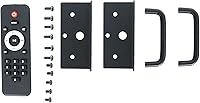
No remote control or app integration is built into this amp. Zone volume adjustments are handled exclusively via the front-panel knobs, which means someone needs to physically access the unit to change levels. If remote zone control is important for your setup — for example, giving staff the ability to adjust music from the floor — you would need to look at a higher-tier system with that capability built in or available as an add-on.