
Overview

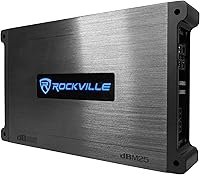
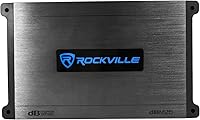
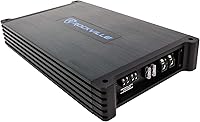
The Rockville DBM25 Marine Amplifier is a 2-channel Class-AB unit built specifically for the punishment that comes with life on the water — salt spray, humidity, and the constant vibration of a moving hull. Rockville sits firmly in the value tier, and this boat amplifier reflects that positioning: it's priced accessibly for recreational boaters who want a real amp without a serious financial commitment. The number worth paying attention to is the 375W Dyno-Certified RMS — that's the honest, tested output figure. The 1500W peak claim is marketing; treat it accordingly. With a 4.1-star average across over 100 ratings since its 2018 release, this marine amp has earned a credible track record.

Features & Benefits

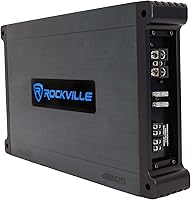
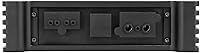
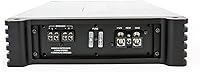
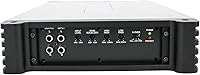
What separates this marine amp from a standard car amplifier is the genuine environmental hardening baked into the hardware. The conformal-coated PCB, rustproof aluminum heatsink, silicone terminal covers, and stainless steel hardware are practical defenses against the corrosion that silently destroys unprotected electronics near saltwater. The crossover is fully adjustable — low-pass sweeps from 50Hz to 250Hz, high-pass from 60Hz to 1.2kHz — so you can power both speakers and a sub from a single unit without extra processing gear. The dashboard-mounted bass control is a genuinely useful addition; adjusting bass while underway without crawling to the amp locker is a real convenience. RCA inputs keep wiring clean and compatible with virtually any marine head unit.

Best For

This boat amplifier suits recreational boaters running a modest audio upgrade — a pair of marine coaxials, maybe a compact sub, on a pontoon, center console, or day cruiser. It's stable at 2 or 4 ohms, which covers most off-the-shelf marine speakers without impedance headaches. If you're stepping up from a factory head unit and want cleaner, louder audio without committing to a full DSP-driven system, the DBM25 delivers without overcomplicating the install. DIY boaters will appreciate the included birth sheet and detailed owner's manual. Those who'd rather spend on fuel than on a flagship marine audio brand will find the value-to-performance ratio here hard to argue with.

User Feedback

The general tone from buyers leans positive, with straightforward installation and honest power output cited most often. The birth sheet earns specific praise — documented tested output is a trust signal that matters when wattage inflation is common at this price point. On the critical side, a few owners found the instruction manual vague in spots, and some noted inconsistent customer support experiences. The most actionable concern is thermal management: under sustained high-volume use, the DBM25 runs warm, so mounting it with adequate airflow is necessary, not optional. Longer-term reports on saltwater durability are encouraging, with multiple owners noting solid performance through a full boating season.

Pros

  • The 375W Dyno-Certified RMS is a real, documented figure — not a marketing exaggeration.
  • A birth sheet ships with every unit, giving buyers rare factory-verified proof of actual output.
  • Conformal PCB coating and stainless steel hardware provide genuine saltwater corrosion resistance.
  • The dashboard-mounted bass remote is a practical convenience that most amps at this price skip entirely.
  • Fully adjustable crossover handles both full-range speakers and subwoofers from a single unit.
  • Class-AB design delivers cleaner audio than Class-D alternatives at moderate listening volumes.
  • RCA inputs make installation straightforward with nearly any aftermarket marine head unit.
  • This boat amplifier fits naturally into a DIY install with its included manual and mounting hardware.
  • At its price point, the combination of marine-grade protection and crossover flexibility is hard to beat.
  • A 4.1-star average across over 100 ratings reflects a consistently positive real-world track record.

Cons

  • Heat buildup at sustained high volume is a documented issue — ventilation placement during install is non-negotiable.
  • The 1500W peak figure dominates the marketing but has little bearing on real listening performance.
  • Customer support responsiveness has drawn complaints from a portion of buyers, which matters for warranty situations.
  • The owner's manual lacks clarity in certain installation steps, which can slow down first-time installers.
  • Only 2 channels limits usefulness for boaters who need to drive more than two speaker zones.
  • No built-in Bluetooth or digital input options — a wired RCA source is required.
  • At nearly 10 pounds and over 18 inches long, the DBM25 requires meaningful physical space for mounting.
  • The brand carries a value-tier reputation that may affect resale value compared to marine audio specialists.

Ratings

The Rockville DBM25 Marine Amplifier has been scored by our AI after analyzing verified buyer feedback from global sources, with spam, bot activity, and incentivized reviews actively filtered out. Scores reflect the full picture — where this boat amplifier genuinely earns its reputation and where real owners have run into friction. Both the strengths and the trade-offs are represented transparently across each category below.

Value for Money
88%
For a budget-to-mid-range marine amp, buyers consistently feel they are getting more than they paid for. The inclusion of marine-grade hardware, a birth sheet, and an adjustable crossover at this price tier would cost meaningfully more from established marine audio brands.
A small number of buyers feel the aggressive peak wattage marketing muddies the value story — if you buy expecting 1500W of usable output, the reality of 375W RMS can feel like a letdown, even when the RMS figure is honestly competitive.
Marine Durability
83%
Longer-term saltwater owners report solid corrosion resistance, and the combination of conformal PCB coating, silicone terminal covers, and stainless steel hardware addresses the failure points that kill unprotected amps in marine environments within a single season.
It is not a sealed or fully waterproof unit, so installation location matters. Owners who mounted the DBM25 in poorly ventilated or splash-prone spots reported faster wear, suggesting the marine protection has limits beyond incidental spray exposure.
Power Accuracy
79%
21%
The birth sheet is a standout feature at this price point — buyers who understood what they were reading appreciated having documented factory-tested output rather than a spec sheet number. Real-world output aligns closely with the 375W Dyno-Certified RMS claim.
The 1500W peak figure dominates the product title and marketing, and several buyers felt misled after installation when the actual output met expectations for 375W RMS but not the peak number they anchored to when purchasing.
Audio Quality
74%
26%
For a recreational boating context — background music, moderate volume on a pontoon or day cruiser — the Class-AB design delivers noticeably cleaner audio than a head unit alone. Most buyers in this use case found the sound quality fully satisfying for casual on-water listening.
Audiophiles or buyers comparing the DBM25 against higher-tier marine brands will hear the difference at high volume, where clarity degrades more than premium alternatives. This is a value-tier amplifier and the audio ceiling reflects that positioning honestly.
Crossover Flexibility
82%
18%
Having both a low-pass and high-pass filter in a single 2-channel unit at this price gives installers real flexibility — you can run full-range speakers on the high-pass setting or switch to subwoofer duty on the low-pass without additional processing gear.
The 12dB/octave slope is functional but not particularly steep, which means some frequency bleed at crossover points that more precise installers may notice. Buyers wanting tighter crossover control would need an outboard DSP.
Thermal Management
61%
39%
Under moderate listening conditions with adequate airflow, the aluminum heatsink handles the thermal load without triggering protection shutdowns. Owners who installed the DBM25 with clear air space on all sides rarely reported heat-related issues.
Sustained high-volume use in a confined mounting space causes noticeable heat buildup, and several owners reported the amp entering thermal protection mode. Ventilation is effectively a non-negotiable installation requirement rather than a nice-to-have.
Ease of Installation
77%
23%
RCA inputs, clearly labeled terminals, and a logical physical layout make the wiring process approachable for DIY boaters with basic experience. The inclusion of mounting screws and a real owner's manual means most buyers can complete the install without sourcing extra documentation.
Some installers found the owner's manual vague on bridged mono wiring and gain-setting procedures, which added confusion during setup. The instructions assume a baseline familiarity with amplifier installation that not all first-time buyers bring to the project.
Remote Bass Control
81%
19%
The dashboard-mounted bass remote is a practical convenience that owners genuinely use underway — adjusting bass to match different playlists or account for wind noise without leaving the helm is the kind of feature that earns consistent positive mentions in reviews.
The remote control cable length may limit placement options on larger consoles, and a few buyers noted the knob feel is plasticky relative to the rest of the build. It works reliably, but it does not feel like a premium component.
Build Construction
76%
24%
The physical construction feels solid for the price tier — the aluminum chassis is rigid, the heatsink fins are evenly formed, and the stainless hardware gives the unit a finish that looks appropriate in a marine environment rather than like a repurposed car amp.
Compared to purpose-built marine audio brands, the overall fit and finish shows the cost savings in minor ways — terminal labeling can be small and hard to read, and the enclosure design is functional rather than refined.
Wattage Transparency
68%
32%
The birth sheet practice is genuinely unusual at this price point and earns real credibility with informed buyers. Having a unit-specific tested power document removes the guesswork that typically accompanies value-brand amplifier purchases.
Despite the birth sheet, the product title and listing still lead with the 1500W peak figure, which undermines the transparency the birth sheet is meant to provide. Rockville could resolve most buyer confusion simply by foregrounding the RMS figure instead.
Compatibility
84%
The 2-or-4-ohm stability and standard RCA inputs make this boat amplifier broadly compatible with the marine head units and speakers most recreational boaters are already running, reducing the chance of a mismatch that requires additional components.
There is no high-level input for head units without preamp outputs, which excludes some older or entry-level marine receivers from direct compatibility without adding an adapter or line output converter.
Documentation & Support
57%
43%
The birth sheet and included warranty card show that Rockville puts thought into what ships in the box, and the owner's manual covers the essential installation steps well enough for experienced DIYers to complete the job without external resources.
Customer support responsiveness has drawn consistent criticism from buyers who needed post-purchase help — warranty claims and technical questions have reportedly gone unanswered or received slow responses, which is a meaningful risk if something goes wrong.
Packaging & Accessories
71%
29%
The unit arrives with mounting screws, a birth sheet, an owner's manual, and a warranty card — everything needed to physically mount and document the install. Nothing feels missing for a standard setup, which is more than some competitors include.
There is no wiring kit included — power cable, ground wire, and fusing are all separate purchases, which adds to the total cost and can catch first-time buyers off guard when they realize the amp alone is not enough to complete the installation.

Suitable for:

The Rockville DBM25 Marine Amplifier is a strong match for recreational boaters who are ready to move beyond the tinny output of a factory head unit and want noticeably better sound without overbuilding their audio system. If you're running a modest setup — two marine coaxials on a pontoon or center console, maybe paired with a compact sub — the 2-channel, 2-or-4-ohm flexibility covers most common configurations cleanly. DIY installers will feel comfortable here: RCA inputs, a logical crossover layout, and a thorough owner's manual reduce the guesswork that kills weekend projects. The included birth sheet is a genuinely reassuring detail for buyers who've been burned by inflated wattage claims before, since it documents the actual tested output straight from the factory. Budget-minded boaters who want marine-grade corrosion protection — conformal PCB coating, stainless hardware, silicone terminal covers — without paying a premium brand premium will find this boat amplifier punches solidly above its price class.

Not suitable for:

The Rockville DBM25 Marine Amplifier is not the right call for serious audio enthusiasts who want clean, high-output power across a multi-zone boat system or who plan to push demanding subwoofers at sustained high volume. The 375W RMS rating is real and respectable for the price, but it won't satisfy builds that need significantly more headroom — and the thermal behavior under continuous heavy load is a documented concern that limits how hard and how long you can push it without proper ventilation. Boaters with larger vessels who need a 4-channel solution for bow, cockpit, and stern speakers will quickly outgrow a 2-channel unit and should look elsewhere from the start. If after-sales support matters to you — warranty claims, technical questions — Rockville's customer service has received mixed feedback, which is worth weighing before committing. Audiophiles or anyone comparing this marine amp against established marine audio brands on pure sound quality alone will likely find the gap noticeable at high listening levels.

Specifications

  • Amplifier Class: The DBM25 uses a Class-AB design, which prioritizes audio clarity over raw efficiency — a practical choice for boaters who want clean sound at moderate listening levels.
  • Channels: The unit operates as a 2-channel amplifier, suitable for powering a stereo speaker pair or a single subwoofer in bridged mono configuration.
  • RMS Power Output: Dyno-Certified RMS output is 375W total, representing the continuous, real-world power the amplifier reliably delivers under tested conditions.
  • Peak Power: Peak power is rated at 1500W, a burst figure used for marketing comparison purposes and not representative of sustained listening output.
  • Impedance: The amplifier is stable at both 2 ohm and 4 ohm loads, providing compatibility with most standard marine speakers and subwoofers.
  • Crossover Type: A built-in 12dB/octave adjustable crossover includes a low-pass filter sweeping 50Hz–250Hz and a high-pass filter sweeping 60Hz–1.2kHz.
  • Bass Control: A remote bass control knob is included for dashboard mounting, allowing real-time bass level adjustment without accessing the amplifier directly.
  • Input Connectivity: Signal input is handled via RCA connections, compatible with virtually all aftermarket and OEM marine head units that provide preamp outputs.
  • PCB Protection: The circuit board is treated with a conformal coating that protects against moisture, condensation, and salt air intrusion common in marine environments.
  • Heatsink Material: The external heatsink is constructed from rustproof aluminum, designed to dissipate heat while resisting the corrosion associated with saltwater exposure.
  • Hardware Material: External fasteners and structural hardware are stainless steel, preventing rust and surface degradation in wet and humid conditions.
  • Terminal Protection: Silicone covers are fitted over the speaker and power terminals to block water ingress at the wiring connection points.
  • Mounting Type: The amplifier is designed for surface mounting and ships with the necessary mounting screws included in the box.
  • Dimensions: Physical dimensions measure 5″ wide by 11.5″ deep by 18.9″ tall, requiring adequate clearance during installation for both fit and airflow.
  • Weight: The unit weighs 9.83 pounds, which is a relevant consideration when selecting a mounting surface on smaller vessels.
  • Operating Voltage: The amplifier operates within a supply voltage range of 4V minimum to 14V maximum, compatible with standard 12V marine electrical systems.
  • Included Documentation: Each unit ships with a birth sheet documenting factory-tested power output, an owner's manual, a warranty card, and mounting screws.
  • Brand Origin: The DBM25 is manufactured by Rockville, a U.S.-based consumer audio brand known for value-tier car and marine audio products.

Related Reviews
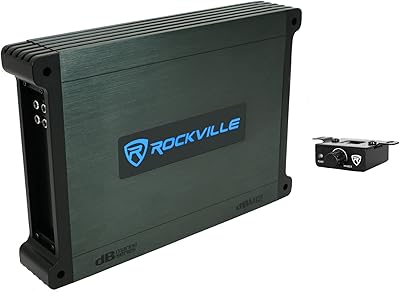
Rockville DBM12 Marine Amplifier
86%
89%
Performance
91%
Durability
86%
Audio Quality
78%
Ease of Installation
92%
Build Quality
More
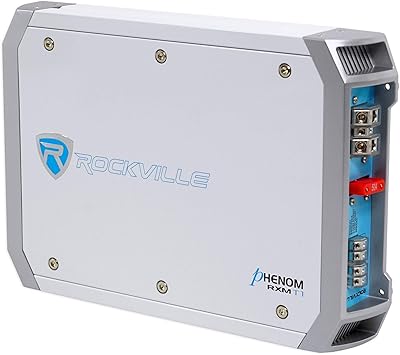
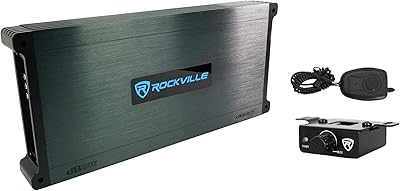
Rockville RXM-T1 2-Channel Marine Amplifier
69%
84%
Ease of Installation
61%
Power Output
77%
Marine Durability
67%
Sound Quality
54%
Heat Management
More
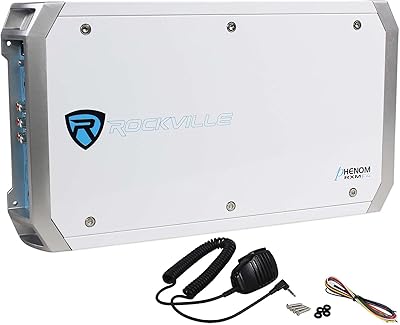
Rockville DBM65 6-Channel Marine Amplifier
73%
88%
Value for Money
83%
Power Output
71%
Waterproofing & Weather Resistance
91%
Channel Flexibility
67%
Build Quality
More
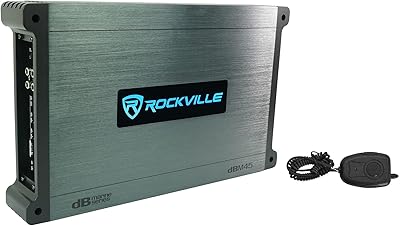
Rockville DBM45 4-Channel Marine Amplifier
71%
78%
Sound Quality
74%
Build Quality
71%
Waterproofing
69%
Power Delivery
57%
Thermal Management
More
Rockville RXM-F4 2400W Marine 4-Channel Amplifier
87%
89%
Sound Performance
94%
Durability & Weather Resistance
84%
Ease of Installation
91%
Build Quality
92%
Power Output
More
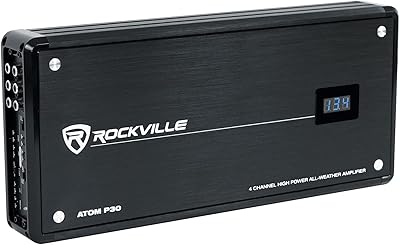
Rockville ATOM P30 2400W 4-Channel Marine Amplifier
84%
94%
Power Output
90%
Build Quality
88%
Waterproof Performance
80%
Ease of Installation
85%
Sound Quality
More
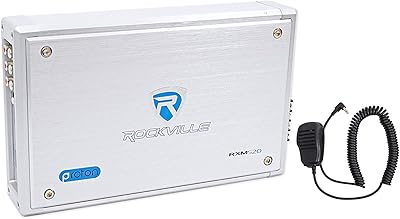
Rockville RXM-S20 4-Channel Marine Amplifier
72%
83%
Value for Money
88%
Installation Ease
71%
Sound Quality
62%
Power Accuracy
67%
Water Resistance
More
Pyle PLMRA200 2-Channel Marine Amplifier
71%
83%
Value for Money
81%
Ease of Installation
57%
Power Output
63%
Build Quality
61%
Water Resistance
More
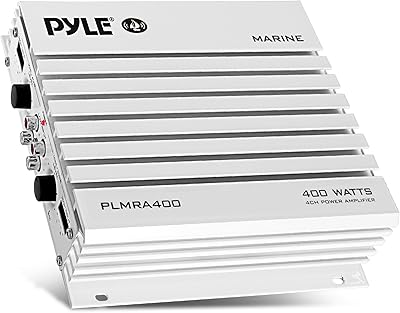
Pyle PLMRA400 4-Channel Marine Amplifier
75%
88%
Value for Money
86%
Ease of Installation
71%
Water Resistance
63%
Power Output
79%
Build Quality
More
Pyle PLMRMB2CW Marine Amplifier
86%
85%
Sound Quality
92%
Waterproof Durability
88%
Bluetooth Connectivity
80%
Power Output
87%
Installation Ease
More

FAQ

It is water-resistant rather than fully submersible. The conformal PCB coating, silicone terminal covers, and stainless steel hardware protect against spray, humidity, and salt air — which covers the realistic exposure any mounted marine amplifier faces. You should not submerge it or install it in a location where standing water can pool around it.

The birth sheet is a factory test document that records the actual measured power output for your specific unit before it shipped. It is a useful reference point that confirms the amplifier met its rated RMS spec — not just a theoretical number pulled from a data sheet. It is relatively uncommon to see this level of transparency at this price point.

Yes. The low-pass filter (50Hz–250Hz) is specifically designed for subwoofer use, and you can bridge the two channels into mono for more output driving a single sub. Just make sure your subwoofer's impedance is compatible with the bridged ohm rating before wiring it up.

It is worth taking seriously during installation. The DBM25 runs warm under sustained high-volume use, which is normal for Class-AB designs but means ventilation is not optional. Mount it somewhere with airflow on all sides — avoid enclosed compartments with no air movement. Several real-world owners have noted this, and installing it thoughtfully from the start prevents most thermal issues.

The bass remote is wired directly to the amplifier, not the head unit, so it works regardless of which head unit you are using. It simply mounts on your dashboard or console and lets you dial the bass level without reaching the amp.

Yes, it is stable at both 2 and 4 ohms per channel, which gives you flexibility when pairing with different marine speakers. Most off-the-shelf marine coaxials are 4-ohm, but if your speakers or subwoofer dip to 2 ohms, the amp handles it without shutting down.

Yes, the two channels can be bridged into a single mono output for driving one subwoofer with more power than either channel delivers individually. Check the owner's manual for the correct bridged wiring configuration and confirm the minimum impedance requirement in bridged mode before connecting your sub.

Most boaters with basic wiring experience find it manageable. The RCA inputs work with standard head unit preamp outputs, the crossover controls are labeled clearly on the unit, and the included manual walks through the main steps. The trickier part for some owners is finding a mounting location with adequate ventilation, not the wiring itself.

Longer-term owner reports are generally encouraging. The combination of conformal PCB coating, silicone-covered terminals, and stainless hardware addresses the main corrosion risks. That said, it is good practice to rinse the exterior with fresh water after heavy saltwater exposure and keep the terminal covers in place when the system is not in use.

No — that figure is the peak power rating, which represents a momentary burst under ideal conditions, not what the amplifier sustains during normal playback. The number to focus on is the 375W Dyno-Certified RMS, which is the tested, continuous output. The marketing emphasis on peak wattage is common in this segment, and the birth sheet is your best tool for verifying what the unit actually delivers.

Where to Buy