Overview

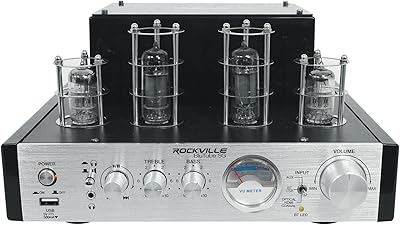
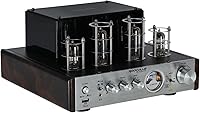
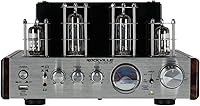
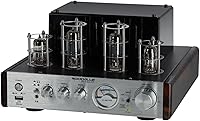
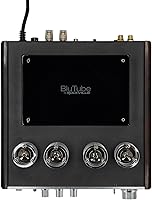
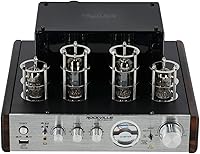
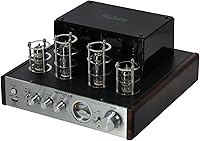
The Rockville BluTube DK Tube Amplifier is Rockville's attempt to bring the warmth of tube amplification to listeners who don't want to spend a fortune chasing it. Rockville has built a reputation for accessible A/V gear — not the darling of audiophile forums, but consistently appreciated by buyers who value versatility over prestige. What stands out is the combination of classic tube aesthetics with a connectivity suite you rarely see at this price. The distinctive silver and wood finish looks genuinely premium on a shelf or desktop. Be honest with yourself going in: this is a consumer-grade unit, not a reference amp.

Features & Benefits

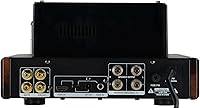
At 35W per channel into 4 ohms, the BluTube DK delivers enough power to drive most bookshelf speakers and smaller floor-standers without strain — pair it with something sensitive and efficient, and it handles a living room with ease. The connectivity list is unusually comprehensive for this price: HDMI ARC, optical, coaxial, RCA, USB thumb drive playback covering FLAC and WAV, plus Bluetooth 2.1+EDR at 33 feet. A dedicated subwoofer output means you can build a 2.1 setup without a separate receiver. The analog VU meter and visible tubes aren't just decorative — they're a big part of why people choose this over a plain black box. Bass and treble controls keep tone shaping simple.

Best For

Rockville's hybrid tube amplifier makes the most sense for a specific type of buyer: someone who wants their first taste of tube sound without committing to a costly or complex setup. It's well matched to efficient bookshelf speakers — think 90dB sensitivity and above — where 25 to 35 watts is plenty. The HDMI ARC input makes it a practical fit for a secondary TV room or a desktop where you want to skip the soundbar entirely. Visually, the glowing tubes and swinging VU needles are a deliberate lifestyle choice, not an afterthought. If you're driving low-sensitivity speakers or building a critical listening room, look further up the price ladder.

User Feedback

Buyers consistently point to the warm midrange character as the standout quality — those coming from solid-state amps often describe this tube amp as noticeably more musical and forgiving on harsh recordings. Setup earns praise too: unboxing and connecting is genuinely straightforward, and the bundled RCA-to-3.5mm cable is a small but appreciated detail. The sticking points are real: Bluetooth 2.1 is an older standard, and anyone accustomed to modern wireless audio will notice the gap. Build quality opinions split — some find the chassis surprisingly solid; others feel the internals reflect the price point. HDMI ARC performance is the most divisive topic, with most users getting it to work but not without some troubleshooting.

Pros

  • Warm, musical midrange character that noticeably outperforms solid-state alternatives at a comparable price.
  • Unusually broad input selection — HDMI ARC, optical, coaxial, RCA, USB, and Bluetooth — covers almost every home source.
  • Dedicated subwoofer output lets you expand to a 2.1 system without adding a separate receiver.
  • Glowing tubes and an analog VU meter deliver retro visual appeal that most competitors at this price simply can't match.
  • At 35W per channel into 4 ohms, there's real headroom for bookshelf and mid-sized floor-standing speakers.
  • Headphone output makes this a practical daily driver well beyond dedicated speaker listening sessions.
  • Setup is refreshingly simple — most users report getting audio running within minutes of unboxing.
  • Bundled RCA-to-3.5mm cable saves an immediate extra purchase and signals thoughtful packaging for the price.
  • Clean, uncluttered front panel with basic bass and treble controls keeps the user experience approachable.

Cons

  • Bluetooth 2.1 is an aging standard with no aptX or AAC support, so wireless audio quality trails modern expectations.
  • HDMI ARC performance can be unreliable, with some users requiring multiple troubleshooting steps before achieving stable audio.
  • Internal components reflect the entry-level price; the build quality doesn't fully live up to what the exterior suggests.
  • Tube rolling options are limited, which will disappoint buyers hoping to fine-tune the sound with aftermarket tubes.
  • Low-sensitivity speakers below around 87dB will hit the amp's power ceiling faster than most buyers expect.
  • Real-world Bluetooth range falls short of the 33-foot spec once walls and household interference enter the picture.
  • The 2-band equalizer covers the basics but leaves anyone wanting granular tone adjustment with few options.
  • No built-in phono preamp means vinyl listeners must budget for and connect a separate phono stage.
  • At over 13 inches wide and nearly 10 pounds, placement on compact desks or tighter shelving can become a real constraint.

Ratings

The Rockville BluTube DK Tube Amplifier was evaluated by our AI rating engine after processing verified global buyer reviews, with spam, bot activity, and incentivized feedback actively filtered out. The analysis covers this tube amp across all major performance dimensions, from sound character and connectivity breadth to build quality and long-term reliability. Both the genuine strengths and recurring pain points are transparently reflected in the scores below.

Sound Quality
74%
26%
Most buyers coming from solid-state receivers describe the BluTube DK's midrange as noticeably warmer and more natural, especially with acoustic music, vocals, and jazz. The tube circuitry adds a pleasant roundness that makes long listening sessions less fatiguing — a quality that's hard to quantify but easy to appreciate once you've heard it.
This is an entry-level unit, and experienced listeners will notice the ceiling — the highs lack air and extension compared to better amplifiers, and overall resolution doesn't match what dedicated hi-fi buyers expect. At higher volumes, dynamic compression becomes apparent, particularly with more complex musical passages.
Build Quality
67%
33%
The exterior chassis makes a strong first impression — the two-tone silver finish and wood accent panel feel more refined than the price suggests, and the overall weight gives it a reassuring presence on a shelf or desktop. Buyers who display their audio gear openly consistently cite the physical presentation as a genuine highlight.
Look closer and the internal component quality reflects the price point — owners who have compared this unit to pricier alternatives note that the internals feel less robust than the exterior implies. A portion of buyers also flagged that certain knobs and controls feel slightly loose or plasticky under regular daily use.
Value for Money
82%
18%
For buyers entering the tube amplifier world without wanting to spend several hundred dollars, this unit offers a compelling combination of features and aesthetics that would otherwise require a significantly larger budget. The inclusion of a subwoofer output, USB playback support, and a bundled RCA cable adds tangible value that most competing units at this tier don't match.
Buyers who expected audiophile-grade sound based on the tube branding sometimes feel shortchanged once the novelty wears off and the performance ceiling becomes clear. The Bluetooth 2.1 implementation in particular feels out of step with the price bracket — a more current wireless standard would have meaningfully improved the overall value proposition.
Connectivity
88%
Few tube amplifiers at any price offer HDMI ARC, optical, coaxial, RCA, USB thumb drive playback, and Bluetooth all in one chassis — and this unit delivers exactly that. For buyers trying to consolidate a TV, turntable, streaming device, and phone into a single amp without adding a receiver, the input breadth is a genuine practical advantage.
The sheer number of inputs doesn't guarantee they all perform equally well — HDMI ARC reliability in particular has drawn inconsistent reports, and the Bluetooth 2.1 standard lacks the codec support that most modern streaming setups rely on. Buyers should approach this as a versatile but not flawless connectivity hub.
Visual Design
89%
The retro aesthetic — glowing tubes, swinging VU needles, and a wood-accented chassis — is one of the most praised aspects by buyers who treat their audio gear as part of their home's visual identity. In a living room or home office where equipment sits in plain sight, this amp looks genuinely distinctive at its price point.
The visual appeal is almost entirely front-and-top focused — the sides and rear are functional but unremarkable. A small number of buyers also noted that the tube glow is relatively subtle compared to higher-wattage valve amplifiers, which may disappoint those expecting a more dramatic visual effect in a dimly lit room.
Ease of Setup
91%
Setup is one of the most consistently celebrated aspects across buyer reviews — most describe connecting their speakers and audio sources and having music playing within 15 minutes. The included RCA-to-3.5mm cable eliminates a common first-use hurdle, and the straightforward front panel means you won't need to consult a manual just to get started.
The main exception is HDMI ARC, which requires TV-side audio settings to be configured correctly and isn't always a plug-and-play experience — this specific input generates a disproportionate share of setup frustration. Buyers who rely on optical or RCA connections instead rarely encounter any issues at all.
Bluetooth Performance
52%
48%
For buyers who simply want to stream background music from a phone or tablet, Bluetooth 2.1 gets the job done without pairing complications — the connection is straightforward and the 33-foot range is adequate for most living room setups. Casual listeners who aren't comparing wireless codecs will find it perfectly usable day to day.
Bluetooth 2.1 predates aptX, AAC, and LDAC, and buyers accustomed to modern wireless audio will notice the difference in clarity and detail, particularly at higher volumes. Real-world range also tends to fall short of the 33-foot spec once walls and typical household interference are factored in.
HDMI ARC Reliability
61%
39%
When HDMI ARC works, it's one of the most convenient features this type of amp can offer — a single cable carries audio from the TV and simplifies the entire setup considerably. Buyers who pair this amp with a TV that has well-implemented ARC support report stable, clean digital audio without any further intervention needed.
A recurring pattern in buyer feedback is that HDMI ARC requires troubleshooting — cycling TV settings, trying different cables, or toggling inputs before the amp finally registers the signal reliably. This is a known pain point at this price tier and not unique to Rockville's hybrid tube amplifier, but it's frustrating enough to lower the score meaningfully.
Power Output
73%
27%
For its primary audience — listeners running efficient bookshelf speakers in a bedroom, study, or small living room — 35 watts per channel at 4 ohms is more than sufficient and rarely gets pushed to its limits during normal sessions. Buyers with Klipsch, Polk, or similarly sensitive speakers consistently report comfortable headroom to spare.
Step outside the ideal speaker pairing — anything below around 87dB sensitivity, larger floor-standers, or a room demanding sustained high volume — and the amp starts to compress noticeably. Several buyers who pushed this tube amp harder than it was designed for reported a clear performance wall that left them wishing for more reserve power.
Tube Character
77%
23%
Buyers consistently describe the tube character as warm and forgiving — voices, guitars, and piano all benefit from the slight harmonic softening that valve circuits naturally introduce. For listeners who find their current solid-state setup too bright or fatiguing during long sessions, this is precisely the tonal shift they're looking for.
More experienced tube enthusiasts who have owned dedicated valve amplifiers will notice that the warmth here is subtle and the tonal character less pronounced than higher-grade designs. Tube rolling — swapping out tubes to tune the sound — is limited by the socket configuration, which frustrates buyers who expected more upgrade flexibility.
USB Playback
86%
USB thumb drive playback supporting FLAC, WAV, APE, MP3, and WMA is a quietly appreciated feature — buyers with digital music libraries on thumb drives love being able to play lossless files directly without needing a separate streaming device. It works reliably and handles a wide enough format range to cover most real-world music collections.
The USB port is limited to thumb drive playback and doesn't support device charging or function as an audio interface. Navigation controls for browsing large folder structures aren't always intuitive, and a small number of buyers reported occasional compatibility issues with certain drive formats or folder hierarchies.
Headphone Output
78%
22%
Having a headphone output on a tube amp at this price is a genuine everyday convenience — buyers use it for late-night listening without needing a separate headphone amplifier. The warm tube character carries over noticeably through headphones, making acoustic recordings and vocal-heavy albums particularly enjoyable during private sessions.
High-impedance headphones above 150 ohms may not reach their full potential here — driving capability isn't documented in detail, and some buyers with more demanding headphones reported needing to push volume higher than expected. The output also doesn't match the quality or control of a dedicated standalone headphone amplifier.
Subwoofer Integration
84%
The dedicated subwoofer output is a practical and well-received feature — buyers building a 2.1 system can connect a powered sub directly without any additional components. This extends the low-frequency reach of a bookshelf speaker pairing considerably and makes the overall system feel significantly more complete for TV and home theater use.
The subwoofer output level isn't independently adjustable on this unit, meaning fine-tuning the blend between main speakers and the sub relies entirely on the subwoofer's own volume control. Buyers who prefer precise crossover management will find this integration less sophisticated than what a dedicated AV receiver or processor typically provides.

Suitable for:

The Rockville BluTube DK Tube Amplifier is a strong match for casual home listeners who have been curious about tube sound but don't want to sink serious money into a dedicated hi-fi rig. It suits someone running efficient bookshelf speakers — 90dB sensitivity or higher — in a living room, bedroom, or home office, where 25 to 35 watts per channel provides more than enough headroom. The HDMI ARC input makes it particularly useful for anyone who wants to improve their TV audio without buying a full AV receiver. Streaming fans will appreciate the Bluetooth and USB playback support, while vinyl listeners can connect via RCA and let the tubes handle what they do best. If visual aesthetics factor into your decision — and for many buyers in this category, they genuinely do — the glowing tubes, swinging VU needle, and wood-accented chassis make this a piece of gear you'll want to display, not tuck away.

Not suitable for:

If you're a committed audiophile with demanding speakers and a reference-quality listening room, the Rockville BluTube DK Tube Amplifier is not your amp, and it doesn't pretend to be. Speakers with sensitivity ratings below around 87dB will expose the power limits quickly, leaving the sound thin or compressed at higher volumes. The Bluetooth implementation is version 2.1, which predates aptX, AAC, and other modern codecs, so anyone expecting wireless audio to rival a wired source will come away frustrated. Tube rollers should also know that swapping in aftermarket tubes may be restricted by socket compatibility and circuit design, limiting the usual upgrade path enthusiasts rely on. And if you're expecting build quality comparable to amplifiers at two or three times this price, the internal components will feel underwhelming once you look past the attractive exterior.

Specifications

  • Power Output: Delivers 35W x 2 RMS at 4 ohms and 25W x 2 RMS at 8 ohms for stereo channel operation.
  • Bluetooth: Equipped with Bluetooth 2.1+EDR supporting wireless audio streaming at a range of up to 33 feet.
  • Digital Inputs: Accepts digital audio signals via HDMI ARC, optical (TOSLINK), and coaxial S/PDIF inputs.
  • Analog Input: Features a stereo RCA line-level input for connecting CD players, streaming DACs, or other analog audio sources.
  • USB Playback: USB port supports thumb drive playback of audio files in WAV, MP3, WMA, APE, and FLAC formats.
  • Sub Output: Includes a dedicated subwoofer output for connecting a powered subwoofer to extend low-frequency response.
  • Headphone Out: A front-panel headphone output accommodates standard headphones for private listening sessions.
  • Tone Control: Provides a 2-band tone control section covering bass and treble for basic sound adjustment.
  • VU Meter: Features an analog VU meter on the front panel giving a classic visual indication of output level.
  • Speaker Posts: Speaker connections use banana plug and binding post terminals for secure, flexible wire attachment.
  • Dimensions: Unit measures 13.5 x 13.4 x 8.7 inches, making it compatible with standard AV shelving or a larger desktop surface.
  • Weight: Weighs 9.65 pounds, consistent with a stationary home audio component not intended for portable use.
  • Finish: Styled in a 2-tone silver finish with a wood accent panel, giving the unit a retro-modern visual character.
  • Remote Control: Ships with a remote control for adjusting volume and settings without leaving the listening position.
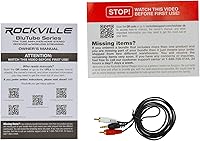
  • Accessories: Package includes a 5ft Tiffany RCA-to-3.5mm cable, a 5.5ft power cable, and a warranty card.
  • Amp Technology: Uses tube amplifier circuitry to generate the warm harmonic character associated with valve amplification.
  • Manufacturer: Designed and sold by Rockville, a consumer A/V brand offering accessible audio equipment across multiple product categories.

Related Reviews
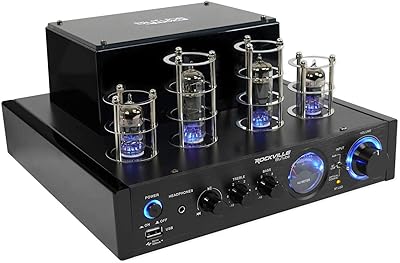
Rockville BluTube WD Tube Stereo Receiver
74%
83%
Sound Character
61%
Build Quality
88%
Connectivity Range
47%
Bluetooth Performance
67%
Power & Headroom
More
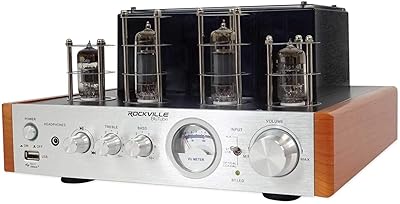
Rockville BluTube LED 70W Tube Amplifier
87%
89%
Sound Quality
93%
Connectivity Options
75%
Bass Control
88%
Build Quality
84%
Ease of Use
More
Rockville BluTube SG 70W Home Theater Tube Amplifier
85%
91%
Audio Quality
88%
Bluetooth Connectivity
84%
Sound Customization (Bass/Treble Controls)
90%
Compactness & Size
86%
Ease of Use
More
Rockville DBM12 Mono Marine Amplifier
72%
83%
Value for Money
54%
Power Accuracy
74%
Marine Durability
88%
Ease of Installation
79%
Bass Performance
More
Rockville DBM25 Marine Amplifier
75%
88%
Value for Money
83%
Marine Durability
79%
Power Accuracy
74%
Audio Quality
82%
Crossover Flexibility
More
Rockville RXM-T1 2-Channel Marine Amplifier
69%
84%
Ease of Installation
61%
Power Output
77%
Marine Durability
67%
Sound Quality
54%
Heat Management
More
Rockville dB15 Mono Car Amplifier
73%
83%
Value for Money
78%
Bass Output
86%
Ease of Installation
61%
Thermal Management
58%
Power Accuracy
More
Pyle PVTA90 Vacuum Tube Stereo Amplifier
74%
78%
Sound Quality
61%
Build Quality
82%
Value for Money
79%
Bluetooth Performance
84%
Input Versatility
More
Reisong A10
Reisong A10
71%
88%
Sound Quality
54%
Power Output
82%
Build Quality
83%
Value for Money
79%
Tube Complement & Rolling Potential
More
Rockville dB14 Mono Class-D Car Amplifier
74%
83%
Value for Money
78%
Power Accuracy
67%
Build Quality
54%
Long-Term Reliability
86%
Ease of Installation
More

FAQ

It's best matched with efficient bookshelf speakers rated at 90dB sensitivity or higher — brands like Klipsch, Polk Audio, or similar tend to pair well at this power level. At 25 to 35 watts per channel, it handles a typical bedroom or living room setup without strain, but low-sensitivity floor-standers will push it to its limits. If your speakers dip below around 87dB sensitivity, you may find the sound starts to feel compressed at higher volumes.

No, the RCA input is a standard line-level connection, not a dedicated phono stage. If you want to connect a turntable, you'll need an external phono preamp between the turntable and this amp. The good news is that affordable, compact phono preamps are widely available and easy to add to any setup.

The Rockville BluTube DK Tube Amplifier does include HDMI ARC support, which lets you send TV audio through a single HDMI cable. In practice, results vary — many users get it working without any issue, but others report needing to dig into their TV's audio output settings or swap cables before it locks in reliably. If HDMI ARC is your main use case, enable ARC in your TV's settings first, and keep the optical input as a reliable fallback if needed.

Tube rolling is possible in theory, but your options here are more limited than with higher-end amplifiers that are explicitly designed for it. The circuit design and socket compatibility may not accommodate every tube variant you might want to try. If tube rolling is something you care about, it's worth researching the specific tube types the unit accepts before purchasing aftermarket replacements.

It does, if wireless audio fidelity matters to you. Bluetooth 2.1 predates modern codecs like aptX and AAC, which means the wireless connection won't match the quality of a wired source. For background or casual listening it's perfectly usable, but a side-by-side comparison with a wired optical or RCA connection will reveal a clear difference. Anyone prioritizing audio quality should use one of the wired inputs.

The product documentation doesn't explicitly confirm auto-muting behavior, though most amplifiers at this tier do cut speaker output when headphones are inserted. It's worth testing once you have the unit set up rather than assuming. Either way, the headphone output is a genuinely useful feature for late-night listening without reconfiguring anything.

For a medium-sized room — roughly up to 250 to 300 square feet — paired with efficient speakers, the BluTube DK will handle comfortable listening levels without issue. A large, open-plan space or a room that demands high sustained output is a different story; that's where the wattage ceiling becomes a real constraint. If you regularly listen at high volumes in a larger space, you'll want to step up in power.

Most buyers report having music playing within 10 to 15 minutes of unboxing. The connection options are clearly laid out, the included RCA-to-3.5mm cable covers a common source scenario right away, and the front panel controls are straightforward enough that you won't need to read the manual to get started. It's one of the aspects this unit consistently gets praised for.

Tube amplification tends to produce a warmer, slightly smoother top end and a more rounded midrange compared to the tighter, more analytical character of solid-state designs. Coming from a budget receiver or mid-range solid-state amp, you'll likely notice that vocals and acoustic instruments sound a bit richer and more natural. Keep expectations grounded though — this is an entry-level tube unit, so the difference is real but more subtle than what a high-end valve amplifier would deliver.

Yes, Rockville's hybrid tube amplifier includes a dedicated subwoofer output that connects directly to a powered sub without requiring an external receiver or processor. This makes building a 2.1 system genuinely simple and is a feature that's not guaranteed at this price point, so it's a practical advantage worth noting if a subwoofer is part of your plan.