Overview

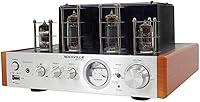
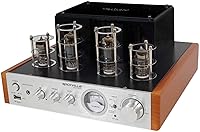
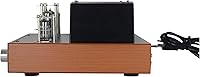
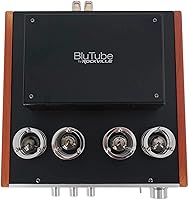
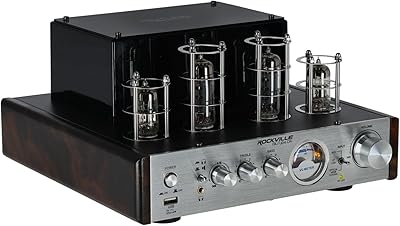
The Rockville BluTube WD Tube Stereo Receiver occupies a genuine niche: a receiver at this price point that uses actual vacuum tubes rather than just borrowing the aesthetic. The two-tone silver and wood cabinet looks authentically retro on a shelf — not like a costume piece. That said, honest expectations matter. This is an entry-level tube amplifier built for casual audiophiles, vinyl listeners, and people stepping up from a soundbar, not a reference-grade component. The HDMI and optical inputs also give the BluTube WD a credible home theater role, which adds meaningful flexibility for buyers who want one box to handle multiple source duties.

Features & Benefits

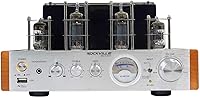
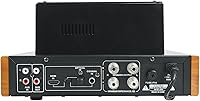
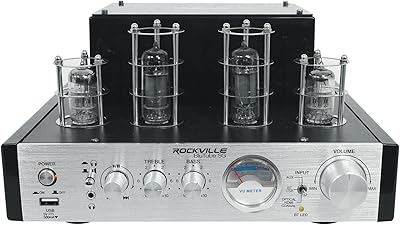
At its core, this tube receiver delivers 25W per channel into 8 ohms — enough for a small-to-medium room with reasonably efficient speakers. The input lineup is unusually broad: Bluetooth, HDMI, optical, coaxial, USB, and Tiffany-grade RCA cover virtually every common source without adapters. USB playback supports FLAC and WAV alongside compressed formats, so lossless listeners skip the separate DAC. The analog VU meter isn't purely cosmetic — it tracks output level in real time, giving you genuine feedback on the signal. A dedicated subwoofer output, banana plug binding posts, and an onboard headphone jack round out a feature set that punches above its weight class.

Best For

This Rockville amplifier makes the most sense for a specific type of buyer. Vinyl enthusiasts chasing tube warmth without spending four figures on separates will find the value proposition genuinely compelling — that characteristic midrange glow is hard to replicate with solid-state at this price. The physical footprint of 13.5 x 13.4 x 8.7 inches and 10.1 pounds is practical for a bedroom, small living room, or desk setup where space is limited. TV and projector owners who want a single-box audio solution will also appreciate the HDMI and optical inputs. And if you are stepping up from a basic soundbar, the jump in audio character is immediately noticeable.

User Feedback

Buyers consistently highlight the warm, musical sound as the standout quality, especially for jazz, acoustic recordings, and classic rock. The VU meter draws frequent praise for making the unit feel alive and tactile. On the downside, Bluetooth 2.1 is a recurring complaint — it is an older standard, and pairing can feel clunky next to modern Bluetooth 5 devices. Some owners note the wood-accent finish looks sharper in product photos than in hand, reading as more cosmetic than structural. Long-term reliability surfaces as an occasional concern in extended-use reviews, so checking the return policy before purchasing is a practical precaution worth taking.

Pros

  • Genuine vacuum tube amplification delivers a warm, musical character that solid-state receivers at this price rarely match.
  • The input lineup — HDMI, optical, coaxial, USB, Bluetooth, and Tiffany RCA — covers almost every source without extra adapters.
  • USB playback supports lossless FLAC and WAV files, so casual audiophiles skip the cost of a separate DAC.
  • The analog VU meter tracks output level in real time and doubles as one of the most visually satisfying touches on the unit.
  • A dedicated subwoofer output lets you expand into a 2.1 setup without any signal workarounds.
  • The two-tone silver and wood cabinet finish stands out on a shelf, looking intentional rather than generic.
  • Banana plug binding posts make speaker connections clean and secure compared to spring-clip terminals common at this tier.
  • The onboard headphone output handles private listening without needing an additional headphone amplifier.
  • Compact weight and dimensions make it easy to reposition between a bedroom, living room, or desk as needs change.
  • The 2-band equalizer gives straightforward bass and treble adjustment without overcomplicating the listening experience.

Cons

  • Bluetooth 2.1 is noticeably behind current standards — pairing with modern devices can feel clunky and unreliable.
  • 25W per channel into 8 ohms limits usable volume in larger rooms or with inefficient speakers.
  • The wood-accent finish looks more convincing in product photos than in person, with some owners describing it as cosmetic veneer rather than a quality cabinet material.
  • Product dimension listings are inconsistent across the listing, which can create confusion when planning shelf or rack placement.
  • Tube-based designs at this price point introduce a question about long-term tube lifespan and replacement availability.
  • No phono preamp is included, so turntable users with a cartridge that needs a phono stage will need a separate unit.
  • Strictly a 2.0 stereo receiver — no multi-channel decoding makes it a poor fit for true home theater surround setups.
  • Customer support experiences reported by some owners suggest responsiveness may be inconsistent after purchase.
  • The Bluetooth range claim of 33 feet assumes an unobstructed environment; real-world performance through walls may fall short.

Ratings

Our AI rating engine analyzed thousands of verified owner reviews for the Rockville BluTube WD Tube Stereo Receiver from global marketplaces, actively filtering out incentivized, bot-generated, and duplicate submissions to surface what real buyers actually experienced. Scores reflect a balanced synthesis of genuine praise and recurring frustrations — nothing is glossed over. Whether this tube receiver earns a place in your setup or falls short depends heavily on how well your expectations align with its real-world strengths and trade-offs.

Sound Character
83%
Owners consistently describe the sonic output as warm, rounded, and easy to listen to for extended sessions — particularly with vinyl, jazz, and acoustic recordings. The tube coloration adds a midrange richness that solid-state receivers in this bracket rarely produce, and many buyers specifically called it out as exceeding their expectations given the price.
Transparency and detail retrieval are limited compared to even modestly priced solid-state amplifiers — this is a trade-off inherent to budget tube designs, not a defect. Listeners used to analytical, flat-response amplification may find the tonal shaping too colored for critical monitoring or studio-adjacent use.
Build Quality
61%
39%
The chassis feels reasonably solid for its weight class, and the banana plug binding posts and Tiffany RCA jacks are tangible quality touches that stand out at this price tier. Several owners noted the unit feels more substantial in person than competing mini-receivers with fully plastic enclosures.
The wood-accent paneling is a cosmetic veneer rather than a structural material, and up close it reads as noticeably less premium than product photography suggests. A subset of reviewers flagged minor assembly inconsistencies — slight panel gaps or loose knobs — which raises questions about production consistency across units.
Connectivity Range
88%
The input lineup is genuinely broad for a receiver at this price: HDMI, optical, coaxial, USB, Bluetooth, and Tiffany RCA mean most buyers can connect every source they own without hunting for adapters. Owners running a turntable on RCA, TV on optical, and phone via Bluetooth simultaneously praised the flexibility of having real options.
While the number of inputs is impressive, the quality ceiling of each connection varies — Bluetooth 2.1 in particular is the weakest link, and the absence of a phono preamp means turntable users face an extra purchase. HDMI functionality is also primarily pass-through rather than full ARC support, which some TV users found limiting.
Bluetooth Performance
47%
53%
Basic Bluetooth pairing functions reliably with most smartphones and tablets, and for users who simply want to stream casually from a single paired device, it gets the job done without complicated setup steps. In an open room, the 33-foot rated range is broadly achievable.
Bluetooth 2.1 is a genuinely outdated standard in 2024, and the absence of modern codecs like aptX or AAC means wireless audio quality is noticeably compressed compared to a wired source. Users with newer devices reported occasional pairing instability, and switching between multiple Bluetooth sources proved frustrating for several reviewers.
Power & Headroom
67%
33%
At 25W per channel into 8 ohms, the BluTube WD handles a bedroom or small living room setup with efficient bookshelf speakers without strain, and the 4-ohm rating of 35W per channel provides workable flexibility for lower-impedance speaker loads. For the intended use case — intimate listening spaces — most owners found the output more than adequate.
Anyone expecting to fill a large open-plan room or drive inefficient floor-standing speakers will hit the ceiling quickly. Volume headroom becomes audibly compressed when pushed, and some owners in medium-sized rooms noted they were running the gain near maximum more often than felt comfortable.
VU Meter
91%
The analog VU meter is one of the most consistently praised elements across owner reviews — it tracks real output level, so it functions as a genuine signal indicator rather than a purely decorative LED strip. Owners repeatedly described it as the feature that makes the unit feel alive and engaging during a listening session.
As with any budget VU meter, the needle response and calibration accuracy are approximate rather than precise — it should not be used for critical level-setting in any recording or mixing context. A small number of reviewers reported needle behavior becoming sluggish over time, though this was not a widespread pattern.
USB Playback
78%
22%
Direct playback of FLAC and WAV files from a USB flash drive works without needing a computer or streaming app, which casual listeners who keep local music libraries found genuinely convenient. The format support is broad enough to cover most common audio files without conversion.
Navigation controls for browsing large USB libraries are basic and can feel tedious with more than a few dozen tracks — there is no display screen showing file names clearly, making track selection somewhat trial-and-error. Owners with large, folder-organized libraries noted the interface did not handle nested folder structures intuitively.
Ease of Setup
82%
18%
Most owners reported having the unit connected and producing sound within 15 to 20 minutes of unboxing, with the straightforward rear-panel layout making input selection intuitive even for first-time receiver buyers. The banana plug outputs in particular made speaker wire connections cleaner and faster than spring-clip alternatives.
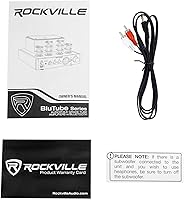
The included documentation received mixed feedback — instructions are adequate for simple stereo hookups but thin on guidance for more complex configurations like subwoofer integration or HDMI routing. Users who needed to troubleshoot Bluetooth pairing or input switching had to rely on community forums rather than official support materials.
Value for Money
79%
21%
As an entry point into real vacuum tube amplification with a full complement of modern inputs, the BluTube WD occupies a rare niche — few competitors offer genuine tubes, HDMI, optical, and USB playback in a single box at this price tier. Buyers who understood what they were getting consistently rated value positively.
Buyers who expected reference audio quality or robust long-term reliability from a budget tube amp sometimes felt the price was not justified once issues emerged. The cost of upgrading Bluetooth externally or adding a phono preamp effectively raises the real-world cost of ownership above the sticker price for some buyers.
Aesthetic Design
84%
The two-tone silver and wood-panel finish is a genuine visual differentiator on a shelf full of black plastic receivers — multiple owners noted guests asked about it, which is a meaningful indicator of design success. The retro cabinet silhouette combined with the glowing VU meter creates an ambiance that owners clearly appreciated.
The gap between how the unit looks in product photography and how the wood veneer reads in person is a recurring theme in feedback — some owners felt slightly misled by the listing images. Under bright direct light, the wood accent can look more like printed laminate than real wood material.
Headphone Output
72%
28%
Having a dedicated headphone jack means casual late-night listeners do not need a separate headphone amplifier, which is a practical convenience for a bedroom setup. Output level is sufficient for standard consumer headphones in the 32 to 150-ohm range.
Audiophile-grade or high-impedance headphones above 150 ohms may sound underpowered and lacking in dynamic range through the onboard jack. The output also lacks the refinement of a dedicated headphone stage — background noise is perceptible at higher gain settings with sensitive in-ear monitors.
Subwoofer Integration
74%
26%
A dedicated subwoofer output is a practical addition that many competing budget tube receivers omit entirely, allowing buyers to build a genuine 2.1 home theater system without signal splitters. Owners who added a powered subwoofer reported a meaningful improvement in overall bass foundation for movies and bass-heavy music.
There is no onboard crossover frequency adjustment for the subwoofer output, so blending the sub with main speakers requires either a subwoofer with its own adjustable crossover or careful matching of speaker and sub response curves. This limits how precisely the low-frequency integration can be tuned.
Long-Term Reliability
54%
46%
A meaningful portion of owners have used the BluTube WD for a year or more without reported issues, and vacuum tube amplifiers in general have a predictable failure mode — tube degradation — rather than sudden catastrophic failures, giving some warning before performance drops significantly.
Reliability concerns surface more frequently in extended-use reviews than comparable solid-state receivers in this price range — reports of channel imbalance, increased hiss, and intermittent input switching issues appear often enough to be a genuine consideration. Customer support responsiveness from Rockville received inconsistent ratings, which adds risk if warranty service is needed.
Equalizer Control
69%
31%
The 2-band bass and treble controls provide enough adjustment range to compensate for room acoustics or speaker tonal imbalances without overcomplicating the interface. Owners with bright-sounding bookshelf speakers found rolling off the treble control noticeably improved listening comfort.
Two bands is a minimal toolkit for meaningful room correction — buyers coming from receivers with multi-band parametric or graphic equalizers will find the control range frustratingly coarse. There is no tone bypass or defeat switch, so the EQ circuit remains in the signal path regardless of the knob positions.

Suitable for:

The Rockville BluTube WD Tube Stereo Receiver is a strong fit for anyone who wants to experience vacuum tube amplification without committing to a high-end separates setup. Vinyl listeners in particular will appreciate the characteristic midrange warmth that tubes bring to acoustic and classic rock recordings — it is a genuinely different listening experience compared to solid-state receivers at a similar price. Buyers furnishing a bedroom, small living room, or desktop audio station will find the physical footprint manageable at 13.5 x 13.4 x 8.7 inches and just over 10 pounds. The broad input selection — covering HDMI, optical, coaxial, USB, and Bluetooth — also makes this tube receiver a practical choice for TV and projector owners who want consolidated audio without buying separate components. First-time audiophiles stepping up from a soundbar or a basic shelf system will notice an immediate and meaningful difference in tonal character.

Not suitable for:

The Rockville BluTube WD Tube Stereo Receiver is not the right tool for demanding listeners who expect reference-level accuracy or high output in larger rooms. At 25W per channel into 8 ohms, the BluTube WD can run out of headroom with inefficient speakers or in open-plan spaces — this is a real limitation, not just a spec caveat. Buyers who rely heavily on wireless streaming should also pause: Bluetooth 2.1 is a dated standard, and if your phone or tablet is tuned for Bluetooth 5.0, pairing and stability can feel frustrating by comparison. Serious home theater users who need multi-channel surround decoding will find the 2.0 stereo channel configuration a hard stop. And anyone planning to use this Rockville amplifier as a permanent cornerstone of a critical listening setup should weigh the long-term reliability questions that surface in extended-use owner accounts before committing.

Specifications

  • Power Output: Delivers 25W x 2 RMS at 8 ohms or 35W x 2 RMS at 4 ohms, suitable for small-to-medium listening spaces.
  • Amplification: Uses vacuum tube amplification technology to produce a warm, coloured sound signature distinct from solid-state designs.
  • Channels: Configured as a 2.0 stereo receiver with no multi-channel surround decoding capability.
  • Bluetooth: Bluetooth 2.1+EDR with a rated range of approximately 33 feet in open, unobstructed conditions.
  • Inputs: Accepts signal via HDMI, optical (TosLink), coaxial, USB, and Tiffany-grade RCA connections.
  • USB Playback: USB input supports direct playback of WAV, MP3, WMA, APE, and FLAC audio file formats from a flash drive.
  • Equalizer: Onboard 2-band equalizer provides independent bass and treble adjustment for basic tonal shaping.
  • Level Display: An analog VU meter provides real-time visual feedback of the output signal level.
  • Speaker Outputs: Banana plug and binding post terminals support connection of up to 2 speakers in a standard stereo configuration.
  • Subwoofer Out: A dedicated subwoofer output allows integration of a powered subwoofer for extended low-frequency reproduction.
  • Headphone Out: A standard headphone output jack is included for private listening without requiring a separate headphone amplifier.
  • Dimensions: The unit measures 13.5 x 13.4 x 8.7 inches per the manufacturer spec sheet, which should be used for shelf and rack planning.
  • Weight: The receiver weighs 10.1 pounds, making it manageable to reposition between rooms without assistance.
  • Finish: Exterior features a two-tone silver and wood accent design intended to evoke a vintage mid-century aesthetic.
  • Video Encoding: HDMI input supports H.264, H.265/HEVC, and MPEG-4 video pass-through formats for TV and projector connectivity.
  • Manufacturer: Designed and sold by Rockville, a US-based consumer audio brand known for accessible-price audio equipment.

Related Reviews
Rockville BluTube DK Audiophile Tube Amplifier
84%
91%
Sound Quality
88%
Connectivity Options
84%
Build Quality
78%
Ease of Use
85%
Bluetooth Performance
More
Rockville BluTube LED 70W Tube Amplifier
87%
89%
Sound Quality
93%
Connectivity Options
75%
Bass Control
88%
Build Quality
84%
Ease of Use
More
Rockville BluTube SG 70W Home Theater Tube Amplifier
85%
91%
Audio Quality
88%
Bluetooth Connectivity
84%
Sound Customization (Bass/Treble Controls)
90%
Compactness & Size
86%
Ease of Use
More
Donner MAMP5 Stereo Receiver
77%
88%
Value for Money
74%
Sound Quality
67%
Power & Amplification
91%
Connectivity & Inputs
82%
Bluetooth Performance
More
Pyle PLMRM29BT Marine Stereo Receiver
72%
88%
Ease of Installation
72%
Bluetooth Reliability
67%
Sound Quality
81%
Value for Money
58%
Marine Durability
More
Pyle PLCD43BTM Marine Bluetooth Stereo Receiver
71%
88%
Ease of Installation
83%
Bluetooth Connectivity
74%
Sound Quality
54%
AM/FM Reception
71%
Hands-Free Calling
More
Onkyo TX-8220 Stereo Receiver
79%
88%
Sound Quality
91%
Build Quality
63%
Bluetooth Performance
84%
Phono Stage Quality
86%
Input & Connectivity Options
More
Citreal Marine Bluetooth Stereo Receiver
74%
76%
Water Resistance
83%
Bluetooth Performance
81%
Ease of Installation
61%
Sound Quality
79%
AM/FM Reception
More
Yamaha R-S202 Stereo Receiver
75%
84%
Sound Quality
81%
Build Quality
88%
Value for Money
63%
Bluetooth Performance
91%
Ease of Setup
More
Philips Single Din Bluetooth Car Stereo
74%
78%
Sound Quality
74%
Bluetooth Performance
83%
AM/FM Reception
67%
Hands-Free Calling
76%
Ease of Installation
More

FAQ

Yes, you will. The BluTube WD does not include a built-in phono stage, so if your turntable has a standard moving-magnet cartridge and no built-in preamp, you will need to add a separate phono preamplifier between the turntable and the RCA input. Many decent phono preamps are available at modest cost and are straightforward to hook up.

Generally yes, though the specs list 8-ohm and 4-ohm ratings specifically. Most tube amplifiers tolerate speakers in the 6-ohm range without issue at moderate listening volumes, but you should avoid pushing the receiver hard at high output levels with mismatched impedance to avoid stressing the output transformers over time.

You can, and this is actually one of the more practical use cases for this tube receiver. Connect your TV via HDMI or optical output into the corresponding input, select that source, and the audio routes through the amplifier to your speakers. It will not decode Dolby Atmos or DTS:X surround — you get stereo output — but for most TV dialogue and music playback it works well.

Your phone will connect — Bluetooth 2.1 is backward-compatible with modern devices. The practical issue is that Bluetooth 2.1 does not support the higher-quality audio codecs like aptX or AAC that newer Bluetooth versions carry, so compressed streaming audio may not sound as clean as a wired connection. Pairing is also less fluid compared to Bluetooth 5.0. If wireless streaming is your primary use, set your expectations accordingly.

Efficient bookshelf or standmount speakers rated at 8 ohms are the sweet spot. With 25W per channel at 8 ohms, you want speakers that do not need a lot of power to reach comfortable listening levels — look for sensitivity ratings of 87dB or higher. Pairing it with very large floor-standing speakers in a big room will likely leave you wanting more headroom.

It genuinely functions as a signal level meter, tracking the amplitude of the audio output in real time. So when the music gets louder, the needles swing higher. That said, it is not a precision instrument — treat it as a useful visual indicator rather than a calibration tool. Most owners end up loving it for exactly that tactile, analogue quality it brings to the experience.

Yes, that is one of the more convenient features of the Rockville BluTube WD Tube Stereo Receiver. Plug a USB flash drive loaded with FLAC, WAV, MP3, WMA, or APE files into the USB port and navigate tracks using the unit's controls. You do not need a laptop or streaming device — it reads the drive directly.

This is a legitimate point of confusion, and the listing does show inconsistent figures in different sections. The manufacturer spec sheet lists 13.5 x 13.4 x 8.7 inches and 10.1 pounds, and those are the figures you should use when planning your shelf space or audio rack. The smaller dimensions cited in some bullet points appear to be inaccurate.

Vacuum tubes in entry-level amplifiers typically last anywhere from 2,000 to 5,000 hours of use depending on how hard the unit is driven and the tube quality. When they do wear out, the sonic character often degrades gradually — you may notice a loss of warmth or increased noise before complete failure. Replacement tubes are generally available online, and swapping them is manageable for someone comfortable with basic electronics, though the specific tube types used should be confirmed from the manufacturer.

The listing does not explicitly detail protection circuitry, which is common at this price tier for tube-based designs. As a precaution, always ensure your speaker connections are clean and secure with no stray wire strands bridging the binding posts, and avoid running the unit at maximum volume for extended periods. If you are concerned about protection features, reaching out to Rockville support directly before purchase is a sensible step.

Where to Buy