Overview

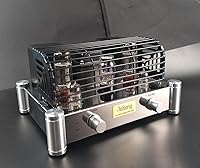
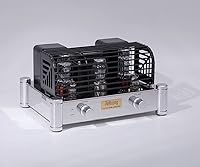
The Reisong A10 is a single-ended Class A tube amplifier that sits in an interesting spot — hand-wired, EL34-driven, and priced to attract serious listeners who aren't ready to spend boutique money. The upgraded 76x40 output transformer is central to its identity, and REISONG deserves credit for being upfront about one key limitation: this amp is genuinely low-wattage by design. If you're expecting it to fill a large room or push inefficient floor-standing speakers, it won't. What it does instead is deliver rich midrange warmth and a relaxed, musical presentation that's hard to find at this price tier. Manage expectations correctly and this EL34 amplifier punches well above its weight.

Features & Benefits

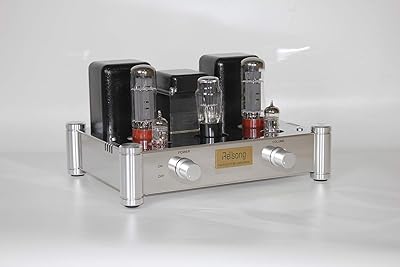
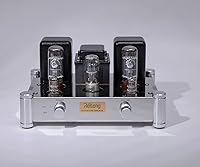
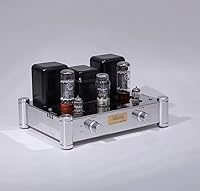
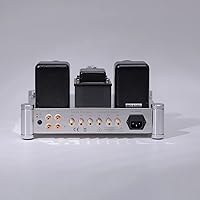
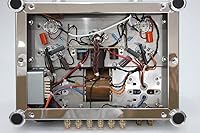
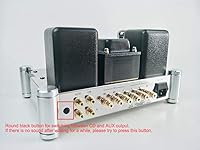
At the heart of this tube amp is point-to-point hand wiring — a construction method audiophile purists strongly prefer over printed circuit board designs for its lower noise floor and easier repairability. The tube lineup pairs two EL34s for output with two 6N2J driver tubes and a 5Z4PJ rectifier, a combination known for producing a smooth, full-bodied sound. The upgraded output transformer is a meaningful hardware choice, not a marketing claim, contributing to a more controlled and extended frequency response. A rear-panel toggle handles AUX and CD input switching — functional, though it catches some buyers off guard at first. The amp ships ready to use, with a protective tube cage and a printed circuit diagram included.

Best For

This EL34 amplifier is genuinely well-suited to high-sensitivity bookshelf speakers — anything rated 89dB or above will let it breathe properly. It's a natural companion for vinyl listeners or fans of jazz and classical, where tonal accuracy and midrange texture matter far more than raw volume. Don't plan on using it in a large living room or with power-hungry floor-standers; it simply wasn't built for that. For a desktop setup or a dedicated listening spot in a smaller room, it's a strong choice. It also appeals to DIY-curious buyers who want to experiment with tube rolling later, since the accessible design and included circuit diagram make that process approachable.

User Feedback

Buyers are largely positive, with most praise directed at the warm, engaging sound the A10 produces — the midrange in particular draws consistent compliments for its smoothness during long listening sessions. Build quality earns good marks for the price tier, and the hand-wiring is frequently cited as a genuine differentiator. On the downside, the rear input toggle has confused several buyers troubleshooting an initial no-sound situation; it's worth knowing about before you panic. Occasional reports of unit-to-unit quality variation surface in reviews, though this is fairly common across this segment of Chinese audio manufacturing. A number of owners noted clear sonic gains after swapping in third-party tubes, suggesting the stock set leaves meaningful room to grow.

Pros

  • Hand-wired point-to-point construction offers a level of build integrity rare at this price tier.
  • Midrange warmth and vocal presence are genuinely exceptional for the money.
  • Ships fully assembled with tubes installed — no intimidating setup required for newcomers.
  • The included circuit diagram makes independent troubleshooting and tube rolling accessible.
  • Upgraded output transformer improves frequency response over typical budget Chinese amp designs.
  • Tube cage ships attached, protecting the tubes during transit and during everyday use.
  • Stock sound is musical and engaging out of the box, with further improvement available through tube rolling.
  • REISONG is transparent about the power limitations upfront, which sets honest expectations before purchase.
  • Well-matched pairings consistently earn high satisfaction scores from buyers who did their homework.

Cons

  • Only two inputs with no front-panel switching makes multi-source setups genuinely inconvenient.
  • The rear AUX/CD toggle is poorly communicated and has caused widespread confusion on initial setup.
  • Stock tubes are entry-level and will likely need upgrading to get the best from the circuit.
  • Quality control is inconsistent enough that some buyers receive units with cosmetic or minor functional issues.
  • No remote control, digital inputs, or modern connectivity features of any kind.
  • Low wattage rules out a wide range of popular speaker models and listening environments.
  • At over 26 pounds, it is not easy to reposition once placed and takes up significant desk or shelf space.
  • Bass extension and high-frequency detail fall noticeably short of what more powerful designs can achieve.

Ratings

The Reisong A10 scores below are generated by AI after analyzing verified user reviews from buyers worldwide, with spam, bot-submitted, and incentivized feedback actively filtered out. What you see reflects a genuine cross-section of real listening experiences — the strengths that keep buyers satisfied and the friction points that some wish they had known upfront. Both sides are represented honestly.

Sound Quality
88%
The midrange reproduction is where this tube amp genuinely shines — buyers describe vocals and acoustic instruments as full-bodied, natural, and involving in a way that solid-state amps at this price rarely match. Jazz and classical listeners in particular report that extended evening sessions feel effortless rather than fatiguing.
Bass extension and high-frequency air are not this amplifier's strongest suits, with some users noting the low end can feel slightly soft compared to more powerful designs. Listeners who want a punchy, dynamic presentation for rock or electronic music may find the overall signature too laid-back.
Power Output
54%
46%
For the specific use cases this amp was designed around — high-sensitivity bookshelf speakers in a small-to-medium room — the available wattage is genuinely adequate, and users in those setups report satisfying volume with headroom to spare at normal listening levels.
The power limitation is the single most common complaint across all reviews. Buyers who tried pairing it with floor-standing speakers or lower-sensitivity drivers reported thin, strained sound at moderate volumes. REISONG's own warning is real and should be taken seriously before purchasing.
Build Quality
82%
18%
The point-to-point hand-wired construction draws consistent praise from buyers with a background in electronics — it looks and feels noticeably more considered than the PCB-based competitors at similar prices. The chassis feels solid and the overall fit and finish punches above expectations for the segment.
A minority of buyers have flagged inconsistencies between units — slight variations in finish quality or minor cosmetic imperfections that suggest hand-assembly without rigorous final inspection. It's not widespread, but it's present enough to mention as a realistic risk.
Value for Money
83%
Positioned between mass-market Chinese budget amps and boutique hand-wired options that cost several times more, this EL34 amplifier offers a genuinely compelling middle ground. Buyers who understand what they're getting — a warm, musical single-ended amp for efficient speakers — consistently feel the pricing is fair.
Buyers who purchased without fully understanding the power and speaker sensitivity requirements often feel short-changed, which skews some value ratings negatively. The price is justified for the right buyer, but can feel steep if expectations don't align with the amp's real-world limitations.
Tube Complement & Rolling Potential
79%
21%
The stock EL34 and 6N2J tubes are functional and deliver the amp's core sound competently out of the box. The real upside is that the accessible circuit design and included diagram make tube rolling approachable even for relative newcomers, and buyers who upgraded to premium tubes reported meaningful sonic improvements.
The factory-installed tubes are generally considered entry-level by experienced audiophiles, and several buyers noted that unlocking the amp's full potential does require an additional investment in better glass. This is a known characteristic of the segment, but it adds hidden cost to the overall ownership experience.
Ease of Setup
74%
26%
The amp arrives fully assembled with all tubes installed and tested, so most buyers were up and running within minutes of unboxing. The straightforward two-input design means there is very little to configure, and the tube cage ships attached to protect the tubes during transit.
The rear-panel AUX/CD toggle has caused genuine confusion for a notable subset of buyers who experienced no sound on initial power-up and couldn't identify the cause. This single usability issue is responsible for a disproportionate share of negative early impressions and unwarranted return attempts.
Input Flexibility
51%
49%
Having both an AUX and a CD input covers the essential sources most listeners in this category actually use — a turntable with a phono preamp or a CD transport connected to either input works reliably once the toggle is correctly set.
Two inputs with a single rear-panel toggle is a very limited feature set by modern standards. There is no remote control, no front-panel input selector, and no digital inputs, which means buyers with streaming devices or multiple analog sources will need an external switcher to avoid constant cable swapping.
Midrange Performance
91%
This is the A10's signature strength and the primary reason seasoned buyers recommend it. Voices, strings, and woodwinds have a presence and texture that draws listeners into the music rather than simply reproducing it. Multiple reviewers specifically compared it favorably to more expensive amps in this one dimension.
The strong midrange character is so pronounced that it creates an inherently colored presentation — this is a warm, euphonic amp, not a neutral reference tool. Listeners who prefer flat, analytical reproduction will find the voicing too flavored regardless of how technically well it performs.
Bass Response
62%
38%
In a well-matched desktop or near-field setup with efficient speakers, the low-end is controlled and textured enough to handle acoustic bass, kick drums, and cello lines without sounding vague. The single-ended topology gives bass notes a certain organic quality that some listeners genuinely prefer.
Extended, impactful bass is not a realistic expectation from a low-wattage single-ended Class A design, and buyers who listen to bass-heavy genres confirmed this in practice. The limitation is architectural, not a defect, but it rules out this amp for anyone who prioritizes low-frequency weight and dynamics.
High-Frequency Clarity
68%
32%
Treble through this EL34 amplifier is smooth and non-fatiguing — buyers who previously found bright solid-state amplifiers uncomfortable for long sessions often appreciate how the A10 handles the top end. Cymbals and upper harmonics retain enough air to sound natural without ever becoming harsh.
Listeners who value crisp, extended treble detail — particularly those coming from ribbon tweeters or electrostatic speakers — may find the high-frequency presentation slightly rolled off and lacking sparkle. It's a byproduct of the EL34 voicing, and while pleasant to many, it does sacrifice some resolution.
Aesthetic & Visual Design
77%
23%
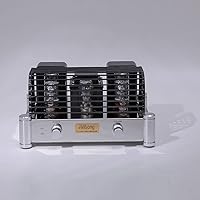
The exposed tube design with the protective cage gives the A10 the visual character that draws many buyers to tube amps in the first place. On a desktop or bookshelf system, it looks purposeful and distinctive — clearly a piece of audio equipment with some personality rather than a generic black box.
The industrial aesthetic won't suit every interior, and the relatively large footprint — over 12 inches wide and weighing over 26 pounds — makes it impractical for truly compact setups. A few buyers noted that the cage, while protective, slightly diminishes the visual impact of the glowing tubes.
Quality Control Consistency
61%
39%
The majority of buyers receive a unit that performs as expected from day one, with no functional defects. When the amp works as intended, the experience is positive enough that most owners are satisfied without needing to contact support or seek a replacement.
Unit-to-unit variation is a real pattern in the reviews — not catastrophic, but present. Some buyers received amplifiers with cosmetic blemishes, slightly noisy tubes, or channel imbalances that required intervention. For a product at this price point, a small but non-trivial percentage of buyers have had to deal with these issues.
Speaker Compatibility Range
47%
53%
Within its intended pairing — bookshelf speakers at 89dB sensitivity or above — the amp performs confidently and consistently. Buyers who matched it correctly with something like a compact two-way monitor in a 10-by-12-foot room reported a satisfying and complete listening experience.
The compatibility window is genuinely narrow. Floor-standing speakers, planar magnetics, and most budget bookshelf speakers below the recommended sensitivity threshold are simply not suitable partners. This constraint limits the amp's usefulness for buyers who already own a speaker collection and can't cherry-pick a compatible pair.
Warmup & Operational Behavior
72%
28%
Once the tubes are properly warmed up — typically within a few minutes of powering on — the amp settles into a stable, consistent sound that buyers describe as predictable and reliable in daily use. The included circuit diagram also means technically inclined owners can diagnose minor issues independently.
The warmup period before the amp produces sound confused several first-time tube amp owners who assumed the unit was defective. Combined with the rear-toggle issue, the initial power-on experience has a steeper learning curve than buyers accustomed to plug-and-play solid-state gear typically expect.

Suitable for:

The Reisong A10 is a strong match for listeners who already own — or are willing to choose — high-sensitivity bookshelf speakers rated at 89dB or above, and who plan to use the amp in a smaller dedicated listening space, home office, or desktop setup. If your musical diet leans toward jazz, acoustic, classical, or vocal-heavy recordings where midrange texture and tonal warmth matter more than raw output, this tube amp will genuinely reward you. It's also a smart entry point for first-time tube amp buyers who want a real hand-wired circuit rather than a budget PCB design, without paying boutique prices to get there. DIY-inclined buyers will appreciate the included circuit diagram and the fact that the accessible tube layout makes swapping to premium EL34s or 6N2J variants a straightforward upgrade path. If you listen at moderate volumes in a room under roughly 150 square feet with a well-matched speaker, the A10 delivers a listening experience that costs considerably more to replicate with solid-state gear.

Not suitable for:

The Reisong A10 is the wrong amplifier if your speakers are floor-standers, planar magnetics, or any bookshelf model with sensitivity below about 88dB — the power simply isn't there to drive them properly, and no amount of enthusiasm will change that physical reality. Listeners who primarily enjoy bass-heavy genres like EDM, hip-hop, or hard rock will likely find the low-wattage single-ended Class A presentation too soft and lacking in punch and dynamic slam. If you need more than two inputs, a front-panel selector, or any form of digital connectivity, this tube amp will frustrate you immediately — it was designed for a simpler signal chain and that's all it handles. Buyers furnishing a large living room or open-plan space should look elsewhere regardless of speaker choice, since volume headroom at those distances becomes a real problem. And if you're the type who wants plug-and-play certainty and zero tolerance for setup quirks, the rear input toggle behavior and tube warmup period may test your patience more than the experience is worth.

Specifications

  • Amplifier Type: Single-ended Class A design, a topology favored for its natural midrange character and low distortion at moderate listening levels.
  • Output Tubes: Two EL34 pentode tubes handle the output stage, a classic choice for warm, musical reproduction with good midrange density.
  • Driver Tubes: Two 6N2J dual-triode tubes serve as the driver stage, contributing to the amp's smooth, controlled signal path.
  • Rectifier Tube: One 5Z4PJ tube provides rectification, a full-wave design that contributes to the amp's organic, slightly soft power delivery.
  • Wiring Method: Point-to-point hand welding throughout the circuit, with no printed circuit board used in the signal path.
  • Output Transformer: Upgraded 76x40 output transformer unit, selected for improved bandwidth and better impedance matching compared to entry-level alternatives.
  • Inputs: Two analog inputs — AUX and CD — selected via a toggle button located on the rear panel of the unit.
  • Dimensions: The chassis measures 12.2 x 10.55 x 6.5 inches (L x W x H), requiring a stable, heat-tolerant surface with clearance above the tubes.
  • Weight: The unit weighs 26.46 pounds, reflecting the substantial steel chassis and heavy output transformer typical of well-built tube amplifiers.
  • Supply Voltage: Designed for 110–120V AC mains, making it compatible with standard North American household power outlets without a step-down transformer.
  • Speaker Sensitivity: A minimum speaker sensitivity of 89dB is strongly recommended by the manufacturer to ensure adequate volume and dynamic range in real use.
  • Tube Protection: A removable metal tube cage ships installed on the unit to protect the glass envelopes during transit and everyday operation.
  • Included Documentation: A printed circuit diagram is included in the box, providing a useful reference for tube rolling, troubleshooting, or general maintenance.
  • Manufacturer: Designed and produced by REISONG, a Chinese audio manufacturer specializing in affordable hand-wired tube amplifier designs.
  • Model Designation: The full model reference is Reisong-A10-WBH-Upgrade, indicating this is the upgraded transformer variant rather than the earlier base configuration.
  • Availability Status: The product is confirmed as not discontinued by the manufacturer as of its current listing status on Amazon.

Related Reviews
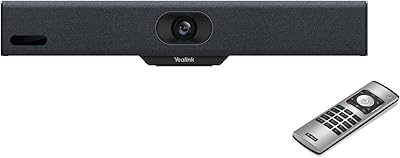
Yealink MeetingBar A10

82%
88%
Setup & Installation
91%
Video Quality
89%
Audio Clarity
76%
AI Speaker Tracking
84%
Build Quality
More
ssontong A10 Dash Cam
84%
91%
Value for Money
94%
Ease of Installation
88%
Video Quality (Daytime)
83%
Night Vision Performance
85%
Wide-Angle Coverage
More
AFU A10 128GB MP3 Player with Bluetooth
83%
88%
Sound Quality
72%
Bluetooth Connectivity
91%
Battery Life
94%
Portability & Design
85%
Expandable Storage
More
Yealink A10 4K Video Conference Camera
86%
91%
Video Quality
88%
Audio Clarity
85%
Ease of Setup
92%
AI Features (Auto-framing & Speaker Tracking)
78%
Software Usability
More
OneOdio A10 Hybrid Active Noise Cancelling Headphones
87%
88%
Noise Cancellation Performance
94%
Battery Life
90%
Sound Quality
85%
Comfort & Fit
87%
Build Quality
More
Inmei A10 Portable Teleprompter
74%
84%
Mirror Clarity
67%
Build Quality
79%
Ease of Setup
82%
Bluetooth Remote
63%
App Compatibility
More
USHJNV A10 4K+2K Dual Dash Cam
82%
91%
Video Quality
88%
Night Vision Performance
75%
Ease of Installation
82%
App Connectivity & Integration
85%
Build Quality
More
TP-Link AC2600 Archer A10 Smart WiFi Router
84%
86%
Overall Performance
91%
Setup and Installation
88%
WiFi Coverage
85%
Multi-Device Performance
80%
Reliability and Stability
More
BOYUURANGE Reisong A12 EL34 Hi-Fi Audio Tube Amplifier
85%
94%
Sound Quality
88%
Build Quality
92%
Value for Money
81%
Compatibility with Speakers
85%
Ease of Use
More
Audio Pro A10 MKII WiiM Edition
80%
91%
Sound Quality
84%
Bass Performance
93%
Streaming Compatibility
88%
WiiM App Experience
72%
Setup & Installation
More

FAQ

Almost certainly not. There are two common causes for this. First, make sure the power connection is fully seated. Second — and this catches a lot of buyers off guard — check the small black button on the rear panel that toggles between AUX and CD input modes. If it's set to the wrong input for your source, you'll get complete silence. Try pressing it once and check again before assuming there's a fault.

You want bookshelf speakers with a sensitivity rating of 89dB or higher — that's the honest minimum for this amp to perform well. Compact two-way monitors from brands like Klipsch, Zu, or older vintage designs often work beautifully. Avoid floor-standing speakers, planar magnetics, or anything with a nominal sensitivity below 87dB, as the low wattage will leave you with thin, strained sound even at moderate volumes.

Tube amplifiers need a short warmup period before the tubes reach stable operating temperature, and the Reisong A10 is no exception. Expect to wait anywhere from 30 seconds to a couple of minutes before sound comes through cleanly. This is completely normal behavior for the tube rectifier design and is not a sign of any fault.

Not directly without a phono preamplifier in between. This EL34 amplifier has line-level inputs only — it has no built-in phono stage. You'll need a separate phono preamp connected between your turntable and the amp's AUX input. A decent external phono stage is a modest additional investment and opens up the full vinyl experience this amp is well-suited for.

It's quite accessible. The tube layout is straightforward, and the included circuit diagram helps you understand what each tube is doing. Most buyers start by swapping the 6N2J driver tubes, as affordable NOS replacements like the 6N2P-EV can noticeably improve clarity and detail. EL34 rolling is also popular — brands like Electro-Harmonix or JJ Electronics are common first upgrades. Just make sure the amp is fully powered off and cooled before handling any tubes.

The exact output wattage isn't officially specified in detail, but single-ended Class A EL34 designs in this configuration typically produce somewhere in the range of 3 to 6 watts per channel. That sounds low on paper, and it is — but in a small room with efficient speakers, it's more than enough for realistic listening levels. Just don't expect it to fill a large open-plan living room.

You can leave the cage on during normal use — it's there to protect the tubes from accidental contact and to prevent anything from falling onto the hot glass. Some listeners remove it for purely aesthetic reasons since the glowing tubes look impressive, but there's no audio benefit to doing so and it does increase the risk of accidental burns or damage. If you have children or pets nearby, keep the cage on.

Yes, that works well. Connect a USB DAC or any streaming device with an analog RCA output to the AUX input and you're set. The amp has no digital inputs of its own, but any source with a standard line-level analog output pairs cleanly with it. Many buyers run a simple DAC or even a Chromecast Audio into this tube amp with good results.

It's a real but minority concern. The majority of buyers receive a perfectly functional unit, and REISONG's production is generally consistent. That said, some buyers have noted cosmetic blemishes or occasionally a slightly noisy tube out of the box. If you receive a unit with a channel imbalance or unusual hum, the most common fix is simply swapping the relevant tube — which is low-cost and easy to do. It's worth inspecting the unit within your return window just to be safe.

Functionally, both are standard line-level RCA inputs and there is no meaningful audio quality difference between them. The labeling is simply a naming convention carried over from traditional amplifier design where CD players were a common dedicated source. You can use either input for any line-level analog source — a DAC, a phono preamp, a CD player, or anything else — and the rear toggle just selects which one is active.