Bolanle P2 In-Ear Monitor Amplifier
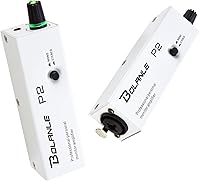
Bolanle P2 In-Ear Monitor Amplifier — image 1
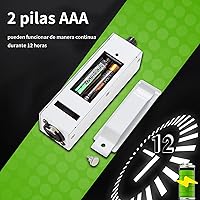
Bolanle P2 In-Ear Monitor Amplifier — image 2
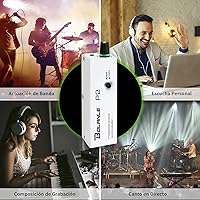
Bolanle P2 In-Ear Monitor Amplifier — image 3
Bolanle P2 In-Ear Monitor Amplifier — image 4
Bolanle P2 In-Ear Monitor Amplifier — image 5
Bolanle P2 In-Ear Monitor Amplifier — image 6
85%

Overview

The Bolanle P2 In-Ear Monitor Amplifier is a no-frills, single-channel belt-pack built for working musicians who want reliable personal monitoring without hauling a rack unit to every gig. At this price point, you are not getting a studio-grade reference device — and that is fine, because that is not what it is designed for. This belt-pack amp slots neatly into a drummer's or keyboardist's live setup, giving them a clean, controllable feed from the stage mix. The all-metal body feels more substantial than you might expect, which matters when gear gets knocked around in transit or during a loud show.

Features & Benefits

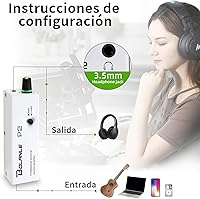
The P2 monitor amp covers the basics well, and a few of its design choices show real practical thinking. XLR and TRS inputs both lock into place, which anyone who has had a cable yank free mid-set will immediately appreciate. A standard 3.5mm output means it works with virtually any IEM on the market. The mono/stereo toggle deserves a real mention here: when a soundboard sends you a mono mix — which happens constantly at smaller venues — flipping this switch fills both ears evenly instead of leaving one side dead. Battery access is tool-free through the belt clip panel, so swapping cells between sets takes seconds.

Best For

This compact IEM amplifier makes the most sense for drummers and keyboardists playing live in small-to-mid-sized venues where the house engineer is running a single mono mix. If your band rehearses in a basement and you need a portable monitoring solution without a dedicated mixer, this is a practical answer. First-time IEM users will find the straightforward knob-and-switch interface easy to get up and running in minutes. That said, if you need multiple channels or phantom power for condenser mics, this belt-pack amp is not the right fit — it is purpose-built for personal monitoring, full stop.

User Feedback

With a 4.6-star average across over 170 ratings, the P2 monitor amp has earned consistent goodwill from buyers. Most praise centers on sound clarity and build — users are genuinely surprised at how clean the output sounds for what they paid, and the metal housing feels solid in hand. Recurring complaints are worth knowing upfront: a few buyers mention a slight noise floor at higher volume levels, and battery life varies depending on usage. The mono/stereo switch gets called out positively in multiple reviews from gigging musicians. Against pricier dedicated IEM systems, expectations should be calibrated — but as a budget stage tool, most buyers feel it over-delivers.

Pros

  • Locking XLR and TRS inputs keep cables secure on stage — a genuinely practical feature for live use.
  • The mono/stereo switch is a real-world problem-solver when venues send a single mono mix to the stage.
  • All-metal construction feels noticeably solid for a device in this price tier.
  • Universal 3.5mm output works with virtually any IEM or earphones a musician already owns.
  • Tool-free battery access through the belt clip means mid-show swaps take seconds, not minutes.
  • The P2 monitor amp is small and light enough that you barely notice it clipped to a waistband.
  • Wide volume range on the main knob gives fine-tuned control without relying on any digital interface.
  • Setup is minimal — plug in, clip on, adjust volume, done.
  • Buyers consistently report that audio output sounds cleaner than the price would suggest.
  • Strong user rating across a meaningful number of reviews signals reliability beyond a handful of early fans.

Cons

  • Battery-only power means no option to run off phantom power or a USB supply during long gigs.
  • A slight noise floor at higher volume settings has been flagged by users with sensitive in-ear monitors.
  • Single-channel design limits use to one audio feed — no flexibility for blending multiple sources.
  • No headphone output level indicator makes it easy to accidentally over-drive sensitive IEMs.
  • Cable compatibility at the locking inputs can be finicky with certain third-party connector styles.
  • Battery life is inconsistent across user reports, which makes relying on it across a full show day risky.
  • No carry case or pouch is included, so protecting this compact IEM amplifier during transport falls on you.
  • Not suited for musicians who need to share or split a monitor feed between two performers.

Ratings

The Bolanle P2 In-Ear Monitor Amplifier has been scored across 12 performance categories by our AI rating system, which analyzed verified buyer reviews from multiple global markets while actively filtering out incentivized, bot-generated, and spam submissions. Scores reflect what real gigging musicians consistently reported — both the features that impressed them and the limitations that frustrated them. Nothing has been smoothed over to make this belt-pack amp look better than it actually performs in the field.

Value for Money
93%
Buyers repeatedly express genuine surprise at how much functional stage gear they get at this price point. For drummers and keyboardists who need a personal monitor feed without investing in a full IEM system, the P2 monitor amp hits a sweet spot that few competitors at this tier can match.
A small number of users feel the battery dependency slightly erodes the long-term value, since ongoing battery costs add up over many gigs. Those who expected studio-grade transparency were occasionally disappointed, though most reviewers agree those expectations were misplaced.
Build Quality
81%
19%
The all-metal chassis genuinely stands out at this price tier, and most buyers comment on how solid it feels when held — more akin to gear costing twice as much. It survives regular tossing into gig bags and the physical wear of being clipped to a belt through long rehearsal sessions without showing damage.
The plastic components around the clip and battery panel feel noticeably less refined than the metal body, and a few buyers report the clip feeling slightly loose after extended daily use. It holds up well, but it does not feel like something built to last a decade of heavy touring.
Sound Clarity
78%
22%
For live stage monitoring — where the goal is hearing yourself clearly over a loud band — this compact IEM amplifier delivers clean, listenable audio that serves its purpose well. Drummers in particular appreciate being able to hear a full, balanced mix without the muddiness that plagued cheaper alternatives they had tried before.
At higher volume levels, some users with sensitive in-ear monitors detect a background noise floor that becomes distracting. It is not a deal-breaker for most gigging scenarios, but anyone using high-sensitivity IEMs in a quiet rehearsal setting will likely notice it.
Input Connectivity
88%
The combination of locking XLR and TRS inputs is a standout feature for live use, and multiple buyers specifically mention that the locking mechanism held secure even when cables were pulled or caught on something during a performance. Having both input types on one unit covers the vast majority of stage feed scenarios without needing adapters.
The locking function, while effective, can be slightly fiddly to engage properly in low-light stage environments, and a handful of users mention that certain third-party cable connectors do not seat as cleanly as standard ones. There is no combo jack, so simultaneous dual-input routing is not possible.
Mono/Stereo Switch
86%
This is one of the most consistently praised features among gigging buyers, particularly those playing venues where the sound engineer delivers a single mono mix. Flipping to mono mode fills both ears evenly from that feed, which makes a real and immediate difference in stage comfort — several reviewers call it the reason they chose this unit over competitors.
The switch itself is small and offers little tactile resistance, making it easy to accidentally toggle mid-set if the unit gets knocked. A few users also wish the switch position were more visible at a glance, since distinguishing mono from stereo in dim stage lighting is not always straightforward.
Ease of Use
91%
First-time IEM amp users consistently report being up and running within minutes, with no manual required. The single volume knob and two-position toggle are intuitive enough that even performers who are not particularly gear-savvy feel confident using it during soundcheck.
The simplicity that makes it easy to use also means there is very little room for customization — no EQ, no gain staging, and no input trim. Musicians coming from more fully featured systems may find the lack of control options limiting over time.
Battery Access
77%
23%
The tool-free battery panel built into the belt clip is a genuinely clever design choice that buyers appreciate in real gigging scenarios. Swapping batteries between sets takes seconds rather than requiring a screwdriver or fumbling with a separate compartment cover.
Battery life consistency is a recurring concern, with buyers reporting meaningfully different run times depending on volume level and battery brand. The complete absence of a USB charging option or a low-battery indicator means you can be caught off guard during a long performance day.
Portability
89%
At 7 ounces and barely over 4 inches tall, the P2 monitor amp disappears on a belt or waistband during a performance. Drummers especially appreciate not having a bulky unit shifting around while they play, and the compact form factor makes it easy to pack alongside other gear without needing dedicated space.
No carry pouch or protective case is included, so keeping the unit scratch-free during transport requires improvisation. The clip, while functional, does not rotate or swivel, which limits positioning options for performers who prefer it at a specific angle.
Output Compatibility
84%
The standard 3.5mm headphone output works with virtually every pair of in-ear monitors on the market, which means buyers are not locked into any specific IEM ecosystem. This universality is consistently mentioned as a practical positive by users who already own IEMs from various brands.
There is only one headphone output, so sharing the unit between two performers or running a second set of IEMs simultaneously is not possible. Users who want a backup output for a monitor engineer or a recording feed will need additional equipment.
Stage Durability
74%
26%
The metal body handles the bumps and drops that come with regular live performance better than most plastic alternatives at this price point. Several buyers who gig weekly report using the same unit for multiple months without visible damage or functional degradation.
It has not been rated for water or sweat resistance, which is a meaningful omission for drummers who generate significant heat and perspiration during intense sets. Long-term durability data is still limited given the product launched in late 2023.
Volume Range
82%
18%
The volume knob covers a wide enough range that both quiet rehearsal environments and loud live stages are accommodated without the output feeling maxed out or uselessly soft at the extremes. Keyboardists in particular appreciate the fine-grained control available through a simple analog knob rather than stepped digital presets.
At the upper end of the volume range, the noise floor becomes more noticeable, which limits how high sensitive IEM users can realistically push the output. There is no separate gain control, so managing headroom in high-output signal chains requires care.
Setup Speed
92%
Plugging in, clipping on, and adjusting volume takes under a minute, which matters enormously during rushed soundchecks at small venues. Buyers who play multiple gigs a week cite the zero-configuration approach as one of the main reasons they keep reaching for this belt-pack amp over more complex alternatives.
The flip side of that speed is rigidity — there are no presets, no saved settings, and no way to recall a specific volume level from a previous show. Performers who play across very different venue sizes may find themselves re-dialing every time.

Suitable for:

The Bolanle P2 In-Ear Monitor Amplifier is a strong match for drummers and keyboardists who need a personal monitoring solution at live gigs without the cost or complexity of a full monitor mixing system. If you are playing bars, churches, rehearsal spaces, or small venues where the house engineer hands you a single XLR or TRS feed and says good luck, this belt-pack amp gives you control over your own mix volume without bothering anyone at the board. It is equally practical for students or hobbyists stepping into in-ear monitoring for the first time, since the interface is simple enough to understand in under five minutes. Bands that rehearse regularly and want a portable, no-setup monitoring option will also find real value here. The all-metal construction means it can handle being tossed into a gear bag repeatedly without feeling like it will fall apart by the third show.

Not suitable for:

The Bolanle P2 In-Ear Monitor Amplifier is not the right tool for musicians who need multi-channel monitoring, phantom power, or a low noise floor for critical listening. If you are a recording engineer or studio musician expecting clean, transparent amplification for reference-grade work, this compact IEM amplifier will disappoint — it is built for the stage, not the control room. Performers who rely entirely on rechargeable gear will find the battery-only power source inconvenient, especially on longer show days where swapping cells mid-performance is not always possible. Anyone needing to monitor two separate mixes simultaneously, or routing audio for multiple band members, will quickly outgrow what this single-channel device can do. It is also worth noting that at louder output levels, some users report a slight noise floor, which could be a dealbreaker for those with sensitive in-ear monitors.

Specifications

  • Brand: Manufactured by Bolanle, a brand focused on accessible audio monitoring gear for live performers.
  • Model: The unit carries the model designation P2, sold in a single-channel configuration.
  • Input Connections: Accepts both XLR and TRS inputs, each equipped with a locking mechanism to prevent accidental disconnection during use.
  • Output: Delivers audio through a single 3.5mm headphone jack, compatible with the vast majority of in-ear monitors and earphones.
  • Output Wattage: Rated at 5W output, providing sufficient amplification for standard in-ear monitor use in live stage environments.
  • Mono/Stereo Switch: Includes a dedicated toggle switch that allows the user to switch between mono and stereo listening modes on the fly.
  • Power Source: Powered entirely by batteries, with no USB or phantom power option; batteries are accessible without tools via the belt clip panel.
  • Body Material: The main chassis is constructed from metal, with select plastic components used in the clip and panel areas.
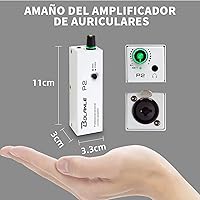
  • Dimensions: The unit measures 4.33 x 1.30 x 1.18 inches, making it compact enough to wear on a belt without restricting movement.
  • Weight: Weighs 7 ounces, light enough to remain unobtrusive when clipped to a waistband or instrument strap during a performance.
  • Belt Clip Design: Features an integrated belt clip that doubles as a tool-free access panel for battery replacement mid-show.
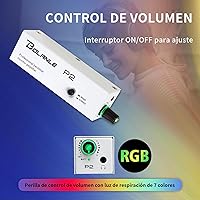
  • Volume Control: A single top-mounted knob provides continuous volume adjustment across a wide range without any digital menus or stepped increments.
  • Compatible Instruments: Officially listed as compatible with drum kits and keyboards, though it functions with any signal source using XLR or TRS outputs.
  • Channels: Single-channel design, meaning it handles one audio input feed at a time with no built-in mixing capability.
  • Available Since: This model became available for purchase in October 2023, making it a relatively recent entry in the budget IEM amp category.

Related Reviews
Coda IEM-One-R
Coda IEM-One-R
82%
93%
Ease of Setup
88%
Battery & Charging System
91%
Input Compatibility
86%
LED Volume & Battery Indicator
79%
Audio Clarity
More
Kiwi Ears Orchestra Lite
88%
93%
Tonal Neutrality
89%
Build Quality & Materials
91%
Imaging & Soundstage
76%
Long-Term Comfort
88%
Value for Money
More
Linsoul Kiwi Ears Quartet 2DD+2BA Hybrid In-Ear Monitor
88%
94%
Sound Quality
91%
Bass Performance
83%
Treble Clarity
88%
Comfort & Fit
89%
Build Quality
More
Kiwi Ears KE4 Hybrid In-Ear Monitor
80%
88%
Sound Quality
86%
Bass Performance
91%
Midrange Clarity
83%
Treble Extension
78%
Soundstage & Imaging
More
CCA C12 In-Ear Monitors
85%
88%
Sound Quality
84%
Comfort for Long Listening
89%
Build Quality
87%
Noise Isolation
76%
Bass Performance
More
CCA CS16 In-Ear Monitors
87%
94%
Sound Clarity
82%
Comfort for Extended Wear
88%
Noise Isolation
90%
Build Quality
89%
Cable Durability
More
BASN Bmaster5 In-Ear Monitors

85%
94%
Sound Quality
85%
Comfort and Fit
88%
Build Quality
91%
Noise Isolation
86%
Durability
More
CCZ Melody In-Ear Monitors
84%
89%
Sound Quality
91%
Comfort and Fit
77%
Build Quality
68%
Cable Durability
84%
Ease of Use
More
KBEAR KB02 In-Ear Monitors
85%
90%
Sound Quality
88%
Comfort & Ergonomics
75%
Bass Performance
85%
Build Quality
89%
Fit & Isolation
More
KZ ZA12 In-Ear Monitor
87%
92%
Sound Quality
88%
Comfort for Long Listening
85%
Build Quality
89%
Customization (Tuning Switch)
83%
Noise Isolation
More

FAQ

The belt-pack amp runs on standard batteries accessible through the tool-free clip panel, but Bolanle does not publish an official battery life figure. Real-world reports from buyers vary quite a bit depending on volume level and how long sets run, so it is worth carrying a spare set to any important gig.

This compact IEM amplifier is a wired personal monitor amp — it does not include a wireless transmitter or receiver. You would plug a cable from the stage feed directly into its XLR or TRS input, then connect your IEMs to the 3.5mm output.

Yes, and this is one of the more genuinely useful features on the P2 monitor amp. Many smaller venues and house engineers send a single mono mix to the stage. Without a mono mode, that signal only plays in one ear, which is disorienting during a performance. Flipping to mono fills both ears evenly from that single feed, which makes a real difference in comfort and awareness on stage.

The 3.5mm output is a universal standard, so it works with virtually any in-ear monitor or earphones that use a standard 3.5mm connector. There is no brand lock-in here.

No, this is a single-channel device with one headphone output. Each performer needs their own unit. It is not designed for splitting or sharing between two people simultaneously.

According to multiple buyers, yes — the locking mechanism on both the XLR and TRS inputs is one of the features that gets called out positively in real user reviews. It is not a heavy-duty professional latch, but it is meaningfully more secure than a standard unlocked input.

A handful of buyers have noted a slight noise floor when the volume is pushed toward its upper range, particularly when used with sensitive in-ear monitors. At moderate listening levels it is generally a non-issue, but if you use very sensitive IEMs and like to run loud, it is worth being aware of.

Pricier dedicated IEM systems typically offer lower noise floors, rechargeable batteries, multi-channel capability, and more refined audio transparency. This belt-pack amp trades those features for a much lower cost of entry. For musicians who simply need a clean, controllable personal feed at a live gig, most buyers feel it holds its own — but it is not competing with professional-grade systems at double or triple the price.

The listed compatible devices are drums and keyboards, but in practice any instrument or audio source with an XLR or TRS output can feed into this unit. Guitarists tapping from a direct box or a mixer output would find it equally functional.

For a device in this price range, the all-metal chassis is a genuine positive. Buyers consistently describe it as solid and well-built. It is not indestructible, and you would not want to drop it repeatedly onto concrete, but it holds up well to regular use in a gear bag and on a belt through a full set.