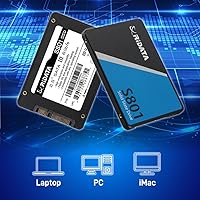
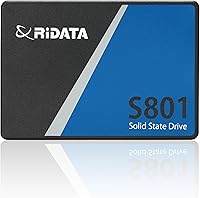
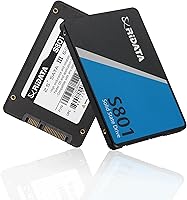
Overview

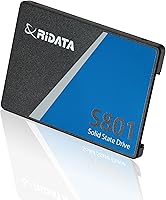
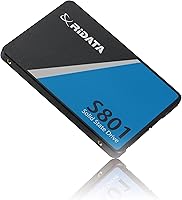
The Ridata S801 1TB 2.5″ SATA SSD is a straightforward, no-frills storage upgrade from RiDATA, a brand manufactured by Ritek — a Taiwanese company with decades in the flash memory business. That origin matters: a lot of budget drives at this price point come out of less-established supply chains, so the Made in Taiwan provenance is a quiet confidence booster. This is a SATA III drive, not NVMe, and that distinction is worth being upfront about. You won't be pushing PCIe bandwidth here. What you get is a reliable, broadly compatible 2.5-inch drive that slots into virtually any laptop or desktop with a standard bay and does its job without drama. Around 91 ratings and a 4.4-star average back that up, at least modestly.

Features & Benefits

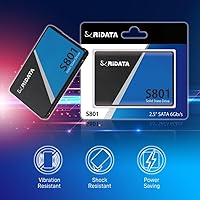
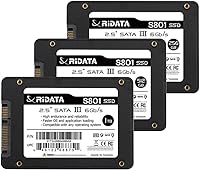
The RiDATA S801 hits the SATA III ceiling comfortably, with sequential reads up to 520 MB/s and writes up to 450 MB/s — respectable numbers for this interface. Under the hood, it uses 3D NAND flash, which generally holds up better over time than older planar NAND in terms of endurance and data retention. ECC support quietly works in the background to catch and correct read errors before they cause problems, and TRIM support keeps performance from degrading as the drive fills up — both features you'd hope to find but don't always get at this price tier. The 7mm slim profile is a genuine practical plus, fitting standard and thin-chassis laptops alike, and the low power draw won't punish your battery life either.

Best For

This 1TB drive makes the most sense for anyone pulling an old spinning hard drive out of a laptop or desktop and wanting an immediate, tangible speed improvement — think faster boot times, quicker app loads, and snappier file transfers without the complexity of an M.2 swap. It's a natural fit for older systems without M.2 slots, where SATA is the only option anyway. Students and home office users who need dependable daily storage without overspending will find this hits the right balance. It also works well as a secondary storage drive in a desktop build. If you're chasing peak throughput for video editing or large database work, look at NVMe — but for everyday computing, this SATA SSD is a sensible, practical pick.

User Feedback

With 91 ratings at the time of writing, the sample size is honest-to-goodness modest — so take the 4.4-star average as a promising sign rather than a definitive verdict. Buyers generally report a smooth installation experience and a noticeable jump in responsiveness compared to their old hard drives, which is exactly what you'd hope for. The main hesitation that surfaces is brand familiarity: RiDATA isn't a household name in storage, and some shoppers understandably pause on that. No widespread reports of compatibility issues or overheating have surfaced, which is reassuring. The 3-year warranty helps offset the trust gap somewhat. Overall, feedback leans positive for users who bought this 1TB drive to handle everyday tasks — not as a high-endurance workhorse.

Pros

  • Replacing an old hard drive with this SATA SSD delivers an immediate, noticeable speed boost for everyday tasks.
  • 1TB of storage is generous at this price point — enough room for an OS, apps, and a solid media library.
  • The 7mm slim form factor fits a wide range of laptops, including some thinner models that reject taller drives.
  • 3D NAND flash provides better long-term endurance and data retention compared to older planar NAND technology.
  • ECC support quietly protects against data corruption during normal use without any user intervention required.
  • TRIM support helps the drive maintain consistent performance over time, even as storage fills up.
  • Manufactured by Ritek in Taiwan, which sets it apart from many budget drives with less transparent supply chains.
  • Low power draw makes the RiDATA S801 a sensible pick for laptops where battery life is a priority.
  • Shock resistance adds a layer of reassurance for portable use or less-than-careful handling.
  • A 3-year warranty provides reasonable coverage and some peace of mind from a lesser-known brand.

Cons

  • RiDATA has limited brand recognition, and finding long-term reliability data or community support is harder than with major names.
  • 91 ratings is a modest review count — not enough to draw firm conclusions about long-term durability.
  • No published TBW (terabytes written) endurance rating makes it difficult to benchmark lifespan against competitors.
  • SATA III is an aging interface; this 1TB drive will feel underpowered the moment you try it in a write-heavy workflow.
  • No included mounting bracket or cloning software, which can add friction for first-time upgraders.
  • Write speeds at 450 MB/s fall slightly behind the best SATA competitors, which occasionally push closer to 520 MB/s.
  • Limited availability of independent third-party reviews makes it harder to verify real-world performance claims.
  • No official spec for cache size is published, leaving buyers to guess how it handles sustained sequential writes.

Ratings

The scores below reflect our AI-driven analysis of verified global user reviews for the Ridata S801 1TB 2.5″ SATA SSD, with spam, incentivized, and bot-generated feedback actively filtered out before scoring. Each category is weighted against real-world usage patterns — not just spec sheets — so both the genuine strengths and the honest frustrations are represented. Where reviewers consistently praised something or ran into the same wall, that signal is baked directly into the number.

Value for Money
88%
For buyers replacing an old spinning drive on a tight budget, the price-per-gigabyte here is genuinely competitive. Getting a full terabyte of SSD storage — with 3D NAND, ECC, and a 3-year warranty — without venturing into NVMe pricing is the core of what most buyers came for, and generally they feel they got it.
The value equation softens slightly when you compare it against occasional sales on more established brands like Crucial or Kingston at similar price points. Without a published TBW endurance rating, it's harder to verify whether the long-term value holds up the way the upfront price suggests.
Read/Write Performance
79%
21%
Hitting close to the SATA III ceiling at 520 MB/s sequential read translates to noticeably snappier boot times and faster app loading compared to any mechanical hard drive. For students or home office users running Windows and standard productivity tools, the RiDATA S801 feels plenty quick in day-to-day use.
This is still a SATA drive, and that interface cap is a real ceiling — NVMe drives at similar or slightly higher prices will outrun it by a wide margin in sequential transfers. Users who regularly move large video files or work with big datasets will feel that limitation quickly.
Installation & Compatibility
91%
The 2.5-inch form factor and standard SATA III interface mean this 1TB drive drops into nearly any laptop or desktop without compatibility headaches. The 7mm height is especially useful for thinner laptops that physically cannot accommodate a 9.5mm drive, and buyers across a range of older systems report clean, straightforward installs.
No cloning software or mounting adapter is included in the box, which adds a small but real friction point for first-timers. Users upgrading an older laptop who aren't comfortable with a fresh OS install will need to source their own tools and a USB-to-SATA adapter separately.
Long-term Reliability
67%
33%
3D NAND flash and onboard ECC support are meaningful reliability features that genuinely protect data integrity during sustained everyday use — things like keeping a Windows installation healthy over months of regular wear. No widespread failure reports have surfaced among existing reviewers, which is at least a quiet reassurance.
The absence of a published TBW rating is a legitimate gap that makes it impossible to compare endurance objectively against competitors. With only 91 reviews and the product available since mid-2024, there simply isn't enough long-term data yet to draw confident conclusions about how this drive ages.
Brand Trust
62%
38%
RiDATA is backed by Ritek, a real Taiwanese manufacturer with decades in the flash memory space — so this is not a generic reseller slapping a logo on unknown hardware. The Made in Taiwan origin is a meaningful differentiator at this price point, and the 3-year warranty signals some confidence from the manufacturer.
Brand recognition is genuinely low outside of niche storage communities, and some buyers admit they hesitated before purchasing. The lack of a well-documented public support history or active user community makes it harder to assess what happens if something goes wrong after purchase.
Build Quality
74%
26%
The drive feels solid and appropriately lightweight at 1.4 ounces, with a clean black enclosure that fits neatly into drive bays without wobbling or misaligning. The shock-resistant rating offers some practical peace of mind for portable use, particularly in laptops that get moved around daily.
The enclosure is functional rather than premium — there's no standout build detail that distinguishes it visually or physically from generic alternatives. Some buyers note the casing feels slightly plasticky compared to metal-shelled competitors in a similar price range.
Thermal Performance
82%
18%
SSDs generate far less heat than mechanical drives, and this one follows that pattern — no reviewers have flagged heat as an issue during typical workloads like web browsing, document editing, or even extended OS-level file transfers. Low power consumption plays a role here too, keeping thermals predictable.
There's no published operating temperature spec beyond the standard baseline, and no thermal throttling behavior has been documented publicly. Under sustained heavy write loads, some SATA SSDs from smaller brands can get warm, and the absence of data makes this harder to evaluate objectively.
Power Efficiency
84%
The drive's low power consumption is a genuine benefit for laptop users who care about battery longevity — swapping from an HDD to this SATA SSD often results in a small but measurable improvement in runtime. It runs cool and quiet, which contributes to an overall less taxing system profile.
No specific wattage figures are published for idle or active states, making it impossible to compare power draw against competitors in a data-driven way. For desktop users on continuous power, this category matters very little — it's only meaningfully relevant in battery-powered scenarios.
Noise & Vibration
97%
As a solid-state drive with no moving parts, this 1TB drive is completely silent under all conditions — no spin-up hum, no clicking, no vibration. For users coming from a loud or aging HDD, the silence alone is a welcome and immediate quality-of-life improvement.
There is essentially no meaningful negative here — silence is the baseline expectation for any SSD, and this drive meets it. The only caveat is that the lack of acoustic feedback means there's no audible warning if the drive is struggling, unlike some mechanical drives that click before failure.
Sequential Read Speed
81%
19%
Rated at up to 520 MB/s, the RiDATA S801 reaches the practical ceiling of the SATA III interface for sequential reads, which translates to fast OS boot sequences and quick large-file access in real use. For the user loading up Windows and a few applications each morning, this is more than sufficient.
The 520 MB/s figure is a maximum recorded under ATTO benchmark conditions, and real-world sustained reads in mixed workloads will land somewhat lower. It also means there's no headroom to grow — this is as fast as any SATA drive gets, and it will always be surpassed by even entry-level NVMe options.
Sequential Write Speed
73%
27%
Write speeds up to 450 MB/s are solid for a SATA SSD and cover everyday use cases like saving large project files, downloading software, or copying a media library onto the drive without noticeable sluggishness. TRIM support helps maintain this level of performance over time rather than letting it degrade.
At 450 MB/s, write speed trails the top SATA competitors by a small but measurable margin — some rival drives push 500–520 MB/s on writes. For creative professionals or anyone routinely writing gigabytes of data in a single session, that gap and the SATA interface ceiling combined make a stronger case for NVMe.
Review Confidence
58%
42%
A 4.4-star average out of 91 ratings is an encouraging starting signal, and the absence of a cluster of low-score complaints suggests buyers are not running into widespread defects or performance failures. The #107 ranking in Internal SSDs also suggests reasonable organic traction on the platform.
Ninety-one reviews is genuinely a modest sample, and the product has only been available since mid-2024 — making it statistically premature to treat the rating as a settled verdict. Long-term reliability data simply does not exist yet, and cautious buyers are right to factor that uncertainty into their decision.
Packaging & Unboxing
66%
34%
The drive arrives in straightforward, functional packaging that protects it adequately in transit. Buyers report receiving the unit in good condition without signs of mishandling, which matters more than presentation for an internal component most users never think about after installation.
No accessories, adapters, mounting brackets, or software licenses are included — just the drive. Competitors at this tier sometimes bundle a brief installation guide or a basic data migration code, and the absence of anything extra is a minor but real gap for less experienced upgraders.

Suitable for:

The Ridata S801 1TB 2.5″ SATA SSD is built for a very specific, very common upgrade scenario: pulling an old mechanical hard drive out of an aging laptop or desktop and replacing it with something dramatically faster. If your machine boots in two minutes, takes forever to open Chrome, or just generally feels sluggish, swapping in this drive will feel like a different computer — not because SATA is magical, but because the jump from HDD to any SSD is substantial. Students who need a dependable everyday machine, home office workers running standard productivity software, and anyone on a tight budget who still wants a full terabyte of internal storage will find this hits the right notes. It also makes practical sense as a secondary storage drive in a desktop build, or as a system drive replacement in older systems that lack an M.2 slot entirely. The 7mm slim profile means it fits a wide range of 2.5-inch laptop bays, including some thinner chassis that choke on 9.5mm drives.

Not suitable for:

If you're building or upgrading a system where raw storage speed genuinely matters — video editing timelines, large game installs with long load screens, or any workflow that moves big files constantly — the Ridata S801 1TB 2.5″ SATA SSD is not the right tool. SATA III tops out around 550 MB/s sequentially, and no drive on this interface can change that; a mid-range NVMe SSD will outrun it by three to five times in sequential throughput. Power users who rely on sustained write performance for heavy workloads will also bump into the limits of SATA quickly. If your system already has an M.2 slot available and you have a modest budget to stretch, spending a little more for NVMe almost always makes more sense going forward. Buyers who are brand-loyal to established storage names like Samsung, Western Digital, or Crucial may also feel uneasy with RiDATA's lower profile in the market, and that hesitation is fair to weigh.

Specifications

  • Capacity: This drive provides 1TB of internal storage, suitable for operating systems, applications, and personal media libraries.
  • Form Factor: It uses the standard 2.5-inch form factor, compatible with the vast majority of laptops and desktop drive bays.
  • Height: At 7mm slim, the drive fits both standard-depth and thin-chassis laptop bays that cannot accommodate 9.5mm drives.
  • Interface: It connects via SATA III at 6Gb/s, the current standard for 2.5-inch internal SSDs and widely supported across modern and legacy systems.
  • Sequential Read: Maximum sequential read speed is rated at up to 520 MB/s under ATTO benchmark conditions.
  • Sequential Write: Maximum sequential write speed is rated at up to 450 MB/s under ATTO benchmark conditions.
  • NAND Type: The drive uses 3D NAND flash memory, which offers improved endurance and data retention compared to planar NAND designs.
  • Error Correction: ECC (Error Correcting Code) is supported, allowing the controller to detect and correct read errors during normal operation.
  • TRIM Support: TRIM is supported on compatible operating systems, helping maintain consistent long-term write performance as the drive fills up.
  • Shock Resistance: The drive is rated as shock resistant, providing a degree of protection against physical impact during handling or portable use.
  • Power Usage: The drive is designed for low power consumption, making it practical for laptop installations where battery efficiency matters.
  • Warranty: RiDATA covers this drive with a 3-year limited warranty from the date of purchase.
  • Manufacturer: The drive is manufactured by Ritek Corporation, a flash memory company based in Taiwan with decades of industry experience.
  • Weight: The drive weighs 1.4 ounces, making it light enough to have no meaningful impact on a laptop's overall weight.
  • Dimensions: Physical dimensions are 4 x 2.8 x 0.3 inches (L x W x H), consistent with the 2.5-inch SATA standard.
  • Installation Type: This is an internal drive intended for permanent installation inside a desktop or laptop, not designed for external enclosure use out of the box.
  • Color: The drive housing is black, typical of standard internal SSD enclosures.
  • Compatible Devices: Compatible with desktops and laptops that feature a 2.5-inch SATA drive bay, including many older systems without M.2 slots.

Related Reviews
GiGimundo G500 1TB 2.5″ SATA SSD
84%
92%
Performance (Speed)
89%
Ease of Installation
85%
Build Quality (Durability)
91%
Value for Money
87%
Compatibility
More
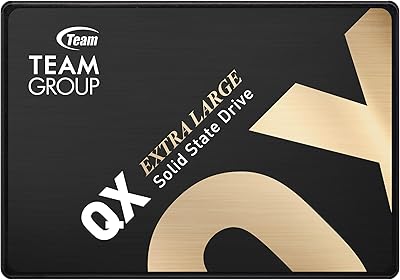
TEAMGROUP QX 1TB 2.5 Inch SATA III SSD
84%
90%
Read/Write Speed
87%
Installation Ease
85%
Reliability
71%
Durability (QLC NAND)
92%
Price-to-Performance Ratio
More
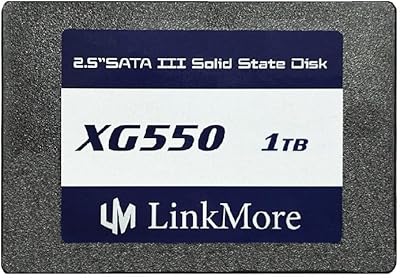
LinkMore XG550 1TB 2.5″ SATA III Internal SSD
84%
89%
Performance
92%
Value for Money
86%
Read Speed
85%
Write Speed
94%
Ease of Installation
More
Timetec 1TB 2.5-inch SATA III Internal SSD
80%
91%
Value for Money
86%
Read Speed Performance
73%
Write Speed Performance
93%
Installation Ease
77%
Long-term Reliability
More
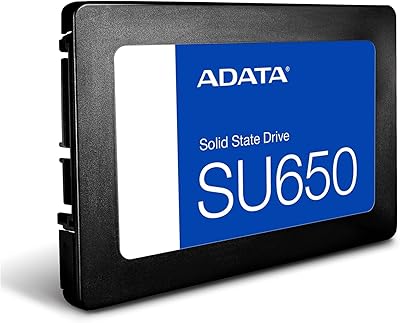
ADATA SU650 1TB 3D-NAND SATA 2.5 inch Internal SSD
86%
88%
Performance
92%
Value for Money
85%
Installation Ease
87%
Speed (Read/Write)
78%
Software Experience
More
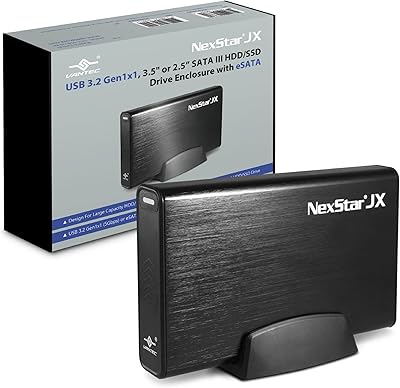
Vantec NexStar JX 3.5″ HDD Enclosure
76%
93%
Ease of Setup
78%
Transfer Speed — USB
86%
Transfer Speed — eSATA
74%
Thermal Management
67%
Build Quality
More
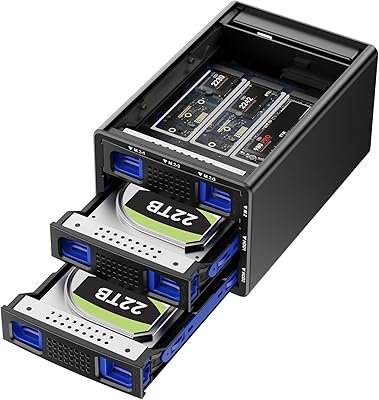
Cenmate 5-Bay Hybrid HDD/NVMe Enclosure
73%
83%
Build Quality
78%
Thermal Management
71%
Transfer Speed
69%
RAID Functionality
76%
Drive Compatibility
More
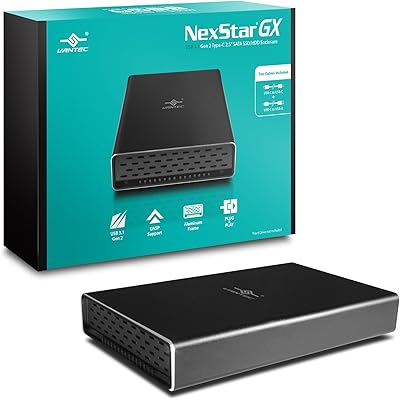
Vantec NexStar Gx USB 3.1 Gen 2 Type-C 2.5” SATA SSD/HDD Enclosure
88%
91%
Data Transfer Speed
95%
Ease of Setup
87%
Build Quality & Durability
88%
Compatibility with Devices
85%
Heat Dissipation
More
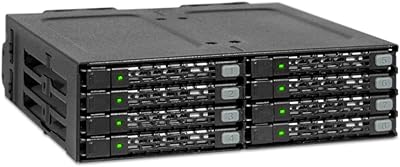
ICY DOCK ToughArmor MB998SP-B 8-Bay 2.5” SATA/SAS HDD/SSD Mobile Rack Enclosure for 5.25″ Bay
87%
91%
Performance
88%
Cooling Efficiency
89%
Build Quality
93%
Ease of Installation
72%
Noise Level
More
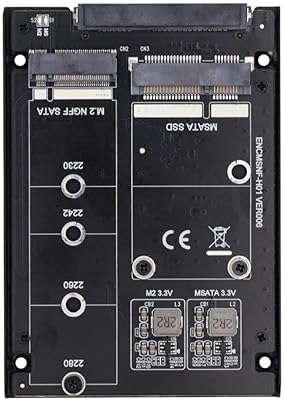
ChenYang MSATA & M.2 NGFF SATA to 2.5″ SATA JBOD Enclosure Adapter
83%
93%
Ease of Installation
85%
Build Quality
88%
Performance and Speed
74%
Compatibility
89%
Value for Money
More
iDsonix X20 2TB 2.5″ SATA SSD
80%
88%
Performance
92%
Value for Money
85%
Reliability
65%
Installation Process
90%
Durability/Build Quality
More

FAQ

Almost certainly yes, as long as your laptop has a 2.5-inch SATA drive bay, which is standard on most laptops made in the last 15 years. The 7mm height is also a plus — some thinner laptops can't fit a 9.5mm drive, but this one slides in without issue. Just double-check your specific model's bay depth before buying if you have a particularly slim ultrabook.

Yes, it works with Windows 11 as well as Windows 10 and most modern Linux distributions. TRIM support is OS-dependent, but both Windows 10 and 11 handle it automatically, so you won't need to configure anything manually.

For typical tasks — booting Windows, opening a browser, loading Office apps, or transferring files — the difference between this SATA SSD and a budget NVMe is often smaller than benchmarks suggest. You'll notice the gap more if you regularly move large files or do video editing, where NVMe's higher throughput becomes meaningful. For most everyday users, the RiDATA S801 gets the job done without issue.

Usually just a small Phillips-head screwdriver to open your laptop or desktop panel. The drive doesn't come bundled with cloning software, so if you want to migrate your existing data rather than do a fresh install, you'll need a third-party tool like Macrium Reflect (free) and a USB-to-SATA adapter to connect both drives temporarily.

RiDATA is the consumer brand of Ritek Corporation, a Taiwanese company that has been making optical discs, flash memory, and storage products since the 1980s. They're not a household name the way Samsung or Western Digital are, but they're a real, established manufacturer — not a generic white-label reseller. The 3-year warranty and Taiwan manufacturing are reasonable reassurances.

The manufacturer hasn't published a TBW (terabytes written) endurance rating, which makes it harder to compare directly against competitors on paper. In practice, 3D NAND-based drives used for everyday tasks — an OS install, documents, media — tend to outlast their warranty periods comfortably. Heavy write workloads are a different story, but for typical home or office use, longevity shouldn't be a primary concern.

Not directly out of the box — it's an internal drive. However, if you pick up an inexpensive 2.5-inch USB-to-SATA enclosure, you can house it externally for use as portable storage. That's a handy option if you're repurposing an old drive bay.

Yes, the PS4 and PS4 Pro use a standard 2.5-inch SATA interface for their internal drive bays, and this 1TB drive meets the size and interface requirements. The 7mm height is also within the PS4's supported range. It's a popular use case for budget 2.5-inch SSDs.

No — SSDs have no moving parts, so this drive operates completely silently. There's no spin-up noise, no clicking, and no vibration, which is one of the underrated perks of switching from a mechanical hard drive.

If you're doing a fresh OS install, you're looking at 20 to 45 minutes depending on your setup and installation media. If you're cloning an existing drive, add time for the cloning process itself — usually 30 minutes to a few hours depending on how much data you're transferring. Either way, the physical swap takes most people under 15 minutes.