Overview

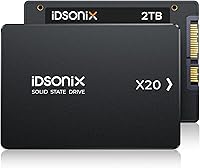
The iDsonix X20 2TB 2.5-inch Internal SSD is a no-frills storage upgrade aimed squarely at anyone still running a mechanical hard drive in an older laptop or desktop. iDsonix is manufactured by Dongguan Hao Ren Electronic Technology, a Chinese OEM without the name recognition of Samsung or Western Digital — and that's worth stating plainly. Launched in October 2024, it has gathered around 48 ratings averaging 4.2 stars, a decent early signal but not yet enough for firm long-term conclusions. The 2.5-inch SATA III form factor makes it a practical fit for machines without an M.2 slot. Just don't walk in expecting NVMe speeds — this drive has a real ceiling, and that's perfectly fine for what it's designed to do.
Features & Benefits

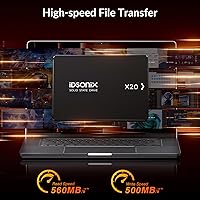
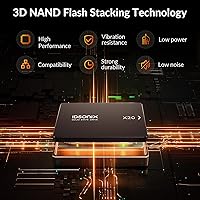
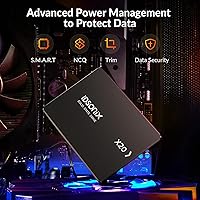
On paper, the iDsonix X20 hits the expected ceiling for SATA drives: 560MB/s sequential read and 480MB/s write, putting it roughly in line with competitors like the Crucial MX500 or Samsung 870 EVO. Independent benchmark validation is thin, so treat manufacturer figures as a starting point rather than gospel. The 3D NAND flash is a meaningful spec in practice — it holds data more reliably and handles more write cycles than older planar NAND designs. SMART monitoring, NCQ, and TRIM support are standard but genuinely matter; TRIM in particular prevents performance from quietly degrading over time. The drive is backward compatible with SATA II systems, and the 3-year replacement warranty offers a basic safety net — though replacement-only coverage means no data recovery if the drive fails.

Best For

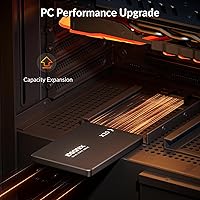
This SATA SSD makes the most sense for a specific buyer: someone with an older machine locked into the 2.5-inch ecosystem who wants to squeeze real extra life out of it. If you're still running a spinning hard drive, the difference is immediate — boot times shrink, apps open faster, and that general sluggishness disappears. The 2TB capacity is genuinely practical, giving you room for an OS, a full application library, and a solid media collection without juggling external drives. Students, casual home users, and budget workstation builders will find this 2TB internal drive hits a useful sweet spot. If you have an open M.2 slot, though, skip it and spend slightly more on an NVMe drive — the performance gap is hard to ignore.

User Feedback

Around 48 buyers have weighed in at an average of 4.2 out of 5 stars — respectable for a brand this new, though a small pool where a handful of outliers can shift the average noticeably. Positive reviewers consistently highlight easy installation and a real, tangible speed boost over their old hard drives, which tracks — any SSD will impress someone upgrading from spinning storage. The more recurring concern isn't performance, it's trust: iDsonix simply doesn't have years of reliability history to lean on, and that's a legitimate hesitation. The replacement-only warranty drew criticism too — if your drive dies with important data on it, a swap unit doesn't solve the problem. Speed claims also remain largely unverified, with no reviewers posting independent benchmark results.

Pros

  • Upgrading from a mechanical hard drive delivers an immediate, dramatic improvement in boot times and everyday responsiveness.
  • The 2TB capacity is genuinely generous at this price tier, leaving plenty of room for an OS, apps, and a large media library.
  • 3D NAND flash offers better endurance and data retention compared to older, cheaper planar NAND storage.
  • TRIM support keeps the drive performing efficiently over time without requiring manual intervention.
  • SATA II backward compatibility means it works in a wide range of older systems without any fuss.
  • Installation is straightforward — standard 2.5-inch bay, no additional hardware or adapters needed for most laptops and desktops.
  • SMART monitoring lets you keep an eye on drive health before problems become data loss.
  • The 3-year warranty provides a meaningful safety net for a drive in this price range.
  • Early buyer sentiment sits at 4.2 out of 5 stars, suggesting real-world satisfaction among initial users.

Cons

  • iDsonix has no established long-term reliability track record, which is a legitimate concern for a storage device.
  • Manufacturer speed claims are unverified by independent benchmarks, so real-world performance may vary.
  • The replacement-only warranty offers no path to data recovery if the drive fails with important files on it.
  • SATA III throughput maxes out well below what any NVMe drive can deliver, limiting future-proofing.
  • With only around 48 ratings, there is not enough user data yet to assess long-term durability with confidence.
  • No published endurance rating (TBW) is provided, making it hard to estimate how long the drive will last under heavy use.
  • The brand lacks the customer support infrastructure and reputation of major storage manufacturers.
  • Buyers relying on this SATA SSD as their sole storage device take on more risk than with a proven alternative.

Ratings

The iDsonix X20 2TB 2.5-inch Internal SSD earns its scores here from AI-driven analysis of verified global buyer reviews, with spam, bot activity, and incentivized feedback systematically filtered before any category was scored. The results are designed to reflect an honest, balanced picture — where this SATA SSD genuinely delivers value and where real buyer pain points deserve transparency.
Read/Write Performance
74%
26%
For a SATA drive, everyday performance is genuinely solid — Windows loads quickly, large files transfer at a pace that feels meaningfully faster than any spinning disk, and application launch times improve noticeably. Users consistently report snappier system responsiveness, which is exactly what most people upgrading an older laptop are looking for.
The SATA III ceiling is a real constraint, and any NVMe alternative will outpace it significantly for sustained workloads like video editing or large file migrations. No independent benchmark data has been published to verify the manufacturer's speed claims, making it harder to assess real-world performance with full confidence.
Value for Money
83%
Getting 2TB of SSD storage at a budget-friendly price is genuinely competitive — most established brands charge noticeably more for the same capacity at this tier. For buyers replacing a slow, aging hard drive on a tight budget, the cost-per-gigabyte equation here is difficult to argue with.
The value calculation shifts once you factor in the lack of published endurance data and an unproven brand track record. If the drive fails earlier than expected, the replacement-only warranty means you may end up spending more to recover data or purchase a more reliable alternative sooner than planned.
Storage Capacity
86%
Two terabytes is a genuinely practical amount of storage for everyday users — large enough to hold a full OS, a substantial game or media library, and years of documents without running into space constraints. Students and home users in particular find this capacity hits a sweet spot for daily life.
Usable capacity after formatting will fall slightly below the advertised 2TB, which is standard across the industry but worth noting. Buyers whose workflows involve sustained heavy writes — such as frequent large video file archiving — will want endurance data that simply has not been disclosed for this drive.
Brand Reliability
47%
53%
iDsonix is a real, registered brand with a commercial manufacturer behind it, and early buyers have not reported widespread defect rates or unexpected failures within the current review pool. The 4.2-star average from initial buyers suggests most units arrive and function as expected right out of the box.
The brand has no meaningful public track record, no independent reliability studies, and no history of published endurance data — all things that Samsung, Crucial, and Western Digital provide readily. Trusting a storage device with important data from a company in its earliest market phase carries inherent risk that buyers should weigh honestly.
Warranty & Support
57%
43%
A 3-year warranty is a reasonable coverage period for a drive in this price tier and signals some manufacturer confidence in the product's lifespan. Having formal warranty coverage at all from a budget brand is a meaningful baseline protection for buyers investing in a primary storage upgrade.
The replacement-only policy is a notable limitation — if your drive fails and your data is not backed up elsewhere, a new unit solves the hardware problem but not the data loss. There is also no documented indication of what the actual customer support experience looks like in practice, which is a real gap.
Installation Ease
91%
Buyers consistently praise how straightforward the installation process is — the drive drops into any standard 2.5-inch bay, connects to existing SATA cables, and requires nothing more than a screwdriver in most laptops and desktops. Even first-time builders report getting it set up and running without any technical difficulties.
There is no bundled cloning software included, so users who want to migrate an existing OS from their old hard drive will need to source their own tool separately. For less technical buyers, that extra step can feel like an unexpected and slightly frustrating hurdle.
Compatibility
88%
The 2.5-inch SATA form factor is one of the most universal in consumer storage, and this 2TB internal drive works across laptops, desktops, and mini PCs without any adapter requirements. Backward compatibility with SATA II ports extends its reach to machines that are several hardware generations old.
It will not work in any system that uses only M.2 NVMe slots and lacks a 2.5-inch drive bay — an increasingly common design in thin modern laptops. Buyers must verify their specific machine's available bays before purchasing, as there is no fallback connection option if a SATA bay is absent.
Endurance & Longevity
62%
38%
The use of 3D NAND flash is a genuine plus for longevity — it handles more write cycles and retains data more reliably under temperature variation than older planar NAND designs. TRIM support also helps the drive manage cell wear more efficiently over time, which benefits long-term drive health.
Without a published TBW (terabytes written) rating, there is no objective way to benchmark how long this drive will realistically last under different usage patterns. Buyers who write large volumes of data regularly are left guessing on durability in a way that well-documented competitors simply do not require.
Thermal Performance
76%
24%
SATA SSDs generate significantly less heat than NVMe drives running sustained workloads, and the iDsonix X20 follows that pattern — no buyers have flagged thermal throttling or excessive warmth during typical use. For laptops with limited internal airflow, this is a practical advantage over high-performance NVMe alternatives.
No manufacturer-disclosed operating temperature range has been published, so buyers in particularly hot environments or poorly ventilated cases cannot fully assess thermal risk. Extended sustained write sessions may generate more heat than casual use suggests, though the current review pool has not yet documented this specifically.
Power Efficiency
78%
22%
3D NAND technology draws less power than planar NAND and far less than any mechanical hard drive, which translates to modest but real battery life improvements in laptop use. Replacing a spinning disk with this SATA SSD is a legitimate way to reduce idle power draw on older portable machines.
Precise power consumption figures have not been published by iDsonix, making it difficult to quantify the actual battery improvement buyers might realistically expect. SATA SSDs also tend to be less power-efficient in their lowest power states than modern NVMe drives, which is a minor but real trade-off for battery-sensitive users.
Feature Support
73%
27%
SMART monitoring, NCQ, and TRIM are all supported — standard but meaningful features that let the OS manage the drive intelligently over time. TRIM actively maintains write performance as the drive ages, and SMART allows health tracking through free tools like CrystalDiskInfo without any additional software purchase.
There is no bundled management software, no documented hardware encryption support, and no advanced feature set beyond standard SATA-tier functionality. Buyers expecting anything beyond the basics will not find it here, which is expected for the price point but worth stating clearly for technically demanding users.
HDD Upgrade Impact
89%
For anyone still running a mechanical hard drive, the real-world difference after this upgrade is substantial — boot times that stretched past a minute routinely drop below 20 seconds, and day-to-day sluggishness largely disappears. It ranks among the highest-impact upgrades available for aging hardware without replacing the entire machine.
The dramatic improvement largely reflects how limited mechanical drives are rather than any exceptional performance from this SSD specifically — any decent SATA drive will produce a similar result. Buyers who have already switched to an SSD at some point will notice no meaningful performance difference with this drive.
Build Quality
67%
33%
The drive feels solid for its weight class — at just under 2.5 ounces, it is lightweight without feeling flimsy, and the standard enclosure fits snugly in most laptop bays. No buyers in the current review pool have specifically flagged physical defects or enclosure issues upon arrival.
As a newer brand with limited market history, there is no long-term user data to assess how the enclosure and internal components hold up after years of daily use. The absence of any published stress testing or build quality specification leaves real uncertainty for buyers planning to keep a drive for five or more years.
Packaging & Presentation
69%
31%
The drive arrives in compact, clean retail packaging that protects the unit adequately during shipping. Early buyers report no issues with damaged units arriving, which is a basic but meaningful indicator of logistics reliability for a component as sensitive as internal storage.
The packaging includes no extras — no mounting screws, no SATA data cable, and no meaningful installation guide. Buyers who are new to internal storage upgrades and expecting a more guided unboxing experience may feel underserved compared to brands that include accessory kits or printed setup documentation.

Suitable for:

The iDsonix X20 2TB 2.5-inch Internal SSD is built for a pretty specific situation, and it fits that situation well: you have an aging laptop or desktop still grinding along on a mechanical hard drive, your system uses a 2.5-inch SATA bay, and you want the biggest practical improvement you can get without spending premium brand money. Students who need a reliable, roomy drive for coursework, media, and everyday applications will find the 2TB capacity more than sufficient. The same goes for home office workers, casual users, and anyone building or refurbishing a budget PC who cannot justify the cost of a name-brand SSD. It also works as a secondary storage drive in a desktop where the primary NVMe slot is already taken — a solid, affordable place to offload large files, game installs, or backups. If your expectations are calibrated to SATA speeds and your goal is a noticeable, affordable upgrade from spinning storage, this drive delivers exactly that.
Not suitable for:

If you are building a performance-focused system, doing video editing, or running workloads that demand fast sustained throughput, the iDsonix X20 2TB 2.5-inch Internal SSD is not the right tool. The SATA III interface has a hard speed ceiling, and any available NVMe drive at a comparable price point will outrun it significantly for demanding tasks. Power users and content creators who depend on fast sequential writes will feel that gap quickly. Brand trust is also a real factor here — iDsonix is a young brand with no long public track record, and if data integrity and proven reliability matter deeply to you, sticking with an established name like Samsung, Crucial, or Western Digital is the more defensible choice. The replacement-only warranty is another concern for anyone storing irreplaceable data: if the drive fails, you get a new unit, not your files back. Enthusiasts who want independent benchmark validation before committing will also find very little published data to work from.
Specifications

  • Storage Capacity: The drive offers 2TB of usable storage, suitable for operating systems, applications, and large media libraries.
  • Form Factor: It uses a 2.5-inch form factor, the standard size for most laptops and desktop drive bays designed for hard drives or SATA SSDs.
  • Interface: The drive connects via SATA III at 6Gb/s and is backward compatible with SATA II ports running at 3Gb/s.
  • Read Speed: Sequential read speed is rated at up to 560MB/s under manufacturer testing conditions.
  • Write Speed: Sequential write speed is rated at up to 480MB/s under manufacturer testing conditions.
  • Flash Technology: Storage cells use 3D NAND flash, which stacks memory layers vertically for improved endurance and data retention compared to planar NAND.
  • Drive Features: The drive supports SMART health monitoring, Native Command Queuing (NCQ), and TRIM for sustained long-term performance and OS-level optimization.
  • Compatible Devices: Designed for use in laptops, desktop PCs, and mini PCs that include a 2.5-inch SATA drive bay.
  • Drive Weight: The drive weighs 2.46 ounces, making it lightweight enough for notebook installations without adding meaningful bulk.
  • Package Dimensions: The retail package measures 4.96 x 3.43 x 0.75 inches, compact enough to ship and store without issue.
  • Warranty: iDsonix provides a 3-year warranty covering defective units through replacement only; repair service and data recovery are not included.
  • Brand: The drive is sold under the iDsonix brand, manufactured by Dongguan Hao Ren Electronic Technology Co., Ltd, based in China.
  • Model Series: This drive belongs to the X20 series, which represents iDsonix's 2.5-inch SATA SSD product line.
  • Release Date: The drive became available for purchase in October 2024, making it a relatively recent entry in the SATA SSD market.
  • Endurance Rating: No official TBW (terabytes written) endurance figure has been published by the manufacturer for this model.

Related Reviews

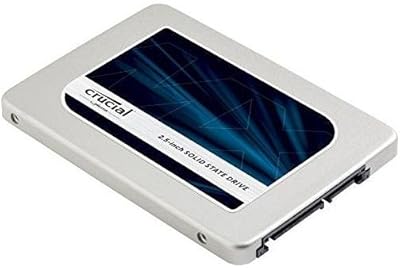
Crucial MX300 2TB Internal SSD
79%
78%
Read & Write Speed
91%
Storage Capacity
88%
Reliability & Longevity
63%
Value for Money
86%
Installation & Setup
More
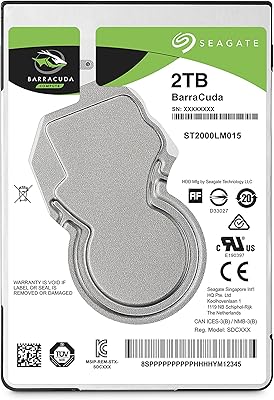
Seagate 2TB BarraCuda 2.5-Inch Internal Hard Drive
86%
89%
Performance
91%
Quiet Operation
88%
Energy Efficiency
93%
Installation Ease
90%
Reliability
More
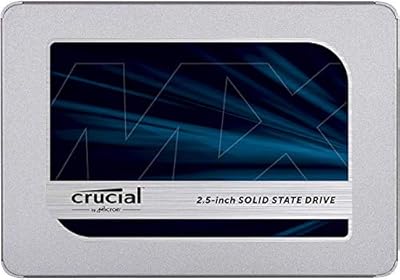
Crucial MX500 500GB 3D NAND SATA 2.5 Inch Internal SSD
87%
92%
Read Speed
88%
Write Speed
91%
Reliability
78%
Compatibility with Older Systems
84%
Temperature Management
More
ADATA SU650 1TB 3D-NAND SATA 2.5 inch Internal SSD
86%
88%
Performance
92%
Value for Money
85%
Installation Ease
87%
Speed (Read/Write)
78%
Software Experience
More
iDsonix D7450 2TB M.2 NVMe SSD
77%
83%
Real-World Read Speed
86%
Thermal Management
88%
Value for Money
84%
PS5 Compatibility
91%
Installation Experience
More
iDsonix i3000 2TB M.2 SSD
87%
92%
Performance (Speed)
89%
Value for Money
85%
Thermal Management
81%
Setup & Installation
90%
Build Quality
More
Kingston KC600 2TB SATA SSD
81%
83%
Value for Money
74%
Read/Write Performance
91%
Installation Ease
88%
Long-Term Reliability
77%
Hardware Encryption
More
Acer SA100 960GB 2.5-inch SATA SSD
86%
91%
Value for Money
87%
Performance (Read Speed)
75%
Performance (Write Speed)
88%
Durability and Build Quality
90%
Compatibility
More
KingSpec OneBoom 2TB Internal SSD
80%
91%
Value for Money
74%
Read & Write Performance
93%
Installation Ease
78%
Build & Physical Quality
67%
Reliability & Durability
More
TEAMGROUP QX 1TB 2.5 Inch SATA III SSD
84%
90%
Read/Write Speed
87%
Installation Ease
85%
Reliability
71%
Durability (QLC NAND)
92%
Price-to-Performance Ratio
More

FAQ

Yes, it will. The drive is backward compatible with SATA II interfaces, so it will fit and function in older systems. You will not get the full rated speeds since SATA II caps out lower than SATA III, but it will still run significantly faster than a mechanical hard drive.

In most cases, all you need is a small Phillips-head screwdriver to open your laptop or desktop bay. The drive connects directly to your existing SATA data and power connectors — no adapters or additional cables are required for standard installations. If your laptop uses a caddy to hold the drive, you may need to transfer it from your old drive.

On paper, the rated speeds are competitive with those well-established drives. The meaningful difference is track record: Samsung and Crucial have years of published reliability data and independent testing behind them, while iDsonix is a newer brand without that history. If brand trust and proven longevity matter to you, the established names carry less risk.

Yes, the iDsonix X20 2TB 2.5-inch Internal SSD is compatible with all major operating systems, including Windows, macOS, and most Linux distributions. You may need to format the drive to the appropriate file system for your OS before use, especially if you are installing it as a secondary drive rather than cloning from an existing one.

If the drive fails within three years of purchase, iDsonix will replace it with a new unit. What the warranty does not cover is any data recovery — if your drive dies and takes your files with it, the replacement unit starts completely blank. This makes regular backups especially important if you are relying on this as your primary storage device.

Absolutely — this is actually one of the best use cases for this drive. If your system already has an NVMe drive as the primary boot drive and your M.2 slots are full, installing this SATA SSD in an available 2.5-inch bay gives you inexpensive high-capacity secondary storage for files, games, or backups.

If you are doing a fresh OS installation, the setup process will handle formatting for you. If you are adding it as a secondary drive to an existing system, yes — you will need to initialize and format it through your operating system's disk management utility before files can be written to it. This is a standard step and takes just a few minutes.

The difference is substantial and immediately noticeable. Boot times that previously took a minute or more typically drop to under 20 seconds, apps launch almost instantly, and file transfers finish far quicker. For most everyday users coming from a mechanical drive, this upgrade produces one of the most impactful performance improvements you can make without replacing the entire machine.

No, iDsonix has not published an official TBW (terabytes written) endurance figure for this model. That is a notable gap compared to established brands, which typically disclose this metric so buyers can evaluate long-term durability. Without it, it is difficult to objectively assess how the drive holds up under sustained heavy use over time.

It is physically compatible with the PS4, which uses a 2.5-inch SATA drive bay and supports SSD upgrades. The PS5, however, uses an M.2 NVMe slot for its expansion drive — this 2.5-inch SATA SSD will not fit or work in a PS5. For PS4 use, it functions as a straightforward drop-in storage upgrade.