


Overview

The LinkMore XG550 1TB Internal SSD is a straightforward, no-frills storage upgrade aimed squarely at users still running older SATA-based machines who want to breathe some life into them without spending a lot. Made by Moment Semiconductor Inc. in Taiwan, this drive sits firmly in the budget tier — yet it has earned a 4.5-star average from over 260 Amazon buyers, which is encouraging for a brand most people haven't heard of before. The price-to-capacity ratio is genuinely one of its stronger selling points, especially if you're after a full terabyte without paying premium brand prices.

Features & Benefits

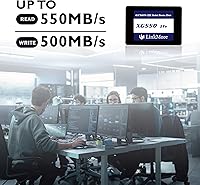
The XG550 SSD uses a SATA III 6Gb/s interface and delivers sequential read speeds up to 550MB/s, with writes rated at up to 500MB/s — though those figures come from manufacturer testing and may vary in practice. The 2.5-inch, 7mm form factor fits cleanly into most desktops and notebooks without any adapter required. Because there are no moving parts, the drive runs quietly and generates minimal heat, which is a real practical improvement over spinning hard drives in everyday use. It also carries a shock-resistant rating, offering some peace of mind if the drive ends up in a laptop that gets moved around regularly.

Best For

This 1TB SATA upgrade makes the most sense if your machine has a 2.5-inch bay and no NVMe slot — that distinction matters. If you have an NVMe-capable motherboard, you would be leaving meaningful performance on the table by going SATA. But for anyone with an older laptop or desktop that shipped with a traditional hard drive, swapping it out for this LinkMore drive will produce a noticeable real-world difference in boot times and application loading. It also works well as secondary storage for media libraries or file backups. Students and home users on a tight budget will find the value hard to argue with.

User Feedback

Buyer sentiment around the XG550 SSD skews positive, with most reviews pointing to faster boot and load times as the most immediately felt improvement after installation. Quite a few buyers also mention how painless the setup process is — no special drivers, no complicated steps. On the cautious side, LinkMore does not carry the same track record as Crucial or Samsung, and long-term reliability data is still limited given how recently the drive launched. A handful of reviews flag the importance of verifying compatibility before purchasing, particularly in older systems. For a budget SATA drive with strong early ratings, it holds its own — but going in with realistic expectations is the sensible approach.

Pros

  • Boot times drop dramatically compared to a traditional spinning hard drive, often cutting startup from minutes to seconds.
  • The 2.5-inch, 7mm form factor slides into most laptops and desktops without needing any bracket or adapter.
  • At 1TB, there is enough room for an operating system, applications, and a healthy media library without constantly managing space.
  • Installation is genuinely plug-and-play — buyers consistently report no driver installs or configuration headaches.
  • Running silently with no moving parts means no clicking, vibrating, or fan-like hum from the drive itself.
  • The shock-resistant build offers practical protection for laptop users who carry their machines around daily.
  • Manufactured in Taiwan with chips selected for reliability, which is a reassuring detail at this price point.
  • Multiple capacity options from 128GB to 2TB mean you can size up or down based on actual needs and budget.
  • A 4.5-star average across more than 260 real buyer reviews suggests consistent satisfaction for everyday use cases.
  • The price-to-capacity ratio makes 1TB of SSD storage accessible without stretching a tight upgrade budget.

Cons

  • LinkMore lacks the brand recognition and long public reliability record of established names like Samsung or Crucial.
  • SATA III tops out at around 550MB/s reads, which is a hard ceiling — no firmware update will change that.
  • Manufacturer speed ratings are based on internal testing and real-world transfers may fall short, especially with mixed file sizes.
  • Long-term durability data is limited since the drive only entered the market in late 2023.
  • No bundled cloning software is included, so migrating from an existing drive requires sourcing a third-party tool separately.
  • Buyers in machines with NVMe slots are leaving significant performance on the table by choosing this interface.
  • The warranty terms and customer support infrastructure for a lesser-known brand can be harder to navigate than with major players.
  • A small number of reviews flag potential compatibility edge cases in certain older system configurations worth verifying before purchasing.

Ratings

The LinkMore XG550 1TB Internal SSD has been scored by our AI rating system after analyzing hundreds of verified global buyer reviews, with spam, bot-generated, and incentivized feedback actively filtered out before scoring. The ratings below reflect a transparent picture of this drive — capturing what genuinely impressed everyday users and where real-world experience fell short of expectations.

Value for Money
88%
For buyers upgrading a machine that still runs a spinning hard drive, the price-per-gigabyte on this 1TB SATA drive is hard to beat in its tier. Users frequently describe it as one of the most cost-effective ways to extend the useful life of an older laptop or desktop without investing in a full system replacement.
Buyers who later discover their machine supports NVMe often feel the money would have been better spent on a faster drive, since the price gap between budget SATA and entry-level NVMe has narrowed significantly. Shoppers who do not check compatibility first can end up feeling they paid for less than they could have gotten.
Installation Ease
93%
The plug-and-play nature of this drive is one of its most praised qualities — the overwhelming majority of buyers report that installation required nothing more than a screwdriver and a few minutes. No driver downloads, no configuration utilities, and no formatting headaches were needed in typical desktop and laptop setups.
A small number of users in older or less common system configurations encountered recognition issues on first boot, requiring a BIOS check or cable reseat to resolve. Buyers who have never opened a computer before may still feel uncertain without a model-specific installation guide.
Boot Time Improvement
87%
The jump from a traditional hard drive to this LinkMore drive is one of the most immediately felt upgrades a user can make — machines that previously took two minutes to reach the desktop often boot in under 20 seconds. Everyday tasks like launching applications and opening large files feel meaningfully faster almost immediately after installation.
Users coming from a previous-generation SSD rather than a hard drive will notice a less dramatic improvement, since the gains are most pronounced over spinning media. Those expecting NVMe-level responsiveness will find the SATA interface ceiling a limiting factor in more demanding workflows.
Read/Write Performance
74%
26%
For everyday computing tasks — web browsing, document editing, streaming media, and light photo work — the sequential read speeds hold up well and keep the system feeling responsive. Buyers using this as a secondary storage drive for media libraries report smooth file access without noticeable lag.
The SATA III interface imposes a hard performance ceiling that no firmware or configuration change can overcome, making this drive a poor fit for users regularly transferring large files or running disk-intensive applications. Manufacturer speed figures are based on internal testing and real-world mixed-workload performance often lands below the quoted peak numbers.
Reliability & Longevity
61%
39%
Early user reports are encouraging, with no widespread pattern of premature failures reported across the review base so far. The manufacturer highlights chip selection focused on long-term performance, and the drive being made in Taiwan under Moment Semiconductor adds a layer of production credibility at this price point.
The drive launched in late 2023, meaning long-term reliability data beyond 12 to 18 months of heavy use is simply not available yet — which is a genuine unknown for buyers planning to rely on it as a primary drive for years. The brand does not yet carry the sustained reliability track record that established names like Crucial or Western Digital have built over many product generations.
Build Quality
71%
29%
The compact, solid chassis feels adequately constructed for a budget-tier internal drive, and the shock-resistant rating gives laptop users reasonable confidence that the drive can handle the bumps of daily portability. The 7mm slim profile fits cleanly into most bays without any flex or loose tolerances during installation.
The enclosure does not inspire the same confidence as premium drives from top-tier brands, and there is limited independent third-party testing data on the housing durability under sustained physical stress. Buyers coming from a higher-end previous drive may notice the difference in perceived build solidity.
Compatibility
83%
The standard 2.5-inch, 7mm SATA form factor covers an enormous range of laptops and desktops, and the vast majority of buyers report the drive fitting and functioning without any adjustment required. Multi-platform support across Windows and Linux environments adds practical flexibility for users running non-standard setups.
A small subset of reviewers flagged edge-case compatibility issues with certain older machines, particularly around BIOS recognition in systems that were not designed with modern SSD behavior in mind. Buyers should verify their specific device supports 2.5-inch SATA before purchasing, especially with non-mainstream hardware.
Thermal Management
84%
Without any spinning platters or moving components, the drive generates minimal heat during normal operation, which is a practical advantage in compact laptops where internal temperatures can build up quickly. Users running the drive as a secondary storage device in desktops report it contributing negligibly to overall system thermals.
Extended sustained write operations — such as large file transfers or disk cloning — can produce moderate warmth, which is normal for NAND flash storage but worth noting in very poorly ventilated enclosures. No thermal throttling behavior has been widely reported, but there is limited stress-test data available publicly for this specific model.
Noise & Vibration
96%
Being entirely solid-state, the drive produces zero audible noise and zero vibration under any workload — a meaningful quality-of-life improvement for users who previously dealt with the clicking and humming of a hard drive, particularly in quiet home or study environments. Several buyers specifically called out the silence as a welcome side effect of the upgrade.
There is genuinely very little to criticize here for any user upgrading from a spinning drive, as the absence of moving parts removes these issues by design. The only minor note is that some users expecting active cooling features found the drive simply runs passively, which is entirely standard for 2.5-inch SATA SSDs.
Capacity Options
82%
18%
Offering five capacity tiers from 128GB all the way up to 2TB within the same product line gives buyers real flexibility to match the drive size to their actual needs and budget. The 1TB variant in particular hits a practical sweet spot for users who want enough room for an OS, a full application suite, and a media library without managing space constantly.
The lower-capacity options like 128GB feel increasingly marginal for modern use cases, especially if the drive is intended as a primary system drive running a full desktop OS. Buyers after the 2TB tier should compare pricing against competing options, as the value ratio can shift at higher capacities.
Brand Trust
54%
46%
LinkMore has accumulated a respectable early rating on Amazon, and the connection to Taiwan-based Moment Semiconductor provides a degree of manufacturing credibility that pure white-label products often lack. The 4.5-star average from over 260 buyers is a genuinely positive early signal for a newer brand.
The reality is that LinkMore does not yet carry the consumer trust weight of Samsung, Crucial, or Western Digital — brands with decades of reliability data, established warranty programs, and large communities of long-term users. Buyers who prioritize brand accountability and post-purchase support infrastructure will feel that gap acutely.
Everyday Use Speed
78%
22%
For the kinds of tasks most users actually perform — booting Windows, launching Chrome, opening spreadsheets, loading photos — the drive keeps up without any sluggishness or hesitation that would frustrate a typical home or student user. The real-world experience for moderate daily workloads aligns well with what buyers expect from a SATA SSD.
Users who push the system harder with concurrent large-file operations or database-type workloads may start to notice the SATA ceiling more acutely compared to NVMe alternatives at comparable price points. Sustained write performance in particular tends to taper off during prolonged operations as the drive works through its cache buffer.
Packaging & Unboxing
67%
33%
The drive arrives adequately protected for shipping, and most buyers report receiving it in good physical condition without any cosmetic damage or transit issues. The no-frills packaging approach keeps costs down, which is consistent with the overall budget positioning of the product.
There is no bundled data migration software, mounting adapter, or installation guide included in the box, which means first-time buyers need to source these tools independently before they can complete the upgrade. More established brands at similar price points sometimes include at least a migration software license, which is a small but notable omission here.

Suitable for:

The LinkMore XG550 1TB Internal SSD is purpose-built for one very common scenario: an older laptop or desktop that shipped with a spinning hard drive and is now painfully slow at everyday tasks. If your machine has a 2.5-inch SATA bay — which covers a wide range of notebooks and budget desktops from the past decade — swapping in this drive is one of the most cost-effective ways to cut boot times and make the whole system feel more responsive. Students who need reliable, fast-enough storage for documents, projects, and media will get solid daily value out of it. It also works well as a secondary internal drive for storing backups, photo libraries, or archived files in a desktop with a spare bay. Home users who simply want their old computer to stop crawling, without committing to an entirely new build, are exactly who this drive is designed for.

Not suitable for:

If your motherboard has an available M.2 NVMe slot, the LinkMore XG550 1TB Internal SSD is not the most sensible choice — NVMe drives can deliver read speeds three to five times higher, and the price gap has narrowed considerably in recent years. Anyone building a new PC or configuring a performance workstation should look at NVMe options first and treat SATA as a fallback. Content creators working with large video files, developers running multiple virtual machines, or power users who routinely move large datasets will likely find SATA III speeds a bottleneck they notice daily. Additionally, buyers who prefer sticking with established storage brands that carry long, well-documented reliability histories may find the relative newness of the LinkMore name uncomfortable, especially for a primary drive holding irreplaceable data. If long-term warranty support and brand track record are priorities, drives from Crucial, Samsung, or Western Digital offer more peace of mind.

Specifications

  • Storage Capacity: The drive provides 1TB of raw flash storage, with a portion reserved for formatting and internal performance functions, resulting in slightly less usable space as reported by the operating system.
  • Form Factor: Built to the standard 2.5-inch form factor at 7mm thickness, making it physically compatible with the vast majority of laptops and desktop bays designed for 2.5-inch drives.
  • Interface: Uses a SATA III 6Gb/s interface, which is the most widely supported storage connection on older desktops and notebooks still in active use.
  • Read Speed: Rated for sequential read speeds of up to 550MB/s based on manufacturer internal testing under controlled conditions.
  • Write Speed: Rated for sequential write speeds of up to 500MB/s based on manufacturer internal testing; actual speeds may vary depending on workload and system configuration.
  • Dimensions: Physical dimensions measure 3.94 x 0.87 x 0.83 inches, fitting standard 2.5-inch drive bays without modification.
  • Weight: The drive weighs approximately 0.212 ounces, making it one of the lightest internal storage options available for portable systems.
  • Shock Resistance: The drive is rated as shock resistant, offering a degree of protection against physical impacts that traditional spinning hard drives cannot provide.
  • Installation Type: Designed as an internal drive, installed directly into the 2.5-inch SATA bay of a compatible desktop or laptop system.
  • Compatible Devices: Compatible with desktop PCs and notebooks that feature a 2.5-inch SATA bay; users should confirm their device supports this form factor before purchasing.
  • Manufacturer: Produced by Moment Semiconductor Inc., a Taiwan-based semiconductor company that operates under the LinkMore brand name for retail storage products.
  • Origin: Manufactured in Taiwan, with chips selected by the manufacturer for reliability according to product documentation.
  • Color: Available in black, which is the standard finish across the XG550 product line.
  • Capacity Options: The XG550 series is offered in five capacity tiers: 128GB, 256GB, 512GB, 1TB, and 2TB, to suit a range of storage needs and budgets.
  • Operating System: Compatible with multiple operating system platforms including Windows and Linux-based systems that support SATA storage devices.
  • Moving Parts: Contains no moving mechanical parts, which eliminates the noise, vibration, and heat generation associated with traditional hard disk drives.
  • Amazon Ranking: Ranked #451 in the Internal Solid State Drives category on Amazon as of available data, with 266 ratings averaging 4.5 out of 5 stars.
  • Availability Date: First made available for purchase on Amazon in September 2023, placing it among the more recently introduced drives in the budget SATA segment.

Related Reviews
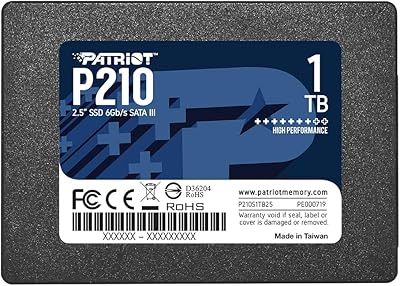
Patriot P210 1TB 2.5″ Internal SSD
83%
91%
Value for Money
83%
Real-World Performance
94%
Installation Ease
92%
Boot Time Improvement
67%
Long-Term Reliability
More
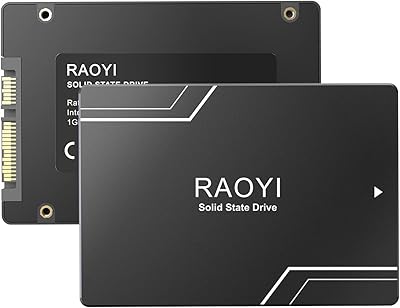
RAOYI 1TB 2.5″ SATA III Internal SSD
73%
88%
Value for Money
76%
Read/Write Performance
92%
Installation Ease
89%
Compatibility
61%
Brand Reliability
More
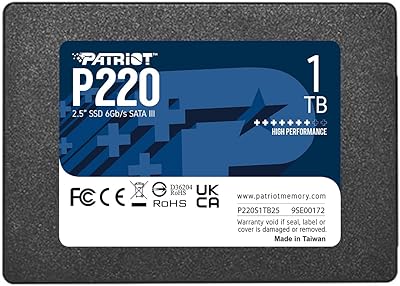
Patriot Memory P220 1TB Internal SATA SSD
78%
93%
Value for Money
74%
Read & Write Performance
94%
Installation Ease
71%
Build Quality
91%
Boot Time Improvement
More
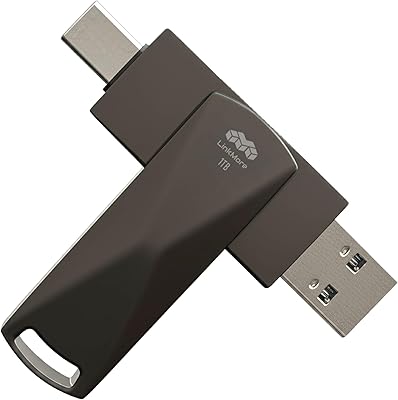
LinkMore NR P50 1TB External SSD
81%
93%
Plug-and-Play Ease
91%
Dual Connector Design
82%
Transfer Speed (Burst)
63%
Sustained Write Performance
88%
Build Quality
More
Seagate BarraCuda Q5 1TB NVMe SSD
81%
88%
Sequential Read Speed
74%
Sequential Write Speed
91%
Value for Money
93%
Ease of Installation
87%
Real-World Boot Performance
More
LinkMore XE600 1TB Gen4 NVMe M.2 SSD
76%
93%
PS5 Compatibility
91%
Installation Ease
88%
Value for Money
86%
Thermal Management
83%
Read Performance
More
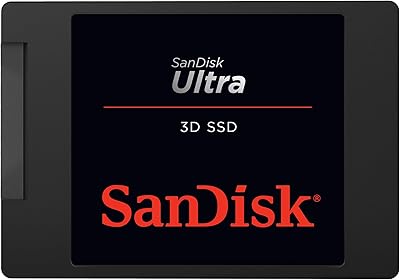
SanDisk Ultra 3D 1TB Internal SSD
79%
91%
Real-World Speed Improvement
88%
Installation Ease
84%
Value for Money
79%
Reliability and Longevity
93%
Compatibility
More
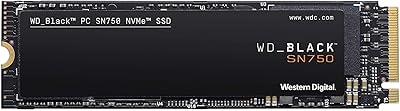
Western Digital SN750 1TB NVMe SSD
79%
88%
Read Speed Performance
79%
Write Speed & Sustained Throughput
63%
Thermal Management
91%
Reliability & Longevity
84%
Installation & Compatibility
More
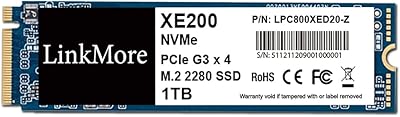
LinkMore XE200 1TB PCIe Gen3 NVMe M.2 SSD
86%
88%
Performance
90%
Installation Ease
92%
Value for Money
85%
Read Speed
78%
Write Speed
More
Bitsjour 1TB MacBook Pro A1425/A1398 Internal SSD
77%
72%
Compatibility Accuracy
88%
Installation Experience
83%
Pre-installed macOS
79%
Real-World Speed
81%
Value for Money
More

FAQ

Most likely yes, but you need to confirm two things: that your laptop has a 2.5-inch drive bay and that it uses a SATA connection. The vast majority of laptops made in the last 15 years with traditional hard drives use exactly this configuration. Check your laptop model specs online if you are not sure.

No, you do not. The XG550 SSD is recognized automatically by Windows, Linux, and most other operating systems once physically installed. Buyers consistently report it as a true plug-and-play experience with no additional setup steps required.

The difference is significant and immediately obvious for most users. Boot times that previously took one to two minutes often drop to under 20 seconds, and applications open much faster. Everyday tasks like launching a browser or loading documents feel noticeably more responsive.

Honestly, no. If your machine supports NVMe, you should use it — NVMe drives are three to five times faster and are competitively priced these days. This drive is best suited for machines that only have a SATA bay and no NVMe option.

In terms of raw SATA III performance, all three sit in a similar range since the interface itself caps speeds around 550MB/s. The main difference is brand history — Crucial and Kingston have much longer track records and broader community feedback. The LinkMore drive holds its own on specs and early user ratings, but the established brands carry more reliability data over time.

Absolutely, and it works very well in that role. Using this 1TB SATA upgrade as secondary storage for photos, videos, backups, or archived files is a practical and cost-effective approach, especially in desktop PCs with a spare bay.

LinkMore provides technical support through their website, but the specific warranty terms should be verified directly with the seller or manufacturer before purchasing. As with any drive from a lesser-known brand, it is a good habit to keep backups of important data regardless of how reliable the hardware appears to be.

Most modern 2.5-inch laptop bays accommodate both 7mm and 9.5mm drives, so the 7mm profile is generally an advantage — it fits everywhere and is less likely to cause clearance issues. Some older bays designed only for 9.5mm drives may need a thin spacer, which is inexpensive and easy to source.

Yes, for most laptops and desktops the process is straightforward. You typically need a small Phillips screwdriver, a few minutes, and a tutorial video specific to your laptop model. The drive itself requires no configuration once it is in place, and free cloning tools are available online if you want to copy your existing system over rather than starting fresh.

The most recurring caution in reviews is around long-term reliability data being limited, since this is a relatively new product from a newer brand. A small number of users also mention checking compatibility before assuming it works in every older machine. Otherwise, the feedback is largely positive, especially regarding installation ease and the speed improvement over old hard drives.

Where to Buy