Overview

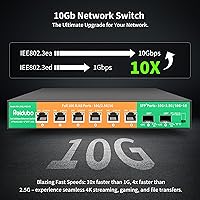
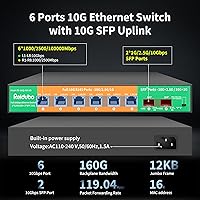
The Reidubo 8-Port 10G Unmanaged Network Switch enters a market that, until recently, charged a serious premium for anything above 2.5G. Reidubo is a newer brand in networking — you won't find decades of reputation behind it, but that also means pricing reflects a more accessible approach to 10G. The port layout is practical: six copper RJ45 jacks handle workstations and servers, while two SFP+ slots let you run a DAC cable to a NAS or tie into a fiber uplink. No configuration is required — plug in, power up, done. For users who want speed without VLANs or QoS menus, that simplicity is exactly the point.

Features & Benefits

All six RJ45 ports handle auto-negotiation from 1G to 10G, which matters if you're mixing older gigabit gear with new 10G adapters — no jumper settings, no headaches. The two SFP+ ports add real flexibility; a short DAC cable to a Synology or QNAP NAS is the obvious use case, but they also work as uplinks to a router or another switch. The 160Gbps non-blocking fabric means every port can run at full speed simultaneously without competing for bandwidth. The metal chassis is solid and includes 6KV lightning protection, a spec often skipped on cheaper plastic units. This unit does include an active cooling fan, which we address further below.

Best For

This 10G switch makes the most sense for home lab users who have a 10G-capable NAS and want to connect it to one or two workstations without touching a CLI. It's also a natural fit for anyone running a WiFi 7 router — those access points can push multi-gigabit throughput, and a gigabit uplink switch would immediately become the bottleneck. Small creative studios moving large video or RAW photo files between machines will feel the difference right away. If you're upgrading from a 2.5G switch and want a meaningful jump, this unmanaged 10G unit delivers that without requiring you to learn network administration.

User Feedback

Because the Reidubo switch is relatively new to market, the pool of long-term user reviews is still building — keep that context in mind. Early buyers report that throughput in practice comes close to the advertised 10G ceiling, particularly with quality Cat6A cabling. Fan noise draws mixed reactions: some find it acceptable in a closet or rack, while others notice it in a quiet home office at idle. Heat doesn't appear to be a common complaint so far. A few users mention smooth NAS compatibility, though after-sales support response times seem to vary. Overall, early sentiment leans positive for the price tier.

Pros

  • True plug-and-play setup — no software, no login, no configuration steps required.
  • Auto-negotiation handles 1G through 10G devices on the same switch without manual intervention.
  • Two SFP+ ports support DAC cables or fiber uplinks, adding real deployment flexibility.
  • Metal chassis feels substantially more durable than plastic-bodied switches in the same price range.
  • 6KV lightning protection is a meaningful differentiator that cheaper unmanaged switches often skip.
  • Non-blocking 160Gbps switching fabric means all eight ports can run at full speed simultaneously.
  • Rack mount brackets are included in the box — no extra purchase needed for rack deployments.
  • Backwards compatible with older gigabit gear, so you can upgrade incrementally without replacing everything at once.
  • Competitive price for 10G switching makes it accessible to home lab users who previously couldn't justify the cost.

Cons

  • Fan is audible in quiet home office or bedroom setups, which bothers noise-sensitive users.
  • No speed indicator on LEDs — you cannot tell at a glance whether a port negotiated 10G or fell back to 1G.
  • Reidubo is a newer brand with limited long-term reliability data and an uncertain RMA track record.
  • Occasional link drop reports from users mixing 2.5G and 10G devices under sustained heavy load.
  • Eight ports is a hard ceiling — no stacking, no expansion, and no workaround if you need more connections.
  • After-sales support response times appear inconsistent based on available buyer feedback.
  • Requires good airflow clearance on the sides; enclosed media cabinets can cause the unit to run noticeably warm.
  • No management interface means zero visibility into traffic, port utilization, or error rates.
  • Rack bracket alignment requires minor adjustment on some standard 19-inch rails, which adds friction during installation.

Ratings

The scores below for the Reidubo 8-Port 10G Unmanaged Network Switch were generated by AI after analyzing verified buyer reviews from multiple global markets, with spam, bot-submitted, and incentivized feedback actively filtered out. Because this is a relatively new product with a still-growing review base, scores reflect the available evidence honestly — including where data is thin. Both the things users genuinely love and the friction points they've run into are weighted equally here.
Real-World Throughput
83%
Buyers connecting 10G NICs to a NAS report transfer speeds that come close to the theoretical ceiling, particularly over short Cat6A runs. File transfers that used to take minutes on a gigabit network drop to seconds, which is the core reason most people buy this class of switch.
A handful of users report inconsistent speeds when mixing 2.5G and 10G devices on the same switch simultaneously, suggesting some auto-negotiation edge cases. Results also vary noticeably depending on cable quality — users running older Cat6 see more variance than those on Cat6A or Cat7.
Ease of Setup
91%
The plug-and-play experience is one of the most consistently praised aspects across reviews. Users with no networking background report being fully up and running within minutes of unboxing — no app, no browser interface, no driver installation required.
The simplicity that makes setup easy is also a ceiling. Users who later need to isolate traffic, set up VLANs, or prioritize certain devices quickly realize this switch has no management interface at all, which can catch less experienced buyers off guard.
Fan Noise
61%
39%
In rack deployments or network closets, the fan is largely a non-issue — buyers in those setups rarely mention it. Under light to moderate load the fan runs at a level that most describe as a quiet hum rather than a whir.
In quiet home office or bedroom lab setups, the fan is noticeably audible, particularly at idle in a silent room. Several buyers specifically wished the unit had a fanless option or a temperature-triggered fan curve, and a few returned it for this reason alone.
Build Quality
78%
22%
The all-metal chassis feels noticeably more substantial than the plastic-bodied switches in a similar price range. The weight and rigidity give it a credible sense of durability, and the port connectors feel secure when cables are seated.
Some buyers note that the finish scuffs easily and the front panel labeling feels slightly cheap up close. The unit is solid but does not feel quite on par with established brands like Netgear or TP-Link at the same price tier when examined side by side.
SFP+ Port Utility
86%
The two SFP+ ports open up genuinely useful deployment options — DAC cables to a NAS, a fiber run to another part of a building, or a clean uplink to a router. Buyers connecting Synology or QNAP units via DAC report reliable, full-speed links without any compatibility issues.
Two SFP+ ports is enough for most home setups but can feel limiting in a small office scenario where multiple fiber uplinks are needed. There is also no indication light differentiation between SFP+ and RJ45 activity, which makes troubleshooting a specific port slightly less intuitive.
Heat Management
74%
26%
Under typical mixed-load conditions the chassis stays warm but not hot to the touch, and no buyers in available reviews report thermal throttling or unexpected shutdowns. The active fan does its job in keeping the internals within safe operating range.
In poorly ventilated racks or enclosed media cabinets, the unit runs noticeably warmer. A few buyers mention that the exhaust vents on the sides need clear airflow and should not be blocked by adjacent equipment — something to plan for before mounting.
Port Count and Layout
79%
21%
Eight ports — six copper plus two SFP+ — covers the needs of most home lab and small office builds without wasted capacity. The port spacing is comfortable enough to accommodate standard RJ45 jacks without adjacent cables interfering with each other.
Power users scaling beyond eight connected devices will outgrow this switch quickly, since there is no stacking or expansion capability. The two SFP+ ports are positioned at one end of the unit, which can make cable management slightly awkward depending on rack orientation.
Compatibility with NAS Devices
82%
18%
Buyers pairing this with Synology, QNAP, and TrueNAS systems report straightforward plug-in experiences with no driver or firmware conflicts. Auto-negotiation handles the handshake reliably regardless of whether the NAS port is set to 1G, 2.5G, or 10G.
A small number of buyers report needing to force a fixed speed on their NAS network interface to avoid occasional link drops during heavy sustained transfers. This appears to be an edge case rather than a systemic issue, but it is worth noting for NAS-heavy deployments.
Value for Money
77%
23%
At its price point, getting eight 10G ports with SFP+ capability is genuinely competitive — a year or two ago, similar specs would have cost significantly more. Buyers upgrading from gigabit infrastructure tend to feel the value is strong relative to what they pay.
Buyers comparing this directly against more established brands at similar or slightly higher prices often feel the brand uncertainty is a real trade-off. If the unit fails outside the warranty window, RMA and parts availability from a newer brand is an open question.
Lightning and Surge Protection
73%
27%
The 6KV lightning protection rating is a meaningful spec differentiator from budget plastic switches that omit surge protection entirely. For users in areas prone to electrical storms, this provides a layer of insurance that is easy to overlook until something goes wrong.
No buyers have yet published real-world accounts of this protection being tested by an actual surge event, so the rating remains a specification claim rather than a field-proven feature. It also does not replace proper whole-home surge protection at the panel or UPS level.
Mounting Flexibility
81%
19%
Rack mount brackets are included in the box, which saves an extra purchase step compared to competitors that sell them separately. Desktop placement also works well thanks to the compact footprint and rubber feet that keep the unit stable on a shelf.
The included rack brackets are functional but not the most refined — a few buyers mention they required minor adjustment to align properly with standard 19-inch rack rails. Not a dealbreaker, but worth knowing if you are mounting into a precision rack enclosure.
Indicator Lights and Diagnostics
58%
42%
Each port has an activity LED that confirms link status at a glance, which is enough for basic troubleshooting in a home or small office setting. For plug-and-play use cases, the indicators do what they need to.
The LED readout does not distinguish between 1G, 2.5G, and 10G link speeds, which makes it impossible to confirm at a glance whether a port has negotiated a 10G connection or fallen back to a lower speed. Users who want that visibility need a separate tool or managed switch.
After-Sales Support
63%
37%
A portion of buyers who contacted Reidubo support report reasonably prompt responses and straightforward warranty claims. The stated lifetime technical support policy is a positive signal for a brand at this price level.
Support quality appears inconsistent based on available feedback — some buyers received fast resolution while others report slow or vague replies. As a newer brand without an established support infrastructure, this remains an area of genuine uncertainty compared to legacy networking vendors.
Auto-Negotiation Reliability
76%
24%
For the vast majority of standard setups — a mix of 1G and 10G devices on the same switch — auto-negotiation works exactly as expected with no intervention needed. Backwards compatibility with older gigabit equipment is handled cleanly.
A small subset of users mixing 2.5G and 10G devices report occasional re-negotiation events under sustained load, resulting in brief link drops. This is not widespread, but buyers running latency-sensitive workloads like virtual machines or iSCSI should be aware of the possibility.

Suitable for:

The Reidubo 8-Port 10G Unmanaged Network Switch is purpose-built for home lab enthusiasts and small business users who are ready to leave gigabit speeds behind but have no interest in managing VLANs, QoS policies, or a browser-based admin panel. If you have a 10G-capable NAS — Synology, QNAP, or a custom TrueNAS build — and want to connect it directly to one or two high-speed workstations without any configuration overhead, this is a practical and cost-accessible way to do it. It also makes strong sense for anyone deploying a WiFi 7 router, where a gigabit uplink switch would immediately become the network's weakest link. Creative professionals in small studios who routinely move large video files or RAW photo archives between machines will notice a real, day-to-day difference. The two SFP+ ports add enough flexibility for a DAC cable to a NAS or a fiber uplink to another switch, making this a useful centerpiece for a small but capable 10G network.
Not suitable for:

The Reidubo 8-Port 10G Unmanaged Network Switch is the wrong tool for anyone who needs traffic control, network segmentation, or any form of monitoring — this is a strictly unmanaged device with no admin interface whatsoever. IT administrators managing a multi-department office, a school network, or any environment that requires VLANs, link aggregation, or port mirroring should look at managed switches from established vendors instead. The fan-cooled design also makes it a poor fit for silent home theater setups or quiet bedrooms where ambient noise matters; buyers sensitive to fan hum should either plan for a closed rack location or consider a fanless alternative. With only eight ports total, anyone running more than six wired devices plus two uplinks will outgrow it immediately. And if brand reliability and long-term RMA support are critical factors for your deployment, the relative newness of Reidubo as a manufacturer is a legitimate risk worth weighing against more established networking brands.
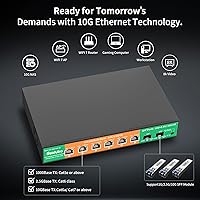
Specifications

  • RJ45 Ports: Includes 6 x 10G RJ45 copper ports, each supporting auto-negotiation across 1G, 2.5G, 5G, and 10G speeds.
  • SFP+ Ports: Includes 2 x 10G SFP+ ports suitable for DAC cables, optical transceivers, or fiber uplinks.
  • Switching Capacity: Non-blocking switching fabric delivers a total throughput capacity of 160Gbps across all ports simultaneously.
  • Switch Type: Fully unmanaged — no configuration interface, no software, and no login credentials required.
  • Speed Negotiation: All RJ45 ports support automatic MDI/MDIX and negotiate link speed at 1G, 2.5G, 5G, or 10G depending on the connected device.
  • Chassis Material: Enclosure is constructed from all-metal housing for improved rigidity and heat dissipation compared to plastic alternatives.
  • Lightning Protection: Integrated 6KV lightning and surge protection is built into the port circuitry to guard against electrical transients.
  • Cooling System: Active cooling via a low-noise internal fan maintains operating temperatures under load in rack and desktop environments.
  • Mounting Options: Supports both flat desktop placement and 19″ rack installation; rack mount brackets are included in the box.
  • Power Input: Operates on 110V AC power; a power cord is included in the package.
  • Package Dimensions: Packaged dimensions measure 13.94 x 9.69 x 3.62 inches, reflecting the compact form factor of the unit itself.
  • Package Weight: Complete package weighs 4.2 pounds including the switch unit, power cord, and rack mount hardware.
  • Included Accessories: Box contents include the switch unit, one power cord, and a set of rack mount brackets for 19″ rack installation.
  • Compatible Devices: Verified compatible with 10G NAS devices, gaming PCs, WiFi 6 and WiFi 7 access points, 10G servers, and PCIe network adapters.
  • Interface Types: Combines RJ45 copper and SFP+ fiber or DAC interfaces on a single unit for mixed-media network deployments.
  • Manufacturer: Designed and sold by Reidubo, a newer entrant in the consumer and SMB networking hardware market.
  • After-Sales Support: Reidubo states lifetime technical support is available for this product through their customer service team.
  • First Available: This product was first listed for sale in March 2025, making long-term field reliability data still limited at this stage.

Related Reviews

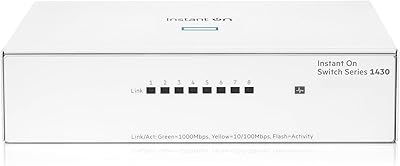
HPE Instant On 1430 8G Unmanaged Switch
83%
96%
Ease of Setup
93%
Reliability & Uptime
97%
Noise & Acoustic Performance
88%
Port Performance & Speed
84%
Value for Money
More
YuLinca 8-Port 10G Managed Network Switch
79%
92%
Port Speed & Auto-Negotiation
89%
Throughput & Switching Performance
88%
Build Quality & Chassis
71%
Web Management Interface
86%
L2 Feature Set Depth
More
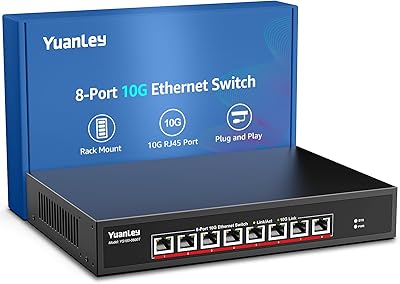
YuanLey 8-Port 10G Unmanaged Ethernet Switch
80%
93%
Setup & Ease of Use
89%
Throughput Performance
86%
Build Quality
88%
Value for Money
71%
Fan Noise & Acoustics
More
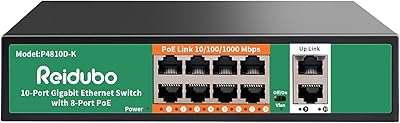
Reidubo P4810D-K 8-Port Gigabit PoE Switch
78%
93%
Ease of Setup
88%
PoE Reliability
67%
Power Budget Adequacy
82%
Build Quality
61%
VLAN Functionality
More
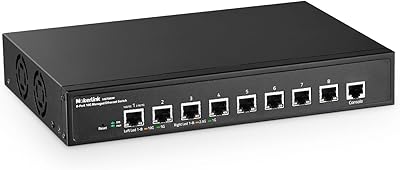
MokerLink 8-Port 10G Managed Ethernet Switch
80%
91%
Throughput Performance
88%
Value for Money
93%
Feature Depth
74%
Web Interface Usability
86%
Build Quality
More
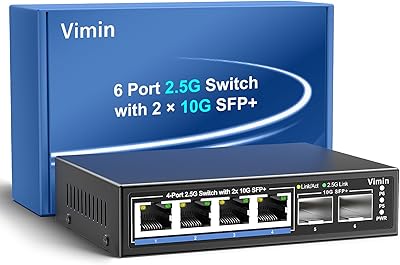
VIMIN 6-Port 2.5G Unmanaged Network Switch
83%
88%
Throughput Performance
84%
Build Quality
93%
Setup & Ease of Use
67%
SFP+ Port Usability
96%
Fanless Noise Level
More
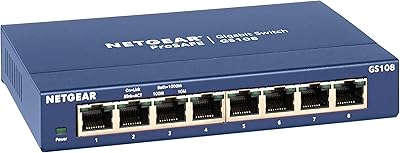
NETGEAR GS108 8-Port Gigabit Ethernet Switch
82%
97%
Ease of Setup
93%
Reliability & Longevity
88%
Build Quality
91%
Value for Money
89%
Port Performance
More
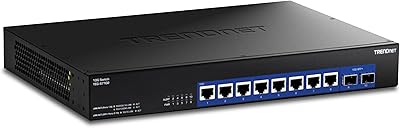
TRENDnet TEG-S7102 10-Port 10G Unmanaged Switch
83%
96%
Ease of Setup
88%
Port Density & Layout
91%
Throughput & Performance
84%
Build Quality
71%
Fan Noise & Thermals
More
TP-Link TL-SX3008F 8-Port 10G SFP+ Switch
88%
91%
Performance
95%
Network Speed
85%
Ease of Setup
89%
Reliability
90%
Build Quality
More
HPE Instant On 1930 8-Port PoE Switch
83%
91%
Ease of Setup
83%
Management App Quality
74%
PoE Performance
88%
Build Quality
72%
Value for Money
More

FAQ

No, nothing at all. The Reidubo 8-Port 10G Unmanaged Network Switch is a true plug-and-play device — you connect the power cable, plug in your network cables, and it starts working immediately. There is no admin panel, no app, and no configuration required.

Yes, it handles mixed-speed environments automatically. Each RJ45 port independently negotiates the best common speed with whatever device is connected, so a gigabit workstation and a 10G NAS can coexist on the same switch without any manual configuration. You do not need to replace your older gear to use this.

This is one of the most common concerns buyers raise, and the honest answer is that it depends on your environment. In a closed rack or a network closet, most users find the noise negligible. In a quiet home office with no background noise, the fan hum is noticeable at idle. If you are particularly sensitive to ambient noise, plan to place this unit in an enclosure or a separate room rather than on your desk.

For the RJ45 ports, you will want Cat6A cabling at minimum for reliable 10G over typical office distances. Standard Cat6 can work at shorter runs but is more susceptible to interference and speed fallback. For the SFP+ ports, a passive DAC cable is the most cost-effective option for connecting a NAS or router that is physically nearby.

Yes, this is one of the most popular ways to use the SFP+ ports on this switch. A compatible DAC cable between the switch and a NAS that has an SFP+ port gives you a clean, low-latency 10G link. Most users connecting Synology or QNAP units via DAC report a smooth, no-fuss experience.

Under typical loads the chassis runs warm but not alarmingly hot to the touch. The active fan keeps internal temperatures in check during normal operation. That said, make sure the side vents are not blocked by other equipment — if you mount it in a tightly packed cabinet without airflow clearance, it will run warmer than intended.

Yes to both. The switch supports standard 19″ rack installation and the rack mount brackets come in the box, so you do not need to source them separately. A few buyers have noted that the brackets may need slight adjustment to align perfectly with certain rack rails, but it fits standard racks without major issues.

It can work well in a small office that just needs fast, reliable connectivity between a handful of machines or servers and does not require traffic management features. However, if your office needs VLANs to isolate departments, port-based access control, or any monitoring capability, you will need a managed switch instead. For pure speed in a simple flat network, this unmanaged 10G unit is a reasonable fit.

Reidubo advertises lifetime technical support, which is a positive commitment for a product at this price level. That said, the brand is relatively new and the volume of warranty claims processed so far is limited, so long-term RMA reliability is not yet well established. If having a proven, well-documented warranty process is critical for your deployment, it is worth factoring that uncertainty into your decision alongside more established brands.

Absolutely — this is actually one of the strongest use cases for this switch. WiFi 7 access points and multi-gig routers can push bandwidth that a standard gigabit switch would immediately bottleneck. Connecting your router and key wired devices through this 10G switch ensures the wired backbone keeps up with the wireless capacity you are paying for.