Overview

The QTHREE Radeon RX 590 GME 8GB Graphics Card is a budget-oriented discrete GPU built on AMD's aging but capable Polaris 20 architecture. The GME designation marks it as a China-market variant of the standard RX 590, with slightly dialed-back clock speeds compared to the original release. QTHREE is a third-party board partner, not an AMD reference design, so expectations around brand prestige should be set accordingly. This budget Polaris GPU occupies an interesting position: a new-retail option competing directly against a wave of used RX 580s at comparable prices. It can hold its own at 1080p under the right conditions, but it is not a powerhouse — and buyers who approach it with that understanding tend to walk away satisfied.

Features & Benefits

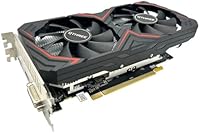
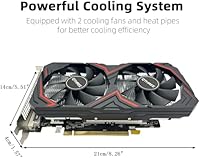
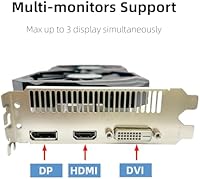
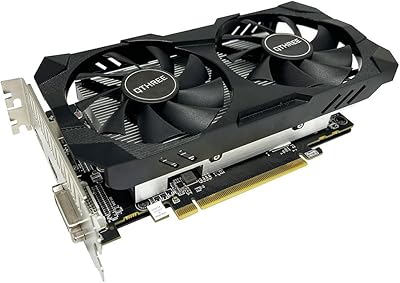
The 8GB GDDR5 buffer on a 256-bit bus is arguably this card's strongest asset — that is more VRAM than several newer budget competitors offer, which makes a real difference in texture-heavy games at 1080p. The dual-fan cooler with a heat pipe does a competent job managing temperatures during longer sessions, though fan noise does creep up under sustained load. Three display outputs — HDMI, DisplayPort, and DVI — make dual or triple monitor setups straightforward. The PCI Express 3.0 x16 interface slots into virtually any motherboard, including older platforms. DirectX 12 support keeps this RX 590 GME card compatible with modern titles, even if raw horsepower will cap settings in the most demanding engines.

Best For

This QTHREE graphics card makes the most sense for builders on a tight budget stepping up from integrated graphics or an aging discrete card. It handles casual 1080p gaming well — older titles, indie releases, and less demanding modern games at medium-to-high settings are well within reach. HTPC builders will appreciate the quiet idle behavior and flexible display outputs. Office users who game occasionally but cannot justify a higher-end investment will find it adequate. Two caveats deserve emphasis: this card is not macOS compatible and will not fit small form factor cases, so check your build carefully before ordering. With a 175W TDP, a reliable mid-range power supply is also a firm requirement.

User Feedback

Across roughly 170 reviews, this RX 590 GME card holds a 4.2-star average — solid for its price tier. The most consistent praise centers on straightforward installation and stable driver behavior under Windows 10, with many buyers calling it good value for entry-level gaming. That said, recurring complaints are worth noting: fan noise becomes noticeable under gaming load, and some users ran into friction configuring drivers on Windows 11. A handful of reviews mention thermal throttling during extended play sessions. Packaging drew mixed reactions, with some units arriving well-protected and others with minimal padding. A notable number of buyers also questioned whether this card's new-retail pricing justifies the cost compared to used RX 580s available at similar prices on the secondhand market.

Pros

  • 8GB of GDDR5 VRAM on a 256-bit bus is genuinely generous for this price tier.
  • This RX 590 GME card handles 1080p gaming in older and less demanding titles without breaking a sweat.
  • Triple display outputs let you run up to three monitors without needing a hub or adapter.
  • DirectX 12 support keeps the card compatible with a wide range of current game titles.
  • PCI Express 3.0 x16 interface means broad compatibility with both modern and older motherboards.
  • Dual-fan cooling with a heat pipe keeps temperatures reasonable during moderate gaming sessions.
  • Installation is straightforward, and most buyers report stable driver behavior on Windows 10.
  • At idle, the card runs quietly — a real plus for HTPC and office environments.
  • The dual-slot form factor fits comfortably in standard ATX mid-tower and full-tower cases.

Cons

  • Fan noise climbs noticeably under sustained gaming load, which some users find distracting.
  • Driver setup on Windows 11 has caused friction for a meaningful number of buyers.
  • Thermal throttling has been reported during extended, intensive gaming sessions.
  • Polaris architecture is aging, and long-term driver support from AMD is not guaranteed.
  • Packaging quality from this third-party seller has been inconsistent, with some units arriving poorly protected.
  • No macOS support at all — a hard dealbreaker for Apple ecosystem users.
  • Incompatible with small form factor cases, limiting build flexibility significantly.
  • At this price, used RX 580 cards on the secondhand market present a real value challenge to this card.
  • The 175W TDP requires a reliable mid-range or better PSU, adding cost if your current unit is marginal.

Ratings

The scores below were generated by AI after analyzing verified buyer reviews for the QTHREE Radeon RX 590 GME 8GB Graphics Card from global sources, with spam, bot activity, and incentivized feedback actively filtered out. Each category reflects the full picture — where real users found genuine value and where recurring frustrations surfaced. Nothing has been smoothed over to make the product look better than it is.

Value for Money
72%
28%
For buyers who need a new discrete GPU at a tight budget, this RX 590 GME card delivers a meaningful performance step over integrated graphics without a painful outlay. The 8GB GDDR5 VRAM is notably generous for the price point, and many users felt they got more than they expected for casual gaming.
The value equation gets murkier when used RX 580 cards appear on the secondhand market at comparable or lower prices. Several buyers explicitly noted this in their reviews, and for shoppers willing to buy used, the justification for paying new-retail prices here becomes harder to make.
1080p Gaming Performance
67%
33%
In older titles, esports games, and less graphically intensive releases, this budget Polaris GPU handles 1080p at medium-to-high settings without major frame drops. Games like CS2, Fortnite, and older AAA titles from 2018 to 2021 generally run at playable framerates with the right settings dialed in.
Push into newer, more demanding AAA games and the cracks show quickly — users report needing to drop to medium or low settings to maintain smooth performance. The architecture is aging, and it simply does not have the raw throughput for consistent high-frame-rate gaming in titles from 2023 onward.
Cooling Efficiency
63%
37%
During casual gaming sessions and everyday desktop use, the dual-fan cooler with heat pipe keeps temperatures at reasonable levels, and several users appreciated that the card ran quietly in idle or light workloads.
Under sustained gaming load, particularly in warm environments, thermal throttling has been reported by a notable subset of buyers. Fan noise under full load is also a recurring complaint — the cooler does its job, but not quietly or effortlessly.
Ease of Installation
84%
Most buyers found the physical installation entirely uncomplicated — standard dual-slot form factor, a single PCIe power connector, and straightforward slot compatibility with a broad range of motherboards. Users upgrading from older cards or integrated graphics described the swap as quick and painless.
The only consistent friction point is the absence of a power cable in the box, which caught a few buyers off guard. It is a minor but avoidable inconvenience that adds an extra step for anyone whose PSU cables do not reach or lack a compatible connector.
Driver Stability
68%
32%
On Windows 10, the vast majority of users reported stable, trouble-free driver performance after installing the AMD Adrenalin software. Once set up correctly, the card tends to behave reliably without crashes or display anomalies during normal use.
Windows 11 is a different story — a meaningful number of reviewers ran into driver installation issues, including failed installs and display problems, requiring manual troubleshooting. AMD's support for older Polaris cards on newer operating systems is functional but not polished.
Build Quality
71%
29%
The card feels solid in hand, and the dual-fan shroud has a reasonably sturdy construction for its price tier. Users who have had the card running for several months have not reported issues with physical degradation or connector loosening.
QTHREE is not a well-known brand, and some buyers noted the finish and component quality feel a step below what you would expect from established partners like Sapphire or PowerColor. There is a perception gap between this card and more reputable board designs.
Noise Level
58%
42%
At idle and during low-load tasks like video playback or office work, the fans are barely audible, which makes this QTHREE graphics card reasonably pleasant to live with in a quiet home environment.
Gaming sessions consistently push the fans into a noise range that many users described as distracting. For anyone sensitive to fan noise or working in a silent room, this is a genuine and recurring issue rather than an edge case.
Multi-Display Support
81%
19%
Having HDMI, DisplayPort, and DVI outputs in one card makes this a flexible choice for multi-monitor setups without needing adapters. Productivity users and HTPC builders praised this feature as one of the most practical aspects of the card's design.
The DVI output is increasingly a legacy port, and buyers hoping to connect three modern monitors may find that one display requires an adapter. It is not a dealbreaker, but the port selection reflects the card's age.
Compatibility
73%
27%
PCIe 3.0 x16 compatibility covers an enormous range of motherboards including platforms going back a decade, making this card a drop-in upgrade for many existing systems without any additional hardware changes.
The hard exclusions are real and worth emphasizing — no macOS support and no SFF case compatibility are non-negotiable limitations. Buyers who miss these details before purchasing account for a noticeable share of negative reviews.
Thermal Throttling Resistance
54%
46%
Under moderate workloads and in well-ventilated cases, the card maintains consistent clock speeds without obvious performance drops. Short gaming bursts in cooler environments tend to go smoothly.
Extended gaming sessions, particularly in warmer ambient temperatures or cases with poor airflow, have triggered throttling reports from multiple buyers. This is an architectural and cooler limitation that cannot be easily resolved without aftermarket solutions.
VRAM Adequacy
83%
8GB of GDDR5 is a legitimate strength for this price tier — it is more than what several competing budget cards offer, and it makes a tangible difference when running texture packs or keeping multiple applications open alongside a game.
While the VRAM capacity is good, the 256-bit bus width and GDDR5 standard mean memory bandwidth lags behind newer GDDR6-based cards. In bandwidth-limited scenarios, that gap becomes measurable even if the raw capacity looks impressive on paper.
Packaging & Unboxing
57%
43%
Some buyers reported receiving their cards in well-padded, secure packaging that gave confidence in the product's protection during transit. When packaging is good, the unboxing experience is unremarkable but adequate.
A consistent thread in the reviews involves inconsistent packaging quality — some units arrived with minimal protection, and a few buyers reported cosmetic damage on the box. For a third-party seller at this price point, more uniform packaging standards would reduce return rates.
Long-Term Reliability
66%
34%
Buyers who have owned this card for six months or more generally report no hardware failures or degraded performance, suggesting the underlying components are at least adequately rated for normal consumer use.
The Polaris architecture is old enough that long-term driver support from AMD is not guaranteed, and the QTHREE brand does not have an established track record to draw confidence from. For buyers who keep cards for several years, this is a legitimate consideration.

Suitable for:

The QTHREE Radeon RX 590 GME 8GB Graphics Card is a practical pick for budget-conscious PC builders who want a meaningful step up from integrated graphics without spending heavily. If your gaming list leans toward older titles, indie games, or less graphically demanding releases, this card handles 1080p at medium-to-high settings without much fuss. It also fits well into HTPC builds, where its quiet idle behavior and flexible triple-display outputs cover both home theater and light productivity needs. Office users who occasionally game but cannot justify a premium GPU will find it hits a reasonable balance between capability and cost. Buyers upgrading aging systems with standard ATX cases and mid-range power supplies will appreciate that this card slots in without requiring a platform overhaul.

Not suitable for:

Buyers chasing smooth framerates in modern AAA titles at high or ultra settings will quickly hit the ceiling of what this budget Polaris GPU can deliver, and frustration is likely if expectations are not calibrated correctly. The Polaris 20 architecture is genuinely old at this point, and newer budget alternatives like the RX 6500 XT offer a more forward-looking platform despite sometimes having less VRAM. Mac users must look elsewhere entirely — this card has no macOS support whatsoever, full stop. Small form factor PC builders are also out of the picture, as the dual-slot cooler and card dimensions rule out SFF cases. Anyone considering this QTHREE graphics card should also weigh it honestly against used RX 580s available on the secondhand market, which often land at comparable prices with similar real-world performance. If your PSU is underpowered or aging, the 175W TDP requirement adds another compatibility hurdle worth resolving before buying.

Specifications

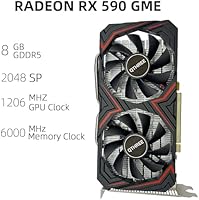
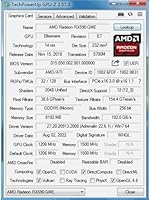
  • GPU Model: This card is built on the AMD Radeon RX 590 GME chip, a variant of the Polaris 20 processor manufactured on a 14nm process node.
  • VRAM: The card carries 8GB of GDDR5 memory, offering a solid buffer for 1080p gaming workloads and multi-display productivity tasks.
  • Memory Bus: A 256-bit memory bus width provides reasonable memory bandwidth for the card's performance tier.
  • GPU Clock Speed: The base GPU clock runs at 1206MHz, which is slightly lower than the standard RX 590 but adequate for entry-level 1080p gaming.
  • Memory Speed: Effective memory clock speed is rated at 6000MHz, supporting texture throughput in demanding 1080p game scenes.
  • API Support: The card supports DirectX 12, Vulkan, and OpenGL 4.6, keeping it compatible with a broad range of current and legacy software titles.
  • Display Outputs: Three video outputs are provided: one HDMI port, one DisplayPort, and one DVI port, supporting up to three simultaneous displays.
  • Interface: The card uses a PCI Express 3.0 x16 slot interface, ensuring compatibility with a wide range of motherboards including older Intel and AMD platforms.
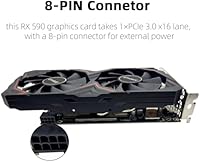
  • Power Connector: One 6-pin or 8-pin power connector is required; the power cable itself is not included in the box.
  • Power Draw: Maximum TDP is rated at 175W, requiring a power supply unit with adequate headroom above that figure for stable operation.
  • Cooling System: Cooling is handled by a dual-fan assembly paired with a heat pipe, designed to manage temperatures during extended gaming or multimedia sessions.
  • Card Dimensions: The card measures 8.43 inches in length, 5.08 inches in width, and 1.77 inches in height.
  • Card Weight: The card weighs 1.39 pounds, which is typical for a dual-slot cooler design in this performance category.
  • Slot Width: This is a dual-slot card, occupying two expansion bay slots in a standard ATX or micro-ATX chassis.
  • macOS Support: This card has no macOS compatibility and cannot be used in Apple systems or Hackintosh builds relying on native GPU support.
  • SFF Compatibility: The card is not compatible with small form factor cases due to its physical dimensions and dual-slot cooler design.
  • Process Node: The Polaris 20 GPU at the heart of this card is built on a 14nm FinFET manufacturing process.
  • Shader Processors: The card features 2048 stream processors, which handle the parallel compute workload during gaming and general GPU tasks.

Related Reviews
QTHREE Radeon RX 560 XT 8GB Graphics Card
68%
61%
Value for Money
53%
Gaming Performance
88%
Installation & Setup
67%
Thermal Performance
58%
Fan Noise
More
QTHREE Radeon RX 560 XT 8GB Graphics Card
68%
57%
Gaming Performance
61%
Value for Money
72%
VRAM & Memory Capacity
78%
Thermal Management & Cooling
67%
Build Quality & Physical Construction
More
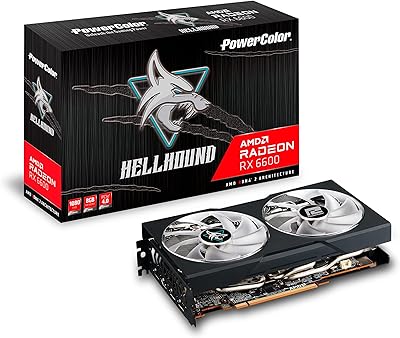
PowerColor Hellhound AMD Radeon RX 6600 8GB Graphics Card
85%
91%
Value for Money
88%
Gaming Performance (1080p)
85%
Cooling Efficiency
75%
Noise Level Under Load
90%
Ease of Installation
More
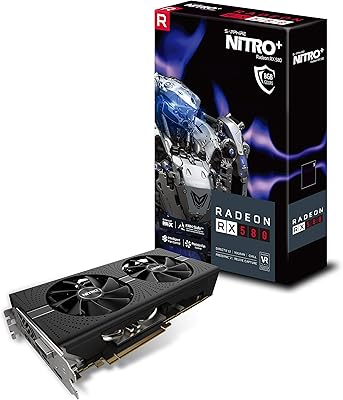
Sapphire NITRO+ RX 580 8GB Graphics Card
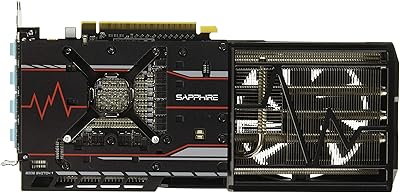
80%
84%
1080p Gaming Performance
88%
Thermal Management
91%
Build Quality
83%
Value for Money
57%
Power Efficiency
More
Sapphire Radeon RX Vega 56 8GB HBM2 Graphics Card
83%
89%
Performance at 1440p and 1080p
84%
Cooling System Efficiency
91%
Value for Money
70%
Size and Compatibility
85%
Build Quality and Durability
More
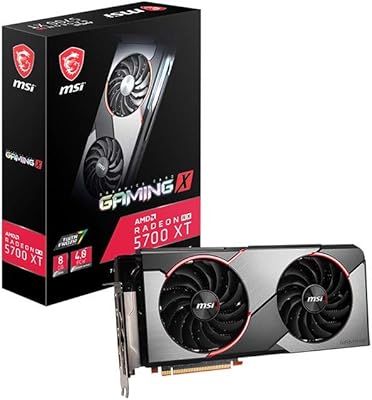
MSI Radeon RX 5700 XT Gaming X 8GB GDDR6 Graphics Card
84%
91%
Gaming Performance
84%
Cooling Efficiency
88%
RGB Lighting Customization
70%
Driver/Software Installation
65%
Noise Levels Under Load
More
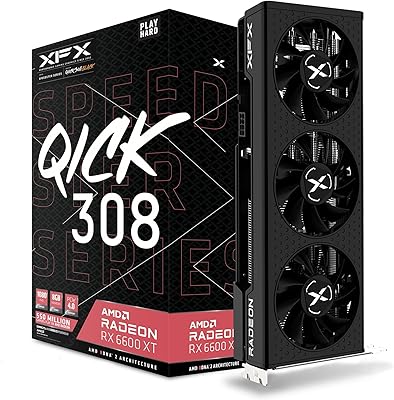
XFX QICK308 RX 6600 XT Graphics Card
79%
88%
1080p Gaming Performance
67%
1440p Gaming Performance
91%
Cooling Performance
86%
Noise Levels
53%
Ray Tracing Performance
More
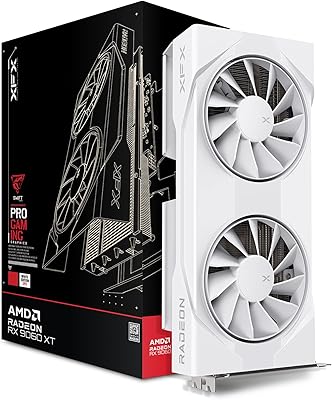
XFX RX 9060 XT 8GB Graphics Card
82%
88%
Gaming Performance at 1440p
93%
Gaming Performance at 1080p
67%
VRAM Adequacy
86%
Thermal Performance
89%
Noise Levels
More
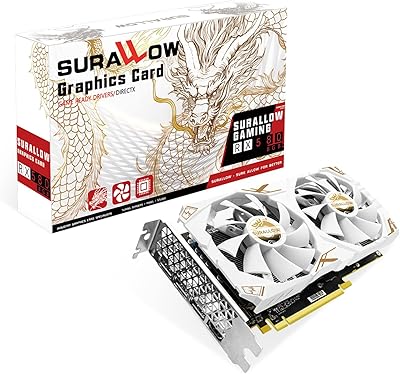
SURALLOW RX 580 8GB Graphics Card
73%
83%
1080p Gaming Performance
78%
Value for Money
76%
Thermal Management & Cooling
61%
Build & Component Quality
89%
Driver Support & Software Compatibility
More
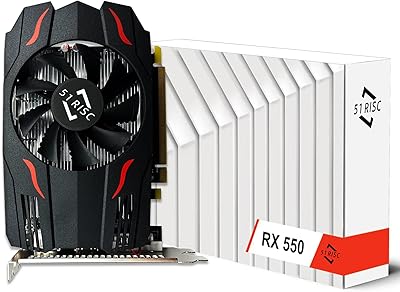
51Risc Radeon RX 550 4GB Graphics Card
81%
92%
Value for Money
85%
Gaming Performance (1080p)
88%
Power Efficiency
84%
Compatibility with Older PCs
89%
Compact Size
More

FAQ

Yes, it will. PCIe 3.0 cards are backward compatible with PCIe 2.0 slots. You may see a marginal bandwidth difference in theory, but in real-world gaming at 1080p, it is unlikely to matter at all.

The card itself draws up to 175W at peak, so when you factor in your CPU and other components, a 450W to 550W power supply from a reputable brand is a sensible minimum. If your current PSU is already aging or undersized, it is worth replacing it before installing this card.

Yes. The card has HDMI, DisplayPort, and DVI outputs and officially supports up to three simultaneous displays. This makes it a practical option for productivity setups or anyone who wants a basic multi-monitor gaming arrangement.

It does work with Windows 11, but a portion of buyers have reported needing some extra steps to get AMD drivers installed correctly on that OS. Downloading the latest Adrenalin driver package directly from AMD's website, rather than relying on Windows Update, tends to resolve most of those issues.

Honestly, it is a close call. The RX 590 GME has a slight edge over the RX 580 in raw compute, but the gap is narrow. The advantage of buying this card new is the warranty and the knowledge of its history — used cards from unknown sellers carry wear risk. If you find a clean used RX 580 from a trusted source at a meaningfully lower price, it is worth considering, but this card is a reasonable alternative if you prefer buying new.

No, it is not. This card has zero macOS support — no drivers exist for it on Apple platforms, and AMD has not provided macOS compatibility for Polaris 20 cards in any recent release. Mac users need to look at cards on Apple's official supported list.

At idle or light use, the fans are quite quiet. Under sustained gaming load, they do spin up noticeably — several users describe the noise as moderate but present. It is not disruptive in a typical room with background noise, but if you game in a very quiet environment, it is worth knowing about.

In most standard mid-tower ATX cases, yes. The card is 8.43 inches long and takes up two slots, which fits comfortably in the vast majority of full-size and mid-tower builds. Just avoid small form factor or mini-ITX cases, as it will not fit there.

It can handle basic GPU-accelerated workloads — Adobe Premiere and DaVinci Resolve both support AMD cards through OpenCL and Vulkan compute. The 8GB of VRAM is actually a practical advantage for editing timelines with higher-resolution footage. That said, this budget Polaris GPU is not a workstation card, so heavy professional rendering workloads will feel slow.

No power cable is included in the box, which has caught a few buyers off guard. Make sure your power supply has a free 6-pin or 8-pin PCIe connector available before the card arrives, or pick up an adapter cable separately if needed.