Overview
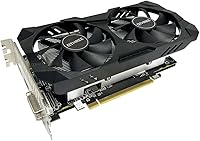
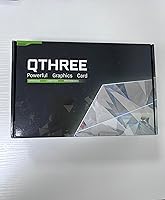
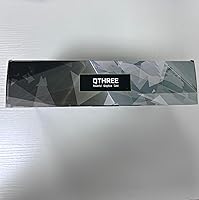
The QTHREE Radeon RX 560 XT 8GB Graphics Card is a budget-tier discrete GPU built around AMD's aging but capable Polaris 10 LE1 silicon — not a new architecture, despite the branding suggesting otherwise. QTHREE is a third-party board partner with limited market recognition, so don't expect the polish of an ASUS or Sapphire build. What you do get is 1792 stream processors and a healthy 8GB of GDDR5 memory for the price tier, which is genuinely more VRAM than many competing cards at this level. This is a 1080p entry-level card, full stop. Treat it accordingly and it can surprise you; expect flagship-level gaming and it absolutely will not.
Features & Benefits
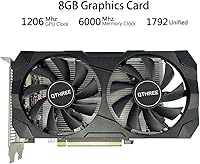
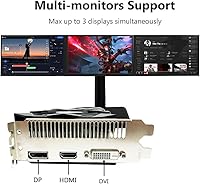
This RX 560 XT card runs on a 128-bit memory bus, which keeps bandwidth to 96 GB/s — functional, but a genuine constraint when textures get heavier. The core clock sits at 1206 MHz across 1792 stream processors, delivering modest rasterization that holds up in lighter workloads. Dual-fan cooling manages the 150W thermal envelope reasonably well, avoiding the passive throttling that plagues some single-fan alternatives. The triple output configuration — HDMI, DisplayPort, and DVI — is a practical win for older monitors still on DVI connections. PCI-E 3.0 x16 means broad motherboard compatibility, and DirectX 12 support keeps it usable across a decent range of older and indie game titles.
Best For
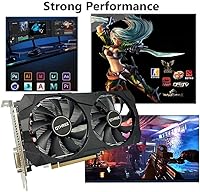
This budget graphics card makes the most sense for a specific kind of builder: someone with a pre-2018 desktop running integrated graphics who needs a real GPU without breaking the bank. It handles light 1080p gaming competently — think League of Legends, older RPGs, or indie titles — though you should not push it toward modern AAA games expecting smooth framerates. HTPC users will find it capable for 4K media playback over HDMI or DisplayPort, which is a legitimate and often overlooked use case. The single 6-pin power requirement also makes it attractive for older or lower-wattage PSUs that could not feed a more demanding card.
User Feedback
Buyers who went in with clear expectations tend to come away satisfied. Driver installation on Windows 10 is commonly praised as painless, with most users reporting the card was recognized without manual intervention. The dual-fan cooler gets mixed marks — adequate under light loads, but noticeably audible during sustained gaming sessions. A recurring frustration is the marketing language implying performance that Polaris-era silicon simply cannot deliver today; several buyers felt misled about modern AAA compatibility. A smaller number flagged driver conflicts on certain older chipsets. Overall, the QTHREE GPU earns its stars from budget-conscious upgraders, but disappoints anyone expecting contemporary gaming horsepower.
Pros
- 8GB of GDDR5 memory is unusually generous for this price tier, giving it headroom for older texture-heavy titles.
- Plug-and-play driver installation on Windows 10 is consistently smooth, with most users up and running within minutes.
- Triple display output — HDMI, DisplayPort, and DVI — is a practical advantage for multi-monitor or legacy monitor setups.
- The dual-fan cooler keeps thermals in check during light to moderate gaming sessions without constant throttling.
- PCI-E 3.0 x16 compatibility means this RX 560 XT card will slot into virtually any desktop motherboard from the last decade.
- DirectX 12 and OpenGL 4.6 support keeps it viable for a wide library of older and indie PC games.
- The single 6-pin power connector makes it accessible for systems with modest or aging power supplies.
- Linux support out of the box is a genuine plus for Ubuntu users who want a discrete GPU without driver headaches.
Cons
- The 128-bit memory bus creates a real bandwidth ceiling that shows up in demanding or texture-heavy game scenes.
- Fan noise climbs noticeably during sustained gaming loads, which can be distracting in quieter environments.
- QTHREE is an obscure board partner with limited customer support infrastructure if something goes wrong post-purchase.
- The Polaris architecture is nearly a decade old, and driver optimization from AMD for this tier is no longer a priority.
- Marketing claims around VR and high-refresh gaming are misleading and set false expectations for new buyers.
- Some users have reported driver conflicts on specific older chipsets, requiring manual troubleshooting to resolve.
- At its price point, used cards from more recent GPU generations occasionally surface and offer meaningfully better performance.
- The 14nm process node and aging architecture mean this budget graphics card has a shorter viable lifespan than newer alternatives.
Ratings
The scores below reflect AI-driven analysis of verified global buyer reviews for the QTHREE Radeon RX 560 XT 8GB Graphics Card, with spam, bot-generated, and incentivized feedback actively filtered out before scoring. Each category is weighted against real-world usage patterns reported by buyers across budget PC builds, HTPC setups, and light gaming rigs. Both the genuine strengths and the recurring frustrations are represented transparently — nothing is glossed over.
Value for Money
Gaming Performance
Installation & Setup
Thermal Performance
Fan Noise
Build Quality
Driver Stability
Display Connectivity
1080p Media Playback
Compatibility
Power Efficiency
Multi-Monitor Support
Brand Reliability
Suitable for:
The QTHREE Radeon RX 560 XT 8GB Graphics Card is a practical pick for a well-defined group of buyers who know exactly what they need. If you have a desktop from 2015 to 2018 that is still running on integrated graphics, dropping this card in is one of the most affordable ways to get a real gaming experience without replacing the whole system. It is a solid fit for casual 1080p gamers who stick to less demanding titles — MOBAs, older RPGs, indie games, and retro classics — where the Polaris chip still holds its own comfortably. HTPC builders will also find it genuinely useful, since it handles 4K media playback over HDMI or DisplayPort without breaking a sweat, making it a quiet workhorse for living room setups. The single 6-pin power requirement is a real advantage for anyone running an older or lower-wattage PSU that simply cannot feed a more power-hungry card.
Not suitable for:
Buyers chasing modern AAA gaming performance should look elsewhere before considering this card. The QTHREE Radeon RX 560 XT 8GB Graphics Card is built on AMD's Polaris architecture from 2016, and no amount of marketing language changes the fact that it will struggle with titles like Cyberpunk 2077, Alan Wake 2, or any graphically intensive release from the last few years. The 128-bit memory bus keeps bandwidth at 96 GB/s, which becomes a noticeable bottleneck in texture-heavy scenes even at 1080p. Despite the listing suggesting VR compatibility, real-world VR performance is too inconsistent to recommend it for headset gaming. Content creators, 3D artists, and anyone running GPU-accelerated workloads will also hit the ceiling fast, as the compute throughput simply is not competitive with anything released in the last four years.
Specifications
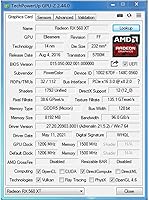
- GPU Model: The card is built on AMD's Radeon RX 560 XT using the Polaris 10 LE1 die, a 14nm architecture originally introduced in 2016.
- Stream Processors: 1792 stream processors handle all rendering and compute workloads on this card.
- Core Clock: The GPU core runs at a base and boost clock of 1206 MHz under standard operating conditions.
- Memory Size: 8GB of GDDR5 video memory is onboard, which is generous relative to competing cards in this price tier.
- Memory Clock: The GDDR5 memory operates at an effective speed of 6000 MHz.
- Memory Interface: Memory communicates over a 128-bit bus, resulting in a peak bandwidth of 96 GB/s.
- Bus Interface: The card connects to the motherboard via a PCI Express x16 3.0 slot and is backward compatible with PCI-E 2.0 boards.
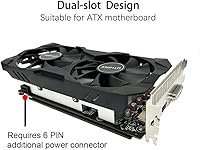
- Power Draw: Maximum TDP is rated at 150W, supplied through a single 6-pin PCIe power connector.
- Display Outputs: Three video outputs are provided: one HDMI port, one DisplayPort, and one DVI port, supporting up to three monitors simultaneously.
- API Support: The card supports DirectX 12 and OpenGL 4.6, keeping it compatible with a broad range of current and legacy software titles.
- OS Support: Officially supported operating systems include Windows 10 and Windows 7 (both 64-bit), as well as Ubuntu and x86-64 Linux distributions.
- Cooling System: A dual-fan active cooler manages thermals across the card's heatsink, designed to prevent sustained thermal throttling under moderate load.
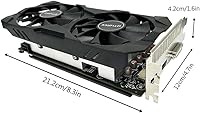
- Form Factor: This is a dual-slot card measuring approximately 8.27 x 4.72 inches, suitable for standard ATX and mid-tower cases.
- Card Weight: The card weighs approximately 1.32 pounds, which is typical for a dual-slot, dual-fan GPU at this size.
- Process Node: The Polaris 10 LE1 chip is fabricated on a 14nm process node by GlobalFoundries.
- Multi-Monitor: The triple output configuration supports simultaneous connection of up to three displays for expanded desktop or productivity setups.
- 4K Output: The card can output a 4K signal at 60Hz over HDMI or DisplayPort, suited for media playback rather than 4K gaming.
- VR Capability: While DirectX 12 support technically meets minimum VR API requirements, real-world VR gaming performance is limited and not reliably smooth.
Related Reviews
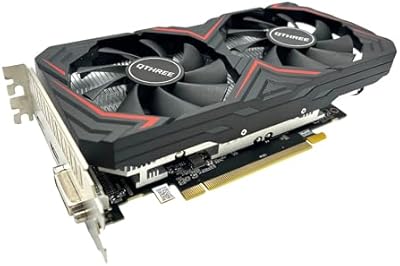
QTHREE Radeon RX 590 GME 8GB Graphics Card
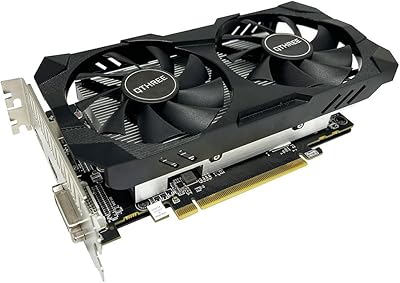
QTHREE Radeon RX 560 XT 8GB Graphics Card
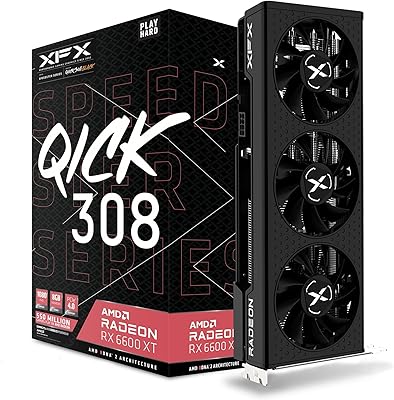
XFX QICK308 RX 6600 XT Graphics Card
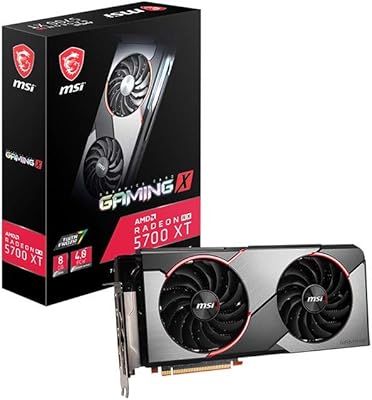
MSI RX 5700 XT Gaming X GPU
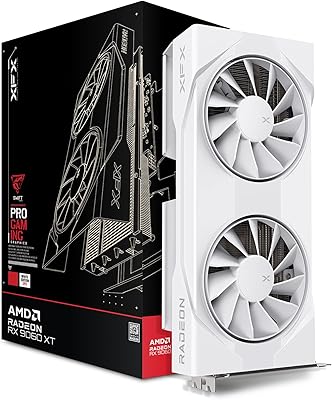
XFX RX 9060 XT 8GB Graphics Card
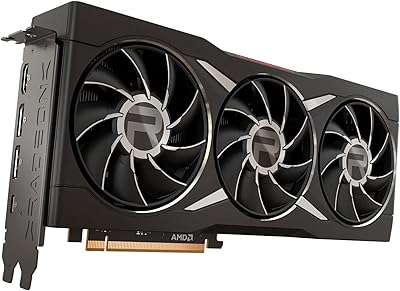
AMD Radeon RX 6950 XT Graphics Card
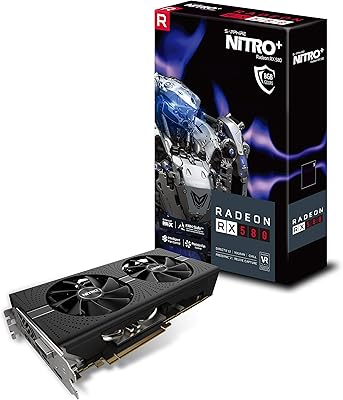
Sapphire NITRO+ RX 580 8GB Graphics Card
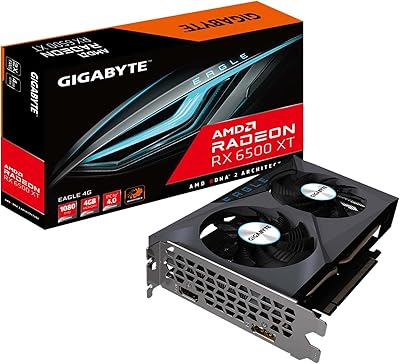
GIGABYTE Radeon RX 6500 XT Eagle 4GB Graphics Card
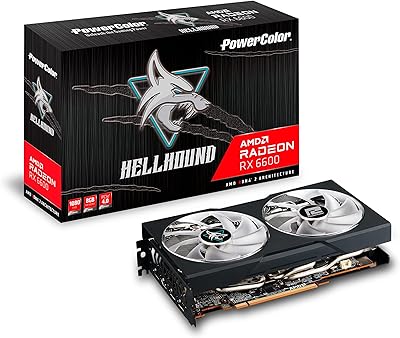
PowerColor Hellhound AMD Radeon RX 6600 8GB Graphics Card