Overview

The 51RISC RX 550 4GB Graphics Card is a no-frills, low-profile discrete GPU built for office workstations and home theater PCs rather than gaming rigs. Based on AMD's Radeon RX 550 Lexa architecture on a 14nm process, it slots into the entry-level segment where the goal is simply doing more than integrated graphics can. The card draws all its power straight from the PCIe slot — no external connector needed — which matters more than it sounds if you're working with a slim case or an older system. At roughly 5.7 x 4.4 inches, this low-profile GPU fits where many cards simply cannot.

Features & Benefits

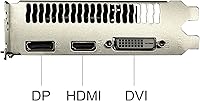
Under the hood, this RX 550 card runs AMD's Lexa chip with 512 stream processors, clocked at 1100MHz base and boosting to 1183MHz. Paired with 4GB of GDDR5 memory on a 128-bit bus at an effective 7GHz, it handles everyday tasks and video decoding without complaint. The triple-output configuration — HDMI, DisplayPort, and DVI-D — gives genuine flexibility for multi-monitor setups. H.265/HEVC hardware decode support is one of the more practical perks here, letting budget or older systems offload 4K video playback to the GPU rather than straining the CPU. The 50W power draw keeps things cool and quiet.

Best For

This low-profile GPU earns its place in a few very specific scenarios. If you're building a home theater PC and need hardware 4K video decode without cramming in a full-size card, it checks that box cleanly. Older desktops with modest 250W power supplies can take this card without a PSU upgrade, removing a common barrier to adding discrete graphics. Office users who want to drive two or three monitors simultaneously — without the heat and noise of a more powerful card — will appreciate how unobtrusive it is. Just don't expect it to run modern games at any playable setting.

User Feedback

Buyers largely echo a consistent theme: the 51RISC graphics card does exactly what it promises and nothing more. Installation gets frequent praise — plug in and it works, with AMD's standard drivers handling setup without drama for most users. Home theater enthusiasts and office multi-monitor users report solid, reliable results. Where feedback turns critical is predictable: buyers who expected gaming performance were disappointed, and a handful noted the single fan becomes audible under sustained load. Driver setup occasionally required a manual step on older Windows installs. A 4.2-star average across nearly 200 reviews reflects genuine buyer satisfaction — provided expectations are set correctly from the start.

Pros

  • Requires no external power connector, making it safe for older or low-wattage PSUs starting at 250W.
  • Compact enough to fit mini-ITX and slim desktop cases where most cards cannot.
  • Hardware H.265/HEVC decode support enables smooth 4K media playback without taxing the CPU.
  • Triple display outputs — HDMI, DisplayPort, and DVI-D — cover virtually every monitor type.
  • Installation is straightforward; AMD drivers handle setup cleanly with minimal manual intervention.
  • 50W power draw keeps heat output and noise low during typical office and media use.
  • 4GB of GDDR5 memory is adequate for multi-monitor desktop work and video streaming tasks.
  • This RX 550 card carries a 4.2-star average across nearly 200 buyer reviews, reflecting consistent satisfaction.

Cons

  • Completely unsuitable for modern PC gaming — even older or less demanding titles may struggle.
  • A single small fan can become audible under sustained load, which may bother noise-sensitive users.
  • 128-bit memory bus limits bandwidth, which becomes a bottleneck in any GPU-intensive task.
  • A small number of buyers reported needing a manual driver installation step on older Windows versions.
  • Brand recognition for 51RISC is limited, which may raise questions about long-term support or warranty reliability.
  • No performance headroom for GPU-accelerated creative software, 3D rendering, or machine learning workloads.
  • The card uses a PCIe 3.0 x8 interface rather than x16, which may affect compatibility in certain older boards.
  • Build quality feedback is mixed — some reviewers found the overall construction feels lightweight for the price.

Ratings

The 51RISC RX 550 4GB Graphics Card has been evaluated by our AI system after analyzing verified global buyer reviews, with spam, bot-generated, and incentivized feedback actively filtered out to reflect only genuine purchase experiences. Scores transparently capture both the real strengths that earned this low-profile GPU a loyal following and the honest pain points that frustrated buyers who misjudged its intended purpose. The result is a clear-eyed picture of where this card genuinely delivers and where it falls short.

Value for Money
83%
Buyers who needed a low-power discrete GPU for an older office PC or a slim HTPC build consistently found this card punched above its price bracket for those specific tasks. Driving three monitors or decoding 4K HEVC video without touching the power supply felt like a meaningful upgrade for very little outlay.
Buyers who compared it against slightly pricier alternatives — or who later realized they needed gaming capability — felt the value equation did not hold up. The narrow use-case focus means it represents poor value for anyone outside its intended audience.
Installation Ease
88%
Most buyers described the physical installation as effortless — slot it in, boot up, and Windows detects it within moments. The absence of a power cable means there is genuinely nothing else to connect, which removes a common stumbling block for less experienced builders.
A portion of users encountered friction specifically on older Windows installs, where a clean driver installation was needed to clear conflicts with previously loaded generic display drivers. AMD's Radeon Software, while capable, can feel heavyweight for users who just need basic display output.
Multi-Monitor Support
86%
Office users who set this low-profile GPU up with two or three monitors reported genuinely smooth day-to-day performance across productivity apps, web browsers, and video calls. Having HDMI, DisplayPort, and DVI-D on one card eliminated the need for adapters in most real-world desk setups.
While three outputs are listed, some users noted that running all three simultaneously at higher resolutions introduced minor lag in display switching. It is reliable for typical office resolutions but pushing all three outputs to 1440p or above is not where this card is most comfortable.
Media Playback Quality
84%
Hardware H.265/HEVC decode made a real difference for HTPC builders who stream 4K content or play high-bitrate local files — the CPU was left free while the card handled the decode pipeline quietly and efficiently. Users building living-room media centers praised how cool and silent it ran during long movie sessions.
A handful of buyers expecting broader codec acceleration were disappointed to find the card does not cover every format with the same hardware path. AV1 decode, increasingly common on newer streaming platforms, is not supported on this architecture.
Gaming Performance
31%
69%
The card can handle very old or extremely lightweight titles — think decade-old indie games or simple browser-based games — at low settings without completely falling apart. For users with no gaming ambitions at all, this is simply irrelevant.
Modern games are not a realistic use case here, and buyers who tried reported unplayable frame rates even at minimum settings in titles from the last few years. This is an architectural limitation of the RX 550 Lexa chip, not a fixable issue, and buyers should factor that in before purchasing.
Power Efficiency
91%
At a 50W TDP with no external power connector required, this RX 550 card is one of the most power-frugal discrete GPUs available, and buyers with constrained PSUs genuinely appreciated that they could add discrete graphics without touching their power supply budget. Running 24/7 in an office or media PC adds negligible electricity cost.
The low power ceiling is also a hard performance ceiling — there is no boosting past what 50W can sustain, so workloads that benefit from more TDP headroom will always hit a wall with this card. It is efficient by design, but that efficiency is inseparable from its performance limitations.
Noise Level
74%
26%
During typical light use — office applications, web browsing, or 4K video playback — the single-fan cooler runs quietly enough that most users sitting nearby could not hear it over ambient room noise. For a home theater or quiet office environment under normal workloads, it holds up well.
When the card is stressed for sustained periods, the small fan spins up noticeably and several buyers commented it became distracting in quiet rooms. The compact single-fan design has less thermal headroom than a dual-fan card, which shows when the GPU is consistently busy.
Build Quality
62%
38%
For a budget-oriented card, the physical construction is functional and the PCB feels adequately solid for normal installation and use. Most buyers who installed it and left it in place never reported any hardware reliability issues during the review period.
The overall feel is noticeably lightweight and the plastic shroud around the fan lacks the rigidity of more premium cards. Some buyers specifically noted the construction felt cheap when handling it, which creates uncertainty about long-term durability under repeated removal and reinstallation.
Driver Compatibility
71%
29%
Being an AMD product, this low-profile GPU benefits from AMD's broad Radeon Software ecosystem, which covers Windows 10 and 11 well and receives regular updates that improve stability over time. Most users on modern systems had no driver issues whatsoever.
Users on older Windows installs or those upgrading from a different GPU brand occasionally ran into driver conflicts that required a clean wipe and reinstall to resolve. AMD's Radeon Software suite itself is considered bloated by some buyers who only need basic functionality.
Form Factor Fit
89%
At under 5.7 inches long and single-slot thickness, this card is one of the few discrete GPUs that physically fits in slim desktop towers, mini-ITX builds, and small chassis where normal-length cards are simply not an option. Buyers who had previously been stuck with integrated graphics in compact systems found it to be the right tool for that exact problem.
A small number of buyers noted that certain slim cases require a separate low-profile bracket for mounting, which is not included in the box. Verifying bracket compatibility with your specific case before ordering is worth the extra step.
Thermal Performance
69%
31%
Under light workloads the card stays cool without effort, and in open-air or well-ventilated cases thermal performance is genuinely a non-issue for the tasks this card handles day-to-day. HTPC and office users in particular rarely see temperatures that cause concern.
In compact cases with limited airflow, temperatures climb faster than buyers expected during extended use, and the single small fan cannot compensate the way a larger cooler could. Anyone planning to run this card in a very cramped chassis with poor airflow should account for this.
4K Display Output
78%
22%
Connecting a 4K monitor or television and using it for desktop work, streaming, or media playback works reliably, and buyers building living-room media PCs specifically praised how well the card handled 4K output over HDMI without any additional configuration.
The 4K capability is strictly for display output and video playback — any attempt to use it for 4K rendering in games or creative applications exposes the card's fundamental processing limitations quickly. Buyers who did not read carefully enough sometimes conflated 4K display support with 4K performance capability.
Brand Reliability
57%
43%
The 51RISC graphics card carries a 4.2-star rating across a meaningful sample of real buyer reviews, suggesting that units are arriving functional and performing as described for the majority of purchasers. No systemic hardware failure pattern emerged from the available feedback.
51RISC has limited brand recognition compared to established GPU vendors, and buyers expressed uncertainty about after-sales support, warranty responsiveness, and long-term parts availability. For a card intended for low-risk office or media use this may be acceptable, but it is a fair concern.

Suitable for:

The 51RISC RX 550 4GB Graphics Card is a practical choice for anyone who needs to step up from integrated graphics without overhauling their entire system. It was clearly designed with constrained environments in mind — think small form factor builds, slim office towers, or older desktop PCs where a full-size card would never physically fit and the power supply simply cannot spare the wattage. Home theater PC builders will find the hardware H.265/HEVC decode support genuinely useful, since it lets even modest CPUs handle smooth 4K video playback without breaking a sweat. Office users who want to run two or three monitors simultaneously — for spreadsheets, productivity apps, or light creative work — get a reliable, low-noise solution that won't spike power bills. If your goal is escaping the limitations of integrated graphics for everyday computing tasks, this low-profile GPU covers that ground well.

Not suitable for:

Anyone who wants to play modern games — even at low settings — should look elsewhere before purchasing the 51RISC RX 550 4GB Graphics Card. With 512 stream processors and a modest memory bus, this card was never positioned for gaming workloads, and no driver update or settings tweak will change that reality. Content creators who need GPU-accelerated rendering, 3D modeling, or video editing acceleration will quickly hit its ceiling and feel frustrated by what it cannot do. The single-fan cooling design, while adequate for typical light use, has drawn some criticism when the card is pushed under sustained workloads, where fan noise becomes noticeable. Buyers running a modern system with a capable PSU would be wasting the potential of their platform by pairing it with this card — there are faster options available for those who can accommodate them.

Specifications

  • GPU Chip: Powered by the AMD Radeon RX 550 Lexa graphics processor built on a 14nm process node.
  • Stream Processors: Contains 512 stream processors for handling display output, media decoding, and light compute tasks.
  • Base Clock: Core runs at a base clock speed of 1100MHz under typical load conditions.
  • Boost Clock: Automatically boosts to 1183MHz when thermal and power headroom allows.
  • Memory: Equipped with 4GB of GDDR5 video memory operating at an effective 7GHz memory clock.
  • Memory Bus: Uses a 128-bit memory bus, delivering memory bandwidth suited for display and media workloads.
  • Power Draw: Rated at a maximum TDP of 50W, drawing power entirely from the PCIe slot with no external connector.
  • PSU Requirement: Requires a minimum 250W system power supply, making it compatible with many older or compact desktops.
  • Display Outputs: Provides three outputs — one HDMI, one DisplayPort, and one DVI-D — supporting up to three simultaneous displays.
  • PCIe Interface: Connects via a PCI Express 3.0 x8 interface, compatible with standard PCIe x8 and x16 motherboard slots.
  • Card Dimensions: Measures 5.7 x 4.4 x 1.38 inches (approximately 145 x 112 x 35mm), fitting low-profile and mini-ITX cases.
  • Card Weight: Weighs 1.04 pounds, making it one of the lighter discrete GPUs available in this segment.
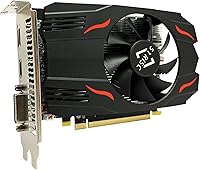
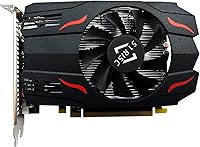
  • Cooling Design: Uses a single-fan cooling solution that keeps the card compact and quiet under typical workloads.
  • Video Decode: Supports hardware H.265/HEVC and H.264 decode at 4K resolution, offloading video playback from the CPU.
  • Video Encode: Also capable of H.265/HEVC and H.264 hardware encode, useful for light transcoding tasks.
  • 4K Support: Supports 4K display output over HDMI and DisplayPort for connecting to high-resolution monitors or TVs.
  • DirectX Support: Compatible with DirectX 12, meeting the minimum API requirement for Windows 11 and current software.
  • Package Contents: Includes one RX 550 4GB graphics card and one user manual; no additional cables or adapters are included.

Related Reviews
VisionTek Radeon RX 550 4GB Graphics Card
77%
91%
Multi-Monitor Output
93%
Installation Ease
44%
Gaming Performance
89%
Power Efficiency
82%
Build & Form Factor
More
SAPLOS Radeon RX 550 4GB Graphics Card
81%
91%
Ease of Installation
88%
Compatibility
86%
Multi-Monitor Support
74%
Value for Money
58%
Gaming Performance
More
QTHREE Radeon RX 560 XT 8GB Graphics Card
68%
57%
Gaming Performance
61%
Value for Money
72%
VRAM & Memory Capacity
78%
Thermal Management & Cooling
67%
Build Quality & Physical Construction
More
GIGABYTE Radeon RX 6500 XT Eagle 4GB Graphics Card
83%
92%
Value for Money
88%
Gaming Performance (1080p)
90%
Cooling System Efficiency
63%
4K Performance
84%
Build Quality
More
Sapphire Pulse AMD Radeon RX 6400 4GB Graphics Card
85%
91%
Value for Money
85%
Gaming Performance (1080p)
87%
Cooling System (Noise/Effectiveness)
92%
Compact Size for Small PC Builds
90%
Ease of Installation
More
PowerColor Fighter AMD Radeon RX 6500 XT 4GB Graphics Card
82%
91%
Value for Money
89%
1080p Gaming Performance
85%
Build Quality
88%
Power Efficiency
84%
Setup & Installation
More
PowerColor AMD Radeon RX 550 2GB GDDR5 Low Profile Graphics Card
83%
91%
Value for Money
85%
Performance for Basic Gaming
96%
Low-Profile Design for Compact Builds
89%
Ease of Installation
92%
Power Efficiency
More
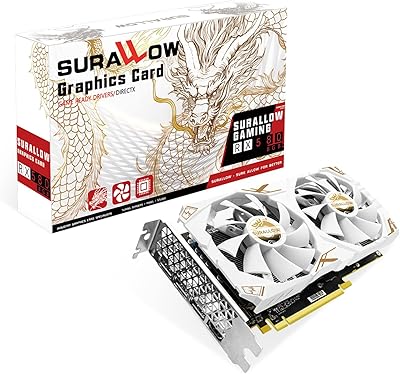
SURALLOW RX 580 8GB Graphics Card
73%
83%
1080p Gaming Performance
78%
Value for Money
76%
Thermal Management & Cooling
61%
Build & Component Quality
89%
Driver Support & Software Compatibility
More
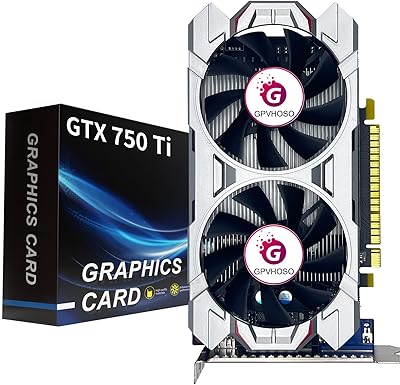
GPVHOSO GTX 750Ti 4GB Graphics Card
75%
71%
Value for Money
52%
Gaming Performance
89%
Power Efficiency
81%
Multi-Monitor Support
86%
Installation Ease
More
SRhonyra RX 580 8GB Graphics Card
72%
78%
Value for Money
67%
Gaming Performance
86%
Installation Ease
71%
Thermal Management
52%
Brand Reliability
More

FAQ

Correct — the 51RISC RX 550 4GB Graphics Card draws all its power directly from the PCIe slot on your motherboard. As long as your system has a PCIe x8 or x16 slot and at least a 250W power supply, you do not need to connect any additional cables. This is a genuine advantage for older systems or slim desktops where a 6-pin or 8-pin connector may not even exist.

Yes, the card has three physical outputs — HDMI, DisplayPort, and DVI-D — and supports driving up to three displays simultaneously. That makes it a practical upgrade for office setups where multiple screens are needed for productivity without requiring a high-powered GPU.

For 4K video playback, yes — this low-profile GPU has dedicated hardware decode for H.265/HEVC and H.264 at 4K, which is exactly what streaming services and local media files use. It handles that job well. To be clear though, this is not 4K gaming; the card does not have the rendering horsepower for that, and you should not expect it to.

That is actually one of the strongest use cases for this card. At 5.7 x 4.4 x 1.38 inches, it fits in low-profile and mini-ITX cases where full-size cards simply will not go. Just double-check whether your specific case requires a low-profile bracket, as some slim cases need one to mount correctly.

For light, older titles from several years back — think simple indie games or games from the early 2010s at low settings — it can manage. Modern AAA games are a different story; this RX 550 card does not have the GPU horsepower to run them at any playable frame rate. If gaming is a meaningful part of your use case, this card will disappoint, and you would be better served by a more capable option.

AMD's standard Radeon Software drivers work with this card and are available directly from AMD's website. Most buyers report that Windows detects the card and installs basic drivers automatically, but downloading the latest Radeon Software package manually gives you better control and performance options. A small number of users on older Windows installs noted needing to do a clean driver install to avoid conflicts.

Yes, 250W is the stated minimum, and since the card only draws 50W itself, a 250W PSU can support it provided the rest of your system is not unusually power hungry. If you have an older dual-core CPU and no other expansion cards, you should be fine. If you are uncertain, adding up the rough wattage of your other components is worth the few minutes it takes.

Under typical light loads — web browsing, office work, and video playback — the single fan on this low-profile GPU runs quietly and most users do not notice it at all. The fan does become more audible when the card is pushed harder for extended periods, which some buyers flagged in their reviews. For the workloads this card is designed for, noise is rarely a problem in practice.

PCIe is backward compatible, so a PCIe 3.0 card will work in a PCIe 2.0 slot without any issues — you just use the card at PCIe 2.0 speeds, which for a GPU at this performance level makes no practical difference. The card uses an x8 configuration, so it also works fine in both x8 and x16 physical slots.

The package includes the graphics card itself and a user manual. No additional cables or adapters are included, so if your monitor only has a VGA input, for example, you would need to source a separate adapter. The card covers HDMI, DisplayPort, and DVI-D natively, which covers the vast majority of modern monitors without any extras needed.