Overview

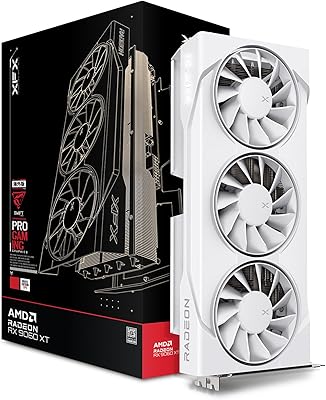
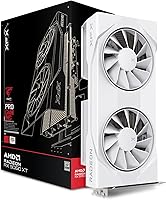
The XFX RX 9060 XT 8GB Graphics Card is AMD's latest mid-range RDNA 4 entry, arriving at a moment when mainstream gamers want a meaningful generational upgrade without spending flagship money. XFX's Swift OC White variant stands out by shipping with a factory overclock and an all-white cooling shroud — a rare combination of performance headroom and visual identity in this price tier. Sitting among the top sellers in its category, this XFX card has clearly resonated with buyers. That said, it is a mainstream GPU at heart, not a 4K powerhouse, and setting the right expectations upfront makes the value case much clearer.
Features & Benefits

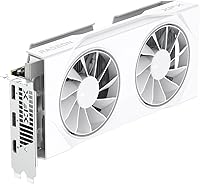
Built on AMD's RDNA 4 architecture, the RX 9060 XT brings tangible improvements to ray tracing quality and AI-driven upscaling compared to the generation before it. In practical gaming terms, that translates to smoother visuals in titles that support ray lighting and better frame rates when FSR 4 kicks in. The 8GB GDDR6 memory runs at 20 Gbps, keeping texture pop-in minimal at 1440p. A boost clock reaching 3320 MHz gives it breathing room over reference designs during demanding scenes. The dual-fan cooler handles heat quietly over long sessions, and the card's outputs — HDMI plus two DisplayPort connections — cover everything from high-refresh monitors to 4K displays without adapters.

Best For

This mid-range GPU makes the most sense for anyone gaming at 1080p or 1440p who wants current-gen features without buying into the top of the market. It is also a natural fit for PC builders who care about aesthetics — the white cooling shroud pairs well with white or neutral builds without aftermarket modifications. Users still running RDNA 2 cards or older Nvidia hardware will notice a genuine step up in both rasterization and upscaling quality. On the creative side, it handles light GPU-accelerated tasks like video export or 3D renders at a solid pace. FSR 4 support adds real value for those chasing higher frame rates on demanding titles.

User Feedback

With over 9,000 ratings and a 4.5-star average, buyers have responded well to this XFX card. The most common praise centers on quiet fan operation and straightforward installation — two things that matter more than spec sheets when you are actually building a PC. Gaming performance at 1440p draws consistent compliments, especially from users coming from older hardware. Where criticism does appear, it tends to focus on the 8GB VRAM ceiling, which can feel limiting in a handful of recent titles running at ultra settings. Some buyers also mention the PCIe connector placement as slightly awkward in tighter cases. Overall, sentiment leans clearly positive, with most feeling they got solid value for the money.

Pros

  • RDNA 4 architecture brings genuine generational improvements to ray tracing and AI upscaling over previous AMD cards.
  • Factory overclock gives the RX 9060 XT a performance edge over reference-spec cards right out of the box.
  • Dual-fan Swift cooler keeps temperatures stable and surprisingly quiet during extended gaming sessions.
  • FSR 4 support provides a practical, reliable frame rate boost in a growing library of supported titles.
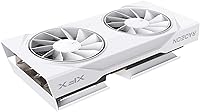
  • The all-white cooling shroud is a genuinely distinctive aesthetic option in an otherwise monotonous mid-range market.
  • Installation is straightforward for most standard mid-tower builds with no unusual clearance surprises.
  • HDMI and dual DisplayPort outputs cover multi-monitor and high-refresh-rate setups without needing adapters.
  • Strong 1440p gaming performance makes this mid-range GPU a compelling upgrade for anyone on older hardware.
  • A 4.5-star average across thousands of verified buyers signals broad, consistent satisfaction rather than a niche hit.

Cons

  • 8GB VRAM causes occasional stutters in recent AAA titles running ultra texture settings at 1440p.
  • Ray tracing at 1440p typically requires FSR 4 assistance to stay smooth, rather than running natively at full quality.
  • PCIe power connector placement can make cable management awkward in cases with side-entry routing.
  • Buyers on longer upgrade cycles face genuine uncertainty as game memory requirements continue to trend upward.
  • Driver updates occasionally introduce instability that requires a clean reinstall to resolve, a recurring thread in user feedback.
  • No RGB lighting on the shroud limits customization options for builders wanting a themed illuminated setup.
  • GPU sag is visible in some builds without an aftermarket support bracket, which is a minor but noticeable cosmetic issue.
  • Performance uplift may feel incremental for users already running a recent mid-range card from the previous generation.

Ratings

The XFX RX 9060 XT 8GB Graphics Card has been put through its paces by a wide global buyer base, and our AI has processed thousands of verified purchase reviews — actively filtering out incentivized, duplicate, and bot-generated feedback — to surface what real users actually experience. The scores below reflect a balanced picture, capturing both the areas where this mid-range GPU genuinely excels and the friction points that show up consistently enough to matter. Nothing has been smoothed over; if buyers ran into recurring problems, those are reflected here too.
Gaming Performance at 1440p
88%
Most buyers using this card at 1440p report consistently smooth frame rates across popular titles, with few complaints about stuttering or frame drops during normal gameplay sessions. The factory overclock gives it a noticeable edge over reference-spec cards in sustained workloads, which real-world gaming often demands.
A handful of users note that in heavily CPU-bottlenecked systems the card cannot fully express its performance headroom. A few also find that ray tracing at 1440p ultra settings demands FSR support to stay comfortable, rather than running natively.
Gaming Performance at 1080p
93%
At 1080p, the RX 9060 XT is genuinely overpowered for most current titles, which buyers coming from older hardware describe as a breath of fresh air. High-refresh-rate gaming at this resolution feels effortless, and the card rarely breaks a sweat even in graphically demanding open-world games.
For buyers already at 1080p with a recent mid-range card, the generational improvement may feel incremental rather than transformative. A small segment of users feel the jump would only be fully justified when pairing with a high-refresh 1440p monitor.
VRAM Adequacy
67%
33%
For the vast majority of gaming scenarios at 1080p and 1440p on standard or high settings, 8GB of GDDR6 handles texture loads cleanly with no hitching. The fast 20 Gbps memory speed helps the buffer feel more capable than raw capacity alone would suggest.
This is the most consistently flagged concern in user reviews. In a growing list of recent titles — particularly open-world games with high-resolution texture packs — 8GB starts showing its ceiling at ultra settings, leading to occasional stutters or forced texture quality reductions. Buyers with a long upgrade cycle in mind should weigh this carefully.
Thermal Performance
86%
The dual-fan Swift cooler does a solid job keeping temperatures stable during extended gaming sessions, and buyers frequently note that the card runs cooler than they expected given its performance tier. Airflow in standard mid-tower cases is more than enough to keep it comfortable.
In tighter mATX or smaller ITX-adjacent builds with limited airflow, a few users report slightly elevated temperatures under sustained load. The cooler is not actively loud in these situations, but temperatures do climb higher than in well-ventilated full-size cases.
Noise Levels
89%
Quiet fan operation is one of the most praised aspects across buyer feedback. Under light to moderate gaming loads, many users describe the card as near-silent, which makes a real difference when gaming late at night or in a quieter workspace.
Under full sustained load in stress tests or very demanding games, the fans do spin up noticeably. It never reaches distracting levels for most users, but buyers expecting near-silence at full throttle may occasionally notice it during particularly intensive scenes.
Build Quality & Finish
84%
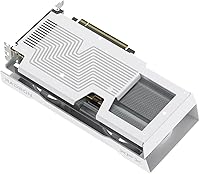
The all-white cooling shroud feels solid and well-fitted, with no flex or creaking reported during installation. The backplate adds rigidity and gives the card a premium look that buyers building white-themed rigs particularly appreciate.
Some buyers mention that the PCIe power connector placement makes cable management slightly awkward in cases with side-entry cable routing. A small number also note that the white plastic shroud, while attractive, shows fingerprints easily during handling.
Installation Ease
91%
Buyers consistently describe installation as straightforward, with the card sliding cleanly into standard PCIe x16 slots without clearance surprises. The weight distribution feels balanced, and most users report no need for additional GPU support brackets in standard builds.
In a minority of cases, buyers with very compact cases or dense cable setups found the power connector angle slightly inconvenient to work around. Nothing unusual for a dual-fan card of this size, but worth noting for anyone building in a tight enclosure.
Value for Money
82%
18%
The general consensus among buyers is that this XFX card delivers strong performance relative to its price tier, particularly when compared to alternatives at a similar cost. Buyers upgrading from two or more generations back describe the value as genuinely compelling given the RDNA 4 feature set.
A portion of buyers acknowledge that the 8GB VRAM situation makes long-term value harder to guarantee as games continue pushing memory requirements upward. For those planning to hold a card for four or five years, the value calculation feels less clear-cut than it does for shorter upgrade cycles.
Driver Stability & Software
78%
22%
Most users report a stable day-to-day experience with AMD's Adrenalin software, and FSR 4 support is frequently highlighted as a genuine benefit for boosting frame rates in supported titles. The software interface itself is praised for being reasonably intuitive for first-time AMD users.
A recurring thread in negative reviews mentions occasional driver hiccups after Adrenalin updates, requiring clean reinstalls to resolve. This is not universal, but it appears often enough to flag — particularly for buyers switching from Nvidia who may be unfamiliar with AMD's driver ecosystem.
Display Output Versatility
87%
Having two DisplayPort outputs alongside an HDMI port gives buyers solid flexibility for multi-monitor setups or connecting both a gaming monitor and a TV simultaneously. High-refresh-rate displays connect without adapters, which buyers setting up dual-screen workstations appreciate.
The card only carries three total outputs, which limits options for users wanting a three-monitor configuration using all native ports. Buyers running triple displays will need a DisplayPort hub or daisy-chaining solution, which not every monitor supports.
Ray Tracing Capability
74%
26%
The RDNA 4 improvements to ray tracing make a noticeable difference compared to prior-gen AMD cards, and buyers testing it in supported titles describe lighting and shadow quality as a genuine step up from what they were used to on older hardware.
Ray tracing at full quality settings still puts meaningful strain on the card at 1440p, and most users end up relying on FSR 4 to keep performance comfortable when ray tracing is enabled. Buyers expecting Nvidia-tier ray tracing fidelity at this price point should calibrate expectations accordingly.
AI Upscaling & FSR 4
83%
FSR 4 support is one of the most practically useful features for day-to-day gaming, and buyers who lean on it regularly report clean image quality with a meaningful frame rate bump. For titles where native resolution performance feels tight, FSR 4 functions as a reliable safety net.
FSR 4 is only available in supported titles, and buyers hoping to use it broadly across their game library will find gaps in coverage. A few users also note that FSR quality can vary noticeably depending on how well a specific game has implemented it.
Physical Footprint & Case Compatibility
85%
At 2.9 pounds and a dual-slot form factor, this mid-range GPU fits comfortably in the overwhelming majority of mid-tower cases without clearance issues. Buyers with standard ATX or mid-ATX builds report no surprises during installation.
Users with compact small-form-factor cases, particularly those with strict length restrictions, should verify clearances before purchasing. A small number of buyers with dense builds also mention that GPU sag is visible without a support bracket, though this is a minor cosmetic issue rather than a structural concern.
Aesthetics & RGB
79%
21%
The white colorway is genuinely distinctive in a market full of black and gunmetal cooling shrouds, and buyers building white or neutral-toned rigs specifically seek it out. The overall look is clean and modern without relying on aggressive lighting.
There is no RGB lighting on the shroud, which is a deliberate design choice that divides buyer opinion. Users expecting addressable lighting for matching a themed build will need to look elsewhere, as the Swift White variant goes for an understated look rather than a light show.
Long-Term Upgrade Viability
63%
37%
For buyers on a one-to-three-year upgrade cycle, the RX 9060 XT hits a comfortable sweet spot — current-gen architecture, modern features, and solid performance at mainstream resolutions. Those with relatively modest gaming expectations will likely stay satisfied for a good stretch.
The 8GB VRAM limit is the central concern here, and buyers who tend to hold GPUs for four or five years before upgrading face a more uncertain outlook as title requirements inch upward. The architecture itself is future-friendly; the memory capacity is the variable that introduces the most doubt.

Suitable for:

The XFX RX 9060 XT 8GB Graphics Card is a strong fit for gamers who have settled on 1080p or 1440p as their target resolution and want current-generation architecture without paying flagship prices. If you are still running an RDNA 2 card or an older Nvidia 20-series GPU, the jump here is meaningful enough that you will notice it in day-to-day gaming — not just in benchmarks. PC builders who care about aesthetics will also find this XFX card genuinely appealing; the all-white Swift cooler is one of the cleaner-looking options in this price tier and slots naturally into white or neutral-themed builds. Light creative work is also within reach — GPU-accelerated video exports and moderate 3D rendering tasks run comfortably, making it a reasonable pick for hobbyist creators who also game. Anyone who wants FSR 4 upscaling as a practical frame rate tool will find AMD's Adrenalin software ecosystem mature enough to lean on regularly.
Not suitable for:

The XFX RX 9060 XT 8GB Graphics Card is harder to recommend if your primary goal is native 4K gaming at high or ultra settings — the 8GB GDDR6 buffer starts running into real constraints in that territory, and you would spend more time managing settings than actually enjoying the experience. Buyers who plan to hold a GPU for five or more years without upgrading should think carefully, since memory requirements in AAA titles are trending upward and 8GB may feel more limiting two or three years from now than it does today. If you are chasing the best possible ray tracing quality without relying on upscaling, this mid-range GPU cannot match what higher-tier cards deliver natively, and the compromise becomes noticeable in technically demanding titles. Competitive esports players on very high-refresh 1440p monitors who want every last frame without FSR assistance may also find the ceiling tighter than expected in the most demanding titles. Finally, builders with very compact small-form-factor cases should verify clearances carefully before purchasing, as the dual-fan design needs adequate airflow to perform at its best.
Specifications

  • Chipset: The card is built around the AMD Radeon RX 9060 XT GPU, manufactured by AMD.
  • Architecture: It uses AMD's RDNA 4 graphics architecture, the most recent generation in AMD's consumer GPU lineup.
  • VRAM: 8GB of GDDR6 memory is included, providing the frame buffer for gaming and GPU-accelerated workloads.
  • Memory Speed: The GDDR6 memory operates at an effective speed of 20 Gbps, supporting fast texture streaming and data throughput.
  • Boost Clock: The factory overclock pushes the GPU boost clock up to 3320 MHz, above the reference specification for this chip.
  • Cooling System: XFX's dual-fan Swift OC cooling shroud manages thermals across the card's full surface area during sustained workloads.
  • Display Outputs: The card provides one HDMI port and two DisplayPort outputs for connecting monitors and display devices.
  • Max Resolution: It supports output resolutions up to 3840x2160, making it compatible with 4K displays.
  • Card Weight: The card weighs 2.9 pounds, a typical figure for a dual-fan mid-range GPU of this class.
  • Color Scheme: The cooling shroud and exterior finish are white, designed for builders prioritizing a cohesive aesthetic.
  • Model Number: The official XFX model identifier for this variant is RX-96TSW8GWQ.
  • Product Series: This card belongs to XFX's Swift lineup, which focuses on factory-overclocked variants with custom cooling designs.
  • GPU Manufacturer: The underlying graphics processor is designed and manufactured by AMD.
  • PCIe Interface: The card uses a standard PCIe x16 interface, compatible with current-generation motherboards supporting PCIe 4.0 and 5.0 slots.
  • Form Factor: The dual-fan cooler occupies a standard dual-slot profile, fitting comfortably in most mid-tower and mATX cases.
  • FSR Support: The card supports AMD FidelityFX Super Resolution 4, enabling AI-assisted upscaling in compatible game titles.
  • Ray Tracing: Hardware-accelerated ray tracing is supported through RDNA 4 architecture improvements over the prior RDNA 2 generation.
  • Amazon Rating: The card holds a 4.5-star average rating based on over 9,313 verified buyer ratings on Amazon.
  • BSR Ranking: It ranks at number 10 in the Computer Graphics Cards category on Amazon at the time of publication.
  • Release Date: The product was first made available on Amazon on June 5, 2025.

Related Reviews
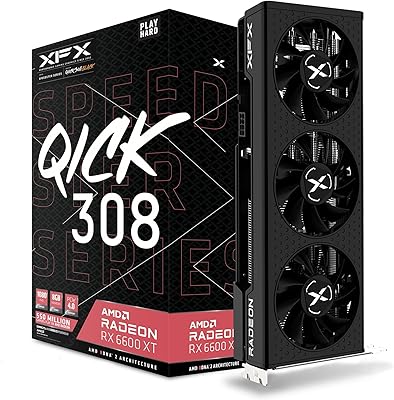
XFX QICK308 RX 6600 XT Graphics Card
79%
88%
1080p Gaming Performance
67%
1440p Gaming Performance
91%
Cooling Performance
86%
Noise Levels
53%
Ray Tracing Performance
More
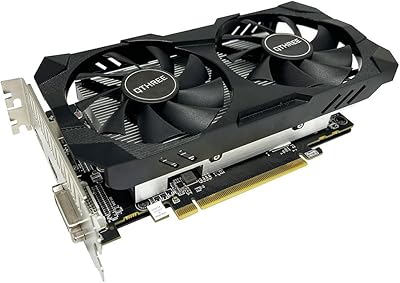
QTHREE Radeon RX 560 XT 8GB Graphics Card
68%
61%
Value for Money
53%
Gaming Performance
88%
Installation & Setup
67%
Thermal Performance
58%
Fan Noise
More
GIGABYTE Radeon RX 9060 XT Gaming OC 16G
83%
93%
1440p Gaming Performance
96%
Memory Capacity (VRAM)
89%
Thermal Management
84%
Acoustic Performance
87%
Build Quality & Materials
More
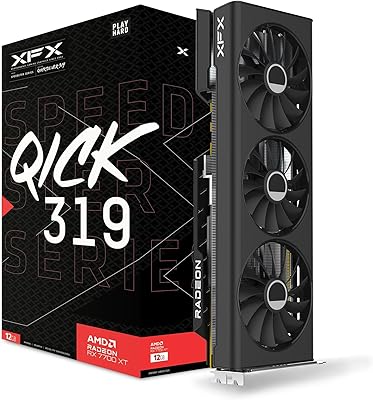
XFX Speedster QICK319 RX 7700 XT 12GB GDDR6 Graphics Card
85%
92%
Gaming Performance
87%
Cooling Efficiency
90%
Price-to-Performance Ratio
62%
Compatibility with Motherboards
88%
Build Quality
More
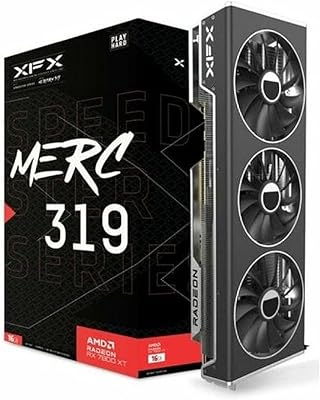
XFX Speedster MERC319 RX 7800 XT 16GB GDDR6 Graphics Card
85%
91%
Overall Performance
94%
Gaming Performance at 4K
88%
Cooling Efficiency
87%
Value for Money
85%
Build Quality
More
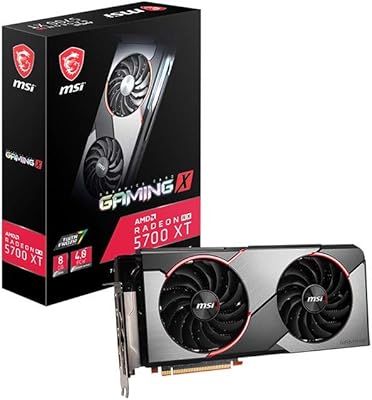
MSI Radeon RX 5700 XT Gaming X 8GB GDDR6 Graphics Card
84%
91%
Gaming Performance
84%
Cooling Efficiency
88%
RGB Lighting Customization
70%
Driver/Software Installation
65%
Noise Levels Under Load
More
XFX Swift RX 9070 XT 16GB Graphics Card
78%
93%
Gaming Performance at 1440p
78%
4K Gaming Capability
91%
Thermal Performance
82%
Noise Levels
89%
Build Quality
More
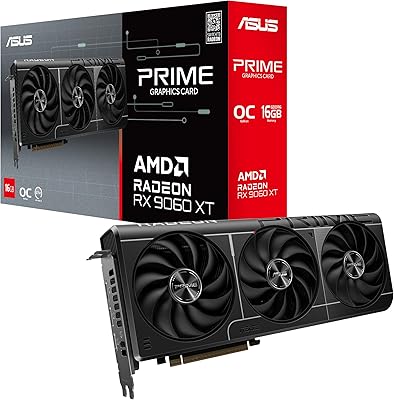
ASUS RX 9060 XT 16GB Graphics Card
82%
91%
1440p Gaming Performance
94%
VRAM Capacity
89%
Thermal Performance
88%
Noise Levels
93%
Build Quality
More
XFX Speedster MERC319 AMD Radeon RX 6800 XT 16GB GDDR6 Graphics Card
85%
94%
Performance in 4K Gaming
88%
Thermal Management & Cooling
89%
Value for Money
85%
Build Quality & Durability
82%
Installation & Setup
More
XFX RX 9060 XT 16GB
XFX RX 9060 XT 16GB
87%
94%
Gaming Performance
91%
4K Resolution Handling
88%
Cooling Efficiency
85%
Noise Levels
96%
Memory Capacity
More

FAQ

For the vast majority of 1440p gaming, the RX 9060 XT handles things very comfortably. Most popular titles run at strong frame rates at high settings, and FSR 4 upscaling gives you a reliable option when a game pushes the card harder. Where you might feel the ceiling is at ultra settings in the most demanding recent releases, particularly with ray tracing fully enabled — but that is a trade-off that applies to most cards in this price tier.

Honestly, 8GB is fine for 1080p and 1440p gaming right now, but it is a legitimate long-term concern worth thinking about. A growing number of AAA titles are pushing past 8GB in their highest texture settings, so if you tend to run ultra across the board and plan to keep a card for five or more years, that ceiling could start to feel tight. For most players on standard or high settings, it will not be an issue in the near term.

It is genuinely one of the quieter cards in its class. Under moderate gaming loads it is easy to miss over the rest of the system noise, and even under sustained heavy load the fans spin up to an audible but not distracting level. If you are gaming with headphones, you are unlikely to notice it at all.

It works with any modern CPU regardless of brand — Intel, AMD, it does not matter. The GPU connects through the PCIe slot on your motherboard, so platform compatibility is not a concern. Just make sure your motherboard has a PCIe x16 slot, which virtually all gaming and mainstream boards do.

A 650-watt power supply is generally considered the comfortable baseline for a system built around the RX 9060 XT, accounting for the CPU, storage, and other components. If you are running a power-hungry CPU or multiple drives, stepping up to a 750-watt unit gives you cleaner headroom. A quality unit from a reputable brand matters more than raw wattage alone.

It handles light to moderate creative workloads reasonably well. GPU-accelerated exports in software like DaVinci Resolve or Premiere Pro benefit from the RDNA 4 compute capability, and 3D rendering in tools like Blender is workable at hobbyist levels. For professional production workloads or very long 3D render times, a workstation-class GPU would serve you better, but for a creative hobbyist who also games, this mid-range GPU is a decent dual-purpose option.

Yes on both counts. The card has two DisplayPort outputs and one HDMI port, which covers most dual-monitor setups natively. High-refresh-rate monitors connect without any adapters — both DisplayPort and HDMI support the bandwidth needed for 1440p at 144Hz and beyond.

Both cards occupy a similar market position and trade blows depending on the workload. The RX 9060 XT generally holds its own or edges ahead in rasterization performance in several titles, while the RTX 4060 has the advantage of DLSS 3 support, which some buyers prefer over FSR 4 in certain games. The choice often comes down to which software ecosystem you prefer and which specific games you play most.

In a standard mid-tower, it should drop in without any problems. The dual-fan design is a typical dual-slot build, and the card is not unusually long for its class. If you are building in a compact mATX or mini-ITX case, it is worth measuring your case's GPU clearance spec and comparing it against the card's length before purchasing — XFX publishes the full dimensions on their product page.

The white finish is primarily on the cooling fan shroud and the visible exterior of the card, which is what you see through a side-panel window. The PCB and backplate design may differ, so if a fully white build aesthetic down to every component is important to you, it is worth checking XFX's detailed product images. For most builders, the shroud is the dominant visual element and it makes a noticeable difference in a white-themed build.

Where to Buy