Overview

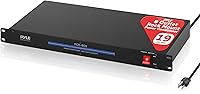
The Pyle PCO800 19″ Rack Power Conditioner has been a staple in budget rack builds since its 2005 debut, and with over 600 ratings averaging 4.4 out of 5, it has clearly earned its place. The core pitch is straightforward: 1800W of capacity across eight outlets, housed in a single rack unit that slides neatly into any standard 19-inch rack. If you are wiring up a home studio or a small AV setup and want basic surge protection plus tidy power organization, this fits the bill well. Just go in with clear expectations — this is entry-level conditioning focused on convenience and protection, not audiophile-grade power filtration.

Features & Benefits

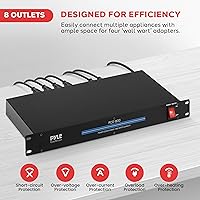
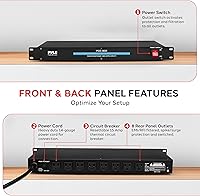
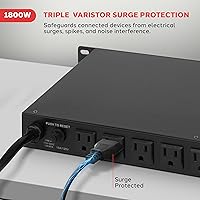
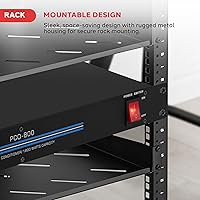
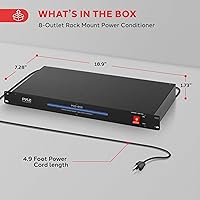
The rear panel holds eight AC outlets arranged with enough breathing room to fit four bulky wall-wart power supplies side by side — a practical touch that saves you from the usual adapter-blocking headaches. The whole unit occupies just one rack space, weighs around 5.2 lbs, and installs quickly without straining a lightly built rack shelf. A triple-mode varistor handles surge and spike protection, while a resettable 15-amp circuit breaker on the rear adds a layer of overload defense. Up front, a single power switch cuts or restores power to all eight outlets at once — simple, reliable, and exactly what you want in a busy rack setup.

Best For

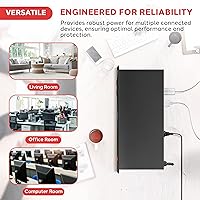
This rack conditioner is a natural fit for home recording setups where an audio interface, a preamp, a couple of monitors, and various accessories all need a centralized, organized power source. Live sound and DJ rigs benefit from the master-switch convenience — one press and everything powers down in an orderly way. Budget-conscious AV builders putting together their first rack will appreciate how neatly the Pyle PCO800 fills that bottom slot. Small rehearsal rooms where electrical noise can creep into signal chains get a reasonable level of protection here, and home-lab or IT users building compact server racks will find it a practical, no-frills option.

User Feedback

Across more than 600 reviews, the picture is largely positive, with most buyers singling out the build quality and clean rack appearance as strong points at this price tier. The wall-wart outlet spacing earns repeated praise — it is the kind of thoughtful detail owners notice immediately. On the honest side, a fair number of users point out that this 1U power unit functions more like a well-made surge strip with a master switch than a true power conditioner, and that distinction is worth understanding before you buy. The front-panel switch and indicator light get solid marks for feel and reliability. Overall satisfaction is high, but buyers expecting deep EMI filtering or voltage regulation will likely be disappointed.

Pros

  • Eight rear outlets with dedicated wall-wart spacing means no more fighting for room with bulky power adapters.
  • The single front-panel master switch makes powering an entire rack up or down effortless.
  • Slim 1U metal chassis slides into any standard 19-inch rack without eating valuable rack space.
  • At roughly 5.2 lbs, this rack conditioner is light enough to reposition or restack without help.
  • Triple-mode varistor protection provides a real, functional barrier against surges and voltage spikes.
  • A rear-panel resettable circuit breaker adds meaningful overload protection for connected gear.
  • Over 600 verified ratings averaging 4.4 out of 5 signal consistent real-world satisfaction across years.
  • Build quality consistently impresses buyers at this price tier — it looks and feels more expensive than it is.
  • Long market presence since 2005 points to a design that has stood up to sustained practical use.

Cons

  • No voltage regulation means this 1U power unit cannot correct sags or swells from unstable mains power.
  • Varistor-based surge protection degrades over time after absorbing surges, requiring eventual replacement to stay effective.
  • Only eight outlets may fall short for larger racks with many power-hungry devices.
  • No individual outlet switching on the front panel — everything powers on or off together, all or nothing.
  • Not a substitute for an isolation transformer if ground loops or deep EMI noise are your primary concern.
  • The front-panel indicator offers minimal feedback — there is no display showing voltage, current draw, or protection status.
  • Wall-wart spacing helps but four adapter slots may still feel tight in denser builds with oversized bricks.
  • No USB charging ports, which feels like a missed opportunity given how many modern rack accessories use USB power.

Ratings

The scores below for the Pyle PCO800 19″ Rack Power Conditioner were generated by our AI review engine after analyzing verified purchaser feedback from buyers worldwide, with spam, bot-submitted, and incentivized reviews actively filtered out before scoring. Each category reflects the honest consensus of real rack builders, home studio owners, and AV enthusiasts who have used this unit in their setups. Both the strengths and the genuine frustrations are transparently baked into every number you see here.

Value for Money
91%
At its price point, few rack-mount units offer this combination of a metal chassis, eight outlets, surge protection, and a master power switch. Buyers consistently express surprise at how solid the unit feels given what they paid, and many describe it as the smartest budget decision in their rack build.
A small number of buyers who later upgraded to a true power regenerator felt the entry-level protection gap was larger than they initially appreciated, making the value feel more conditional on expectation-setting than the score alone suggests.
Build Quality
84%
The iron chassis feels noticeably more rigid than typical plastic-bodied power strips, and the front-panel switch has a satisfying, deliberate click that users frequently mention in reviews. For a 1U unit at this tier, the construction inspires real confidence when rack-mounted.
Some buyers note that the unit does not feel as heavy or as premium as higher-end rack conditioners from brands like Furman, and the rear outlet plastic surrounds show cosmetic wear over extended use in working rigs.
Surge Protection
72%
28%
Triple-mode varistor protection gives this rack conditioner a meaningful edge over an unprotected power strip, and users in home studios report peace of mind during thunderstorm season knowing their audio interfaces and preamps have a first line of defense.
Varistor-based protection degrades silently after absorbing surges, and the unit provides no indicator to alert users when the protection layer has been compromised. This is a real limitation for anyone relying on it as a long-term safety net for expensive gear.
Outlet Layout
88%
The deliberate spacing for four oversized wall-wart adapters is the single most praised practical detail across hundreds of reviews. Users building racks with multiple switching power supplies, pedalboard bricks, and proprietary adapters find the layout solves a real day-to-day frustration that cheaper strips ignore.
Eight outlets can feel tight once a full home studio rack is wired up, and the all-or-nothing outlet control means users who need to keep certain gear powered while cycling others have to work around the design rather than with it.
Rack Compatibility
93%
The 1U 19-inch form factor fits every standard rack enclosure without any adapter brackets or modifications, and the lightweight chassis makes solo installation genuinely easy. DJ and live sound users especially appreciate how cleanly it anchors an otherwise messy power situation in a touring rack.
The depth of just under 8 inches means rear cable management can get snug in shallow rack cases, and the power inlet positioning on the rear panel can be awkward to access once the unit is fully racked and cabled.
Ease of Use
94%
There is genuinely no learning curve here — one switch, eight outlets, done. Users who manage racks for rehearsal studios or shared practice spaces particularly appreciate being able to hand someone a one-step power-on procedure without any training required.
The simplicity that makes it easy for most users is also a limitation for anyone wanting timed outlet sequencing or independent circuit control, and there is no remote switching capability for users managing racks from a distance.
Noise Filtering
61%
39%
In typical home studio environments with reasonably clean mains power, users report that the unit does a serviceable job reducing low-level electrical interference that might otherwise bleed into signal chains on sensitive audio gear like condenser microphones and high-gain preamps.
Users in buildings with older wiring or particularly dirty power have found that this 1U power unit makes little measurable difference to audible hum or ground noise issues, and it is not a replacement for a proper isolation transformer in those situations.
Installation Experience
89%
At 5.17 lbs, the unit is light enough that one person can rack it, secure the rack ears, and have it cabled in under ten minutes. The standard rack-ear mounting holes align precisely with typical rack rails, which sounds basic but is something cheaper units sometimes get wrong.
No rack-mount screws are included in the packaging, which catches some first-time rack builders off guard and means an extra trip to the hardware store before the installation is complete.
Front Panel Aesthetics
77%
23%
The clean black face with a single illuminated switch has a professional, understated look that fits naturally alongside branded rack gear without drawing attention to its budget origins. Users building client-facing studio racks appreciate that it does not look out of place next to more expensive units.
The single LED indicator gives almost no operational feedback beyond on or off, and the panel labeling is minimal enough that some users wish there were even basic voltage or load indicators to confirm the unit is functioning correctly.
Long-Term Reliability
79%
21%
The fact that this design has remained in continuous production since 2005 with a sustained 4.4-star average across hundreds of purchases over many years is a meaningful signal that the unit holds up in everyday use without frequent failures or early burnout.
Because the surge protection degrades invisibly over time and there is no self-diagnostic capability, long-term reliability as a protective device is harder to verify than reliability as a simple power distribution unit, which are meaningfully different things.
Cable Management
58%
42%
Having all eight outlets consolidated on the rear panel does create a cleaner front-of-rack appearance, and the grouped outlet positions make it possible to run cables in organized bundles rather than scatter them across multiple wall outlets.
The rear panel offers no integrated cable tie points or routing guides, so users with dense wiring setups often end up with a tangle of cords directly behind the unit that can make servicing or repatching other rack gear more frustrating than it needs to be.
Circuit Protection
81%
19%
The rear-panel resettable circuit breaker is a practical addition that most basic power strips lack entirely. Studio users who have accidentally overloaded a circuit mid-session appreciate that resetting is a single button press rather than a fuse replacement or a trip to the breaker panel.
The 15-amp ceiling is appropriate for most home studio loads but can feel limiting in racks that include power amplifiers or subwoofer systems with high inrush current, where the breaker can trip unexpectedly during startup sequencing.
Portability for Live Use
74%
26%
The lightweight metal chassis and standard rack-mount format make this rack conditioner a reasonable companion in touring racks and portable DJ setups where durability and compact footprint matter more than advanced power management features.
Without locking outlet covers or road-grade reinforced connectors, the unit is better suited to semi-permanent installations than to rigs that get loaded in and out of vehicles regularly, where repeated cable connect and disconnect cycles can stress the outlet plastic over time.

Suitable for:

The Pyle PCO800 19″ Rack Power Conditioner is genuinely well-suited for anyone building or expanding a home recording studio, small rehearsal space, or entry-level AV rack on a practical budget. If your setup involves an audio interface, a preamp or two, a pair of monitors, and a handful of accessories all crammed into a rack, this unit gives you a clean, organized power hub with the bonus of a single master switch to cut everything at once. Live sound operators and working DJs who need a reliable one-press shutdown at the end of a gig will find that convenience alone worth the price of entry. Budget-conscious AV enthusiasts assembling their first rack will appreciate how professionally it fills a 1U slot without demanding a premium outlay. It also works well for home-lab and IT users who simply want rack-mounted surge protection without paying for features they will never use.

Not suitable for:

Buyers expecting genuine power regeneration, voltage regulation, or audiophile-grade EMI and RFI filtering should look elsewhere — the Pyle PCO800 19″ Rack Power Conditioner is not that device, and it has never claimed to be. If you are running sensitive high-end studio monitors, expensive vintage outboard gear, or professional recording equipment in an environment with notoriously dirty power, a true power regenerator or isolation transformer would serve you far better. This unit does not correct voltage sags or swells, which matters in older buildings or regions with unstable electrical infrastructure. Users who need more than eight outlets or require front-panel individual outlet switching will also find the layout limiting. It is also worth noting that the varistor-based surge protection, while functional, is consumable — after absorbing significant surges over time, its protection level degrades, so it is not a set-and-forget long-term solution for irreplaceable gear.

Specifications

  • Model Number: This unit carries the manufacturer model designation PCO800.
  • Form Factor: It occupies a single rack unit (1U) and fits any standard 19″ equipment rack.
  • Dimensions: The chassis measures 19″ wide by 1.75″ tall by 7.75″ deep.
  • Weight: The unit weighs approximately 5.17 lbs, keeping rack load impact minimal.
  • Total Wattage: Maximum supported load is rated at 1800W continuous draw across all outlets.
  • Amperage: The unit is rated at 15 amps, consistent with a standard North American wall circuit.
  • Input Voltage: Designed for 110V AC power supply, suitable for North American electrical systems.
  • Total Outlets: Eight rear-panel AC receptacles are provided, all controlled by a single front-panel switch.
  • Wall-Wart Space: Four of the eight outlet positions offer extra lateral spacing to accommodate oversized adapter bricks.
  • Surge Protection: Triple-mode varistor circuitry provides protection against surges, spikes, and transient impulses.
  • Circuit Breaker: A resettable 15-amp circuit breaker is located on the rear panel for overload protection.
  • Outlet Type: All outlets are standard 3-prong grounded AC receptacles compatible with typical North American plugs.
  • Housing Material: The outer chassis is constructed from iron, giving the unit a solid, rack-grade feel.
  • Control Interface: A single illuminated power switch on the front panel toggles all eight outlets simultaneously.
  • Color: The unit is finished in black, which suits most standard rack enclosures and cases.
  • Connector Type: Input and outlet connections use standard component-type AC connectors rated for domestic voltage.
  • Rack Spaces Used: Installation requires exactly one rack unit (1U) of vertical rack space.
  • First Available: This product has been commercially available since December 2005, reflecting a long production run.

Related Reviews
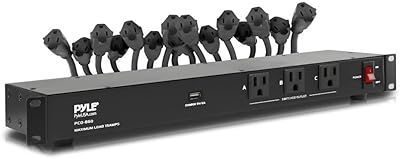
Pyle PCO860 19-Outlet Rackmount PDU
76%
88%
Value for Money
91%
Outlet Count & Layout
63%
Build Quality
79%
Circuit Protection
86%
Ease of Installation
More
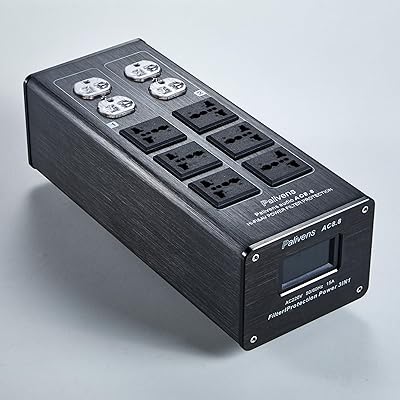
Pailvens P10 Power Conditioner
77%
83%
Build Quality
74%
Noise Filtering Performance
88%
LED Display Usefulness
79%
Outlet Layout & Usability
81%
Overvoltage Protection
More
WAudio W-3900 AC Power Conditioner
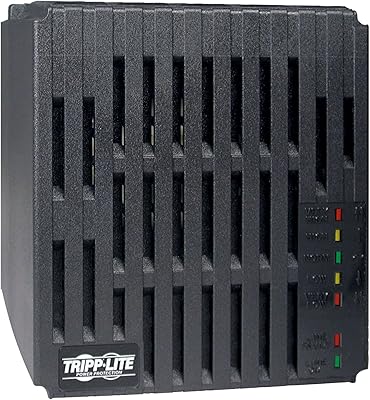
76%
86%
Build Quality
79%
Noise Filtering
61%
Surge Protection
74%
Outlet Configuration
83%
Phase Detection
More
Tripp Lite LC2400 Power Conditioner
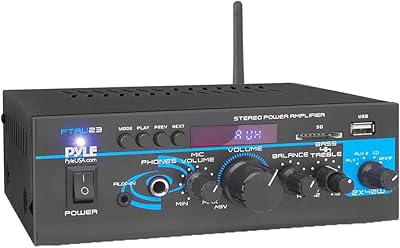
83%
93%
Voltage Regulation
88%
EMI/RFI Noise Filtering
86%
Surge Protection
91%
Build Quality
79%
Outlet Configuration
More
Pyle PT506BT Powered Amplifier
70%
78%
Value for Money
61%
Sound Quality
72%
Bluetooth Connectivity
74%
Microphone Performance
54%
Output Power
More
Pyle PTAU23 Stereo Amplifier
74%
83%
Value for Money
89%
Input Versatility
91%
Ease of Setup
61%
Audio Quality
74%
Microphone Performance
More
Furman Elite-15 DM i AC Power Conditioner
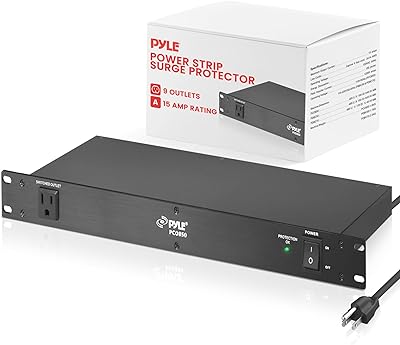
79%
88%
Noise Reduction Performance
93%
Build Quality
91%
Equipment Protection
61%
Value for Money
69%
Outlet Layout & Usability
More
Pyle PCO850
Pyle PCO850
77%
83%
Build Quality
61%
Surge Protection Performance
88%
Rackmount Installation
67%
Outlet Layout & Spacing
74%
RFI/EMI Noise Filtering
More
Pyle PPRE70BT Rack Mount Pre-Amplifier
74%
84%
Value for Money
91%
Ease of Setup
77%
Bluetooth Performance
63%
Sound Quality
68%
Build Quality
More
StarTech 8U Open Frame Wall Mount Rack
79%
91%
Build Quality
74%
Ease of Installation
88%
Hardware Kit Completeness
82%
Depth Adjustability
89%
Airflow & Thermal Management
More

FAQ

Honest answer: it sits closer to the surge strip end of the spectrum. The Pyle PCO800 19″ Rack Power Conditioner provides transient surge and spike protection via varistor circuitry and filters out some basic electrical noise, but it does not regenerate or regulate voltage. If your mains power has significant voltage sags or swells, this unit will not correct them. For most home studio and AV rack users, that level of protection is perfectly adequate.

Yes, without issue. This rack conditioner is built to the standard 19-inch rack width and occupies exactly one rack unit of vertical space, so it drops right into any conventional rack enclosure or open-frame rack stand. At around 5.2 lbs it will not stress your rack rails either.

A standard 15-amp wall outlet works fine. Just keep in mind the unit is rated at 15 amps total, so you want to make sure the combined draw of everything plugged into it stays within that limit. Running it on a dedicated circuit is ideal if your gear draws significant current, but for typical home studio use a standard outlet is perfectly acceptable.

That is exactly what the outlet layout is designed for. Four of the eight rear outlets have extra spacing built in specifically to handle oversized adapter bricks. In practice, most users find they can fit their bulkiest adapters without any blocking, which is one of the details that gets consistently praised in real-world feedback.

It controls everything at once — one switch, all eight outlets on or off together. There is no individual outlet switching. For most rack setups this is actually convenient since you want a single master power-on and power-off routine, but if you need per-outlet control you would need a different unit.

Yes, and this is worth knowing upfront. Varistor-based surge protection is consumable — each significant surge it absorbs degrades the varistor slightly. Over years of use, or after a major electrical event, the protection capability diminishes even though the unit continues to pass power normally. There is no indicator on this 1U power unit to tell you when the varistors are spent, so if you have experienced a serious surge event it is worth considering a replacement.

It is designed specifically for 110V North American electrical systems and uses standard North American 3-prong outlets. Using it in countries with 220-240V mains without a step-down transformer would damage the unit and potentially anything connected to it. Stick to North American use unless you know exactly what you are doing with voltage conversion.

This rack conditioner has no fan and no active components that generate audible noise, so it runs completely silent during normal operation. It will not add any hum or mechanical noise to your studio environment.

The rear-panel circuit breaker is a simple resettable button — if it trips due to an overload condition, you reduce the load, then press the breaker button to reset it. No tools required and no fuses to replace. It is a straightforward design that most users find intuitive.

The core job it does — surge protection, outlet organization, and master power switching in a 1U rack form factor — has not changed, so the age of the design is not really a drawback. The fact that it has remained in production and maintained a strong rating over that span is more of a vote of confidence than a red flag. Where it does show its age is in the lack of any USB outlets or status display, which newer units sometimes include. If those are important to you, there are more modern options worth comparing.