Overview

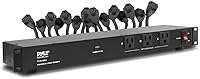
The Pyle PCO860 19-Outlet Rackmount PDU sits squarely in the value tier of the rackmount power market — and it knows it. Designed for home studios, small IT closets, and AV rack builds, it fits into any standard 19-inch rack in a single rack unit of space. The detachable mounting flanges are a nice touch, letting you mount it on a wall or under a counter if a full rack is not in the picture. That 15-foot power cord is genuinely useful when your rack sits far from the nearest wall outlet. Just go in with realistic expectations: this is organized power distribution, not premium power conditioning.
Features & Benefits

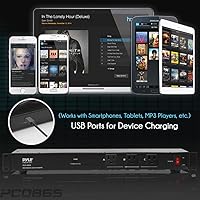
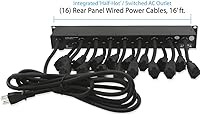
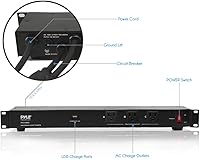
What makes this rackmount PDU genuinely practical is how it handles outlet real estate. The three front-facing AC outlets are handy for quick connections, but the sixteen rear pigtail cables deserve a closer look — these are flexible cord outlets, not fixed NEMA sockets, which is worth knowing before you buy. They accommodate bulky AC adapters without blocking adjacent slots. A 15-amp circuit breaker shuts the unit down if your load climbs into dangerous territory, which beats hunting for a blown fuse. There is also a USB port up front for charging a phone or tablet, plus a ground lift switch that can kill persistent audio hum caused by ground loops in your signal chain.

Best For

This 19-outlet rack strip hits a sweet spot for anyone building a functional but budget-conscious rack. Home recording studios are the obvious fit — power a mixer, preamps, outboard gear, and a computer all from one organized row. Small network or server closets benefit from the high outlet count packed into a single rack unit. AV integrators wiring up racks for houses of worship or boardrooms will appreciate the mounting options. If you are running a UPS as backbone, this works well as the downstream distribution layer. It is also a practical choice for DIY rack builders who want something tidy without committing to a high-end power conditioner.

User Feedback

Owners of the Pyle power strip unit generally land at satisfied, and the 4.2-star average feels about right. The most consistent praise centers on the generous outlet count and the extra-long power cord, both of which make real-world installation noticeably easier. On the downside, the rear pigtail cables draw recurring complaints — some users find them less robust than expected, and a few report inconsistent build quality from unit to unit. The USB port is convenient but not built for fast-charging demanding devices. Audio users tend to love the ground lift feature; IT buyers occasionally find it confusing at first. Solid value for the price point, though not the right fit for mission-critical or high-density deployments.

Pros

  • Nineteen outlets in a single rack unit is genuinely hard to beat at this price point.
  • The 15-foot power cord gives you real flexibility when your rack sits away from the nearest wall outlet.
  • Detachable mounting flanges let you rack-mount, wall-mount, or go under-counter depending on your setup.
  • The built-in circuit breaker adds a meaningful layer of protection for connected equipment during overload events.
  • Front-panel USB charging port keeps a phone or tablet powered without sacrificing an AC outlet.
  • Ground lift switch is a practical bonus for audio users dealing with hum caused by ground loops.
  • 110/240V compatibility means you can use this rackmount PDU in international environments without an adapter.
  • Compact 1U metal chassis keeps the weight and footprint low without feeling cheap in hand.
  • Works well as a downstream distribution strip when paired with a UPS for added power backup coverage.

Cons

  • Rear pigtail cables are not standard NEMA sockets, which can limit compatibility and surprise first-time buyers.
  • Build quality is inconsistent enough that some units feel noticeably less solid than others out of the box.
  • Surge protection is basic varistor-based circuitry only — do not expect any voltage regulation or noise filtering.
  • The front USB port delivers standard charging current; power-hungry or fast-charge devices will be left waiting.
  • Ground lift switch has no labeling context for IT buyers who may not understand when or why to use it.
  • Pigtail cables on the rear outlets can feel flimsy under repeated plugging and unplugging cycles.
  • Not appropriate for high-density or mission-critical deployments where reliability standards are strict.
  • No individual outlet switching, so cutting power to one device means cutting it to everything.
  • No indicator light or display to show actual load draw, making it harder to monitor circuit usage.

Ratings

Our editorial team used AI-assisted analysis to process hundreds of verified owner reviews for the Pyle PCO860 19-Outlet Rackmount PDU, actively filtering out incentivized, bot-generated, and spam submissions to surface what real buyers actually experience. The scores below reflect both the genuine strengths that keep this unit popular and the recurring frustrations that show up consistently across independent feedback. Nothing here is sugar-coated — the highs and the friction points are given equal weight.

Value for Money
88%
For buyers building a home studio or small AV rack on a tight budget, the sheer outlet count relative to the price is hard to argue with. Getting centralized, protected power distribution in a 1U chassis for this cost consistently surprises buyers who have priced out competing options.
A handful of users feel the build quality does not quite match the price-to-feature ratio once the unit is in hand, noting that some competing strips with fewer outlets feel more solidly constructed. The value equation holds well for casual installs but feels thinner for anyone demanding long-term durability.
Outlet Count & Layout
91%
Having enough outlets to power a full rack of gear without daisy-chaining strips is where this unit earns consistent praise. Home studio builders in particular appreciate that the front-facing outlets handle quick-connect gear while the rear cables keep the back of the rack organized.
The rear outlets are flexible pigtail cables rather than fixed sockets, which catches some first-time buyers off guard and can make cable management at the rear of a rack more involved than expected. A few users wish at least some of the rear positions were standard recessed NEMA outlets.
Build Quality
63%
37%
The metal chassis feels reasonably solid when mounted in a rack, and the front panel components — the breaker, switch, and USB port — generally hold up fine under normal use. For a value-tier unit, the structural integrity of the enclosure itself draws few complaints.
The rear pigtail cables are the consistent weak point, with multiple reviewers describing them as flimsy or prone to feeling loose over time. There is also a noticeable unit-to-unit variance in quality that suggests less rigorous factory consistency than buyers at this price point would hope for.
Circuit Protection
79%
21%
The resettable 15-amp circuit breaker is a genuinely useful safety feature that real users have credited with preventing equipment damage during accidental overloads. Being able to simply press a button to restore power — rather than replace a fuse — is a practical advantage that comes up repeatedly in positive feedback.
Surge protection is varistor-based and handles spikes adequately, but owners with sensitive gear or noisy power lines note that this is not a substitute for a real power conditioner. There is no voltage regulation or EMI filtering, which limits how much protection is actually being offered.
Ease of Installation
86%
Most buyers report a straightforward racking experience, with the detachable flanges making it easy to adapt the unit to different mounting scenarios including wall and under-counter installs. The 15-foot cord length removes the usual frustration of a rack being too far from a power source.
A small number of users note the flanges require some fiddling to align correctly, and the lack of included rack screws means you need to have your own hardware ready. First-time rack builders occasionally find the pigtail outlet arrangement less intuitive than expected during initial setup.
Power Cord Length
93%
The 15-foot input cord is one of the most consistently praised practical details across owner feedback. In real-world studio and server room installs where a rack often sits away from the nearest wall outlet, this extra length removes a headache that shorter-corded alternatives routinely create.
A small minority of users in very compact or closet-based installs find the long cord creates excess slack that needs to be managed carefully to avoid a messy look. There is no detachable or removable cord option for those who want something shorter.
Ground Lift Functionality
74%
26%
Audio users are consistently enthusiastic about the ground lift switch, citing real-world relief from the persistent low-frequency hum that plagues mixed-grounding rack setups. For home studio owners running both digital and analog gear in the same rack, this feature alone can justify the purchase.
IT and networking buyers frequently report confusion about what the switch does and when it should be used, with some leaving it in an incorrect position without realizing it. Better labeling or an included quick-reference card would meaningfully reduce this friction.
USB Charging Port
66%
34%
Having a USB port on the front panel is a thoughtful convenience that keeps a phone or small device charged without consuming a dedicated AC outlet. Users building rehearsal spaces or project studios appreciate being able to keep a tablet powered for reference tracks or session notes.
The port outputs standard charging current only, and users expecting fast-charge performance for newer devices are left disappointed. It is genuinely useful for low-draw devices but gets called out as a missed opportunity by buyers who needed something with more output capability.
Mounting Flexibility
82%
18%
The detachable flange system gives this unit real versatility for installs that do not follow the standard open-rack pattern. AV integrators building custom furniture-mounted or wall-mounted equipment bays credit this flexibility as a meaningful differentiator over fixed-bracket alternatives.
The flanges feel slightly underbuilt for heavy-duty wall-mount installs, and a few users report that the mounting hardware supplied is minimal. Rack-mount use is clearly the primary design intent, and alternative mounting configurations require more care and supplemental hardware.
Rear Cable Management
57%
43%
The pigtail cable design does solve the bulky-adapter problem effectively, allowing large power bricks and transformers to connect without blocking adjacent outlets — something fixed-socket strips consistently struggle with in dense gear environments.
Managing sixteen individual cables at the rear of a rack requires deliberate cable organization, and users who skipped this step report a tangled, hard-to-trace mess behind their rack within weeks. There is no integrated cable routing or bundling provision on the unit itself.
UPS Compatibility
84%
Buyers running APC, CyberPower, or similar UPS units downstream report clean and stable performance when using this rackmount PDU as the distribution layer. Its tolerance for modified sine wave output is a practical advantage over distribution strips that can behave unpredictably with UPS-sourced power.
There is no communication port or smart monitoring capability, so you cannot track load draw or set alerts through the unit itself. Users who want intelligent PDU features — remote outlet control, power metering — will need to look at a different product category entirely.
Surge & Spike Protection
61%
39%
The varistor-based protection handles the kind of brief voltage spikes common in residential and light commercial electrical environments, and most users report no equipment damage attributable to power events during normal use. It provides a meaningful safety baseline for gear that does not require dedicated power conditioning.
This is not a power conditioner, and the protection level is relatively modest by any technical measure. Users who connected sensitive audio, broadcast, or measurement equipment and expected conditioned power have reported audible noise and occasional anomalies that a proper conditioner would have suppressed.
Long-Term Reliability
67%
33%
Many owners report years of trouble-free use in home studios and small network closets where the unit runs continuously without incident. For light-duty, always-on environments with stable power, the unit holds up respectably given its price tier.
The inconsistent build quality noted at the unit level appears to translate into reliability variance over time as well, with a portion of reviewers reporting degraded connections or failed outlets after extended use. Mission-critical installs that cannot tolerate unexpected downtime should factor this into the decision.

Suitable for:

The Pyle PCO860 19-Outlet Rackmount PDU is a strong fit for anyone building a budget-conscious but functional rack without wanting to burn through space or budget. Home recording studios are probably the most natural home for it — when you have a mixer, audio interface, preamps, a computer, and a few other pieces all demanding power at once, having a centralized strip in your rack keeps things tidy and safe. Small server or network closets where you need to power a handful of switches, patch panels, and access points in a single rack unit will also find plenty of value here. AV integrators putting together racks for conference rooms, houses of worship, or small event venues will appreciate the mounting flexibility, especially the option to go wall-mount if a full rack cabinet is not in play. If you are already running a UPS and just need a reliable distribution layer downstream, this 19-outlet rack strip slots into that role very naturally.
Not suitable for:

If your gear demands clean, conditioned power — think high-end audio mastering suites, sensitive measurement equipment, or medical-adjacent electronics — this rackmount PDU is not the right tool. The surge protection here is varistor-based, which handles spikes reasonably well but does nothing for voltage regulation, noise filtering, or the kind of power conditioning you get from a dedicated Furman or APC unit. The rear outlets are flexible pigtail cables rather than standard NEMA sockets, which can catch first-time buyers off guard and may not work cleanly with every type of gear. Large-scale deployments, data centers, or any environment where consistent build quality and long-term reliability are non-negotiable should look at commercial-grade PDUs instead. The Pyle PCO860 19-Outlet Rackmount PDU is a value-tier product, and while it performs well within that tier, it was not engineered to handle the demands of professional or mission-critical infrastructure.
Specifications

  • Model Number: This unit is manufactured under model designation PCO860.
  • Form Factor: Occupies exactly 1U of vertical space and is designed to fit any standard 19″ equipment rack.
  • Dimensions: The chassis measures approximately 19″ wide by 2.13″ tall by 11.03″ deep.
  • Weight: The unit weighs 7.06 pounds, making it manageable for a single person to rack-mount.
  • Total Outlets: Provides 19 total AC outlets: 3 wide-spaced front-panel NEMA sockets and 16 flexible rear-facing pigtail power cables.
  • Power Cord: Includes a fixed 15-foot input power cord for reaching distant wall outlets or floor-mounted power sources.
  • Circuit Breaker: A built-in 15-amp resettable circuit breaker disconnects AC input automatically when total load exceeds safe operating limits.
  • Surge Protection: Varistor-based circuitry provides basic spike and surge suppression on connected outlets, though voltage regulation is not included.
  • USB Charging: One USB-A charging port is integrated into the front panel for powering small devices without using an AC outlet.
  • Ground Lift: A front-panel ground lift switch allows the user to disconnect the safety ground when troubleshooting ground loop hum in audio systems.
  • Voltage Range: Supports both 110V and 240V input, making it usable in North American and international rack deployments.
  • UPS Compatibility: Optimized for use with UPS systems and generators, supporting the modified sine wave AC output common in those devices.
  • Mounting Options: Detachable mounting flanges allow installation in a standard rack, on a wall, or under a counter depending on the environment.
  • Housing Material: The chassis is constructed from metal for improved durability and basic RF shielding compared to plastic alternatives.
  • Rack Compatibility: Designed to mount flush in any standard 19″ equipment rack using the included detachable ear flanges and standard rack screws.

Related Reviews

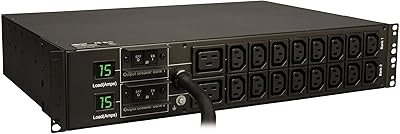
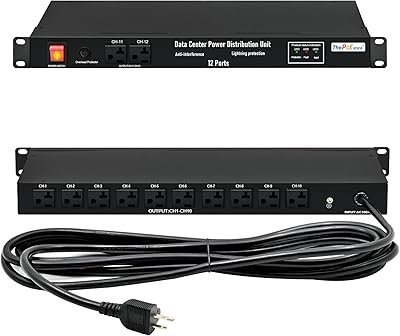
ThePoEstore 10-Outlet Rackmount Surge Protector PDU
86%
91%
Surge Protection Performance
88%
Installation Flexibility
92%
Build Quality
67%
Cord Length
85%
Ease of Use
More
CENTROPOWER 1U PDU Horizontal Rackmount Power Strip
85%
88%
Overall Performance
94%
Build Quality & Durability
91%
Surge Protection Effectiveness
85%
Ease of Installation
70%
Circuit Breaker & Reset Switch Functionality
More
Intellinet 19-inch Intelligent 8-Port PDU
83%
72%
Ease of Installation
88%
Performance & Reliability
90%
Build Quality
85%
Environmental Monitoring
91%
Surge & Lightning Protection
More
Tripp Lite PDUMH30HV 30A Metered Rack PDU
78%
91%
Build Quality
93%
Reliability
88%
Metering Accuracy
62%
Display Readability
89%
Outlet Layout
More
ThePoEstore 1U PDU Network Surge Protector 12-Outlet 120V
87%
94%
Surge Protection Performance
90%
Build Quality and Durability
87%
Ease of Installation
72%
Overcurrent Protection
88%
Mounting Flexibility
More
Tripp Lite PDUH20HVL6 14-Outlet Basic PDU, 208/240V
83%
91%
Value for Money
88%
Build Quality
84%
Ease of Installation
93%
Cord Length and Flexibility
89%
Mounting Versatility
More
Tripp Lite PDU2430 24-Outlet Rack PDU
73%
88%
Build Quality
91%
Outlet Capacity
83%
Circuit Protection
22%
Power Monitoring
18%
Outlet Switching
More
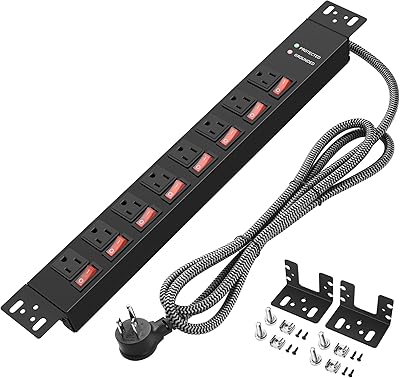
Jgstkcity Rack Mount Power Strip 8 Outlet PDU with Individual Switches
85%
91%
Build Quality & Durability
88%
Surge Protection Performance
84%
Ease of Setup
90%
Flexibility in Placement (Cord Length)
87%
Power Control (Individual Switches)
More
StarTech RKPW081915 Rackmount PDU
81%
91%
Build Quality
78%
Outlet Count & Layout
86%
Surge Protection
63%
Power Cord Length
94%
Ease of Installation
More
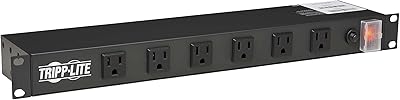
Tripp Lite RS1215-RA
83%
93%
Build Quality
91%
Outlet Layout & Accessibility
88%
Cable Management & Cord Design
84%
Power Capacity & Circuit Protection
41%
Surge & Spike Protection
More

FAQ

The rear outlets are flexible pigtail power cables, not fixed NEMA wall-style sockets. Each one terminates in a standard plug, so your gear plugs into them normally, but the cables themselves extend out from the back of the unit rather than being recessed sockets. This is worth knowing upfront, especially if you were picturing a row of fixed outlets like you see on higher-end PDUs.

Yes, it is designed for any standard 19″ equipment rack and takes up exactly one rack unit of space. The mounting flanges come detached, so you will need to attach them before racking, but it is a straightforward process with basic tools. No modifications to your rack should be necessary.

The ground lift switch disconnects the safety ground between the unit and the wall outlet, which can eliminate a persistent low hum or buzz that sometimes appears in audio setups due to ground loops. It is safe to use in low-voltage audio environments for troubleshooting purposes, but it is generally recommended to restore the ground once the source of the loop is identified and fixed. If you are running a standard IT or networking rack rather than audio gear, you can simply leave the ground lift in its normal position and ignore the switch.

Not exactly. The Pyle PCO860 19-Outlet Rackmount PDU offers varistor-based surge and spike protection, which handles sudden voltage spikes reasonably well, but it does not filter line noise, regulate voltage, or condition power the way a dedicated unit from Furman or similar brands does. For most home studios and light AV use it is perfectly adequate, but if you have gear that is sensitive to line noise or voltage fluctuations, pairing this with an upstream power conditioner or a quality UPS is the smarter approach.
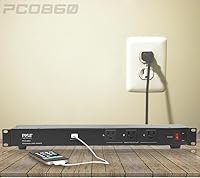
The input power cord is 15 feet long, which is quite generous compared to the 6-foot cords common on cheaper strips. In most home studios, server closets, and AV racks, that is more than enough to reach a wall outlet or floor-mounted power source even when the rack is positioned away from the room perimeter.

The rear pigtail cables are designed specifically to solve that problem. Because each outlet is on its own flexible cable extending from the back of the unit, bulky adapters do not block neighboring outlets the way they would on a fixed-socket strip. That said, routing and managing a bundle of cables at the rear of your rack will require some cable management attention.

The USB port delivers standard charging current and is best suited for keeping a phone, small tablet, or similar low-draw device powered up. It is not rated for fast charging protocols, so if you rely on quick top-ups for a power-hungry device, you will want a separate fast charger for that purpose.

Yes, the detachable flanges can be repositioned or removed entirely, allowing wall-mount and under-counter installation. It is a practical option if you are building a small AV setup or network cabinet that does not use a traditional open rack frame.

The built-in 15-amp resettable circuit breaker will trip and cut power to all outlets before any damage occurs to connected equipment. Once you have reduced the load by unplugging some devices, you can press the reset button on the breaker to restore power. It is a much more user-friendly protection mechanism than a one-time fuse.

Yes, it is specifically designed to work downstream of a UPS or generator. Many UPS units output a modified sine wave rather than a pure sine wave, and some power strips and conditioners do not handle that cleanly. This unit is optimized for that type of alternate waveform AC input, so it pairs naturally with a UPS as the distribution layer beneath it.