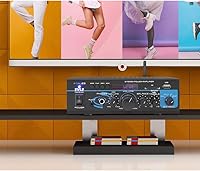
Overview

The Pyle PTAU23 Stereo Amplifier is a compact dual-channel unit built for home theater setups, casual karaoke nights, and small studio configurations — all without demanding a complicated installation process. It comes from Sound Around, a manufacturer that has supplied budget audio gear under the Pyle name for years. One thing to get straight before buying: this ships as a standalone box only. No speakers, no cables included. On paper, it delivers 2x40 watts at 4 ohms, but that figure carries a 10% total harmonic distortion rating, which means this is decidedly not audiophile territory. For casual listening and light PA use, it does the job. Expect accordingly.

Features & Benefits

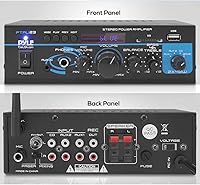
Six inputs is the standout number here. The Pyle amp accepts three pairs of RCA connections — useful if you want a CD player, tuner, and tape deck all wired at once — along with an AUX jack, a USB port, and a 1/4-inch microphone input. A headphone output rounds things out on the front panel. Two operating modes add real flexibility: pager mode cuts the music and lets the microphone dominate for announcements, while mixing mode blends mic and music for karaoke. You can also play MP3 files directly off a USB drive or SD card. A REC output lets you route audio to an external recorder, which is a thoughtful touch at this price point.

Best For

This mini amplifier makes most sense for people who want simple, physical controls and a wide range of inputs without spending much. It suits home karaoke setups well — especially if you already own speakers and just need something to handle both music and a microphone simultaneously. Small classrooms, community halls, and modest garage setups are also natural fits. Hobbyists assembling a basic home theater on a budget will appreciate how many sources they can connect at once. It is not the right call for demanding listeners or high-volume environments. But if your priority is flexibility and ease of setup over raw performance, this compact stereo receiver covers a lot of ground for the money.

User Feedback

Across a few hundred ratings, the pattern is fairly consistent. Buyers who pick up the Pyle amp for casual home use — weekend karaoke, background music, or simple PA duties in a small room — tend to walk away satisfied. Easy setup and the variety of inputs get mentioned repeatedly as genuine highlights. The complaints, though, are worth noting. Several users feel the output runs out of steam when pushed hard, and the plastic casing draws mixed reactions — it looks and feels light, which bothers some buyers more than others. A handful of reviewers also report unit-to-unit inconsistency, suggesting quality control is not perfectly uniform. Manage expectations and it delivers solid value; expect more and you may be disappointed.

Pros

  • Connects up to six audio sources simultaneously, including three RCA pairs, AUX, USB, and a microphone
  • Pager mode reliably cuts music for clear announcements — genuinely useful in classrooms and small halls
  • Karaoke mixing mode blends mic and music without requiring a separate mixer or dedicated machine
  • USB and SD card playback means you can run a full music session without connecting any external device
  • Front-panel knobs for bass, treble, balance, and volume make real-time adjustments quick and intuitive
  • The REC output lets you archive live sessions to an external recorder — a rare feature at this price
  • Compact footprint and light weight make it easy to tuck onto a shelf or into a cramped entertainment unit
  • Setup takes minutes — plug in speakers, connect a source, and it works without any configuration
  • Strong value proposition for casual home use where input flexibility matters more than raw audio power

Cons

  • Audible distortion creeps in well before the volume knob reaches its maximum position
  • No Bluetooth input, which feels like an omission given how common wireless audio sources are today
  • Plastic casing flexes under light pressure and does not hold up well to regular handling or transport
  • Unit-to-unit quality consistency is unreliable — some buyers receive units with channel imbalances or noisy inputs out of the box
  • The microphone input produces feedback and hiss if the MIC volume knob is pushed past the midpoint
  • No echo or reverb effect on the mic channel, which karaoke users accustomed to dedicated machines will notice
  • The REC output level is fixed, making it difficult to match signal levels with external recording equipment
  • MP3 playback is limited to that format only — FLAC, AAC, and other file types are not supported
  • The chassis can run noticeably warm during long sessions, requiring open ventilation space around the unit

Ratings

The scores below for the Pyle PTAU23 Stereo Amplifier were generated by AI after analyzing verified buyer reviews from multiple global markets, with spam, incentivized, and bot-flagged submissions actively filtered out. The result is an honest, balanced picture that reflects what real users — from home karaoke hobbyists to small-venue operators — consistently praised and criticized. Both the strengths and the genuine frustrations are represented here without sugarcoating.

Value for Money
83%
For buyers setting up a basic home karaoke corner or amplifying a small classroom, the price-to-feature ratio is hard to argue with. The sheer number of inputs and dual operating modes bundled into one compact box would cost significantly more from competing brands. Most casual users feel they got more than they paid for.
Buyers who push the unit harder — driving larger speakers in a garage or small bar — often feel the value proposition weakens quickly. When the amp struggles at higher volumes, the initial sense of a good deal starts to fade. It earns its score for light use, not demanding applications.
Input Versatility
89%
This is consistently one of the most praised aspects across all reviewer groups. Being able to wire a CD player, a tape deck, and a turntable simultaneously through the three RCA pairs — while keeping AUX and USB available — genuinely sets it apart from similarly priced units. Many users mention this as the primary reason they chose it.
The inputs themselves work well, but there is no Bluetooth connectivity, which surprises some buyers who assume a modern amp at this tier would include it. A few users also note that the RCA jacks feel slightly loose after extended use, which can introduce intermittent audio dropouts.
Ease of Setup
91%
First-time amplifier buyers consistently highlight how quickly they got up and running — often within minutes of opening the box. The front-panel knobs are clearly labeled and behave predictably, so there is no hunting through menus or downloading companion apps. Plug in your speakers, connect a source, and you are done.
The instruction manual is thin and lacks detail for users who want to understand the pager versus mixing mode difference before diving in. A small number of buyers also report confusion about the REC output, since its function is not explained clearly anywhere in the included documentation.
Audio Quality
61%
39%
For background music in a kitchen, a casual living room setup, or low-volume karaoke in a small room, the audio output is perfectly listenable. The bass and treble knobs give enough adjustment range to compensate for modest speaker deficiencies, and at moderate volumes the stereo separation is reasonably clean.
Push the volume past the halfway mark and distortion becomes noticeable, particularly in the low-end frequencies. The 10% total harmonic distortion rating at full load is not a technicality — it is audible. Anyone accustomed to even mid-tier amplifiers will likely find the sound quality underwhelming at anything above casual listening levels.
Microphone Performance
74%
26%
The pager mode works reliably for its intended purpose — cutting background music so a host or teacher can be heard clearly. In karaoke mixing mode, the mic blends into the music without excessive feedback at moderate gain settings. Home users running weekend karaoke nights report solid, usable results.
The mic input is sensitive to gain adjustments, and users who crank the MIC volume knob past the midpoint frequently report feedback and hiss. The 1/4-inch input also means standard XLR microphones require an adapter, which is an added expense that catches some buyers off guard.
Build Quality
58%
42%
The unit is compact and light enough to tuck onto a shelf or move between rooms without effort. For a stationary home setup where the box simply sits and operates, the construction is functional. Most users in low-traffic environments report no physical issues over the first several months of use.
The plastic casing is the most divisive topic in user reviews. It flexes noticeably under light pressure, and the overall feel does not inspire confidence for anything resembling regular transport or installation in a busy venue. A handful of buyers report knobs that loosen or develop wobble within the first few weeks of regular use.
Power Output
56%
44%
At low to moderate volumes with efficient 4-ohm speakers in a small room, the amplifier moves enough air to fill the space comfortably. For a bedroom, home office, or modest living room, most users find the output adequate for their day-to-day listening without any issues.
The advertised 2x40W figure comes with an important asterisk: it is measured at 10% THD, which is far higher than the 1% standard most audio equipment uses for honest power ratings. Real-world usable power is considerably lower, and users driving less efficient speakers or larger rooms consistently report the amp running out of headroom.
USB & SD Card Playback
77%
23%
The ability to slot in a USB drive loaded with MP3s and control playback directly from the front panel is genuinely convenient for casual users who do not want a separate media player or streaming device. Party hosts and teachers particularly appreciate having one less piece of equipment to manage.
Playback is limited to MP3 format, so users with FLAC or AAC files need to convert them first. The transport controls — previous, next, and play/pause — are functional but basic, with no display to show track names or folder navigation, which makes managing large libraries frustrating.
Karaoke Functionality
79%
21%
For home karaoke sessions with a small group, this compact stereo receiver handles the core job well. The mixing mode blends vocal input and music naturally at sensible gain levels, and the ability to connect a dedicated karaoke disc player via RCA while plugging in a mic creates a surprisingly complete setup for the price.
There is no dedicated echo or reverb effect for the microphone, which more experienced karaoke users will notice immediately. The mic mixing also lacks fine-tune controls beyond a single volume knob, so dialing in a balanced blend between voice and music can require patience and repeated adjustment.
PA & Talkover Use
72%
28%
In pager mode, the talkover function responds promptly when the microphone is active, automatically suppressing background music so announcements come through clearly. Small community halls, yoga studios, and church meeting rooms have shown up repeatedly in reviews as practical use cases where this feature works reliably.
The talkover sensitivity cannot be adjusted, which is a limitation in noisier environments where the mic pickup threshold triggers inconsistently. For professional or semi-professional PA applications, the lack of configurable settings makes this a stopgap solution rather than a dependable long-term tool.
Controls & Usability
84%
Physical rotary knobs for every major function — bass, treble, balance, input selection, and separate mic and master volume — make real-time adjustments intuitive during live use. There is no frustrating menu diving, and the layout is logical enough that most users can operate the unit confidently within minutes of first use.
The knobs themselves have a somewhat loose, low-resistance feel that makes fine adjustments tricky. A small rotation can produce a larger volume jump than expected, which is particularly noticeable when nudging the master volume in a quiet room. Better detented controls would significantly improve the experience.
Compact Form Factor
86%
At under four pounds and with a footprint smaller than a hardcover book, this mini amplifier fits neatly into spaces where full-sized receivers simply cannot go. Shelf installations, entertainment unit cubbies, and portable event kits all benefit from its unobtrusive size. Several reviewers specifically chose it because of how little space it demands.
The compact size does come with thermal trade-offs — a few users report the chassis getting noticeably warm during extended sessions, and ventilation space around the unit matters more than it might appear. Enclosed cabinet installations without airflow have led to some reports of the unit shutting off during long use.
Reliability & Consistency
53%
47%
Many buyers report using this amp for months or years in low-demand home settings without any failures. For a stationary, lightly used installation — background music in a home office or occasional karaoke nights — it can prove genuinely durable within its operational limits.
Unit-to-unit consistency is a recurring concern across reviews. A noticeable minority of buyers describe receiving units with channel imbalances, noisy RCA inputs, or intermittent power issues straight out of the box. Quality control appears to vary meaningfully between production runs, making the purchase feel slightly unpredictable.
Recording Output
68%
32%
The REC output is a small but useful addition that competing units at this price often omit entirely. Podcasters recording interview sessions or event hosts wanting to archive a live karaoke night can route audio directly to a recorder or PC without any additional signal splitters.
The output level from the REC jack is fixed and cannot be adjusted independently, which means it may overdrive or underload an external recorder depending on its input sensitivity. Users without prior experience matching signal levels have reported unusable recordings until they figured out the gain staging issue.

Suitable for:

The Pyle PTAU23 Stereo Amplifier is a practical pick for anyone who needs a do-it-all amplifier on a modest budget without the fuss of complicated installation. Home karaoke enthusiasts will get the most out of it — the ability to blend a microphone with music playback, switch between talkover and mixing modes, and connect multiple audio sources simultaneously covers everything a casual karaoke night demands. It also fits naturally into small meeting rooms, community hall setups, and classrooms where occasional PA announcements need to cut through background music cleanly. Hobbyists assembling a first home theater system, people connecting several legacy audio sources like a CD player and tape deck at once, or beginners who simply want physical knobs instead of smartphone apps will all find this mini amplifier approachable and functional. As long as the room is small and the expectations are calibrated to casual use, it delivers genuine utility.

Not suitable for:

The Pyle PTAU23 Stereo Amplifier is not the right choice for buyers expecting performance that matches its headline wattage figures. The 2x40W rating is measured at 10% total harmonic distortion — a spec that would be considered unacceptable in any serious audio context — so real usable clean power is substantially lower than advertised. Anyone planning to drive large floor-standing speakers, fill a medium-to-large room with sound, or run extended high-volume sessions at a small venue should look elsewhere. Audiophiles or even moderately experienced listeners who care about sound accuracy and low-distortion output will find this compact stereo receiver frustrating rather than satisfying. The plastic build also makes it a poor candidate for mobile DJ rigs, touring setups, or any environment involving regular transport and physical handling. Finally, buyers expecting Bluetooth connectivity or any form of wireless input will be disappointed — there is none.

Specifications

  • Power Output: Delivers 2x40W RMS per channel at 4 ohms impedance, measured at 10% total harmonic distortion.
  • THD Rating: Total harmonic distortion is rated at 10%, which is notably high by audiophile standards and reflects the unit's budget-tier audio fidelity.
  • Impedance: Designed to drive speakers with a 4-ohm impedance load for optimal power delivery.
  • Dimensions: The unit measures 7.6 x 4.1 x 8.9 inches, making it compact enough for shelf or entertainment unit installation.
  • Weight: Weighs 3.44 pounds, light enough to reposition easily but not heavy enough to suggest robust internal construction.
  • Audio Inputs: Accepts audio from three stereo RCA input pairs, one 3.5mm AUX jack, one USB port, and one 1/4″ microphone jack.
  • Audio Outputs: Provides a 1/4″ headphone output for private listening and a dedicated REC output for routing audio to an external recording device.
  • Media Playback: Supports direct playback of MP3 audio files from USB flash drives and SD cards via the front-panel slot.
  • Operating Modes: Features two selectable modes: pager mode for microphone talkover that suppresses background audio, and mixing mode for simultaneous mic and music blending.
  • Tone Controls: Front-panel rotary knobs provide independent adjustment of bass, treble, balance, microphone volume, and master volume.
  • MP3 Controls: Includes dedicated transport buttons for play/pause, skip to previous track, and skip to next track for USB/SD media playback.
  • Power Indicator: An LED indicator on the front panel illuminates when the unit is powered on.
  • Channels: Dual-channel stereo amplifier configuration drives two speaker outputs simultaneously.
  • Model Number: The manufacturer model number is PTAU23, produced by Sound Around under the Pyle brand.
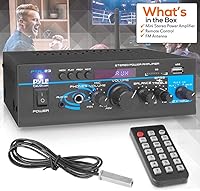
  • In the Box: The unit ships as a standalone amplifier only — no speaker cables, RCA cables, or microphone are included in the package.
  • Manufacturer: Made by Sound Around, a US-based consumer electronics company that markets budget audio products under the Pyle brand name.
  • Availability: First made available in December 2005 and remains an active, non-discontinued product in the manufacturer's lineup.

Related Reviews
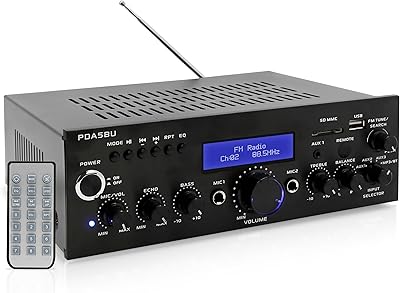
Pyle PDA69BU Stereo Amplifier Receiver
75%
83%
Bluetooth Connectivity
74%
Sound Quality
79%
Build Quality
86%
Value for Money
88%
Input Versatility
More
Pyle PDA5BU Bluetooth Stereo Amplifier
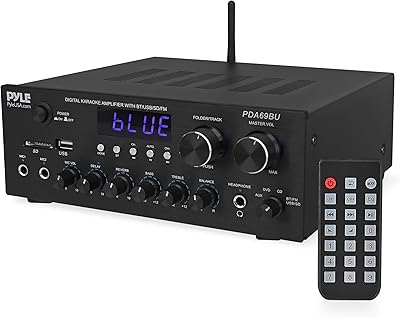
82%
88%
Audio Performance
82%
Bluetooth Connectivity
71%
Build Quality
85%
Ease of Setup
90%
Input Versatility
More
Pyle PCAU46BA Bluetooth Stereo Amplifier
73%
83%
Value for Money
67%
Sound Quality
91%
Ease of Setup
68%
Bluetooth Performance
54%
Build Quality
More
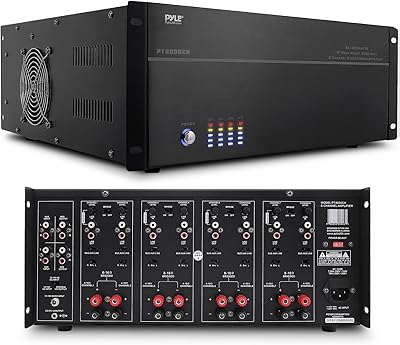
Pyle PT8000CH
Pyle PT8000CH
70%
84%
Ease of Installation
78%
Multi-Zone Audio Performance
51%
Rated Power Accuracy
62%
Build Quality
57%
Thermal Management & Fan Noise
More
Pyle PLA2378 2-Channel Car Stereo Amplifier
85%
87%
Sound Quality
90%
Installation Ease
85%
Power Output
83%
Build Quality
80%
Bass Control
More
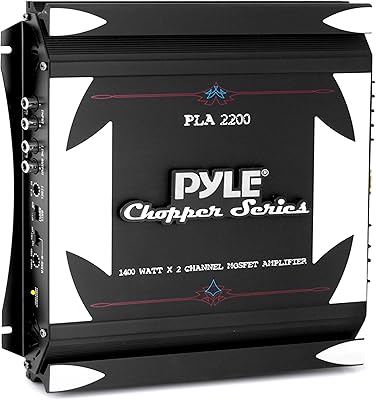
Pyle PLA2200 1400W 2-Channel Car Stereo Amplifier
87%
88%
Sound Quality
90%
Power Output
91%
Ease of Installation
63%
Thermal Performance
85%
Build Quality
More
Pyle PHA40 4-Channel Portable Stereo Headphone Amplifier
85%
87%
Performance
92%
Portability
72%
Build Quality
90%
Audio Quality
89%
Ease of Use
More
Pyle PLA2678 2-Channel Car Stereo Amplifier 4000W
85%
91%
Power Output
87%
Sound Clarity
84%
Build Quality
90%
Compact Design
67%
Thermal Management
More
Pyle PDA33BU 2.1 CH Wireless Stereo Power Amplifier
81%
82%
Sound Quality
88%
Ease of Setup
75%
Bluetooth Connectivity
67%
Bass Performance
92%
Value for Money
More
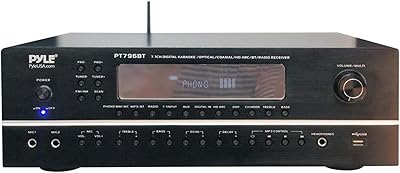
Pyle PT796BT 7.1-Channel AV Receiver
64%
67%
Value for Money
58%
Audio Performance
83%
Connectivity & Inputs
74%
Bluetooth Performance
52%
Build Quality
More

FAQ

No, the Pyle PTAU23 Stereo Amplifier does not include Bluetooth or any wireless connectivity. To play music from your phone, you would need to use the AUX input with a 3.5mm cable, or load your tracks onto a USB drive and plug that directly into the front panel.

The amp is designed for speakers with a 4-ohm impedance. You can connect two speakers in a standard stereo configuration. Higher-impedance speakers, like 8-ohm models, will work but will receive less power output than the rated spec suggests, so expect noticeably lower volume in that scenario.

Not directly. The microphone input uses a 1/4-inch phone jack, so a standard XLR microphone requires an XLR-to-1/4-inch adapter before it will connect. Those adapters are inexpensive and widely available, but it is an extra step worth planning for before your first karaoke night.

In pager mode, whenever the microphone picks up sound, it automatically ducks the background music so your voice comes through clearly — useful for announcements or classroom instructions. Mixing mode lets the mic and music play simultaneously at blended levels, which is what you want for karaoke. You switch between the two using a toggle on the front panel.

Only if your turntable has a built-in phono preamp. A raw phono-level signal from a standard turntable cartridge is too weak and requires RIAA equalization that this amp does not provide internally. If your turntable has a built-in preamp or a line-level output switch, it will work fine through one of the RCA input pairs.

It does generate noticeable warmth during extended use, which is normal for a compact class AB amplifier in a plastic enclosure. The main thing to avoid is placing it inside a fully enclosed cabinet with no airflow. Leave a few inches of open space around the unit, especially above and on the sides, and heat buildup should not be a problem under normal use conditions.

The USB and SD card playback is limited to MP3 format only. If your audio files are in FLAC, AAC, WAV, or any other format, you will need to convert them to MP3 before they will play. Free conversion tools are readily available online if you need them.

The REC output sends a line-level signal of whatever audio is passing through the amp to an external device — a portable recorder, a laptop sound card, or a dedicated recording interface. The signal level is fixed and cannot be adjusted independently, so you may need to tweak the input gain on your recording device to get clean levels. It works well once you dial in that balance.

For a standard living room — say, around 150 to 200 square feet — with reasonably efficient 4-ohm speakers, this mini amplifier can fill the space at moderate volume without obvious strain. Push it into the upper third of the volume range and distortion becomes audible, particularly in the bass. It is best treated as a low-to-moderate volume solution rather than a room-filling powerhouse.

No remote control is included or compatible with this unit. All functions — input selection, volume, tone adjustments, and MP3 transport — are handled exclusively through the front-panel knobs and buttons. If remote operation is important to your setup, this compact stereo receiver is not the right fit.