Overview

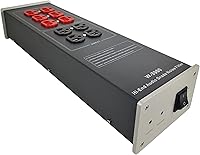
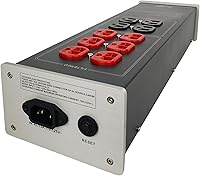
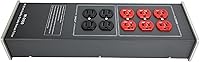
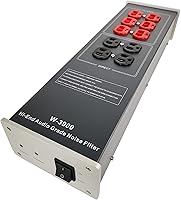
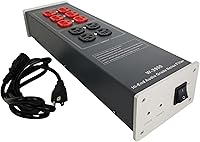
The WAudio W-3900 AC Power Conditioner is a rack-mounted conditioning unit that sits squarely in the mid-range market, competing with established names like Furman and Panamax. The solid aluminum chassis makes an immediate impression — it feels built for a real equipment rack, not a shelf. It offers ten outlets split between six hospital-grade filtered sockets and four direct industrial-grade ones, giving you flexibility for both sensitive and power-hungry gear. Worth stating clearly upfront: this is not a UPS or a line voltage regulator. It conditions and filters — it will not maintain power during an outage or correct severe voltage sag.

Features & Benefits

One of the more practical touches on this rack-mount unit is its automatic phase detection, which signals whether your AC outlet is wired correctly — something most power strips ignore entirely. The overload protection cuts all sockets when total current exceeds 15A, and a front-panel RESET button restores everything without unplugging a thing. The six filtered outlets handle EMI and RFI suppression, which can meaningfully quiet the background hum you might hear through studio monitors or an amplifier. The four direct outlets are reserved for power-hungry devices like subwoofers or power amplifiers that need unfiltered current. All of this fits inside a solid 1U rack enclosure built to standard 19-inch rack dimensions.

Best For

This power conditioner is a natural fit for home recording studios where clean power makes a real, audible difference to audio interfaces, preamps, and monitor speakers. DJ rigs benefit too — having ten organized outlets in a single rack unit is genuinely more manageable than juggling multiple power strips backstage. Home theater owners running a projector or AV receiver can also see fewer noise artifacts from dirty mains power. That said, the W-3900 is most at home in a proper rack cabinet; without one, its 1U form factor becomes less practical. Users in regions with inconsistent grid power or heavy electrical noise will get the most out of its combined filtering and protection.

User Feedback

Across more than 550 ratings, the W-3900 holds a 4.3-star average — respectable, though not without honest caveats. The most consistent praise centers on audible noise reduction in guitar amplifiers and studio monitors, with multiple buyers noting a noticeably cleaner signal after switching over. Build quality earns frequent nods too; the aluminum enclosure feels solid for the price tier. On the critical side, some buyers question whether the surge protection truly meets professional broadcast-grade standards — a fair point, since this is not a Furman PL-PLUS. A smaller group flagged that wide-body adapters can crowd the outlet spacing. The phase detection feature, though, drew consistently positive mention — several reviewers appreciated having wiring problems flagged they had not noticed before.

Pros

  • The aluminum chassis feels genuinely solid — noticeably sturdier than plastic-bodied alternatives at a similar price.
  • Splitting outlets into filtered and direct types is a smart design that handles both sensitive audio gear and power-hungry devices in one unit.
  • Automatic phase detection flags wiring problems in your outlet before they can damage equipment — a practical diagnostic tool many users overlook.
  • The 15A overload cutoff with a front-panel RESET button means recovering from a trip takes seconds, not a full system restart.
  • EMI and RFI filtering produces a real, audible reduction in background hum for amplifiers and studio monitors in noisy electrical environments.
  • Ten total outlets in a 1U rack footprint consolidates a lot of gear into one clean, organized power solution.
  • The W-3900 holds a 4.3-star average across more than 550 ratings, reflecting consistent satisfaction across diverse use cases.
  • At its price tier, it competes credibly with Furman entry-level conditioners while offering a comparable feature set.

Cons

  • Surge protection is basic rather than professional-grade — not a substitute for an isolation transformer in broadcast or high-stakes studio work.
  • Wide-body power adapters and bulky transformer plugs can block adjacent outlets due to tight spacing.
  • Without a rack enclosure, the 1U form factor is awkward to position and offers no practical mounting solution.
  • No voltage regulation or automatic voltage correction — it will not protect gear during sustained brownouts or overvoltage conditions.
  • No display or readout showing current draw, voltage levels, or protection status, which limits real-time monitoring.
  • WAudio is a lesser-known brand, and long-term reliability data and customer support responsiveness are harder to verify than with Furman or Panamax.
  • Some buyers report the power cable length is shorter than expected, which can limit rack placement flexibility.
  • The unit provides no battery backup — a total power outage means all connected equipment loses power instantly.

Ratings

The WAudio W-3900 AC Power Conditioner has been scored below by our AI rating system after analyzing hundreds of verified global purchases, actively filtering out incentivized, bot-generated, and duplicate reviews to surface only authentic buyer experiences. The scores reflect both where this rack-mount unit genuinely excels and where real users have run into friction — nothing is glossed over.

Build Quality
86%
The heavy-gauge aluminum chassis consistently earns praise from buyers who have owned cheaper plastic-bodied power strips and conditioners. Users describe it as feeling dense and substantial when racked — the kind of unit that does not slide around or rattle during live sets or transport.
A handful of reviewers noted that while the exterior aluminum feels solid, some of the internal components and rear labeling show less refinement than the outer shell suggests. At this price tier, a few buyers expected tighter finishing on port edges and panel lettering.
Noise Filtering
79%
21%
For studio monitors and amplifiers in home setups, the EMI and RFI filtering on the six hospital-grade outlets makes a perceptible difference. Several users report that the persistent low-frequency hum they had lived with for years disappeared after plugging into the filtered bank.
Results are inconsistent depending on how noisy the local electrical supply is. Users in newer buildings with clean wiring sometimes notice little change, while skeptical audiophiles point out that independent measurements rarely confirm the dramatic improvements some buyers describe anecdotally.
Surge Protection
61%
39%
The built-in surge and spike protection provides a reasonable safety net for home studio and home theater use, where the risk profile involves occasional voltage events rather than industrial-grade threats. Most buyers feel meaningfully more comfortable leaving sensitive gear powered on during storms.
Professional users and broadcast engineers frequently flag that this unit does not publish detailed clamping voltage or joule ratings, making it difficult to evaluate against Furman or Panamax offerings with transparent protection specs. It is not a substitute for a proper isolation transformer in critical applications.
Outlet Configuration
74%
26%
Having ten outlets split intelligently between filtered and direct categories is a genuine practical advantage over generic power strips. DJs and studio producers particularly appreciate being able to power an audio interface and a subwoofer from the same unit without compromising either.
Outlet spacing is tight enough that wide-body transformer adapters frequently block adjacent sockets — a recurring complaint that limits real-world usable outlet count for many setups. Users with several bulky wall-warts in their signal chain may find themselves back to using a secondary power strip.
Phase Detection
83%
The automatic phase and ground detection indicator is one of the more distinctive features at this price point, and reviewers confirm it works as advertised. Several users discovered their outlets were improperly wired only after plugging in the W-3900, which likely saved them from ongoing hum issues and potential equipment damage.
The indicator light is functional but minimal — it signals a problem without explaining its severity or providing guidance on corrective steps. First-time users unfamiliar with electrical wiring concepts may find themselves unsure what to do after the indicator flags an issue.
Overload Protection
81%
19%
The 15A cutoff threshold is generous enough that most home studio configurations will never trip it under normal use. When it does trigger, the front-panel RESET button makes recovery immediate — no unplugging, no guesswork, no waiting for thermal components to cool down.
The unit provides no indication of how close the current draw is to the 15A limit during operation, so users have no early warning before a cutoff event occurs. Adding a simple current draw display would significantly improve usability, especially in dense DJ or live performance rigs.
Rack Compatibility
88%
The W-3900 slots into a standard 19-inch rack enclosure cleanly, occupying exactly 1U of space without modifications or adapter plates. Rack-focused musicians and producers appreciate how it anchors power management into the same organized system as their other equipment.
For anyone without an existing rack enclosure, the form factor is a real obstacle — it is not designed to sit neatly on a desk or shelf, and it lacks desktop feet or a secondary mounting option. This limits its accessibility for buyers who are new to rack-based setups.
Value for Money
72%
28%
Relative to Furman and Panamax units with comparable outlet counts and filtering specs, the W-3900 typically lands at a more accessible price point without dramatically sacrificing core functionality. For hobbyist home studio use, the cost-to-feature ratio holds up well across the buying audience.
More technically demanding buyers question whether the protection specifications justify the mid-range price when entry-level Furman units come with more clearly documented surge ratings. The value proposition weakens for users who need verifiable protection metrics rather than general assurances.
Setup & Installation
84%
Most buyers report a straightforward installation experience — rack it, plug it in, and the phase indicator immediately confirms whether the outlet is correctly wired. There is no software, no configuration menu, and no learning curve beyond understanding which outlet type to use for which device.
The included documentation is sparse, and new users unfamiliar with the distinction between filtered and direct outlets may plug everything into the wrong bank by default. A clearer labeling scheme or a small included guide sheet would reduce setup errors.
Cable & Power Cord
63%
37%
The power cord feels adequately robust for the unit's weight class and is thick enough to handle the rated current load without concern. Buyers generally report no issues with the cord itself under normal operating conditions.
Multiple reviewers flag that the included power cord is shorter than expected, which restricts where in a rack room or studio the unit can be positioned relative to the wall outlet. Several users ended up purchasing a heavier-gauge extension cord as an immediate workaround.
Long-Term Reliability
69%
31%
A subset of reviewers who have owned the W-3900 for several years report no functional degradation — the outlets work consistently, the indicator lights remain accurate, and the chassis shows minimal wear. Its #3 ranking in Line Conditioners suggests sustained buyer confidence over time.
WAudio is a relatively obscure brand with limited visibility into warranty support responsiveness or long-term parts availability. Buyers who have needed service or replacement after a failure report inconsistent support experiences, which is a real concern for a piece of gear protecting expensive equipment.
Indicator Visibility
71%
29%
The front-panel indicators for phase detection and power status are visible in a typical rack environment and provide a quick visual confirmation that the unit is functioning. Studio users appreciate being able to check status at a glance without touching the unit.
The indicators are not bright enough to read easily in high-ambient-light environments or from across a large studio room. In darker performance spaces or dimly lit home theaters, they can be hard to locate quickly without moving closer to the rack.
Compatibility
77%
23%
The W-3900 handles a broad range of connected equipment without issues — audio interfaces, preamps, powered monitors, projectors, computers, and AV receivers all coexist on its outlets without interference or incompatibility reports in the review pool.
Its 125V AC North American voltage rating makes it incompatible with international electrical systems without a step-down transformer, which is an easy detail to overlook for buyers outside the US or Canada.

Suitable for:

The WAudio W-3900 AC Power Conditioner is an excellent fit for home studio musicians, producers, and audio enthusiasts who want organized, cleaner power for their rack-mounted gear without paying flagship Furman prices. If you run an audio interface, preamp, and a pair of powered monitors off the same circuit, the filtered outlets can genuinely reduce the low-level hum that plagues otherwise well-built setups. DJs with a touring or club rig will appreciate having ten outlets consolidated in one reliable 1U unit, cutting down on the cable chaos that comes with daisy-chained power strips. Home theater owners dealing with subtle picture noise or audio interference from dirty mains will also find real value here. It works best when installed in a proper 19-inch equipment rack, where its form factor and phase detection feature can be put to full practical use.

Not suitable for:

Buyers expecting full power backup or voltage regulation during brownouts should look elsewhere — the WAudio W-3900 AC Power Conditioner is a conditioner and surge protector, not a UPS or automatic voltage regulator. Professional broadcast engineers or recording studios with truly mission-critical power requirements will likely find its surge protection specification below the threshold they need, and would be better served by a Furman P-2400 IT or a dedicated isolation transformer. If you do not own or plan to buy a rack enclosure, the 1U chassis becomes an awkward piece of equipment to place on a desk or shelf. Users who frequently plug in wide-body wall adapters or bulky transformer blocks may also find the outlet spacing frustratingly tight. And for anyone who simply needs a reliable power strip for a desktop computer or a basic home setup, this is significantly more hardware than the situation calls for.

Specifications

  • Brand: Manufactured by WAudio, a brand specializing in audio power management accessories.
  • Model: The unit model number is W-3900, a 1U rack-mountable power conditioner introduced in May 2015.
  • Dimensions: The chassis measures 17.72 x 5.51 x 3.54 inches, conforming to standard 19-inch rack enclosure width.
  • Weight: The unit weighs 5.72 pounds (2.6 kg), reflecting its solid aluminum construction.
  • Voltage: Rated for 125V AC input, compatible with standard North American household and studio electrical supplies.
  • Total Outlets: Provides 10 total outlets: 6 hospital-grade filtered sockets and 4 industrial-grade direct sockets.
  • Filtered Outlets: Six hospital-grade outlets deliver EMI and RFI filtered power, optimized for sensitive audio and video equipment.
  • Direct Outlets: Four industrial-grade outlets supply unfiltered direct power, intended for high-draw devices such as power amplifiers or subwoofers.
  • Overload Protection: An automatic overload cutoff triggers when total current draw exceeds 15A, with a front-panel RESET button for fast recovery.
  • Surge Protection: An onboard circuit monitors for voltage surges and spikes and cuts power to protect connected equipment from transient events.
  • Phase Detection: Built-in phase detection automatically checks AC source phase orientation and ground wire connection status, flagging wiring faults.
  • Chassis Material: The enclosure is constructed from heavy-duty aluminum with thick plating, providing durability and some degree of RF shielding.
  • Form Factor: The W-3900 occupies exactly 1U of rack space, fitting any standard 19-inch equipment rack without modification.
  • Noise Filtering: The filtered outlet bank suppresses electromagnetic interference (EMI) and radio frequency interference (RFI) on the AC line.
  • Connector Type: Uses a barrel-style power connector configuration for its inlet connection to the mains supply.
  • Color: The unit ships in a silver finish consistent with standard rack-mount equipment aesthetics.
  • Best Sellers Rank: Ranked #3 in the Line Conditioners category on Amazon, based on sustained sales performance since its 2015 debut.
  • Availability: The W-3900 has not been discontinued by the manufacturer and remains available as of its most recent listing update.

Related Reviews
WAudio W-5900 AC Power Conditioner
77%
83%
Build Quality
77%
Noise Filtering Effectiveness
71%
Surge & Spike Protection
62%
Outlet Layout & Spacing
88%
Voltage Meter Usefulness
More
Pailvens P10 Power Conditioner
77%
83%
Build Quality
74%
Noise Filtering Performance
88%
LED Display Usefulness
79%
Outlet Layout & Usability
81%
Overvoltage Protection
More
Furman Elite-15i AC Power Conditioner
84%
93%
AC Noise Filtering
91%
Surge & Overvoltage Protection
88%
Build Quality
86%
Ground Loop Elimination
67%
Value for Money
More
Furman Elite-15 PF i AC Power Conditioner
83%
91%
Noise Filtering Performance
93%
Build Quality
89%
Surge Protection Design
88%
Power Delivery for Amplifiers
86%
Outlet Organization
More
Tripp Lite LC2400 Power Conditioner
83%
93%
Voltage Regulation
88%
EMI/RFI Noise Filtering
86%
Surge Protection
91%
Build Quality
79%
Outlet Configuration
More
Furman Elite-15 DM i AC Power Conditioner
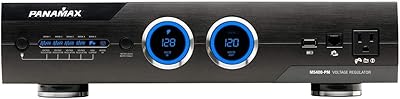
79%
88%
Noise Reduction Performance
93%
Build Quality
91%
Equipment Protection
61%
Value for Money
69%
Outlet Layout & Usability
More
Panamax M5400-PM Power Conditioner
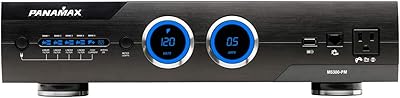
84%
94%
Surge & Spike Protection
78%
Noise Filtration Performance
93%
Build Quality & Durability
86%
Outlet Count & Layout
91%
Voltage Monitoring (AVM)
More
Panamax M5300-PM Home Theater Power Conditioner
86%
89%
Performance
94%
Surge Protection
88%
Build Quality
91%
Noise Reduction
84%
Usability
More
LVYUAN 200W Power Inverter 12V DC to 110V AC
87%
92%
Portability & Size
89%
Charging Performance
86%
Build Quality
94%
Noise Level
75%
Cooling & Thermals
More
XTAR X4 2A Fast AC Power Battery Charger
87%
92%
Charging Speed
89%
Ease of Use
85%
Charging Capacity (Slots)
91%
Display Clarity
88%
Safety Features
More

FAQ

It can, and for many users it does. The six filtered outlets are specifically designed to suppress EMI and RFI on the AC line, which is often the source of low-level hum in amplifiers and monitor speakers. Results vary depending on how noisy your building's electrical supply is, but a meaningful number of buyers report a noticeably quieter noise floor after switching over.

No — the WAudio W-3900 AC Power Conditioner is not a UPS and provides no battery backup whatsoever. If the power goes out, everything plugged into it loses power immediately. It conditions and protects against surges and noise, but it does not regulate or sustain voltage during an outage. If power continuity is critical for your setup, you would need a separate UPS device.

The unit is rated for 125V AC, which is the standard voltage in North America. It is not designed for 220-240V markets used in Europe, Asia, or most of the rest of the world. Using it without a proper step-down transformer in a 240V environment could damage both the unit and any connected gear.

The six hospital-grade filtered outlets pass power through an EMI/RFI noise suppression circuit before it reaches your equipment — ideal for audio interfaces, preamps, and monitors where clean power matters. The four direct outlets deliver unfiltered mains power straight through, which is better for high-draw devices like power amplifiers that can actually be negatively affected by filtering circuits. Splitting your gear between the two types accordingly gets you the best of both.

Technically you can set it on a flat surface, but the W-3900 is clearly designed for rack installation. Without rack ears or a proper enclosure, the 1U slab form factor is awkward to position and leaves the unit unsecured. If you do not own or plan to buy a rack, a traditional power conditioner with a more conventional desktop form factor would likely suit your needs better.

Phase detection checks whether your AC outlet is wired with the correct polarity and whether the ground connection is properly established. Miswired outlets are more common than people realize, especially in older buildings, and they can introduce hum or create safety risks. The indicator on this rack-mount unit flags the problem immediately — which several buyers found genuinely useful for diagnosing issues they had not previously identified.

Furman units at the comparable entry level offer similar EMI filtering and surge protection, and both brands are reasonably well regarded for home studio use. Furman has a longer track record and stronger name recognition in professional audio circles, which matters if resale value or peer credibility is a consideration. The W-3900 competes on build quality and outlet count, and is often priced competitively. For non-professional home studio use, the practical differences are minimal.

This is a legitimate concern raised by a number of buyers. Wide-body transformer adapters can physically overlap adjacent outlets depending on their size, effectively blocking one or two neighboring sockets. If you have several bulky adapters in your setup, it is worth planning which devices will use shorter, direct plugs and reserving the wider-spaced positions for the bulkier ones.

Under normal operating conditions with typical studio gear — an audio interface, a few monitors, a preamp, and a computer — you are very unlikely to hit the 15A threshold. That ceiling is quite generous for most home setups. If you are powering multiple high-wattage amplifiers or large PA components simultaneously, then it becomes more of a consideration. The front-panel RESET button means recovery is quick if it does trip.

For a serious hobbyist with a rack-based setup, yes — the aluminum chassis and overall construction are consistently praised by buyers as feeling more substantial than similarly priced plastic alternatives. It is not built to the same standard as high-end professional units costing several times more, but within its tier it delivers a solid, functional product that holds up well in everyday studio or live use.

Where to Buy