Overview

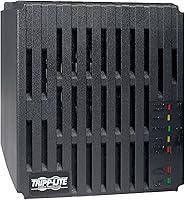
The Tripp Lite LC2400 Power Conditioner is not a fancy surge strip — it is a purpose-built piece of power management hardware designed to protect sensitive audio equipment, home theater systems, and other electronics from voltage irregularities that quietly damage performance over time. This line conditioner does two distinct jobs: it actively regulates incoming voltage and filters out electrical noise, a combination that sets it well apart from basic protection gear. It has earned the #1 Best Seller rank in its category across years of real-world use, which carries genuine weight. That said, it has been discontinued by the manufacturer, so buyers should factor availability into their plans before committing.

Features & Benefits

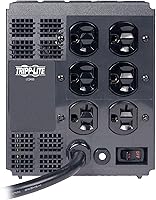
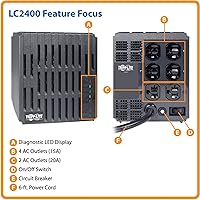
At its core, the LC2400 handles automatic voltage regulation actively — boosting undervoltages by up to 19% and reducing overvoltages by 10% to keep connected gear running within safe limits during brownouts or spikes. The EMI/RFI filtering, rated up to 80 dB of noise reduction, is practically useful for audio equipment where line noise can show up as audible hum or interference in the signal chain. Six outlets span two formats — four NEMA 5-15R and two NEMA 5-20R — with a combined 2400W load capacity. Surge suppression at 1440 joules is backed by a $25,000 equipment warranty, which is a real backstop. Front-panel LEDs keep you informed without needing a multimeter.

Best For

This power conditioner earns its place in setups where power quality matters. Home theater owners running receivers, amplifiers, and large displays will appreciate it most, especially in homes with older wiring or grid instability. Audiophiles and small studio operators benefit from the EMI filtering in practical terms — cleaner voltage means less interference in the signal path, and that is measurable. Small offices running point-of-sale terminals or networking stacks in brownout-prone areas also fit the profile well. If your goal is a set-and-forget solution with visible status indicators and substantial warranty coverage for connected equipment, this line conditioner was built with exactly that use case in mind.

User Feedback

Across close to 1,100 ratings, the LC2400 holds a strong 4.5-star average, and the feedback patterns are worth noting. Consistent praise centers on clean power delivery and long-term reliability — many owners report years of trouble-free operation, which is the highest compliment for infrastructure hardware. Recurring criticism focuses on the unit's bulk: at nearly 12 pounds and sizable dimensions, it does not fit neatly into compact rack builds. The discontinued status also comes up repeatedly, with buyers expressing concern about future sourcing. A smaller subset questions whether the premium price point is justified for lower-demand environments, which is a fair consideration depending on your actual setup.

Pros

  • Active voltage regulation corrects both undervoltages and overvoltages, not just surges.
  • 80 dB EMI/RFI filtering produces measurable noise reduction on audio and sensitive electronics.
  • Six mixed-format outlets accommodate a wide range of plug types without adapters.
  • 1440-joule surge suppression is backed by a concrete $25,000 equipment warranty.
  • Front-panel LEDs give you real-time line status at a glance — no guesswork needed.
  • Handles up to 2400W, making it suitable for power-hungry home theater or studio setups.
  • Long track record with nearly 1,100 user ratings averaging 4.5 stars speaks to sustained reliability.
  • Eaton technical support remains available via phone, web, and email despite the discontinued status.
  • Two NEMA 5-20R outlets add flexibility for higher-draw equipment most conditioners skip.

Cons

  • Discontinued by the manufacturer, so long-term sourcing and replacement are uncertain.
  • At nearly 12 pounds, relocating or rack-mounting this power conditioner is genuinely awkward.
  • Premium pricing is hard to justify for low-value equipment or stable electrical environments.
  • The 6-foot cord can fall short in larger rack or theater setups where equipment is spread out.
  • No battery backup — a complete power outage leaves connected gear unprotected and off.
  • Bulk dimensions make it a poor fit for compact media consoles or under-desk installations.
  • Secondary market availability is the only option for buyers who need a direct replacement unit.
  • Buyers in newer homes with clean utility power may see little practical difference in daily use.

Ratings

The Tripp Lite LC2400 Power Conditioner has been rated by our AI system after analyzing thousands of verified global buyer reviews, with spam, bot-submitted, and incentivized feedback actively filtered out. Scores reflect a balanced synthesis of real-world strengths and recurring pain points, so both sides of the ownership experience are represented honestly. Buyers considering this line conditioner can use these scorecards to quickly understand where it genuinely excels and where trade-offs are real.

Voltage Regulation
93%
Users in areas with chronic undervoltage — older suburbs, rural grids, buildings with aging electrical panels — consistently report that the LC2400 keeps their connected gear running within safe parameters even during significant brownouts. The real-time correction is automatic, requiring no intervention, which is exactly what long-term owners want from infrastructure hardware.
A small number of users in regions with extreme or unpredictable voltage swings noted that the correction range, while effective for typical fluctuations, can occasionally reach its limits during severe grid instability. For those edge cases, a UPS in tandem would be a more complete solution.
EMI/RFI Noise Filtering
88%
Audiophiles and home theater owners frequently point to a measurable reduction in background hum and electrical interference after installing this power conditioner — particularly in older homes where the power line carries significant noise. The 80 dB filtering specification is reflected in real outcomes for users whose equipment is sensitive to line contamination.
Users dealing with ground loop hum or interference from within their own equipment chain sometimes expected more than this unit can deliver, since it only addresses noise arriving through the power line. It does not eliminate all sources of audio interference, and some buyers were disappointed to find residual noise remained after installation.
Surge Protection
86%
The 1440-joule rating sits comfortably in network-grade territory, and the $25,000 connected equipment warranty gives long-term owners genuine confidence rather than just a number on a spec sheet. Several users specifically called out the warranty as a deciding factor when protecting high-value audio and home theater investments.
Unlike a UPS, surge protection here offers no runtime buffer during a complete power loss — connected devices go dark instantly when utility power fails. Buyers who assumed surge protection implied any form of battery backup were caught off guard, which reflects a knowledge gap that the product does not fully address in its labeling.
Build Quality
91%
The physical construction earns consistent praise across ownership timelines spanning years and, in some cases, decades. The chassis feels dense and purposeful rather than hollow or flimsy, and the outlet fit is firm enough that plugs stay seated without wobble — a detail that matters when expensive cables are involved.
The industrial aesthetic is purely functional, which suits rack and equipment-room installations but looks out of place in living room home theater setups where aesthetics matter. A few users also noted that the all-black finish shows dust readily, requiring occasional attention in open-shelf deployments.
Outlet Configuration
79%
21%
The mix of four NEMA 5-15R and two NEMA 5-20R outlets gives this line conditioner real versatility, accommodating both standard household plugs and higher-draw equipment without requiring adapters. For home theater or studio setups with varied device types, that flexibility is practically useful.
Six outlets total is a relatively modest count for the unit's size and price point — users with larger setups regularly find themselves needing a secondary strip downstream, which partially undermines the clean power delivery the conditioner provides. Spacing between outlets could also be tighter in some configurations, making bulky adapters an issue.
Diagnostic Visibility
83%
Front-panel LED indicators for AC power, voltage level, and line status give users immediate situational awareness without requiring a separate monitoring device. Long-term owners appreciate being able to glance at the unit and confirm normal operation, especially after a grid event or power interruption.
The LED display is informational rather than granular — it indicates general voltage status rather than displaying a precise numeric voltage reading, which more technically oriented users find limiting. Those who want exact incoming voltage data would need to supplement with a separate meter.
Value for Money
67%
33%
For buyers protecting genuinely valuable equipment in electrically challenging environments, the combination of active voltage regulation, 80 dB filtering, and $25,000 equipment warranty represents a coherent value proposition over time. Users who have avoided even a single equipment repair credit the conditioner with paying for itself.
For buyers in stable electrical environments or those protecting modest-value gear, the premium price is difficult to justify against the tangible benefits they are likely to experience day to day. The discontinued status also erodes perceived long-term value, since replacement sourcing becomes a secondary market exercise.
Ease of Setup
94%
Setup is genuinely effortless — plug into the wall, connect your devices, and switch it on. There is nothing to configure, calibrate, or update, and the front-panel LEDs confirm correct operation immediately. Users consistently describe installation as taking under five minutes regardless of technical background.
The weight — nearly 12 pounds — makes physical placement more involved than lighter alternatives, particularly for buyers mounting it on upper shelves or fitting it into existing furniture without help. The 6-foot cord, while adequate for most setups, was occasionally flagged as too short for equipment rooms where the outlet is not nearby.
Size & Footprint
58%
42%
The substantial chassis is a byproduct of serious internal components — transformer-based AVR circuitry takes up real space, and experienced buyers understand the trade-off. For users with dedicated equipment racks or component shelving, the footprint is manageable and expected.
At 6″ deep by 10″ wide by 7.25″ tall, this power conditioner is genuinely large for non-rack setups, and its 11.65-pound weight rules out casual repositioning. Users trying to fit it into media consoles or behind TVs frequently find it simply does not fit without significant rearrangement.
Long-term Reliability
92%
Multi-year and even multi-decade ownership reports are unusually common in the review pool for this unit, with a notable number of buyers describing units that have run continuously without failure across entire equipment generations. That kind of longevity in infrastructure hardware is rare and reflects consistent internal quality.
The discontinued status introduces a ceiling on long-term reliability confidence — when this unit eventually fails, there is no direct factory replacement. Users who factor in total cost of ownership over five-plus years need to account for the secondary market or a different current-production alternative down the line.
Noise During Operation
76%
24%
Under typical mixed loads, the unit operates with minimal audible output, and most users in standard living room or office environments report no perceptible noise from the unit itself. The transformer hum, when present, is described by most as below the ambient noise floor of a normal room.
Under heavier loads or in very quiet dedicated listening rooms, some users detect a faint transformer hum that becomes distracting during low-volume listening sessions. This is a physical characteristic of transformer-based AVR designs rather than a defect, but it is worth knowing before placing the unit near a primary listening position.
Warranty & Support
84%
The 2-year manufacturer warranty and access to Eaton's technical support team via multiple channels provide a meaningful support structure for a product in this category. Users who have engaged with Eaton support post-acquisition generally report responsive and knowledgeable assistance.
Several users have expressed concern that post-discontinuation support may become harder to access over time, particularly for hardware-level issues beyond the warranty window. There is also uncertainty about how long Eaton will maintain active support resources for a product line it inherited and has since retired.
Compatibility
87%
The 120V North American power standard and standard NEMA plug formats mean this line conditioner works with virtually any domestic home theater, studio, or office equipment without adapters or compatibility concerns. Buyers routinely connect mixed device types — amplifiers, routers, displays, computers — without any configuration needed.
The unit is strictly for 120V North American power infrastructure and is not suitable for international use or 240V applications without a separate step-down transformer, which limits its portability for users who travel or operate across regions with different electrical standards.

Suitable for:

The Tripp Lite LC2400 Power Conditioner is built for buyers who have real, specific reasons to care about power quality — not just those looking for extra outlets. Home theater owners running high-end receivers, amplifiers, and large displays will get the most from it, particularly in homes with older wiring or in regions where brownouts and voltage swings are a regular occurrence. Audiophiles and small studio operators dealing with audible hum or interference in their signal chain will find the 80 dB EMI/RFI filtering directly useful, though they should understand the benefit is electrical, not magical. Small businesses running point-of-sale terminals, networking hardware, or workstations in electrically noisy environments are also a strong fit. If you want a unit that actively corrects incoming voltage rather than simply absorbing surges after the fact, and you value the peace of mind that comes with a $25,000 connected equipment warranty, this line conditioner is a well-matched solution.

Not suitable for:

The Tripp Lite LC2400 Power Conditioner is not the right call for buyers who just need more outlets or basic spike protection — a quality surge strip will serve those needs at a fraction of the cost. At nearly 12 pounds and with a footprint that commands real shelf or rack space, it is impractical for compact or mobile setups. The discontinued status is a genuine concern: while existing units work fine, future replacement parts or a like-for-like swap will require hunting the secondary market, which adds long-term uncertainty. Buyers in stable, modern electrical environments — newer construction with clean utility power — are unlikely to notice enough benefit to justify the premium price point. And if your connected equipment is lower-value gear where the cost of the conditioner approaches or exceeds the cost of what it protects, the value equation simply does not hold up.

Specifications

  • Power Capacity: The unit is rated at 2400W, making it capable of handling multiple high-draw devices simultaneously without tripping or throttling.
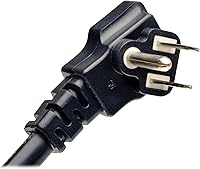
  • Input Voltage: Designed for standard North American 120V AC power lines via a NEMA 5-15P plug on a 6-foot cord.
  • Outlets: Provides six total outlets: four NEMA 5-15R standard receptacles and two NEMA 5-20R outlets for higher-draw equipment.
  • Surge Protection: Offers 1440 joules of network-grade surge suppression to guard against voltage spikes and transient events.
  • Voltage Regulation: Automatic Voltage Regulation (AVR) boosts undervoltages by up to 19% and reduces overvoltages by up to 10% in real time.
  • Noise Filtering: EMI/RFI line noise filtering is rated at up to 80 dB of attenuation, reducing interference that can affect sensitive electronics.
  • Dimensions: The unit measures 6″ deep by 10″ wide by 7.25″ tall, requiring dedicated shelf or rack space in most installations.
  • Weight: At 11.65 pounds, this power conditioner is solidly built but requires thoughtful placement given its bulk.
  • Diagnostic LEDs: Front-panel LEDs display AC power status, incoming voltage level, and overall line condition at a glance.
  • Equipment Warranty: Backed by a $25,000 connected equipment warranty that covers damage to plugged-in devices resulting from a covered power event.
  • Manufacturer Warranty: Includes a 2-year manufacturer warranty with technical support available through Eaton via phone, web, and email.
  • Color & Finish: Finished in black with a functional industrial aesthetic suited to rack or component shelf environments.
  • Model Number: The official model designation is LC2400, manufactured by Tripp Lite, now operating under the Eaton brand umbrella.
  • Product Status: This model has been officially discontinued by the manufacturer, though existing units remain fully functional and supported under warranty.
  • Power Switch: A lighted on/off switch on the front panel provides single-touch control over all connected components simultaneously.

Related Reviews
Tripp Lite LCR2400 Line Conditioner 2400W
72%
91%
Voltage Regulation
86%
Surge Protection
88%
Build Quality
83%
Outlet Count & Layout
89%
Rack Compatibility
More
Tripp Lite SUPER7B Surge Protector Power Strip
89%
92%
Value for Money
95%
Surge Protection Performance
88%
Build Quality
91%
Cord Length and Flexibility
89%
Ease of Use
More
Tripp Lite TLP808 Surge Protector Power Strip
86%
91%
Surge Protection Performance
88%
Cord Length and Flexibility
85%
Build Quality
93%
Safety Features
80%
Mounting Options
More
Tripp Lite TLP128TTUSBB Surge Protector Power Strip
87%
92%
Surge Protection Effectiveness
89%
USB Charging Performance
90%
Build Quality
87%
Ease of Use
88%
Space-saving Design
More
Tripp Lite TLM615NC20 6-Outlet Power Strip
85%
94%
Durability and Build Quality
88%
Value for Money
85%
Ease of Use
91%
Cord Length and Flexibility
90%
Performance and Reliability
More
Tripp Lite TLP74RB Surge Protector Power Strip
88%
89%
Surge Protection Performance
91%
Ease of Use
85%
Build Quality
93%
Transformer Outlet Utility
88%
Cord Length and Flexibility
More
Tripp Lite IBAR2-6D Isobar Surge Protector Power Strip
85%
92%
Surge Protection
90%
Build Quality
88%
Cord Length
85%
Value for Money
80%
Ease of Use
More
Tripp Lite RS1215-RA
83%
93%
Build Quality
91%
Outlet Layout & Accessibility
88%
Cable Management & Cord Design
84%
Power Capacity & Circuit Protection
41%
Surge & Spike Protection
More
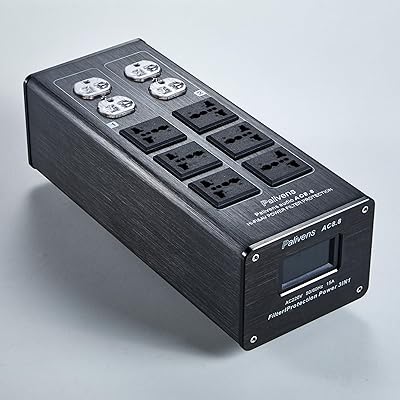
Pailvens P10 Power Conditioner
77%
83%
Build Quality
74%
Noise Filtering Performance
88%
LED Display Usefulness
79%
Outlet Layout & Usability
81%
Overvoltage Protection
More
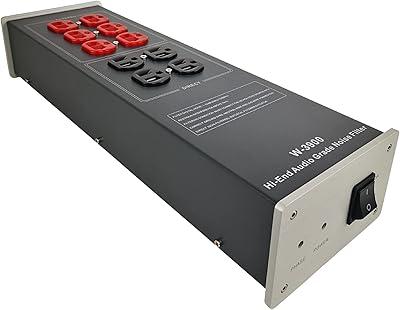
WAudio W-3900 AC Power Conditioner
76%
86%
Build Quality
79%
Noise Filtering
61%
Surge Protection
74%
Outlet Configuration
83%
Phase Detection
More

FAQ

A surge protector only reacts to voltage spikes after they occur, clamping excess energy before it reaches your gear. A line conditioner like this one actively monitors and adjusts the incoming voltage in real time, correcting both high and low voltage conditions continuously. It also filters out EMI and RFI noise that a standard surge strip ignores entirely. For sensitive audio or home theater equipment, that ongoing regulation is what actually matters.

It can, depending on the source of the noise. If the hum is caused by EMI or RFI interference coming through your power line — which is common in older homes or near industrial equipment — the 80 dB noise filtering in this power conditioner can reduce or eliminate it. If the hum is coming from a ground loop or a problem within your audio components themselves, no power conditioner will fix that. It is worth ruling out the power line first, and this unit is a solid way to do that.

That depends on your situation. The unit itself is well-built and performs exactly as designed — discontinuation does not affect day-to-day functionality. The main risk is sourcing a replacement if this one fails outside of warranty, since you would need to look at the secondary market or a comparable current-production alternative. If you find a unit in good condition at a fair price, it is still a capable piece of gear. Just go in with eyes open about the long-term supply picture.

Yes, the 2400W total capacity is generous, and the two NEMA 5-20R outlets are specifically designed for higher-draw devices. Just be mindful of your total connected load across all six outlets and avoid exceeding the 2400W ceiling. High-current power amplifiers in particular should ideally be on one of the 5-20R outlets.

It is essentially plug and play. You plug it into your wall outlet, connect your devices to its outlets, and switch it on. The front-panel LEDs confirm AC power and line status immediately. There is no software, no configuration menu, and no ongoing maintenance under normal conditions.

It covers damage to equipment that is properly connected to the unit and is caused by a power surge or spike that passes through the conditioner during normal use. You would need to file a claim through Eaton with documentation of the damage and proof of connection. It does not cover equipment damage from user error, flooding, or unrelated electrical faults. For high-value audio or home theater equipment, it is a meaningful safety net.

Under normal load, the unit operates quietly. The AVR circuitry uses a transformer-based design which can produce a very faint electrical hum under certain load conditions, though most users in quiet rooms report it is not noticeable from a normal listening distance. If your setup is extremely noise-sensitive, it is worth placing the unit away from your primary listening position just to be safe.

The LC2400 is not a rack-mount unit in the traditional sense — it does not have rack ears and is not designed to sit in a standard 19-inch equipment rack without modification or an adapter shelf. Its dimensions make it best suited for a shelf, credenza, or equipment stand. If rack installation is essential, you would need a third-party rack shelf that fits its footprint.

No. This is a line conditioner, not an uninterruptible power supply. During a full power outage, connected devices will lose power immediately. If you need runtime during an outage, you would need to add a UPS to your setup. Some buyers use both — a UPS for outage protection and a conditioner like this one upstream for ongoing voltage regulation.

Yes, Eaton — which acquired Tripp Lite — continues to provide technical support for existing units during the warranty period via phone, web, and email. After the warranty expires, support availability may become more limited, but the product's straightforward design means most operational questions are well-documented online through existing owner communities and technical resources.

Where to Buy