Overview

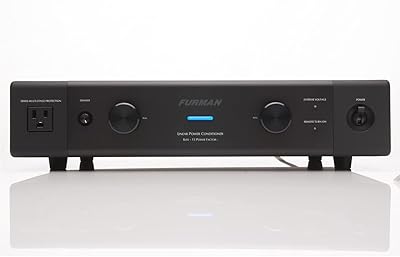
The Furman Elite-15 DM i AC Power Conditioner sits firmly at the premium end of the line conditioning market, built for audiophiles and custom AV installers who take power quality seriously. Most people underestimate how much dirty AC power affects their system — noise, hum, and subtle distortion can creep in from shared circuits, dimmers, and appliances on the same line. This Furman power conditioner addresses that with a 13-outlet, rack-mountable 1U chassis that fits neatly into professional equipment racks or dedicated theater furniture. Furman has been supplying power management solutions to recording studios and installers since long before this model launched in 2008, and that engineering pedigree shows. Just know that the price reflects that heritage.
Features & Benefits

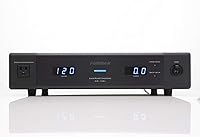
What sets the Elite-15 DM i apart from typical surge protectors or even transformer-based conditioners is its Linear Filtering Technology, or LiFT. Rather than relying on metal oxide varistors that degrade over time or bulky transformers that can introduce their own sonic coloration, LiFT addresses noise across the AC line without choking current delivery to power-hungry amplifiers. The Extreme Voltage Shutdown circuit goes beyond standard surge clamping — it cuts power entirely when voltage strays dangerously high or low, protecting expensive components that surge strips simply cannot safeguard. Zero Ground Contamination circuitry keeps digital noise from traveling through the ground path and muddying analog stages. A 12-volt trigger input with bypass adds real value in automated custom installations.

Best For

This linear conditioner makes the most sense in environments where power quality has a direct, audible impact — a dedicated home theater room, a high-end two-channel listening space, or a rack built by a custom AV integrator. If you are running a resolving system with a quality DAC, a tube or solid-state preamp, and a revealing pair of speakers, the kind of background noise reduction this unit can provide may well be noticeable. It also fits neatly into installer workflows thanks to the 12V trigger compatibility. That said, if your system is modest or your room has bigger acoustic problems than electrical ones, the premium here is hard to justify. A casual user running mid-fi gear is unlikely to hear a meaningful difference.

User Feedback

Owners of this Furman power conditioner consistently praise the reduction in audible noise — lower background hiss and the elimination of hum that had previously crept in from lighting circuits or other appliances are among the most common observations. The steel chassis draws consistent approval for feeling genuinely robust rather than hollow and light. On the critical side, the unit is large and heavy for its category, and a few buyers note it is not practical outside of a proper rack. Outlet spacing can also be tight when using larger power adapters, which occasionally forces the use of short extension leads. Some debate whether the improvement over a well-regarded mid-range conditioner is worth the substantial price gap — a fair concern worth weighing honestly before purchasing.

Pros

  • Linear filtering technology reduces the noise floor without restricting current delivery to demanding amplifiers.
  • Voltage shutdown protection cuts power during dangerous over- and under-voltage events, going well beyond standard surge clamping.
  • Zero Ground Contamination circuitry effectively isolates digital components from ground-loop interference.
  • The 12-volt trigger input makes this Furman power conditioner a natural fit for custom, automated AV installations.
  • 13 outlets across switched and unswitched banks gives installers genuine flexibility in rack builds.
  • The steel chassis feels tank-like and inspires confidence in long-term durability and equipment protection.
  • Front-panel metering lets you monitor incoming voltage at a glance without additional tools.
  • Rack-mount ears are included, making professional installation clean and straightforward.
  • Many owners report a noticeable reduction in audible hum and background hiss after installation.
  • A long, proven market presence since 2008 reflects reliable, field-tested engineering rather than a newcomer unproven design.

Cons

  • The premium price is difficult to justify for anyone without a genuinely resolving, high-end system.
  • At 14 pounds and 1U rack depth, it is impractical for typical living room furniture or non-rack setups.
  • Outlet spacing can be tight when multiple large wall-wart adapters are in use simultaneously.
  • Audible improvements are system-dependent and far from guaranteed, particularly on modest equipment.
  • No built-in USB charging ports, which feels like an omission at this price level given modern rack setups.
  • The value gap versus a quality mid-range conditioner is genuinely debatable for all but the most resolving systems.
  • Buyers in regions with consistently stable utility power may perceive little practical benefit over time.
  • The size and weight make it a poor fit for anyone who moves or reconfigures their system frequently.

Ratings

The scores below reflect AI-driven analysis of verified global user reviews for the Furman Elite-15 DM i AC Power Conditioner, with spam, bot-generated, and incentivized feedback actively filtered out to ensure accuracy. Ratings cover everything from noise reduction performance to physical usability, giving prospective buyers a transparent look at where this linear conditioner genuinely excels and where real-world frustrations tend to surface. Both the standout strengths and the recurring pain points are represented without bias.

Noise Reduction Performance
88%
Owners running sensitive preamps, high-resolution DACs, and tube amplifiers frequently report a meaningful drop in background hiss and the elimination of stubborn hum caused by shared circuits or dimmer switches. In dedicated listening rooms and home theaters, the improvement in perceived silence between musical passages is the most commonly praised outcome.
Results vary considerably depending on how dirty local utility power actually is, and buyers in areas with already stable, clean power sometimes notice little to no audible change. Users with modest or mid-fi systems are particularly unlikely to perceive a difference that justifies the cost.
Build Quality
93%
The steel chassis and 14-pound weight make an immediate impression — this feels like professional-grade infrastructure rather than a consumer-market strip. Installers who have deployed it in long-term rack builds consistently note that it holds up without any flex, rattling, or degradation in fit and finish over years of use.
A small number of buyers have noted that the front-panel labeling can show minor cosmetic wear over time in high-traffic installations, though this does not affect function. At this price tier, a few users expected an even more refined front-panel aesthetic.
Equipment Protection
91%
The Extreme Voltage Shutdown circuit addresses a protection gap that standard surge strips ignore entirely — it shuts the unit down during sustained over-voltage and brown-out conditions, not just transient spikes. Buyers who have experienced utility voltage irregularities report significant confidence in leaving expensive amplifiers and processors powered through this unit.
When EVS triggers a shutdown due to a voltage event, the unit requires a manual reset, which a handful of users found inconvenient during brief, recurring utility fluctuations. There is no audible alarm or notification beyond the front-panel indicators.
Value for Money
61%
39%
For custom AV integrators and audiophiles running four- and five-figure component systems, the protection and filtering capability represents a defensible long-term investment that mid-range alternatives simply cannot match at a technical level. The unit has remained in production for over fifteen years without being superseded, which speaks to its durability as a purchase.
The price point is genuinely polarizing, and a recurring debate in user feedback centers on whether this linear conditioner meaningfully outperforms quality mid-range alternatives for everyday listeners. Buyers who discover after purchase that their system or power environment does not reveal the expected benefits tend to feel the premium was not warranted.
Outlet Layout & Usability
69%
31%
Thirteen outlets across switched and unswitched banks give integrators real flexibility when wiring up a full equipment rack, covering everything from source components and processors to displays and always-on network gear. The bank separation is a practical feature that most competing units at lower price points do not offer with this level of granularity.
Several users report that wall-wart style power adapters, particularly bulkier ones used by routers, streaming devices, and some DACs, physically overlap neighboring outlets and reduce the usable count. This is a genuine ergonomic limitation that crops up consistently in real-world rack builds rather than just in edge cases.
Ground Loop Elimination
86%
The Zero Ground Contamination circuitry is specifically praised by users who had persistent ground-loop hum between digital and analog components sharing the same rack. Home theater owners who had tried cheaper solutions without success frequently describe this feature as the one that finally resolved their interference issues.
Ground loop problems that originate from cable TV, satellite coaxial connections, or network equipment entering the signal chain are outside what this circuitry can address on its own, and a few users were disappointed to find additional isolation products were still needed. This is a technical limitation of the approach rather than a product defect.
Installation & Setup
78%
22%
Rack-mount ears and a standard 1U footprint mean that installation into a 19″ rack is clean and uncomplicated for anyone with basic AV installation experience. The 12-volt trigger input is clearly labeled and straightforward to integrate into control systems that support it.
Outside of a proper equipment rack, placement is awkward due to the unit's depth and weight, and some buyers underestimated these dimensions before purchasing. Non-installer buyers occasionally find the lack of vertical stacking options or feet for shelf placement an oversight.
12V Trigger Functionality
82%
18%
Custom AV integrators consistently praise the 12V trigger input as a mature, reliable feature that integrates cleanly with Lutron, Control4, and similar automation platforms without requiring workarounds. The bypass option adds flexibility for scenarios where the trigger source is unavailable or not yet wired.
For buyers who are not doing an integrated automation install, the trigger input offers no practical benefit and feels like an unused feature they paid for. Documentation on the bypass behavior could be clearer for first-time installers unfamiliar with trigger-based power sequencing.
Front Panel Metering
74%
26%
Having a live voltage meter on the front panel is a genuinely practical feature for installers who want to verify incoming line voltage at a glance without pulling out a multimeter. Some users also find it useful for confirming that the unit is functioning correctly after an EVS event.
The analog meter display is functional but not particularly high-resolution, and a few users noted it can be difficult to read in dimly lit rack environments or at an angle. At this price level, some buyers expected a digital readout with additional status indicators.
Physical Footprint & Weight
58%
42%
The 1U rack height is efficient for dedicated equipment installations, and buyers building structured racks appreciate that it does not consume more vertical space than necessary. The weight conveys quality and helps the unit stay securely positioned once rack-mounted.
At 14 pounds and nearly 17 inches deep, this is a demanding unit for anything other than a proper rack install, and users who did not plan for a rack setup before purchasing have struggled to find a practical placement. The size and weight also make it cumbersome to reposition if a system is reconfigured or moved.
Long-Term Reliability
89%
Multiple long-term owners describe units that have been in continuous service for five to ten years without performance degradation, which is a meaningful endorsement given how many cheaper alternatives rely on MOV components that wear out after absorbing surges. Furman's established support network and the model's uninterrupted production run add to buyer confidence.
There is limited publicly available data on component lifespan for the LiFT filtering elements specifically, and a handful of users have noted that Furman's warranty support response times can vary by region. Some buyers purchasing through non-authorized channels have encountered warranty complications.
Compatibility with AV Components
84%
The unswitched outlet bank ensures that components requiring constant power, such as network-connected AV processors and NAS devices, remain powered regardless of the trigger or switched-bank state. This is a thoughtful design choice that experienced installers specifically call out as a practical advantage.
There is no built-in USB charging, which means tablets, phones, and control devices used in equipment rooms need separate power sources. For the price, the absence of any smart or app-connected features feels increasingly dated compared to newer competitors entering the premium segment.

Suitable for:

The Furman Elite-15 DM i AC Power Conditioner is built for buyers who have already invested seriously in their audio or video equipment and want to protect and potentially optimize that investment. If you run a dedicated home theater room or a high-end two-channel listening setup with a quality DAC, a sensitive preamp, and revealing speakers, this is the tier of power management where real-world differences get reported most consistently. Custom AV integrators will appreciate the 12-volt trigger input, which slots cleanly into whole-system automation without workarounds. It is also a strong fit for anyone who has noticed persistent hum, background hiss, or interference from dimmers and appliances sharing their electrical circuit — problems that a basic surge strip will never solve. With 13 outlets and a 1U rack-mountable chassis, it suits structured equipment rack builds in both residential and light commercial installs.
Not suitable for:

The Furman Elite-15 DM i AC Power Conditioner is a hard sell for anyone who does not already own a resolving, high-end system — the honest reality is that modest gear in an untreated room is unlikely to reveal the kind of improvements that justify this price point. Buyers looking for a straightforward surge protector to cover a TV, a streaming box, and a soundbar will find far more affordable options that meet their actual needs. The unit weighs 14 pounds and requires a proper equipment rack or very sturdy surface, making it impractical for casual shelf or entertainment-unit installs. Outlet spacing can also be a friction point if your system relies on several large wall-wart power adapters, potentially requiring short extension leads that add clutter. If your budget is limited and your power environment is already reasonably clean, the gap in real-world benefit between this linear conditioner and a well-regarded mid-range alternative may not be audible at all.

Specifications

  • Manufacturer: Made by Furman, a brand with decades of experience supplying power management products to professional recording studios and residential AV installers.
  • Model Number: The official model designation is Elite-15 DM i, part of Furman's premium Elite series lineup.
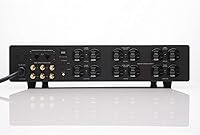
  • Total Outlets: Provides 13 AC outlets distributed across switched and unswitched banks to accommodate both controlled and always-on components.
  • Filtering Technology: Uses Furman's proprietary Linear Filtering Technology (LiFT), which reduces AC line noise without restricting current delivery to connected equipment.
  • Voltage Protection: Extreme Voltage Shutdown (EVS) cuts power to all outlets when incoming voltage rises or falls outside safe operating thresholds, protecting connected gear from both over- and under-voltage conditions.
  • Ground Isolation: Zero Ground Contamination circuitry prevents high-frequency digital noise from traveling through the ground path and interfering with sensitive analog components.
  • Trigger Input: Includes a 12-volt trigger input with a bypass option, enabling remote power sequencing and integration with custom whole-system automation setups.
  • Form Factor: Designed as a 1U rack-mountable unit, compatible with standard 19″ equipment racks used in home theater and professional AV installations.
  • Dimensions: Measures 14.75 x 17 x 4 inches (width x depth x height), sized to occupy one rack unit in a standard equipment rack.
  • Weight: The unit weighs 14 pounds, reflecting its steel chassis construction and internal linear filtering components.
  • Chassis Material: Built with a steel enclosure that provides structural rigidity and helps shield internal circuitry from external electromagnetic interference.
  • Front Panel: Features front-panel voltage metering so users can monitor incoming AC line voltage without any additional tools or external meters.
  • Rack Hardware: Ships with rack-mount ears pre-installed or included, allowing direct installation into standard 19″ equipment racks without additional hardware.
  • Market Position: Currently ranked #12 in the Line Conditioners category on Amazon, reflecting consistent long-term demand among audiophile and custom AV buyers.
  • Availability: The unit has not been discontinued by the manufacturer and remains in active production as of the current date.
  • First Available: This model was first made available for purchase in June 2008, demonstrating over fifteen years of continuous market presence.

Related Reviews
Furman Elite-15 PF i AC Power Conditioner
83%
91%
Noise Filtering Performance
93%
Build Quality
89%
Surge Protection Design
88%
Power Delivery for Amplifiers
86%
Outlet Organization
More
Furman Elite-15i AC Power Conditioner
84%
93%
AC Noise Filtering
91%
Surge & Overvoltage Protection
88%
Build Quality
86%
Ground Loop Elimination
67%
Value for Money
More
Pailvens P10 Power Conditioner
77%
83%
Build Quality
74%
Noise Filtering Performance
88%
LED Display Usefulness
79%
Outlet Layout & Usability
81%
Overvoltage Protection
More
WAudio W-3900 AC Power Conditioner
76%
86%
Build Quality
79%
Noise Filtering
61%
Surge Protection
74%
Outlet Configuration
83%
Phase Detection
More
WAudio W-5900 AC Power Conditioner
77%
83%
Build Quality
77%
Noise Filtering Effectiveness
71%
Surge & Spike Protection
62%
Outlet Layout & Spacing
88%
Voltage Meter Usefulness
More
Tripp Lite LC2400 Power Conditioner

83%
93%
Voltage Regulation
88%
EMI/RFI Noise Filtering
86%
Surge Protection
91%
Build Quality
79%
Outlet Configuration
More
Biolage Volume Boost Conditioner 15.2oz
87%
88%
Effectiveness for Volume
92%
Lightweight Formula
83%
Fragrance
85%
Moisturizing Effect
90%
Suitability for Fine Hair
More
Fluance Ai81 Elite Powered Floorstanding Speakers
86%
94%
Sound Quality
90%
Bass Performance
88%
Ease of Setup
85%
Build Quality
93%
Connectivity Options
More
Panamax M5300-PM Home Theater Power Conditioner
86%
89%
Performance
94%
Surge Protection
88%
Build Quality
91%
Noise Reduction
84%
Usability
More
Azden SMX-15 Powered Shotgun Video Microphone
89%
88%
Sound Quality
92%
Ease of Use
90%
Battery Efficiency
85%
Build Quality
87%
Durability
More

FAQ

There is a real technical difference. A typical surge protector uses metal oxide varistors that clamp large spikes but do nothing about the continuous low-level noise riding on your AC line. The Elite-15 DM i uses linear filtering to address that background noise, which is the part that can affect your audio and video. Whether you hear a difference depends heavily on how resolving your system is and how dirty your local power happens to be.

Many owners report a noticeable drop in background hiss and a quieter noise floor after installation, particularly with sensitive preamps and analog components. That said, results are genuinely system-dependent. If you are running a high-resolution two-channel rig or a revealing home theater setup, the odds of hearing an improvement are reasonable. On a modest mid-fi system, the difference may be subtle enough that it is hard to justify the cost.

Yes, and this is one area where the linear filtering approach has a real advantage over transformer-based isolation conditioners. Transformer designs can limit peak current draw, which compresses dynamics on power-hungry amplifiers. The LiFT technology in this Furman power conditioner is specifically designed to filter noise without creating that current bottleneck, so amplifiers can still draw what they need on loud transients.

EVS monitors your incoming AC voltage continuously and shuts the unit off entirely if it strays dangerously high or dangerously low — not just during sudden spikes. Standard surge strips only react to transient over-voltage spikes and ignore sustained over-voltage or brown-out conditions, both of which can damage sensitive electronics over time. If you live in an area with unstable utility power or older wiring, this protection is genuinely valuable.

The 12V trigger input lets an AV processor, preamp, or control system send a low-voltage signal to power the conditioner on or off as part of a sequence. It is most useful in custom-installed systems where everything needs to power up in a controlled order. You do not need a full rack system to use it, but practically speaking, most buyers taking advantage of this feature are doing a structured rack build.

This is a legitimate concern that comes up in real-world installs. Depending on the size and angle of your wall-wart adapters, some may physically overlap into adjacent outlet space. If your system relies on several oversized adapters, it is worth planning the layout in advance or using short right-angle extension leads for the bulkier ones. The outlet count is generous, but spacing is not unlimited.

It can technically sit on a sturdy shelf, but at 14 pounds and with a 17-inch depth, it is a substantial unit. The rack-mount form factor means it is wider than most shelves are deep, so placement outside of a proper rack requires some planning. Most buyers getting the most out of this unit are putting it in a 19″ equipment rack — that is clearly what it was designed for.

Possibly, but it depends on what is causing the hum. If it is ground-loop interference between components sharing the same AC circuit, the Zero Ground Contamination circuitry in the Furman Elite-15 DM i AC Power Conditioner is specifically designed to address that. If the hum is coming from a cable TV or satellite connection entering the system, you may also need a coaxial ground isolator. It is worth diagnosing the source before assuming the power conditioner alone will solve it.

The entry-level Furman strips provide surge protection and basic noise filtering, which is adequate for many setups. The jump to the Elite tier brings true LiFT linear filtering, EVS voltage shutdown, Zero Ground Contamination circuitry, and heavier chassis construction. For a home theater or audiophile setup where you are spending thousands on source components and speakers, those additions make sense. For a TV and soundbar setup, the less expensive models are more than sufficient.

Yes, the unit has not been discontinued by Furman and remains in active production. Furman also has an established support and service network in North America, and given the product has been on the market since 2008 with no signs of being phased out, long-term support access appears solid. For warranty specifics, it is worth confirming the current terms directly with Furman or your authorized dealer at the time of purchase.

Where to Buy