Overview

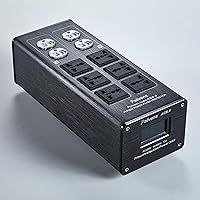
The Pailvens P10 Power Conditioner sits in a practical middle ground between a basic power strip and professional-grade power management — a reasonable option for home audio fans, HiFi listeners, and AV enthusiasts who want cleaner power without a major investment. A power conditioner does more than a surge protector: it actively filters electrical noise from the line before it reaches your equipment. The aluminum housing gives it a solid, purposeful feel, and the LED status display is a genuinely useful touch. Eight outlets with dual-zone switching round out a tidy, functional package for keyboard players, home theater setups, and dedicated listening rooms alike.
Features & Benefits

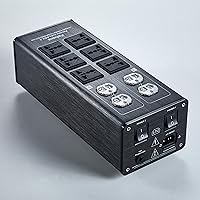
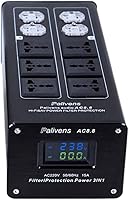
The LED display panel is one of the more practical inclusions here — at a glance, it shows whether the filter is working, whether the load is approaching the 3,000W limit, and whether your household phases are normal. That last indicator trips people up: it reads your incoming power supply, not the unit itself, so an irregular reading reflects your home wiring, not a broken conditioner. Two independent switches each control a bank of four outlets, handy for powering down source components without touching your amplifier. The EMI/RFI noise filtering targets the kind of hum and interference that creeps into audio chains from shared circuits and cheap wall outlets.

Best For

This line conditioner makes the most sense for people who are already hearing a problem — a faint hum through speakers, picture grain on a projector, or subtle noise through a digital piano. If your home was built before modern wiring standards, or if you are running audio and lighting on the same circuit, this kind of filtering has a real job to do. It is also a sensible pick for home theater enthusiasts stacking an AV receiver, streaming device, and display in one rack. Expect a functional upgrade from a standard power strip, but not a replacement for dedicated power management in a professional studio or a serious audiophile system.

User Feedback

With a 4.4-star average from 62 ratings, the Pailvens unit has earned a solid early reception. Buyers most commonly mention the clear LED readout as a highlight — it offers reassurance that the setup is running cleanly, which is exactly what people buying this kind of device want. Some report perceived improvements in audio clarity after installation, though opinions vary; audible gains from power conditioning are genuinely subjective. On the downside, a handful of users found the LED brightness intrusive in dark rooms, and a few noted the outlets grip certain plugs loosely. Buyers treating it as a capable everyday conditioner rather than a professional-grade solution tend to come away satisfied.

Pros

  • The aluminum enclosure feels genuinely solid and purposeful compared to standard plastic-bodied power strips.
  • An LED display showing filtration status, overload level, and phase readings is a rare and practical inclusion at this price tier.
  • Dual-zone switching lets you independently cut power to four outlets at a time without disrupting the rest of your setup.
  • EMI and RFI filtering delivers real noise reduction for users in homes with older wiring or busy shared circuits.
  • Universal outlets accommodate a mix of domestic and imported audio equipment without needing plug adapters.
  • 15A overvoltage protection provides a meaningful safety layer for sensitive and expensive electronics.
  • Setup takes minutes — plug in, confirm the display, and the unit is working immediately with no configuration needed.
  • The fireproof socket housing adds a credible layer of safety for a device intended to run continuously around the clock.
  • Users who already had interference problems consistently report noticeable improvements after installing this line conditioner.

Cons

  • Buyers in homes with clean, modern power supplies may hear or see zero improvement after installation.
  • The LED brightness cannot be dimmed, which is genuinely disruptive in darkened home theater or listening room environments.
  • Wide wall-wart adapters can block adjacent outlets, effectively reducing the usable count below eight.
  • The phase indicator is frequently misread as a unit fault warning, and the documentation does little to prevent that confusion.
  • Pailvens has limited brand recognition, making long-term warranty reliability and after-sales support harder to verify.
  • Independent safety certifications are not prominently documented, which gives technically cautious buyers pause.
  • Long-term durability data is thin — the review pool is still small and weighted toward recent purchases.
  • Some users report plugs seating loosely in the universal outlets, which is a concern for a permanently installed device.
  • At over five pounds and 15 inches long, it is sized for a dedicated equipment shelf rather than a casual desktop setup.

Ratings

The Pailvens P10 Power Conditioner has been evaluated by our AI rating system after analyzing verified global buyer reviews, with spam, bot-generated, and incentivized feedback actively filtered out. Scores reflect a balanced picture — genuine strengths alongside the real frustrations that some users encountered. Both sides are represented honestly so you can make a confident purchase decision.
Build Quality
83%
The aluminum shell makes an immediate impression when you pick it up — it feels denser and more purposeful than the plastic-bodied power strips most buyers are upgrading from. The socket housing, reinforced with glass fiber, adds a layer of confidence for long-term, always-on use.
A small number of buyers noticed minor fit inconsistencies between the two outlet banks, with some plugs seating less firmly than expected. For a unit that stays plugged in permanently, that kind of variance is worth keeping an eye on.
Noise Filtering Performance
74%
26%
Users running HiFi setups in older homes or on shared circuits reported meaningful reductions in background hum and interference after installing this line conditioner. For those who could already hear a problem, the improvement was noticeable enough to justify the purchase.
In homes with newer wiring and already-clean power, the audible difference is much harder to detect — and some buyers reported hearing none at all. Power conditioning benefits are genuinely system-dependent, and this unit is not immune to that variability.
LED Display Usefulness
88%
The real-time display showing overload status, filtration health, and phase readings is one of the most appreciated features among buyers. Being able to confirm at a glance that the filter is active and the load is within safe limits provides genuine peace of mind for anyone running expensive audio equipment 24/7.
The LED brightness has no adjustment, which becomes a real issue in dedicated listening rooms or home theaters where ambient light is kept low. Several users mentioned covering the display partially just to avoid distraction during evening sessions.
Outlet Layout & Usability
79%
21%
Eight outlets split into two independently switched zones gives users practical flexibility — you can power down source components without cutting power to the amplifier or display. For AV racks with mixed standby and always-on devices, that dual-zone logic is genuinely useful daily.
The physical spacing between outlets can make it awkward to fit wide wall-wart adapters without blocking adjacent sockets. Users with several bulky power bricks in their setup may find themselves effectively losing one or two outlets.
Overvoltage Protection
81%
19%
The 15A overvoltage protection gives buyers running sensitive and expensive equipment — digital pianos, AV receivers, HiFi amplifiers — a tangible safety layer against voltage spikes. Users in regions with less stable grid power found this particularly reassuring.
The protection ceiling is rated for home use rather than professional environments, and buyers expecting surge suppression comparable to dedicated isolation transformers will find the specs fairly modest. It handles everyday fluctuations competently, but it is not designed for serious power instability.
Value for Money
71%
29%
For buyers stepping up from a basic surge strip, the combination of noise filtering, overvoltage protection, LED monitoring, and a solid enclosure at this price tier represents a reasonable package. Those who noticed real improvements in their audio chain considered it well spent.
Buyers who did not hear or see a difference after installation tended to feel the pricing was hard to justify versus a quality surge protector costing far less. The value equation is closely tied to how dirty your incoming power actually is.
Ease of Setup
91%
There is virtually no learning curve — plug it in, connect your equipment, and the display activates immediately. Most buyers had everything running within minutes, with the LED indicators confirming correct operation right away without any manual needed.
The phase indicator confused a handful of users who assumed a non-green reading meant the unit was faulty, when it actually reflects the household supply. Better in-box documentation addressing this common misread would prevent unnecessary return attempts.
Phase Indicator Clarity
62%
38%
For users in older properties who genuinely want visibility into their incoming supply quality, the phase readout is a useful diagnostic tool that goes beyond what any standard power strip offers. It does provide real information when interpreted correctly.
The indicator is routinely misunderstood as a filter health warning, leading to buyer confusion and unwarranted concern. Without clear labeling or documentation clarifying that it monitors household wiring — not the unit itself — this feature causes more confusion than confidence for a meaningful portion of buyers.
Dimensions & Desk Fit
76%
24%
The ITX form factor keeps the footprint compact enough for AV racks and equipment shelves without dominating the space. At just over five pounds, it is stable on a shelf without being awkwardly heavy to reposition when rearranging a setup.
At roughly 15 inches long, it is not a small unit by any measure — buyers with tight rack spaces or compact audio furniture should measure carefully before ordering. It is sized for a dedicated equipment shelf rather than a desktop or side table.
Brand Confidence
66%
34%
The physical construction and feature set do a reasonable job of speaking for themselves, and early ratings are encouraging for a relatively new market entrant. Buyers who evaluated the unit on its own merits rather than brand reputation came away generally positive.
Pailvens carries minimal brand recognition in the power conditioning space, which makes some buyers hesitant about long-term support, warranty follow-through, and parts availability. For a device intended to run continuously for years, that uncertainty is a legitimate concern.
Socket Material & Safety
84%
The use of fireproof ABS and PC reinforced with 30% glass fiber is a meaningful material choice for a device handling continuous electrical load. It signals that some engineering thought went into thermal resistance, which matters more in a power conditioner than in a typical power strip.
Material certifications and independent safety testing documentation are not prominently provided, making it difficult for technically minded buyers to verify the safety claims independently. Buyers who routinely check UL or CE markings before purchasing may find the available documentation thin.
Universal Outlet Compatibility
77%
23%
The universal outlet design accommodates a mix of plug types, which is genuinely handy for buyers running imported audio equipment alongside domestic devices. Home studio users with international gear in the same rack appreciated not needing adapters for every connection.
The universal format can result in a less snug fit for standard domestic plugs compared to dedicated country-specific sockets. A few users noted that plugs felt slightly loose, which is a minor but persistent annoyance in a unit designed for permanent installation.
Long-Term Reliability
69%
31%
Units that have been in use for several months report consistent performance with no degradation in display accuracy or filtering behavior. The aluminum chassis shows no signs of heat-related warping under normal continuous load, which is an encouraging sign for longevity.
The review pool is still relatively small and skewed toward recent purchases, so long-term durability data beyond six to twelve months is limited. Buyers making a purchase with multi-year reliability expectations should factor in that track record gap.

Suitable for:

The Pailvens P10 Power Conditioner is a practical fit for home audio and AV enthusiasts who are already aware of noise or interference problems in their setup and want a concrete solution without spending on professional-grade equipment. If you live in an older home with aging electrical wiring, the phase and load display alone gives you visibility that a standard power strip never could. HiFi listeners running amplifiers, CD players, and DACs on the same circuit as household appliances will appreciate the EMI and RFI filtering working quietly in the background. Digital piano players and keyboard musicians in home studio environments benefit from the cleaner power delivery to sensitive audio electronics. Home theater owners juggling an AV receiver, projector, streaming boxes, and a subwoofer will find the dual-zone switching genuinely useful for managing what stays on and what powers down. It is the right tool for anyone treating their listening room or media rack as a considered investment worth protecting.
Not suitable for:

The Pailvens P10 Power Conditioner is not the right choice for buyers expecting professional-grade power management or audiophile-level isolation transformers — this unit operates firmly in the home-use tier and should be evaluated accordingly. If your home has modern wiring, a stable utility supply, and no audible interference issues, you may install this and hear absolutely no difference, making the purchase hard to justify over a quality surge protector at a fraction of the cost. Studio engineers, recording professionals, or anyone running broadcast or medical equipment should look at dedicated power conditioners with independently certified specs and measurable performance data. The brand carries limited market history, which is a real concern for buyers who prioritize established warranty support and long-term serviceability. Buyers with compact rack spaces or furniture with tight outlet clearance should also measure carefully — at over 15 inches long and with no adjustable LED brightness, it is not an especially flexible physical fit for every installation.

Specifications

  • Brand: Manufactured by Pailvens, a relatively newer entrant in the home audio power conditioning market.
  • Model: The P10 is the specific model designation for this 8-outlet line conditioner unit.
  • Outlets: Features 8 universal outlets arranged in two independently switched zones of 4 outlets each.
  • Amperage: Rated at 15A continuous current capacity for safe handling of typical home audio and AV loads.
  • Max Load: The unit supports a combined maximum load of 3,000W before the overload indicator activates.
  • Filtering: Incorporates EMI and RFI noise filtering circuitry designed to reduce electrical interference reaching connected equipment.
  • Overvoltage Protection: Provides active overvoltage protection to guard connected devices against line voltage spikes and fluctuations.
  • Display: An always-on LED panel displays real-time status for overload threshold, filtration operation, and household phase condition.
  • Shell Material: The outer enclosure is constructed from aluminum, offering durability and passive heat dissipation during continuous operation.
  • Socket Material: Outlet sockets are made from fireproof ABS and PC blended with 30% glass fiber for thermal and structural resistance.
  • Dimensions: The unit measures 15.12 x 8.07 x 6.73 inches, sized for placement on an equipment shelf or inside an AV rack.
  • Weight: Weighs 5.52 pounds, substantial enough to stay stable on a shelf without being difficult to reposition.
  • Form Factor: Follows an ITX form factor profile, making it compatible with standard home audio rack arrangements.
  • Color: Available in silver, consistent with the aluminum exterior finish that suits most HiFi and AV rack aesthetics.
  • Zone Switching: Two physical switches each control a dedicated group of 4 outlets, allowing independent power management of different equipment groups.
  • Outlet Type: Universal outlet design accommodates multiple international plug types without requiring separate adapters for each device.
  • Phase Indicator: The phase display monitors the condition of incoming household supply phases, not the internal filter status of the unit itself.

Related Reviews
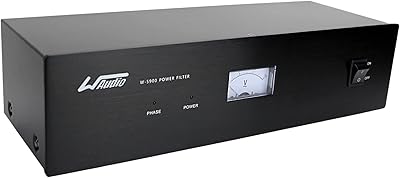
WAudio W-3900 AC Power Conditioner
76%
86%
Build Quality
79%
Noise Filtering
61%
Surge Protection
74%
Outlet Configuration
83%
Phase Detection
More
Tripp Lite LC2400 Power Conditioner
83%
93%
Voltage Regulation
88%
EMI/RFI Noise Filtering
86%
Surge Protection
91%
Build Quality
79%
Outlet Configuration
More
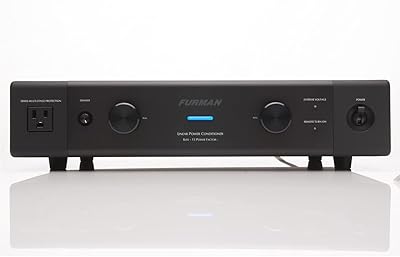
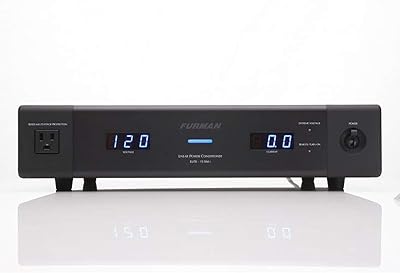
Furman Elite-15 DM i AC Power Conditioner
79%
88%
Noise Reduction Performance
93%
Build Quality
91%
Equipment Protection
61%
Value for Money
69%
Outlet Layout & Usability
More
Furman Elite-15i AC Power Conditioner
84%
93%
AC Noise Filtering
91%
Surge & Overvoltage Protection
88%
Build Quality
86%
Ground Loop Elimination
67%
Value for Money
More
Panamax M5400-PM Power Conditioner
84%
94%
Surge & Spike Protection
78%
Noise Filtration Performance
93%
Build Quality & Durability
86%
Outlet Count & Layout
91%
Voltage Monitoring (AVM)
More
Panamax M5300-PM Home Theater Power Conditioner
86%
89%
Performance
94%
Surge Protection
88%
Build Quality
91%
Noise Reduction
84%
Usability
More
WAudio W-5900 AC Power Conditioner
77%
83%
Build Quality
77%
Noise Filtering Effectiveness
71%
Surge & Spike Protection
62%
Outlet Layout & Spacing
88%
Voltage Meter Usefulness
More
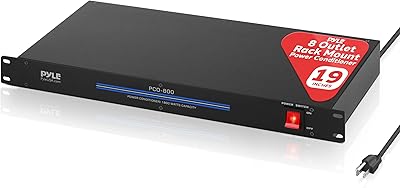
Pyle-Pro PCO800 1800W Rack Mount Power Conditioner
86%
89%
Surge Protection Performance
91%
Power Capacity (1800W)
85%
Build Quality and Durability
87%
Ease of Use and Setup
80%
Outlet Flexibility (8 Outlets)
More
Furman Elite-15 PF i AC Power Conditioner
83%
91%
Noise Filtering Performance
93%
Build Quality
89%
Surge Protection Design
88%
Power Delivery for Amplifiers
86%
Outlet Organization
More
R+Co Sun Catcher Power C Boosting Leave-In Conditioner
85%
87%
Hydration & Moisture
82%
Light Hold & Styling
75%
Fragrance & Scent
90%
Non-Greasy Feel
85%
Shine & Gloss
More

FAQ

The honest answer is: it depends on your situation. If your home has older wiring, noisy circuits shared with appliances, or you can already hear a faint hum through your speakers, the EMI and RFI filtering in this line conditioner can make a real, audible difference. In a modern home with clean power, you may notice nothing at all. Power conditioning benefits are genuinely environment-dependent, so temper your expectations accordingly.

Most likely not — this is one of the most commonly misunderstood features on this unit. The phase indicator monitors your incoming household power supply, not the conditioner itself. An irregular reading almost always means there is something worth noting about your home wiring or utility feed, not that the Pailvens P10 Power Conditioner is faulty. If you are concerned about your home supply, an electrician can check it quickly.

Yes, and the dual-zone layout actually makes this setup work well. You can place your always-on devices — like a network streamer or a preamp — on one switch, and put your projector or power amplifier on the other so you can cut them with a single button when not in use. Just keep an eye on the combined wattage to stay comfortably under the 3,000W ceiling.

It might. The LED display has no brightness adjustment, and several users have flagged it as distracting in dark viewing environments. A few have used a small strip of dark tape to partially cover it without affecting function. It is worth factoring in if your setup is in a dedicated room where you watch with the lights fully off.

Yes, it is designed for continuous operation. The aluminum shell helps dissipate heat, and the fireproof socket housing is there specifically because this type of device tends to stay powered on indefinitely. That said, running any electrical device unattended always carries some baseline risk, so make sure your load stays well within the 15A and 3,000W limits.

Potentially, yes. The universal outlet spacing can make it tricky to fit large wall-wart adapters without overlapping adjacent sockets. If several of your devices use bulky power bricks, it is worth planning your outlet layout in advance — you may end up effectively using six of the eight positions rather than all eight.

A surge protector reacts to voltage spikes and cuts power when they occur. This unit does that too, but it also actively filters out the lower-level electrical noise — EMI and RFI — that a surge strip ignores entirely. That ongoing filtering is what can reduce hum and interference in audio and video equipment. Think of a surge protector as a one-time safety net and a power conditioner as an ongoing cleanup tool.

The universal outlet design is intended to accommodate a range of international plug types without adapters, which makes it convenient for mixed international equipment. That said, always verify your specific device plug fits securely before leaving it connected — some users noted that certain plug types seat more loosely than others in the universal format.

It gives you a real-time read on how close your combined load is to the unit's 3,000W maximum. The display shifts to red when you exceed that threshold, which is a useful warning if you are gradually adding equipment to the same unit over time. It is a practical safeguard that helps you avoid running the conditioner beyond its rated capacity.

Yes, this is actually one of the better use cases for this type of unit. Digital pianos and electronic keyboards are sensitive to power line noise, and in a home studio environment shared with computers, USB hubs, and lighting circuits, interference can sneak into the audio signal. The filtering this conditioner provides is well suited to that kind of low-power but noise-sensitive setup.