Overview

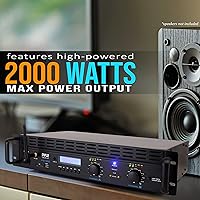
The Pyle PTA1000BT 2-Channel Bluetooth Power Amplifier is a rack-mountable stereo amp built for home audio setups and small venues that need reliable amplification without a steep price tag. The headline 2000W figure refers to peak bridged output — real-world continuous power is considerably more modest, so set expectations accordingly before buying. That said, the bridgeable design gives it genuine versatility, letting you run it as a traditional stereo amp or consolidate both channels into a single mono signal for higher-demand applications. Bluetooth connectivity rounds things out for casual streaming, making this Pyle amplifier a decent entry point into semi-pro audio territory on a budget.
Features & Benefits

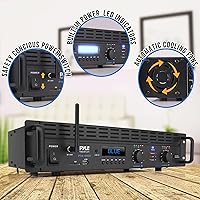
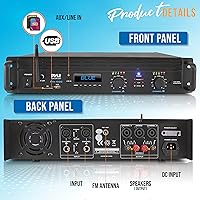
The connection options here are genuinely broad for a unit at this price. On the input side, you get dual XLR and TRS jacks, meaning balanced pro sources and consumer gear both plug in without adapters. Outputs cover three SpeakOn connectors — one each for channel A, channel B, and bridged mode — plus traditional binding posts for bare wire or banana plugs. The front panel keeps things practical: an LCD display, clip indicators, and signal LEDs let you catch problems before your speakers do. A built-in cooling fan keeps the unit from throttling under sustained load, which matters during longer sets or events.

Best For

This rack amp fits a fairly specific buyer profile, and knowing that upfront saves disappointment. It's well-suited to DJs and small event hosts who need a bridgeable amp for a modest PA rig without committing serious money. Home theater users who want to add amplification to passive speakers on a budget will also find it workable. Musicians running a practice PA or a small rehearsal space get the most out of the bridged mode. One practical note: rack mounting requires a standard 19-inch rail enclosure and about 2U of vertical space, so factor that in if you're building a rack for the first time.

User Feedback

Buyers consistently mention how easy the initial setup is, with the labeled front panel making configuration intuitive even for first-timers. On the positive side, Bluetooth pairing gets decent marks for reliability within a normal room range. The friction points are worth knowing: the cooling fan runs audibly at idle, which is a real annoyance in quiet home studio environments. Several owners note the chassis feels lighter than expected for a rack unit, raising mild durability questions compared to pricier alternatives. Long-term reliability is still an open question given the product's age, so this Pyle amplifier is best treated as a capable but unproven workhorse for moderate use.

Pros

  • Bridgeable design gives genuine output flexibility across stereo and mono configurations.
  • Both XLR and TRS inputs mean professional mixers and consumer sources connect without adapters.
  • Three SpeakOn outputs cover stereo and bridged routing without any recabling between modes.
  • Front-panel LCD and LED indicators make signal monitoring intuitive during live use.
  • Bluetooth streaming works reliably within a normal room range for casual playback scenarios.
  • Setup is straightforward enough for first-time rack amp buyers without a steep learning curve.
  • At 15.3 pounds, the PTA1000BT is light enough for solo transport and quick rack installation.
  • Built-in cooling fan keeps operating temperatures stable during extended high-volume sessions.
  • Fits any standard 19-inch rack enclosure without modification or additional mounting hardware.
  • Strong feature count relative to its budget price tier makes it a competitive entry-level option.

Cons

  • Advertised 2000W rating is peak-only; continuous RMS output falls well short of that figure.
  • Cooling fan noise at idle is a consistent irritant in quiet home or studio environments.
  • Chassis feels noticeably lightweight compared to similarly priced competing rack amplifiers.
  • No RCA inputs, which surprises home theater users expecting standard consumer connectivity.
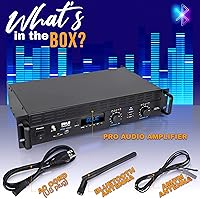
  • Rack-mount ears and screws are not included despite rack mounting being a primary use case.
  • Bluetooth range is limited and can drop intermittently beyond roughly 20 feet or through walls.
  • Long-term durability remains uncertain given the product has limited multi-year ownership history.
  • Documentation is thin for users attempting more complex signal chain or bridge-mode wiring setups.

Ratings

Our scores for the Pyle PTA1000BT 2-Channel Bluetooth Power Amplifier were built by an AI system that analyzed verified buyer reviews from multiple global markets, actively filtering out incentivized, bot-generated, and duplicate submissions. The result is an honest snapshot of how real users experience this rack amp day to day, covering everything from its connection versatility to the aspects that frustrated owners most. Strengths and shortcomings are weighted equally so you can make a genuinely informed call.
Value for Money
82%
18%
For buyers setting up a small PA or home rack system on a tight budget, this Pyle amplifier punches above its price class in terms of raw feature count. Getting bridgeable operation, Bluetooth, XLR inputs, and SpeakOn outputs in a single unit at this price point is genuinely difficult to match.
The value calculation shifts if you factor in the gap between the marketed peak wattage and real continuous output. Buyers who purchase expecting full 2000W working power feel misled, which undercuts the perceived deal.
Power Output Accuracy
51%
49%
In bridged mono mode the unit does deliver a meaningful bump in perceived loudness compared to stereo operation, which works well for driving a single full-range cabinet in a small rehearsal room or event space.
The 2000W headline figure refers to peak, not RMS, and real-world continuous output falls well short of that number. This is the single most common complaint across user reviews and causes genuine frustration for buyers who sized their speaker setup around the advertised spec.
Build Quality
58%
42%
The rack-format chassis fits cleanly into a standard 19-inch rail enclosure and the front panel layout is tidy and logically organized. For occasional use in a home setup or low-demand venue, the construction holds up adequately.
Multiple owners describe the unit as feeling noticeably lighter and thinner than competing rack amps in a similar price range, raising questions about long-term durability under road or touring conditions. The overall fit and finish reads as entry-level rather than semi-pro.
Ease of Setup
89%
First-time amp buyers consistently highlight how approachable the setup process is. The front panel labels are clear, the input and output jacks are well-marked, and switching between stereo and bridge mode does not require digging through a manual.
While initial setup is smooth, users who want to integrate the unit into a more complex signal chain sometimes find the documentation thin. Bridge mode wiring in particular trips up a subset of buyers who are new to rack amplification.
Bluetooth Performance
71%
29%
Pairing with smartphones and laptops is generally quick and stable within a normal room distance, making it practical for background music playback at small events or casual home listening without running cables across the room.
Bluetooth range is limited compared to dedicated wireless receivers, and a handful of users report intermittent dropouts when the source device is more than about 20 to 25 feet away or separated by walls. It works, but it is clearly a secondary feature rather than a core strength.
Input Connectivity
86%
Having both XLR and quarter-inch TRS inputs on the same unit means you can connect a mixing board via balanced XLR while simultaneously patching in a secondary consumer source without any adapters. That flexibility is genuinely useful for small DJ rigs and rehearsal setups.
There are no RCA inputs, which surprises some home theater users who expect them at this price tier. Connecting a standard consumer AV receiver or TV requires an adapter cable that is not included in the box.
Output Connectivity
84%
Three SpeakOn outputs covering channel A, channel B, and bridged mode give you real flexibility for routing speakers without recabling when you switch modes. The binding posts alongside them support bare wire and banana plugs, covering most speaker connection scenarios.
The SpeakOn connectors require compatible speaker cables, which adds a small upfront cost for users who only own standard quarter-inch speaker cables. Some buyers expected more output options given the multi-speaker marketing language.
Cooling and Thermal Management
67%
33%
The built-in fan does its job keeping internal temperatures stable during extended high-volume sessions. Users running the unit for two or three hours straight at a small event report no thermal shutdowns, which is the baseline expectation for any powered rack amp.
The fan runs audibly even at idle, and in a quiet home studio or living room environment that constant low-level noise becomes a genuine annoyance. This is one of the more consistent complaints from non-venue users and is worth factoring in if silence matters in your space.
Front Panel Usability
81%
19%
The LCD display with ID3 support is a practical touch, and the array of LED indicators for signal, clip, protect, and power makes it easy to diagnose problems quickly during a live set without pulling the unit from the rack.
The LCD display is not the brightest in well-lit environments, and a few users mention that reading it from an angle in a rack enclosure can be tricky. It is functional but not exceptional by current standards.
Audio Clarity
73%
27%
At moderate volume levels, the stereo output is clean and undistorted with a balanced tonal character that suits both music playback and speech reinforcement in small rooms. For casual PA use, the sonic performance is more than acceptable.
When pushed toward higher output levels, some users detect a degree of harshness in the high frequencies and a slight thinning of the low end. It does not match the cleanliness of more expensive amplifiers, but that is expected at this price tier.
Rack Compatibility
78%
22%
The standard 19-inch form factor means this rack amp slots into any conventional rack enclosure without modification. At roughly 2U in height, it occupies a reasonable amount of vertical space and leaves room for other gear in a shallow rack.
Users who are new to rack builds sometimes underestimate the depth clearance needed for rear cable management, and the unit does not ship with rack-mount ears or screws, which is an inconvenience given that rack mounting is a primary use case.
Long-Term Reliability
59%
41%
Among buyers who have owned the unit for six months to a year and used it for light to moderate applications, most report no hardware failures. For backup or secondary amp duties it appears to hold up reasonably well.
The product has a relatively short market history, so multi-year reliability data is genuinely limited. A subset of owners report issues appearing after several months of regular use, and Pyle's customer support experience gets inconsistent marks in reviews.
Portability and Weight
74%
26%
At 15.3 pounds the unit is light enough for a single person to move and install without difficulty, which is a practical advantage for mobile DJs or musicians who break down and rebuild their setups frequently.
The lightweight construction that helps portability is also what makes the chassis feel less sturdy than heavier competitors. Users who prioritize durability over easy transport may find the tradeoff unfavorable.

Suitable for:

The Pyle PTA1000BT 2-Channel Bluetooth Power Amplifier is a practical fit for buyers who need a feature-packed rack amp without the price tag of professional-grade gear. Mobile DJs and small event hosts will appreciate the bridgeable design paired with both XLR and TRS inputs, since it lets them connect a mixer cleanly and still switch to mono mode when driving a single main speaker cabinet. Home theater enthusiasts who want to power passive speakers in a living room setup will find the Bluetooth streaming a genuine convenience for day-to-day listening. Musicians running a rehearsal space or small practice PA will get real utility from the SpeakOn outputs and front-panel signal monitoring without needing a separate interface or controller. It also works well as a backup or secondary amplifier for small venues that need a reliable standby unit without committing significant budget to the role.

Not suitable for:

Buyers who need verified, continuous high-output power for larger venues or demanding speaker loads should look elsewhere before considering the Pyle PTA1000BT 2-Channel Bluetooth Power Amplifier. The 2000W figure is a peak specification, and real-world continuous RMS output is considerably lower, meaning anyone sizing their speaker system around the headline number is likely to be disappointed. Home studio users and recording environments are also a poor match, since the cooling fan runs audibly at idle and will bleed into quiet recordings or monitoring sessions. Touring musicians and rental companies who need a durable, road-tested unit will find the lightweight chassis a liability under repeated transport and setup cycles. Anyone expecting long-term reliability data or a proven multi-year track record will also be working with limited information, as the product is relatively new to market.

Specifications

  • Peak Power: The unit delivers up to 2000W peak output when operating in bridged mono mode.
  • Stereo Power: In standard stereo operation, each channel outputs up to 1000W peak independently.
  • Impedance: Compatible with speaker loads between 4 and 8 ohms in both stereo and bridged configurations.
  • Inputs: Equipped with two XLR balanced input jacks and two quarter-inch TRS input jacks for flexible source connectivity.
  • SpeakOn Outputs: Features three SpeakOn output connectors designated for channel A, channel B, and bridged mono operation.
  • Speaker Terminals: Includes two pairs of binding post speaker terminals supporting bare wire and banana plug connections.
  • Wireless: Integrated Bluetooth receiver enables wireless audio streaming from smartphones, tablets, and laptops.
  • Display: Front-panel LCD screen supports ID3 tag format display for track and source identification.
  • Indicators: LED indicators on the front panel show signal presence, clip, protect status, and power state for each channel.
  • Cooling: A built-in ventilation fan runs continuously to manage internal heat during sustained operation.
  • Mounting: Chassis conforms to the standard 19-inch rack format and occupies approximately 2U of vertical rack space.
  • Dimensions: The unit measures 19.09 inches long by 9.84 inches wide by 3.54 inches tall.
  • Weight: Complete unit weighs 15.3 pounds, making single-person installation manageable.
  • Channels: Operates as a 2-channel stereo amplifier or can be configured as a single bridged mono channel.
  • Model Number: Manufacturer model designation is PTA1000BT.
  • Brand: Designed and sold by PyleUsa, a US-based consumer and semi-pro audio brand.
  • Rack Hardware: Rack-mount ears or installation screws are not included and must be sourced separately for rack enclosure mounting.

Related Reviews
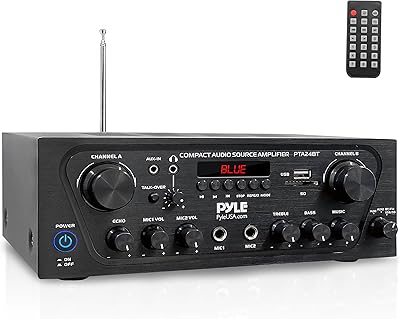
Pyle PT12050CH 12-Channel Rack Amplifier
71%
83%
Value for Money
79%
Channel Flexibility
72%
Bluetooth Performance
81%
Mic Talk-Over Function
57%
Build Quality
More
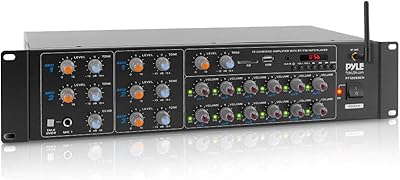
Pyle PTA24BT 2-Channel Karaoke Amplifier
73%
88%
Ease of Setup
83%
Bluetooth Reliability
74%
Microphone Performance
67%
Echo Effect Quality
54%
Actual Power Output
More
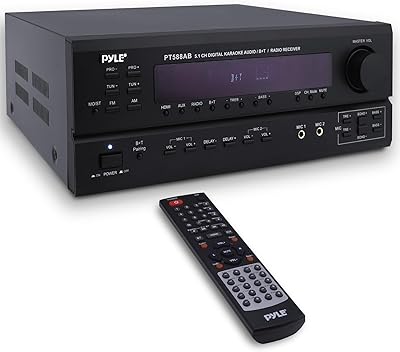
Pyle PT588AB 5.1 Channel Home Theater Receiver
70%
74%
Value for Money
52%
Build Quality
61%
Audio Performance
83%
Karaoke Functionality
78%
HDMI Connectivity
More
Pyle PT694BT 5.2-Channel Home Theater Receiver
66%
78%
Value for Money
83%
Ease of Setup
63%
Audio Performance
67%
Bluetooth Reliability
54%
Build Quality
More
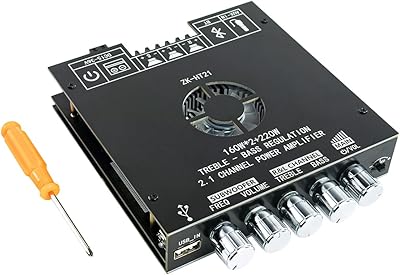
Hosyond TDA7498E 2.1 Channel Bluetooth Amplifier Board 160W×2+220W
73%
88%
Value for Money
76%
Power Output & Headroom
83%
Bluetooth Connectivity
79%
Build & Component Quality
62%
Thermal Management
More
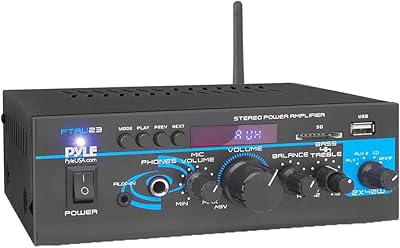
Pyle PTAU23 Stereo Amplifier
74%
83%
Value for Money
89%
Input Versatility
91%
Ease of Setup
61%
Audio Quality
74%
Microphone Performance
More
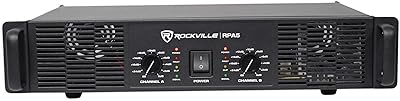
Rockville RPA5 2-Channel Power Amplifier
85%
88%
Power Output
91%
Cooling System
86%
Build Quality
85%
Ease of Installation
89%
Sound Quality
More
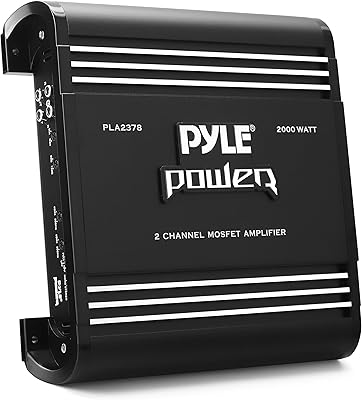
Pyle PLA2378 2-Channel Car Stereo Amplifier
85%
87%
Sound Quality
90%
Installation Ease
85%
Power Output
83%
Build Quality
80%
Bass Control
More
Pyle PD3000BAH 4-Channel Bluetooth Amplifier
73%
83%
Value for Money
61%
Power & Amplification
88%
Connectivity & Input Range
74%
Bluetooth Performance
77%
CD/DVD Player Functionality
More
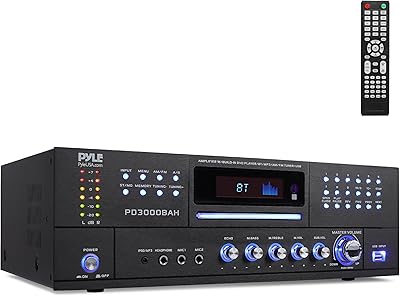
Pyle PLMRA630BT 6-Channel Bluetooth Marine Amplifier
83%
88%
Build Quality and Durability
90%
Bluetooth Connectivity
85%
Power Output
91%
Ease of Setup
83%
Sound Performance
More

FAQ

That 2000W number is a peak rating in bridged mode, not a continuous RMS output. Real-world sustained power is considerably lower, which is standard practice in budget amplifier marketing. Size your speakers based on conservative RMS expectations rather than the headline figure to avoid disappointment.

Bridge mode is selected via the mode switch on the unit and uses the dedicated bridged SpeakOn output connector on the rear panel. In this configuration, both internal channels work together to drive a single speaker load. Make sure your speaker is rated for the impedance range of 4 to 8 ohms before switching to bridged operation.

Yes, the fan runs continuously from the moment the unit is powered on, regardless of output level. It is not temperature-controlled or variable speed on this model. If you are using this rack amp in a quiet room or home studio, the fan noise is audible and worth factoring into your decision.

Absolutely. The dual XLR inputs on the rear accept balanced connections directly from most DJ mixers and mixing boards without any adapters. If your mixer uses quarter-inch TRS outputs instead, the two TRS inputs on the unit handle that just as cleanly.

You will need speaker cables terminated with SpeakOn NL2 or NL4 connectors to use those outputs. Standard quarter-inch speaker cables will not fit SpeakOn jacks. SpeakOn cables are widely available and not expensive, but they are not included in the box, so budget for them if you do not already own compatible cables.

The unit is designed to switch between input sources, so you typically select either Bluetooth or one of the wired inputs at a given time rather than blending them simultaneously. The exact source selection behavior depends on the input mode settings, so check the manual for the switching sequence if you plan to alternate between sources during a session.

Yes, the specified impedance range covers 4 to 8 ohms, so 4-ohm speakers are within the supported load range in both stereo and bridged configurations. Running a 2-ohm load is not recommended and could damage the unit.

Yes. The chassis is built to the 19-inch rack standard and fits standard enclosures, but the mounting ears and screws are not included in the package. You will need to source compatible rack ears or a rack-mount kit separately before installing this Pyle amplifier in a rack case.

Most users report stable performance within roughly 20 to 25 feet with a clear line of sight. Walls, interference from other wireless devices, and obstructions can reduce effective range noticeably. If you are setting up in a large or partitioned space, plan to keep the paired device reasonably close to the unit.

The unit is designed for indoor use and is not weather-resistant or rated for outdoor exposure. For small outdoor events it can work if kept inside a protected equipment station well away from moisture, but leaving it exposed to the elements is not advisable. Long-term outdoor duty would put the lightweight chassis and electronics at real risk.