Overview

The Outlaw Audio Model 5000x comes from a brand that has quietly built a loyal following by selling direct to consumers, cutting out the retail markup that inflates so many competing products. The result is a solid-state power amplifier with genuinely serious internal hardware — 50 pounds of it — aimed squarely at home theater and multi-room audio applications. It sits comfortably in the upper-mid-range tier, trading blows with Emotiva and ATI on paper, and holding its own in practice. With over 250 ratings averaging 4.6 stars, it has earned real-world credibility from a substantial and vocal user base.
Features & Benefits

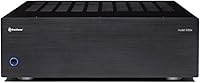
What separates this 5-channel amp from a typical receiver-based setup is the engineering underneath. Each channel gets its own independent power supply rectification, so a demanding bass channel pulling hard won't rob the surround channels of headroom. Balanced XLR inputs add genuine noise rejection — useful if your cable runs are long or your rack mixes audio and video gear. The RCA inputs aren't an afterthought either; a differential-sensing circuit handles interference rejection on that side too. Topped off with a 111dBA signal-to-noise ratio and THD under 0.02%, the background noise is essentially inaudible in any real listening environment.

Best For

The Outlaw 5000x is built for people who already own — or plan to buy — a separate AV preamp or processor. That's an important distinction: this is a power amplifier only, not a standalone solution, so buyers coming from an all-in-one receiver need to account for that extra component. Once that box is checked, it's a natural fit for anyone running a 5.1 surround setup with passive speakers and wanting cleaner, more controlled power than a typical receiver output stage can provide. The per-channel speaker protection relays are a practical bonus for anyone with expensive speakers they'd rather not put at risk.

User Feedback

Owners of this power amplifier consistently highlight two things: how quiet it is at idle and how confidently it handles dynamic peaks without strain. Several note that switching from a traditional AV receiver to this dedicated configuration was immediately audible — cleaner imaging, better dynamic headroom. Build quality comments lean positive, with a few reviewers noting the chassis feels overbuilt in the best way. That said, the unit does run warm under sustained loads, so adequate rack ventilation isn't optional. The sheer 50-pound weight also makes solo rack installation awkward. Failures and service issues are rarely mentioned, which speaks well to its long-term reliability.

Pros

  • Dead-quiet noise floor makes a clearly audible difference, especially with sensitive speakers in a treated room.
  • Independent per-channel power supplies prevent bass-heavy channels from robbing the surrounds of headroom.
  • Both XLR and RCA inputs on each channel give you real flexibility as your system evolves over time.
  • Per-channel speaker protection relays add meaningful insurance when your speakers cost more than the amp.
  • THD under 0.02% at rated power means distortion is genuinely inaudible in normal listening conditions.
  • Drives 4-ohm loads with authority, delivering 180W per channel without losing composure under pressure.
  • Direct-to-consumer pricing puts audiophile-grade engineering within reach of buyers watching their budget.
  • Long-term reliability reports are consistently positive, with very few failure stories across years of ownership.
  • The 111dBA SNR rating translates to a black, silent background between soundtrack cues and musical passages.

Cons

  • Requires a separate AV preamp or processor — a significant additional cost many first-time buyers underestimate.
  • At 50 pounds, solo rack installation is awkward and borderline unsafe without a second set of hands.
  • Nearly 17 inches deep, it can exceed clearance limits in standard entertainment furniture when cables are factored in.
  • Runs noticeably warm under all-channel high-volume loads, making open rack ventilation a non-negotiable requirement.
  • Warranty service requires shipping a heavy amplifier back to the manufacturer with no local drop-off option.
  • Fixed 1.2V input sensitivity may be a mismatch with certain pro-audio or unconventional preamp output levels.
  • Startup relay click is audible through high-efficiency speakers, which may bother listeners in particularly quiet rooms.
  • No rack-ear mounting hardware included, complicating tidy installation in dedicated AV rack furniture.

Ratings

The Outlaw Audio Model 5000x has been scored by our AI rating engine after parsing and filtering hundreds of verified owner reviews from global marketplaces, with spam, incentivized posts, and outlier bot activity actively screened out. The scores below reflect the genuine consensus of real buyers — home theater builders, stereo separates enthusiasts, and critical listeners — and are calibrated to surface both the strengths that make this 5-channel amp a standout and the friction points that prospective buyers deserve to know about upfront.
Audio Clarity & Noise Floor
93%
Owners consistently describe the background silence as striking — even with sensitive speakers at close range, hiss and hum are essentially absent. The 111dBA SNR isn't just a spec on paper; listeners switching from receiver-based setups notice the cleaner background immediately, especially during quiet passages in film soundtracks or acoustic recordings.
A small number of users in setups with very long unbalanced RCA runs report mild interference pickup, suggesting the XLR path is meaningfully better in electrically noisy environments. Those relying solely on RCA in complex rack setups may not extract the full noise-floor benefit.
Power Delivery & Dynamics
91%
The independent per-channel power supply design pays off during demanding, multi-channel peaks — action sequences and concert recordings hit with authority rather than compression. Reviewers running 4-ohm speakers note that the amp doubles down convincingly, holding composure where many competitors in this tier start to thin out.
A handful of users with particularly inefficient or low-impedance speaker loads report the amp running noticeably warm during extended high-volume sessions. It handles the loads, but thermal headroom under sustained stress is something to factor into rack placement planning.
Build Quality & chassis
89%
At 50 pounds, the physical build immediately communicates seriousness — the chassis feels dense and well-damped, with no rattles or flex. Multiple reviewers specifically mention that the internal construction exceeded what they expected at this price tier, comparing it favorably to significantly more expensive units they had previously owned.
The freestanding design, while solid, is not rack-ear equipped out of the box for all configurations, which can complicate tidy installation in dedicated AV furniture. The sheer weight also makes any repositioning a two-person job, which is a minor but real logistical consideration.
Channel Isolation & Crosstalk
88%
The modular audio channel architecture — where each signal path is physically isolated from input to output — produces a noticeably clean stereo and surround image. Reviewers running multichannel music note that instruments sit in their own space without bleeding into adjacent channels, which is harder to achieve in integrated receiver designs.
This benefit is most audible in carefully calibrated, high-resolving systems. Buyers pairing the amp with budget speakers or a lower-grade processor may not hear the isolation advantage clearly enough to distinguish it from a well-designed receiver.
Speaker Protection & Safety
87%
The per-channel output protection relays give owners genuine peace of mind, particularly those running high-value speaker arrays. Several reviewers with expensive floorstanders explicitly cite this feature as a deciding factor — knowing that a DC fault or short won't propagate to the speaker is meaningful when the speakers cost more than the amp.
Protection relay engagement during startup produces an audible click through speakers, which a few users with sensitive, high-efficiency speakers find slightly jarring. It's a minor operational quirk rather than a flaw, but worth knowing if pristine startup behavior matters to you.
Input Flexibility
84%
Having both balanced XLR and differential-sensing RCA inputs on each channel is practically useful in real systems, where not all preamps or processors offer full XLR output banks. This lets buyers connect whatever processor they own now and upgrade later without replacing the amp.
Input sensitivity is fixed at 1.2V, which works well with most AV processors but can be a mismatch with certain pro-audio or unconventional preamp output levels. Users with niche signal chain configurations may need to verify compatibility before purchasing.
Thermal Management
73%
27%
Under moderate listening loads — normal movie watching, background music at conversational levels — the unit runs warm but not alarmingly so. The chassis dissipates heat passively without a fan, keeping the listening environment quiet, which is exactly the right priority for a high-fidelity amp.
Extended high-volume use, particularly with 4-ohm loads across all five channels simultaneously, pushes operating temperatures to a level that demands real rack ventilation. Users who initially installed this in a closed or semi-enclosed cabinet have reported throttling behavior or protective shutdowns, making airflow a non-negotiable installation requirement.
Value for Money
91%
Outlaw Audio's direct-to-consumer model removes retail margin from the equation, and the result is a power amplifier that punches well above what its price tag typically buys. Buyers comparing it against similarly priced offerings from major retail brands consistently find the Outlaw 5000x better specced, better built, and quieter.
The value equation assumes buyers already own a capable AV preamp or processor, which is a meaningful additional cost that first-time separates buyers sometimes overlook. Factor in that prerequisite, and the total system investment climbs considerably before a single speaker is connected.
Installation & Setup
67%
33%
Electrical hookup is straightforward — label-matched inputs, clearly laid-out rear panel, and standard binding post outputs make the connection process intuitive for anyone familiar with component audio. The included documentation covers the basics without being confusing.
The 50-pound weight makes solo rack mounting genuinely difficult, and several reviewers recommend two people for any installation involving lifting into a rack bay. The unit's depth of nearly 17 inches also surprised some buyers who hadn't carefully checked clearance in their existing furniture.
Long-Term Reliability
88%
For a unit that has been in the market since 2019, the absence of widespread failure reports across a 250-plus review pool is telling. Most owners who describe multi-year use report no degradation in performance, and Outlaw Audio's reputation for standing behind its products adds a layer of post-purchase confidence.
Because Outlaw sells direct, warranty service requires shipping a 50-pound amplifier, which is a non-trivial undertaking. Users outside the continental US have flagged this as a practical concern, since return logistics can be expensive and time-consuming without a local service network.
Compatibility with AV Processors
82%
18%
The amp pairs naturally with virtually any modern AV processor or preamp offering standard output levels, and the dual input type per channel gives installers routing flexibility. Reviewers using it with Marantz, Anthem, Emotiva, and Trinnov preamps all report clean, predictable performance.
This is a power amplifier only, with no volume control, no DSP, and no onboard processing — buyers must own a separate preamp or AV processor to use it. That requirement is easy to miss for buyers transitioning from integrated receivers, and it represents a significant additional system cost.
Form Factor & Footprint
71%
29%
The freestanding design works well on a sturdy shelf or equipment stand, and the roughly 17-inch width fits standard rack-width spaces without adapters. The industrial aesthetic is clean and unobtrusive — it disappears visually into a component stack without demanding attention.
At nearly 17 inches deep and almost 6 inches tall, this amp consumes meaningful shelf or rack real estate. A few users in space-constrained setups found the footprint larger than anticipated from the listed dimensions, particularly when accounting for cable clearance behind the unit.
Surround Sound Performance
86%
Running a full 5.1 or 5-channel array through this power amplifier produces a cohesive, well-balanced soundstage where each channel contributes without dominating. Film viewers report a palpable improvement in surround envelopment compared to their previous receiver-based systems, particularly in the rear and side channels.
The improvement over a high-quality modern receiver is real but most obvious in high-resolving, well-calibrated systems. Buyers with budget speakers or acoustically untreated rooms may find the performance delta less immediately audible than expected, which can make the step up to separates feel less transformative in practice.

Suitable for:

The Outlaw Audio Model 5000x is purpose-built for home theater enthusiasts and serious stereo listeners who have already committed to a separates-based system — meaning they own or plan to buy a dedicated AV preamp or processor to pair with it. If you're running a 5.1 surround setup with quality passive speakers and you've outgrown what a traditional AV receiver can deliver in terms of clean, controlled power, this 5-channel amp is a logical and well-priced next step. It's particularly well-matched for anyone dealing with longer cable runs between components, since the balanced XLR inputs on each channel provide meaningful noise rejection that single-ended connections simply can't match. Buyers building a dedicated listening room or home theater rack will appreciate the modular internal architecture and per-channel speaker protection, which together give you both sonic performance and peace of mind for expensive speaker arrays. Outlaw's direct-to-consumer model also makes this an attractive option for the budget-conscious audiophile who wants upper-tier engineering without paying retail markup to a brick-and-mortar chain.

Not suitable for:

The Outlaw Audio Model 5000x is a poor fit for anyone expecting a plug-and-play audio solution straight out of the box — this is a power amplifier only, with no volume control, no onboard DSP, and no streaming or processing capability of any kind, so a separate AV preamp or processor is a hard requirement before you can use it. Buyers still relying on an all-in-one AV receiver should understand that moving to this amp means adding another component, more cabling, and a meaningful additional cost to the overall system. It's also not a practical choice for anyone with limited equipment space or closed cabinetry, since the unit runs warm under sustained loads and needs proper airflow to avoid thermal shutdowns — a sealed entertainment center is genuinely problematic here. At 50 pounds, it's a physically demanding install that essentially requires two people for safe rack mounting, making it inconvenient for anyone who frequently reconfigures their setup. Finally, buyers in regions outside the continental United States should weigh the logistics of warranty service carefully, since returning a 50-pound amplifier to a direct-to-consumer brand without a local service network is both expensive and time-consuming.

Specifications

  • Channels: The amplifier delivers power across 5 independent channels, suitable for a full 5.1 or 5-channel surround configuration.
  • Power (8 ohms): Each channel produces 120W RMS into 8 ohms continuously from 20Hz to 20kHz at below 0.02% THD.
  • Power (4 ohms): Each channel produces 180W RMS into 4 ohms continuously from 20Hz to 20kHz at below 0.05% THD.
  • Signal-to-Noise: The rated SNR is 111dBA, indicating an exceptionally low background noise floor under normal operating conditions.
  • Distortion (THD): Total harmonic distortion is rated below 0.02% at full rated power into 8 ohms across the full audio bandwidth.
  • Input Sensitivity: Input sensitivity is fixed at 1.2V, compatible with standard AV processor and preamplifier output levels.
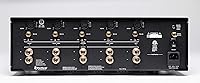
  • XLR Inputs: Each of the 5 channels includes a balanced XLR input with Common Mode Rejection circuitry to suppress noise and hum.
  • RCA Inputs: Each channel also provides a differential-sensing RCA input designed to reject interference without requiring a balanced source.
  • Protection Relays: A dedicated output protection relay per channel automatically disconnects the speaker load in the event of a DC fault or short circuit.
  • Power Supply: Independent power supply rectification is provided for each of the 5 channels to ensure electrical isolation between channels.
  • Signal Path: A modular audio channel design physically isolates each channel signal path from input connector to output binding post.
  • Dimensions: The unit measures 5.82″ H x 17.0″ W x 16.75″ D, requiring adequate depth clearance behind the unit for cable management.
  • Weight: The amplifier weighs 50 pounds, reflecting a substantial internal transformer and build quality appropriate for its power class.
  • Mounting Type: The unit is designed for freestanding placement on a shelf or equipment stand; rack-ear mounting hardware is not included by default.
  • Supply Voltage: The unit operates on a maximum AC supply voltage of 123.6V, consistent with standard North American household current.
  • Certifications: The amplifier carries FCC certification, confirming it meets United States regulatory requirements for electromagnetic emissions.
  • Manufacturer: The amplifier is manufactured by Outlaw Audio, a direct-to-consumer brand based in the United States.
  • Availability: The model has been available since January 2019 and is confirmed as not discontinued by the manufacturer.

Related Reviews
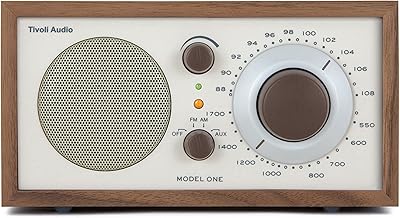
Tivoli Audio Model One AM/FM Table Radio
84%
92%
Sound Quality
88%
Build Quality
94%
Design & Aesthetics
75%
Reception & Clarity
90%
Ease of Use
More
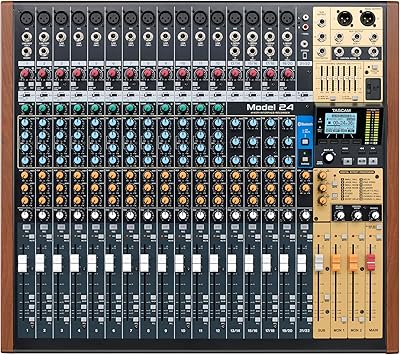
Tascam Model 24 Multi-Track Mixer and Audio Interface
85%
94%
Sound Quality
88%
Ease of Use
90%
Build Quality
92%
Recording Flexibility
81%
Portability
More
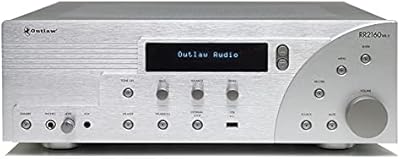
Outlaw Audio RR2160 Mk II Retro Stereo Receiver
85%
92%
Build Quality
88%
Sound Quality (Streaming)
65%
Wi-Fi Setup
87%
Bass Management Control
80%
Ease of Use
More
Cambridge Audio CXN100 Network Audio Player
86%
94%
Sound Quality
88%
Multiroom Compatibility
85%
Ease of Use
90%
Connectivity Options
92%
Build Quality
More
M-Audio AIR 192|4
M-Audio AIR 192|4
85%
93%
Build Durability
91%
Tactile Control Experience
88%
Preamplifier Transparency
87%
Recording Latency
86%
Software Bundle Value
More
Planet Audio P350MB Car Audio Stereo System
83%
91%
Value for Money
88%
Bluetooth Performance
92%
Ease of Use
84%
Sound Quality
86%
Installation Ease
More
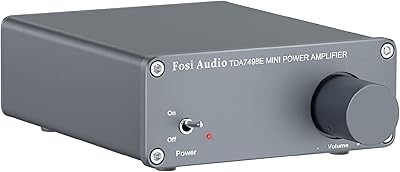
Fosi Audio TDA7498E
Fosi Audio TDA7498E
83%
88%
Sound Quality
93%
Value for Money
71%
Build Quality
74%
Power Output & Headroom
66%
Noise Floor & Background Hiss
More
Universal Audio Arrow Thunderbolt 3 Audio Interface
88%
94%
Audio Quality
90%
Portability
89%
Real-Time Processing Performance
91%
Ease of Use
86%
Build Quality
More
JK Audio Autohybrid Passive Telephone Audio Interface
87%
89%
Ease of Use
91%
Portability
85%
Audio Quality
88%
Connectivity
92%
Compatibility with Devices
More
Black Lion Audio Revolution 2x2 USB Audio Interface
84%
89%
Sound Quality
76%
Ease of Setup
92%
Build Quality
87%
Latency Performance
80%
Compatibility with DAWs
More

FAQ

You will need a separate AV preamp or processor — this is a power amplifier only, with no volume control, source switching, or onboard processing of any kind. Think of it as the muscle in a separates system: your preamp or processor does the thinking, and this amp provides the power. If you are currently using an all-in-one AV receiver, you would need to either add a preamp stage or use your receiver's preamp outputs if it has them.

Not directly, no. Consumer TVs and streaming devices output audio digitally or at line level without the volume management a power amp needs upstream. You would route audio from your TV through an AV processor or preamp first, then into this power amplifier. Skipping that step means you have no practical way to control volume.

For most residential home theater rooms, 120W per channel into 8 ohms is more than sufficient, even at reference listening levels. If your speakers dip to 4 ohms, the amp steps up to 180W per channel, which gives you additional headroom for dynamic peaks in action films. Very large dedicated theater spaces with inefficient speakers might push the limits, but for the vast majority of home setups this amp has power to spare.

It does generate meaningful heat under sustained loads, and an enclosed cabinet is genuinely problematic — several owners have reported thermal shutdowns when airflow was restricted. You really need open rack space with room above the unit, or at minimum a ventilated cabinet with active airflow. Treat adequate ventilation as a hard installation requirement, not an optional nicety.

Both input types include noise-rejection circuitry, but the balanced XLR connection is inherently more resistant to interference, particularly over long cable runs or in electrically noisy equipment racks. If your processor offers XLR outputs, use them — you will likely notice a quieter background, especially with sensitive speakers. RCA works well in shorter, cleaner signal paths, but XLR is the better choice whenever it is available.

Yes, and it handles them well. The amp is rated at 180W per channel into 4 ohms, so it does not merely tolerate lower-impedance loads — it actually delivers more power into them, which is the behavior you want from a high-current design. Just keep the ventilation situation in mind, since 4-ohm loads at high volumes will generate more heat than 8-ohm operation.

Electrically, connecting it is straightforward — the rear panel is clearly laid out and the process is intuitive for anyone familiar with component audio. Physically, however, 50 pounds is genuinely heavy for rack work, and we would strongly recommend having a second person assist with lifting it into a rack bay. Several owners have mentioned this specifically, and it is sound advice.

In a well-matched system with good speakers, yes — most owners who made the switch describe the improvement as clearly audible rather than subtle. The noise floor drops, dynamic headroom feels more effortless, and the channel separation tightens up. That said, the improvement is most obvious in resolving systems with quality speakers in a reasonably treated room. If your speakers or room are the limiting factor, the gains will be less immediately apparent.

There is an audible relay click through the speakers when the amp engages its output protection circuits at startup. For most speakers this is a minor background click, but owners with very high-efficiency or sensitive speakers may find it slightly noticeable. It is a normal operational characteristic of relay-protected amplifier designs and is not a sign of any fault.

Outlaw Audio is a direct-to-consumer brand, which means warranty service goes through them directly rather than through a local dealer or service center. For most buyers this works fine, but it does mean shipping a 50-pound amplifier back to the manufacturer if a physical return is ever needed. Buyers outside the continental United States should factor in the potential shipping cost and logistics before purchasing, as there is no local service network to fall back on.