Overview

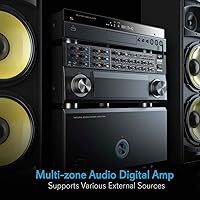
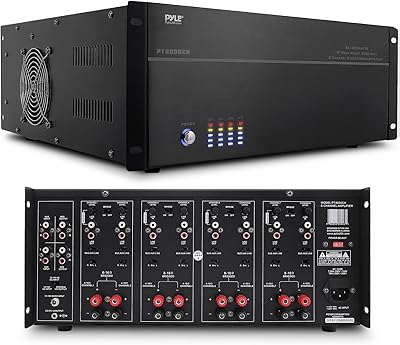
The Pyle PT12050CH 12-Channel Rack Amplifier is a mid-range, rack-mountable mixer-amp built for commercial and semi-pro audio environments where managing multiple speaker zones from a single unit matters. Think restaurant dining rooms, small theaters, rehearsal spaces — situations where real control is needed without building out a full pro rig. It slots into a standard 2U rack space and puts a front-panel LCD alongside rotary controls right at your fingertips. The addition of Bluetooth puts this rack amplifier ahead of purely analog alternatives in the same price class, making it genuinely useful for operators who want to stream music wirelessly without patching in extra gear.
Features & Benefits

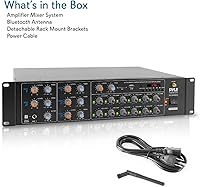
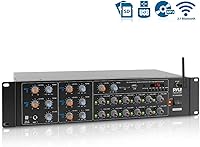
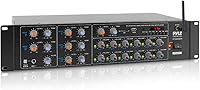
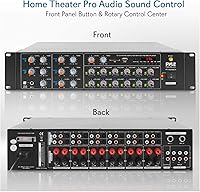
At the heart of this mixer-amp is a 12-channel layout where each channel carries its own independent volume control — a practical setup when routing different audio sources to different zones. Three RCA stereo input pairs cover CD players, tuners, or tape decks, while two quarter-inch mic inputs, a 3.5mm AUX jack, USB port, and SD card slot round out the options. An RCA output lets you loop signal to a secondary amp if needed. The voice priority function is a standout for anyone running a PA alongside background music; press the button and the music ducks automatically so an announcement cuts through cleanly without manual adjustment.

Best For

This rack amplifier is a natural fit for restaurant and café owners who need to push background music into multiple dining zones while keeping a mic handy for occasional announcements. Small venue operators — a theater green room, a rehearsal hall, a community event space — will find the channel count and input variety genuinely useful without the cost of a dedicated pro console. It also works well as a step-up option for home studio users who have outgrown a basic stereo receiver. Anyone wanting Bluetooth streaming bundled into their rack without buying a separate device will appreciate what the Pyle 12-channel unit delivers at its price tier.

User Feedback

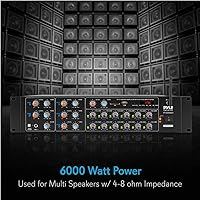
Buyers consistently highlight the value packed into this mixer-amp relative to what comparable setups would cost if assembled from separate components. Bluetooth pairing earns good marks for being quick and reliable at typical indoor distances. On the critical side, a recurring theme is build quality — the chassis and knobs feel closer to consumer-grade plastic than professional rack equipment, which matters if the unit sees heavy daily use. A handful of buyers flagged uneven channel output straight out of the box, worth testing before a permanent installation. One key clarification: the advertised 6000W figure is peak total power, not continuous RMS — real-world output will run considerably lower than that headline number suggests.

Pros

  • 12 independent channels let you manage separate audio zones from a single rack unit.
  • Built-in Bluetooth pairs quickly with phones and tablets for cable-free music streaming.
  • The voice priority mic function automatically ducks background music during announcements — no manual fader pull needed.
  • Covers a wide range of input types: RCA, quarter-inch mic, AUX, USB, and SD card all in one box.
  • RCA line output lets you feed a second amplifier or recording interface without extra gear.
  • Front-panel LCD and rotary knobs make level adjustments fast and intuitive during live use.
  • Switchable 115/230V power supply makes it usable in international venues without a transformer.
  • For the price tier, the feature-to-cost ratio is hard to beat among multi-zone rack amplifiers.
  • Fits a standard 2U rack slot cleanly, keeping equipment setups tidy and organized.

Cons

  • The 6000W headline figure is peak power — real sustained output is significantly lower and often surprises buyers.
  • Knobs and chassis feel plastic and lightweight, especially if you have handled mid-tier pro rack equipment before.
  • Some units ship with inconsistent output levels across channels, requiring testing before permanent installation.
  • Bluetooth range degrades noticeably through walls or beyond typical room distances.
  • USB and SD card playback is basic with no real file navigation or playlist management.
  • No adjustable ducking depth on the talk-over function, which can feel abrupt on sensitive speaker systems.
  • Long-term reliability reports are mixed, with some users noting channel degradation or knob wear after a year of regular use.
  • No preset memory means every zone configuration must be manually re-dialed after a power cycle.

Ratings

Our scores for the Pyle PT12050CH 12-Channel Rack Amplifier were generated by AI after analyzing verified buyer reviews from multiple global markets, with spam, bot activity, and incentivized feedback actively filtered out. The result is an honest snapshot of what real owners across restaurants, small venues, and home studios actually experienced — strengths and frustrations included, nothing smoothed over.
Value for Money
83%
Most buyers feel they are getting considerably more functionality per dollar than comparable multi-zone setups would cost if pieced together separately. For a café owner or rehearsal space manager working with a modest budget, the channel count and input variety alone justify the spend.
A few buyers who expected pro-grade performance felt the gap between the marketing and the real-world output was wide enough to dampen their satisfaction. If your expectations are set by the spec sheet rather than the product tier, the value perception drops quickly.
Channel Flexibility
79%
21%
Having 12 independently controlled channels in a single 2U rack unit is genuinely useful in multi-zone environments. Restaurant operators in particular appreciate being able to dial the kitchen feed separately from the dining room without rerouting cables or jumping between devices.
A handful of users reported that some channels came out of the box with noticeably uneven output levels compared to neighboring channels. This is workable in low-stakes setups but would require careful testing before any permanent installation in a professional venue.
Bluetooth Performance
72%
28%
Pairing with smartphones and tablets is fast and stays stable at typical indoor distances, which is all most hospitality and small venue users actually need. Being able to stream from a phone across the room without running a cable is a practical convenience that owners genuinely use daily.
This is not audiophile-grade wireless streaming, and the Bluetooth range drops off or becomes unreliable through walls or at extended distances. Users expecting the kind of robust wireless performance found in dedicated streaming hardware will likely find it falls short.
Mic Talk-Over Function
81%
19%
The voice priority feature earns consistent praise from retail and hospitality users who need to make occasional announcements without manually pulling down music faders. It reacts quickly and the ducking is smooth enough for a typical store or restaurant PA scenario.
The depth and speed of the music ducking are not user-adjustable, which frustrated a minority of users who wanted finer control over how aggressively background audio gets suppressed. In noisier environments, the transition can feel abrupt rather than natural.
Build Quality
57%
43%
The unit is physically compact and rack-mounts cleanly, which counts for something in a tidy equipment setup. For light-duty or fixed installations where the knobs are rarely touched after initial setup, the construction holds up adequately.
The chassis and control knobs feel noticeably plastic relative to anything in the pro-audio tier, and several long-term users report knobs that loosen or develop wobble after extended regular use. Anyone running this in a high-traffic venue where staff interact with the front panel daily should factor in potential wear.
Input Variety
84%
Three RCA stereo input pairs alongside two quarter-inch mic inputs, a 3.5mm AUX port, USB, and an SD card slot means most common sources plug straight in without adapters. Studio and rehearsal users appreciate not needing a separate DI box or interface for basic mic work.
The USB and SD card playback functions are functional but basic — no real file browsing or metadata display, just straightforward media playback. Users hoping for organized playlist control or format flexibility beyond standard MP3 files may find these inputs limiting.
Ease of Setup
76%
24%
Most users report getting the unit racked, wired, and producing sound within 30 minutes, even without prior experience with rack-mounted equipment. The front-panel layout is logical enough that basic operation does not require reading the manual in full.
The included documentation is thin, and users who want to configure more advanced routing or fine-tune the EQ controls often have to rely on online forums or trial and error. The LCD readout helps but does not substitute for clearer instructions on signal flow.
Power Output Accuracy
48%
52%
When used within its realistic operating range for background music and light PA duties, the unit delivers consistent and adequate volume for small to medium spaces without audible distortion at moderate listening levels.
The advertised 6000W figure is peak power across all channels combined, not continuous RMS — a distinction that catches many buyers off guard. Real-world sustained output is considerably lower, and users who purchased expecting to drive large speaker arrays were frequently disappointed.
Front Panel Controls
71%
29%
The rotary knobs are intuitively laid out, and the LCD screen gives just enough visual feedback to make real-time adjustments during a live event or service without hunting through menus. For day-to-day level tweaking, the controls feel accessible.
The knobs have a somewhat loose, lightweight feel that does not inspire confidence when making fine adjustments, and a few users noted that very small rotations produce disproportionate jumps in level. Precision control in critical monitoring situations is not this unit's strong suit.
Multi-Zone Audio Management
74%
26%
The per-channel volume architecture works well for splitting audio into distinct zones — a common requirement in cafés, small theaters, and event halls where different rooms or areas need different levels or sources simultaneously.
There is no digital routing matrix or preset memory, so any zone configuration has to be dialed in manually each time the unit powers on. For venues with frequently changing layout needs, this adds a small but real operational overhead.
Rack Integration
78%
22%
Fitting cleanly into a standard 2U rack space, the unit plays well alongside other rack gear without requiring custom mounting hardware. The switchable 115/230V power supply also makes it usable in international installations without a step-down transformer.
At just under 16 pounds the unit is heavier than its plastic construction suggests, and the rack ears feel slightly underbuilt for transport in a touring or mobile setup. It is better suited to permanent or semi-permanent rack installations than road cases.
Signal Routing Options
69%
31%
The RCA line output gives users a practical way to feed a secondary amplifier or a recording interface, which is useful in studio setups or venues that need to simultaneously drive two separate amp chains from one mixer source.
Signal routing flexibility is limited compared to even modestly priced dedicated mixers. There are no insert points, no send/return loops, and no matrix outputs, which means users who need more sophisticated routing topology will quickly hit the ceiling of what this unit can do.
Noise Floor & Audio Clarity
63%
37%
For background music applications at moderate volumes, audio through this rack amplifier is clean enough that most non-critical listeners will not notice any particular coloration or interference. It handles typical RCA source material without obvious degradation.
At higher gain settings or when multiple inputs are active simultaneously, a low-level hiss or hum becomes audible on sensitive speaker systems. Users running high-efficiency speakers in quiet environments — like a small theater during a spoken-word performance — may find this bothersome.
Longevity & Reliability
61%
39%
Many buyers running this mixer-amp in fixed restaurant or retail installations report months of uninterrupted operation without failures, suggesting that light continuous-duty use is within its capabilities. For low-intensity daily use it holds its own.
Longer-term ownership reports are more mixed, with some users noting channel degradation, intermittent Bluetooth dropouts, or knob failures appearing after a year or more of regular use. The overall reliability picture is acceptable for the price tier but not reassuring for mission-critical applications.

Suitable for:

The Pyle PT12050CH 12-Channel Rack Amplifier is a practical fit for small business owners and venue operators who need to manage background music across multiple zones without investing in a full professional audio setup. A café or restaurant owner who wants dining room, patio, and bar areas running at independent volumes — with a mic input ready for occasional announcements — will find this rack amplifier covers that exact brief cleanly. Small theaters, community event spaces, and rehearsal halls are also natural homes for this unit, particularly where a single piece of gear handling both music playback and basic PA duties is more appealing than a chain of separate components. Home studio users and bands with a dedicated rehearsal room who have outgrown a basic stereo receiver will appreciate the jump in input options and zone control. The built-in Bluetooth is a genuine everyday convenience for these users — being able to hand a phone to someone and have them stream immediately, without routing cables across the room, is the kind of friction-free operation that matters in a working environment.
Not suitable for:

Buyers expecting professional-grade construction or tour-ready durability should look elsewhere before committing to this mixer-amp. The build sits firmly in the consumer-to-prosumer tier, and anyone who has handled genuine pro rack gear will immediately notice the difference in how the chassis and knobs feel. The advertised 6000W power figure is peak output across all channels combined — sustained RMS performance is considerably lower — so if you are planning to drive a large speaker array or fill a mid-sized venue with serious headroom, this rack amplifier will disappoint. Audio professionals who need precise signal routing, insert points, or a low noise floor for sensitive monitoring tasks will find the feature set too limited for reliable use in critical listening or recording contexts. Bluetooth here is a convenience feature, not a high-fidelity wireless solution, so DJs or audiophiles who prioritize wireless audio quality should factor that in. Finally, buyers needing mission-critical reliability in a high-traffic commercial environment — somewhere the unit runs eight-plus hours daily and gets handled by multiple staff — should weigh the longer-term durability reports carefully before purchasing.

Specifications

  • Channels: The unit provides 12 independent audio channels, each with its own dedicated volume control for flexible zone management.
  • Peak Power: Total maximum peak power output is rated at 6000W across all 12 channels combined, not a continuous RMS figure.
  • Per-Channel Power: Each channel delivers up to 500W at 4 ohm impedance or 250W at 8 ohm impedance under peak conditions.
  • Impedance: Compatible with speakers rated at 4 to 8 ohm impedance, covering the majority of standard passive PA and background music speakers.
  • Inputs: Accepts signal via three stereo RCA input pairs, two quarter-inch microphone inputs, one 3.5mm AUX jack, one USB port, and one SD card slot.
  • Outputs: Provides one RCA stereo line output for routing signal to a secondary amplifier or recording device.
  • Wireless: Integrated Bluetooth allows wireless audio streaming from smartphones, tablets, and computers without a physical cable connection.
  • Display: A front-mounted LCD screen provides real-time visual feedback for input selection, levels, and operational status.
  • Controls: Front panel features rotary knobs for microphone level, AUX level, input selection, voice priority, and individual per-channel volume.
  • Talk-Over: A dedicated voice priority button automatically reduces background music volume when a signal is detected at the Mic 1 input.
  • Form Factor: Designed for standard 19-inch equipment racks, occupying 2U (two rack units) of vertical space.
  • Dimensions: The unit measures 18.89″ in length, 11.22″ in width, and 3.93″ in height.
  • Weight: The unit weighs 15.97 lbs, which is heavier than its plastic construction suggests and worth noting for mobile rack setups.
  • Power Supply: Features a switchable power supply supporting both 115V and 230V mains input, making it compatible with international electrical standards.
  • Manufacturer: Designed and sold by Sound Around under the Pyle brand, a US-based consumer and prosumer audio equipment company.
  • Model Number: The official model designation is PT12050CH, used for warranty registration, parts sourcing, and manufacturer support inquiries.
  • Availability Date: This model was first made available for purchase in May 2019 and remains an active listing as of this review.

Related Reviews

Pyle PLMRMP4A 4-Channel Marine Amplifier
82%
88%
Sound Quality
93%
Waterproof & Weatherproof Features
72%
Installation Ease
80%
Durability
90%
Power Output
More
Pyle PLAM1600 4-Channel Car Amplifier
84%
89%
Audio Performance
92%
Value for Money
86%
Installation Ease
80%
Build Quality
62%
Thermal Performance
More
Pyle PT8000CH
Pyle PT8000CH
70%
84%
Ease of Installation
78%
Multi-Zone Audio Performance
51%
Rated Power Accuracy
62%
Build Quality
57%
Thermal Management & Fan Noise
More
Pyle PLMTR4A 4-Channel Marine Amplifier
85%
88%
Performance
91%
Build Quality/Durability
85%
Sound Quality
80%
Ease of Installation
92%
Waterproofing
More
Pyle PLA2378 2-Channel Car Stereo Amplifier
85%
87%
Sound Quality
90%
Installation Ease
85%
Power Output
83%
Build Quality
80%
Bass Control
More
Pyle PPRE70BT Rack Mount Pre-Amplifier
74%
84%
Value for Money
91%
Ease of Setup
77%
Bluetooth Performance
63%
Sound Quality
68%
Build Quality
More
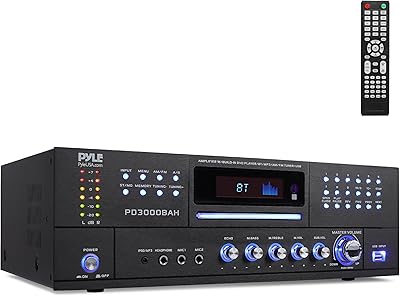
Pyle PD3000BAH 4-Channel Bluetooth Amplifier
73%
83%
Value for Money
61%
Power & Amplification
88%
Connectivity & Input Range
74%
Bluetooth Performance
77%
CD/DVD Player Functionality
More
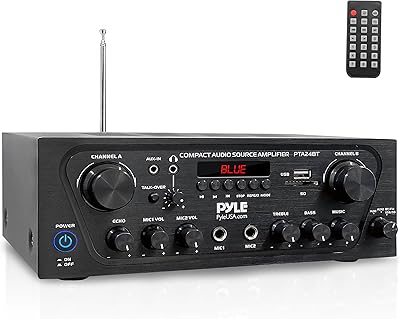
Pyle PTA24BT 2-Channel Karaoke Amplifier
73%
88%
Ease of Setup
83%
Bluetooth Reliability
74%
Microphone Performance
67%
Echo Effect Quality
54%
Actual Power Output
More
Pyle PLMRMB4CB 200W 4-Channel Marine Amplifier
87%
85%
Sound Quality
89%
Bluetooth Connectivity
91%
Build Quality
93%
Installation Ease
94%
Water Resistance
More
Pyle PLMRA402 400W 4-Channel Marine Amplifier
87%
88%
Power Output
84%
Sound Quality
90%
Ease of Installation
85%
Durability
92%
Waterproof Protection
More

FAQ

Not in the way most people interpret it. The 6000W figure is the combined peak power across all 12 channels simultaneously — it does not represent continuous RMS output, which is considerably lower. For background music and light PA use in a small venue, the real-world power is sufficient, but do not expect to drive a large outdoor speaker array on this unit.

You can connect one speaker per channel, so up to 12 passive speakers in total. Keep in mind each speaker should be rated between 4 and 8 ohm impedance, and you should make sure the combined load per channel stays within the unit's rated range to avoid overheating or distortion.

Yes, this is actually one of the strongest use cases for this rack amplifier. You can run independent speaker feeds to different zones — dining room, bar area, patio — and adjust each room's volume separately from the front panel without affecting the others. The mic talk-over function is a bonus for anyone who occasionally needs to make announcements over the music.

Pairing is straightforward and works well at typical indoor distances — across a room or within about 30 feet in open space. Range drops off through walls, so if your phone or source device is in a separate room, you may experience dropouts. It is a convenience feature rather than a high-fidelity wireless solution, so keep expectations grounded accordingly.

For basic applications — background music with a mic input and multi-zone volume control — this unit can genuinely replace a separate mixer and amplifier combination. If you need advanced routing, EQ per channel, insert points, or send/return loops, you will still want a dedicated mixer upstream. For a café, small theater, or rehearsal room, though, the built-in controls are usually enough.

The two microphone inputs use standard quarter-inch connectors, so any dynamic microphone with a quarter-inch plug or a quarter-inch adapter will work. There is no phantom power on this unit, which means condenser microphones that require 48V phantom power are not compatible without an external phantom power supply.

Unfortunately, a small number of buyers have reported channel output inconsistencies straight out of the box. Before assuming a fault, test each channel individually at the same input level and rotary setting to confirm whether the difference is significant. If it is, contacting the manufacturer for a replacement is the recommended path since it may indicate a quality control issue with that specific unit.

Yes, the Pyle PT12050CH 12-Channel Rack Amplifier is built to fit a standard 19-inch equipment rack and takes up 2U of rack space. The rack ears are included, though some users note they feel lightweight — fine for a permanent fixed install but not ideal for a touring or frequently transported rack case.

The USB input is for audio playback only, not charging. It reads MP3 files from a USB drive and plays them back through the selected channel. The functionality is basic — there is no screen-based file browsing or playlist management — but it works fine if you just want to plug in a drive with background music files and press play.

When you press the voice priority button and speak into Mic 1, the background music feeding through the other channels automatically drops in volume so your voice is heard clearly. Once you stop speaking or release the signal, the music returns to its previous level. The ducking depth is not user-adjustable, which is a minor limitation, but for a quick announcement in a retail or hospitality setting it works exactly as intended.