Overview

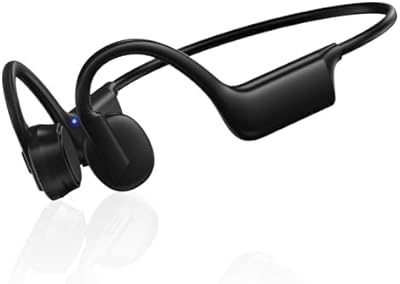
The PSIER X11 Bone Conduction Headphones represent one of the most accessible ways to try open-ear audio without spending serious money. At just 26 grams, picking them up for the first time is a genuine surprise — they feel almost like nothing on your head. The open-ear design is not a gimmick here; keeping your ears uncovered means you can hear traffic, trail hazards, or a coworker calling your name while still listening to a podcast. Shenzhen Jiechen Technology operates squarely in the value tier, so go in expecting capable workout headphones rather than precision audio equipment.
Features & Benefits

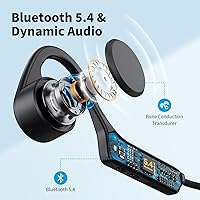
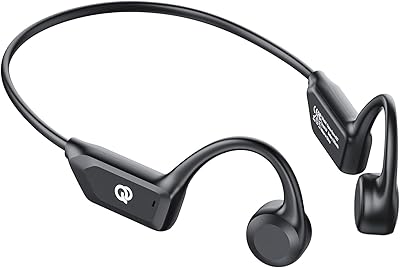
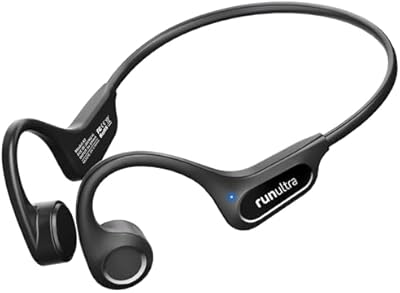
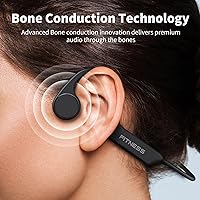
The X11 sits its transducers against your cheekbones rather than inside your ears, so your ear canals stay completely open the entire time. The titanium memory frame flexes to fit different head sizes and snaps back to shape after being stuffed in a bag — a small but practical detail for everyday carry. Bluetooth 5.4 keeps the connection stable and noticeably reduces audio lag compared to older versions, which matters when watching videos. The IPX6 waterproof rating holds up well against sweat and surprise rain, but these bone conduction earbuds are not built for swimming or any kind of submersion. Battery runs a solid 10 hours on a single charge.

Best For

These bone conduction earbuds suit anyone who spends time outdoors and cannot afford to be cut off from their surroundings. Cyclists and runners get the most obvious benefit — hearing approaching cars or other riders without pulling out an earbud. They also work well for gym sessions where traditional in-ear tips slip out or become uncomfortable after an hour. If you have dealt with ear canal irritation from silicone tips, the open-ear fit removes that problem entirely. And for anyone curious about bone conduction but not ready to spend significantly more, this open-ear headset offers a genuinely low-risk way to find out whether the technology suits your lifestyle.

User Feedback

With a 4.0-star average across over 300 ratings, this open-ear headset lands in a respectable but honest middle ground. Buyers consistently praise the secure, comfortable fit and how straightforward pairing is right out of the box. The complaints are predictable for the technology: bass is thin, which is a structural limitation of bone conduction drivers rather than a flaw unique to the X11. Sound leakage at higher volumes is real — noticeably present in quiet spaces like libraries or open offices, so keep that context in mind. The built-in mic handles outdoor calls decently, though indoor call quality is average at best. Long-term durability remains an open question given how recently the product launched.

Pros

  • Keeps ears completely open, making it genuinely safer for road running and cycling.
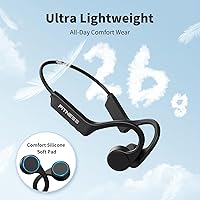
  • At just 26 grams, it is light enough to forget you are wearing it during long sessions.
  • The titanium frame holds its shape and stays put even during vigorous movement.
  • Ten hours of battery life is enough to cover a full day of commuting and a workout combined.
  • Bluetooth 5.4 connects quickly and holds a stable signal without frustrating dropouts.
  • IPX6 rating handles heavy sweat and unexpected rain without any performance issues.
  • Physical push buttons work reliably with wet or gloved hands, unlike touch-sensitive controls.
  • A practical entry point for first-time bone conduction buyers without a steep financial commitment.
  • Comfortable for people with ear canal sensitivity who cannot tolerate standard in-ear designs.

Cons

  • Bass response is thin across all music genres — a hard limitation of the driver technology at this tier.
  • Sound leaks noticeably to people nearby when volume exceeds moderate levels.
  • No carrying case is included, leaving the exposed frame vulnerable to scratches in a bag.
  • Indoor call quality is mediocre and unlikely to satisfy anyone using these for regular work calls.
  • No companion app means zero EQ adjustment, firmware updates, or button customization.
  • Long-term durability is unproven given how recently the product launched.
  • The charging port has drawn early concerns from a subset of buyers about its long-term robustness.
  • Does not support simultaneous connection to two devices, making phone-to-laptop switching manual.
  • Low-battery warning leaves limited time before shutdown, with no percentage readout available.

Ratings

The scores below reflect an AI-driven analysis of verified buyer reviews for the PSIER X11 Bone Conduction Headphones, gathered from global sources with spam, bot-generated, and incentivized feedback actively filtered out. Each category is scored independently, meaning strong performance in one area does not mask real weaknesses in another. Both what buyers genuinely appreciated and what frustrated them are represented as accurately as the data allows.

Comfort & Wearability
88%
The 26-gram frame is light enough that most buyers report forgetting they have it on after the first few minutes. The soft silicone pads rest gently against the cheekbones without creating pressure points, which makes hour-long runs or gym sessions genuinely comfortable rather than just tolerable.
A small number of users with narrower heads found the frame sat slightly loose, particularly when bending forward. Those who wear glasses noted occasional interference with their frames, which can shift the transducer position and reduce audio quality.
Secure Fit During Activity
84%
The titanium memory frame wraps around the back of the head and holds its position during running, cycling, and gym workouts without requiring constant adjustment. Buyers who had struggled with earbuds falling out mid-run specifically called this out as the X11's most practical advantage.
During very high-intensity movements like jump rope or aggressive trail running on uneven terrain, a few buyers noticed slight shifting. The fit is secure for steady-state cardio but less reliable when head movement becomes unpredictable.
Sound Quality
61%
39%
Mids and vocals come through clearly enough for podcasts, audiobooks, and voice calls, which covers the primary use case for most buyers. At moderate volume, the audio is intelligible and reasonably balanced for spoken content during outdoor workouts.
Bass response is noticeably thin — a structural reality of bone conduction drivers, not a defect, but it still limits the X11 for music listeners who want any sense of depth or punch. Electronic music and bass-heavy genres in particular feel flat and underwhelming at this price point.
Open-Ear Situational Awareness
93%
This is arguably the strongest reason to choose the X11 over conventional earbuds. Cyclists and urban runners consistently praised being able to hear traffic, bike bells, and ambient cues without removing anything. It is a genuine safety advantage that buyers who have switched from in-ear designs rarely want to give up.
The open-ear setup is a deliberate design choice, but it does mean audio feels less immersive than closed earbuds. Buyers expecting a traditional listening experience will find the lack of isolation disorienting at first, especially in noisier environments.
Sound Leakage
52%
48%
At low to moderate volumes, leakage is minimal and unlikely to bother anyone nearby in an outdoor setting. For solo workouts or commuting on foot, it rarely creates any real-world issue.
Cranking the volume past roughly 70 percent produces audible leakage that people sitting nearby — on a bus, in a library, or at a shared office desk — will clearly hear. This is a known limitation of the bone conduction format, but it is worth knowing before purchase if you plan to use these in quiet shared spaces.
Bluetooth Connectivity
82%
18%
Bluetooth 5.4 pairs quickly on first connection and reconnects automatically when taken out of the case or powered on near a previously paired device. Buyers noted the connection stayed stable through a full hour of use without dropout events, even with a phone in a back pocket.
A handful of users reported occasional audio stutters when moving through areas with heavy wireless interference, such as busy gyms with multiple devices active. Initial multi-device pairing is not supported, so switching between a phone and a laptop requires a manual reconnect.
Battery Life
79%
21%
The claimed 10-hour runtime holds up under real-world conditions for most buyers, easily covering a full day of commuting and a workout without needing a recharge. That kind of endurance removes battery anxiety from the equation for most everyday use cases.
There is no battery indicator beyond a low-battery voice alert, which some users found came with less warning than expected. Charging time is not prominently documented, and a few buyers noted the charging interface felt less robust than the rest of the build.
Waterproofing & Sweat Resistance
76%
24%
IPX6 coverage handles sweat, splashing, and caught-in-the-rain moments without any reported issues. Buyers who used these during humid summer runs or heavy workout sessions reported no degradation in performance after repeated moisture exposure.
IPX6 does not mean waterproof in any submersible sense — taking the X11 into the pool or wearing them in the shower is likely to cause damage. This distinction matters because the open-ear form factor could lead some buyers to assume they double as swim headphones, which they do not.
Microphone & Call Quality
63%
37%
Outdoors, the built-in mic performs adequately for taking calls while walking or cycling, with callers on the other end generally able to understand the speaker without complaints. For quick calls during a commute or run, it clears the minimum bar.
Indoors, particularly in a quiet room, the mic picks up a slight background hiss and lacks the clarity of dedicated headsets. Buyers who expected to use these as a work-from-home headset during meetings reported that call recipients frequently noticed lower audio quality.
Build Quality & Durability
67%
33%
The titanium frame feels more substantial than the price would suggest, and the silicone padding shows no early signs of peeling or deterioration based on short-term owner reports. First impressions on unboxing are generally positive for this price tier.
Because the X11 launched relatively recently, long-term durability data is still limited. A few early buyers raised concerns about the charging port feeling less reinforced than the rest of the headset, which could become a wear point over months of daily use.
Button Controls & Usability
74%
26%
The physical push buttons are positioned in a way that makes them easy to locate by touch while running, without looking. Play, pause, and call answer functions work reliably, and buyers appreciated not having to fight with touch sensors that misfire during sweaty workouts.
The button layout takes a short learning curve to memorize, particularly for volume and track-skip functions. A couple of buyers accidentally triggered controls while adjusting the headset, suggesting the button resistance could be slightly firmer.
Value for Money
83%
At its price point, the X11 delivers the core bone conduction experience — open-ear safety, all-day comfort, and reliable Bluetooth — without the premium cost of established brands in the category. For first-time buyers or casual athletes, it represents a genuinely reasonable starting point.
Buyers comparing it to higher-priced bone conduction options will notice the gap in audio depth and build refinement. It is excellent value if expectations are calibrated correctly, but buyers who later want richer sound are likely to upgrade rather than stick with this one long term.
Ease of Setup & Pairing
86%
Out of the box, pairing the X11 to a smartphone takes under a minute with no app required. Buyers consistently described the setup process as straightforward, which matters for users who are not particularly tech-savvy.
There is no companion app, which means no EQ adjustments, firmware updates, or custom button mapping are available. For most buyers this is fine, but anyone expecting software customization will find the experience barebones.
Weight & Portability
91%
At 26 grams, the X11 is genuinely one of the lighter options in the bone conduction category. It folds into a small enough footprint to toss in a jacket pocket or gym bag without adding bulk, which makes it easy to carry everywhere.
There is no included carrying case, which means the exposed titanium frame can pick up scratches from other items in a bag over time. A simple pouch would have meaningfully improved the portable storage experience at minimal added cost.

Suitable for:

The PSIER X11 Bone Conduction Headphones are a strong fit for anyone whose outdoor activities demand constant awareness of their surroundings. Road cyclists navigating traffic, trail runners on shared paths, and urban commuters on busy sidewalks all benefit from keeping their ears open while still having audio in the mix. The X11 also works well for people who have chronic discomfort with traditional in-ear tips — no silicone pressing against your canal means no soreness after an hour-long run. Gym-goers who sweat heavily will appreciate the IPX6 resistance, which holds up to even intense sessions without worry. If you have been curious about bone conduction technology but were not prepared to spend significantly more on a premium brand, this open-ear headset offers a practical and low-risk entry point to find out whether the format suits your lifestyle.
Not suitable for:

Anyone prioritizing rich, full-bodied audio should look elsewhere — the PSIER X11 Bone Conduction Headphones are simply not built for that purpose, and no amount of expectation adjustment will change the underlying physics of the driver format. Bass-heavy music genres like hip-hop, EDM, and rock will sound noticeably thin and flat, which is a dealbreaker for listeners who care about sound depth. People who plan to use these at a desk in a shared office or a quiet library should also reconsider, since audio leaks to nearby people at higher volumes. The built-in microphone handles casual outdoor calls acceptably, but remote workers who rely on headset clarity for daily video meetings will find the quality underwhelming compared to purpose-built options. Finally, swimmers or anyone wanting a waterproof headset for aquatic use should note that IPX6 covers sweat and rain only — submersion will likely cause damage.
Specifications

  • Brand & Model: Manufactured by Shenzhen Jiechen Technology Co. Ltd and sold under the PSIER brand as model X11.
  • Driver Type: Uses a bone conduction driver that transmits sound vibrations through the cheekbones directly to the inner ear, bypassing the ear canal entirely.
  • Bluetooth Version: Equipped with Bluetooth 5.4, offering reduced connection latency and improved signal stability compared to older Bluetooth standards.
  • Battery Life: Rated for up to 10 hours of continuous playback, calls, or podcast listening on a single full charge.
  • Weight: The headset weighs 26 grams, placing it among the lighter options available in the open-ear bone conduction category.
  • Frame Material: The wraparound band is constructed from a flexible titanium memory alloy that returns to its original shape after being bent or compressed.
  • Water Resistance: Carries an IPX6 water resistance rating, meaning it withstands high-pressure water jets, heavy sweat, and rain, but is not rated for submersion or swimming.
  • Ear Placement: Designed as a fully open-ear device with no insertion into the ear canal; transducers rest against the cheekbones just in front of each ear.
  • Controls: Operated via physical push buttons positioned on the body of the headset to allow reliable use during exercise without accidental activation.
  • Microphone: Includes a built-in microphone for hands-free calls, positioned to capture the wearer's voice during outdoor and light indoor use.
  • Connectivity: Connects exclusively via Bluetooth; there is no 3.5mm headphone jack or wired connection option available.
  • Compatible Devices: Compatible with smartphones, laptops, desktop computers, tablets, smart speakers, televisions, and car audio systems that support Bluetooth pairing.
  • Ear Cushion Material: Contact pads are covered in soft, skin-friendly silicone designed to minimize irritation during extended wear sessions.
  • Package Dimensions: The retail packaging measures 5.24 x 4.13 x 2.01 inches, compact enough for standard shelf display or shipping.
  • Item Weight: The packaged product weighs 3.52 ounces (approximately 0.1 kilograms) including all included accessories.
  • Wireless Range: As a Bluetooth 5.4 device, the X11 is designed to maintain a stable connection at typical close-range distances of up to approximately 10 meters in open conditions.
  • Target Age Group: Designed and marketed for adult users; not specifically rated or configured for children.

Related Reviews

Raycon Bone Conduction Headphones RBB842
74%
91%
Water Resistance
93%
Situational Awareness
87%
Battery Life
63%
Audio Quality
82%
Fit & Stability
More
Qyzue S27 Bone Conduction Headphones
79%
91%
Comfort & Wearability
88%
Fit & Stability
86%
Battery Life
67%
Sound Quality
83%
Bluetooth Connectivity
More
Ogogrs K08 Bone Conduction Open-Ear Headphones
70%
81%
Comfort & Fit
58%
Sound Quality
83%
Battery Life
88%
Situational Awareness
52%
Microphone Quality
More
Cevinily HS1 Bone Conduction Headphones
78%
91%
Wearing Comfort
89%
Situational Awareness
86%
Battery Life
84%
Water Resistance
61%
Sound Quality
More
Enerair A20 Bone Conduction Headphones
73%
84%
Value for Money
81%
Comfort & Fit
63%
Sound Quality
88%
Water & Sweat Resistance
76%
Battery Life
More
Hitarah X3 Bone Conduction Headphones
81%
88%
Wearing Comfort
63%
Sound Quality
84%
Battery Life
79%
Fit Stability During Exercise
93%
Situational Awareness
More
Hitarah X19 Bone Conduction Headphones
83%
90%
Comfort and Fit
72%
Sound Quality
85%
Battery Life
88%
Build Quality
93%
Waterproof Rating (IPX7)
More
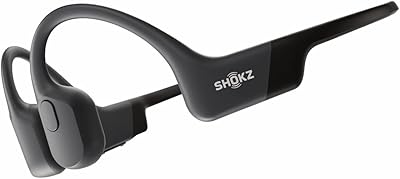
Shokz OpenRun
Shokz OpenRun
82%
97%
Situational Awareness
93%
Fit and Comfort
88%
Water and Sweat Resistance
84%
Battery Life
92%
Quick Charging Capability
More
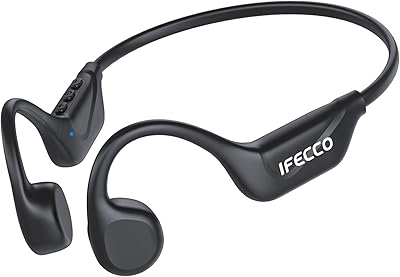
IFECCO X25 Bone Conduction Headphones
78%
91%
Value for Money
84%
Comfort & Fit
58%
Sound Quality
86%
Battery Life
79%
Bluetooth Connectivity
More
Nanajorwa X7 Bone Conduction Headphones
78%
83%
Comfort & Fit
61%
Sound Quality
72%
Battery Life
91%
Ambient Awareness
69%
Build Quality
More

FAQ

Power on the PSIER X11 Bone Conduction Headphones and they will automatically enter pairing mode — you should hear an audio prompt confirming this. Open your phone's Bluetooth settings, look for the X11 in the available devices list, and tap to connect. The whole process typically takes under a minute and requires no app download.

No, and this is worth being clear about. The IPX6 rating means the X11 handles sweat, splashing, and rain without any issue, but IPX6 does not cover submersion. Taking them into a pool, even briefly, risks permanent water damage. If you need headphones specifically for swimming, you will need a device rated IPX8 or higher.

At low to moderate volumes, leakage is minimal and generally not noticeable to others in outdoor settings. However, if you push the volume toward the higher end, the vibrations become audible to people sitting or standing close to you. This is a characteristic of all bone conduction headsets, not a defect, but it does mean they are not ideal for quiet shared spaces like libraries or open-plan offices.

It depends on your glasses frame. Thinner frames typically coexist fine with the X11, but bulkier temples can interfere with where the transducers sit against your cheekbones, which may reduce sound quality or cause the headset to feel less secure. If you wear glasses regularly, it is worth testing the positioning carefully before committing to a long workout.

The headset uses physical push buttons for play, pause, volume, track skipping, and call answering. Once you have memorized the button layout — which takes a session or two — operating them by feel while running is fairly straightforward. There is no touch surface, which actually works in your favor since sweaty fingers cannot trigger accidental inputs.

Not simultaneously. The X11 supports single-device pairing at a time. If you want to switch from your phone to your laptop, you will need to disconnect from one device and manually initiate pairing with the other. It is a minor but real inconvenience if you regularly work across multiple devices.

Honest answer: it is decent for spoken content — podcasts, audiobooks, and calls — but noticeably limited for music. The open-ear bone conduction format produces thin bass across the board, so genres that rely on low-end depth like hip-hop or EDM will sound flat. Mid-range and vocals are cleaner, but if music quality is your main priority, bone conduction headphones at any price may not be the right choice.

Wipe down the frame and silicone pads with a slightly damp cloth after use. Avoid submerging them or running them under a tap even with the IPX6 rating, since the charging port area is a vulnerability. A quick wipe after each session is generally enough to prevent salt buildup from sweat, which can degrade the padding over time.

PSIER has not published a precise charge time in the official product documentation, but based on comparable devices in this category, a full charge typically takes around 1.5 to 2 hours. The X11 uses a magnetic or proprietary charging connector rather than a standard USB-C port, so keeping the included cable safe is important since replacements may be harder to source.

For most activities — road running, cycling, gym circuits, and hiking — the titanium frame holds its position well. During very high-intensity movements with lots of unpredictable head motion, a small number of users have noticed slight shifting. It is not a headset that will fly off your head, but it may need a minor readjustment after a particularly intense interval set.