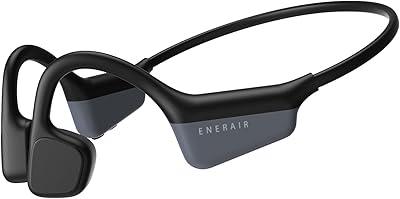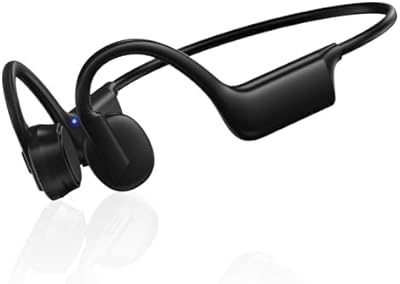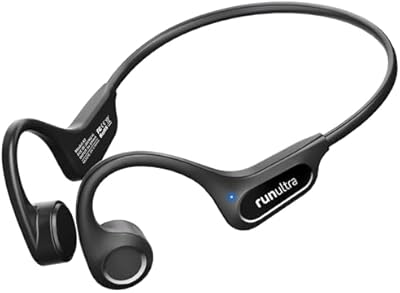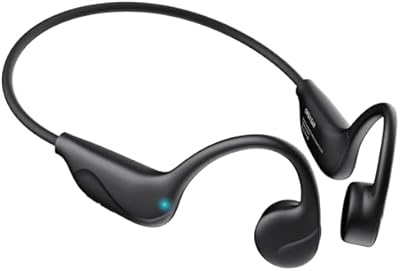

Overview

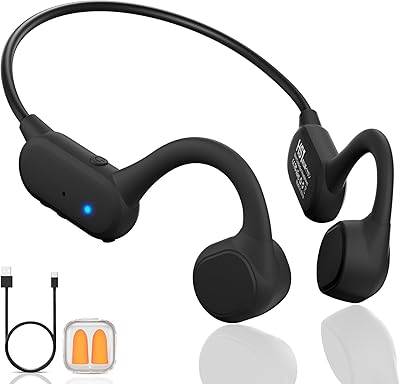
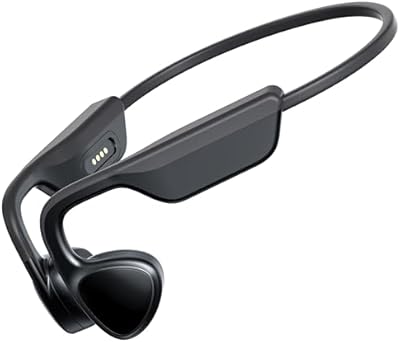
The Qyzue S27 Bone Conduction Headphones enter a crowded budget market with a clear identity: they're built for athletes who refuse to tune out their environment. Bone conduction works by transmitting sound through your cheekbones rather than your ear canal, which means traffic, trail companions, and warning calls stay fully audible while your playlist keeps running. Qyzue isn't a household name yet, but the Qyzue S27 is clearly their sport-focused effort, and the first thing you notice is how little it weighs. The titanium wraparound frame sits at roughly an ounce — genuinely light. Just set your expectations: bone conduction will never match the bass depth or isolation of a good in-ear design.

Features & Benefits

The 16.2mm dual drivers are notably large for this price tier, and they do push a fuller midrange than you'd expect — though low-end rumble stays modest, as it does with most bone conduction designs. Bluetooth 5.4 handles pairing quickly and reconnects to your last device automatically when you power on, a small convenience that adds up across daily use. The 10-hour battery is genuinely useful; a full morning run, afternoon commute, and evening walk won't drain it. Ten minutes on charge buys you roughly an hour of playback, which is handy. IPX55 waterproofing means it handles sweat and rain confidently — but keep it well away from the pool.

Best For

This open-ear headset earns its place for runners and cyclists who regularly share space with cars, pedestrians, or unpredictable terrain — situational awareness is genuinely non-negotiable in those settings. It also works well for long commutes or travel days where you want something comfortable enough to forget you're wearing it for hours. Gym sessions are a fair use too, provided the music isn't your primary focus; bone conduction at high volumes in a noisy weight room has limits. If you have ear canal sensitivity or just hate the stuffed feeling of traditional earbuds, this style of headphone is worth exploring. First-time buyers are especially well-served here.

User Feedback

With 265 ratings and a 4.5-star average, these bone conduction headphones clearly land well for most buyers. Comfort and fit stability draw the most consistent praise — people appreciate that the frame doesn't slip mid-run and causes no ear fatigue across extended wear. Battery performance also gets favorable mentions. On the other side, some users note that max volume falls short in genuinely loud environments, and those expecting deep bass will find themselves adjusting expectations. A handful of reviewers mention the fit feels slightly different depending on head size. Worth flagging: the listing references active noise cancellation, which is physically incompatible with an open-ear design — treat that particular claim with skepticism.

Pros

  • Weighing just around 1 oz, the frame is light enough to forget you are wearing it on long runs or commutes.
  • Bluetooth 5.4 reconnects automatically to your last paired device — no fiddling required when you power on.
  • Ten hours of battery life is enough to cover most full-day use without needing a mid-session top-up.
  • A 10-minute fast charge delivers roughly one hour of playback, a genuinely useful emergency backup.
  • The titanium wraparound frame stays put during high-intensity workouts without relying on ear tips that can slip.
  • IPX55 waterproofing handles sweat and rain sessions reliably, removing anxiety about outdoor use in bad weather.
  • Open-ear listening keeps you audibly connected to your surroundings — a real safety advantage for road runners and cyclists.
  • Type-C charging means one less proprietary cable to track down or replace.
  • At this price tier, these bone conduction headphones punch well above expectations for fit quality and build material.
  • Buyers prone to ear fatigue or canal discomfort finally get a comfortable alternative that does not sacrifice wireless convenience.

Cons

  • Bass response is noticeably thin — listeners who enjoy bass-heavy genres will feel the limitation quickly.
  • Maximum volume struggles to cut through loud ambient environments like busy gyms or urban traffic.
  • The product listing incorrectly claims active noise cancellation, which is physically impossible on an open-ear design — a misleading spec that erodes trust.
  • Fit comfort can vary across head sizes and shapes; some users may need to adjust expectations based on frame curvature.
  • Physical button controls require memorization to operate confidently without stopping to look at the device.
  • There is zero passive sound isolation, making these unsuitable for focus-heavy listening or noisy indoor environments.
  • Not rated for swimming or water immersion despite the waterproof labeling — a distinction many buyers overlook.
  • Qyzue is a relatively unknown brand with limited long-term reliability data or established customer support reputation.
  • Microphone performance in open acoustic environments is inconsistent, making hands-free calls unreliable in windy or noisy conditions.

Ratings

Our AI rating system analyzed verified global buyer reviews for the Qyzue S27 Bone Conduction Headphones, actively filtering out incentivized, duplicate, and bot-generated feedback to surface what real users actually experience. Scores reflect an honest synthesis of both standout strengths and recurring frustrations across hundreds of real-world use cases. You will find both the highs and the friction points represented transparently in every category below.

Comfort & Wearability
91%
The titanium wraparound frame at roughly 1 oz is the single most praised aspect across all feedback — users consistently report wearing these for four, six, even eight hours without any ear fatigue or pressure discomfort. Commuters especially note that by end of day they have forgotten the headset is on.
A smaller segment of reviewers with larger or differently shaped heads find the frame curvature creates minor pressure at the temples during extended sessions. Fit is generally excellent but not universally perfect across all head sizes.
Fit & Stability
88%
Runners and cyclists are the most vocal advocates for the secure wraparound fit — the headset stays in place through tempo runs, hill sprints, and bumpy trail rides without any mid-session adjustment needed. The over-ear hook design genuinely holds under dynamic movement.
A handful of users note that during very intense movements involving sharp head turns or bending down repeatedly, the fit feels slightly less locked-in than marketed. Those with smaller heads have occasionally flagged that the frame sits a touch loosely.
Battery Life
86%
Ten hours of real-world playtime is a meaningful figure at this price tier — users report it aligns closely with advertised performance, covering a full day of commuting plus an evening workout without reaching for a cable. The 10-minute fast charge rescue feature has earned specific praise from forgetful users.
The 200mAh battery cannot be replaced or serviced, so long-term ownership means accepting gradual capacity degradation over charge cycles. A small number of users report achieving closer to 8 hours in practice, particularly at higher volume levels.
Sound Quality
67%
33%
Midrange clarity is genuinely better than expected from a bone conduction headset at this price — vocals, podcasts, and acoustic tracks come through with decent definition. The 16.2mm drivers deliver more presence than smaller-driver competitors, making spoken content particularly listenable.
Bass is thin by any reasonable standard, and maximum volume falls short in noisy environments like busy gyms or city streets. Anyone accustomed to in-ear headphones will immediately notice the sonic gap — this is a situational awareness tool that plays music, not the reverse.
Bluetooth Connectivity
83%
Bluetooth 5.4 delivers noticeably stable pairing in everyday use — users report minimal dropouts during outdoor runs and gym sessions where phone and headset move independently. The auto-reconnect on power-up is a small but frequently appreciated convenience.
Connecting to a new device requires manually disconnecting the previously paired one, which some users find unnecessarily cumbersome when switching between a phone and laptop throughout the day. Range beyond 8 meters in real-world conditions can introduce occasional brief interruptions.
Water & Sweat Resistance
78%
22%
The IPX55 rating handles sweaty workout sessions and outdoor runs in light rain without any performance degradation — gym users in particular report no issues across months of daily training. The waterproofing is a meaningful practical benefit for its intended athletic audience.
The rating does not extend to swimming or submersion, and a notable number of buyers discover this only after purchase because the marketing language can suggest broader water protection than IPX55 actually provides. Managing buyer expectations here is a recurring theme in negative reviews.
Build Quality
74%
26%
The titanium frame material feels substantively better than the plastic-heavy alternatives at this price point, giving the headset a durability impression that exceeds its budget positioning. Most users report no structural issues or degradation after several months of regular outdoor use.
The ear hook and transducer housing are plastic, and a few users note these components feel noticeably lighter in quality relative to the metal frame itself. Long-term durability data is limited given the product's relatively recent market entry.
Microphone Quality
58%
42%
In quiet indoor environments, callers report hearing voice clearly enough for casual phone conversations and brief check-in calls. The microphone handles the basics without requiring the other party to ask for repeated clarification in calm conditions.
Wind noise and ambient sound flood the microphone in outdoor environments because the open-ear design offers no acoustic shielding whatsoever. Users who rely on these for frequent work calls outdoors consistently flag this as a functional limitation.
Button Controls
69%
31%
The physical button layout handles core functions — power, volume, and playback — reliably, and users appreciate having tactile controls they can operate without pulling out their phone mid-run. No touchpad misfire issues, which is a genuine advantage over capacitive alternatives.
The learning curve for navigating multi-function button combinations without looking is steeper than expected, and several users report accidental skips or volume jumps during the first few weeks of use. The buttons are functional but not intuitive from day one.
Situational Awareness
93%
This is where the open-ear format genuinely delivers — road runners, urban cyclists, and commuters consistently describe the ability to hear traffic, pedestrian warnings, and trail sounds as the primary reason they chose this style of headphone. For safety-conscious athletes, no in-ear alternative replicates this.
The open design means there is no volume isolation in either direction — at higher playback volumes, sound leakage is noticeable to people nearby in quiet spaces like libraries or public transit. This is a design trade-off inherent to the format, not a defect.
Charging Experience
81%
19%
USB-C charging is a practical modern standard that most users already have cables for, removing the frustration of proprietary connectors. The 1.5-hour full charge time is competitive, and the fast charge feature provides genuine peace-of-mind for users who forget to charge overnight.
There is no charging case or dock included, and some users note the magnetic or port cover on charging contacts can be fiddly in post-workout conditions when hands are wet or sweaty. The charging indicator feedback could be more clearly communicated through the LED.
Value for Money
84%
Buyers who compare the Qyzue S27 against established bone conduction brands costing two to three times as much consistently describe it as a smart entry point into the category. The titanium frame, Bluetooth 5.4, and 10-hour battery together represent strong hardware for the budget tier.
The value perception drops among users who expected in-ear sound quality from a bone conduction headphone — the format itself sets a ceiling that no amount of driver engineering fully overcomes at any price. Setting accurate expectations before purchase is critical to satisfaction.
Setup & Pairing Ease
77%
23%
Initial setup is fast and painless for most users — power on, hold the button, find it in Bluetooth settings, and you are listening within two minutes. Auto-reconnect on subsequent power-ons means the pairing process is a one-time friction point for the majority of buyers.
Switching between two regularly used devices — say, a work laptop and a personal phone — requires a deliberate manual disconnect step each time, which users who multitask across devices find annoying relative to headsets with dedicated multi-device pairing modes.

Suitable for:

The Qyzue S27 Bone Conduction Headphones are a natural fit for outdoor athletes who treat situational awareness as a safety requirement rather than a preference — runners sharing roads with traffic, cyclists on mixed-use trails, and hikers who need to hear their environment as much as their music. The open-ear format also makes these a strong pick for commuters and travelers who wear headphones for hours at a stretch and find traditional earbuds physically uncomfortable or fatiguing by midday. People who experience ear canal irritation, sensitivity, or hearing aid use that conflicts with in-ear designs will find the bone conduction format genuinely liberating. Gym-goers who want a sweat-resistant headset that won't shift during a workout will appreciate the secure titanium wraparound frame. And for anyone simply curious about bone conduction technology without wanting to spend significantly more on established brands, this open-ear headset offers a low-risk entry point.

Not suitable for:

The Qyzue S27 Bone Conduction Headphones are not the right choice for anyone who prioritizes rich, immersive sound above everything else — bone conduction is simply a different audio delivery method, not a better one, and bass depth and maximum volume both trail what a decent pair of in-ear headphones can produce at this price. Audiophiles, music producers, or listeners who regularly use headphones in very noisy environments like construction sites or loud gyms will likely find the open-ear format inadequate, since there is no sound isolation whatsoever by design. Swimmers should also look elsewhere: despite the IPX55 waterproofing handling sweat and light rain reliably, this headset is explicitly not rated for immersion or aquatic use. Buyers seeking a headset primarily for phone calls in busy areas may find the microphone performance less than ideal given the open acoustic environment. Finally, anyone who prefers a passive or hands-free listening experience should be aware that the physical button controls, while functional, require a learning curve to navigate confidently mid-activity.

Specifications

  • Audio Driver: Uses 16.2mm dual bone conduction drivers that transmit sound vibrations through the cheekbones directly to the inner ear, bypassing the ear canal entirely.
  • Bluetooth Version: Equipped with Bluetooth 5.4, offering faster pairing, a more stable connection, and automatic reconnection to the last paired device on power-up.
  • Wireless Range: Maintains a stable wireless connection up to 10 meters (approximately 33 feet) from the paired source device under typical conditions.
  • Battery Life: Delivers up to 10 hours of continuous music playback on a full charge from its 200mAh internal battery.
  • Charging: Charges via USB-C in approximately 1.5 hours from empty; a 10-minute fast charge provides roughly 1 hour of additional playback.
  • Water Resistance: Rated IPX55, meaning it withstands sweat, splashes, and light rain but is not suitable for swimming or full water submersion.
  • Frame Material: The wraparound headband is constructed from a flexible titanium alloy, which provides durability and a secure fit while keeping overall weight minimal.
  • Weight: The complete headset weighs approximately 1 oz (28g), making it one of the lighter options available in the bone conduction category.
  • Impedance: Rated at 8 Ohm, which is standard for bone conduction transducers and compatible with typical Bluetooth audio output levels.
  • Controls: Operated via physical push buttons on the unit for functions including power, volume adjustment, playback control, and call management.
  • Compatibility: Pairs wirelessly with smartphones, tablets, laptops, portable media players, and Bluetooth-enabled smart speakers.
  • Ear Placement: Open-ear design with transducer pads resting against the cheekbones just in front of the ears, leaving the ear canals fully unobstructed.
  • Microphone: Includes a built-in microphone for hands-free calls, positioned to capture voice while the open-ear design allows ambient sound to enter freely.
  • In the Box: Package includes the headset, a USB-C charging cable, and a printed user manual; no carrying case or additional accessories are included.
  • Recommended Use: Designed primarily for outdoor sports including running, cycling, and gym workouts, as well as everyday commuting and extended wear scenarios.

Related Reviews
Raycon Bone Conduction Headphones RBB842
74%
91%
Water Resistance
93%
Situational Awareness
87%
Battery Life
63%
Audio Quality
82%
Fit & Stability
More
Hitarah X19 Bone Conduction Headphones
83%
90%
Comfort and Fit
72%
Sound Quality
85%
Battery Life
88%
Build Quality
93%
Waterproof Rating (IPX7)
More
Shokz OpenMove
Shokz OpenMove
84%
96%
Situational Awareness
92%
Long-Term Comfort
88%
Build Quality & Durability
84%
Value for Money
91%
Charging Convenience
More
Yistao B8 Bone Conduction Open-Ear Headphones
77%
91%
Comfort & Fit
88%
Battery Life
86%
Waterproofing
63%
Audio Quality
51%
Sound Leakage
More
Ogogrs K08 Bone Conduction Headphones
84%
83%
Sound Quality
89%
Comfort & Fit
87%
Battery Life
80%
Waterproof Performance
86%
Build Quality & Durability
More
Shokz OpenRun
Shokz OpenRun
82%
97%
Situational Awareness
93%
Fit and Comfort
88%
Water and Sweat Resistance
84%
Battery Life
92%
Quick Charging Capability
More
Hitarah X3 Bone Conduction Headphones
81%
88%
Wearing Comfort
63%
Sound Quality
84%
Battery Life
79%
Fit Stability During Exercise
93%
Situational Awareness
More
Nanajorwa X7 Bone Conduction Headphones
78%
83%
Comfort & Fit
61%
Sound Quality
72%
Battery Life
91%
Ambient Awareness
69%
Build Quality
More
PSIER X11 Bone Conduction Headphones
77%
88%
Comfort & Wearability
84%
Secure Fit During Activity
61%
Sound Quality
93%
Open-Ear Situational Awareness
52%
Sound Leakage
More
Enerair A20 Bone Conduction Headphones
73%
84%
Value for Money
81%
Comfort & Fit
63%
Sound Quality
88%
Water & Sweat Resistance
76%
Battery Life
More

FAQ

No — and this is worth being clear about. The IPX55 rating means these bone conduction headphones handle sweat and rain without issue, but they are not designed for submersion. Taking them into a pool could damage the unit, so stick to dry or light-moisture environments.

Nothing goes in your ears at all. The transducer pads rest against your cheekbones just in front of your ears, and they send sound vibrations through your skull directly to your inner ear. Your ear canals stay completely open, which is why you can hear traffic, people talking, and everything else around you while music is playing.

Yes, they pair with any Bluetooth-enabled device regardless of operating system — iPhones, Android phones, tablets, laptops, and even smart speakers all work fine. The headset uses standard Bluetooth 5.4 and does not require any companion app to function.

The headset automatically reconnects to the last paired device when powered on. To connect to something new, you will first need to disconnect or forget the headset on the previously paired device, then hold the power button to enter pairing mode and connect as you normally would with any Bluetooth device.

Honest answer: bone conduction audio sits comfortably in the middle. Vocals, podcasts, and mid-range instruments come through clearly, and these perform better than many budget bone conduction options thanks to the larger 16.2mm drivers. That said, bass is noticeably thin and max volume is limited compared to in-ear headphones — so if thumping bass is a priority for you, this format will disappoint regardless of price.

Generally, yes. The titanium wraparound frame wraps around the back of the head and hooks lightly over each ear, which gives it a secure hold during running and gym sessions. Most users report no slipping even during high-intensity movement, though fit can vary slightly depending on head shape and size.

If you grab this open-ear headset and realize it is nearly dead right before a workout, 10 minutes on charge should give you roughly an hour of playback — enough for most training sessions. A full charge from empty takes about 1.5 hours, and once full you have up to 10 hours to work with.

This is a genuine concern and worth addressing directly. Active noise cancellation and open-ear bone conduction design are mutually exclusive — by definition, these headphones let all ambient sound through, so there is nothing to cancel. The ANC claim in the product listing appears to be a spec error. Do not factor it into your buying decision.

Many users do wear them alongside glasses without major issues since the frame wraps around the back of the head rather than resting on the ears. That said, where the ear hook meets the arms of thicker frames can create a slight pressure point during extended wear, so it may come down to the specific shape of your glasses.

It works adequately for quiet environments — callers can hear you clearly enough for typical phone conversations. In windy outdoor conditions or noisy settings, performance drops noticeably because the open design means ambient sound competes directly with your voice. For occasional calls during a run it is fine; for frequent work calls in busy spaces, you may find it frustrating.