



Overview

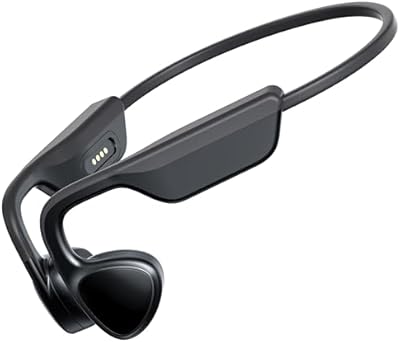
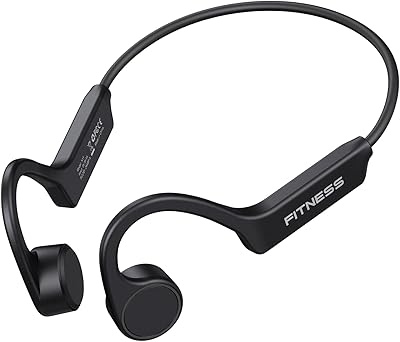
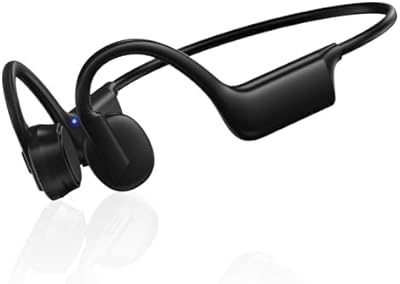
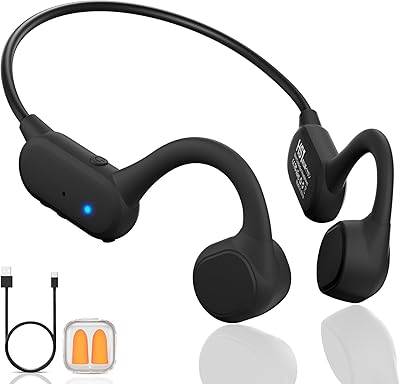
The Nanajorwa X7 Bone Conduction Headphones are a budget-accessible entry into open-ear audio, aimed squarely at people who want to stay aware of their surroundings while still enjoying music or podcasts. Rather than sitting inside your ears, these open-ear headphones rest against your cheekbones and transmit sound through vibration — a meaningful distinction if you run or cycle near traffic. The titanium wraparound frame keeps everything under an ounce, and Bluetooth 5.4 means pairing is quick and stable. Nanajorwa is not a household name, so expectations should be calibrated accordingly, but the core concept here is sound.

Features & Benefits

The X7 headphones use 16mm bone conduction drivers to push stereo audio without touching your ear canal — practical for long sessions where traditional earbuds cause fatigue or soreness. Battery life is rated at 10 hours, though that figure applies at around 50% volume; push it louder and you are realistically looking at 7 to 8 hours, sometimes less. Charging takes just 2 hours via USB-C, which is genuinely convenient. The titanium frame holds firm during intense movement, and the water-resistant build handles sweat without issue. A built-in mic rounds things out for hands-free calls on the go.

Best For

This bone conduction set makes the most sense for runners and cyclists who genuinely need to hear what is happening around them — that ambient awareness is the primary reason to choose this style over conventional earbuds. Gym users who find in-ear designs uncomfortable after an hour will also appreciate the pressure-free fit. First-time bone conduction buyers on a tighter budget get a low-risk way to try the technology without committing to a premium-priced alternative. It also works well for people with ear canal sensitivities who have simply run out of comfortable in-ear options.

User Feedback

With 47 ratings and a 3.9 out of 5 average, the feedback pool for the X7 headphones is still relatively small — the product only launched in mid-2025, so draw your own conclusions carefully. Early buyers tend to highlight comfort and lightweight feel as genuine strengths. On the flip side, sound leakage at higher volumes and limited bass depth are recurring points of friction, both of which are honestly just inherent limitations of bone conduction at this price point. Call quality gets occasional praise, which is a practical plus for commuters. Nothing here suggests a defective product, but audio purists will want to look elsewhere.

Pros

  • Open-ear design lets you hear traffic and surroundings without pausing your audio — a genuine safety feature for outdoor use.
  • The titanium wraparound frame stays put during running, cycling, and circuit training without digging into your head.
  • At under one ounce, the X7 headphones are light enough that you genuinely stop noticing them mid-workout.
  • USB-C charging reaches a full battery in just 2 hours, making a quick top-up between sessions easy.
  • Bluetooth 5.4 pairs fast and holds a stable connection reliably throughout typical workout distances.
  • People with ear canal discomfort or sensitivity finally have a functional, comfortable wireless audio option.
  • Water-resistant construction handles sweat and light rain without requiring any extra care or caution.
  • For first-time bone conduction buyers, the low price makes experimentation low-risk and financially sensible.
  • Button controls are simple and reliable — no touch surfaces to misfire when your hands are sweaty or gloved.

Cons

  • Bass response is thin and music sounds flat compared to even basic in-ear earbuds at a similar price.
  • Battery life drops significantly at higher volumes — the headline 10-hour figure only applies at moderate listening levels.
  • Sound leaks outward at higher volumes, making these open-ear headphones unsuitable for quiet shared spaces.
  • The mic picks up significant wind noise outdoors, making phone calls unreliable during cycling or running in a breeze.
  • No IP rating is officially disclosed, leaving buyers uncertain about exactly how much moisture exposure is safe.
  • With only 47 reviews at the time of writing, there is not enough long-term data to confirm durability over months of heavy use.
  • No on-device volume control means you must reach for your phone to adjust levels during a workout.
  • The brand has no established reputation or service track record, which adds uncertainty around warranty support.
  • 60ms audio latency is acceptable for music but noticeable enough to cause sync issues during video or gaming use.

Ratings

The scores below for the Nanajorwa X7 Bone Conduction Headphones were generated by our AI system after analyzing verified buyer reviews from multiple global markets, with spam, bot-submitted, and incentivized feedback actively filtered out. Each category reflects the honest spread of real user experiences — strengths and frustrations alike — so you get a transparent picture before you buy.

Comfort & Fit
83%
Most users report that the open-ear design is noticeably easier to wear for extended periods than traditional earbuds. The titanium wraparound frame sits lightly against the head without creating pressure points, which is a genuine relief for anyone who has ever ended a long run with sore ears.
A small number of buyers with narrower or wider head shapes found the fit less secure than expected. The wraparound frame is flexible but not truly adjustable, so edge-case head sizes may experience minor slippage during vigorous movement.
Sound Quality
61%
39%
For casual listening — podcasts, audiobooks, and upbeat workout playlists — the audio output is serviceable and clear enough at moderate volumes. The 16mm drivers handle mid-range frequencies reasonably well, making voices and talk content easy to follow during a run.
Bass response is thin, which is a structural limitation of bone conduction technology at this price point rather than a product defect. Audiophiles and music lovers who prioritize rich, full sound will find these open-ear headphones underwhelming compared to even entry-level in-ear alternatives.
Battery Life
72%
28%
At around 50 to 60 percent volume — a realistic daily listening level for outdoor use — battery performance tracks reasonably close to the advertised 10 hours. Commuters and gym-goers doing one to two hour sessions can typically get several days of use between charges.
Crank the volume to 80 percent or higher and real-world playback drops noticeably, often landing in the 5 to 6 hour range rather than the headline figure. The volume-dependent battery trade-off is not prominently communicated, and some buyers feel misled by the top-line spec.
Ambient Awareness
91%
This is where the X7 headphones genuinely deliver. Because nothing sits in or over the ear canal, users can hear approaching traffic, conversation, and environmental cues without removing the headset. Cyclists and urban runners consistently flag this as the single most important reason they chose this style.
The same open design that enables ambient awareness also means sound bleeds outward at higher volumes, which can disturb people nearby in quiet settings like offices or public transit. It is not a flaw so much as an unavoidable characteristic of the format.
Build Quality
69%
31%
The titanium frame feels sturdy for the price tier, and the silicone and ABS plastic construction does not feel obviously cheap in hand. Several buyers noted the headset held up well after months of regular outdoor use without visible degradation.
The brand is a newcomer with limited track record, and the long-term durability data simply does not exist yet. A few early reviewers mentioned that connection points and earbud housing feel less refined up close, suggesting quality control may not be perfectly consistent across units.
Water & Sweat Resistance
77%
23%
The water-resistant rating handles everyday workout sweat without issue, and buyers who wear these through rainy runs or humid gym sessions report no functional problems. For the intended use case, the protection level is adequate and practical.
There is no official IP rating disclosed, which makes it harder to know exactly how much moisture exposure is safe. Users should avoid submerging or directly rinsing these open-ear headphones, as the resistance is clearly sweat-level rather than waterproof.
Bluetooth Connectivity
78%
22%
Bluetooth 5.4 brings noticeably faster initial pairing compared to older versions, and the connection tends to stay stable within a typical 30-foot range. Buyers using the headset for commutes and indoor workouts rarely report dropouts during normal use.
At the outer edge of the 33-foot Bluetooth range, signal stability becomes less reliable, particularly if walls or bodies are in the path. A handful of users also noted occasional re-pairing requirements after the headset had been left idle for extended periods.
Microphone & Call Quality
67%
33%
For a sport-focused headset at this price, the built-in mic performs better than expected in calm environments. Several buyers specifically mentioned using it for hands-free calls during commutes and finding the call clarity acceptable for daily conversations.
Wind noise is a real problem when using the mic outdoors at speed — running or cycling in anything above a light breeze makes calls noticeably garbled on the other end. Indoor call quality holds up better, but outdoor mic performance is inconsistent.
Ease of Use
82%
18%
Button-only control is simple and intuitive once learned, and the single MFB button handles power, pairing, and playback without requiring a companion app. Users appreciate not having to fiddle with touch surfaces mid-run, where sweat and gloves make touchpads unreliable.
The limited button layout means some functions require multi-press sequences that are not immediately obvious without reading the manual. There is no volume control directly on the headset, which a notable number of buyers found genuinely inconvenient during workouts.
Charging Convenience
86%
USB-C charging is the right call here, and the 2-hour full-charge time is fast enough that leaving the headset to charge during a lunch break or work session is rarely disruptive. The cable type is widely available, which removes one small friction point.
There is no wireless charging option, and the charging port cover — where applicable — can feel fiddly. A few users noted that the indicator light behavior during charging could be clearer about distinguishing between fully charged and still-charging states.
Stability During Activity
79%
21%
The wraparound titanium frame keeps this bone conduction set in place through most high-intensity activity, including trail running, cycling, and circuit training. The absence of ear canal insertion means there is nothing to work loose from inside the ear during movement.
In activities with significant vertical bounce — like HIIT jumping exercises or aggressive trail descents — a small number of users noticed the frame shifting slightly. It does not fall off, but the fit is not quite as locked-in as some pricier competitors with adjustable frames.
Value for Money
84%
At its asking price, this bone conduction set offers a genuine and functional introduction to open-ear technology without a steep financial commitment. For first-time buyers curious about bone conduction, the entry cost is low enough that a less-than-perfect experience is not a painful loss.
The trade-offs in sound depth, mic outdoor performance, and brand maturity are real, and buyers expecting near-premium results at a budget price will likely feel the gap. It delivers fair value for the category, but the price-to-quality ceiling is visible.
Latency
71%
29%
At 60 milliseconds, audio latency is within an acceptable range for music playback and podcast listening, where tiny delays go unnoticed. Most users report no obvious lip-sync issues during casual video consumption on a phone.
For anyone using these open-ear headphones for gaming or video editing work requiring precise audio sync, 60ms latency is perceptible and potentially distracting. It is a non-issue for the primary sport use case but worth knowing if secondary uses matter to you.
Weight & Portability
88%
At under one ounce, the X7 headphones are among the lighter options in the bone conduction category. They slip into a jacket pocket or gym bag without adding bulk, and the low weight means you genuinely stop noticing them on your head after a few minutes of wear.
The wraparound frame means they cannot fold flat for compact storage the way some headphones can. The included packaging is functional but not particularly protective, so buyers who travel frequently may want a separate case to avoid frame distortion over time.

Suitable for:

The Nanajorwa X7 Bone Conduction Headphones are a practical fit for anyone whose daily routine puts them in situations where keeping ears open is a genuine safety priority. Runners and cyclists who train on roads or shared paths will find real value in being able to hear approaching vehicles, cyclists, or pedestrians without removing their headset. Gym-goers who have struggled with earbuds falling out or causing discomfort over long sessions will appreciate the pressure-free wraparound fit that simply stays put. This bone conduction set also makes sense for commuters who walk busy urban streets and want ambient awareness without giving up their podcast or playlist. People with ear canal sensitivities — whether from chronic irritation, hearing aid use, or just general discomfort with in-ear designs — have a genuinely useful alternative here. Budget-conscious buyers who are curious about bone conduction technology but unwilling to spend heavily on a first attempt will find the entry cost reasonable for a proper trial of the format.

Not suitable for:

The Nanajorwa X7 Bone Conduction Headphones are not the right pick for anyone whose primary motivation is audio quality. Bone conduction technology at any price point delivers thinner bass and less immersive sound than in-ear or over-ear alternatives, and this set is no exception — music lovers who care deeply about sonic depth and richness will be disappointed. If you regularly take calls outdoors while moving at speed, the built-in mic struggles with wind noise, which makes it a poor choice for professionals who rely on crystal-clear call quality in the field. Anyone expecting the advertised 10-hour battery at high volume should also recalibrate — real-world playback at elevated volumes lands notably shorter, which could be frustrating for all-day users. Buyers who work in open offices or quiet shared spaces should know that sound leakage at higher volumes is noticeable to those nearby. Finally, anyone with no prior experience of bone conduction should understand this technology transmits vibration rather than traditional sound waves — the listening experience feels different, and not everyone adjusts to it comfortably.

Specifications

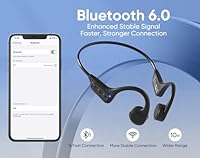
  • Bluetooth Version: Equipped with Bluetooth 5.4 for faster pairing and more stable wireless connections compared to older Bluetooth standards.
  • Wireless Range: Maintains a stable connection up to 33 feet (approximately 10 meters) from the paired device under typical conditions.
  • Audio Drivers: Uses 16mm bone conduction drivers that transmit sound through the cheekbones, bypassing the ear canal entirely.
  • Frequency Response: Covers a frequency range of 20Hz to 20,000Hz, spanning the full standard range of human hearing.
  • Sensitivity: Rated at 97dB sensitivity, which is typical for bone conduction transducers operating at this driver size and price tier.
  • Impedance: Driver impedance is 8 Ohm, making it compatible with standard Bluetooth audio output without requiring amplification.
  • Battery Life: Delivers up to 10 hours of playback at approximately 50% volume; real-world use at 70–80% volume typically yields 7 to 8 hours.
  • Charge Time: Fully recharges from empty in approximately 2 hours via a USB-C connection.
  • Audio Latency: Specified audio latency is 60 milliseconds, suitable for music and podcast playback with minimal perceptible delay.
  • Weight: The headset weighs 0.92 ounces (approximately 26 grams), placing it among the lighter options in the open-ear category.
  • Frame Material: The wraparound frame is constructed from flexible titanium, providing both structural resilience and a lightweight, low-pressure fit.
  • Body Material: Contact surfaces and housing components use a combination of silicone and ABS (Acrylonitrile Butadiene Styrene) plastic.
  • Water Resistance: Rated as water resistant, suitable for sweat and light moisture exposure during workouts; no official IP rating is disclosed.
  • Microphone: Includes a built-in microphone for hands-free calls, integrated into the headset body with button-activated call management.
  • Controls: All functions are managed via physical button controls only; there is no touch surface or companion app required.
  • Charging Port: Charges via a standard USB-C port, with no proprietary cable or magnetic charging connector required.
  • Ear Placement: Open-ear fit with no component entering or resting inside the ear canal; transducers rest against the cheekbones in front of the ears.
  • Package Contents: Retail box includes the bone conduction headset and a USB-C charging cable; no carrying case is included in the standard package.
  • Manufacturer: Manufactured by Shenzhen Sounder Digital Technology Co., Ltd, based in China, under the Nanajorwa brand.
  • Compatibility: Compatible with any Bluetooth-enabled device including Android and iOS smartphones, tablets, and computers within standard Bluetooth range.

Related Reviews
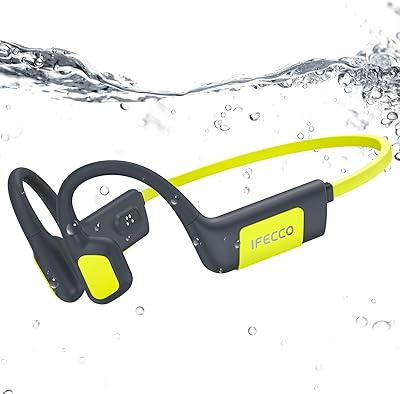
iFecco X7 32GB Bone Conduction Headphones
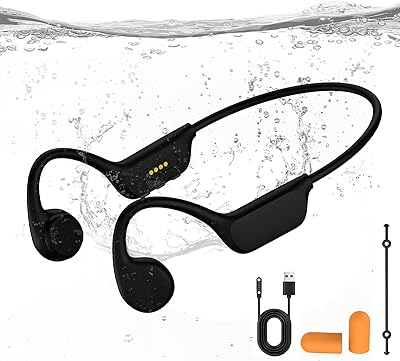
76%
84%
Waterproof Performance
79%
Onboard MP3 Functionality
58%
Audio Quality
81%
Comfort & Fit
77%
Bluetooth Stability
More
KOPIDOE X7 32GB Bone Conduction Swimming Headphones
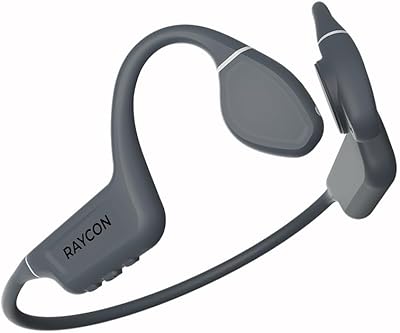
78%
88%
Waterproof Performance
84%
Fit & Stability
61%
Audio Quality
86%
Underwater Usability
83%
Battery Life
More
Raycon Bone Conduction Headphones RBB842
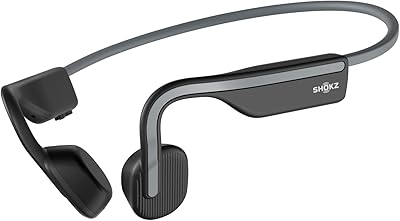
74%
91%
Water Resistance
93%
Situational Awareness
87%
Battery Life
63%
Audio Quality
82%
Fit & Stability
More
Hitarah X3 Bone Conduction Headphones
81%
88%
Wearing Comfort
63%
Sound Quality
84%
Battery Life
79%
Fit Stability During Exercise
93%
Situational Awareness
More
Shokz OpenRun
Shokz OpenRun
82%
97%
Situational Awareness
93%
Fit and Comfort
88%
Water and Sweat Resistance
84%
Battery Life
92%
Quick Charging Capability
More
Cevinily HS1 Bone Conduction Headphones
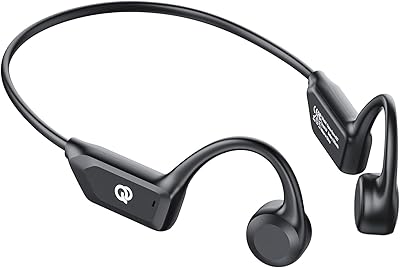
78%
91%
Wearing Comfort
89%
Situational Awareness
86%
Battery Life
84%
Water Resistance
61%
Sound Quality
More
Hitarah X19 Bone Conduction Headphones
83%
90%
Comfort and Fit
72%
Sound Quality
85%
Battery Life
88%
Build Quality
93%
Waterproof Rating (IPX7)
More
IFECCO X25 Bone Conduction Headphones
78%
91%
Value for Money
84%
Comfort & Fit
58%
Sound Quality
86%
Battery Life
79%
Bluetooth Connectivity
More
Qyzue S27 Bone Conduction Headphones
79%
91%
Comfort & Wearability
88%
Fit & Stability
86%
Battery Life
67%
Sound Quality
83%
Bluetooth Connectivity
More
Enerair A20 Bone Conduction Headphones
73%
84%
Value for Money
81%
Comfort & Fit
63%
Sound Quality
88%
Water & Sweat Resistance
76%
Battery Life
More

FAQ

Press and hold the MFB button for about 2 seconds until the headset powers on and enters pairing mode. On your phone, open Bluetooth settings and select X7 from the list of available devices. The whole process takes under a minute and you should only need to do it once — after that, the headset reconnects automatically each time you power it on near your phone.

For most users, yes. The titanium wraparound frame is designed to sit behind the head and hold the transducers firmly against the cheekbones without relying on ear canal insertion to stay in place. That said, fit is personal — if you have a particularly narrow or wide head, it is worth wearing them on a short test run before committing to a full workout.

The headset is water resistant and handles workout sweat and light rain without issue. What it is not designed for is submersion or heavy water exposure like swimming or getting caught in a downpour. No official IP rating is listed, so treat it as sweat-proof and light-splash-resistant rather than waterproof.

Honest answer: it depends on what you listen to. Spoken content — podcasts, audiobooks, talk radio — sounds clear and easy to follow. Music works well for upbeat, mid-range-heavy genres like pop or electronic. Where these open-ear headphones fall short is bass depth and overall richness, so if you are a music listener who cares about full, immersive sound, bone conduction at this price tier will likely feel flat.

In calm indoor environments or low-wind outdoor conditions, call quality is genuinely usable and several buyers have reported positive experiences. The issue is wind — at cycling or running speeds in anything above a gentle breeze, wind noise picked up by the mic makes it hard for the person on the other end to understand you clearly. For stationary calls it performs fine; for moving outdoor calls it is inconsistent.

The 10-hour figure applies at around 50% volume, which is the manufacturer's test condition. At a more typical listening level of 70 to 80 percent volume, real-world playback is closer to 7 or 8 hours. Push it to full volume regularly and you may see 5 hours or less. It is still a decent battery for daily use — just go in with realistic expectations rather than assuming the top-line number reflects your actual habits.

Because these headphones transmit sound through the cheekbones rather than through the ear canal, they can in principle be used alongside certain hearing aids without direct interference. However, individual compatibility depends heavily on the type and placement of the hearing aid. We would recommend consulting an audiologist before purchasing if this is your specific use case, as results can vary significantly.

No — volume control is handled through your phone or connected device, not through the headset itself. The on-device buttons manage power, pairing, play and pause, and call answering. This is a common limitation across button-only bone conduction headsets in this price range, and it does mean reaching for your phone mid-workout if you need to adjust levels.

At low to moderate volumes, sound leakage is minimal and unlikely to bother those around you. As you turn the volume up — particularly past 70 percent or so — sound leakage becomes noticeable to people sitting or standing close by. This is a characteristic of the open-ear bone conduction format rather than a defect, and it is something to keep in mind if you plan to use this bone conduction set in quiet offices, libraries, or public transit.

Wipe the transducer pads and frame down with a slightly damp cloth after sweaty sessions and allow them to air dry fully before storing or charging. Avoid using alcohol wipes or submerging any part of the headset. Keeping the USB-C port free of moisture and debris is also worth the small effort — a dry toothbrush works well for clearing lint from the charging port.