Overview

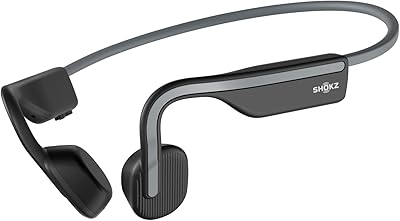
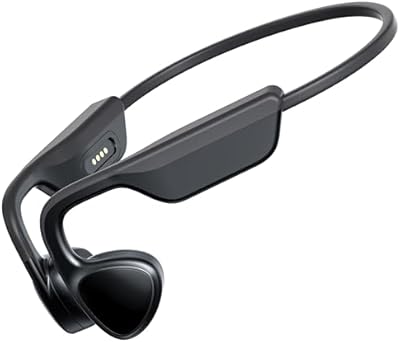
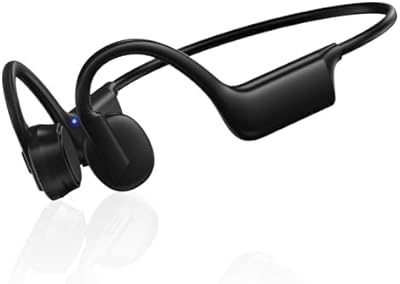
The Cevinily HS1 Bone Conduction Headphones take a fundamentally different approach to listening — instead of sitting in or over your ears, they rest against your cheekbones and transmit sound through vibration. It's a technology that was once reserved for military and medical use, now packaged in a genuinely affordable open-ear option. The titanium alloy frame wraps around the back of your head and stays put without ever blocking your ear canal. For runners, hikers, and commuters who want music without losing touch with their surroundings, that open design is the whole point. Just don't expect audiophile-grade sound — at this price tier, you're buying awareness and comfort, not studio fidelity.
Features & Benefits

Bluetooth 5.4 keeps the connection fast and stable — pairing takes about 10 seconds and holds steady during movement, which matters when you're mid-run and don't want audio dropping out. The IPX5 rating handles rain and sweat without issue. At roughly 32 grams, the HS1 is light enough that you genuinely forget you're wearing it after a few minutes. Battery life is rated at 12 hours, and the Type-C charging port is a welcome touch at this price. The built-in microphone handles calls decently in quiet environments, though it can struggle in windy or noisy outdoor settings. Overall, the spec sheet punches above its weight.

Best For

These bone conduction headphones are a strong match for outdoor runners and cyclists who need to hear traffic, other pedestrians, or trail hazards without sacrificing their playlist. Hikers and long-distance commuters will appreciate the open-ear fit — it doesn't create the ear fatigue or pressure that comes with extended in-ear use. If you've ever pulled out an earbud to talk to someone and found it annoying, this open-ear headset basically makes that a non-issue. It's also a solid first step for anyone curious about bone conduction but not ready to spend significantly more. That said, those who prioritize deep bass or use headphones in loud gyms may want to look elsewhere.

User Feedback

Early buyer impressions are encouraging — the HS1 has collected a 4.5-star average across around 136 ratings, which is a solid start for a product this new. Comfort is the most consistent theme in positive reviews: wearers frequently mention forgetting the headset is on during long workouts. On the flip side, a handful of buyers note that bass is noticeably thin and that sound leaks at volume, which is typical of bone conduction at this price. Call quality gets mixed marks — fine for quick conversations in calm settings, less reliable outdoors. A few reviewers also mention the 12-hour battery holding up well in real-world use, which is always reassuring to see confirmed.

Pros

  • The open-ear design keeps you aware of traffic, voices, and surroundings without removing anything from your ears.
  • At roughly 32 grams, these bone conduction headphones are light enough to genuinely forget you are wearing them.
  • Bluetooth 5.4 pairs quickly and holds a stable connection even during movement-heavy workouts.
  • The IPX5 rating handles sweat and light rain reliably, with no need to worry mid-run.
  • A 12-hour battery life means most users will go days between charges under normal use.
  • Type-C charging is a practical, modern touch that eliminates the need for proprietary cables.
  • The memory titanium frame wraps securely without clamping pressure, making long wear comfortable.
  • Works with virtually any Bluetooth-enabled device, from smartphones to laptops and tablets.
  • For first-time bone conduction buyers, the HS1 is a low-cost, low-risk way to evaluate the technology.
  • The included sponge earplugs are a thoughtful addition for environments where you do want passive sound isolation.

Cons

  • Bass response is noticeably thin — music sounds flat compared to even budget in-ear alternatives.
  • Sound leaks at higher volumes, which can disturb people nearby in quiet shared spaces.
  • The microphone struggles in windy or noisy outdoor environments, limiting hands-free call quality.
  • With around 136 ratings, the long-term reliability picture is still limited and unclear.
  • No active noise cancellation means loud environments will easily overpower your audio.
  • The wrap-around frame may not fit all head sizes comfortably, particularly those outside the average range.
  • No headphone jack means you cannot use these in wired mode if Bluetooth is unavailable.
  • Bone conduction vibration at high volumes can feel physically uncomfortable for some users.
  • The brand has limited established reputation or customer support track record to fall back on.

Ratings

The scores below for the Cevinily HS1 Bone Conduction Headphones were generated by our AI system after analyzing verified purchaser reviews worldwide, with spam, bot-submitted, and incentivized feedback actively filtered out before scoring. Each category reflects the honest distribution of real buyer experiences — strengths and frustrations alike — so you get a clear, unvarnished picture of where this open-ear headset delivers and where it falls short.

Wearing Comfort
91%
Comfort is the single most praised aspect across buyer feedback. The 32-gram frame is light enough that most users report forgetting they have it on during hour-long runs or long commutes, and the memory titanium alloy adapts to head shape without creating pressure points.
A small portion of buyers with larger or narrower head sizes find the wrap-around frame sits awkwardly, requiring repeated repositioning. The fit is not truly universal, and there is no adjustment mechanism to compensate for different head dimensions.
Situational Awareness
89%
The open-ear design is genuinely effective at keeping ambient sound audible, which is exactly why outdoor runners and cyclists gravitate toward these. Being able to hear approaching traffic, a cyclist's bell, or a fellow hiker calling out without removing anything from your ears is a real practical advantage.
Users who want to block out noise for focus-heavy tasks will find the open design actively works against them. There is no toggle or mode to reduce ambient sound intake, so the HS1 is a poor fit for noisy public transport or loud gym floors.
Battery Life
86%
Multiple buyers confirmed the 12-hour claim holds up in real-world use, which is reassuring for a product at this price point. For most active users, that translates to several days of workouts before needing a charge, reducing the friction of daily maintenance.
The exact charge time from empty is not well documented, and a few buyers noted inconsistency in how quickly the battery depletes at higher volume levels. There is no companion app or battery percentage indicator on most paired devices, so you are guessing until the low-battery alert hits.
Water Resistance
84%
The IPX5 rating handles sweat-heavy gym sessions and unexpected rain without issue, and buyers who wear these during outdoor runs in variable weather report no degradation in performance over weeks of use. For the target use case, the protection level is appropriate and reliable.
IPX5 is not submersion-proof, which rules out swimming or heavy water exposure. A handful of buyers assumed the waterproofing was more robust than the rating implies, which led to disappointment — the spec is accurate but requires careful reading.
Sound Quality
61%
39%
For podcasts, audiobooks, and vocal-heavy content, the HS1 delivers clear, intelligible audio that works well during exercise. Mids and high frequencies come through with reasonable clarity, and at moderate volumes the listening experience is genuinely enjoyable for casual use.
Bass is noticeably thin, which is a structural limitation of bone conduction at this price tier rather than a manufacturing defect. Buyers expecting music to sound full or punchy — especially for bass-heavy genres — will find the audio noticeably flat compared to even budget in-ear alternatives.
Sound Leakage
54%
46%
At low to moderate volume levels, leakage is subtle enough that people sitting beside you on a train or in a cafe are unlikely to notice. For everyday casual listening in open environments, it is rarely a practical issue.
Turning the volume up to compensate in noisy environments causes noticeable sound leakage that nearby people can clearly hear. In quiet shared spaces like offices or libraries, this becomes a genuine social problem, and there is no way to mitigate it short of keeping the volume low.
Bluetooth Connectivity
83%
Bluetooth 5.4 pairs quickly — typically within 10 seconds as advertised — and the connection holds steady during movement-heavy activities like running or cycling. Buyers rarely report mid-workout dropouts, which matters more than raw spec numbers when you are mid-stride.
There is no multipoint pairing, meaning switching between a phone and laptop requires a manual disconnect and reconnect each time. For users who move between devices frequently throughout the day, this becomes a minor but repetitive annoyance.
Build Quality
77%
23%
The titanium alloy frame feels substantively more durable than plastic alternatives at this price, and the finish holds up well to regular use based on early buyer reports. The frame flexes without feeling fragile, which gives reasonable confidence for daily athletic wear.
At this price tier, the transducer pads and connection points are not premium, and long-term durability beyond six months is still an open question given the product's limited review history. A few buyers noted the frame coating showed minor wear with heavy daily use.
Microphone Quality
63%
37%
In calm indoor environments — at home, in a quiet office, or on a still morning walk — call quality is clear enough that callers on the other end rarely complain. The passive noise reduction in the mic circuit does a reasonable job filtering steady background hum.
Wind is the microphone's biggest enemy, and outdoor calls during a run or bike ride often result in choppy or muffled audio for the person on the other end. This limits the hands-free call experience to relatively sheltered environments.
Charging Experience
81%
19%
The switch to Type-C is a practical quality-of-life upgrade that removes the need to carry a proprietary cable. Most buyers already have Type-C cables everywhere, which makes topping up the HS1 genuinely convenient at a desk or in a gym bag.
There is no charging indicator light that clearly communicates when the headset is fully charged versus still charging, which can leave users guessing. Fast charging is mentioned but not precisely defined, and charge time from flat is not officially specified.
Value for Money
88%
Relative to what you are getting — a lightweight open-ear headset with modern Bluetooth, solid battery life, and genuine waterproofing — the pricing makes the HS1 a strong entry point for anyone new to bone conduction. The included carrying case and earplugs add practical value without inflating the price.
Buyers who compare the audio output directly against standard wireless earbuds at a similar price may feel shortchanged on sound quality alone. The value equation is compelling only if situational awareness and comfort are your primary needs, not audio fidelity.
Secure Fit During Exercise
82%
18%
The wrap-around titanium frame stays planted during runs, hikes, and gym sessions without needing clips or additional accessories. Buyers specifically highlight that it does not bounce or slide even during high-impact movement, which is one of the HS1's most consistent practical strengths.
For head sizes outside the mid-range, the fixed frame can feel slightly loose or slightly tight with no way to fine-tune. A small number of buyers noted the fit required adjustment after putting on or removing hats, helmets, or sunglasses.
Setup & Pairing Ease
87%
There is no app to download and no complex setup process — power on, go to Bluetooth settings, and pair within a few seconds. For less tech-savvy buyers or anyone who just wants headphones that work without fuss, this simplicity is genuinely appreciated.
Without an app, there are no EQ settings, firmware update options, or customizable controls. Power users who want to tune their audio experience or remap the physical buttons will find the feature set limited.
Control & Button Layout
69%
31%
The physical button placement is straightforward once you learn it by feel, and most users adapt to controlling volume and playback without looking within a few uses. The tactile buttons work reliably even with sweaty fingers during workouts.
The buttons are small and positioned on the transducer body near the face, which makes them harder to locate instinctively during exercise without fumbling. A few buyers noted accidentally pressing the wrong button while adjusting fit mid-run.

Suitable for:

The Cevinily HS1 Bone Conduction Headphones are purpose-built for people who are active outdoors and genuinely need to stay aware of their environment while listening. Runners and cyclists who train on public roads will appreciate that these headphones let traffic sounds, voices, and ambient noise through naturally — no fussing with one earbud out or pausing your music every few minutes. Hikers and long-distance commuters are another strong fit, particularly those who find in-ear buds uncomfortable after extended wear; the open-ear wrap-around frame eliminates that pressure and fatigue almost entirely. If you've been curious about bone conduction technology but weren't ready to spend heavily on a premium brand, this open-ear headset offers a low-risk way to try the format at an accessible price. The IPX5 waterproofing and reliable 12-hour battery also make it a practical everyday companion for gym sessions, light rain, or sweat-heavy workouts.

Not suitable for:

The Cevinily HS1 Bone Conduction Headphones are genuinely not the right tool if rich, full-spectrum sound is your priority. Bone conduction by nature delivers thinner audio than traditional drivers — bass is noticeably limited, and at higher volumes, sound leakage can be noticeable to people nearby, which makes these a poor choice for shared quiet spaces like offices or libraries. Dedicated gym-goers who rely on punchy, bass-heavy music to drive their training will likely find the audio underwhelming compared to a standard pair of wireless earbuds at a similar price. The HS1 also lacks any kind of active noise cancellation, so if you want to block out the world — on a plane, a noisy train, or a loud gym floor — this open-ear headset works against that goal by design. Finally, buyers who make frequent hands-free calls outdoors in windy conditions should be aware that the microphone can struggle in those environments.
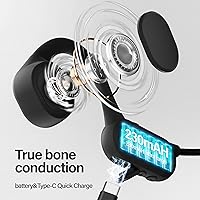
Specifications

  • Model: The HS1 is manufactured by Cevinily and carries the model designation HS1.
  • Weight: The headset weighs approximately 32 grams, making it one of the lighter options in the open-ear category.
  • Frame Material: The wrap-around frame is constructed from memory titanium alloy, which flexes to fit and returns to its original shape.
  • Driver Type: Audio is delivered via bone conduction drivers, which transmit sound vibrations through the cheekbones rather than the ear canal.
  • Bluetooth: The HS1 uses Bluetooth 5.4, offering faster pairing and a more stable wireless connection compared to older Bluetooth versions.
  • Frequency Range: The headset covers a frequency range of 20Hz to 20,000Hz, which is the standard range for human hearing.
  • Impedance: The impedance is rated at 8 Ohm, which is typical for bone conduction consumer audio devices.
  • Battery Life: A full charge delivers up to 12 hours of continuous music playback or call time.
  • Charging: The HS1 charges via a Type-C port and supports fast charging, reducing downtime between uses.
  • Water Resistance: The headset carries an IPX5 rating, meaning it can withstand sweat and rain splashes but should not be submerged.
  • Ear Design: The open-ear form factor leaves the ear canal completely unobstructed, allowing ambient sounds to pass through naturally.
  • Noise Control: Passive noise cancellation is present in the microphone circuit to reduce background noise during calls, but there is no active noise cancellation for the listener.
  • Connectivity: The HS1 connects exclusively via Bluetooth and has no headphone jack for wired use.
  • Compatible Devices: The headset is compatible with smartphones, tablets, laptops, desktops, gaming consoles, and smart TVs that support Bluetooth.
  • Microphone: A built-in microphone is included for hands-free calls and voice assistant use.
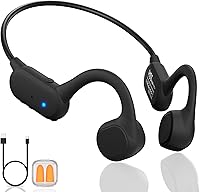
  • In the Box: Each unit ships with the headset, one Type-C charging cable, two sponge earplugs, and a user manual.
  • Earpiece Shape: The transducer pads rest flat against the cheekbones just in front of the ears, with no part entering the ear canal.
  • Carrying Case: A carrying case is included, measuring approximately 5.04 by 4.33 by 2.13 inches.

Related Reviews
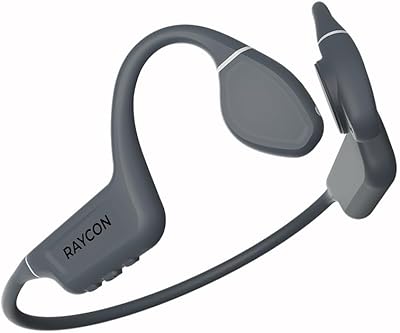
Raycon Bone Conduction Headphones RBB842
74%
91%
Water Resistance
93%
Situational Awareness
87%
Battery Life
63%
Audio Quality
82%
Fit & Stability
More
Hitarah X3 Bone Conduction Headphones
81%
88%
Wearing Comfort
63%
Sound Quality
84%
Battery Life
79%
Fit Stability During Exercise
93%
Situational Awareness
More
Hitarah X19 Bone Conduction Headphones
83%
90%
Comfort and Fit
72%
Sound Quality
85%
Battery Life
88%
Build Quality
93%
Waterproof Rating (IPX7)
More
Shokz OpenRun
Shokz OpenRun
82%
97%
Situational Awareness
93%
Fit and Comfort
88%
Water and Sweat Resistance
84%
Battery Life
92%
Quick Charging Capability
More
PSIER X11 Bone Conduction Headphones
77%
88%
Comfort & Wearability
84%
Secure Fit During Activity
61%
Sound Quality
93%
Open-Ear Situational Awareness
52%
Sound Leakage
More
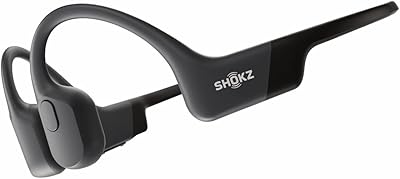
IFECCO X25 Bone Conduction Headphones
78%
91%
Value for Money
84%
Comfort & Fit
58%
Sound Quality
86%
Battery Life
79%
Bluetooth Connectivity
More
Ogogrs K08 Bone Conduction Open-Ear Headphones
70%
81%
Comfort & Fit
58%
Sound Quality
83%
Battery Life
88%
Situational Awareness
52%
Microphone Quality
More
Enerair A20 Bone Conduction Headphones
73%
84%
Value for Money
81%
Comfort & Fit
63%
Sound Quality
88%
Water & Sweat Resistance
76%
Battery Life
More
Nanajorwa X7 Bone Conduction Headphones
78%
83%
Comfort & Fit
61%
Sound Quality
72%
Battery Life
91%
Ambient Awareness
69%
Build Quality
More
Qyzue S27 Bone Conduction Headphones
79%
91%
Comfort & Wearability
88%
Fit & Stability
86%
Battery Life
67%
Sound Quality
83%
Bluetooth Connectivity
More

FAQ

Bone conduction technology can help some people with conductive hearing loss, since it bypasses the outer and middle ear entirely. However, the HS1 is designed as a consumer sports headset, not a medical hearing device, so results will vary significantly depending on the type and degree of hearing loss. It is worth consulting an audiologist before relying on it for this purpose.

The memory titanium frame wraps around the back of your head and holds its shape, which keeps the HS1 in place during most activities including running and cycling. It is not a clamping design, so it does not squeeze, but it sits snugly enough that bouncing is rarely an issue for most head sizes.

No — the IPX5 rating means the headset can handle sweat and rain, but it is not designed for submersion. Using it in a pool would likely damage it and would void any protection the water resistance rating provides.

Cevinily describes the Type-C charging as fast charge, though an exact charge time from empty is not officially stated. Based on the 12-hour battery capacity and typical bone conduction headset charging rates, expect around 1.5 to 2 hours for a full charge.

Music is absolutely listenable on the Cevinily HS1 Bone Conduction Headphones, but you should calibrate your expectations. Bone conduction at this price tier tends to produce clear mids and highs, while bass is noticeably thin. For podcasts, audiobooks, and casual listening during workouts, they work well. For music where bass and overall richness matter, traditional earbuds at a similar price will outperform them.

Yes, and that is actually why the box includes two sponge earplugs. Since the ear canal stays open, you can insert the earplugs while wearing the headset to reduce ambient noise when you want more audio immersion. It is an unusual but practical combination.

Yes, Bluetooth 5.4 is platform-agnostic. The HS1 pairs with iPhones, Android devices, and anything else with Bluetooth support, without any app or special setup required.

No — like most Bluetooth headsets at this tier, the HS1 connects to one device at a time. If you want to switch between your phone and your laptop, you will need to disconnect from one and reconnect to the other.

This is a common concern with wrap-around bone conduction headsets. The frame sits behind the ears and along the back of the head, so it can sometimes press against glasses arms, particularly with thicker frames. Many users find it manageable, but it may take some adjustment to find a comfortable position if you wear glasses regularly.

At moderate volumes, leakage is minimal and unlikely to bother anyone next to you. At higher volumes, the vibrations do produce audible sound leakage that a person seated close to you could hear. In quiet shared environments like offices or libraries, this is worth keeping in mind.